
- Pollen study science kits range from basic microscopy setups to AI-powered real-time monitoring systems — the right choice depends on whether you’re doing field collection, lab analysis, or long-term ecological archiving.
- The Hirst-type volumetric trap remains the gold standard for airborne pollen sampling, used in national aerobiological networks worldwide due to its cost-effectiveness and reliability.
- AI and Vision Transformer (ViT) models are transforming pollen identification, reducing analysis time to under three hours post-collection and dramatically cutting the need for manual expert annotation.
- Slide preparation quality directly impacts detection accuracy — staining with basic fuchsine and high-resolution digitization are non-negotiable steps in any serious pollen research workflow.
- Keep reading to discover how real-time portable tools like the AllergenKit are replacing traditional lab setups — and what that means for allergy forecasting, biodiversity monitoring, and climate research.
Pollen research has never been more accessible — or more powerful — than it is right now.
Whether you’re a field ecologist, an allergist, or a climate scientist, the tools available today can take you from raw air sample to species-level identification faster than ever before. Pollen Sense, a leader in patented real-time particle identification technology, is one of the companies driving this shift — making professional-grade pollen monitoring portable and accessible beyond the traditional lab environment. Understanding which kits and tools actually deliver on their promise requires knowing what the science demands at each stage of the research workflow.
The Best Pollen Study Kits Start With the Right Foundation
Every effective pollen study kit is built around three core functions: collection, preparation, and identification. Getting any one of these wrong creates bottlenecks that cascade through your entire analysis pipeline. The tools you choose at the collection stage directly determine the quality of data you can extract downstream — no amount of advanced AI software can compensate for a poorly captured sample.
Why Hirst-Type Pollen Traps Remain the Global Standard
The Hirst-type volumetric spore trap, first described by J.M. Hirst, has maintained its position as the most widely adopted airborne pollen monitoring tool across national aerobiological networks globally. Its design draws a precise volume of air across an adhesive-coated drum that rotates at a calibrated speed, capturing pollen grains in a time-resolved sequence across a 7-day collection strip. This temporal resolution is critical — it lets researchers correlate pollen release events with meteorological data at the daily level. For those interested in starting their own monitoring projects, our community garden startup guide offers valuable insights.
What keeps this technology relevant despite decades of innovation is its combination of robustness, low operating cost, and network compatibility. Because national monitoring stations from Hungary to Sweden have used Hirst-type traps continuously for decades, the resulting datasets are directly comparable across regions and time periods. Any newer pollen study kit designed for serious aerobiological research needs to either use this format or produce data that can be benchmarked against it.
Manual vs. Automated Collection: What the Science Says
Manual pollen collection and identification remains the reference standard for analytical precision. Trained palynologists examining stained slides under a microscope can achieve identification accuracy that automated systems are still working to match consistently across diverse species sets. However, manual analysis is expensive, slow, and introduces inter-analyst variability — particularly problematic when building large-scale monitoring datasets or processing time-sensitive allergy forecasting data.
How AI-Powered Tools Are Changing Pollen Identification
Automated pipelines using AI-based workflows are now capable of enabling same-day pollen monitoring, reducing post-collection analysis time to under three hours. These systems leverage object detection models and feature extraction architectures to classify pollen species from digitized microscopy slides — tasks that previously required hours of expert labor per sample. The most significant breakthrough isn’t just speed; it’s scalability. AI-driven pipelines can generate robust datasets from pure-species reference slides with minimal human supervision, fundamentally changing how long-term pollen archives are built and maintained.
Essential Microscopy Equipment for Pollen Analysis
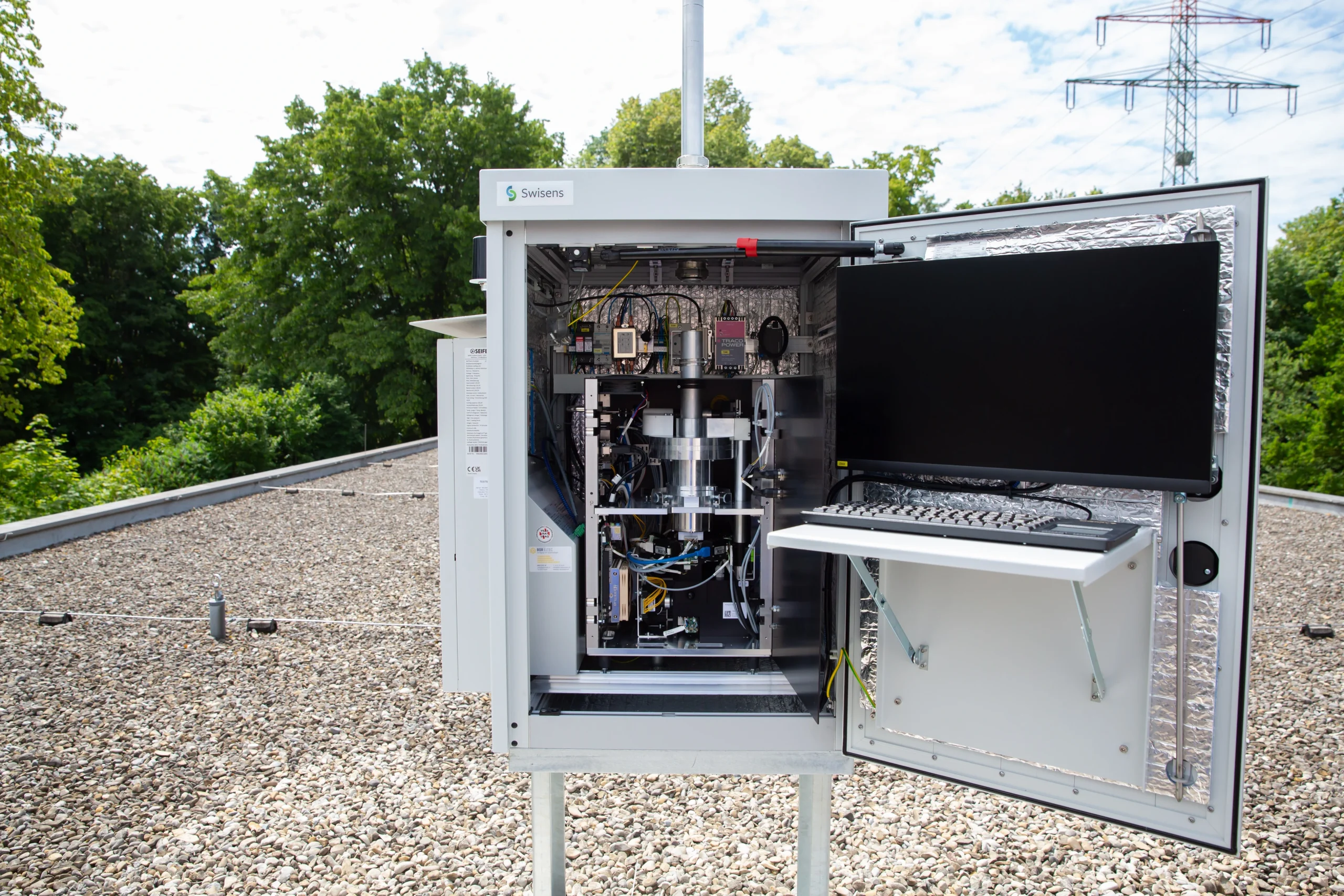
“New Pollen Measuring Device Provides …” from www.helmholtz-munich.de and used with no modifications.
No pollen study kit is complete without a reliable microscopy setup. Pollen grain identification depends entirely on resolving fine surface features — apertures, exine ornamentation, and colpus structure — that distinguish species from one another. Choosing the wrong microscope or using inadequate slide preparation introduces identification errors that no downstream software can correct.
The microscopy stage sits at the intersection of hardware capability and researcher technique. A well-configured microscope paired with properly prepared slides is what separates publishable data from inconclusive results. This is where many entry-level pollen kits fall short — they include basic magnification tools without addressing the resolution requirements that real species-level identification demands.
Bright-Field Microscopy for Pollen Grain Identification
Bright-field microscopy is the standard optical method used in palynological analysis. It illuminates the specimen from below, transmitting light through the stained pollen grain to reveal structural details under magnification. For most pollen identification workflows — particularly those using basic fuchsine-stained adhesive strips from Hirst-type traps — bright-field microscopy provides sufficient contrast to distinguish morphological features at the species or genus level.
When selecting a microscope for pollen work, compound microscopes with a minimum 40x objective are the entry point, with 100x oil immersion objectives required for fine structural analysis of smaller grains or for differentiating closely related species. Integrated camera systems that allow slide digitization are increasingly standard in research settings, enabling the high-resolution image capture that feeds AI-based identification workflows.
Resolution Requirements for Accurate Pollen Detection
High-resolution digitization is a non-negotiable requirement for any pollen study kit feeding into automated analysis pipelines. Pollen grains typically range from 10 to 100 micrometers in diameter, with identification-critical surface features often smaller than 5 micrometers. Imaging systems must resolve these features clearly and consistently across entire slide surfaces to produce training data and detection results that hold up to scientific scrutiny. For more information on pollen study kits, visit Sysmex Flow Cytometry.
Slide Preparation Tools Every Researcher Needs
Slide preparation is where collected data becomes analyzable information. For airborne samples captured on adhesive strips, the standard workflow involves staining with basic fuchsine, mounting the strip segment on a glass slide, and applying a coverslip before imaging. Each step requires specific consumables and techniques to avoid artifacts that confuse both human analysts and automated detection systems.
Standard Slide Preparation Workflow for Airborne Pollen Samples:
Step 1: Remove adhesive strip segment from Hirst-type trap drum (typically 48mm per day of collection)
Step 2: Apply basic fuchsine stain to the strip surface — this enhances contrast of pollen grain walls under bright-field illumination
Step 3: Mount the stained strip onto a labeled glass slide using the appropriate mounting medium
Step 4: Apply the coverslip carefully to eliminate air bubbles that would obstruct imaging
Step 5: Allow mounting medium to cure before high-resolution scanning or manual microscopy analysis
Beyond the staining consumables, researchers need precision cutting tools for strip segmentation, a clean preparation surface to avoid cross-contamination between samples, and a consistent labeling system that preserves temporal metadata from the collection period. These details matter enormously when building archives intended for long-term ecological or climate research.
For labs scaling toward digitized slide libraries, motorized slide scanners that produce whole-slide images at sufficient resolution for AI training are becoming essential infrastructure. The quality of these scanned images directly determines how effectively automated detection models can be trained on reference collections — a factor that becomes critical when the goal is species-level identification across diverse geographic regions. For those interested in further exploring related topics, consider checking out this guide on greenhouse kits.
Top Pollen Collection Kits for Field Research
Airborne Particle Samplers: Key Features to Look For
Field-grade pollen collection kits need to balance portability with sampling precision. The core specifications that separate research-quality samplers from consumer-grade tools come down to airflow calibration, particle size range, and collection substrate compatibility. Any sampler intended for aerobiological research should draw a consistent, measured volume of air — typically 10 liters per minute — to ensure that particle counts remain statistically comparable across collection periods and geographic sites.
- Calibrated airflow rate — consistent volumetric sampling (10 L/min is the aerobiological standard) is essential for cross-site data comparability
- Adhesive substrate compatibility — the sampler must support collection strips or slides that work with your staining and digitization workflow
- Particle size range — effective pollen samplers should capture particles in the 10–100 micrometer range with minimal size-based collection bias
- Weather resistance — field deployments require housings rated for wind, humidity, and temperature variation without affecting airflow performance
- Data logging capability — integrated sensors that record meteorological conditions alongside pollen capture dramatically increase the research value of collected samples
The Pollen Sense APS400: Real-Time Particle Intelligence
The Pollen Sense APS400 represents a significant departure from passive collection into active real-time identification. Rather than capturing particles on a substrate for later laboratory analysis, the APS400 uses patented particle intelligence technology to identify and classify airborne particles — including pollen, mold spores, and dust — as they pass through the sensing chamber. This eliminates the lag between collection and actionable data that defines traditional Hirst-type workflows, making the APS400 particularly valuable for time-sensitive applications like allergy warning systems and real-time environmental monitoring.
AllergenKit by Pollen Sense: Portable Identification in the Field
The AllergenKit by Pollen Sense brings real-time portable particle identification to researchers who need professional-grade data outside of fixed monitoring stations. Designed around the same patented Particle Intelligence technology as the APS400, the AllergenKit identifies pollen, mold, dust, and other bioaerosols on-site — without requiring samples to be transported back to a laboratory for microscopy and staining.
For field ecologists and public health researchers, this portability changes the research design calculus entirely. Transect studies, urban-rural gradient analyses, and rapid-response allergen surveys that previously required weeks of lab turnaround can now generate preliminary species-level data on the same day as collection. The AllergenKit’s form factor makes it deployable in locations where fixed monitoring infrastructure is impractical — remote ecological sites, urban allergy hotspots, or agricultural environments where pollen release events need to be captured in real time.
Software and AI Tools for Pollen Identification
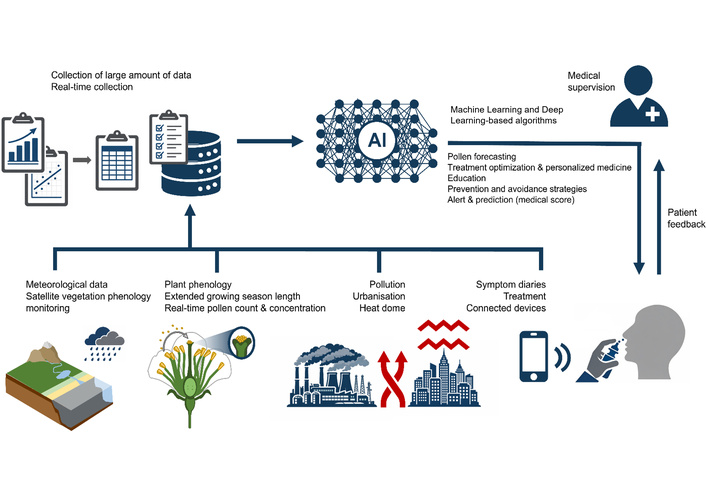
“Artificial intelligence in pollen …” from www.explorationpub.com and used with no modifications.
The identification stage is where pollen research has undergone the most dramatic transformation in recent years. Software tools ranging from open-source web-based counters to deep learning pipelines trained on tens of thousands of annotated microscopy images are now capable of automating tasks that once required years of specialist training. The critical distinction for researchers evaluating these tools is not just accuracy — it’s how the system performs on pollen types it hasn’t been explicitly trained on.
A two-stage AI workflow has emerged as the most effective framework for scalable pollen identification. In the first stage, the system automatically harvests training examples from pure-species reference slides with minimal human supervision. In the second stage, these harvested examples train detection models that can then be applied to airborne mixed-species samples captured in the field. This architecture reduces the manual annotation bottleneck that has historically made large-scale automated pollen monitoring impractical for most research institutions.
Vision Transformers (ViTs): The Most Effective Feature Extractors
Vision Transformers have emerged as the leading architecture for pollen grain feature extraction in automated identification pipelines. Unlike convolutional neural networks that process images through fixed local receptive fields, ViTs divide the pollen grain image into patches and model relationships between all patches simultaneously — a design that captures the global structural patterns of exine ornamentation and aperture arrangement that define species-level taxonomy. In comparative evaluations across multiple pollen datasets, ViT-based models have consistently outperformed earlier CNN architectures in both accuracy and generalization to unseen species.
Object Detection Models Trained Across Multiple Regions
Species-level pollen identification becomes substantially more complex when detection models trained on samples from one geographic region are applied to pollen captured in another. Pollen morphology varies with local environmental conditions, and the species composition of airborne samples differs dramatically between, for example, Central European deciduous forests and Mediterranean scrubland environments. Object detection models that are trained exclusively on single-region datasets tend to underperform when deployed across national aerobiological networks that span multiple climate zones.
The most robust identification systems address this by incorporating training data from multiple regions — including reference slides from Hungary, France, Sweden, and other countries with long-running aerobiological monitoring programs. Cross-regional training datasets expose models to the natural morphological variation within species, improving generalization without requiring separate models for each geographic deployment context.
Open-source tools like the web-based pollen recognition system described by Chaves et al. in Earth Science Informatics (2024) demonstrate that automated particle counting for aerobiological analysis is no longer restricted to institutions with large software development budgets. Researchers can now access functional identification pipelines through browser-based interfaces, significantly lowering the barrier to entry for smaller labs and educational research programs that want to engage with real pollen monitoring data.
Building a Long-Term Pollen Monitoring Dataset
Long-term pollen archives are among the most scientifically valuable datasets in environmental research — but they are also among the most difficult to build and maintain. A meaningful pollen time series requires consistent methodology across decades, careful slide preservation, and rigorous metadata management that links each sample to its collection date, location, meteorological conditions, and analyst. Most national-level archives that exist today were built through sustained institutional commitment over 30 to 50 years, long before automated tools made the process more tractable.
How Hungary, France, and Sweden Built Decades of Pollen Archives
Several European countries have operated continuous pollen monitoring networks using Hirst-type volumetric traps since the 1970s and 1980s. Hungary, France, and Sweden stand out as examples of national programs that have maintained methodological consistency long enough to produce datasets capable of supporting paleoclimatology research, long-term allergen trend analysis, and phenological shift studies linked to climate change. Their archives now contain millions of individual pollen counts spanning multiple decades — data that is only becoming more scientifically valuable as climate signal detection requires longer baseline periods.
What made these archives possible was standardization at every level: consistent trap models, identical slide preparation protocols, calibrated analyst training programs, and centralized data repositories. The lesson for researchers building new monitoring programs today is that the value of a pollen dataset compounds over time — but only if the methodology remains stable enough to make year-over-year comparisons valid. For those interested in exploring innovations in allergy-resistant technologies, maintaining consistent methodologies is key.
Digitization Requirements for Historical Slide Collections
Existing physical slide collections represent an enormous potential resource for AI model training and long-term ecological analysis — but only if they can be digitized at sufficient resolution. Whole-slide imaging systems must produce images at a resolution that preserves identification-critical surface features at the 1–5 micrometer scale. Slides that were prepared using non-standard staining protocols or mounting media that have degraded over time present additional challenges for automated analysis, often requiring manual quality screening before digitized images enter AI training pipelines.
Scaling From Lab to National Aerobiological Networks
The transition from a single-lab pollen monitoring setup to a node in a national aerobiological network requires more than adding monitoring stations. It demands harmonized data formats, shared species reference libraries, agreed-upon quality control thresholds, and the computational infrastructure to aggregate and analyze data streams from multiple simultaneous collection points. AI-assisted workflows are making this scaling more achievable — but the foundational requirement remains consistent field methodology and rigorous slide preparation at every node in the network. For those interested in optimizing urban spaces, consider exploring indoor gardening lighting kits to enhance your setup.
Pollen Research Tools for Ecological and Climate Studies
| Research Application | Primary Tool Required | Data Output | Time Scale |
|---|---|---|---|
| Airborne allergen monitoring | Hirst-type volumetric trap + AI pipeline | Species counts, daily concentrations | Daily to seasonal |
| Paleoclimatology reconstruction | Sediment core sampling + microscopy | Fossil pollen assemblages | Centuries to millennia |
| Biodiversity assessment | Field samplers + ViT identification models | Species presence/abundance data | Weekly to annual |
| Real-time allergy forecasting | Pollen Sense APS400 or AllergenKit | Live particle counts by type | Sub-hourly |
| Long-term ecological archiving | Whole-slide scanner + digitization workflow | High-resolution slide image libraries | Decades |
Pollen data sits at the intersection of ecology, public health, and climate science in ways that make it uniquely cross-disciplinary. A single well-maintained monitoring station generates data that is simultaneously useful for allergy forecasting, plant phenology tracking, biodiversity surveys, and long-term climate signal detection. This multi-application value is precisely why investing in a capable, research-grade pollen study kit pays dividends across research domains that rarely overlap.
The critical insight for researchers building or expanding their toolkit is that ecological and climate applications place fundamentally different demands on your equipment than clinical allergy research does. Paleoclimatology requires tools optimized for sediment core analysis and fossil pollen identification — morphological precision over speed. Real-time environmental monitoring demands the opposite: fast, continuous, automated detection that can feed alert systems and public health dashboards without manual intervention between collection and output.
Understanding where your research sits on that spectrum — and which tools are designed for that specific position — is what separates a productive pollen monitoring program from an expensive one that generates data nobody can use. For those interested in sustainable practices, exploring water conservation tips can enhance the effectiveness of your research tools.
Linking Pollen Data to Paleoclimatology Research
Fossil pollen preserved in lake sediments, peat bogs, and ice cores serves as one of the most reliable proxies for reconstructing past vegetation communities and, by extension, historical climate conditions. By comparing fossil pollen assemblages from dated sediment layers against modern reference collections, palynologists can infer temperature ranges, precipitation patterns, and vegetation zone shifts across timescales that extend thousands to millions of years into the past. The accuracy of these reconstructions depends entirely on the quality and taxonomic breadth of the modern reference pollen libraries they are compared against, which is exactly why building comprehensive, well-digitized reference collections is a scientific priority that extends well beyond contemporary monitoring applications. For more insights into the impact of pollen on ecosystems, further reading is available.
Real-Time Allergy Warning Systems Powered by Pollen Monitoring
Real-time pollen monitoring has direct, measurable public health value. Airborne pollen concentrations that trigger allergic responses can spike within hours of flowering events — far faster than traditional Hirst-type trap analysis workflows can detect and report. Systems like the Pollen Sense APS400 address this gap by generating sub-hourly particle identification data that can feed directly into public allergy warning platforms, giving sensitive individuals and healthcare providers actionable advance notice rather than retrospective exposure data.
The combination of dense sensor networks and AI-powered identification is enabling a new generation of hyperlocal allergy forecasting tools that operate at the neighborhood scale rather than the regional scale of traditional monitoring networks. This spatial resolution matters clinically — pollen concentrations can vary by an order of magnitude within a single urban area depending on local vegetation, wind patterns, and surface characteristics. Real-time portable tools like the AllergenKit are making this hyperlocal data collection feasible for researchers and public health agencies that cannot afford fixed infrastructure at every monitoring point.
The Future of Pollen Research Is Automated and Accessible
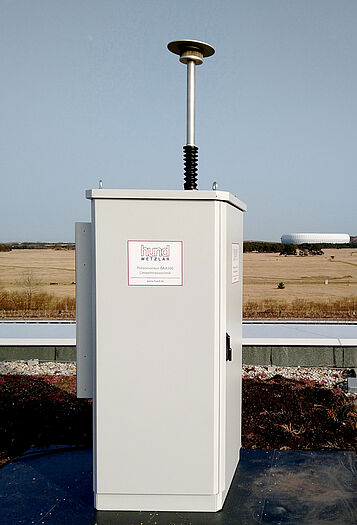
“Automatic pollen monitors” from www.faulhaber.com and used with no modifications.
The convergence of AI-powered identification, portable real-time sensors, and cloud-connected data pipelines is removing the barriers that once restricted serious pollen research to well-funded institutions with dedicated laboratory infrastructure. Vision Transformer models that generalize across geographic regions, automated slide digitization systems, and tools like the AllergenKit are collectively shifting pollen monitoring from a labor-intensive specialist discipline into a scalable, distributed scientific infrastructure. Researchers who build their workflows around these tools today are positioning themselves to contribute to datasets that will be scientifically valuable for decades.
The foundational principles have not changed — rigorous collection methodology, careful slide preparation, and taxonomically precise identification remain the benchmarks against which all new tools are measured. What has changed is how much of that process can now be automated, accelerated, and deployed at scales that were previously impossible. The best pollen study kits available right now are those that bridge this transition: combining the methodological reliability of established aerobiological standards with the speed and scalability that modern ecological and public health research demands.
Frequently Asked Questions
Below are answers to the most common questions researchers ask when selecting pollen study kits and building out their monitoring workflows.
What is the best pollen collection kit for beginners in environmental science?
For researchers just starting, the most effective entry point is a kit that combines a basic volumetric air sampler with bright-field microscopy capability and a standard staining protocol. A setup built around a calibrated passive sampler, basic fuchsine staining supplies, prepared glass slides, and a compound microscope with at least a 40x objective covers the core workflow without requiring significant capital investment. This configuration lets beginners develop the slide preparation and identification skills that underpin every more advanced technique. For more specialized equipment, you might consider exploring the options available at Pollen Sense.
As skill and research scope grow, adding digitization capability — even a basic microscope-mounted camera — opens the door to AI-assisted identification tools and the ability to contribute samples to larger reference libraries. Starting with solid fundamentals and expanding incrementally is far more effective than investing in advanced automated systems before the underlying methodology is established. For those interested in optimizing their research environment, exploring indoor gardening lighting kits can be a practical step forward.
How does the Pollen Sense APS400 differ from traditional Hirst-type pollen traps?
The core difference is real-time identification versus retrospective analysis. A Hirst-type trap captures pollen passively on an adhesive strip over a 7-day collection period, after which the strip must be sectioned, stained, mounted, and analyzed — a process that can take days to weeks depending on lab capacity. The Pollen Sense APS400 uses patented Particle Intelligence technology to classify airborne particles, including pollen, mold, and dust, as they are captured, generating actionable species-level data in sub-hourly timeframes without any laboratory preparation steps. For applications where speed of detection matters — allergy warning systems, real-time environmental surveys, or rapid-response research — the APS400 provides a fundamentally different capability that traditional trap-based workflows cannot replicate.
Can AI tools reliably identify pollen species from microscopy slides?
AI-based identification tools, particularly those using Vision Transformer architectures, have demonstrated strong performance on pollen species classification from digitized microscopy slides — with the important caveat that performance varies significantly based on how well the training dataset represents the species and morphological variation present in the samples being analyzed. Systems trained on multi-regional datasets that include reference slides from diverse geographic locations generalize more reliably than those trained on single-region collections. Manual expert identification remains the reference standard for analytical precision, but AI pipelines can now process samples at a scale and speed that makes them the practical choice for large-scale monitoring programs, provided the training data quality is sufficient.
What microscope specifications do I need for accurate pollen grain analysis?
At minimum, pollen grain identification requires a compound bright-field microscope with a 40x objective for general morphological assessment and a 100x oil immersion objective for fine structural analysis of smaller grains or closely related species. The microscope should include a mechanical stage for systematic slide scanning — manual repositioning introduces both efficiency losses and the risk of double-counting or missing grains during analysis. Köhler illumination capability is standard in research-grade instruments and significantly improves image contrast and resolution compared to basic illumination systems.
For workflows that feed into AI-assisted identification pipelines, an integrated digital camera capable of capturing images at sufficient resolution to resolve features at the 1–5 micrometer scale is essential. Many research groups now use motorized slide scanners rather than manual microscopy for digitization-focused work, as these systems produce whole-slide images with consistent focus and exposure across the entire slide surface — a requirement for training data that AI models can learn from reliably. For those interested in enhancing their research environments, exploring options like indoor gardening lighting kits could provide valuable insights into optimizing workspace conditions.
Calibration is an often-overlooked specification requirement. Any microscope used for quantitative pollen analysis should have its stage micrometer verified and its objectives calibrated against a known standard before use in research workflows. Uncalibrated systems introduce systematic measurement errors that compound across large datasets and can invalidate cross-site comparisons in networked monitoring programs.
How are long-term pollen archives used in climate and ecological research?
Long-term pollen archives provide the continuous observational baseline that climate and ecological research requires to detect trends, shifts, and anomalies against natural variability. A pollen time series spanning 30 or more years captures multiple cycles of interannual climate variation — El Niño events, volcanic cooling periods, multi-decadal oscillations — which is the minimum context needed to distinguish a genuine climate-driven phenological shift from short-term weather noise. Without this baseline, even statistically significant single-year observations cannot be interpreted with confidence.
In paleoclimatology, fossil pollen assemblages extracted from dated sediment cores are compared against modern reference collections to reconstruct past vegetation communities at specific time horizons. The quality of this reconstruction depends on the taxonomic completeness and geographic coverage of the modern reference library — gaps in the reference collection translate directly into gaps in the paleoclimate reconstruction. This is why digitizing and expanding existing physical slide collections is a research priority that benefits both contemporary monitoring and deep-time climate science simultaneously. For those interested in practical applications, exploring community garden startup guides can provide insights into current vegetation management practices.
Ecological applications use long-term pollen archives to track phenological shifts — changes in the timing of flowering events — that are among the most sensitive early indicators of climate change impacts on plant communities. Data from European monitoring networks have documented measurable advances in the start of the pollen season for many species over multi-decade records, with implications for both ecosystem function and human health burden from airborne allergens.
The increasing integration of AI-powered analysis tools with historical archive data is opening new research possibilities that were previously intractable. Automated processing of digitized historical slides can extract quantitative data from collections that were originally analyzed manually under variable methodological standards — effectively extending the reach of consistent, comparable data further back in time than the standardized monitoring era alone would allow.
Understanding the intricacies of pollen viability is crucial for various scientific studies and agricultural applications. For accurate results, researchers often rely on specialized kits. One such product is the Pollen Viability Kit, which provides reliable data essential for effective research.