
Key Takeaways: Pollen, Pollinators & the Power of Compost
- Composting plant waste returns essential nutrients like nitrogen, phosphorus, and potassium directly back into the soil — cutting the need for synthetic fertilizers.
- Healthy compost-enriched soil grows stronger plants that produce more flowers and more pollen, directly supporting declining pollinator populations.
- Composting keeps organic waste out of landfills, which significantly reduces methane emissions — one of the most potent greenhouse gases contributing to climate change.
- Bacteria and fungi are the unsung heroes of composting — without them, plant waste stays waste instead of becoming the nutrient-dense material your garden needs.
- There are three proven methods for using finished compost in a pollinator garden, and one of them (compost tea) doubles as a natural pest control solution — more on that below.
Composting plant waste is one of the simplest things you can do with an outsized impact on soil health, pollinator survival, and the fight against climate change.
Most gardeners think of composting as a tidy way to deal with dead leaves and clippings. But what’s actually happening in that pile is a biological process that feeds entire ecosystems — from underground to the bees, butterflies, and beetles that keep our food systems alive. Understanding that connection changes how you think about every piece of plant waste you’d otherwise throw in the trash. Resources like The Flutter Buzz have been helping pollinator garden enthusiasts understand exactly how composting and ecosystem health are linked.
Compost Does More Than Feed Your Garden
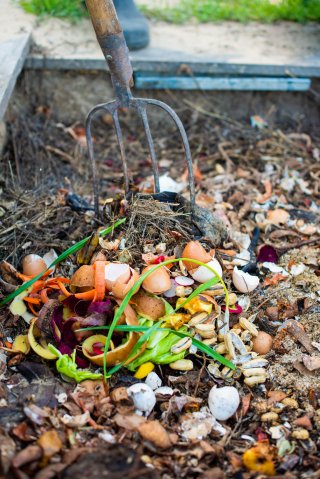
“Composting At Home | US EPA” from www.epa.gov and used with no modifications.
Compost is often sold as a soil amendment, but that undersells what it actually does. When you break down plant waste through composting, you’re not just creating fertilizer — you’re rebuilding the biological infrastructure of your soil. You’re giving microbes a place to thrive, improving how water moves through the ground, and reducing your garden’s dependence on synthetic inputs that can harm the broader environment.
The ripple effects go further than most people expect. A single healthy compost pile supports a chain of ecological benefits that stretches from your backyard to regional pollinator populations. That’s not an exaggeration — it’s the science of how interconnected living systems work.
How Pollen Shapes the Ecosystem
Pollen is the starting point for nearly every fruit, vegetable, and nut we eat. Without it moving from plant to plant, most flowering species can’t reproduce. It’s the biological currency that keeps both wild ecosystems and agricultural systems running. When pollen transfer breaks down, entire food webs start to unravel. Learn more about composting to support these essential processes in a thriving pollinator garden.
What makes pollen transfer possible is pollinators — and what keeps pollinators alive is healthy, flowering plant life. That’s where the connection to composting becomes direct and consequential.
Pollinators That Depend on Pollen to Survive
Bees are the most well-known pollinators, but they’re far from the only ones. Butterflies, beetles, moths, flies, and even some birds and bats move pollen between flowers as they feed. Each of these species depends on a consistent supply of nectar and pollen-rich blooms — and those blooms depend on nutrient-rich soil to grow strong enough to produce them reliably.
How Pollen Supports Food Systems and Biodiversity
Pollinators are responsible for supporting the reproduction of a significant portion of the world’s flowering plants, including many crops that humans and wildlife depend on for food. Beyond agriculture, pollen transfer sustains the biodiversity of wild plant communities — which in turn provide habitat, food, and shelter for hundreds of other species. It’s a system built on interdependence, and pollinators sit right at the center of it.
Why Pollinator Populations Are Declining
Pollinator populations are under serious pressure from multiple directions at once. Habitat loss has removed the wildflower meadows and hedgerows that once gave pollinators consistent food sources. Pesticide use — particularly systemic insecticides — has damaged both pollinator health and the soil microbiomes that support healthy plant growth. Climate change is shifting bloom times out of sync with pollinator activity cycles.
Composting won’t solve all of these problems on its own. But it directly addresses two of the biggest drivers: it builds the soil health that sustains pollinator-friendly plants, and it reduces reliance on chemical fertilizers and pesticides that cause downstream harm. That makes it one of the most practical tools available to gardeners who want to make a real difference.
What Composting Plant Waste Actually Does to Soil
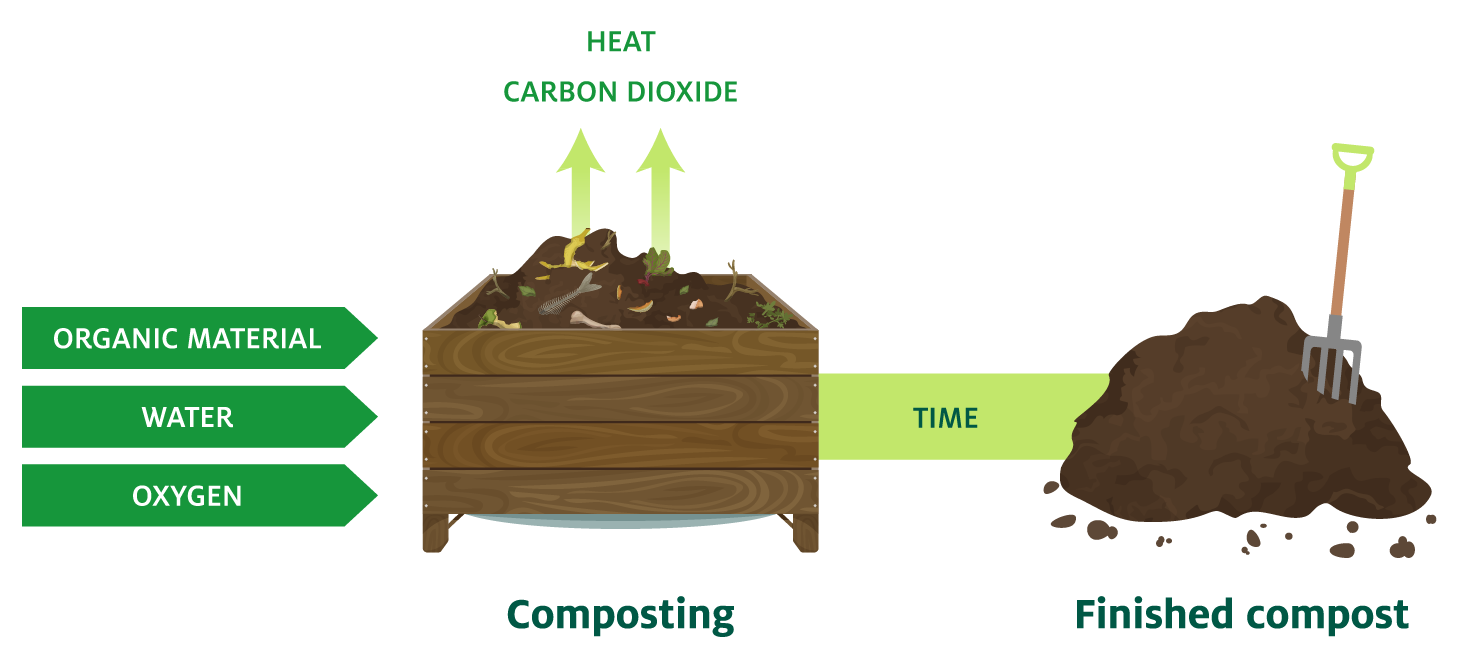
“How Composting Works – FastGrowingTrees.com” from www.fast-growing-trees.com and used with no modifications.
When plant waste breaks down properly, it becomes humus — a dark, crumbly material packed with nutrients and teeming with microbial life. This material doesn’t just sit in soil passively. It actively improves how soil functions, from its ability to hold water to the efficiency with which plant roots absorb nutrients. The transformation from dead plant matter to living, productive soil is driven by biology, and understanding it makes you a far more effective gardener. For those interested in optimizing their gardening efforts, exploring organic soil options for native plants can be incredibly beneficial.
Nitrogen, Phosphorus, and Potassium: The Core Nutrients in Compost
Finished compost delivers the three macronutrients plants need most — nitrogen for leaf and stem growth, phosphorus for root development and flowering, and potassium for overall plant health and disease resistance. Unlike synthetic fertilizers that dump these nutrients in concentrated form and risk burning roots or leaching into waterways, compost releases them slowly as microbial activity continues breaking down organic matter. This slow-release mechanism means plants get a steady, balanced feed rather than a spike followed by a crash. For more on sustainable gardening practices, check out our organic soil options for native plants.
How Compost Fixes Both Sandy and Clay-Heavy Soils
Soil texture is one of the biggest limiting factors in garden productivity, and compost addresses both extremes. In sandy soils, which drain too fast and can’t hold nutrients, compost adds organic matter that acts like a sponge — slowing drainage and giving plant roots time to absorb what they need. In clay-heavy soils that compact easily and suffocate roots, compost improves aggregation, creating the air pockets and drainage channels that roots and soil organisms need to function. It’s one of the only soil amendments that works in both directions.
The Role of Bacteria and Fungi in Breaking Down Plant Waste
The decomposition process in a compost pile is driven almost entirely by microorganisms — primarily bacteria and fungi. Bacteria handle the initial breakdown of soft, nitrogen-rich materials like fresh plant clippings and kitchen scraps, generating heat in the process that can push pile temperatures above 130°F. This heat is what kills weed seeds and pathogens, making the finished product safe to use around food crops and flowering plants alike.
Fungi take over where bacteria leave off, breaking down tougher materials like woody stems, dried leaves, and fibrous plant stalks that bacteria struggle to process. Together, these two groups of microorganisms transform raw plant waste into stable humus. When finished compost is added back to garden soil, those microbial communities don’t disappear — they continue working, cycling nutrients and supporting root health long after the initial application.
The Direct Link Between Compost and Pollinator Health
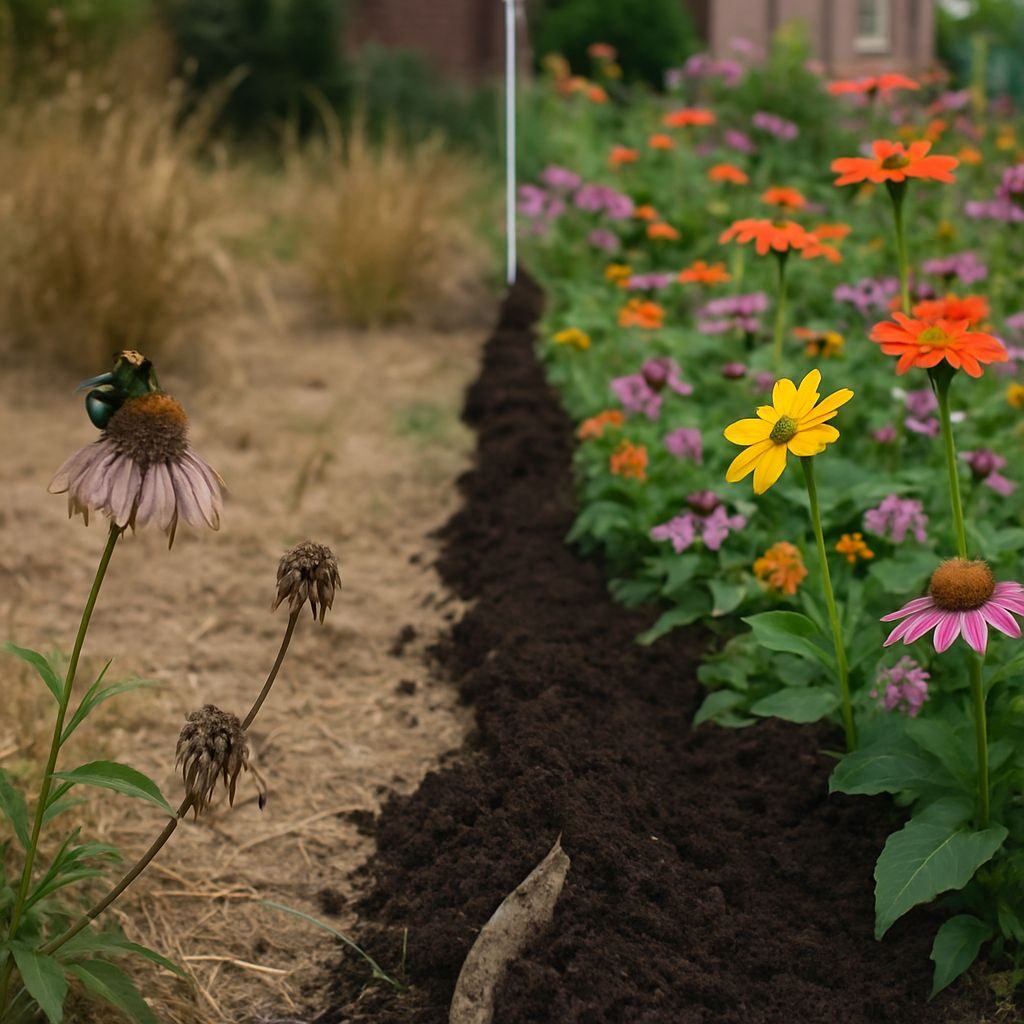
The connection between compost and pollinators isn’t abstract. It runs through a straightforward biological chain: compost enriches soil, enriched soil grows stronger plants, stronger plants produce more and better flowers, and better flowers sustain the pollinators that ecosystems and food systems depend on. Interrupt any link in that chain and the whole system weakens. Strengthen it with compost, and the effects compound over time.
Stronger Plants Produce More Flowers and More Pollen
Plants grown in compost-enriched soil consistently outperform those grown in depleted or synthetic-fertilizer-dependent soils when it comes to bloom production. The slow-release nutrient profile of compost supports steady, sustained growth rather than the rapid but fragile growth that synthetic fertilizers can trigger. More robust root systems mean plants can access water and nutrients more efficiently, which translates directly into more blooms, richer nectar, and higher-quality pollen — all of which matter enormously to the pollinators feeding on them.
How Compost Reduces the Need for Pesticides
One of the least-discussed benefits of composting plant waste is how it naturally reduces pest pressure, which in turn reduces the temptation to reach for chemical pesticides. Healthy, well-nourished plants have stronger cell walls and more robust immune responses, making them less vulnerable to insect damage and fungal disease. Compost also supports populations of beneficial soil organisms — including predatory insects and nematodes — that keep pest populations in check without any chemical intervention. For more information on sustainable gardening practices, check out our guide on sustainable flowering vegetables.
- Stronger cell walls in compost-fed plants make them physically harder for pests to penetrate.
- Beneficial nematodes thrive in compost-rich soil and actively prey on soil-dwelling pest larvae.
- Mycorrhizal fungi supported by compost form protective networks around plant roots, reducing disease entry points.
- Balanced soil pH maintained by compost discourages many fungal pathogens that thrive in acidic or alkaline extremes.
- Diverse microbial communities in compost-amended soil outcompete harmful pathogens through natural biological competition.
Reducing pesticide use isn’t just good for your immediate garden — it’s one of the most direct actions a gardener can take to protect pollinators. Systemic insecticides in particular have been strongly linked to pollinator decline, persisting in plant tissue, nectar, and pollen long after application. Every garden that replaces chemical inputs with compost-based soil health is one fewer source of that exposure.
The cumulative effect matters too. Individual gardens may seem small in isolation, but pollinator territories span entire neighborhoods and landscapes. When gardeners across a region shift toward compost-based practices, the reduction in pesticide exposure becomes meaningful at the population level — giving bees, butterflies, and other pollinators a measurably safer foraging environment.
Composting Plant Waste Fights Climate Change
Beyond the garden fence, composting plant waste plays a measurable role in reducing the greenhouse gas emissions that drive climate change. It does this in two distinct ways — by preventing emissions at the source, and by actively pulling carbon out of the atmosphere and locking it into the ground. For those interested in sustainable practices, exploring sustainable flowering vegetables can complement composting efforts.
Cutting Methane Emissions by Keeping Waste Out of Landfills
When organic waste — including plant material — ends up in a landfill, it breaks down without access to oxygen in a process called anaerobic decomposition. This produces methane, a greenhouse gas that is significantly more potent than carbon dioxide over a short-term timeframe. Landfills are one of the largest human-generated sources of methane emissions globally.
Composting breaks down the same organic matter aerobically — with oxygen — which produces carbon dioxide instead of methane. While CO₂ is still a greenhouse gas, the climate impact of aerobic decomposition is dramatically lower than that of anaerobic landfill decomposition. Simply redirecting plant waste from the trash bin to a compost pile makes a measurable difference in your household’s overall emissions footprint.
How Compost Locks Carbon Into the Ground
Finished compost contains stable organic carbon compounds — particularly humic substances — that don’t break down quickly once incorporated into soil. This means that carbon originally captured by plants during photosynthesis gets stored in the ground rather than returning to the atmosphere. Soil carbon sequestration through compost application is increasingly recognized as a meaningful climate mitigation strategy, particularly in agricultural and horticultural contexts.
The more consistently compost is added to soil over time, the more carbon accumulates in the ground. This is a long-term process, but it’s one that compounds with every growing season. Gardens and farms that have been composting for decades often show significantly elevated soil organic carbon levels compared to those relying on synthetic inputs — demonstrating that consistent practice produces real, measurable climate benefits.
3 Proven Ways to Use Compost in a Pollinator Garden
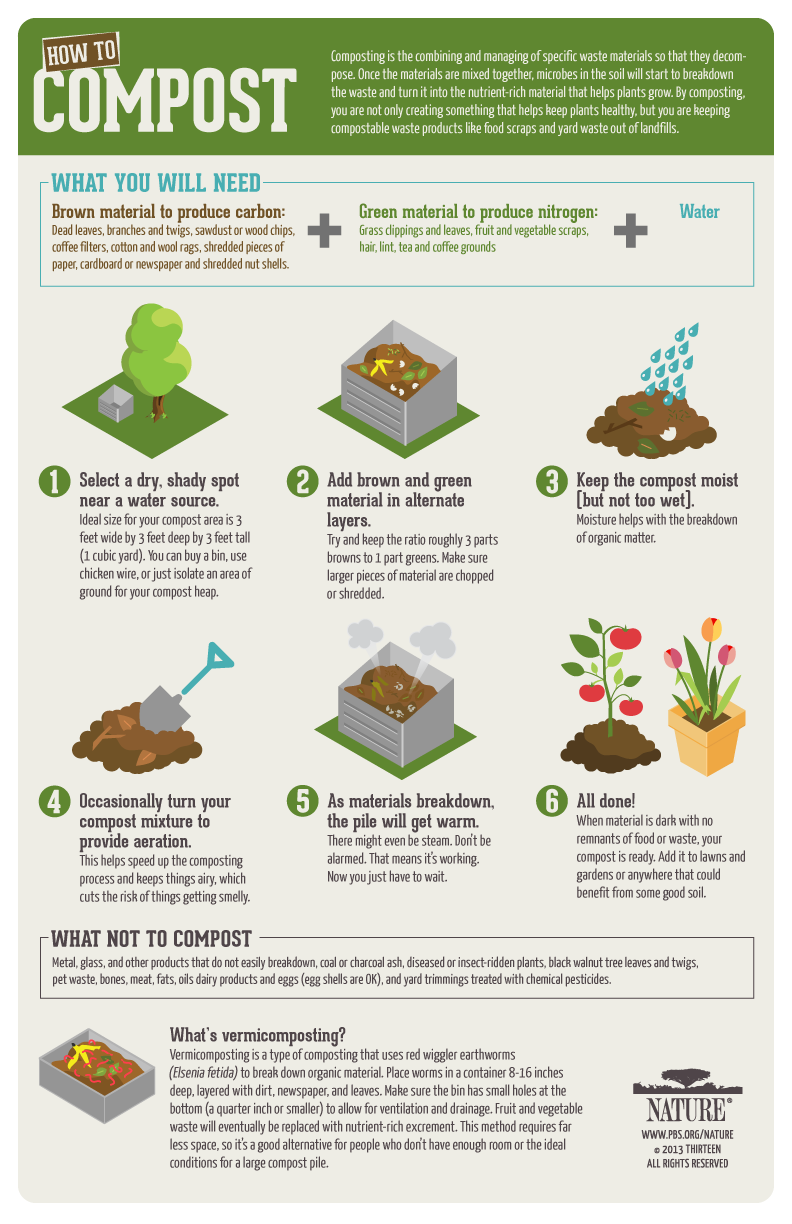
“Composting, a New Pile of Info” from www.ilonasgarden.com and used with no modifications.
Knowing the benefits of composting is one thing — knowing how to apply finished compost effectively is what turns that knowledge into results. Three methods consistently deliver the strongest outcomes for pollinator-friendly gardens, each suited to different situations and plant types.
1. Top-Dressing Around Existing Plants
Top-dressing is the simplest and most widely applicable method. Spread a 1 to 2 inch layer of finished compost around the base of existing plants — flowers, shrubs, and perennials — without disturbing the root zone. Rainfall and irrigation will gradually work the nutrients down into the soil, while the compost layer itself acts as a light mulch, retaining moisture and moderating soil temperature. This method works particularly well for established pollinator plants like lavender, coneflower (Echinacea purpurea), and black-eyed Susan (Rudbeckia hirta) that benefit from a consistent, low-level nutrient supply through the growing season.
Timing matters with top-dressing. Applying compost in early spring gives plants a nutrient boost right as they’re entering active growth, supporting the strong stem and flower development that pollinators depend on through summer. A second application in early autumn helps plants build root reserves before winter, setting them up for an even stronger blooming performance the following year.
2. Brewing Compost Tea for Pest Control and Plant Health
Compost tea is made by steeping finished compost in water — typically for 24 to 48 hours with an aerator running to keep the brew oxygenated — then straining out the solids and applying the liquid directly to plant foliage or soil. The result is a microbially active liquid that delivers beneficial bacteria and fungi directly to plant surfaces and root zones. When applied as a foliar spray, it creates a biological barrier on leaves that competes with and suppresses fungal pathogens before they can establish.
For pollinator gardens specifically, compost tea offers a pesticide-free way to manage common problems like powdery mildew, aphid infestations, and black spot fungus — all without leaving chemical residues in nectar or pollen. A basic brew uses roughly one part finished compost to five parts water, aerated for 24 hours, then applied immediately while the microbial populations are still active and at peak concentration. Use it within four hours of finishing the brew for best results.
3. Mixing Compost Into Soil Before Planting
When establishing new pollinator garden beds or replanting areas, incorporating compost directly into the soil before planting gives new plants the strongest possible start. Work 3 to 4 inches of finished compost into the top 8 to 10 inches of existing soil using a garden fork — this depth puts nutrients and microbial activity right in the zone where new roots will be actively growing. For heavy clay soils, this single step can dramatically improve drainage and aeration before a single plant goes in the ground.
This method is particularly effective when establishing plants that pollinators rely on heavily, such as milkweed (Asclepias tuberosa) for monarch butterflies, or native wildflower mixes that require well-draining, nutrient-balanced soil to germinate and establish successfully. Getting the soil right before planting means less intervention later — fewer supplemental feedings, less watering, and significantly less pest pressure through the first critical growing season.
Composting Plant Waste Is One of the Most Impactful Things You Can Do
Every piece of plant waste that goes into a compost pile instead of a landfill becomes part of a larger solution — richer soil, stronger plants, more flowers, healthier pollinators, and less carbon in the atmosphere. The benefits of composting plant waste compound with every season you practice it, building a garden ecosystem that becomes more resilient and more productive over time without synthetic inputs or chemical intervention. It is one of the rare environmental actions that costs nothing, requires no special equipment to start, and delivers measurable results in your own backyard while contributing to something far larger than any single garden.
Frequently Asked Questions
Here are the most common questions gardeners ask when starting to compost plant waste for the first time or scaling up an existing practice.
What plant waste can be composted safely?
Most plant-based garden waste is safe to compost, including fallen leaves, grass clippings, spent flower heads, vegetable trimmings, herb stems, and non-woody prunings. These materials break down efficiently and contribute a balanced mix of carbon-rich and nitrogen-rich material that microbial communities need to function well.
There are a few materials to avoid or handle carefully. Diseased plant material — such as stems or leaves showing active fungal infection or viral symptoms — can potentially survive the composting process if the pile doesn’t reach a high enough internal temperature to kill pathogens. For home composters who aren’t actively monitoring pile temperature, it’s safer to bag diseased material separately. Avoid composting plants treated with persistent herbicides, particularly those containing clopyralid or aminopyralid, which can survive composting and damage plants the finished compost is later applied to. For more insights on maintaining healthy plants, explore this guide on organic soil for native plants.
How long does it take for plant waste to turn into usable compost?
Under active management — regular turning to maintain aeration, a balanced ratio of carbon-rich to nitrogen-rich material, and adequate moisture — a compost pile can produce finished compost in as little as 8 to 12 weeks during warm months. Passive piles that are simply built and left without turning typically take 6 to 12 months to fully break down, depending on the materials included and the ambient temperature. Shredding or chopping plant material into smaller pieces before adding it to the pile significantly speeds up decomposition by increasing the surface area available to microorganisms.
Does composting plant waste attract pests to the garden?
A properly managed compost pile is far less attractive to pests than commonly assumed. The key is maintaining the right balance of materials and keeping the pile covered or enclosed. Plant-based garden waste — dry leaves, clippings, spent plants — generates very little odor and attracts minimal pest interest when managed correctly. The pests most commonly associated with compost, such as rodents, are typically drawn to food scraps like cooked meat or dairy, not plant waste.
Turning the pile regularly disrupts any pest activity that does begin to develop, and using an enclosed compost bin rather than an open pile virtually eliminates the issue for most gardeners. Beneficial organisms like worms, ground beetles, and centipedes that are attracted to active compost piles are far more likely to take up residence than the pest species most people worry about — and those beneficial organisms actively improve both the compost and the surrounding garden soil.
Can compost replace chemical fertilizers in a pollinator garden?
In most pollinator garden contexts, yes — finished compost can fully replace synthetic fertilizers, and in many cases it produces better long-term results. The difference lies in how nutrients are delivered. Synthetic fertilizers provide immediate, concentrated doses of specific nutrients, which can push rapid growth but often bypass the soil biology that makes plants genuinely resilient. Compost feeds plants indirectly, by feeding the microbial communities that make nutrients available to roots over an extended period.
The transition period matters. Gardens that have relied on synthetic fertilizers for years may have depleted soil biology that needs time to rebuild once compost applications begin. During the first one or two seasons after switching, plant performance may seem comparable rather than dramatically improved — but what’s happening underground during that period is the rebuilding of a functional soil food web that will increasingly reduce the need for any supplemental inputs at all.
For flowering plants that pollinators depend on — coneflowers, native asters, milkweed, goldenrod, and similar species — the slow-release nutrient profile of compost actually produces more desirable growth patterns than synthetic fertilizers. Rather than the lush, soft, pest-attractive foliage that excess synthetic nitrogen can trigger, compost-fed plants tend to grow at a pace that produces stronger structural tissue, better root systems, and more sustained flowering over the full season.
One important practical note: not all compost is equal. Finished compost should be dark, crumbly, and have an earthy smell — not a strong ammonia or sulfur odor, which indicates incomplete decomposition. Applying immature or partially finished compost can temporarily tie up nitrogen in the soil as decomposition completes, potentially limiting plant growth in the short term. Letting compost fully mature before application ensures you’re delivering the full nutrient and biological benefit to your soil. For more on sustainable gardening practices, check out our sustainable flowering vegetables guide.
- Coneflower (Echinacea purpurea) — thrives with top-dressed compost in spring; supports bees and butterflies through late summer
- Milkweed (Asclepias tuberosa) — benefits from compost incorporated into well-drained soil; essential host plant for monarch butterflies
- Goldenrod (Solidago canadensis) — one of the highest-pollen-producing native plants; grows vigorously in compost-amended soil
- Lavender (Lavandula angustifolia) — prefers lean soil but benefits from light compost top-dressing to support sustained bloom production
- Black-eyed Susan (Rudbeckia hirta) — long-blooming native that responds strongly to compost-enriched soil with extended flowering periods
How does composting help pollinators specifically?
Composting helps pollinators by building the soil conditions that allow pollinator-friendly plants to grow strong enough to produce abundant, high-quality flowers. Pollinators don’t interact with compost directly — they interact with the flowers that compost makes possible. When soil is nutrient-dense and biologically active, the plants growing in it produce more blooms, richer nectar, and more viable pollen over a longer period of the growing season. That extended and abundant food supply is what sustains pollinator populations through the critical summer and early autumn months when energy reserves for overwintering are being built. For more tips on sustainable gardening, check out this guide to sustainable flowering practices.
Beyond flower production, the reduction in pesticide use that comes with healthy, compost-supported plants removes one of the most direct threats pollinators face. Every garden that manages pest pressure through soil health rather than chemical application becomes a safer foraging environment. At the landscape scale, a network of compost-fed, pesticide-free pollinator gardens creates connected corridors of safe habitat — something fragmented, chemically managed landscapes cannot provide.
The simplest way to think about it: pollinators need flowers, flowers need healthy plants, healthy plants need living soil, and living soil needs compost. Composting plant waste is the foundational act that sets every other part of that chain in motion. If you want to support pollinators in a meaningful, lasting way, building and maintaining a compost practice is the place to start. The Flutter Buzz is a great resource for gardeners looking to create pollinator-friendly spaces that are grounded in sustainable, ecology-based practices.