Article-At-A-Glance: Best Sustainable Flowering Vegetables
- Flowering vegetables do double duty — they feed your table and fuel a thriving garden ecosystem by attracting pollinators and repelling pests naturally.
- The most sustainable gardens rely on companion planting, healthy soil, and water-smart practices — not chemicals — to stay productive year after year.
- Some of the best flowering vegetables for sustainability are already in your kitchen — zucchini, tomatoes, runner beans, and okra all bloom beautifully while building biodiversity.
- Native and edible flowering plants are the foundation of any low-maintenance, eco-friendly vegetable garden that works with nature instead of against it.
- Keep reading to discover which flowering vegetable is the single best starting point for transforming your garden into a self-sustaining, pollinator-friendly powerhouse.
Growing food and supporting the planet at the same time is not just possible — it is exactly what a sustainable flowering vegetable garden is designed to do.
Whether you are a beginner turning over your first patch of soil or a seasoned grower looking to close the loop on a truly regenerative garden, this guide covers everything you need. From the top 20 flowering vegetables that attract pollinators and deter pests, to the sustainable practices that keep your garden producing season after season — it is all here. Sustainable gardening communities and resources have long championed these plants as the backbone of eco-conscious food growing, and the science backs it up.
What Makes a Vegetable Garden Truly Sustainable
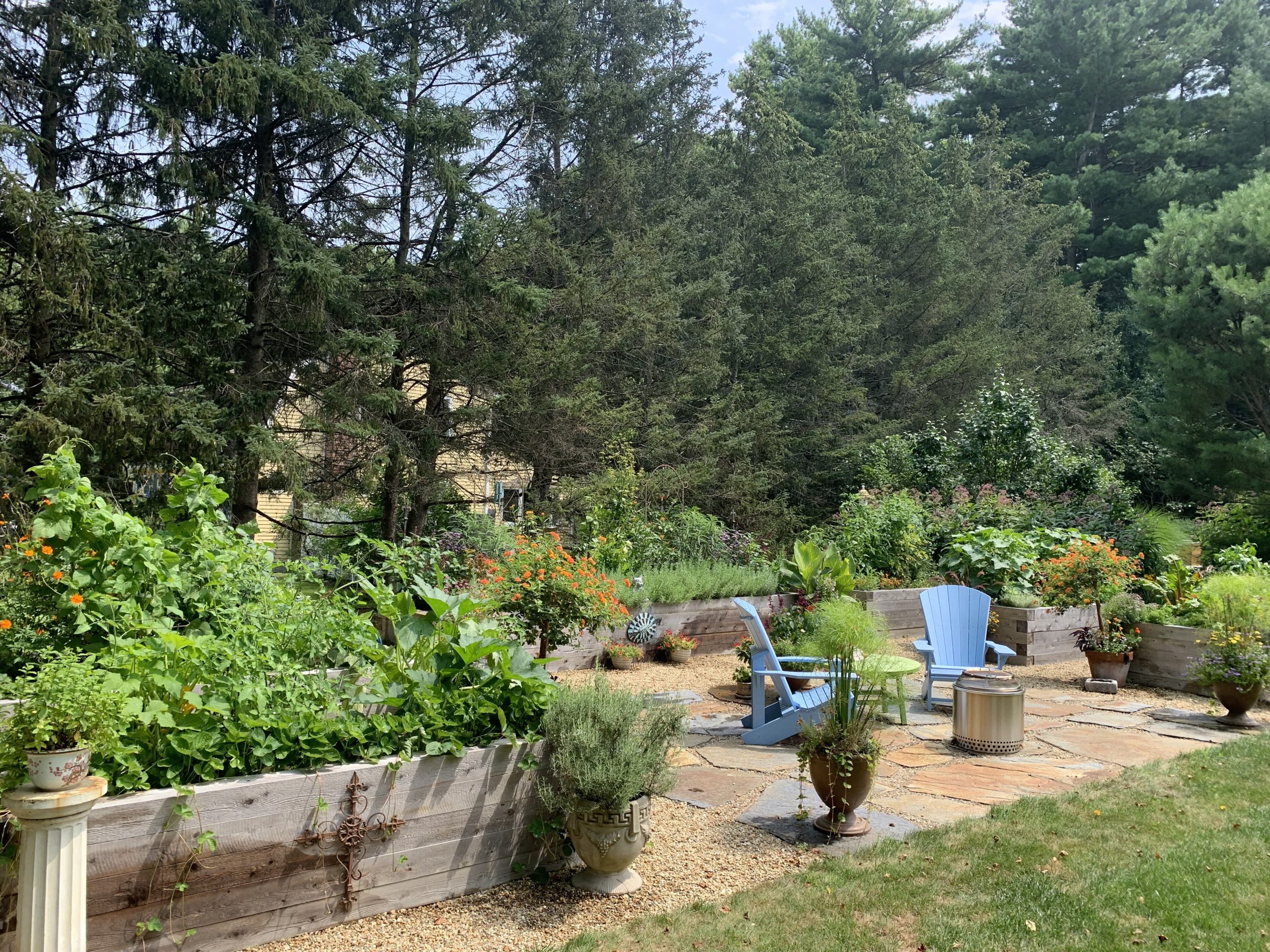
“Sustainable Vegetable Gardening …” from www.thegardencontinuum.com and used with no modifications.
A sustainable vegetable garden is one that gives back as much as it takes. It builds soil health over time, reduces dependence on external inputs like synthetic fertilizers and pesticides, conserves water, and supports the local ecosystem — all while producing food.
Working With Nature, Not Against It
The most productive sustainable gardens are not the ones that fight every pest or weed with a chemical solution. They are the ones that create balance. When you introduce flowering vegetables into your growing space, you are essentially building a living support system. Flowers attract predatory insects that eat pests, bring in bees that boost crop yields through pollination, and create ground cover that suppresses weeds and retains moisture.
This approach — often called ecological gardening — reduces the labor, cost, and environmental impact of growing food. It is low maintenance by design, not by accident.
Why Native Plants Are the Foundation of Sustainability
Native flowering plants are adapted to your local climate, soil type, and rainfall patterns, which means they need far less intervention to thrive. When paired with vegetables, they create a garden that functions more like a natural ecosystem. They support native bee populations, provide habitat for beneficial insects, and require significantly less watering than non-native ornamentals. For those interested in urban gardening, consider exploring community garden startup guides to enhance your sustainable practices.
The Role of Flowering Vegetables in a Healthy Ecosystem
Flowering vegetables sit at a unique intersection: they are productive food crops that also function as habitat and forage for beneficial wildlife. Unlike purely ornamental flowers, they deliver edible yield on top of all their ecological benefits.
When a zucchini plant opens its large yellow blooms or borage drops its brilliant blue star-shaped flowers, they are not just beautiful — they are actively recruiting pollinators to your garden. Research consistently shows that gardens with diverse flowering plants support higher populations of beneficial insects, which in turn leads to better pest control and improved crop yields across the entire vegetable patch.
The best sustainable gardens are not monocultures. They are layered, diverse, and dynamic. Flowering vegetables help achieve that complexity without requiring you to plant non-edible species that take up valuable growing space.
Sustainable Garden Snapshot: What Flowering Vegetables Bring to the Table
Benefit How Flowering Vegetables Deliver It Pollination Blooms attract bees, butterflies, and hoverflies to nearby crops Pest Control Certain flowers repel aphids, nematodes, and hornworms Soil Health Deep root systems break up compaction and add organic matter Biodiversity Diverse plantings support beneficial insect populations Water Retention Ground cover from flowering plants reduces evaporation Food Production Edible blooms, seeds, and fruits provide direct harvest value
20 Best Flowering Vegetables for a Sustainable Garden
Not all flowering vegetables are created equal when it comes to sustainability. The best ones offer a combination of ecological value — pest deterrence, pollinator attraction, soil improvement — alongside genuine food production. Here are 20 of the finest.
Each entry below includes what the plant does for your garden beyond just looking good, because in a sustainable system, every plant needs to earn its place. For more tips on creating a thriving community space, take a look at the community garden startup guide.
1. Borage (Borago officinalis)
Borage is one of the hardest-working plants you can put in a vegetable garden. Its vivid blue, star-shaped flowers bloom prolifically from early summer through to the first frost, attracting honeybees in remarkable numbers. It is well-documented as a companion plant for tomatoes — it actively repels tomato hornworms while drawing in pollinators that improve fruit set. The leaves and flowers are edible with a fresh cucumber-like flavor, and borage self-seeds readily, meaning once you plant it, it returns year after year with zero effort. Discover more about the best flowers every vegetable garden needs to enhance your garden’s productivity.
2. Nasturtium (Tropaeolum majus)
Nasturtiums are arguably the most versatile flowering vegetable in the sustainable garden toolkit. Every part of the plant is edible — the peppery leaves, the vibrant orange and yellow flowers, and even the seed pods, which can be pickled as a caper substitute. From a pest management standpoint, they function as a brilliant trap crop, luring aphids away from neighboring vegetables like beans, tomatoes, and brassicas.
They are also incredibly easy to grow, tolerating poor soil and drought conditions that would knock back more demanding plants. This makes them a go-to choice for gardeners who want maximum return for minimum input.
Nasturtiums also attract hoverflies, whose larvae are voracious aphid predators. Plant them at the border of your vegetable beds or let them sprawl as ground cover to suppress weeds and retain soil moisture simultaneously.
- Best companion for: Tomatoes, cucumbers, brassicas, and beans
- Edible parts: Leaves, flowers, and seed pods
- Pest deterrence: Trap crop for aphids; attracts aphid-eating hoverflies
- Growing conditions: Full sun to partial shade; tolerates poor, dry soil
- Sustainability rating: Self-seeds freely, requires no fertilizer, low water needs
3. Calendula (Calendula officinalis)
Calendula — sometimes called pot marigold — produces cheerful orange and yellow blooms that do serious work in the sustainable garden. The flowers attract a wide range of beneficial insects including lacewings, hoverflies, and parasitic wasps, all of which prey on common vegetable garden pests like aphids and whiteflies. The sticky stems of calendula also physically trap small insects before they can reach neighboring crops.
Beyond pest management, calendula flowers are edible and have a long history of use in cooking and natural medicine. They are easy to grow from direct-sown seed and will bloom continuously if you deadhead the spent flowers regularly — making them a reliable, season-long asset in any sustainable garden.
4. Sunflowers (Helianthus annuus)
Sunflowers are one of the most powerful pollinator magnets you can grow, drawing bees, butterflies, and beneficial wasps to your garden in large numbers. Their height makes them useful as windbreaks and as support structures for climbing plants like beans and cucumbers. The seeds are a rich food source for birds, which in turn help reduce grasshopper and caterpillar populations in the garden.
From a soil perspective, sunflower roots are deep and fibrous, helping to break up compacted ground and improve drainage over time. Once the season ends, the stalks and leaves can be composted to return nutrients to the soil, closing the loop on a truly circular growing system.
5. Lavender (Lavandula angustifolia)
Lavender sits at the crossroads of herb, flower, and functional garden plant. Its aromatic oils are a proven deterrent for a wide range of garden pests including aphids, moths, fleas, and even deer. At the same time, it is one of the most attractive plants for bees and butterflies, supporting pollinator populations that benefit every other crop in your garden. Want additional advice on growing herbs, take a look at the allergen-friendly herb planting guide.
Lavender is drought-tolerant once established, making it a smart water-conservation choice for sustainable gardens in drier climates. It is perennial in most temperate zones, meaning it will return reliably year after year without replanting. The flowers and leaves are edible and can be used in cooking, teas, and natural remedies.
Planted along the edges of vegetable beds, lavender creates a fragrant, pest-deterring border that pulls double duty as a habitat corridor for beneficial insects. Few plants deliver this much ecological value with this little maintenance.
- Pest deterrence: Repels aphids, moths, whiteflies, and fleas
- Pollinator value: Exceptionally attractive to bees and butterflies
- Water needs: Drought-tolerant once established
- Lifespan: Perennial in USDA zones 5–8
- Edible use: Flowers and leaves used in culinary and medicinal applications
6. Marigolds (Tagetes spp.)
Marigolds are the most well-known companion plant in vegetable gardening for good reason. They contain compounds including pyrethrum and thiophenes that actively deter soil nematodes, aphids, mosquitoes, squash bugs, and whiteflies. French marigolds (Tagetes patula) are particularly effective at suppressing root-knot nematodes when planted densely around susceptible crops like tomatoes and peppers. Plant them as a border, interplant them between rows, or use them as a living mulch — they work in any configuration. As your garden expands, learning how companion planting and pollinator-friendly vegetables work together can improve both yield and sustainability (urban rooftop tomato gardens guide).
7. Sweet Peas (Lathyrus odoratus)
Sweet peas are nitrogen fixers, which means their root systems host bacteria that pull nitrogen from the air and deposit it into the soil. This is one of the most valuable functions a plant can perform in a sustainable garden — it builds soil fertility naturally, reducing the need for any added fertilizer. Their climbing habit makes them space-efficient in smaller gardens, and their delicate, fragrant blooms attract a range of pollinators. For those interested in maximizing space, consider exploring space-saving options like portable greenhouses.
It is worth noting that while sweet peas are grown for their flowers rather than for food (the seeds are mildly toxic), their soil-building contribution to a sustainable vegetable garden is significant enough to earn them a firm place on this list.
8. Zucchini (Cucurbita pepo)
Zucchini produces some of the most striking edible flowers in the vegetable garden — large, bright yellow blooms that are harvested and eaten stuffed, battered, or raw. But their value goes beyond the plate. These big, open flowers are magnets for bees and other large pollinators, and because zucchini requires pollination to set fruit, having a healthy pollinator population nearby is critical to a productive harvest. A zucchini plant in full bloom essentially acts as a pollinator hub for the entire garden.
9. Runner Beans (Phaseolus coccineus)
Runner beans earn their place in every sustainable garden twice over. First, their vivid scarlet flowers are irresistible to bumblebees and hummingbirds, making them one of the best pollinator-attracting crops you can grow. Second, like all legumes, runner beans fix atmospheric nitrogen into the soil through their root systems — building fertility season after season without a single bag of fertilizer.
Their vigorous vertical growth habit makes them ideal for small-space gardens. A single teepee of runner bean canes can produce an extraordinary amount of food from a tiny footprint, while simultaneously improving the soil it grows in. For those interested in maximizing their urban gardening efforts, consider exploring space-saving options to further enhance your garden’s productivity.
At the end of the season, always cut runner bean plants at ground level rather than pulling them. The nitrogen-rich root nodules remain in the soil and break down over winter, leaving behind a natural fertility boost for whatever crop follows in that bed the next year.
Runner beans are also one of the most satisfying crops to grow from seed. They germinate quickly, grow fast, and reward consistent harvesting with continuous production — making them an ideal choice for gardeners who want results without complexity. For those interested in expanding their gardening efforts, consider exploring this community garden startup guide to learn more about setting up larger gardening projects.
- Nitrogen fixation: Root nodules deposit nitrogen directly into the soil
- Pollinator value: Scarlet flowers attract bumblebees and hummingbirds
- Space efficiency: Vertical growth produces high yields from minimal ground area
- End-of-season tip: Cut at ground level to leave nitrogen-rich roots in the soil
- Best companion crops: Corn, squash, and nasturtiums
10. Artichoke (Cynara cardunculus var. scolymus)
Artichokes are architectural powerhouses in the sustainable garden. Their towering, silvery-green foliage and dramatic thistle-like purple blooms — which appear when the heads are left unharvested — attract an extraordinary range of pollinators including bumblebees, honeybees, and solitary bees. A single artichoke plant in full flower can become the most visited spot in your entire garden during peak summer.
From a sustainability standpoint, artichokes are perennials in USDA zones 7–11, meaning once established, they return reliably for up to five years without replanting. Their large, deeply lobed leaves create dense ground cover that suppresses weeds and retains soil moisture. The spent plant matter is highly beneficial when composted, returning significant amounts of potassium and phosphorus to the soil.
11. Peas (Pisum sativum)
Peas are among the most ecologically generous crops in the vegetable garden. Like runner beans, they are nitrogen-fixing legumes — their root nodules work in partnership with Rhizobium bacteria to convert atmospheric nitrogen into plant-available form, enriching the soil for every crop that follows. Their delicate white or purple flowers are early-season pollinator magnets, providing a critical nectar source at a time when many other plants are not yet in bloom. Always leave the roots in the ground after harvest to maximize the nitrogen benefit delivered to your soil.
12. Eggplant (Solanum melongena)
Eggplant produces beautiful, star-shaped purple flowers that are highly attractive to bumblebees — and bumblebee pollination is particularly important for this crop. Bumblebees use a technique called buzz pollination, or sonication, where they vibrate their bodies at a specific frequency to release pollen from eggplant flowers more effectively than any other pollinator. Growing eggplant in a sustainable garden naturally encourages bumblebee activity across the entire plot, benefiting neighboring crops as well. The plants thrive in warm conditions and pair well with basil, thyme, and marigolds as companion plants.
13. Fennel (Foeniculum vulgare)
Fennel is one of the most beneficial insectary plants you can grow. Its flat-topped yellow umbel flowers — blooming from midsummer onward — are landing pads for a remarkable diversity of beneficial insects including parasitic wasps, lacewings, hoverflies, and ladybugs, all of which are natural predators of common garden pests. Fennel essentially recruits your pest control team for you.
One important note for sustainable garden planning: fennel is allelopathic, meaning it releases chemicals from its roots that inhibit the growth of many neighboring plants. Keep it away from tomatoes, peppers, and beans, but plant it freely at the edges of your garden or in a dedicated herb bed where it can do its insectary work without interfering with your vegetables.
- Beneficial insects attracted: Parasitic wasps, hoverflies, lacewings, and ladybugs
- Bloom time: Midsummer through early autumn
- Allelopathic caution: Keep away from tomatoes, peppers, beans, and kohlrabi
- Best planted near: Dill, sage, and garden borders away from main vegetable beds
- Edible value: Leaves, seeds, and bulb are all edible with a distinctive anise flavor
Despite the need for thoughtful placement, fennel is an indispensable component of any garden designed to harness natural pest control. Its contribution to beneficial insect populations makes it worth accommodating. For more on sustainable urban gardening, take a look at our urban garden cultivation guide.
14. Chives (Allium schoenoprasum)
- Pest deterrence: Repels aphids, Japanese beetles, and carrot flies
- Pollinator value: Purple globe flowers attract bees throughout late spring and early summer
- Best companion for: Carrots, tomatoes, roses, and apple trees
- Growth habit: Clump-forming perennial; divides easily to multiply your plants for free
- Edible parts: Leaves, flowers, and bulbs — all with a mild onion flavor
Chives are one of the most underrated sustainable garden plants. Their round, purple-pink flower clusters bloom reliably in late spring and are consistently visited by bees at a time when many early-season crops need pollination most. From a pest management perspective, the sulfur compounds in chives actively repel aphids, carrot root fly, and Japanese beetles — making them an excellent interplanting choice throughout the vegetable garden. If you’re experimenting with edible blooms in limited spaces, you may also enjoy learning how compact urban gardens can produce more with less room. Take a quick look at this sustainable gardening guide.
Because chives are perennial and multiply readily through division, a single plant purchased today can supply your entire garden within a few seasons at zero additional cost. That kind of self-sufficiency is the definition of sustainable growing. Divide clumps every two to three years in spring to keep the plants vigorous and to expand your planting wherever pest deterrence or pollinator support is needed.
The flowers are also fully edible — mild, onion-flavored, and beautiful scattered over salads or soups. Nothing in the sustainable garden should be purely ornamental, and chives deliver on every front: food, pest control, and pollinator support simultaneously.
15. Tomatoes (Solanum lycopersicum)
Tomatoes are one of the most popular crops in the world for good reason — and their small, yellow star-shaped flowers are more ecologically significant than most gardeners realize. Like eggplant, tomatoes benefit enormously from buzz pollination by bumblebees. The flowers release their pollen only when vibrated at the right frequency, which is why growing tomatoes in a garden rich with bumblebee activity consistently outperforms growing them in isolation or in polytunnels without managed pollinators.
Tomatoes also form the center of one of the most well-documented companion planting systems in sustainable gardening. Pairing them with basil deters thrips and aphids. Planting borage nearby repels tomato hornworm. Marigolds planted at the base suppress soil nematodes. A well-planned tomato bed is not just a food crop — it is an entire micro-ecosystem working in harmony.
16. Kale (Brassica oleracea)
Kale is a nutritional powerhouse on the plate, but when left to bolt and flower in its second year, it becomes an equally impressive resource for the garden ecosystem. The small yellow flowers that emerge on bolting kale plants are rich in nectar and are visited by a wide range of early-season pollinators, particularly small native bees and hoverflies. Allowing a few kale plants to flower each season — rather than pulling them when they bolt — costs you nothing and delivers significant pollinator habitat value. The seeds that follow can be saved for the next season’s planting, closing the loop on a completely self-sustaining crop cycle.
17. Sweet Basil (Ocimum basilicum)
Sweet basil is primarily grown as a culinary herb, but its role in the sustainable vegetable garden extends well beyond the kitchen. When allowed to flower, basil produces slender white or purple bloom spikes that are magnets for bees and other beneficial insects. The volatile oils in basil — including linalool and eugenol — have been shown to repel thrips, aphids, and whiteflies, making it one of the most effective aromatic companion plants for tomatoes, peppers, and eggplant. Plant basil generously throughout your beds rather than restricting it to a single pot by the kitchen door, and let a few plants flower freely to maximize both pest deterrence and pollinator attraction. Additional advice on choosing vegetables, is available at the guide to self-reliance.
18. Okra (Abelmoschus esculentus)
Okra produces some of the most strikingly beautiful flowers in the entire vegetable garden — large, hibiscus-like blooms in creamy yellow with a deep burgundy center that open for just a single day before developing into the edible seed pod. These flowers are highly attractive to bees, and because each flower opens and closes within 24 hours, a long-season okra planting provides a continuous, rotating supply of fresh blooms throughout the summer. Okra thrives in heat and performs well in raised beds where soil temperatures remain consistently warm, making it an excellent choice for sustainable gardens in warmer climates.
19. Pepper (Capsicum annuum)
Pepper plants produce small, delicate white flowers that, like tomatoes and eggplant, benefit significantly from buzz pollination by bumblebees. In a garden with healthy bumblebee populations — supported by the flowering companions discussed throughout this guide — pepper plants consistently set more fruit and produce higher yields. Hot pepper varieties also have a secondary sustainable benefit: the capsaicin in their fruits and leaves acts as a natural pest deterrent when used in homemade garden sprays, offering a chemical-free option for managing a range of chewing insects and even deterring larger pests like deer and rabbits.
20. Squash (Cucurbita maxima)
Squash rounds out this list with some of the most productive and ecologically valuable blooms in the sustainable garden. The large, vivid orange flowers open wide in the morning and are among the most visited blooms by bees, particularly specialist squash bees (Peponapis pruinosa) that have co-evolved specifically to forage on cucurbit flowers. Male flowers appear first and can be harvested for eating — stuffed with ricotta and herbs and pan-fried — while female flowers, identifiable by the tiny fruit forming at their base, are left to develop into the harvest.
Squash plants also function as living mulch. Their broad, sprawling leaves cover large areas of bare soil, dramatically reducing moisture evaporation, suppressing weed growth, and moderating soil temperature. This is the same principle behind the traditional Three Sisters planting system — squash, corn, and beans grown together — one of the oldest and most proven sustainable growing systems in the world.
How Flowering Vegetables Attract Beneficial Insects
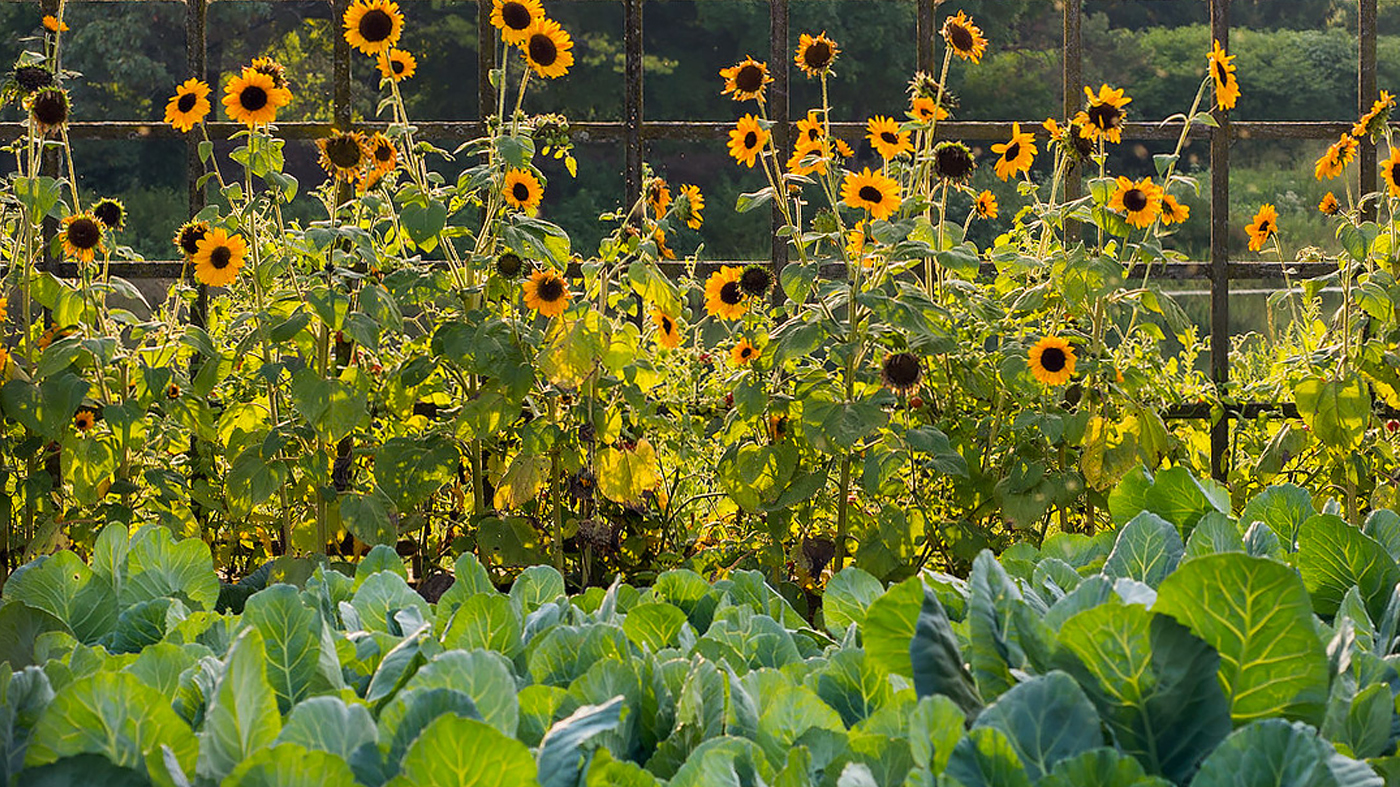
“Flowers for the Vegetable Garden …” from www.chicagobotanic.org and used with no modifications.
The relationship between flowering vegetables and beneficial insects is not random — it is a co-evolved partnership built over millions of years. Plants produce nectar and pollen as a reward for insects that carry out pollination, and in turn, those insects bring predictability and abundance to the garden’s food production. When you deliberately plant a diversity of flowering vegetables, you are essentially signing a contract with the local insect population: food and habitat in exchange for pollination and pest control.
Pollinators That Boost Your Vegetable Yields
Bees are the most important pollinators in the vegetable garden, but the category is far broader than just honeybees. Bumblebees, solitary mason bees, leafcutter bees, and mining bees all contribute to pollination — and many are more effective than honeybees for specific crops. Bumblebees, as noted above, are essential for tomatoes, peppers, and eggplant due to their buzz pollination capability. Hoverflies are the second most significant pollinator group, and their larvae are also predatory, feeding on aphids at a rate of up to 50 per day. Butterflies, moths, and even some beetles contribute to pollination of open-structured flowers like fennel, calendula, and sunflowers. A garden planted with a diverse range of flowering vegetables will support all of these groups simultaneously. Another helpful strategy is understanding which low-maintenance crops thrive in your specific growing environment before planting begins. A resource for avoiding gardening mishaps is the guide to avoiding common gardening mistakes.
Natural Pest Control Through Companion Planting
Companion planting is the practice of positioning plants strategically so that they protect and support each other — and flowering vegetables are central to making it work. Nasturtiums draw aphids away from beans and brassicas. Marigolds suppress soil nematodes around tomatoes and peppers. Fennel and calendula attract the parasitic wasps and lacewings that hunt caterpillars, whiteflies, and mites. Chives and lavender create aromatic barriers that confuse and deter a range of flying pests. The result is a garden where pest pressure is managed naturally, without a single synthetic spray, simply through the intelligence of plant selection and placement. For those interested in optimizing their urban garden space, consider exploring portable greenhouses to further enhance your gardening efforts.
Sustainable Practices That Keep Your Garden Thriving
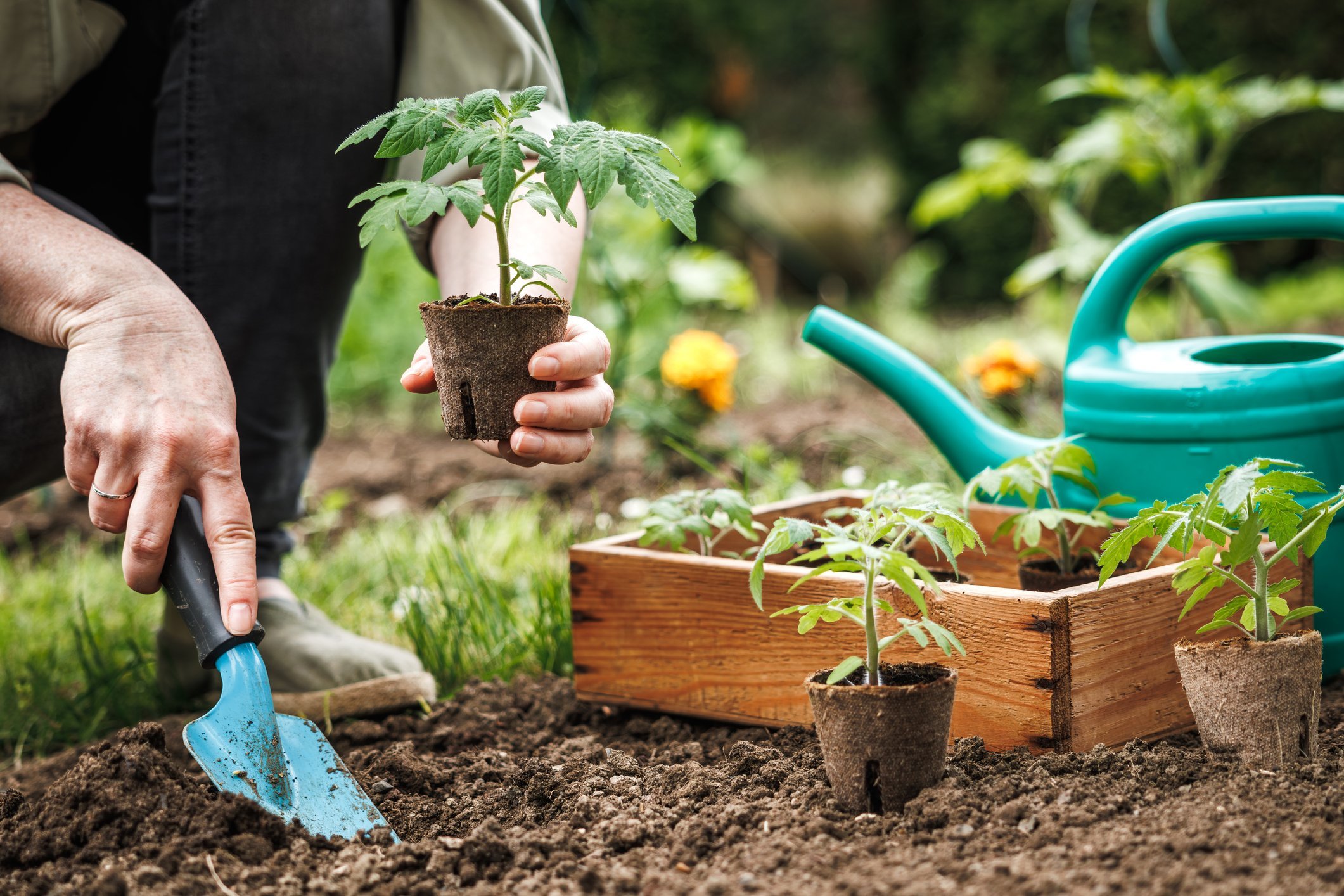
“Top Tips for a Thriving Garden – The …” from www.thecanyonsliving.com and used with no modifications.
Choosing the right flowering vegetables is only the beginning. The practices you use to manage your garden determine whether it becomes truly self-sustaining over time or continues to depend on external inputs. The best sustainable gardens operate on a set of core principles that build resilience into the system year after year — and each one is simpler to implement than most gardeners expect.
1. Build Healthy Soil With Composting
Healthy soil is the foundation of every sustainable garden, and composting is the most direct way to build it. When you compost kitchen scraps, spent plant material, and garden waste, you are creating a living, nutrient-rich amendment that feeds your soil biology — the bacteria, fungi, earthworms, and microorganisms that make nutrients available to plant roots. A garden bed regularly amended with finished compost needs little to no synthetic fertilizer, year after year. For those interested in community efforts, consider checking out this community garden startup guide to expand your sustainable practices.
The simplest approach is a two-bin system: one bin actively receiving new material, one bin finishing its decomposition. Aim for a balance of carbon-rich browns (dried leaves, cardboard, straw) and nitrogen-rich greens (vegetable scraps, fresh plant trimmings, coffee grounds) in roughly a 3:1 ratio by volume. Turn the pile every two to three weeks to introduce oxygen and speed up decomposition. Within six to eight weeks in warm weather, you will have finished compost ready to work into your beds or use as a surface mulch around your flowering vegetables.
2. Use Natural Pest Control Methods
Once your garden supports a healthy population of beneficial insects — recruited by the flowering vegetables covered in this guide — your pest management largely takes care of itself. But in the early stages, or during periods of high pest pressure, there are several natural interventions worth having in your toolkit. Neem oil, derived from the seeds of the neem tree (Azadirachta indica), disrupts the life cycle of soft-bodied insects like aphids and whiteflies without harming bees when applied in the evening after pollinators have returned to their nests. A diluted spray of water and castile soap physically breaks down the protective coating of aphids and mites on contact. For caterpillars and other chewing insects, Bacillus thuringiensis (Bt) is a naturally occurring soil bacterium that is lethal to caterpillar larvae but completely harmless to beneficial insects, birds, and mammals. These three tools — neem oil, soap spray, and Bt — cover the vast majority of pest scenarios you are likely to encounter in a sustainable vegetable garden.
3. Conserve Water With Smart Irrigation
Water Conservation Methods for the Sustainable Vegetable Garden
Method How It Works Water Saved Drip Irrigation Delivers water directly to the root zone, minimizing evaporation Up to 50% vs. overhead watering Mulching Covers bare soil to reduce surface evaporation and moderate temperature Up to 70% reduction in soil moisture loss Rainwater Harvesting Collects roof runoff in barrels or tanks for garden use Replaces mains water use entirely in wet seasons Ground Cover Planting Dense planting of low-growing flowering vegetables shades the soil Reduces irrigation frequency significantly Morning Watering Watering early allows absorption before midday evaporation peaks Reduces water lost to evaporation by up to 30%
Water is the resource most frequently wasted in home vegetable gardens, and the fix is usually straightforward. Drip irrigation systems — even simple soaker hose setups — deliver water directly to the root zone where plants actually absorb it, bypassing the leaves and dramatically reducing both evaporation and the conditions that promote fungal disease. Pair drip irrigation with a timer and your watering becomes fully automated and optimized without any ongoing effort.
Mulching is equally transformative. A layer of straw, wood chip, or shredded leaf mulch 5–8cm (2–3 inches) deep around your flowering vegetables can reduce the frequency of watering by half in dry weather. It also moderates soil temperature, suppresses weeds, and as it breaks down, it adds organic matter to the soil — making it one of the highest-return, lowest-effort practices in sustainable gardening.
Rainwater harvesting is the final piece of the water-conservation puzzle. A single 200-liter water butt connected to a downpipe can capture enough rainwater during a typical wet season to dramatically offset — or completely replace — mains water use during summer. In many regions, this is also the preferred water source for acid-loving crops, since collected rainwater is naturally slightly acidic and free of the chlorine and fluoride found in treated tap water.
4. Save and Share Seeds Between Gardeners
Seed saving is one of the oldest and most powerful acts of sustainable gardening. When you allow a portion of your flowering vegetables to go fully to seed — letting calendula heads dry on the plant, leaving a borage stem to drop its nutlets, or harvesting dried nasturtium pods — you are preserving genetic diversity, reducing your gardening costs to near zero, and selecting plants that are increasingly adapted to your specific growing conditions over successive generations. Store saved seeds in labelled paper envelopes in a cool, dry, dark location and they will remain viable for one to three years depending on the species. Share surplus seeds with neighbors, community gardens, and local seed libraries to strengthen your entire growing community’s food resilience.
5. Certify Your Garden as a Pollinator Habitat
What a Certified Pollinator Habitat Requires
Requirement How to Meet It Food Sources Plant a diversity of flowering vegetables and herbs that bloom across spring, summer, and autumn Water Source Provide a shallow dish of fresh water with stones for insects to land on Nesting Sites Leave areas of bare soil, install bee hotels, or retain hollow stems overwinter No Pesticides Commit to chemical-free pest management using the natural methods outlined above Sustainable Practices Demonstrate composting, mulching, or other habitat-positive garden management
Organizations like the National Wildlife Federation (NWF) in the United States and the Royal Horticultural Society (RHS) in the UK offer garden certification programs that recognize gardens that actively support pollinator populations. While the certification itself is largely symbolic, the process of meeting the criteria is a practical roadmap for creating a garden that genuinely functions as a habitat — not just a food-production space.
Meeting the certification requirements also tends to align naturally with the planting and management practices described throughout this guide. A garden full of diverse flowering vegetables, managed without synthetic chemicals, with water and nesting provision for insects, qualifies without significant additional effort. The certification marker — a small sign at your garden gate — also serves as a conversation starter that spreads sustainable gardening practice through your neighborhood.
Even without formal certification, aiming for these standards transforms how you approach every gardening decision: plant selection, pest management, water use, and end-of-season tidying all shift in a direction that builds habitat rather than disrupting it. Leaving hollow stems standing through winter, for example — a small act that most gardeners never consider — provides critical overwintering sites for solitary bees and beneficial insects that will return to your garden with compound interest the following spring.
How Sustainable Flowering Vegetable Gardens Reduce CO2
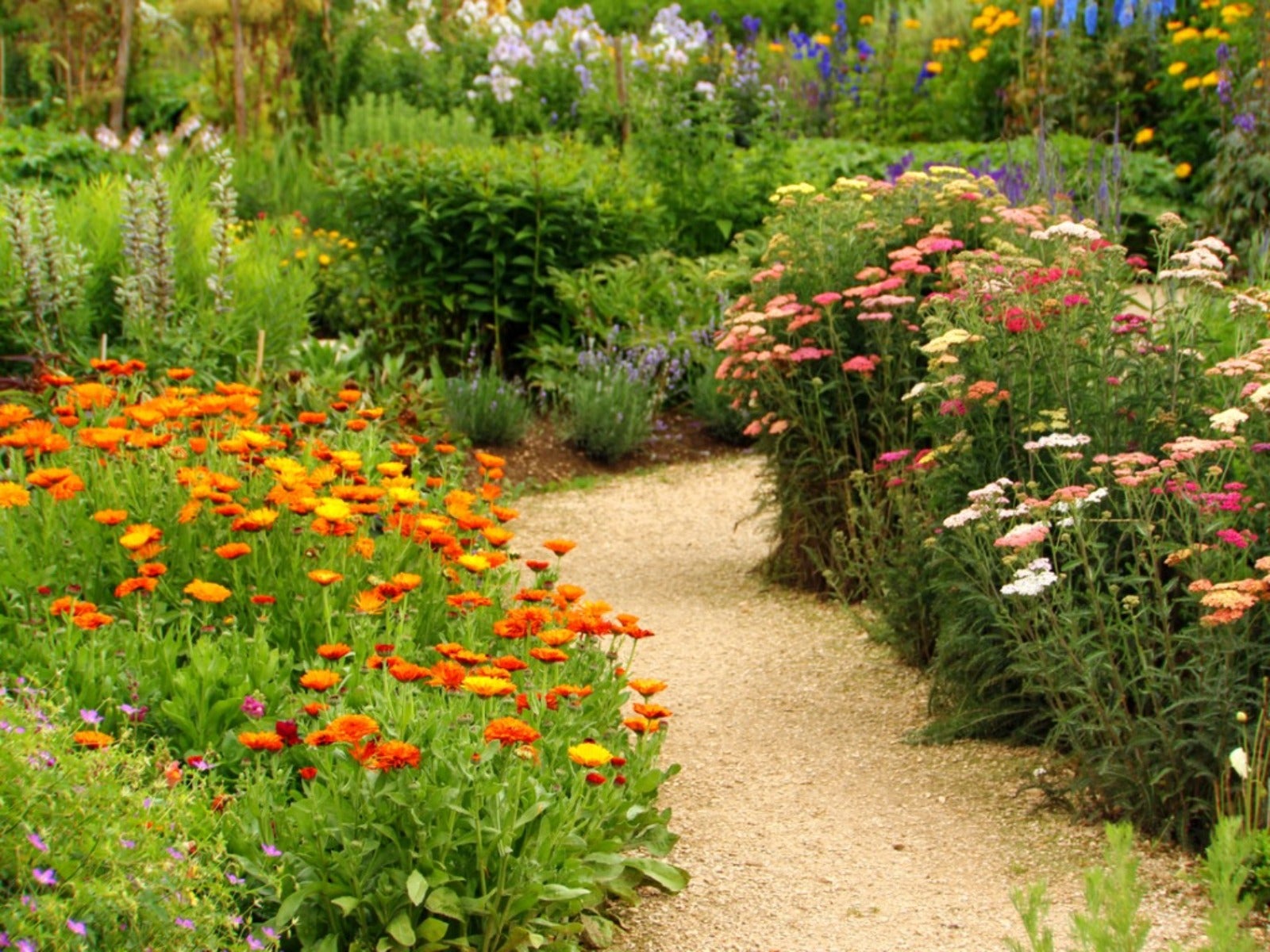
“Reduce Carbon Emissions With Plants …” from www.gardeningknowhow.com and used with no modifications.
Gardens are frequently overlooked as carbon management tools, but the science is clear: soil that is managed organically — built with compost, covered with mulch, and planted densely with diverse vegetation — sequesters carbon rather than releasing it. Every time you dig bare soil unnecessarily, apply synthetic nitrogen fertilizer, or burn garden waste, you are releasing stored carbon into the atmosphere. Sustainable garden practices do the opposite.
The collective impact of millions of gardens managed sustainably is not trivial. Urban and suburban green spaces represent a significant potential carbon sink that is currently underleveraged in most climate strategies. Choosing to grow flowering vegetables using the practices in this guide is a meaningful contribution to that potential — even if your garden is measured in square meters rather than hectares.
Carbon Absorption Through Ground Cover and Root Systems
Dense planting of flowering vegetables creates continuous ground cover that protects the soil surface from erosion and compaction while feeding the soil food web through root exudates — sugars and proteins that plant roots secrete directly into the surrounding soil. This process, known as rhizodeposition, is one of the primary mechanisms through which plants actively build soil carbon. Deep-rooted flowering vegetables like artichokes, fennel, and sunflowers are particularly effective, driving organic carbon further into the soil profile where it is more stable and less likely to be released back into the atmosphere.
Reducing Chemical Use to Protect Soil and Air Quality
- Synthetic nitrogen fertilizers are produced through the Haber-Bosch process, which is energy-intensive and responsible for significant industrial CO2 emissions — replacing them with compost eliminates this footprint entirely.
- Herbicide and pesticide production involves petrochemical processes that contribute to greenhouse gas emissions at every stage of manufacturing and transport.
- Soil fumigants used in conventional agriculture destroy the soil microbiome, releasing stored carbon and reducing the soil’s future capacity for carbon sequestration.
- Tilling bare soil exposes stored organic carbon to oxygen, triggering microbial activity that converts it to CO2 — no-dig and low-dig growing methods prevent this release.
- Chemical fertilizer run-off into waterways contributes to nitrous oxide (N2O) emissions from aquatic systems — a greenhouse gas approximately 265 times more potent than CO2 over a 100-year period.
Every chemical input you eliminate from your garden represents not just a cost saving and a biodiversity benefit, but a measurable reduction in the carbon footprint of your food. When your flowering vegetables are managing pests, fixing nitrogen, and building soil fertility for you, the need for those inputs disappears — and so does their environmental cost.
The cumulative effect of these changes at a garden level may seem small in isolation, but the model is scalable. Community gardens, school growing programs, and urban farming initiatives that adopt these principles collectively represent a meaningful shift in how food is grown and how urban land contributes to — rather than detracts from — climate stability.
Building a sustainable garden is not a sacrifice of productivity for principle. It is the recognition that the most productive garden is the one that works with natural systems rather than overriding them. Every flowering vegetable you plant is an investment in that productivity — one that pays dividends in food, biodiversity, soil health, and carbon for years to come. If you want more sustainable gardening tips, get started on reading this sustainable gardening guide.
Your Sustainable Garden Starts With One Flowering Vegetable
You do not need to transform your entire garden overnight. Start with one — a packet of nasturtium seeds scattered along a sunny border, a borage seedling tucked beside your tomatoes, or a strip of calendula sown at the edge of your vegetable bed. Watch what arrives: the bees, the hoverflies, the ladybugs. Notice how the energy of your garden shifts when it is no longer just a production space but a living system. For those interested in expanding their gardening efforts, consider checking out this community garden startup guide. That is the beginning of something that grows — in every sense — year after year.
Frequently Asked Questions
Sustainable flowering vegetable gardening attracts a lot of questions from gardeners at every level — from total beginners wondering where to start, to experienced growers looking to fine-tune their companion planting strategies. The answers are almost always simpler than expected.
The most common barrier is overthinking. Sustainable gardening is not a complex system that requires specialist knowledge or expensive equipment. It is the practice of working with natural processes that have been operating for millions of years. Your job is to create the conditions for those processes to function — and the flowering vegetables and practices in this guide do most of the heavy lifting for you.
Below are the questions most frequently asked by gardeners making the move toward a more sustainable, biodiverse, and productive growing space.
Quick-Reference: Frequently Asked Questions at a Glance
Question Short Answer Easiest flowering vegetables for beginners? Nasturtiums, calendula, and borage — all direct-sow and self-sustaining Can they grow in containers? Yes — nasturtiums, chives, basil, peppers, and tomatoes all thrive in pots How do they improve soil? Through nitrogen fixation, deep rooting, and organic matter contribution Best for attracting pollinators? Borage, sunflowers, runner beans, zucchini, and lavender How to keep the garden low maintenance? Mulch, compost, plant densely, choose self-seeders, and avoid bare soil
What Are the Easiest Flowering Vegetables to Grow for Beginners?
Nasturtiums, calendula, and borage are the three easiest entry points for any beginner. All three are direct-sown from seed — no propagation trays, no heat mats, no specialist equipment required. Nasturtiums thrive in poor soil and dry conditions and will self-seed prolifically. Calendula germinates within a week in most soils and blooms within eight weeks of sowing. Borage self-seeds so freely that once you plant it, it effectively takes care of itself indefinitely. Start with any one of these three and you will immediately see the benefit of flowering companions in your vegetable garden — and the confidence to expand from there.
Can Flowering Vegetables Grow in Small Spaces or Containers?
Absolutely. Many of the best flowering vegetables on this list are perfectly suited to container growing and small-space gardens. Nasturtiums, chives, sweet basil, calendula, and dwarf varieties of tomatoes and peppers all perform well in pots of 30cm (12 inches) diameter or larger. Climbing varieties of runner beans and sweet peas can be grown in deep containers against a wall or trellis, adding vertical growing space without requiring any additional ground area. Even a single container of mixed flowering vegetables on a balcony contributes meaningfully to local pollinator populations. To learn more about growing tomatoes in small areas, check out our urban rooftop tomato gardens guide.
The key to successful container growing in a sustainable garden is soil quality. Use a peat-free, compost-rich growing medium — ideally blended with 20–30% homemade compost if available — and top-dress with a thin layer of worm castings once or twice during the growing season to maintain fertility without synthetic fertilizer. Water more frequently than you would in ground beds, as containers dry out faster, and ensure drainage holes are adequate to prevent waterlogging.
How Do Flowering Vegetables Improve Soil Health?
Flowering vegetables improve soil health through several simultaneous mechanisms. Legumes including peas, runner beans, and sweet peas fix atmospheric nitrogen into plant-available form through their root nodules, directly increasing soil fertility. Deep-rooted plants like artichokes, fennel, and sunflowers break up compacted soil layers and draw minerals up from deeper in the soil profile, making them available to shallower-rooted crops. All flowering vegetables contribute organic matter to the soil through their root exudates and eventual decomposition — feeding the soil biology that drives nutrient cycling. Dense planting prevents bare soil exposure, reducing erosion, maintaining soil structure, and supporting the mycorrhizal fungal networks that help all plants access water and nutrients more efficiently.
Which Flowering Vegetables Are Best for Attracting Pollinators?
The top performers for pollinator attraction, based on both flower structure and documented insect visitation, are borage, sunflowers, runner beans, zucchini, lavender, and calendula. Each attracts different pollinator groups, which is why planting a combination delivers far greater biodiversity benefit than any single species.
Top Pollinator-Attracting Flowering Vegetables by Insect Group
Flowering Vegetable Primary Pollinators Attracted Peak Bloom Period Borage Honeybees and bumblebees Early summer through first frost Sunflower Bees, butterflies, and beneficial wasps Midsummer through early autumn Runner Beans Bumblebees and hummingbirds Summer Zucchini Large bees and squash bees Summer Lavender Honeybees, bumblebees, and butterflies Early through midsummer Calendula Hoverflies, lacewings, and bees Late spring through autumn Fennel Parasitic wasps, hoverflies, and lacewings Midsummer through early autumn Chives Small native bees and honeybees Late spring through early summer
To maximize pollinator support across the entire growing season, aim for a continuous succession of blooms from early spring through late autumn. Chives and peas provide early-season nectar when few other flowers are open. Borage, calendula, and runner beans carry through summer. Sunflowers, fennel, and artichoke blooms extend the season into early autumn. This staggered succession ensures that pollinators always have a food source in your garden — and keeps them returning consistently to support your vegetable crops throughout the growing season.
Flower color also plays a role in which pollinators you attract. Bees are most strongly attracted to blue, purple, and yellow flowers — borage, lavender, chives, and calendula all score highly here. Butterflies favor red and orange blooms, making nasturtiums and runner bean flowers particularly attractive to them. Hoverflies and parasitic wasps are drawn most strongly to open, flat-structured flowers like fennel umbels, calendula faces, and the simple blooms of sweet basil.
One often-overlooked strategy is allowing vegetables to bolt rather than removing them at the first sign of flowering. A bolting kale, fennel frond in full umbel, or overwintered parsley plant in flower can be one of the most significant pollinator resources in your entire garden at certain times of year — and costs you nothing beyond the decision not to pull it out.
How Do I Keep My Sustainable Vegetable Garden Low Maintenance?
The single most effective low-maintenance strategy is to never leave soil bare. Bare soil grows weeds. Covered soil — whether by mulch, ground cover plants, or dense vegetable planting — does not. Invest in a deep mulching session at the start of each season and you will eliminate the majority of your weeding work before it begins. Many of the flowering vegetables in this guide — nasturtiums, calendula, and borage — also function as living ground cover when planted densely, giving you weed suppression and ecological benefit simultaneously.
Choose self-seeding flowering vegetables wherever possible. Nasturtiums, borage, calendula, and fennel all self-seed freely, meaning your garden essentially replants itself each year with plants that are progressively better adapted to your specific conditions. This reduces the time and cost of seed buying, propagation, and replanting — the three most labor-intensive aspects of annual vegetable gardening.
Build your soil biology rather than feeding individual plants. A garden with rich, biologically active soil managed with regular compost additions requires dramatically less intervention than one dependent on synthetic inputs. When the soil is healthy, plants access the nutrients they need without supplemental feeding, they develop stronger root systems that are more drought-resilient, and they support stronger populations of the beneficial insects that manage pests on your behalf. Healthy soil is the ultimate labor-saving device in the sustainable garden.
Finally, embrace a degree of productive disorder. The most ecologically rich sustainable gardens are not perfectly manicured — they have a controlled wildness that serves a purpose. Allow some plants to flower and set seed. Leave a patch of undisturbed ground for ground-nesting bees. Keep a pile of logs or hollow stems in a corner for overwintering beneficial insects. These small acts of deliberate untidiness cost nothing and return a garden that is increasingly self-regulating, biodiverse, and resilient with every passing season. For those with limited space, consider exploring space-saving greenhouse options to enhance your urban garden’s potential.