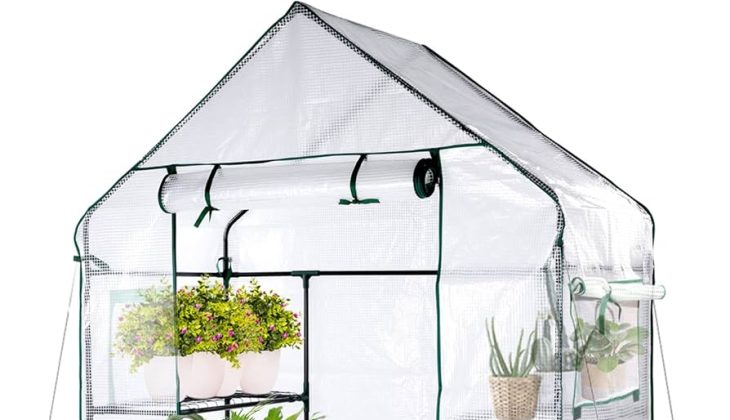
Article-At-A-Glance
- Small urban greenhouses come in four main types: portable walk-in, cabinet-style, balcony-mounted, and cold frames — each suited to different city living situations.
- The best small urban greenhouse for you depends on three things: available floor space, sun exposure, and what you plan to grow.
- Polycarbonate panels outperform glass in most urban settings — they’re lighter, shatter-resistant, and provide better heat retention for year-round growing.
- Some models, like the Juliana Balcony Greenhouse, attach directly to railings — meaning apartment dwellers with zero floor space can still grow fresh produce.
- Keep reading to find out which heating method works best for keeping a mini greenhouse productive through winter months — the answer might surprise you.
You don’t need a backyard — or even a garden — to grow your own food year-round.
Urban gardening has exploded in recent years, and small greenhouses have become one of the most practical tools city growers have in their arsenal. Whether you’re working with a fire escape, a narrow balcony, a tiny patio, or just a sunny corner of a rooftop, there’s a greenhouse solution designed specifically for your situation. For urban gardeners looking to level up their growing game, exploring purpose-built small greenhouse options is one of the smartest first moves you can make.
The challenge isn’t finding motivation — it’s finding the right fit. With dozens of styles, sizes, and materials flooding the market, knowing which small urban greenhouse actually delivers results takes some digging. This guide cuts through the noise.
Small Spaces Can Still Grow Big
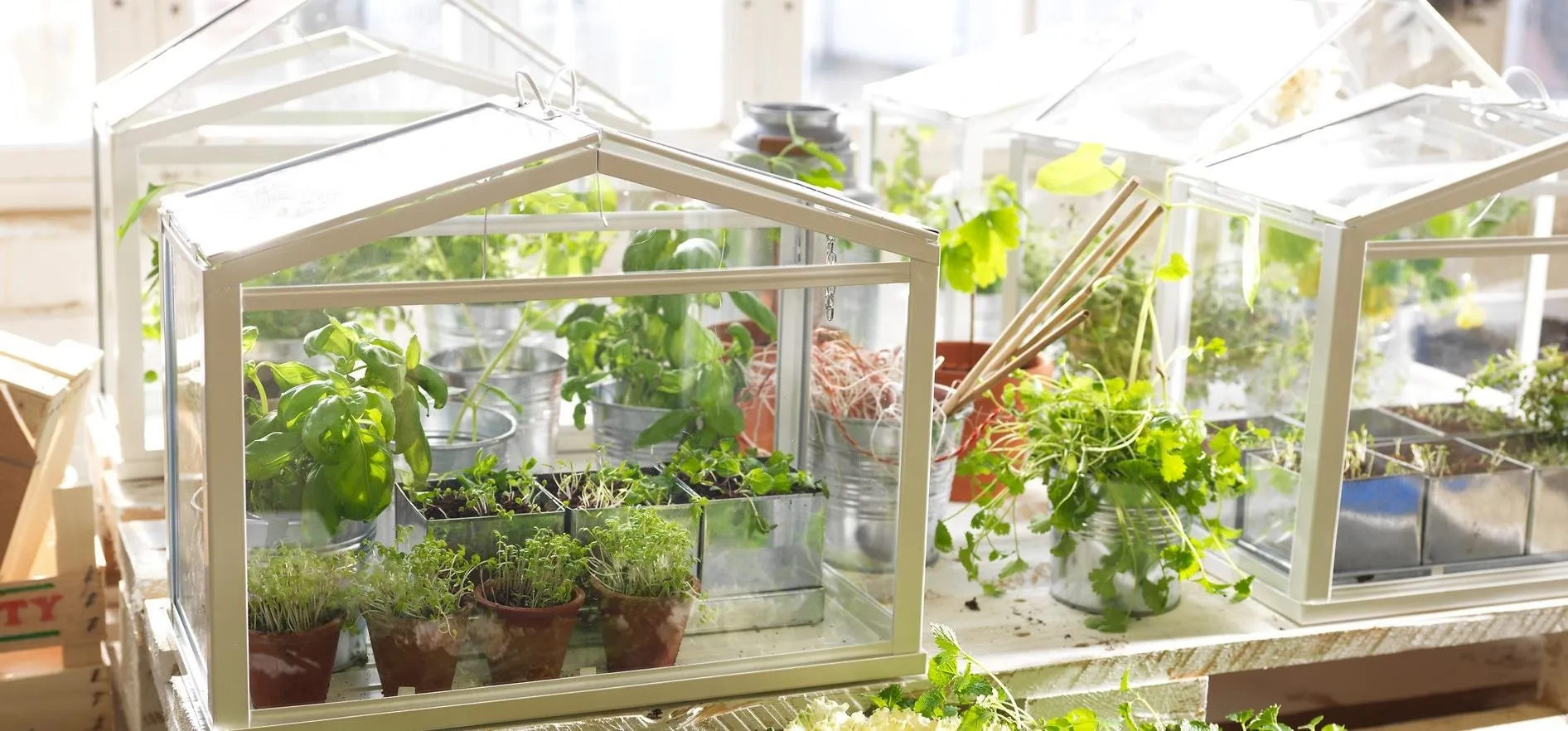
“Grow Fresh Herbs & Veggies Indoors with …” from food-hacks.wonderhowto.com and used with no modifications.
The idea that greenhouses are only for sprawling rural properties is completely outdated. Today’s compact greenhouse designs are purpose-built for urban environments — engineered to maximize growing potential within the tightest footprints imaginable. A well-chosen mini greenhouse can extend your growing season by weeks on either end, protect tender plants from urban pollution and weather extremes, and give you reliable harvests of herbs, vegetables, and flowers no matter how small your outdoor space is. If you’re interested in urban gardening solutions, consider exploring custom raised garden beds for city living.
The secret is understanding that size doesn’t limit productivity — poor planning does. A 4 x 2 ft cabinet greenhouse packed with the right crops and proper ventilation can outperform a poorly managed structure three times its size.
What Makes a Greenhouse “Urban-Friendly”
An urban-friendly greenhouse ticks several specific boxes that a standard garden greenhouse simply doesn’t need to worry about. It needs to be compact enough to fit within restricted outdoor areas, lightweight enough to avoid overloading balconies or rooftops, and robust enough to handle the wind exposure that elevated city spaces typically experience. Easy assembly matters too — most urban gardeners aren’t working with a full toolkit or a helper on hand. The best urban greenhouse options are designed with all of this in mind from the ground up.
Portable vs. Permanent: Which Is Right for You
Permanent greenhouses are anchored structures — typically glass or polycarbonate — that require foundation work, planning permissions in some cities, and a long-term commitment to a single location. For most urban gardeners, that’s simply not realistic. Portable greenhouses, on the other hand, can be assembled, relocated, and stored away based on the season or your living situation. If you’re renting, moving frequently, or just starting out, portable is almost always the smarter first choice.
The 4 Main Types of Small Urban Greenhouses
Before diving into specific products, it helps to understand the four main categories you’ll be choosing from:
- Walk-in portable greenhouses — Freestanding tunnel or cube structures with a zippered door, typically covered in PE tarp or reinforced polyethylene. Best for patios and rooftops with some floor space.
- Cabinet-style greenhouses — Upright enclosed shelving units with transparent panels. Ideal for small patios or against a wall, offering multi-tier growing without a large footprint.
- Balcony-mounted greenhouses — Bracket or railing-attached structures that hang over a balcony edge. A genuine game-changer for apartment dwellers with no usable floor space at all.
- Cold frames — Low-profile, lidded boxes that sit directly on the ground or a surface. No heating required — they use solar gain alone to protect plants from frost.
1. VEVOR Walk-In Greenhouse
“Amazon.com : VEVOR Walk-in Green House …” from www.amazon.com and used with no modifications.
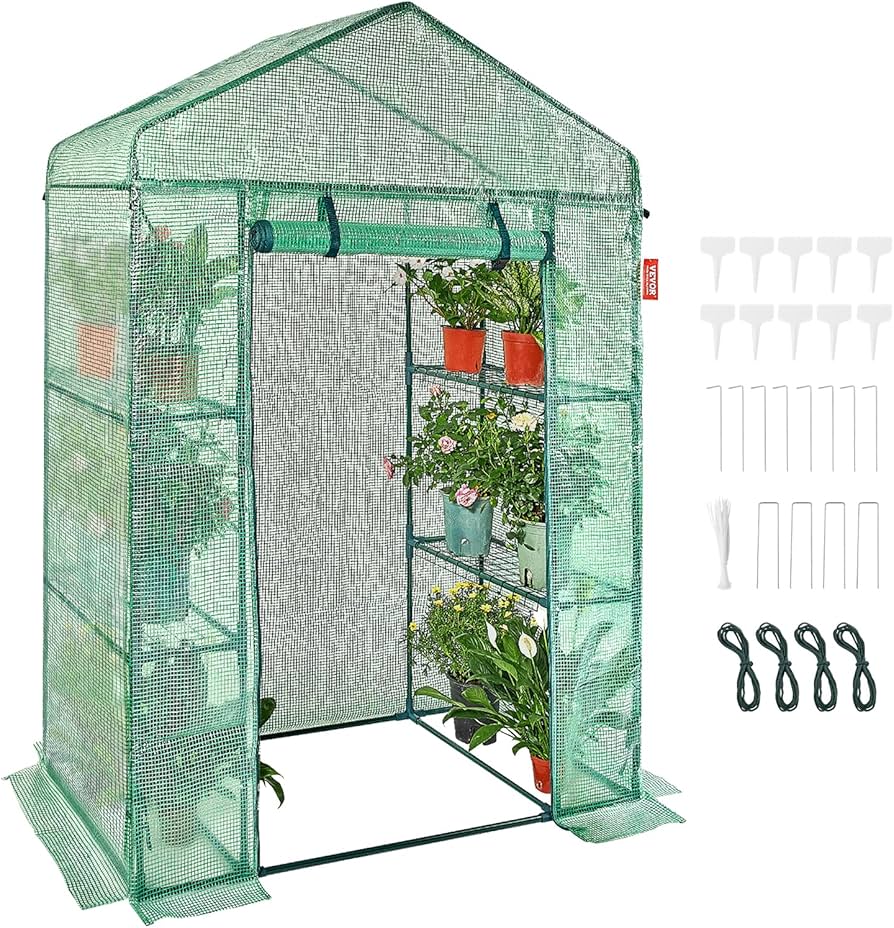
The VEVOR Walk-In Greenhouse is one of the most popular entry points for urban growers who have a patio, courtyard, or rooftop area to work with. It delivers a proper enclosed growing environment at a price point that makes it accessible without feeling cheap.
Why It Works for Urban Spaces
The VEVOR’s modular steel tube frame — which is rust-proof and powder-coated — assembles without specialist tools, typically in under two hours. Its footprint starts at a compact 56 x 56 inches on the smallest models, making it a realistic fit for city patios that can’t accommodate a full-sized glasshouse. The roll-up zipper door and mesh windows provide ventilation control, which is critical in warmer urban microclimates where heat buildup can damage plants rapidly.
Urban Grower Tip: In exposed rooftop locations, use the VEVOR’s integrated guy wire anchoring points and stake directly into sandbags if you can’t penetrate the surface. This prevents wind damage without requiring permanent fixings — a common restriction in rental or shared rooftop spaces.
Key Features: Heavy-Duty Rust-Proof Tubes and Tarp Cover
The VEVOR Walk-In Greenhouse uses heavy-gauge, rust-resistant steel tubing throughout its frame — a detail that separates it from cheaper competitors that start corroding after a single wet season. The PE tarp cover is UV-resistant and rated to handle both rain and light snow load, giving it genuine year-round usability in most temperate urban climates. Multiple shelf tiers inside the structure allow you to maximize vertical growing space, which is exactly the mindset every urban gardener needs to adopt.
2. Bksfoaa Solid Wood Greenhouse Cabinet
If you want something that looks as good as it functions, the Bksfoaa Solid Wood Greenhouse Cabinet bridges the gap between practical growing tool and outdoor furniture piece. It’s the kind of structure that fits naturally into a well-designed urban patio or courtyard without looking out of place. For tips on maintaining such spaces, check out this urban balcony garden pest management guide.
Two Size Options to Fit Any Patio
The Bksfoaa comes in two sizes, giving urban gardeners genuine flexibility depending on available space. The smaller footprint option is ideal for narrow balconies or tight corners, while the larger variant suits more open patio areas where you want serious growing capacity. Both versions use solid fir wood construction with a natural finish that weathers gracefully over time — far more aesthetically considered than the plastic-and-metal look of most portable greenhouse options.
Flip-Top Roof Design for Easy Plant Access
One of the Bksfoaa’s most practical design features is its flip-top hinged roof panel. Rather than reaching awkwardly through a zippered side opening, you simply lift the roof to access plants on the upper shelves — a small detail that makes daily watering, pruning, and plant maintenance significantly less frustrating. For anyone growing herbs or microgreens that need frequent attention, this kind of accessibility is genuinely valuable.
Customization: Paint It to Match Your Garden
The solid wood construction means you can sand and repaint the Bksfoaa to suit your specific outdoor aesthetic — something you simply can’t do with aluminium or PVC alternatives. Urban gardeners who’ve invested time into creating a cohesive outdoor space will appreciate this flexibility. A coat of exterior wood paint in the right tone and it blends into the garden design rather than dominating it.
3. Outsunny 3-Tier Outdoor Garden Wooden Greenhouse
The Outsunny 3-Tier Outdoor Garden Wooden Greenhouse is a compact, upright structure that punches well above its weight in terms of growing capacity for the floor space it occupies.
Anti-UV PC Board vs. Traditional Glass Panels
Rather than using traditional horticultural glass, the Outsunny uses twin-wall polycarbonate (PC) panels that are anti-UV treated and significantly more impact-resistant than glass. In urban environments — where wind-carried debris, accidental knocks, and unpredictable weather are regular realities — this is a meaningful upgrade over glass. PC board also retains heat more efficiently than single-pane glass, helping maintain a stable internal temperature for sensitive seedlings and overwintering plants. The light diffusion through polycarbonate is softer and more even than glass, which actually reduces the risk of scorching during intense summer sun.
Built-In Hinged Roof and Latch System
The Outsunny features a hinged roof panel with a secure latch system that locks down in windy conditions — a feature that matters enormously on exposed urban balconies and rooftops. When temperatures climb and ventilation is needed, the roof props open to allow airflow without requiring you to remove any panels or disassemble any part of the structure. It’s a thoughtful design solution that makes day-to-day management of the greenhouse genuinely straightforward.
4. Juliana Balcony Greenhouse
The Juliana Balcony Greenhouse is genuinely one of the most clever space solutions in urban gardening — a structure designed from the ground up for people who want to grow but have no usable floor space whatsoever.
How It Attaches to Railings Without Floor Space
The Juliana mounts directly onto balcony railings using an integrated bracket system, suspending the greenhouse over the balcony edge rather than sitting on the floor. It uses toughened safety glass panels set in a powder-coated aluminium frame, giving it the structural integrity to handle wind and rain without flexing or warping. The entire unit is designed to attach securely to standard railing widths, and the mounting hardware is included — no specialist installation required. For apartment dwellers who’ve written off greenhouse growing entirely because of space constraints, this product is a revelation.
Best Urban Scenarios for This Style
The Juliana Balcony Greenhouse performs best in south or southwest-facing balcony orientations where it can capture maximum sunlight through the glass panels. It’s particularly well-suited to growing compact herbs like basil, chives, parsley, and thyme, as well as propagating seedlings through the early spring months before transplanting elsewhere. High-rise apartment gardeners dealing with significant wind exposure will appreciate the toughened glass construction — it holds up where polycarbonate sheeting on a flimsy frame simply wouldn’t.
5. Barrina 6-Tier Greenhouse with Grow Lights
Quick Specs: Barrina 6-Tier Greenhouse with Grow Lights
Feature Detail Tiers 6 shelves Cover Material Clear PVC with zippered front access Grow Lights Built-in full-spectrum LED strips per tier Mobility 360° lockable caster wheels Folding Yes — folds flat for storage Best For Indoor growing, low-light urban apartments
The Barrina 6-Tier Greenhouse with Grow Lights solves one of the most persistent problems urban growers face — not enough natural light. In city apartments where south-facing windows are a luxury and shade from surrounding buildings is the norm, built-in full-spectrum LED grow lights change the equation entirely.
Each tier of the Barrina unit comes equipped with its own LED strip, delivering consistent full-spectrum light directly to the plants on that shelf without relying on window proximity or seasonal sun angles. This makes it genuinely viable for growing leafy greens, herbs, and seedlings year-round in spaces that would otherwise be too dark for productive gardening. It’s an indoor greenhouse in the truest sense — completely independent of outdoor conditions.
The clear PVC zippered cover creates a controlled microclimate around the shelves, trapping humidity and warmth generated by both the grow lights and the plants themselves. This self-sustaining environment is particularly effective for propagating cuttings and starting seeds in late winter when outdoor temperatures make balcony growing impractical.
Wheels and Foldable Design for Easy Storage
One of the Barrina’s most practical design details is its set of 360° lockable caster wheels. You can roll the entire unit to follow light across a room, shift it out of the way for gatherings, or move it between rooms as seasons and light conditions change — all without disassembling a single component. For urban apartment dwellers where flexibility and multi-use living spaces are a daily reality, this mobility is a genuine differentiator. Additionally, for those interested in enhancing their urban gardening experience, exploring custom raised garden beds can offer more versatility and functionality.
When the growing season winds down or you simply need to reclaim the floor space, the Barrina folds completely flat for storage. It slides behind a sofa, into a closet, or under a bed — a level of convenience that bulkier cabinet-style greenhouses simply can’t offer. Assembly and breakdown takes minutes, not hours.
Built-In Grow Lights: Do They Replace Natural Sunlight?
The short answer is: for many crops, yes — but with some caveats. The full-spectrum LED strips in the Barrina cover the blue and red wavelengths that plants use most actively for photosynthesis and flowering, making them genuinely effective for herbs, leafy greens, microgreens, and seedlings. Studies from controlled indoor growing environments consistently show that full-spectrum LEDs can match or exceed natural light performance for these crop types when run on appropriate daily light cycles — typically 14 to 16 hours for vegetative growth.
Where artificial grow lights fall short is with fruiting plants like tomatoes and peppers, which benefit significantly from the full intensity and natural UV spectrum of direct outdoor sunlight. The Barrina’s LED strips are excellent for what they are, but managing your crop selection to suit the light output is key to getting the most from this unit. For those interested in urban gardening, you might find this guide to custom raised garden beds helpful for optimizing your space.
The most productive approach is to use the Barrina for what it does brilliantly — starting seeds, growing herbs, and producing microgreens — while reserving your outdoor portable greenhouse for crops that need stronger, more direct light exposure during the warmer months.
Best Crops for the Barrina 6-Tier Indoor Greenhouse:
- Basil, mint, parsley, and chives
- Lettuce, spinach, and arugula
- Microgreens (sunflower, radish, pea shoots)
- Seedlings and cuttings for spring transplanting
- Compact flowering plants like violas and pansies
6. Hampton Mini Greenhouse
“Mini Greenhouse | Garden Furniture …” from www.heritagegardens.co.uk and used with no modifications.
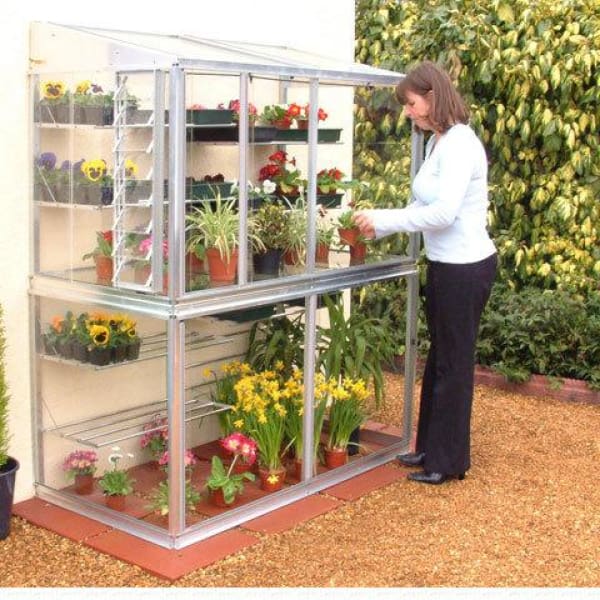
The Hampton Mini Greenhouse sits at the premium end of the compact greenhouse market, and it earns that position through build quality and thoughtful features that genuinely improve the growing experience rather than just adding to the spec sheet.
Its design aesthetic leans toward the traditional — clean lines, quality materials, and a finish that looks at home in a well-maintained urban garden or courtyard. If you’re the kind of gardener who cares about how your outdoor space looks as much as what it produces, the Hampton is worth the investment over cheaper alternatives. For more ideas on enhancing your urban garden, explore these custom raised garden beds tips.
Toughened Glass and Aluminium Build Quality
The Hampton uses toughened safety glass panels throughout — not polycarbonate, not standard horticultural glass, but properly toughened glass that meets residential safety standards. Set within an anodized aluminium frame that resists corrosion and discolouration over time, this is a structure built to last years rather than seasons. The aluminium extrusions are precision-fitted, meaning there are no rattling panels or warping frames after a year of weather exposure — a common complaint with lower-cost mini greenhouse alternatives.
Built-In Two-Tier Mist Watering System
What genuinely sets the Hampton apart from everything else at its size category is the optional integrated two-tier mist watering system. Fine-mist nozzles positioned at two shelf heights deliver consistent, even moisture directly to the plant canopy — dramatically reducing the time commitment of daily watering and maintaining the higher humidity levels that seedlings and tropical plants need to thrive. For urban gardeners who travel frequently or simply can’t commit to daily maintenance routines, this feature transforms the Hampton from a nice-to-have into a serious growing tool.
Cold Frames: The Most Underrated Urban Option
Cold frames rarely get the attention they deserve in conversations about urban greenhouse growing, and that’s a genuine missed opportunity for city gardeners working with limited space and budget. A cold frame is essentially a low-profile, transparent-lidded box that creates a protected microclimate for plants without any heating, electricity, or complex assembly required.
They’re one of the oldest growing tools in horticulture — and they remain relevant precisely because they work so well for what they do. Placed against a south-facing wall on a balcony or in a courtyard, a simple cold frame can protect winter salad crops, harden off seedlings in spring, and extend your growing season by four to six weeks on either end without a single penny spent on heating.
How Cold Frames Differ From Traditional Greenhouses
A traditional greenhouse creates a fully enclosed environment that traps heat, humidity, and light across a significant volume of air — allowing you to manage temperatures, grow tall plants, and create a genuinely separate microclimate. A cold frame works on a much simpler principle: it sits low to the ground, uses a transparent lid (glass or polycarbonate) to capture solar heat, and relies entirely on passive solar gain to keep temperatures a few critical degrees warmer than the ambient outdoor air. There’s no interior standing space, no ventilation system, and no heating — just a straightforward physical barrier against frost, wind, and cold rain that gives plants the protection they need to keep growing through marginal weather.
Best Crops to Grow in a Cold Frame
Cold frames thrive with low-growing, cold-tolerant crops that don’t need the vertical space a walk-in greenhouse provides. Winter lettuces, spinach, arugula, kale, and Swiss chard are cold frame staples — they handle near-freezing nights without damage when protected by even a simple polycarbonate lid. Radishes, spring onions, and claytonia (winter purslane) are equally well-suited, producing reliable harvests through months when an unprotected outdoor bed would be completely dormant. For more ideas on space-saving options, explore best mini greenhouses.
Spring is where a cold frame really earns its place in the urban garden. Using it to harden off seedlings started indoors — gradually exposing them to outdoor temperatures over one to two weeks before transplanting — dramatically improves survival rates and reduces transplant shock. This single use case alone justifies having a cold frame, even if you already own a larger portable greenhouse.
Cold Frame Crop Calendar for Urban Gardeners
Season Best Crops Key Benefit Late Autumn Winter lettuce, spinach, claytonia Frost protection extends harvest Winter Kale, Swiss chard, mâche Passive solar keeps roots active Early Spring Radishes, spring onions, peas 4–6 week head start on season Spring Seedling hardening-off Reduces transplant shock dramatically Summer Propagating cuttings Controlled humidity without overheating
One practical tip most guides skip: prop the cold frame lid open during warm sunny days — even in winter. Internal temperatures can spike to damaging levels within an hour of direct sun on a still day, even when outdoor air temperatures feel cold. A simple wooden prop cut to 3 or 4 inches is all you need to regulate airflow and prevent heat stress on your crops.
For urban gardeners with a single balcony or small courtyard patio, pairing a cold frame with one of the cabinet-style or portable walk-in greenhouses covered earlier in this guide gives you a genuinely complete year-round growing system — the cold frame handling low-growing crops and season extension while the main greenhouse manages taller plants, seedlings, and anything that needs more controlled conditions.
How to Pick the Right Portable Greenhouse for Your Space
With so many options available, the decision comes down to four practical factors that no amount of product marketing can substitute for. Get these four things right and whichever greenhouse you choose will work well. Get them wrong and even the most expensive option will frustrate you within a single season.
Think of this less as a checklist and more as a sequence — each factor builds on the one before it, narrowing your options until the right choice becomes obvious.
1. Measure First: Floor Space, Height, and Sun Exposure
Before looking at a single product, measure your available space with a tape measure — not by eye. Note the exact floor dimensions, the maximum height restriction (particularly important on covered balconies or beneath overhanging structures), and observe which direction your space faces and how many hours of direct sunlight it receives on a typical clear day. South-facing spaces receiving six or more hours of direct sun can support almost any greenhouse type. East or west-facing spaces with three to five hours suit cabinet greenhouses and cold frames well. North-facing or heavily shaded spaces are best served by the Barrina-style indoor greenhouse with built-in grow lights — passive solar gain simply won’t be sufficient.
2. Match the Material to Your Climate
In coastal or high-wind urban locations, toughened glass in a rigid aluminium frame — like the Hampton or Juliana — outperforms flexible PE tarp structures that can deform or tear in sustained gusts. In colder inland climates, twin-wall polycarbonate panels provide the best insulation-to-weight ratio, retaining heat more effectively than single-pane glass while remaining far lighter and more impact-resistant. In mild, temperate urban climates with moderate wind and rainfall, almost any material will perform adequately — which opens up the full range of options and lets price and aesthetics drive the decision. For those looking to optimize their garden setup, consider exploring self-watering planter tools to enhance your urban gardening experience.
3. Decide What You Want to Grow
This single factor eliminates more wrong choices than any other. If you want to grow tall tomatoes, cucumbers, or climbing beans, you need a walk-in structure with at least 5 to 6 feet of internal height — cabinet greenhouses won’t cut it. If herbs, salad leaves, and microgreens are your focus, a tiered cabinet or indoor grow-light unit like the Barrina is more productive per square foot than a walk-in greenhouse would be. If your primary goal is season extension and frost protection for existing outdoor plants, a cold frame or the Juliana balcony unit delivers exactly that at the lowest cost and complexity. For those interested in maximizing urban space, consider exploring DIY vertical garden systems as an innovative solution.
Matching the greenhouse to the crops — rather than choosing a greenhouse and then figuring out what to grow in it — is the decision pattern that consistently produces the best results for urban gardeners.
4. Consider Assembly, Portability, and Storage
Portable Greenhouse Comparison: Assembly & Storage
Model Assembly Time Tools Required Folds for Storage Mobility VEVOR Walk-In 60–90 mins No tools Partial disassembly Relocatable Bksfoaa Wood Cabinet 30–45 mins Basic screwdriver No Low — heavy Outsunny 3-Tier 20–30 mins No tools No Moderate Juliana Balcony 45–60 mins Basic tools No Railing-fixed Barrina 6-Tier 15–20 mins No tools Yes — fully flat High — wheeled Hampton Mini 30–45 mins Basic tools No Low — rigid frame
If you’re renting your property or expect to move within the next two to three years, prioritize greenhouses that can be fully disassembled and transported without damage. The Barrina 6-Tier and VEVOR Walk-In are the clearest options here — both pack down to manageable sizes and neither requires permanent fixing to any surface. Wood and glass structures like the Bksfoaa and Hampton are beautiful and durable, but they don’t relocate easily and can be damaged during transit.
Storage between seasons is equally worth thinking through before you buy. A greenhouse that folds flat and fits in a storage cupboard is a fundamentally different commitment to one that needs to be partially dismantled and stacked in a corner of a small apartment. Honest self-assessment about how much storage space you actually have — not how much you think you might create — will save you a significant headache six months down the line.
Assembly confidence matters too. If you’ve struggled with flat-pack furniture in the past, lean toward tool-free greenhouse designs with colour-coded components and step-by-step visual instructions. The VEVOR Walk-In and Outsunny 3-Tier both score well here — designed for solo assembly without specialist knowledge or equipment.
These Small Greenhouses Prove You Don’t Need a Big Garden to Grow
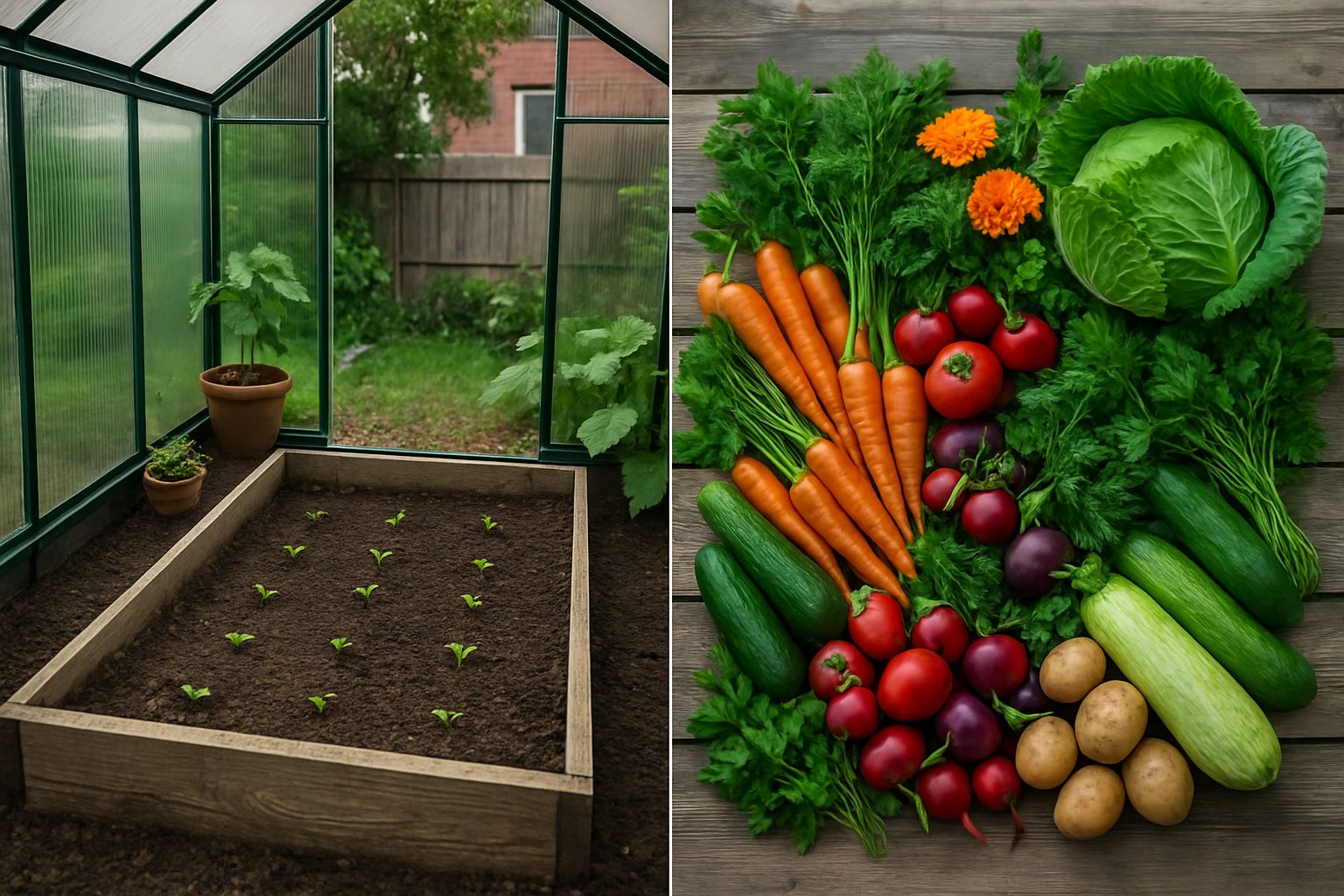
Urban gardening has never had better tools than it does right now. Whether you’re attaching a Juliana Balcony Greenhouse to a fifth-floor railing, rolling a Barrina 6-Tier unit into the sunniest corner of a studio apartment, or slipping an Outsunny 3-Tier cabinet onto a 4-foot-wide patio — productive, year-round growing is genuinely within reach for any city dweller willing to match the right greenhouse to their specific space.
Frequently Asked Questions
Here are answers to the most common questions urban gardeners ask before investing in their first small greenhouse. For those interested in creating more space for their plants, consider exploring custom raised garden beds as an option.
Can a Portable Greenhouse Stay Outside All Year?
Most portable greenhouses with quality PE tarp or polycarbonate covers can remain outdoors through all four seasons in temperate climates, provided they are properly anchored against wind and the cover material is UV-stabilized. Heavy snow load is the main risk in colder climates — lightweight tarp structures should have snow brushed off regularly to prevent frame buckling. Rigid polycarbonate and aluminium frame models like the Outsunny 3-Tier handle winter conditions more reliably than flexible tarp alternatives. Always check the manufacturer’s stated temperature and wind load ratings before leaving any portable structure out through extreme weather events.
What Can You Grow in a Small Urban Greenhouse?
The range is wider than most people expect. Herbs — basil, parsley, chives, mint, thyme, and coriander — thrive in compact greenhouse conditions and provide the highest return on space of any crop category. Salad leaves, spinach, arugula, and baby kale grow quickly and can be harvested repeatedly across the season. Microgreens produce a harvestable crop in as little as seven to fourteen days and require minimal depth, making them ideal for tiered shelf systems.
With a tall enough walk-in structure, compact tomato varieties like Tumbling Tom or Maskotka, dwarf pepper plants, and bush cucumber varieties are all achievable. The key is selecting varieties specifically bred for container or small-space growing rather than assuming full-size garden varieties will adapt — they rarely perform as well in confined conditions. For those interested in efficient watering solutions, consider exploring common drip irrigation kit issues and solutions for gardens.
How Do You Heat a Small Portable Greenhouse in Winter?
The most effective and practical heating solution for small urban greenhouses is a thermostatically controlled electric tubular heater — low-wattage models designed specifically for greenhouse use draw minimal power and maintain a stable frost-free temperature of around 35–40°F (2–4°C) without overheating the space. Paraffin heaters work as an off-grid alternative but require regular refuelling and produce moisture that can encourage mould in enclosed spaces. For cold frames and smaller cabinet greenhouses, horticultural bubble wrap insulation applied to interior walls combined with a seedling heat mat beneath pots provides effective passive frost protection without any powered heating at all.
Is a Polycarbonate or Glass Greenhouse Better for Urban Use?
For the majority of urban growing situations, polycarbonate is the more practical choice. Twin-wall polycarbonate panels insulate better than single-pane glass, are significantly lighter — reducing load concerns on balconies and rooftops — and are virtually shatter-proof, eliminating the safety risk of broken glass in shared outdoor spaces. Glass delivers superior light transmission and a premium aesthetic, making it the right choice when those factors are priorities and the structural support to handle the weight is confirmed. The Hampton and Juliana both use toughened glass effectively, but they’re designed for specific situations where the trade-offs are justified. For those interested in more sustainable urban gardening practices, check out this natural urban balcony garden pest management guide.
Can You Use a Mini Greenhouse on an Apartment Balcony?
Yes — and for many urban gardeners, a balcony is actually an ideal greenhouse location. The key considerations are weight capacity, wind exposure, and building regulations specific to your property or lease agreement. Most modern apartment balconies are engineered to handle significant load, but it’s worth confirming the rated capacity with your building management before placing any heavy structure — particularly glass and wood designs like the Hampton or Bksfoaa. For more ideas on greenhouse options, you can check out the best mini greenhouses.
For balconies with restricted floor space or weight limits, these are the most practical options to consider:
- Juliana Balcony Greenhouse — Mounts to railings with no floor footprint at all, ideal for narrow balconies
- Outsunny 3-Tier Wooden Greenhouse — Compact cabinet footprint, lightweight enough for most balcony weight ratings
- Barrina 6-Tier with Grow Lights — Indoor-use option that works well near a balcony door or large window where direct outdoor placement isn’t possible
- Cold frame — Low-profile, sits flat on the balcony surface, handles wind well when weighted with a stone or brick
Wind management is the most underestimated challenge on apartment balconies, particularly above the third or fourth floor. At these heights, even moderate ground-level winds can create sustained gusts that stress lightweight greenhouse structures significantly. Anchoring all four corners of any freestanding greenhouse with straps, weights, or wall fixings is essential — not optional — for balcony use. For additional tips on urban gardening, check out our guide to city living garden beds.
Check your lease or building rules before installation. Many apartment buildings have specific guidelines around balcony modifications, freestanding structures, and anything that attaches to railings or exterior walls. The Juliana’s railing bracket system, for example, is designed to be removable without damage — a detail that matters if your lease prohibits permanent fixtures.
With the right structure chosen and a few smart precautions in place, a balcony greenhouse can be one of the most productive growing setups available to city dwellers — delivering fresh herbs, salad crops, and year-round growing joy from a space that would otherwise sit underused for half the year. For more ideas, check out these custom raised garden beds tips for city living.
The best urban greenhouse isn’t the biggest or the most expensive — it’s the one that fits your space, suits your crops, and actually gets used every season. Start with the right match and the growing takes care of itself.