
Article At A Glance
- Indoor air pollutants like mold spores, VOCs, and particulate matter are among the most overlooked triggers of chronic watery eyes.
- Epiphora (watery eyes) can result from both overproduction of tears and blocked tear ducts, and your indoor environment can cause both.
- Low humidity from heating and air conditioning systems accelerates tear evaporation, which paradoxically causes your eyes to produce more tears.
- Simple fixes like HEPA air purifiers, humidifiers, and upgraded HVAC filters can dramatically reduce eye irritation without medication.
- There’s one indoor air quality mistake almost every household makes that keeps eye symptoms coming back — and it has nothing to do with dust.
If your eyes are constantly watering at home but feel fine outdoors, your indoor air is almost certainly the problem.
Most people reach for eye drops and never think twice about what’s actually in the air around them. The truth is, indoor air can be two to five times more polluted than outdoor air, according to the U.S. Environmental Protection Agency. Everything from your cleaning products to your HVAC system could be silently irritating your eyes every single day. For expert guidance on improving indoor environments for better health outcomes, resources like this one are a great starting point.
Your Indoor Air Is Most Likely Making Your Eyes Water

It’s easy to blame seasonal allergies or screen time for watery eyes. But when symptoms are worse at home than anywhere else, the air inside your house deserves a hard look. Indoor spaces trap pollutants, recirculate irritants through HVAC systems, and create humidity imbalances that directly stress your tear film.
The Link Between Indoor Air Quality and Watery Eyes
When your eyes are exposed to airborne irritants, they respond immediately by producing more tears. This is a protective reflex. Your tear glands kick into overdrive to flush out whatever is irritating the ocular surface. The problem is that this reflex doesn’t stop until the irritant is gone — and indoors, it rarely is. Poor air quality can also damage the meibomian glands responsible for producing the oily layer of your tear film, making tears evaporate faster and triggering a cycle of dryness followed by excessive watering.
How to Tell If Your Home Is the Problem
Pay attention to patterns. Do your eyes water more in specific rooms — near the kitchen, bathroom, or basement? Do symptoms improve when you leave the house for several hours? Do they flare up after running the heat or air conditioning? These are strong signals that indoor air quality is the root cause. Chronic watery eyes that don’t respond to standard allergy medication are another indicator that environmental triggers inside the home may be at play.
The Most Common Indoor Air Triggers for Watery Eyes

Not all indoor air problems are the same. Several distinct pollutant categories affect eye health in different ways, and knowing which ones are present in your home determines which solutions will actually work.
Volatile Organic Compounds (VOCs) From Everyday Products
VOCs are gases released by a surprisingly wide range of household products. Paints, varnishes, cleaning sprays, air fresheners, and even new furniture can off-gas VOCs into your indoor air for months after purchase. These compounds directly irritate the mucous membranes of the eyes, causing redness, itching, and excessive tearing. The concentration of VOCs indoors can be up to ten times higher than outdoors, particularly in newer or recently renovated homes with poor ventilation.
Common household sources of VOCs include:
- Aerosol cleaning sprays and disinfectants
- Scented candles and plug-in air fresheners
- New carpet, flooring, and pressed wood furniture
- Paints, stains, and adhesives
- Dry-cleaned clothing brought indoors
The fix isn’t complicated, but it does require some habit changes. Increase ventilation whenever using any of these products, switch to fragrance-free and low-VOC alternatives where possible, and allow new furniture or flooring to off-gas in a well-ventilated space before bringing it into a living area.
Particulate Matter From Cooking, Dust, and Smoke
Fine particulate matter — tiny solid and liquid particles suspended in the air — is one of the most direct eye irritants found indoors. Cooking without ventilation releases a significant concentration of these particles into the air. Smoke from candles, fireplaces, or tobacco is another dense source. Even ordinary household dust, which contains skin cells, dust mite debris, and fabric fibers, can cause persistent eye irritation when it accumulates and becomes airborne.
Mold Spores in Damp Indoor Environments
Mold thrives in bathrooms, basements, and anywhere moisture collects — and the spores it releases are potent allergens. When inhaled or deposited on the ocular surface, mold spores trigger an allergic response that leads to red, itchy, and chronically watery eyes. The reaction can be ongoing in homes with hidden mold growth, even if you can’t see or smell it. Relative indoor humidity above 60% creates an environment where mold growth accelerates rapidly. For those dealing with allergy issues, exploring allergy-resistant solutions can be beneficial.
Low Humidity and Faster Tear Evaporation
This is the one that surprises most people. When indoor humidity drops below 30% — which is common in winter with central heating running — the tear film on the surface of your eye evaporates much faster than normal. Your body compensates by triggering reflex tearing, flooding the eyes with watery, low-quality tears that don’t actually lubricate well. This is why so many people experience worse eye symptoms in winter indoors, even without any obvious allergen present. For more information on managing these symptoms, you can explore home remedies for dry eyes.
What Is Epiphora and Why Does Indoor Air Cause It

Epiphora is the clinical term for watery eyes — a condition where tears either overflow onto the face or accumulate visibly in the eyes outside of emotional crying. It’s not a disease itself but a symptom of an underlying issue. While epiphora can have many causes, indoor air quality is one of the most frequently missed contributors, especially in cases where symptoms are persistent and don’t respond well to antihistamines alone.
Blocked Tear Ducts vs. Overproduction of Tears
There are two distinct mechanisms behind epiphora. The first is a drainage problem — tear ducts become partially or fully blocked, preventing normal tear outflow and causing tears to pool. The second is a production problem — the eye makes far more tears than the drainage system can handle, usually in response to irritation or allergens. Indoor air quality primarily drives the second mechanism. Chronic exposure to airborne irritants keeps the lacrimal glands in a state of constant stimulation, flooding the ocular surface with tears that have nowhere to go fast enough.
Immediate Eye Symptoms vs. Long-Term Chronic Effects
The immediate effects of poor indoor air quality on your eyes show up fast. Within minutes of exposure to VOCs, mold spores, or fine particulate matter, you may notice itching, redness, a burning sensation, or that unmistakable feeling of something being stuck in your eye. These acute symptoms are your eyes’ frontline defense — irritation triggers reflex tearing, eyelid inflammation, and in some cases, conjunctivitis (pink eye) from repeated microbial exposure.
The long-term picture is more concerning. Chronic exposure to indoor air pollutants has been linked to progressive damage to the meibomian glands, which are responsible for producing the oily layer that prevents tear evaporation. Repeated inflammatory responses can also contribute to conditions like meibomian gland dysfunction, blepharitis, and according to research cited by the National Institutes of Environmental Health Sciences, may increase risk factors associated with glaucoma and macular edema over time. This is why treating the source — your indoor air — matters far more than just managing symptoms.
Air Quality Fixes That Directly Reduce Eye Irritation
Treating watery eyes from the inside out means fixing what’s actually in the air you breathe at home. Eye drops help, but they don’t stop the irritation cycle. These five environmental changes address the root causes directly and deliver noticeable results — some within days.
Start with the fixes that target your biggest irritant sources first. If you have pets, mold risk, or run forced-air heating regularly, prioritize in that order. Layering multiple solutions together gives you the fastest and most lasting relief, such as incorporating low-pollen plants into your environment.
1. Use a HEPA Air Purifier to Remove Airborne Allergens
- True HEPA filters capture 99.97% of particles as small as 0.3 microns, including dust mite debris, mold spores, pet dander, and pollen
- Place units in bedrooms and main living areas where you spend the most time
- Look for purifiers with an activated carbon layer to also capture VOCs and odors
- Replace filters on schedule — a clogged HEPA filter recirculates what it has already captured
- The Winix 5500-2 and Coway AP-1512HH are well-regarded mid-range options with verified HEPA performance
Room size matters more than most people realize when choosing an air purifier. A unit rated for 200 square feet will be completely overwhelmed in a 500-square-foot open-plan living room. Always match the purifier’s CADR (Clean Air Delivery Rate) to the actual square footage of the room you’re treating.
Run your air purifier continuously, not just when symptoms flare. Particulate matter and allergen concentrations build up gradually, and intermittent use allows levels to climb back up between cycles. Most modern purifiers have an auto mode that adjusts fan speed based on real-time air quality sensors, keeping energy use reasonable without sacrificing effectiveness.
Position also matters. Keep the unit away from walls and corners where airflow is restricted. Central placement in the room with at least a foot of clearance on all sides maximizes the volume of air cycling through the filter per hour. For more tips on optimizing your space, check out our urban garden success tips.
2. Choose the Right Humidifier for Your Home
Maintaining indoor relative humidity between 40% and 50% is the sweet spot for eye comfort. Below 30%, tear evaporation accelerates dramatically. Above 60%, you risk encouraging mold and dust mite growth — both major eye irritants. Use a hygrometer (a simple, inexpensive device) to monitor actual humidity levels in your home rather than guessing. Ultrasonic humidifiers like the Levoit Classic 300S are popular for bedrooms because they run quietly, but they require distilled or demineralized water to prevent white mineral dust from being dispersed into your air — another overlooked irritant. For those interested in a more comprehensive approach to reducing irritants, consider exploring low-pollen plants for your home environment.
3. Upgrade Your HVAC Filter to Block Pollutants
Standard fiberglass HVAC filters have a MERV rating of 1 to 4 and do almost nothing to capture fine particles, allergens, or mold spores. Upgrading to a MERV 11 or MERV 13 filter is one of the highest-impact, lowest-cost improvements you can make for indoor air quality and eye health. These filters trap particles down to 1 micron, capturing the bulk of the allergens and irritants that would otherwise recirculate through your entire home every time the system runs.
Here’s a quick reference for HVAC filter performance by MERV rating:
MERV Rating
Particle Size Captured
What It Filters
Best For
1–4
>10 microns
Large dust, lint
Basic protection only
8–10
3–10 microns
Mold spores, dust mites, pet dander
Most residential homes
11–13
1–3 microns
Fine dust, smoke, allergens
Allergy and eye irritation relief
14–16
<1 micron
Bacteria, fine smoke particles
Medical-grade environments
Change your HVAC filter every 60 to 90 days under normal conditions, and every 30 to 45 days if you have pets or live in a dusty environment. A clogged filter not only stops capturing new particles — it also reduces airflow efficiency and can cause the system to push air around the filter rather than through it. For those looking to minimize allergens, consider using low-pollen plants to further improve indoor air quality.
4. Keep Windows Closed During High Wind and Poor Air Days
Opening windows feels like a natural way to freshen indoor air, and it often is — but not always. On high-wind days, outdoor pollen, dust, and particulate matter flood into your home faster than your ventilation can handle. Check your local air quality index (AQI) daily using apps like AirVisual or IQAir before deciding to ventilate. When the AQI is above 100 or pollen counts are high, keep windows closed and rely on your HVAC system and air purifier instead.
5. Clean Air Ducts Regularly to Prevent Buildup
- Dust, mold spores, and debris accumulate inside HVAC ducts over time and get redistributed throughout your home every time the system runs
- Professional duct cleaning is recommended every 3 to 5 years, or sooner if you notice visible dust buildup at vents, a musty smell from the system, or recent renovations
- Check vent covers regularly and wipe them down with a damp cloth to prevent surface buildup from becoming airborne
- If you’ve recently moved into a home, duct cleaning should be one of the first maintenance steps — you have no way of knowing the previous occupants’ habits
Between professional cleanings, you can reduce duct contamination significantly by keeping the area around return air vents clear of dust and clutter, and by vacuuming vent covers monthly. This small habit prevents large dust deposits from getting pulled into the duct system in the first place.
Sealing duct leaks is another underrated step. Leaky ducts pull unconditioned air from attics, crawl spaces, and wall cavities — areas that are often loaded with insulation particles, mold, and dust — directly into your living spaces. A licensed HVAC technician can test for and seal duct leaks during a routine service call.
At-Home Treatments to Relieve Watery Eyes Fast
Environmental fixes work over time, but when your eyes are actively watering and irritated right now, you need immediate relief. These at-home treatments are clinically supported and straightforward to use.
The key distinction to understand is this: not all watery eyes need the same treatment. If your eyes are watering because of dryness and reflex tearing, lubricating drops are the answer. If there’s active inflammation or meibomian gland blockage involved, warm compresses and lid hygiene take priority. Getting the treatment wrong can actually make symptoms worse.
Combining both approaches — addressing the environment and treating symptoms directly — gives you the fastest path to relief and reduces the likelihood of symptoms becoming chronic.
Lubricating Eye Drops and Artificial Tears
Preservative-free artificial tears are the gold standard for at-home relief of environmentally triggered watery eyes. Products like Systane Ultra Preservative-Free, Refresh Optive Advanced, and TheraTears provide lubrication without the risk of preservative-related irritation that can worsen symptoms with frequent use. If you’re using eye drops more than four times a day, always choose a preservative-free formulation. For those interested in reducing environmental triggers, exploring low-pollen plants might be beneficial.
Thicker gel-based drops like Refresh Celluvisc or Systane Gel Drops offer longer-lasting relief and are especially effective at night. They do cause temporary blurring of vision, so use them before bed rather than during the day if visual clarity is important.
Avoid over-the-counter redness-relieving drops that contain vasoconstrictors like tetrahydrozoline (the active ingredient in Visine Original). These shrink blood vessels temporarily but cause rebound redness and increased irritation with regular use — a well-documented effect known as rebound hyperemia.
Warm Compresses for Meibomian Gland Relief
The meibomian glands run along the edge of your upper and lower eyelids and produce the oily component of your tear film. When indoor air is dry or polluted, these glands can become congested, causing the oily layer to break down and tears to evaporate too quickly. Applying a warm compress for 10 minutes softens the oils inside the glands, allowing them to flow freely and stabilize the tear film. Use a reusable heated eye mask like the Bruder Moist Heat Eye Compress, which retains heat consistently and can be microwaved in seconds.
Follow the compress with a gentle lid massage — using a clean fingertip, roll from the base of the lashes toward the lid margin to express the softened oil from the glands. Do this once daily, especially in dry or heated indoor environments, and most people notice a meaningful improvement in eye comfort within a week.
What Not to Do When Your Eyes Are Watering
Rubbing your eyes is the number one mistake to avoid. It feels instinctively relieving, but rubbing mechanically damages the corneal surface, introduces bacteria from your hands, and triggers the release of additional histamine in the tissue, which intensifies the inflammatory response and makes watering worse. Use a clean, damp cloth or sterile saline rinse instead. Similarly, avoid wearing contact lenses during active irritation flare-ups, as lenses concentrate pollutants on the ocular surface and significantly reduce the effectiveness of any eye drops you apply.
When to See a Doctor for Watery Eyes
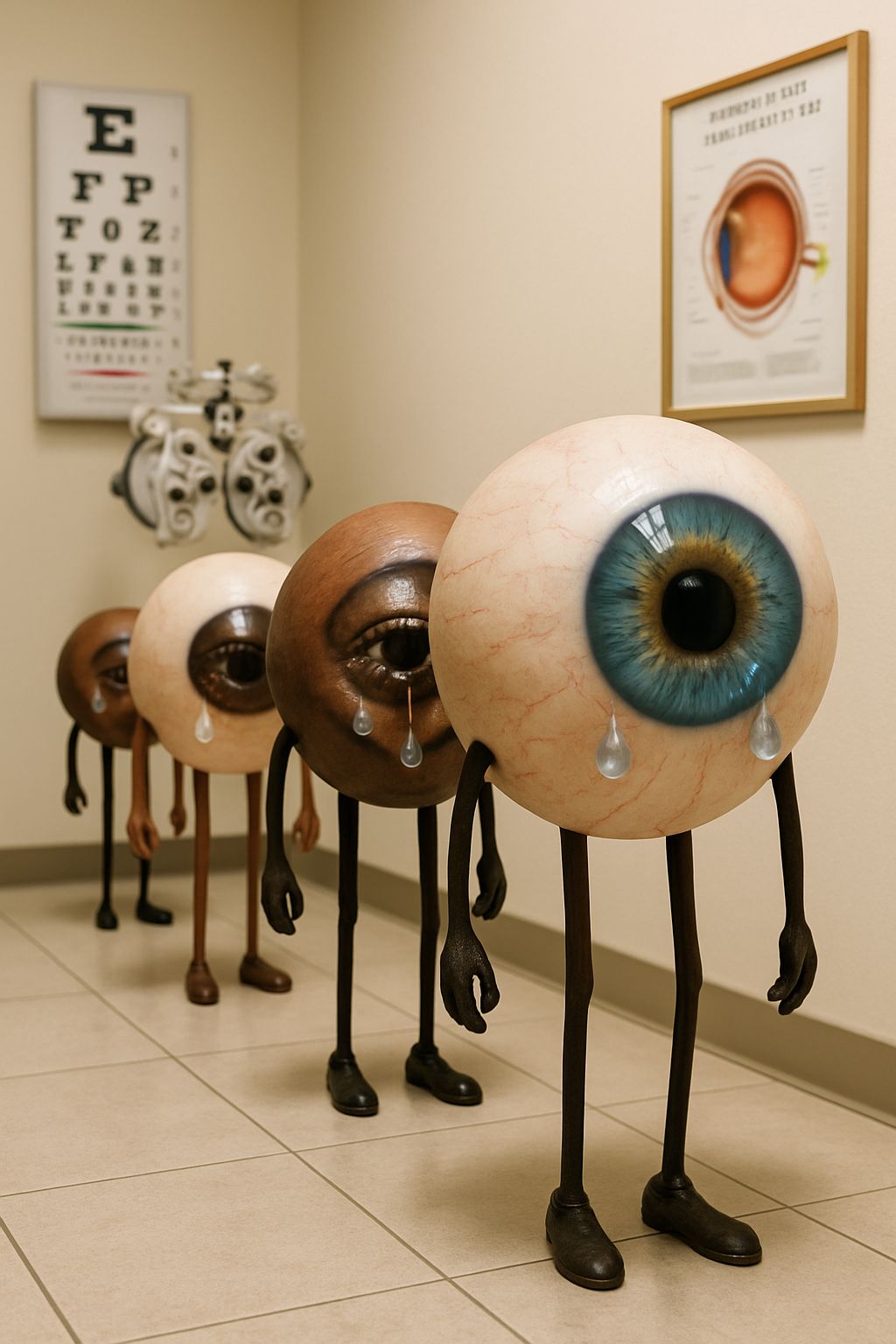
Most cases of environmentally triggered watery eyes improve significantly once indoor air quality is addressed and a consistent at-home care routine is established. But there are clear signals that professional evaluation is necessary — and waiting too long can allow underlying conditions to progress beyond what simple lifestyle changes can fix.
See a doctor if you experience any of the following: persistent watering that doesn’t improve after two weeks of environmental changes, visible swelling or crusting around the eyelids, pain inside the eye rather than just surface irritation, significant changes in vision, or discharge that is yellow or green in color. These symptoms suggest an infection, blocked tear duct, or structural issue that requires clinical diagnosis and treatment. For more information on reducing allergens in your environment, consider exploring allergy-resistant solutions.
Prescription Treatments Including Restasis and Xiidra
When chronic dry eye and reflex tearing are the underlying mechanisms, two prescription eye drops have strong clinical evidence behind them. Restasis (cyclosporine 0.05%) works by reducing the inflammatory response in the lacrimal gland that suppresses natural tear production. Xiidra (lifitegrast 5%) targets a specific inflammatory pathway — the LFA-1/ICAM-1 interaction — that drives the cycle of ocular surface inflammation and tear instability. Both require consistent daily use over several weeks before full benefit is seen, so don’t expect overnight results.
Your eye doctor may also prescribe short-term corticosteroid drops like loteprednol to break an acute inflammatory cycle before transitioning to a longer-term anti-inflammatory option. This combination approach — a corticosteroid bridge followed by Restasis or Xiidra — is a well-established clinical protocol for moderate to severe dry eye with reflex tearing. Never use corticosteroid drops without a prescription, as long-term unsupervised use carries real risks including elevated intraocular pressure and cataract formation.
In-Office Procedures: IPL and Radiofrequency Therapy
Intense Pulsed Light (IPL) therapy has emerged as one of the most effective in-office treatments for meibomian gland dysfunction — a major driver of tear film instability and reflex watering. IPL delivers precisely calibrated pulses of light to the skin around the eyelids, reducing abnormal blood vessel growth that feeds lid margin inflammation and liquefying congested meibomian gland oils simultaneously. Most patients require a series of four treatments spaced three weeks apart, with maintenance sessions every six to twelve months thereafter. Radiofrequency (RF) therapy works through a complementary mechanism, using controlled thermal energy to stimulate meibomian gland secretion and reduce periorbital inflammation. Some clinics now combine IPL and RF in a single session for enhanced outcomes.
Punctal Plugs and Specialty Contact Lenses
For patients whose watery eyes stem from inadequate tear retention rather than overproduction, punctal plugs offer a simple and reversible solution. These tiny silicone devices are inserted into the puncta — the small drainage openings at the inner corner of each eyelid — to slow tear drainage and keep more moisture on the ocular surface. Temporary dissolvable plugs are used first to confirm the patient responds well, before semi-permanent silicone plugs are placed. Scleral contact lenses are another specialist option, creating a fluid-filled reservoir over the entire corneal surface that provides continuous hydration and shields the eye from airborne irritants throughout the day.
Clean Indoor Air Is the Most Overlooked Dry Eye Solution
Eye drops, prescriptions, and in-office procedures all have their place — but none of them stop the irritation cycle if you return home to the same polluted air that caused the problem. Upgrading your indoor air quality with a HEPA purifier, a properly calibrated humidifier, a MERV 13 HVAC filter, and routine duct maintenance removes the underlying triggers that keep your eyes in a constant state of defensive overproduction. It is the one intervention that works around the clock, in every room, without requiring you to remember a single daily step.
Frequently Asked Questions
Here are answers to the most common questions about indoor air quality and watery eyes, based on the mechanisms and treatments covered throughout this article.
Can poor indoor air quality permanently damage your eyes?
Chronic exposure to indoor air pollutants can cause lasting damage over time. Repeated inflammatory responses triggered by mold spores, VOCs, and fine particulate matter can progressively impair meibomian gland function — and once these glands atrophy, they do not regenerate. The National Institute of Environmental Health Sciences has also noted associations between long-term indoor air pollutant exposure and increased risk factors for conditions like glaucoma and macular edema.
The good news is that this damage is largely preventable and, in its early stages, partially reversible through consistent treatment and environmental improvement. Acute and short-term exposure rarely causes permanent harm. It is prolonged, unaddressed exposure — typically measured in months to years — that creates the conditions for structural eye damage. Catching the problem early and addressing both the air quality and the ocular surface health gives you the best chance of avoiding any lasting effects.
What type of air purifier is best for reducing eye irritation indoors?
A True HEPA air purifier combined with an activated carbon filter layer is the most effective setup for eye health, specifically. The HEPA filter captures particulate allergens — mold spores, pollen, dust mite debris, pet dander — while the activated carbon layer adsorbs gaseous VOCs and chemical irritants that a HEPA filter alone cannot trap. Look for a unit with a verified CADR rating appropriate for the room size, an auto-sensing mode for continuous protection, and a filter replacement indicator.
The Winix 5500-2 Air Purifier with PlasmaWave technology and the Coway Airmega AP-1512HH are both strong choices at mid-range price points with verified True HEPA performance. For larger open-plan spaces, the Blueair Blue Pure 211+ covers up to 540 square feet and combines a fabric pre-filter with a combination HEPA and carbon filter. Avoid ionizing air purifiers that produce ozone as a byproduct — ozone is itself a respiratory and ocular irritant that will worsen, not improve, eye symptoms.
Does low humidity cause watery eyes or dry eyes?
Low humidity causes both, and understanding why clears up a lot of confusion. When indoor humidity drops below 30%, the tear film evaporates from the ocular surface faster than the eye can replenish it through normal lacrimal gland secretion. This creates genuine dry eye, characterized by a gritty, burning sensation and compromised corneal lubrication. In response, the nervous system triggers reflex tearing — a flood of watery, low-viscosity tears produced by the lacrimal gland as an emergency response.
The result is paradoxical: your eyes are simultaneously dry and watery. The reflex tears don’t contain the same balance of oils, proteins, and mucins as your baseline tear film, so they don’t actually fix the underlying dryness — they just overflow. Maintaining indoor humidity between 40% and 50% using a calibrated humidifier breaks this cycle more effectively than any eye drop, because it addresses the evaporation trigger directly at its source.
How quickly can improving indoor air quality reduce eye symptoms?
Some improvements are noticeable within 24 to 48 hours of deploying a high-quality air purifier in your primary living space, particularly if particulate matter and pet dander are your main triggers. Humidity correction through a properly calibrated humidifier can reduce reflex tearing symptoms within the first few nights of use, especially if you’ve been running forced-air heat during the winter months.
Longer-term improvements — particularly those tied to meibomian gland function recovery and reduction in chronic lid margin inflammation — take four to eight weeks of sustained better air quality to become fully apparent. Upgrading your HVAC filter and cleaning ductwork produces a gradual improvement over the same timeframe as the overall particulate load in your home decreases. Think of indoor air improvement as cumulative: each layer you add — purifier, humidifier, better filtration, duct maintenance — reduces the total irritant burden and accelerates symptom resolution.
Are watery eyes from indoor air quality a sign of something more serious?
In most cases, watery eyes triggered by indoor air pollutants are a protective response, not a sign of serious underlying disease. The eye is doing exactly what it should — producing tears to flush irritants from the ocular surface. When the irritant source is removed and the environment is improved, symptoms typically resolve without any lasting damage. For those interested in creating a healthier indoor environment, consider exploring urban gardening and recycling filters to help reduce air pollutants.
However, persistent watery eyes that don’t improve despite addressing air quality warrant medical evaluation. Chronic epiphora can sometimes indicate a partially blocked nasolacrimal duct, which may require a minor procedure to open. It can also be an early symptom of autoimmune conditions like Sjögren’s syndrome, which causes dysfunction of the tear and saliva glands. In older adults, a drooping lower eyelid (ectropion) is another common structural cause of persistent tearing that requires clinical correction.
The bottom line: if your eyes are watering primarily at home, in specific rooms, or when your HVAC is running, indoor air quality is almost certainly the driving factor and should be your first intervention. If symptoms persist beyond two to three weeks of genuine environmental improvement, schedule an appointment with an ophthalmologist or optometrist to rule out structural, infectious, or systemic causes.