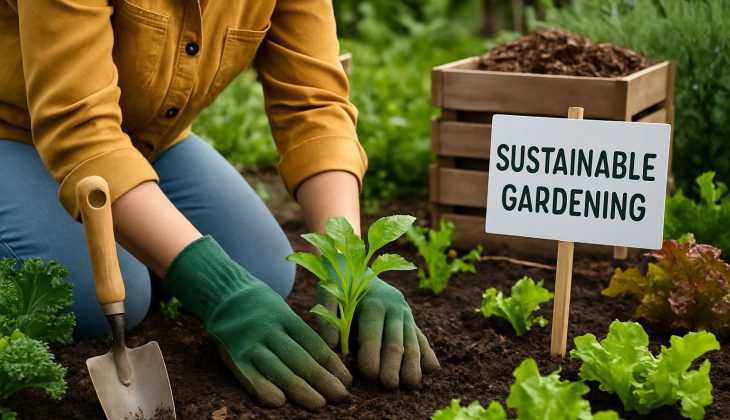
- Compost and mulch are the foundation of a sustainable urban garden — they feed your soil naturally, retain moisture, and reduce the need for chemical fertilizers.
- Water conservation is critical in urban gardening — rainwater harvesting and smart irrigation systems can dramatically cut your water usage without sacrificing plant health.
- Choosing the right plants for your local climate is one of the most impactful decisions you can make — native plants thrive with minimal intervention and support local ecosystems.
- Vertical gardening and smart container choices can double your growing capacity even in the smallest urban spaces — keep reading to discover which structures and materials work best.
- A balanced garden ecosystem — with layered planting and pollinator-friendly species — reduces maintenance costs and keeps your garden thriving season after season.
Growing a thriving garden in the middle of a city is absolutely possible — and doing it sustainably makes it even more rewarding.
Urban gardening has exploded in popularity, and for good reason. Whether you’re working with a rooftop, a balcony, a tiny backyard, or a community plot, a well-maintained urban garden gives you fresh food, cleaner air, and a genuine connection to nature. But the real challenge isn’t starting a garden — it’s keeping it going in a way that doesn’t drain your wallet, your time, or the planet’s resources. ECO Gardener has been helping urban growers build smarter, greener gardens by combining practical tools with sustainable growing principles that actually work in real-world city conditions.
Sustainability in urban gardening isn’t just a buzzword. It means building systems that feed themselves, conserve resources, and get easier to manage over time — not harder.
Your Urban Garden Can Thrive Without Harming the Planet
Most people assume that gardening is automatically eco-friendly. It can be — but only if you’re intentional about how you maintain it. Conventional garden maintenance often relies on synthetic fertilizers, chemical pesticides, and excessive water use, all of which create more problems than they solve. The good news is that every one of those habits has a smarter, sustainable alternative that actually produces better results in the long run. For instance, exploring sustainable urban gardening practices can help you create a thriving garden without harming the planet.
The key is building a garden system where each element supports the others. Healthy soil grows stronger plants. Stronger plants resist pests. Water-wise irrigation keeps roots deep and drought-tolerant. Once these systems are in place, your maintenance load drops significantly — and your garden becomes something you enjoy rather than something you manage.
1. Use Compost and Mulch to Feed Your Garden Naturally
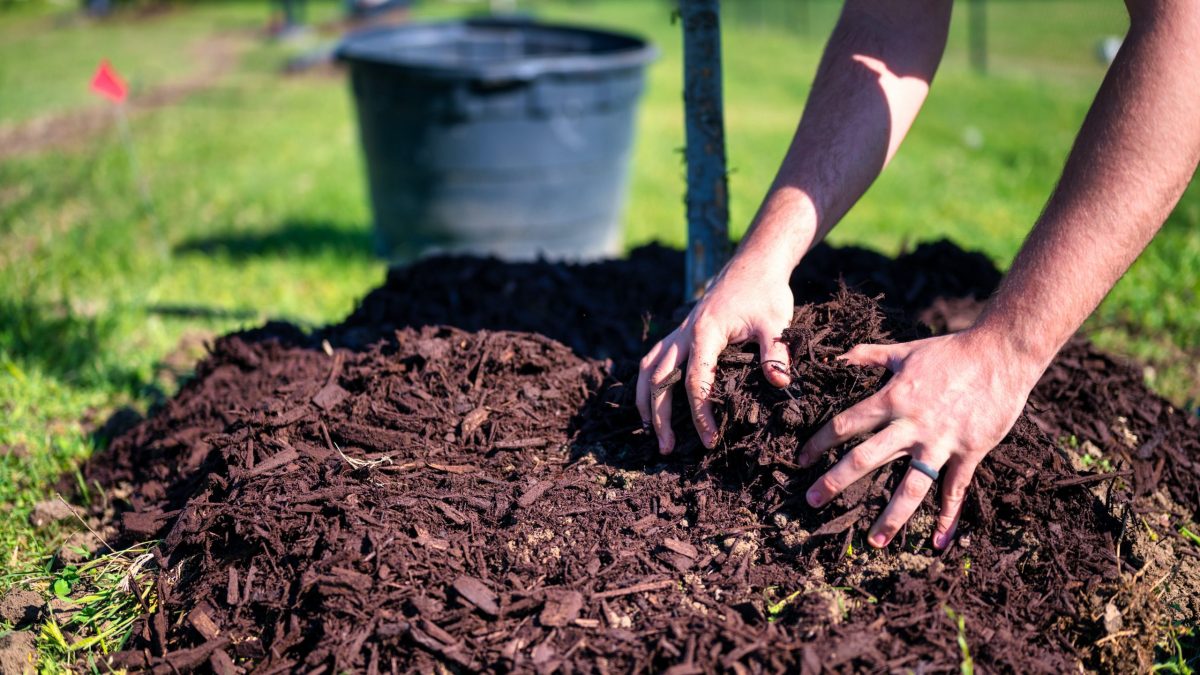
“Between Compost and Mulch …” from geckogreen.com and used with no modifications.
Your soil is everything. Without rich, living soil, even the most carefully chosen plants will struggle. Compost and mulch are the two most powerful tools you have for building and maintaining that soil — and both are either free or extremely low-cost to produce.
Why Compost Beats Chemical Fertilizers Every Time
Chemical fertilizers give plants a quick nutrient hit, but they don’t build soil health — they degrade it over time. Compost, on the other hand, is made from decomposed organic matter like leaves, grass clippings, food scraps, and garden waste. It introduces beneficial microbes, improves soil structure, enhances drainage in clay soils, and increases water retention in sandy soils. It essentially creates the ideal growing environment from the ground up.
The results speak for themselves. Gardens maintained with compost consistently outperform chemically fertilized plots in long-term productivity. You’re not just feeding your plants — you’re building an ecosystem beneath the soil surface that does much of the maintenance work for you.
How to Start Composting in a Small Urban Space
You don’t need a large backyard to compost effectively. Compact worm bins (vermicomposting) work perfectly on apartment balconies and produce rich, concentrated castings that can be applied directly to container plants. Bokashi systems are another excellent option for small spaces — they ferment kitchen waste, including meat and dairy, which traditional compost bins can’t handle. For those with slightly more room, a simple tumbler composter like the FCMP Outdoor IM4000 Tumbling Composter fits neatly on a patio and produces finished compost in as little as two weeks.
The Right Way to Apply Mulch for Maximum Benefit
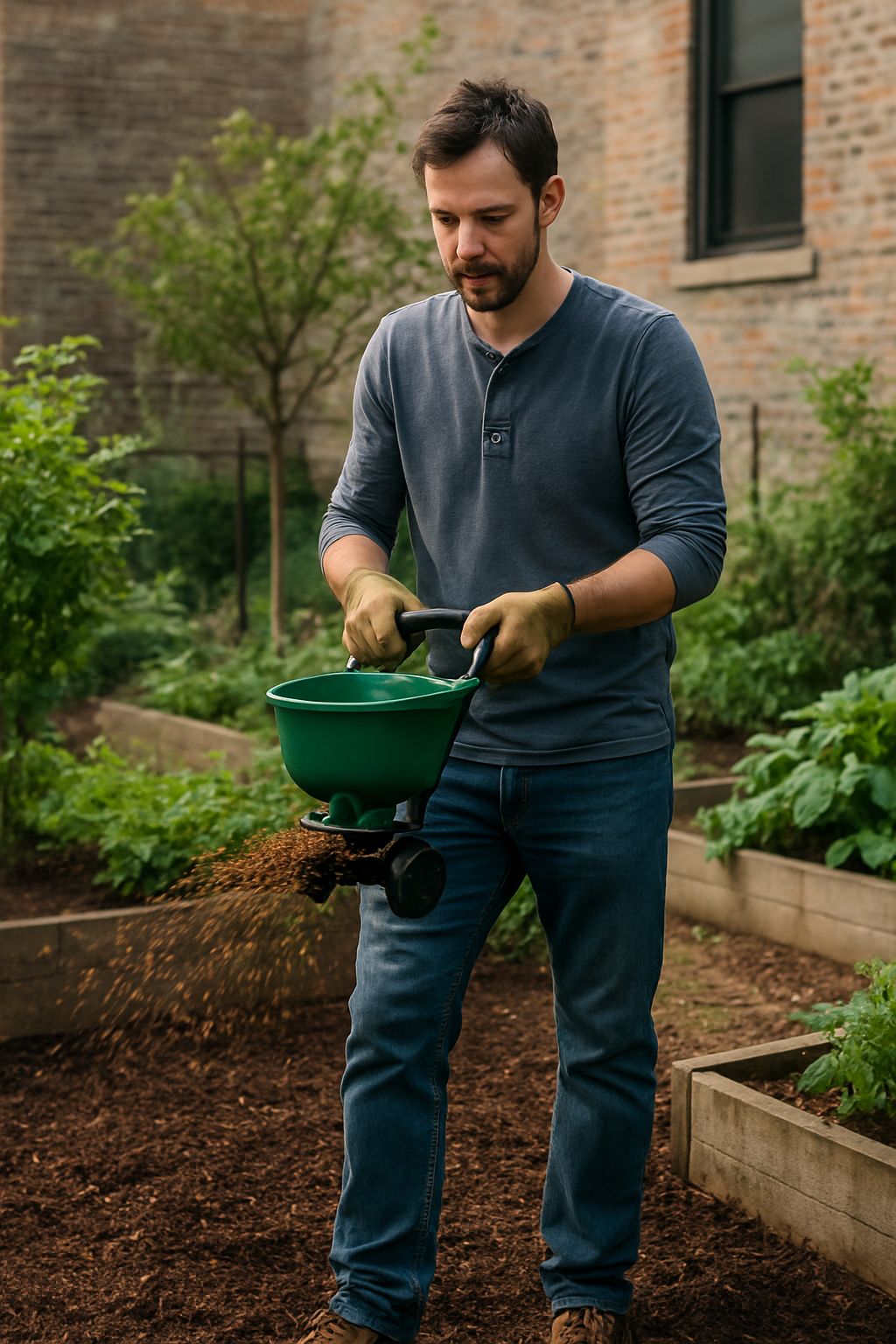
Mulch does several jobs at once — it retains soil moisture, suppresses weeds, regulates soil temperature, and gradually breaks down to feed the soil below. Apply a 2 to 3 inch layer of organic mulch like wood chips, straw, or shredded leaves around your plants, keeping it a few inches away from stems to prevent rot. In urban container gardens, coconut coir mulch is a sustainable and lightweight option that works extremely well.
The benefits stack up quickly:
- Retains up to 70% more soil moisture compared to bare soil
- Suppresses weed growth, reducing weekly maintenance time
- Regulates soil temperature by up to 10°F in both summer and winter
- Adds organic matter and nutrients as it breaks down over the season
- Prevents soil erosion during heavy rain events — a common issue in raised urban beds
2. Harvest Rainwater and Recycle Wastewater
Water is one of the most wasted resources in urban gardening. Most city tap water is treated with chlorine and fluoride — chemicals that are harmless to humans but can disrupt the microbial balance in your soil over time. Rainwater is naturally soft, slightly acidic, and free of those additives, making it the ideal choice for your garden. Collecting and using it isn’t complicated — and it cuts your water bill significantly.
Simple Rainwater Collection Systems for Urban Gardens
A basic rain barrel connected to a downspout can collect hundreds of gallons during a single storm. The RTS Home Accents 50-Gallon Rain Barrel is a widely used option that connects directly to standard downspouts and includes a spigot for easy filling of watering cans. For larger setups, linking multiple barrels in series can give you a substantial reserve that carries your garden through dry spells without touching municipal water supplies. To learn more about maintaining your urban garden, check out these urban garden maintenance tips.
How to Safely Recycle Greywater for Plant Irrigation
Greywater — the lightly used water from sinks, showers, and laundry — can be safely redirected to irrigate ornamental plants and fruit trees when handled correctly. The key rules are simple: use only plant-based, biodegradable soaps, avoid using greywater on edible parts of food plants that contact the soil, and never store it for more than 24 hours to prevent bacterial growth. Many cities now have specific guidelines on residential greywater reuse, so check your local regulations before setting up a system.
3. Choose the Right Containers for Your Space
Container choice has a bigger impact on plant health and sustainability than most urban gardeners realize. The wrong container can overheat roots, leach chemicals into your soil, degrade quickly in UV exposure, or simply restrict growth so much that your plants never reach their potential.
Best Container Materials for Sustainable Urban Gardening
Not all containers are created equal when it comes to sustainability and plant performance. Here’s how the most common materials compare:
| Material | Durability | Sustainability | Best For |
|---|---|---|---|
| Fabric grow bags | 3–5 years | High (recyclable) | Tomatoes, peppers, root veg |
| Terracotta | 10+ years | High (natural clay) | Herbs, succulents |
| Recycled plastic | 5–10 years | Medium | General planting |
| Glazed ceramic | 10+ years | Medium | Ornamentals, herbs |
| Virgin plastic | 3–7 years | Low | Avoid where possible |
How Container Size Affects Plant Health and Yield
Undersized containers are one of the most common mistakes in urban gardening. When roots become pot-bound, plants stop growing, reduce their yield, and become significantly more vulnerable to heat stress and drought. As a general rule, tomatoes need a minimum of 15 gallons, leafy greens do well in 6 to 8 inch depths, and deep-rooted vegetables like carrots need at least 12 inches of depth to develop properly.
Bigger isn’t always better either — oversized containers hold excess moisture around roots that can lead to fungal problems. Matching container volume to plant type is a precise but learnable skill that pays dividends in both yield and reduced maintenance.
4. Build a Smart Irrigation System
Water is the single most time-consuming part of urban garden maintenance — but it doesn’t have to be. A well-designed irrigation system does the heavy lifting for you, delivers water exactly where plants need it, and eliminates the guesswork that leads to both overwatering and underwatering. Getting this right early saves you hours every week and keeps your plants consistently healthier.
Drip Systems vs. Soaker Hoses vs. Hand Watering
| Method | Water Efficiency | Setup Cost | Best For | Maintenance Level |
|---|---|---|---|---|
| Drip irrigation | Up to 90% efficient | Medium–High | Raised beds, containers, rows | Low |
| Soaker hoses | Up to 80% efficient | Low–Medium | Garden beds, shrubs, hedges | Low |
| Sprinklers | 60–70% efficient | Medium | Lawns, large open areas | Medium |
| Hand watering | Varies widely | Very Low | Small container gardens | High |
Drip irrigation systems like the Rain Bird DRIP1000 Drip Irrigation Kit deliver water slowly and directly to the root zone, which means virtually zero evaporation loss and no wet foliage that invites fungal disease. For most urban raised bed setups, this is the gold standard — efficient, automated, and scalable.
Soaker hoses are the more budget-friendly alternative and work exceptionally well in in-ground beds and along planting rows. They release water slowly along their entire length, keeping soil moisture consistent without any runoff. The Gilmour Flat Soaker Hose is a popular choice for urban gardeners who want reliable performance without a complicated setup. For more ideas on enhancing your urban garden, consider exploring companion planting ideas.
Hand watering remains the most practical option for small balcony setups with just a few containers. The downside is consistency — most people water too fast, too shallow, or at the wrong time of day. If hand watering is your method, always water at the base of the plant early in the morning, and water slowly enough to allow full absorption before moving on.
Sprinklers are the least efficient option for urban food gardens. They wet foliage rather than roots, which wastes water through evaporation and creates ideal conditions for fungal diseases like powdery mildew. Reserve sprinklers for turf areas only, and use targeted delivery methods everywhere else. For more ideas on sustainable gardening, explore our guide on sustainable urban gardening.
How to Schedule Watering to Minimize Waste
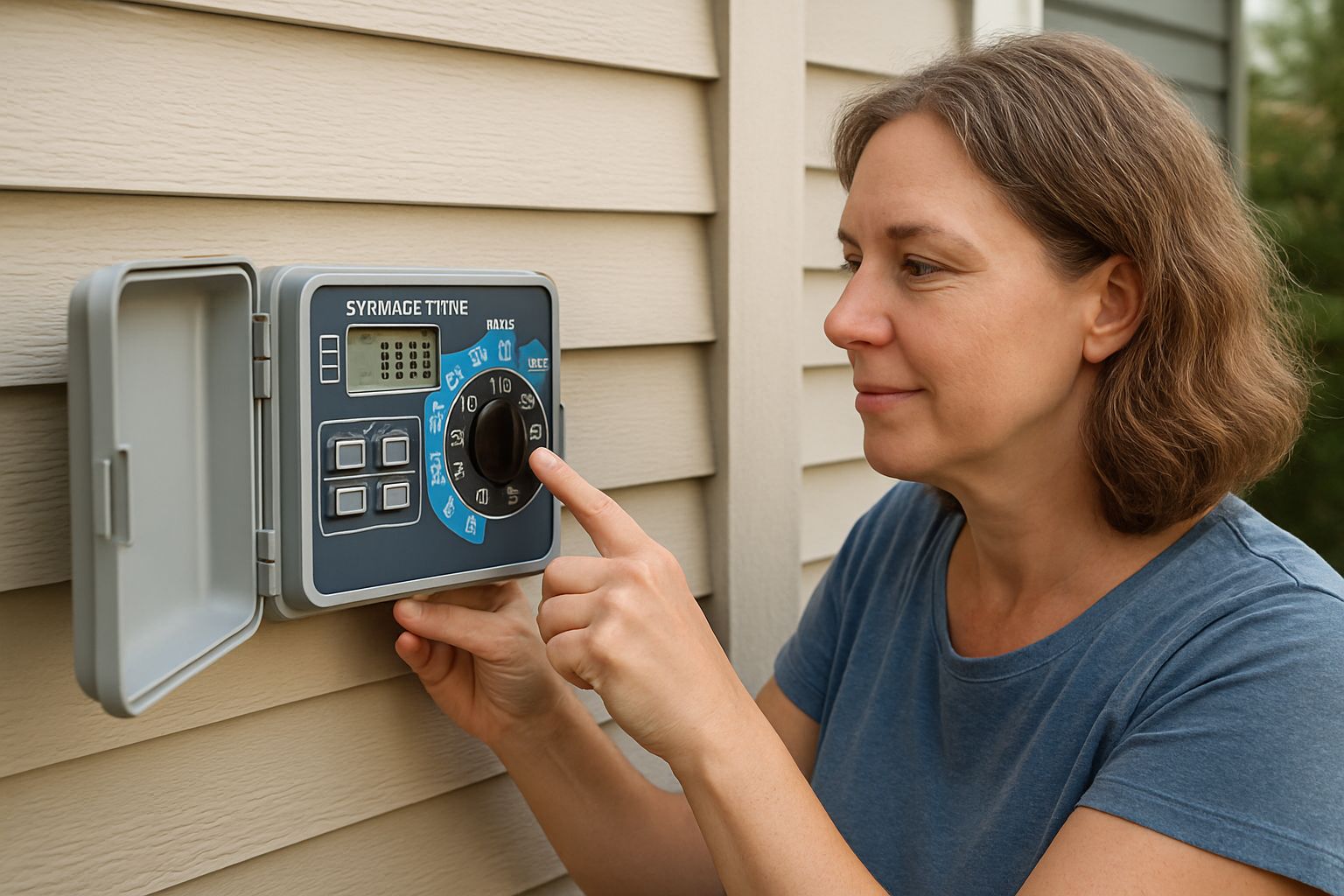
Timing matters as much as method. Watering in the early morning — between 6 am and 10am — gives plants what they need for the day while allowing any surface moisture to evaporate before nightfall. Evening watering leaves foliage wet overnight, which is a fast track to mold, mildew, and root rot. If you’re using a drip or soaker system, pair it with a digital timer like the Orbit 56082 Single-Outlet Hose Faucet Timer so your garden waters itself on a reliable schedule without you having to think about it.
5. Choose Plants That Work With Your Environment
One of the biggest mistakes urban gardeners make is choosing plants based on what looks good at the nursery rather than what actually thrives in their specific conditions. A plant that fights its environment will always demand more water, more fertilizer, and more pest management than one that’s well-matched to where it’s growing.
The most sustainable plant choices are those that need the least intervention to succeed. That means looking at your local climate, your available sunlight, your soil type, and your seasonal patterns before you buy a single seed or seedling.
Why Native Plants Are the Backbone of a Sustainable Garden
Native plants are species that have evolved over thousands of years in your specific region. They’re adapted to local rainfall patterns, soil chemistry, and temperature extremes — which means they need less supplemental watering, feeding, and pest control than non-native ornamentals. A garden that incorporates even 30 to 40% native species will require noticeably less maintenance from day one.
Beyond the maintenance benefits, native plants actively support local biodiversity. They provide the specific food sources and habitat structures that local insects, birds, and pollinators depend on. In an urban environment where natural habitat is already under pressure, this matters enormously. Native wildflowers like purple coneflower (Echinacea purpurea), black-eyed Susan (Rudbeckia hirta), and wild bergamot (Monarda fistulosa) are excellent starting points for most North American urban gardens. If you’re looking for more tips on starting your urban garden, take this urban garden quiz guide for interactive tips.
How to Match Plants to Your Local Climate Conditions
Start with your USDA Hardiness Zone as a baseline, but don’t stop there. Urban environments create microclimates — heat-absorbing concrete, wind tunnels between buildings, and reflected light from walls can all push your local growing conditions beyond what the zone map suggests. Observe your space for at least one full season before committing to perennial plantings, and prioritize species with a hardiness range that extends at least one zone beyond your own for built-in resilience. For more insights, explore this urban greening guide.
Balancing Edible and Ornamental Plants for Maximum Value
The most productive sustainable urban gardens mix edible and ornamental species intentionally. Flowering herbs like borage, nasturtium, and calendula attract pollinators that directly increase your vegetable yields while doubling as edible garnishes. Dwarf fruit trees like the Urban Apple Tree ‘Colonnade Waltz’ provide seasonal harvests while adding vertical structure and year-round visual interest. When every plant in your garden serves at least two purposes — food, habitat, beauty, pest management — your overall maintenance burden drops and your output increases.
6. Maximize Sunlight in Your Urban Space
Sunlight drives everything in your garden. Without adequate light, even the best soil, irrigation, and plant selection can’t produce strong, productive growth. In urban environments, sunlight is often the most constrained resource — buildings cast shadows, neighboring structures block morning or afternoon light, and seasonal sun angles shift dramatically between summer and winter.
Understanding exactly how light moves through your space is one of the most valuable investments of time you can make before planting anything. Most vegetable crops need a minimum of 6 hours of direct sunlight daily, while leafy greens and herbs can tolerate 4 hours. Fruiting plants like tomatoes, peppers, and squash want 8 or more hours to produce at full capacity.
How to Map Sun Exposure Across Your Garden Area
The simplest way to map your sunlight is to observe your space hourly from sunrise to sunset on a clear day and note which areas receive direct light during each hour. Do this at least once in early summer and once in early fall to capture the seasonal shift in sun angle — you’ll be surprised how dramatically the light pattern changes between June and September in most urban locations.
For a more precise approach, the Solu Sun Seeker Pro app uses augmented reality and your phone’s GPS to visualize sun paths across your specific location at any time of year. It takes the guesswork out of determining whether that northeast corner gets enough afternoon sun for tomatoes or whether it’s better suited to shade-tolerant herbs like mint and lemon balm.
Once you understand your light map, organize your garden layout accordingly. Place your tallest plants — trellised beans, staked tomatoes, corn — on the north side of your beds so they don’t shade shorter crops. Rotate shade-tolerant species into spots that are blocked for part of the day, and reserve your best full-sun real estate for the highest-yield fruiting crops.
Reflective surfaces can also be used strategically to amplify available light. Painting walls white or light gray, using reflective mulch, or positioning mirrored panels near shaded beds can meaningfully increase the usable light in tight urban spaces where direct sun is limited by surrounding structures.
- Full sun (6–8+ hours): Tomatoes, peppers, cucumbers, eggplant, squash, melons
- Partial sun (4–6 hours): Beans, peas, chard, kale, beets, carrots
- Partial shade (2–4 hours): Lettuce, spinach, arugula, cilantro, mint, parsley
- Deep shade (under 2 hours): Primarily ornamental ferns, hostas, and moss — very few edibles thrive here
7. Use Vertical Space to Grow More With Less
Floor space is the scarcest resource in any urban garden. Going vertical is the most effective way to multiply your growing capacity without needing a single extra square foot of ground space. A well-designed vertical system can triple or quadruple the number of plants you grow in the same footprint — and it often makes garden maintenance easier, not harder, by improving airflow and keeping crops accessible.
Vertical growing also has genuine sustainability benefits. Plants grown on trellises and towers tend to have better air circulation, which naturally reduces fungal disease pressure. More exposure to light means more efficient photosynthesis and higher yields per plant. And vertical structures like living walls can provide meaningful insulation to building exteriors, reducing urban heat island effects in dense city neighborhoods.
Best Vertical Gardening Structures for Urban Settings
The right structure depends on what you’re growing and how permanent you want the installation to be. For lightweight annual crops, a simple bamboo trellis or the Gardener’s Supply Company A-Frame Trellis is inexpensive, easy to store seasonally, and handles cucumbers, pole beans, and peas with ease. For more permanent setups, a wall-mounted modular system like the Woolly Pocket Wally One Living Wall Planter creates a lush vertical garden that works beautifully on balconies, fences, and exterior walls. For serious food production in a small footprint, a stacked tower planter like the Tower Garden FLEX uses an aeroponic growing system to produce leafy greens, herbs, and strawberries in a column roughly two feet wide.
Which Plants Grow Best Vertically
Not every plant adapts well to vertical growing, but a surprisingly wide range does. Vining and climbing plants are natural candidates — indeterminate tomatoes, pole beans, cucumbers, peas, and squash all thrive on vertical support and actually prefer it to sprawling on the ground. Strawberries, lettuce varieties, spinach, and most herbs grow beautifully in wall-mounted pocket planters and tower systems. For flowering vertical coverage, scarlet runner beans combine high food production with striking ornamental value, making them one of the most efficient dual-purpose choices for an urban vertical garden.
8. Design a Balanced Garden Ecosystem
A sustainable urban garden isn’t just a collection of individual plants — it’s a living system where every element interacts with and supports the others. When you design with ecosystem balance in mind, your garden becomes self-regulating in ways that dramatically reduce the time and resources you need to keep it healthy. Pests are controlled by predators. Soil gets fed by decomposers. Pollinators move through and boost your yields without any effort on your part.
The difference between a garden that exhausts you and one that energizes you usually comes down to design. A garden built as a monoculture — rows of the same crop, repeated season after season — is inherently fragile. It invites pest explosions, depletes specific soil nutrients, and requires constant chemical intervention to stay productive. A diversified, layered garden design avoids all of those problems naturally. For more insights, consider exploring sustainable urban garden tips.
Think of your urban garden in terms of ecological layers rather than just plant types. Even in a small raised bed or balcony setup, you can create a canopy layer of taller plants, a mid-layer of medium-height crops and herbs, and a ground-cover layer of low-growing plants that suppress weeds and retain moisture. This three-tier approach mimics natural ecosystems and creates the kind of complexity that supports long-term garden health. For more tips on sustainable urban gardening, check out this guide on indoor flowering plants.
How Layered Planting Supports Local Wildlife
Layered planting creates habitat structure that different species of wildlife need at different stages of their life cycles. Ground beetles and spiders — two of your most valuable natural pest controllers — need low-growing cover to shelter and hunt in. Birds need mid-height perching spots and dense foliage to feel safe foraging. Bees and butterflies need varied bloom heights and open flight paths to move efficiently between flowers. When you design with layers, you’re not just growing plants — you’re building a functional urban habitat that works alongside your gardening goals rather than against them.
Plants That Attract Pollinators and Beneficial Insects
Pollinators and beneficial predatory insects are the most powerful maintenance tools in any sustainable garden — and attracting them costs nothing beyond a few smart plant choices. Lavender (Lavandula angustifolia), phacelia (Phacelia tanacetifolia), and sweet alyssum (Lobularia maritima) are exceptional at drawing in bees and hoverflies whose larvae devour aphids at a remarkable rate. Fennel and dill attract parasitic wasps that target caterpillars and whiteflies — among the most destructive pests in urban vegetable gardens. Plant these in clusters rather than scattering them individually, as mass plantings are significantly more visible and attractive to pollinators from a distance.
Keeping Maintenance Costs Low Through Smart Garden Design
The smartest sustainable gardens are designed to work with natural processes rather than against them. Group plants with similar water needs together — a principle called hydrozoning — so you’re never overwatering drought-tolerant herbs to satisfy thirsty tomatoes in the same bed. Use companion planting pairings that naturally deter pests: basil planted alongside tomatoes repels thrips and aphids, while nasturtiums act as trap crops that draw aphids away from more valuable plants.
Plan your garden in a way that minimizes the distance between your most frequently tended plants and your tools, water source, and compost bin. This sounds almost too simple, but studies on home garden productivity consistently show that physical proximity to resources dramatically increases how often people tend their gardens — and a well-tended garden is always a lower-maintenance garden. For more ideas, explore our urban greening guide to design for your own habits as much as for your plants’ needs.
A Sustainable Urban Garden Is One You Can Maintain for Years
Every tip in this guide points toward the same underlying principle: sustainability means building systems that get easier over time, not harder. When your soil is alive with organic matter, your irrigation runs on a timer, your plants are matched to your climate, and your garden design supports its own ecosystem, the weekly maintenance load drops to a fraction of what a conventional urban garden demands.
Sustainable Urban Garden Maintenance Checklist
Task Frequency Sustainability Benefit Add compost to beds Every 4–6 weeks Builds soil health, reduces fertilizer need Replenish the mulch layer Every 6–8 weeks Retains moisture, suppresses weeds Check the irrigation system Weekly Prevents water waste from leaks or blockages Harvest rainwater barrel After each rain event Reduces municipal water dependency Inspect for pests Every 3–5 days Enables early natural intervention Prune and deadhead flowers Weekly in the growing season Extends bloom time, supports pollinators Rotate crops Each season Prevents soil depletion and disease buildup Refresh container soil mix Annually Maintains drainage and nutrient availability
Start with the foundations — healthy soil, smart water management, and climate-appropriate plant selection — and build from there. You don’t need to implement everything at once. In fact, making one or two meaningful changes per season is a more sustainable approach than attempting a complete garden overhaul and burning out before you see results.
The urban gardeners who maintain thriving spaces year after year aren’t the ones who work the hardest. They’re the ones who designed the smartest systems from the beginning and made adjustments as they learned what worked in their specific environment. That’s a skill that develops over time — and every season you grow, you get better at it.
Give your garden the patience it deserves. Document what works, observe what doesn’t, and let the ecosystem you’re building tell you what it needs. A sustainable urban garden isn’t a project you finish — it’s a living relationship you develop, and the rewards compound with every year you tend it.
Frequently Asked Questions
Urban gardeners — especially those just transitioning to more sustainable practices — tend to run into the same practical questions. What should I prioritize first? How do I handle water during a dry stretch? Can I really compost in a tiny space? The answers are simpler than most people expect, and getting them right early makes everything else in your garden easier to manage.
The questions below cover the most common sticking points in sustainable urban garden maintenance. Whether you’re working with a rooftop plot, a balcony full of containers, or a small in-ground bed in a community garden, these answers apply directly to real-world city growing conditions. For more insights, explore our urban greening guide.
Here’s a quick summary of what most urban gardeners need to focus on first: understanding the benefits of companion planting can greatly enhance your garden’s productivity and sustainability.
- Build your soil before you plant anything — compost is your highest-leverage investment
- Match your water delivery method to your garden scale and available time
- Choose plants suited to your actual light conditions, not your wishlist
- Introduce diversity early — monocultures always require more intervention
- Observe your garden regularly so small problems never become large ones
What is the most important factor in maintaining a sustainable urban garden?
Soil health is the single most important factor in sustainable urban garden maintenance. Everything else — plant performance, water efficiency, pest resistance, and yield — flows from the quality of your soil. A garden built on rich, biologically active soil amended regularly with compost will consistently outperform one that relies on synthetic inputs, regardless of what else you do right. If you only have time to focus on one thing, make it your soil.
How often should I water my urban garden to conserve water?
Most urban gardens need deep, infrequent watering rather than light daily watering. Watering deeply every 2 to 3 days encourages roots to grow downward in search of moisture, which makes plants more drought-tolerant and resilient over time. Shallow daily watering keeps roots near the surface where they’re vulnerable to heat and evaporation. Use a finger test — push your finger 2 inches into the soil, and only water when it feels dry at that depth. In peak summer heat, container gardens may need daily watering, but always check before you water rather than watering on autopilot.
Can I compost in a small apartment balcony garden?
Yes — absolutely. Vermicomposting with a compact worm bin like the Worm Factory 360 is odorless when managed correctly and produces concentrated worm castings that are exceptionally potent as a soil amendment. A bin roughly 18 inches square fits comfortably on a balcony and processes kitchen scraps, including fruit peels, vegetable trimmings, coffee grounds, and eggshells. Bokashi fermentation systems are another excellent option for small spaces — they handle a wider range of food waste, including cooked food and small amounts of dairy, and the fermented output can be buried directly in containers or added to a larger compost pile.
What are the best plants to grow in a small urban garden space?
The best plants for small urban gardens are those that produce high yields in compact footprints. Leafy greens like lettuce, spinach, arugula, and Swiss chard are among the most productive crops per square foot you can grow — and they tolerate partial shade, which makes them ideal for urban conditions. Herbs, including basil, cilantro, parsley, chives, and mint, deliver enormous culinary value from tiny containers and can be harvested continuously throughout the growing season.
For gardeners who want to grow fruiting crops in limited space, compact or dwarf varieties specifically bred for container culture are the right choice. Look for determinate tomato varieties like Tumbling Tom or Patio F Hybrid, compact pepper varieties, and bush cucumber types that stay manageable in 10 to 15-gallon containers. Strawberries are outstanding in vertical tower systems and hanging baskets, providing both fruit and ornamental appeal throughout spring and summer.
How do I deal with pests in a sustainable urban garden without chemicals?
The most effective pest management in a sustainable garden is prevention, not reaction. A healthy, diverse garden with good soil and appropriate plant spacing is naturally far less vulnerable to pest outbreaks than a stressed, overcrowded, or monoculture planting. Strong plants simply resist pest pressure better than weak ones — which is why soil health and proper nutrition are your first line of defense. For more ideas on maintaining a diverse garden, explore these companion planting ideas.
For pest pressure that does appear, start with physical controls before anything else. Row cover fabric like Agribon AG-19 Floating Row Cover creates a physical barrier against flying insects, including aphids, whiteflies, and cabbage moths, without any chemical application. Yellow sticky traps like Safer Brand Sticky Whitefly Traps capture fungus gnats, whiteflies, and aphid populations effectively in container gardens. Hand-picking larger pests like caterpillars and squash bugs in the early morning — when they’re slow and visible — is time-consuming but highly effective and completely chemical-free.
Biological controls are your next tier. Introducing or attracting beneficial insects is a long-term strategy that pays compounding dividends. Ladybugs, lacewings, and parasitic wasps are voracious predators of the most common urban garden pests. You can purchase live lacewing eggs or ladybug populations from suppliers like Arbico Organics and release them directly into your garden during peak pest season. Planting insectary species — flowers that provide nectar and habitat for these predators — keeps them resident in your garden permanently. For more on optimizing your garden, consider exploring companion planting ideas that can enhance your urban greening efforts.
When physical and biological controls aren’t enough, organic sprays are the appropriate final step. Neem oil mixed at 2 tablespoons per gallon of water with a few drops of dish soap controls aphids, spider mites, and fungal disease simultaneously. Insecticidal soap sprays like Safer Brand Insect Killing Soap are effective against soft-bodied insects and break down quickly without leaving harmful residues on edible crops. Always apply these treatments in the early morning or evening to avoid harming beneficial insects that are active during the day.