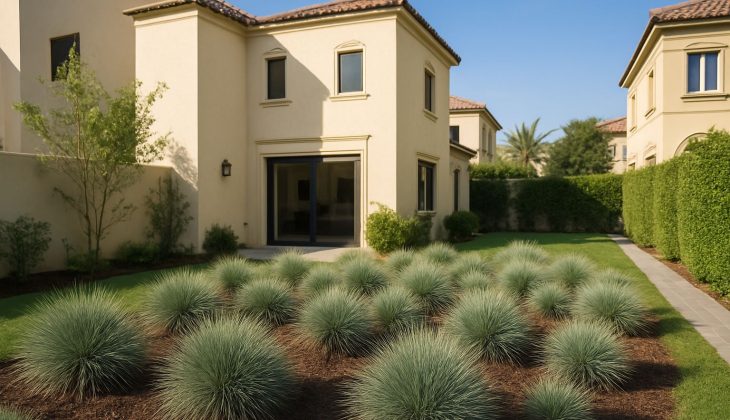
Article-At-A-Glance: Best Drought-Resistant Grasses for Urban Gardens
- Buffalo grass can survive on as little as 1 inch of water per month, making it one of the most water-efficient lawn options available for urban gardeners.
- Lawns account for 30 to 60% of Americans’ domestic water usage — switching to drought-resistant grass varieties can dramatically reduce that footprint.
- Warm-season grasses like Zoysia and Bermuda handle heat and drought best, while cool-season grasses like Tall Fescue use deep root systems to survive dry spells — choosing the wrong type for your climate is the #1 mistake homeowners make.
- Some drought-resistant grasses double as ornamental varieties, offering striking colors and textures that make urban spaces look intentional, not neglected.
- The secret to a drought-tolerant lawn isn’t just grass selection — soil preparation, planting timing, and watering technique all play a critical role in long-term success.
Your urban garden doesn’t need to be a casualty of the next dry summer — the right grass changes everything.
Lawns cover millions of miles of land across the United States, and they quietly drain between 30 to 60% of household water use. For urban gardeners working with limited space, unpredictable weather, and rising water bills, that number is hard to ignore. The good news is that drought-resistant grasses have evolved — or been carefully cultivated — to handle exactly these conditions. Urban gardening specialists have long recognized that grass selection is one of the highest-impact decisions a homeowner can make for both water conservation and long-term lawn health.
Not every drought-tolerant grass works in every garden, though. Climate zone, soil type, sun exposure, and how you actually use the space all shape which variety will genuinely thrive versus simply survive. This guide covers the best warm-season, cool-season, and ornamental drought-resistant grasses — plus the practical steps to get them established and keep them performing season after season.
Your Urban Garden Can Thrive Without Constant Watering
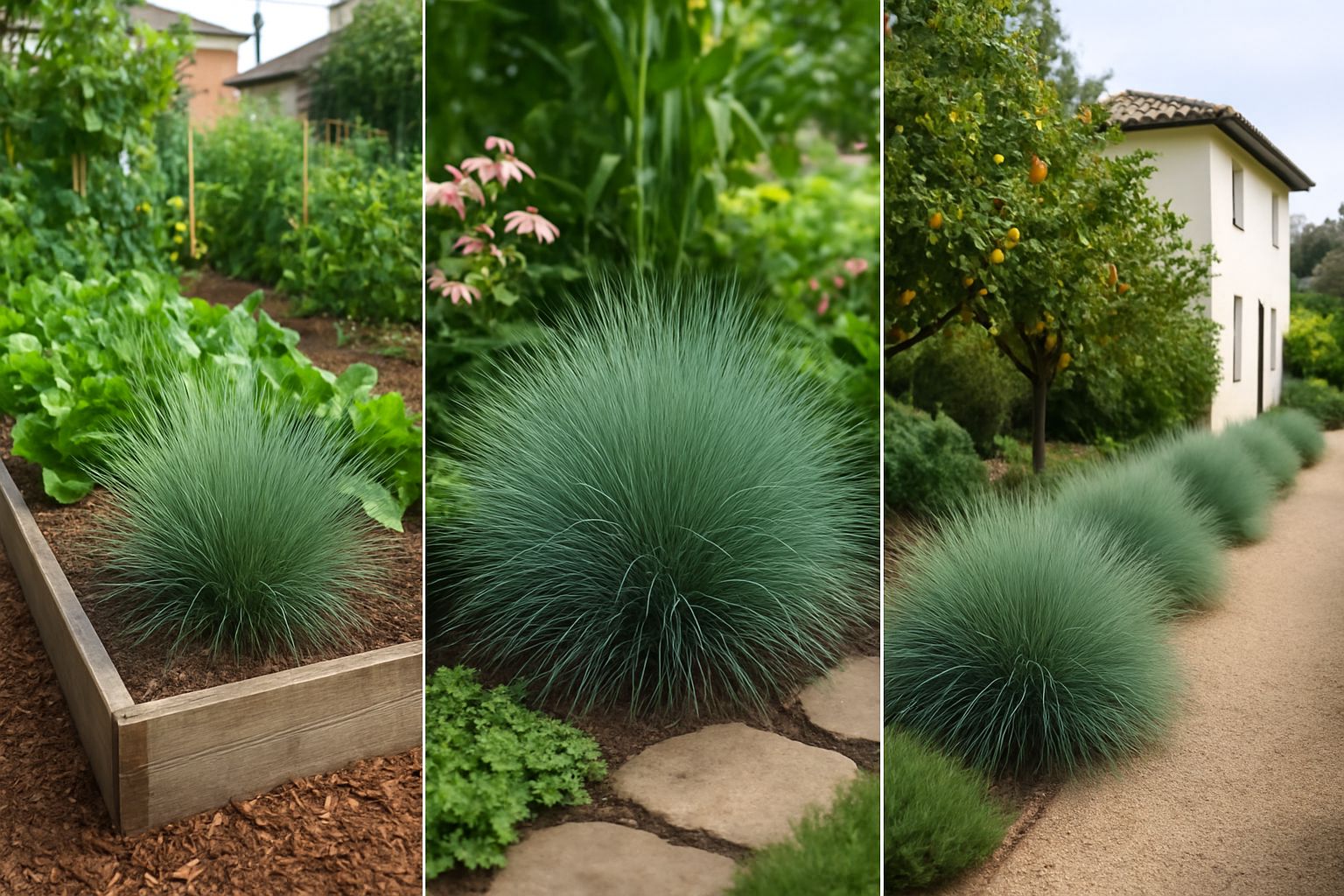
Most people assume a green, healthy lawn demands constant irrigation. That assumption costs time, money, and water — and it simply isn’t true for the right grass varieties.
Why Urban Gardens Face Unique Drought Challenges
Urban environments create a specific set of stress conditions that standard lawn grasses aren’t built to handle. Concrete, asphalt, and building materials absorb and radiate heat, raising local temperatures well above surrounding rural areas — a phenomenon known as the urban heat island effect. This pushes soil to dry out faster and puts grasses under compounded thermal and hydration stress simultaneously.
Compacted urban soils add another layer of difficulty. Heavy foot traffic, construction activity, and years of poor soil management leave urban garden beds with reduced pore space, meaning water drains away quickly rather than being retained near root zones. Shallow-rooted conventional grasses are the first to fail under these conditions.
Shade patterns in cities are also irregular. Buildings, fences, and trees create a patchwork of full sun and deep shade that shifts throughout the day and across seasons. A grass that can’t adapt to both extremes will thin out in patches, leaving bare ground that’s vulnerable to weeds and erosion.
How Drought-Resistant Grasses Cut Water Use by 30-60%
Drought-resistant grasses have structural and biological advantages that allow them to do more with less water. Many warm-season varieties use C4 photosynthesis, a more water-efficient metabolic pathway that reduces moisture loss during hot weather. Cool-season drought varieties compensate with exceptionally deep root systems that access soil moisture well below the surface. For more sustainable urban gardening practices, explore our urban greening guide.
The practical result is measurable. Replacing a conventional lawn with drought-tolerant species can cut outdoor water consumption significantly — contributing to real reductions in the 30 to 60% of domestic water usage that lawns currently consume.
- Deep root systems — grasses like Tall Fescue develop roots that reach far below the surface, accessing water that conventional grasses can’t reach
- Dormancy mechanisms — wide drought-tolerant varieties go dormant rather than dying during dry spells, then recover quickly when water returns
- Reduced evapotranspiration — low-growing varieties like Buffalo grass and Fine Fescue lose less moisture through their leaf surfaces
- Heat-adapted metabolism — warm-season grasses use C4 photosynthesis to stay efficient in high temperatures without requiring extra irrigation
Understanding these mechanisms helps you manage your lawn more confidently. When a drought-tolerant grass goes brown in midsummer, it’s often entering a protective dormant state — not dying. Knowing the difference prevents the instinct to overwater, which is actually one of the most common ways these grasses are damaged.
Warm-Season Drought-Resistant Grasses for Urban Gardens
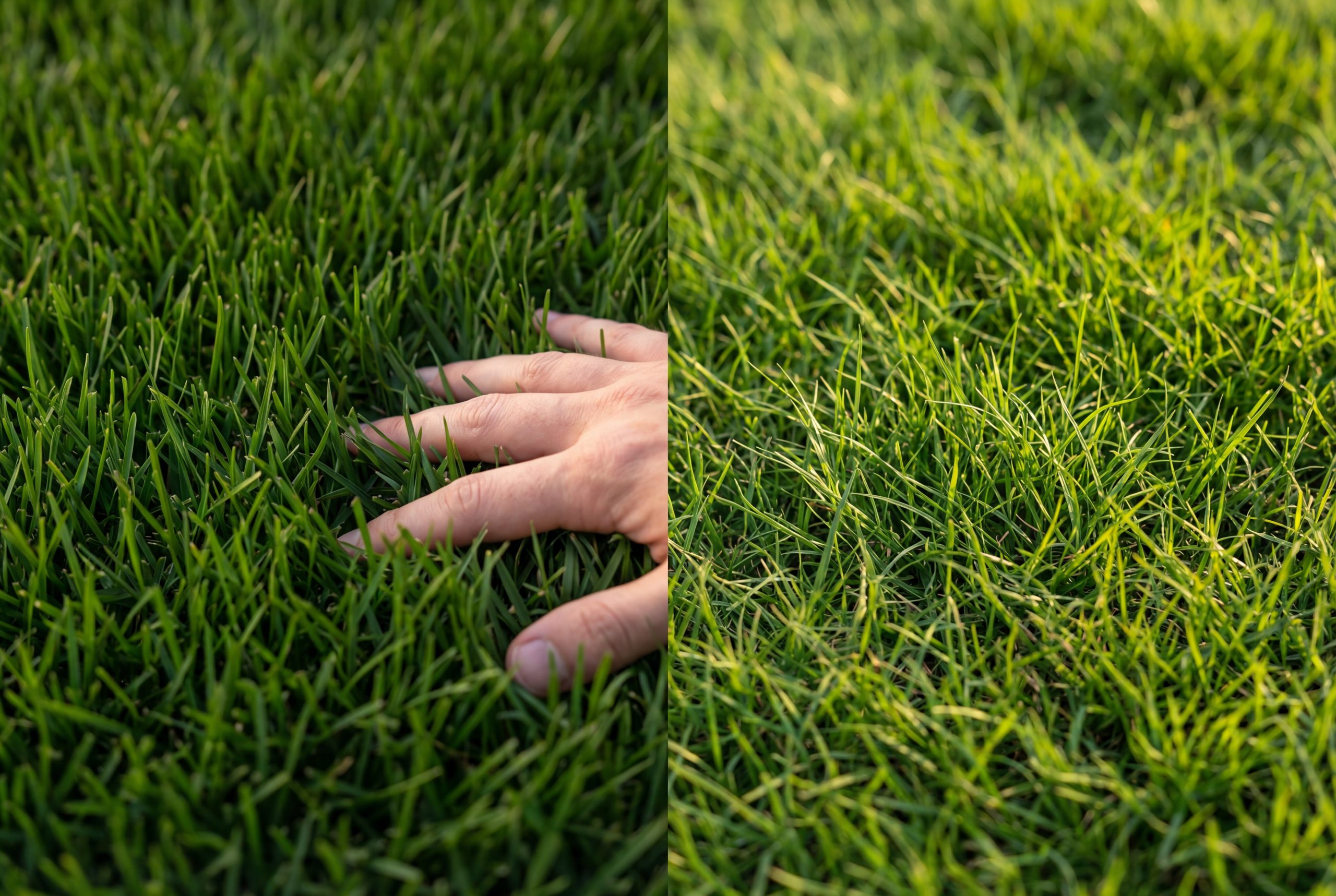
“Zoysia vs. Bermuda Grass: Which One Is …” from usasod.com and used with no modifications.
Warm-season grasses grow most actively between late spring and early fall, peaking in heat that would stress cool-season varieties into dormancy. For urban gardens in the South, Southwest, and transitional climate zones, these are typically the strongest performers.
Each variety has a distinct profile in terms of appearance, water needs, traffic tolerance, and maintenance requirements. Here’s what separates them:
- Zoysia grass — dense, slow-growing, weed-suppressing, tolerates cold better than most warm-season grasses
- Bermuda grass — fast-establishing, highly traffic-tolerant, aggressive spreader that recovers quickly from wear
- Buffalo grass — native prairie species, lowest water needs of any lawn grass, reaches only 4-5 inches unmowed
- Bahia grass — coarse-textured, thrives in poor sandy soils, extremely low maintenance once established
1. Zoysia Grass: Dense, Weed-Resistant, and Cold-Hardy
Zoysia grass is a slow-growing warm-weather perennial that builds into a tight, mat-like structure over time. That density is one of its greatest strengths — it crowds out weeds naturally without herbicide intervention. It thrives in marine and temperate climates and handles high humidity well, making it a reliable choice for urban gardens in the Southeast and mid-Atlantic regions. While it is slow to establish, once it fills in, it creates one of the most resilient drought-tolerant lawns available.
2. Bermuda Grass: Fast-Growing and Foot-Traffic Friendly
Bermuda grass is the go-to choice for urban lawns that take a beating. It establishes quickly from seed or sod, spreads aggressively via stolons and rhizomes, and recovers from damage faster than almost any other warm-season grass. Its drought tolerance comes from both deep roots and its ability to go fully dormant during extended dry periods, then green up again rapidly when rain returns.
The trade-off with Bermuda is its invasiveness. Without edging and containment, it will push into garden beds, cracks in pavement, and neighboring lawns. For urban spaces with clearly defined borders, this is manageable — but it requires consistent attention. For those interested in exploring low-maintenance, drought-resistant lawns, Bermuda grass can be a viable option with proper care.
Bermuda grass needs full sun to perform well. If your urban garden has significant shade from buildings or trees, Bermuda will thin out and underperform. In those situations, Fine Fescue or Zoysia are better alternatives.
3. Buffalo Grass: North America’s Only Native Lawn Grass
Buffalo grass holds a unique status as the only truly native lawn grass in North America, naturally occurring across the Great Plains from Canada down through Texas. It can survive on as little as one inch of water per month once established, which makes it genuinely exceptional among lawn grasses. Left unmowed, it reaches just 4 to 5 inches in height, creating a naturalistic low-maintenance appearance that suits urban gardens aiming for an ecological aesthetic. It’s often sold as a seed mix alongside Blue Grama grass, another native prairie species that shares similar water requirements.
4. Bahia Grass: Low-Input Grass for Sandy Urban Soils
Bahia grass — sometimes called highwaygrass because of its prevalence along roadsides — is built for poor conditions. It thrives in sandy, low-nutrient soils that would starve most other lawn grasses, and its deep, extensive root system anchors it firmly against both drought stress and erosion. It’s a warm-season perennial with coarse blades and an open texture that won’t win awards for fine appearance, but for low-maintenance urban areas with difficult soil, it’s genuinely hard to beat.
Grass Variety Season Min. Water Need Traffic Tolerance Best Climate Zoysia Grass Warm Low High Southeast, Mid-Atlantic Bermuda Grass Warm Low–Medium Very High South, Southwest Buffalo Grass Warm Very Low (1 in/month) Medium Great Plains, Midwest Bahia Grass Warm Low Medium Southeast, Gulf Coast
When choosing between these four warm-season grasses, start with your soil type and sun conditions before anything else. Sandy soil points directly to Bahia grass. Heavy shade rules out Bermuda. A lawn that needs to look polished year-round favors Zoysia, despite its slower establishment time.
Cool-Season Drought-Resistant Grasses for Urban Gardens
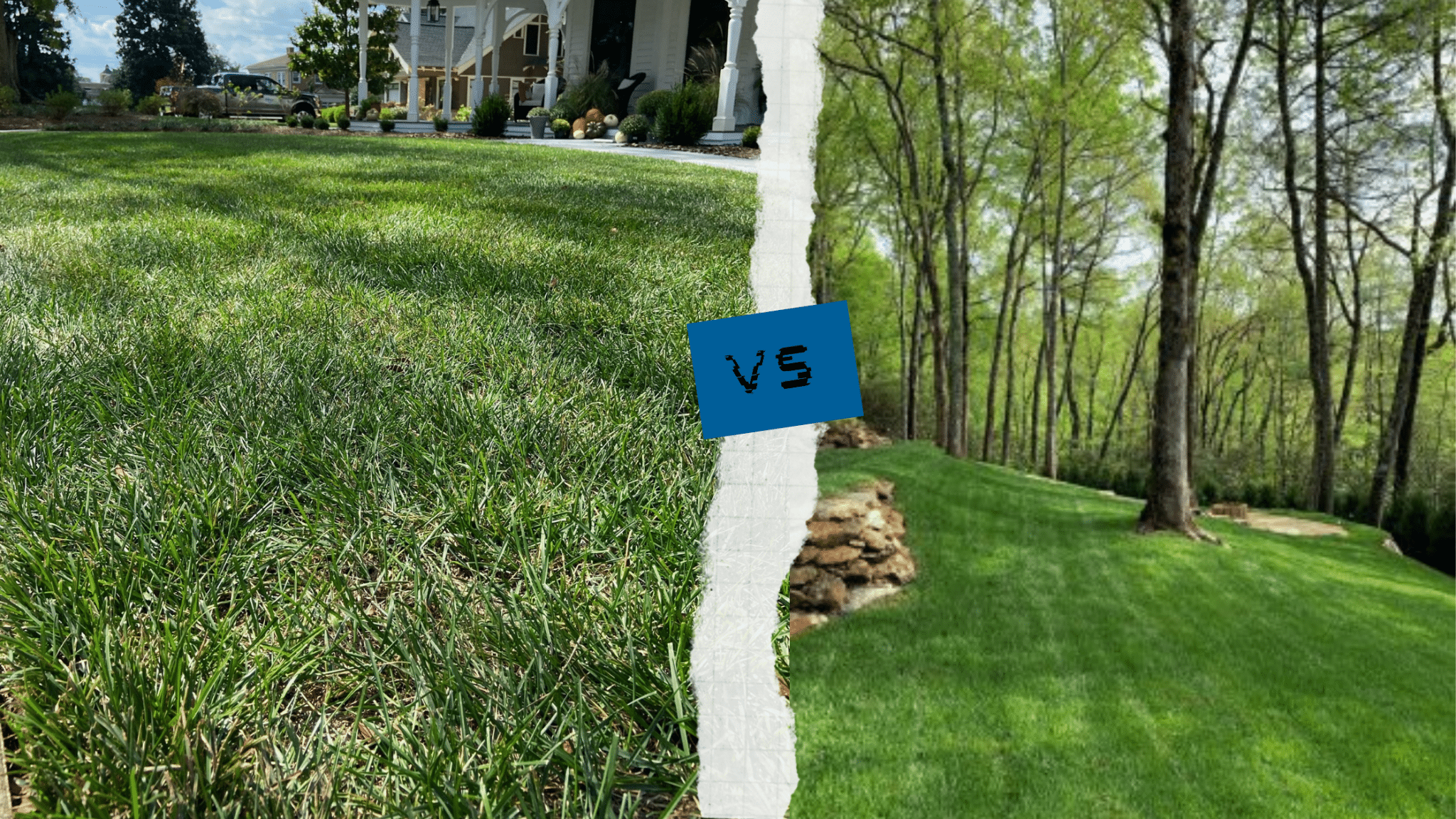
“Bluegrass VS Fescue – NG Turf – Premium …” from ngturf.com and used with no modifications.
Cool-season grasses peak in spring and fall, staying green through mild winters and tolerating cold that would kill warm-season varieties. The drought-resistant options in this category use root depth and density rather than dormancy to survive dry summers — a key difference that affects how you manage them.
1. Tall Fescue: Deep Roots That Reach Hidden Moisture
Tall Fescue is one of the most heat-tolerant cool-season grasses available, which makes it a valuable bridge variety for northern climates that experience summer heat waves. Its deep, fibrous root system is the core of its drought strategy — roots extend well below the surface, accessing soil moisture that shallow-rooted grasses simply can’t reach. Compared to fine fescues, Tall Fescue has wider, coarser blades, and once established, it requires minimal supplemental irrigation even through extended dry periods.
2. Fine Fescue: The Shade-Tolerant Urban Performer
Fine Fescue is the category name for a group of closely related fescue species — including Creeping Red Fescue, Chewings Fescue, and Hard Fescue — that share fine blade texture, low water needs, and exceptional shade tolerance. For urban gardens where buildings and trees create persistent shade, Fine Fescue consistently outperforms other cool-season options. It requires very little fertilization, holds color well through mild droughts, and blends cleanly with other low-water grass mixes.
3. Blue Grama Grass: A Prairie Native That Thrives on Neglect
Blue Grama grass is a fine-textured, warm-season native species that grows naturally across the western United States and Great Plains. It’s frequently sold as a seed mix alongside Buffalo grass, and the combination creates a tough, low-growing native lawn that needs almost no supplemental irrigation once established. Blue Grama reaches just 8 to 12 inches when unmowed and produces distinctive eyelash-shaped seed heads that add genuine visual interest through late summer. For urban gardeners in the West looking to use regionally appropriate species, it’s one of the most ecologically sound choices available.
Best Ornamental Drought-Resistant Grasses for Urban Spaces
Not every urban garden needs a traditional lawn. In many city spaces — courtyard gardens, rooftop beds, narrow borders, and container plantings — ornamental grasses deliver far more visual impact than conventional turf while using a fraction of the water. For more ideas on enhancing your urban garden, explore this urban greening guide.
Ornamental drought-resistant grasses bring texture, movement, and seasonal color to spaces where turf grass simply isn’t practical. Their architectural quality means they work as focal points, border edging, or mass plantings, depending on scale. Several varieties maintain year-round structure, giving urban gardens a designed, intentional appearance even through dry periods when flowering plants have faded. For more ideas on enhancing your garden, check out this urban greening guide.
The three standout ornamental varieties for urban drought conditions each bring something distinct to the table — one leads with color, one with height and elegance, and one with delicate texture suited to tight spaces. For more information on selecting the right grass, explore grasses for low-maintenance, drought-resistant lawns.
1. Blue Oat Grass: Striking Color With Minimal Water Needs
Blue Oat Grass (Helictotrichon sempervirens) produces intensely blue-silver foliage that holds its color through heat and dry periods, making it one of the most visually reliable ornamental grasses for drought-prone urban gardens. It forms neat, upright mounds reaching 2 to 3 feet in height, with slender arching blades that catch light beautifully in the morning and late afternoon. It performs best in full sun with well-drained soil and requires very little fertilization or supplemental watering once established. As a cool-season ornamental, it looks its best in spring and fall, maintaining structural presence through summer drought without collapsing.
2. Feather Reed Grass: Tall, Elegant, and Drought Proven
Feather Reed Grass (Calamagrostis x acutiflora ‘Karl Foerster’) is one of the most widely planted ornamental grasses in urban landscapes, and for good reason. It grows in tight, upright columns reaching 4 to 6 feet, making it ideal for narrow urban spaces where a vertical accent is needed without sprawling. Its feathery pink-bronze plumes emerge in early summer and slowly fade to warm gold through fall and winter, providing multi-season interest. It tolerates both drought and occasional wet conditions — a rare combination that makes it exceptionally versatile across different urban soil situations. For more tips on urban gardening, check out this urban greening guide.
3. Mexican Feather Grass: Airy Texture for Tight Urban Spaces
Mexican Feather Grass (Nassella tenuissima) creates a soft, flowing effect that few other ornamental grasses can match in a compact footprint. Its ultra-fine, hair-like blades move with the lightest breeze, giving urban garden beds a dynamic, alive quality even on still days. It thrives in hot, dry, sunny conditions and requires excellent drainage to perform well. One important note — in some western U.S. states, Mexican Feather Grass is classified as invasive due to prolific self-seeding. Always check local regulations before planting, and consider deadheading spent plumes to control spread in urban settings.
How to Choose the Right Drought-Resistant Grass for Your Garden
Choosing a drought-resistant grass isn’t just about picking the most water-efficient variety on a list — it’s about matching the right plant to your specific conditions. A grass that thrives in a Phoenix front yard will struggle in a Chicago rooftop garden, even if both gardeners are trying to solve the same water problem.
Three factors consistently determine whether a drought-tolerant grass succeeds or fails in an urban setting: climate zone compatibility, soil type and drainage quality, and the actual sun and shade pattern in your specific space. Get all three right, and the establishment is relatively straightforward. Miss one, and even the toughest grass will underperform.
Match Your Grass to Your Climate Zone First
USDA Hardiness Zones provide a starting framework, but for grass selection, the warm-season versus cool-season distinction is the more practical dividing line. Warm-season grasses like Bermuda, Zoysia, Buffalo, and Bahia perform best in zones 7 through 10, where summers are long and hot. Cool-season varieties like Tall Fescue and Fine Fescue are better suited to zones 3 through 7, where summer heat is intense but shorter in duration. In transitional zones — roughly a band stretching from Northern California across to the mid-Atlantic — both categories can work, but variety selection becomes more critical, and local nursery expertise is genuinely valuable.
Soil Type and Drainage Determine Long-Term Survival
Drought-resistant grasses are tough, but they are not invincible against poorly draining soil. In compacted urban soils where water pools after rain rather than percolating through, even drought-tolerant roots will rot during wet periods, leaving the lawn unable to survive when dry conditions arrive. The irony is that drainage improvement is often more important for drought-tolerant success than the grass variety itself.
Sandy soils, common in coastal urban areas, drain quickly but hold almost no nutrients or moisture. Bahia grass and Buffalo grass handle these conditions better than most. Clay-heavy urban soils retain moisture longer but compact easily; Tall Fescue and Zoysia tolerate clay better than fine-textured ornamental varieties. Loamy, well-structured soils give you the widest selection of viable options across both warm and cool-season categories.
Sun Exposure vs. Shade Tolerance: What to Check Before Buying
Most drought-resistant grasses are sun-lovers. Bermuda grass in particular demands full sun — at least 6 to 8 hours of direct light daily — to develop the dense root system that gives it drought resilience. Planting it under a tree canopy or in the shadow of a building wall produces thin, weak turf that struggles through both dry and wet conditions.
Fine Fescue varieties, especially Creeping Red Fescue and Hard Fescue, are the standout exceptions. They maintain drought tolerance even in partially shaded conditions, which makes them the go-to recommendation for urban gardens with irregular light patterns. Zoysia grass also handles light shade better than most warm-season grasses, tolerating dappled shade without the dramatic thinning that affects Bermuda.
Before purchasing seed or sod, spend a full day observing how light moves across your garden space. Note which areas receive consistent sun from morning to midday, which spots are shaded by afternoon, and where deep shade persists for most of the day. This single observation exercise will eliminate several grass varieties from consideration immediately and sharpen your decision considerably.
Tips to Establish Drought-Resistant Grass Successfully
Establishment Stage Key Action Timing Common Mistake to Avoid Soil Preparation Loosen compacted soil to 6 inches, amend with compost 2–4 weeks before planting Skipping aeration in clay-heavy urban soils Seeding / Sodding Plant warm-season in late spring; cool-season in early fall Species-specific window Planting outside the active growth window Early Watering Water daily for the first 2 weeks to support root development Weeks 1–2 post-planting Reducing water too early before roots are anchored Transition to Drought Mode Gradually reduce watering frequency over weeks 3–6 Weeks 3–6 post-planting Continuing heavy irrigation that prevents deep root growth First Mow Mow when the grass reaches 1.5x its target height 4–8 weeks post-planting Mowing too short, too early, stressing new roots
Establishment is the most water-intensive phase for any drought-resistant grass — and it’s also where most failures happen. New roots need consistent surface moisture to penetrate the soil and anchor themselves before they can begin accessing deeper water reserves. Cutting back irrigation too soon during this window is the single most common reason drought-tolerant lawns fail to establish properly.
The transition period between weeks three and six is where patience pays off. As you gradually reduce watering frequency, the grass roots respond by growing deeper in search of moisture. This is the biological process that creates the deep root systems that define drought tolerance — and it only happens if you resist the urge to keep irrigating at the same rate as the first two weeks.
Sod establishes faster than seed in most conditions, typically anchoring within two to three weeks versus four to eight weeks for seeded lawns. For urban gardeners who want faster results — particularly when replacing a failing lawn mid-season — sod is worth the additional cost. However, seeding is significantly more economical for larger areas and gives you access to a wider variety selection, since not all drought-tolerant cultivars are available in sod form.
Best Time of Year to Plant for Strong Root Development
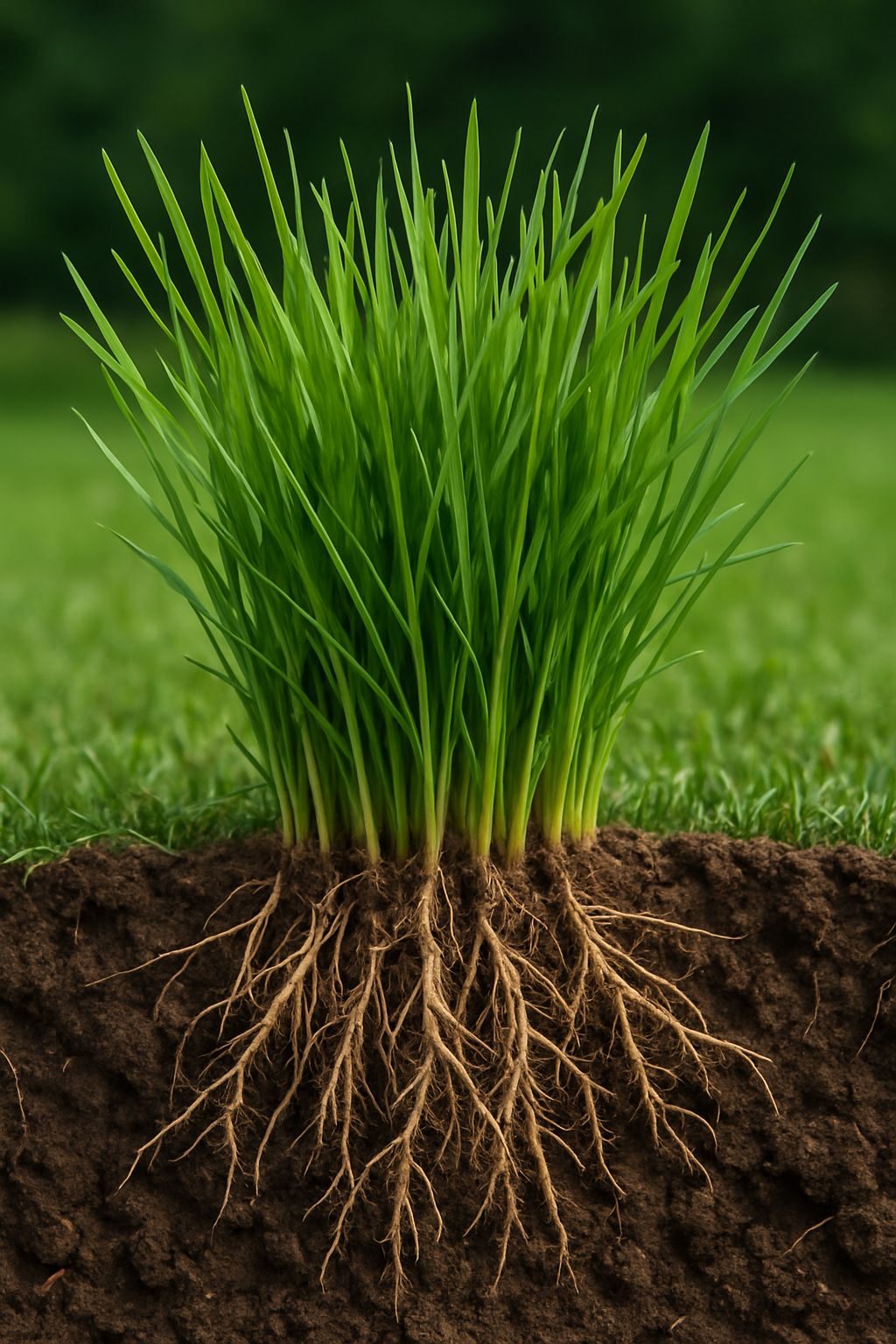
Timing your planting to align with the grass’s natural growth cycle gives roots the best possible conditions to establish before facing stress. Planting outside this window forces new grass to establish in either peak heat or approaching cold — both of which slow root development and increase the risk of failure. For more information on choosing the right drought-resistant grasses, check out this guide.
Warm-season grasses should be planted in late spring, ideally when soil temperatures have consistently reached 65°F or above. This gives varieties like Bermuda, Zoysia, Buffalo, and Bahia their full growing season to develop root systems before the first frost. In most southern U.S. climates, that planting window runs from mid-April through June.
Cool-season grasses perform best when planted in early fall — typically late August through October depending on your location. Cooler air temperatures reduce heat stress on new seedlings, while soil still retains enough warmth to encourage root growth before winter dormancy. Spring planting is possible for cool-season varieties, but it gives them less time to establish before summer heat arrives.
- Warm-season grass planting window: Late spring, soil temp consistently above 65°F
- Cool-season grass planting window: Early fall, late August through October
- Avoid summer planting for cool-season grasses — heat stress significantly reduces establishment success
- Avoid late fall planting for warm-season grasses — roots won’t establish before frost arrives
- Sod can extend the planting window slightly in both directions compared to seeding, but still performs best within the optimal timing range
Soil Preparation Steps That Boost Drought Tolerance
Good soil preparation before planting multiplies the drought tolerance of any grass variety. Compacted urban soil is the enemy of deep root growth — and deep roots are exactly what drought-tolerant grasses depend on. Start by aerating the planting area to a depth of at least 6 inches, breaking up compaction and creating channels for roots to penetrate. Follow with a 2 to 3 inch layer of compost worked into the top layer of soil, which improves both drainage in clay-heavy soils and water retention in sandy soils. A soil pH test is worth doing before planting — most drought-tolerant lawn grasses perform best in a pH range of 6.0 to 7.0, and adjusting pH at the preparation stage is far easier than correcting it once grass is established.
Water-Saving Techniques That Maximize Results
Even the toughest drought-resistant grass benefits from smart water management. The goal isn’t to eliminate watering entirely — it’s to make every drop count so your lawn builds deeper roots, stays healthier through dry spells, and demands less intervention over time.
These four techniques work with any drought-tolerant grass variety and compound each other’s effectiveness. Implement all four together, and you’ll notice a significant difference in how your lawn handles prolonged dry periods compared to irrigation alone.
1. Mulch Beds to Lock in Soil Moisture
A 2 to 3-inch layer of organic mulch around the edges of lawn areas and throughout adjacent garden beds slows evaporation from the soil surface dramatically. In urban gardens where heat radiates off surrounding hard surfaces, this moisture retention effect is especially valuable — mulched soil stays noticeably cooler and holds water two to three times longer than exposed bare soil. Use shredded bark, wood chips, or straw, and keep mulch pulled back slightly from grass crowns to prevent moisture-related rot at the base of the plant.
2. Install Drip Irrigation for Targeted Watering
Overhead sprinklers lose a significant portion of their water to evaporation before it ever reaches the root zone — especially in the wind and heat typical of urban environments. Drip irrigation delivers water directly to the soil at the root level, eliminating surface evaporation loss and reducing the risk of fungal disease that comes from wet foliage. For urban gardens with defined beds and border grass areas, even a basic drip system with a timer can reduce water usage substantially while ensuring drought-tolerant grasses receive consistent moisture during the critical establishment phase.
3. Harvest Rainwater to Supplement Dry Periods
A simple rain barrel connected to a downspout can collect hundreds of gallons of free water during a single moderate rainfall event. That stored water becomes an invaluable resource during dry stretches between rain events, allowing you to supplement your drought-resistant lawn without drawing on municipal supply. In urban gardens with limited roof area, even a single 55-gallon barrel provides meaningful capacity for targeted spot watering. Before installing a rainwater harvesting system, check local regulations — some U.S. states have historically restricted collection, though most now permit residential use.
For larger urban gardens, connecting multiple barrels in series or upgrading to a 250 to 500-gallon tank extends harvesting capacity significantly. Pairing stored rainwater with a drip irrigation system and a basic timer creates a nearly self-managing low-water garden setup that requires minimal manual intervention through most of the growing season.
4. Water Only in Early Morning or Evening to Reduce Evaporation
The timing of irrigation matters as much as the volume applied. Watering during midday heat — when temperatures peak, and wind is often strongest in urban areas — can lose up to 30% of applied water to evaporation before it reaches the root zone. Early morning watering, ideally between 5 and 9 a.m., gives water time to soak into the soil before heat builds, while allowing foliage to dry fully during the day, which reduces fungal disease risk. Evening watering is the second-best option when morning watering isn’t practical, though wet foliage overnight can encourage mildew in humid climates.
Consistent early-morning watering also trains drought-tolerant grass roots to grow deeper. When water is applied in the cool morning and absorbed fully before evaporation begins, roots follow moisture downward rather than staying shallow near the surface. Over several weeks, this watering discipline produces a noticeably more drought-resilient lawn than the same volume of water applied at random times throughout the day.
A Low-Water Urban Garden Is Closer Than You Think
The shift from a water-hungry conventional lawn to a drought-resistant urban garden doesn’t require a complete overhaul overnight. Start with one section — replace the most stressed, high-maintenance area first with a drought-tolerant variety matched to your climate zone and soil type. Get the establishment right, implement the water-saving techniques, and within one full growing season, you’ll have direct evidence of what’s possible. That first successful patch becomes the blueprint for the rest of the garden.
The grasses, the timing, the soil prep, the irrigation discipline — all of it stacks together into a system that genuinely works with your environment instead of fighting it. A lawn that stays green through a dry summer without constant watering isn’t a fantasy. It’s the predictable result of choosing the right plants and giving them a proper start. For more information on suitable plants, consider exploring drought-tolerant plants.
Frequently Asked Questions
Here are the most common questions urban gardeners ask when making the switch to drought-resistant grasses.
What is the most drought-resistant grass for urban gardens?
Buffalo grass is widely regarded as the most drought-resistant lawn grass available, capable of surviving on as little as one inch of water per month once established. It’s a native North American prairie species that evolved through centuries of low-rainfall Great Plains conditions, giving it drought tolerance that no cultivated variety can fully match. For urban gardeners in the western or central United States, it’s the most water-efficient lawn option available. In the Southeast, Bahia grass and Zoysia grass are strong alternatives that combine drought tolerance with better performance in humid, high-heat conditions.
Can drought-resistant grasses grow in shaded urban spaces?
- Fine Fescue varieties (Creeping Red, Hard, Chewings) — best overall shade tolerance among drought-resistant grasses, handles dappled to moderate shade
- Zoysia grass — tolerates light to moderate shade better than most warm-season grasses, maintains density with 3 to 4 hours of direct sun
- Tall Fescue — handles partial shade reasonably well, though drought performance is slightly reduced in low-light conditions
- Bermuda grass — requires full sun (minimum 6 hours), not suitable for shaded urban spaces
- Buffalo grass — a full sun species, will thin out significantly in shade
Shade in urban environments is rarely uniform — buildings and trees create shifting patterns throughout the day and across seasons. Before ruling a space out for drought-resistant grass, observe how many hours of direct sun the area receives at its lowest point (typically in late fall or winter). If a spot receives at least 3 to 4 hours of direct sunlight daily, Fine Fescue or Zoysia can establish and maintain reasonable drought tolerance.
In spaces with deep, persistent shade — north-facing walls, narrow alleys, or spots blocked by dense overhead canopy — ornamental grasses are often a more realistic solution than turf grass. Varieties like Creeping Red Fescue used as a ground cover rather than a traditional lawn can fill shaded urban spaces with low-maintenance texture without the thinning and bare-patch problems that turf grasses develop under low-light stress.
Mixing Fine Fescue into a seed blend with small amounts of Kentucky Bluegrass or Tall Fescue creates a shade-tolerant, drought-resistant lawn mix that handles the irregular light patterns typical of urban gardens better than any single species planted alone. Many commercially available “low-maintenance” lawn seed mixes use exactly this blending approach.
The honest answer is that no grass thrives in true deep shade — drought-resistant or otherwise. If your urban space receives fewer than 3 hours of direct sun daily, redirecting toward shade-tolerant ground covers, ornamental grasses, or hardscaping with planted borders will deliver a far better long-term result than trying to force turf grass to perform in conditions it can’t support.
How long does drought-resistant grass take to establish?
Establishment time varies significantly between species and between seed versus sod installation. As a general benchmark, most drought-resistant lawn grasses require between four and twelve weeks from planting to achieve sufficient root development to begin reducing irrigation frequency. Sod establishes faster than seed — typically anchoring within two to three weeks — while seeded lawns need four to eight weeks before roots are deep enough to access sub-surface moisture independently.
Warm-season grasses planted within their optimal spring window tend to establish on the faster end of this range because soil temperatures support rapid root development from day one. Cool-season grasses planted in early fall benefit from cooling air temperatures that reduce seedling stress, but root development is slightly slower than warm-season species at their peak. In both cases, the first two weeks after planting are the most critical — consistent surface moisture during this period determines whether roots anchor properly or struggle to penetrate compacted soil.
Full drought tolerance — meaning the ability to handle extended dry periods without supplemental irrigation — typically develops over one to two full growing seasons, not just the initial establishment phase. During the first season, treat your drought-resistant grass as you would any new planting: water appropriately, avoid heavy traffic, and mow at the correct height for the species. By the second season, the deep root system that defines true drought resilience will be in place, and the lawn will perform as expected through dry periods.
Do drought-resistant grasses go dormant in winter?
Most warm-season drought-resistant grasses — including Bermuda, Zoysia, Buffalo, and Bahia — go dormant and turn brown once temperatures drop below approximately 50°F. This is a natural survival mechanism, not damage, and the grasses green up again reliably in spring as soil temperatures rise. Cool-season drought-resistant varieties like Tall Fescue and Fine Fescue remain green through winter in most climates, going semi-dormant only during the hottest part of summer rather than the cold months. Urban gardeners in transitional climate zones sometimes overseed dormant warm-season lawns with annual ryegrass in fall to maintain winter greenery, though this practice adds irrigation and maintenance requirements that offset some of the water-saving benefits of the underlying drought-tolerant species.
Can I mix different drought-resistant grass varieties together?
Mixing drought-resistant grass varieties is not only possible — in many urban garden situations, it’s the smarter approach. A single-species lawn is optimized for one specific set of conditions, which works well when your entire garden has uniform sun exposure, consistent soil type, and even moisture distribution. Most urban gardens don’t fit that description. Buildings, trees, fences, and paved surfaces create microclimates within a single small garden where conditions can shift dramatically across just a few feet.
A well-chosen grass blend distributes risk across species with complementary strengths. Fine Fescue handles shade; Tall Fescue manages heat and moderate traffic; Buffalo grass or Blue Grama cover the driest, most exposed areas. Together they produce a lawn that stays cohesive in appearance while each variety performs in the microclimate it’s best suited for.
- Cool-season blend: Tall Fescue + Fine Fescue — drought-tolerant across both sunny and shaded areas in northern climates
- Warm-season blend: Buffalo grass + Blue Grama — native prairie mix, extremely low water needs, suited to western and central U.S. gardens
- Transitional zone blend: Zoysia + Fine Fescue — handles both summer heat and winter cold in mid-Atlantic and similar climates
- Avoid mixing Bermuda grass with finer-textured species — its aggressive spreading habit tends to overtake less competitive grasses over time
When buying seed blends, look for mixes specifically labeled as drought-tolerant or low-water, since these are formulated with compatible species ratios already calculated for performance. Generic lawn seed mixes often include species that require regular irrigation and will underperform or die back during dry periods, leaving gaps that weeds quickly colonize.
The most important rule with mixed grass lawns is consistency in mowing height. Different grass species have different ideal mowing heights — Bermuda performs best kept at 1 to 1.5 inches, while Tall Fescue prefers 3 to 4 inches. Blending species with incompatible mowing requirements creates ongoing management tension. Stick to varieties with similar height preferences, and your mixed lawn will maintain a consistent, healthy appearance without requiring species-specific management across different zones.
For urban gardens with clearly distinct zones — a sunny open center, shaded border edges, and a dry slope or raised section — consider treating each zone as a separate planting rather than seeding the entire space with one mix. This zone-by-zone approach gives each drought-resistant variety the conditions in which it performs best and produces a healthier, lower-maintenance result than forcing a single blend to cover incompatible microclimates. For more ideas on how to optimize your garden, explore this urban greening guide.
For expert guidance on building a water-smart urban garden from the ground up, visit our resource hub where experienced gardeners share practical, climate-specific advice on drought-resistant planting strategies. For additional insights, explore our guide on pollen-free terrace gardens for the best plant choices and tips.