Article-At-A-Glance: Eco-Friendly Air Filtration Solutions
- Indoor air can be up to 5 times more polluted than outdoor air, making effective home filtration a genuine health priority — not just a lifestyle choice.
- True eco-friendly air filters use sustainable materials like cotton, bamboo, and recycled paper, and are built to be washed, reused, or fully biodegraded — drastically cutting landfill waste.
- HEPA technology remains the gold standard, capturing 99.97% of airborne particles at 0.3 microns, including dust, pollen, pet dander, and mold spores.
- Brands like Blueair, Austin Air, and Honeywell each take a different approach to eco-conscious filtration — and the right choice depends entirely on your specific indoor air problem.
- Keep reading to find out which certifications actually matter when buying an eco air filter, and which ones are just greenwashing.
Most people don’t realize the air inside their home could be quietly working against them. The U.S. Environmental Protection Agency has identified indoor air pollution as one of the top five environmental risks to public health, and the average person spends roughly 90% of their time indoors. That statistic alone should shift how seriously we think about what we’re breathing every single day.
For anyone researching smarter filtration options, eco-friendly air filtration solutions have matured well beyond basic green marketing — today’s options combine genuine filtration performance with responsible materials and design. Whether you’re managing allergies, reducing VOC exposure, or simply trying to make a lower-impact choice, there’s now a compelling case for going eco from both a health and sustainability standpoint.
Your Indoor Air Is More Polluted Than You Think
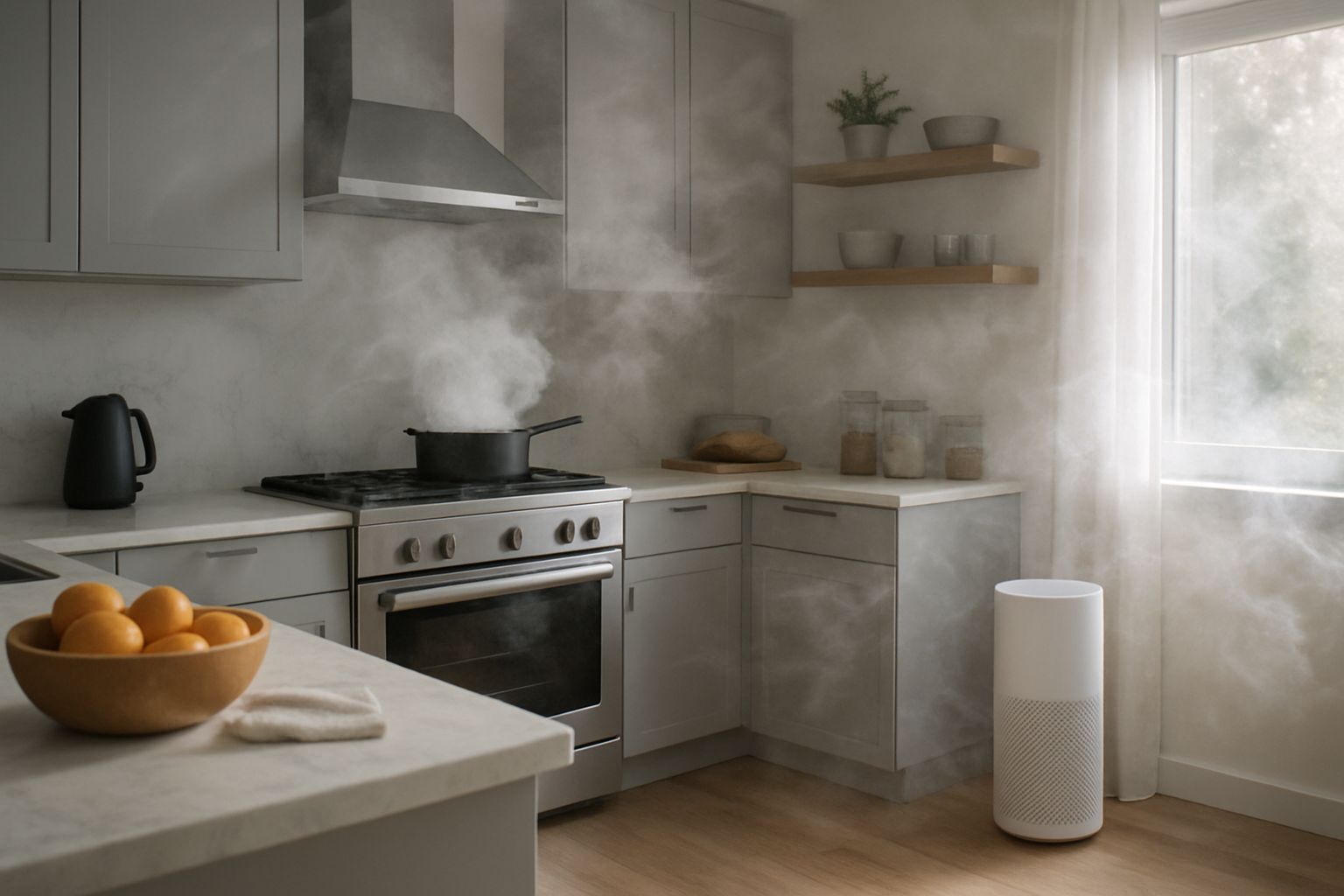
Outdoor pollution gets most of the headlines, but indoor air quality is often significantly worse. Common household sources of indoor air pollution include cooking fumes, cleaning product chemicals, off-gassing from furniture and carpets, mold spores from damp areas, and pet dander. These contaminants accumulate in enclosed spaces where ventilation is limited, and standard building construction only makes the problem worse by sealing homes tightly for energy efficiency.
Volatile organic compounds, or VOCs, are particularly concerning. These are gases emitted from products like paints, varnishes, wax, and many common cleaning supplies. Prolonged VOC exposure has been linked to headaches, liver and kidney damage, and central nervous system effects. For households with children, elderly residents, or anyone with a respiratory condition, the stakes are even higher.
This is exactly where a well-chosen eco-friendly air filter stops being optional and starts being essential.
What Makes an Air Filter Truly Eco-Friendly
Not every filter marketed as “green” earns the label. A genuinely eco-friendly air filter has to meet criteria across its entire lifecycle — from what it’s made of, to how it performs, to what happens when it’s disposed of. Performance cannot be sacrificed for sustainability, and the best options don’t ask you to choose between the two.
Sustainable Materials: Cotton, Bamboo, and Recycled Paper
The material composition of an air filter matters more than most buyers realize. Traditional filters rely heavily on synthetic fiberglass or petroleum-based polyester, both of which carry a significant manufacturing footprint and don’t break down in landfills. Eco-conscious alternatives replace these with natural or recycled materials that perform comparably while doing far less environmental damage.
Cotton-based filter media is washable and highly durable, making it one of the most practical choices for long-term use. Bamboo-derived filtration layers offer natural antimicrobial properties, which is a meaningful bonus in high-humidity environments where mold growth is a concern. Recycled paper filter media, when properly treated, deliver solid particulate capture rates while diverting material from the waste stream before it ever reaches a landfill. For more sustainable gardening solutions, explore our best low-maintenance garden plant kits.
Biodegradable vs. Recyclable Filters: What Is the Difference
These two terms get used interchangeably, but they describe very different end-of-life outcomes. A biodegradable filter will break down naturally over time through biological processes, ideally composting rather than sitting in a landfill for decades. A recyclable filter, on the other hand, must be processed through a specific recycling stream — which means it only stays out of landfill if the infrastructure to handle it actually exists in your area. Biodegradable options generally offer a cleaner, lower-friction disposal path for most households.
Energy Consumption Ratings to Look For
An eco-friendly filter paired with an energy-hungry purifier unit undercuts the whole point. Look for air purifiers carrying the ENERGY STAR certification, which guarantees the unit uses at least 25% less energy than conventional models. For filter media itself, lower air resistance ratings (measured as pressure drop in Pascals) mean your HVAC system doesn’t have to work as hard to push air through — saving energy and extending equipment life simultaneously. To further understand the impact of such choices, explore our airborne irritants guide for insights on health and energy efficiency.
How Eco-Friendly Air Filtration Technology Actually Works
Understanding the mechanics behind filtration helps you match the right technology to your actual air quality problem. Eco-friendly filters don’t operate on a single principle — they often layer multiple capture methods to handle different particle types and sizes.
HEPA Filtration: Capturing 99.97% of Particles at 0.3 Microns
HEPA stands for High-Efficiency Particulate Air, and the standard is precise: a true HEPA filter must capture at least 99.97% of particles that are 0.3 microns in diameter. That size — 0.3 microns — is specifically targeted because it represents the hardest particle size to trap, not the smallest. Particles both larger and smaller are actually easier to capture through different physical mechanisms.
In eco-friendly designs, HEPA media is increasingly being produced using recycled or sustainably sourced fiber materials without compromising that 99.97% threshold. Some manufacturers have also developed washable HEPA-type filters, though it’s worth noting that only filters explicitly labeled “True HEPA” meet the certified standard — “HEPA-type” or “HEPA-like” filters do not.
Activated Carbon Layers and VOC Absorption
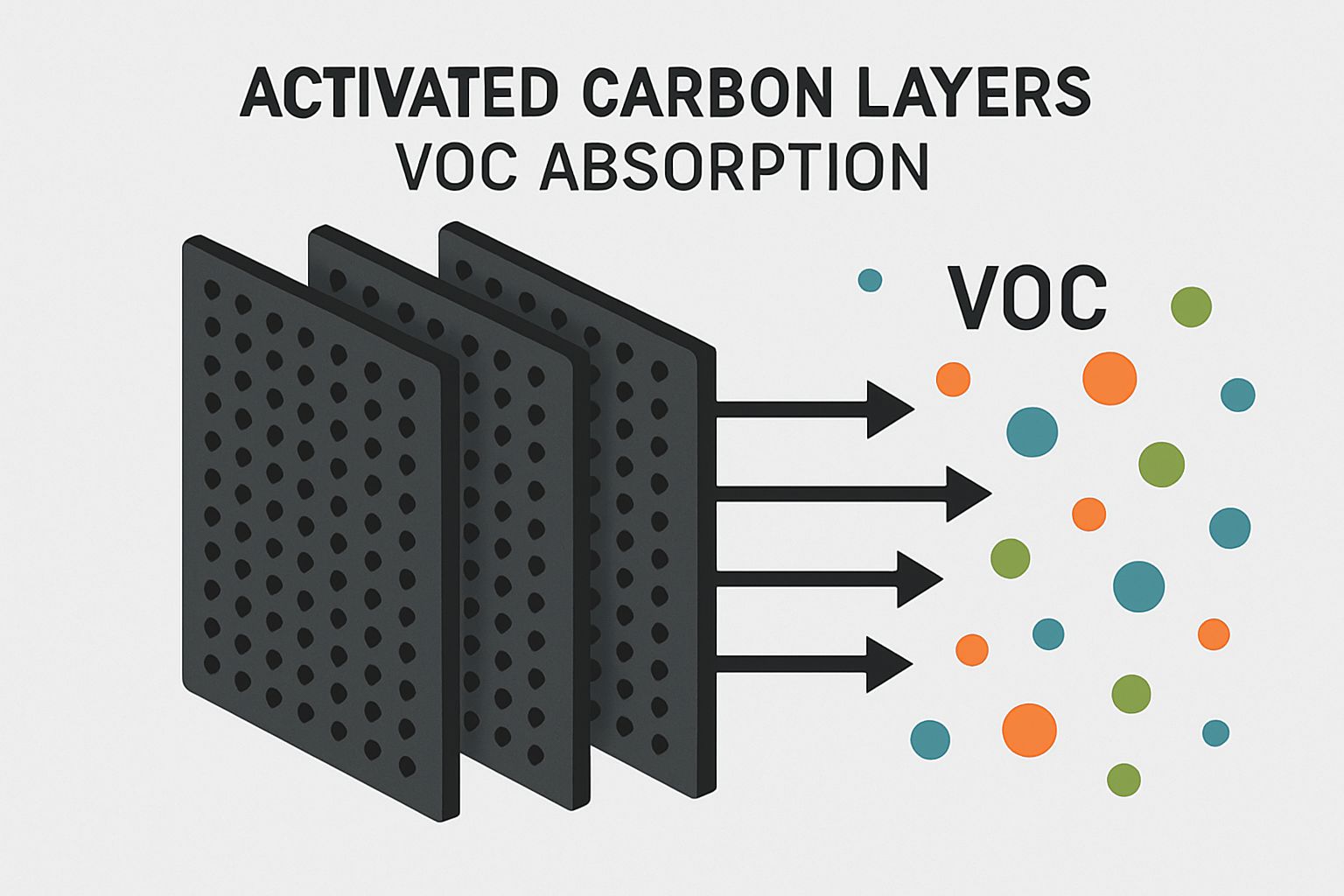
HEPA filtration excels at particles but does nothing for gases. That’s where activated carbon comes in. Activated carbon works through a process called adsorption — VOC molecules and other gaseous pollutants bond to the enormous surface area within the carbon’s porous structure. A single gram of activated carbon can have a surface area exceeding 500 square meters, which explains its remarkable capacity for trapping odors, chemical fumes, and VOCs that HEPA layers simply pass through. Eco-friendly versions often source activated carbon from coconut shells or other renewable biomass rather than coal-derived sources.
Electrostatic Filtration and How It Reduces Waste
Electrostatic filters use an electrical charge — either self-generated through airflow or externally powered — to attract and trap airborne particles much like a magnet. The significant eco advantage here is that most electrostatic filters are permanently washable, eliminating the replacement cycle. Blueair’s filtration systems, for example, combine mechanical and electrostatic methods to maintain high capture rates at lower fan speeds, which directly reduces both energy consumption and noise output.
The tradeoff with electrostatic technology is maintenance discipline. A filter that isn’t washed on schedule loses its charge effectiveness and can actually release captured particles back into the air. Consistent cleaning — typically every one to three months, depending on air quality — is non-negotiable for this filter type to perform as intended.
The Real Benefits of Switching to Eco Air Filters
Switching to an eco-friendly air filter isn’t just a feel-good decision — it delivers measurable improvements across health, household budget, and environmental impact. The benefits compound over time, meaning the longer you use a well-chosen eco filter, the more value it returns on every front. For most households, the switch pays for itself within the first year. To enhance the benefits, consider integrating solutions for clean indoor air into your home environment.
What often surprises first-time eco filter buyers is how directly air quality improvements translate into daily quality of life. Better sleep, fewer allergy flare-ups, reduced headaches, and less dust settling on surfaces are all commonly reported outcomes within the first few weeks of use. These aren’t minor perks — for anyone managing a chronic respiratory condition, they can be genuinely life-changing. To explore more about eco-friendly air filtration systems, check out this ultimate guide.
Allergy and Asthma Relief Through Cleaner Indoor Air
The connection between indoor air quality and respiratory health is well-established. Dust mites, pollen, pet dander, and mold spores are the primary triggers for both allergy symptoms and asthma attacks, and all four are effectively captured by True HEPA filtration. For households where at least one person manages a respiratory condition, running an eco-friendly HEPA air purifier in the bedroom alone can significantly reduce nighttime symptom frequency.
- Dust mite allergens — typically 0.5 to 50 microns in size, well within HEPA capture range
- Pollen particles — range from 10 to 100 microns, among the easiest for HEPA filters to trap
- Pet dander — as small as 2.5 microns, requiring True HEPA certification to reliably capture
- Mold spores — range from 1 to 30 microns, captured effectively by both HEPA and electrostatic filter types
- VOCs from cleaning products — require an activated carbon layer in addition to HEPA media for effective removal
It’s worth noting that air filtration works best as part of a broader approach to indoor air quality. Reducing the sources of pollutants — vacuuming with a HEPA-equipped vacuum, washing bedding weekly, and controlling indoor humidity — amplifies everything a good air filter does. Filtration handles what source control can’t eliminate entirely.
For asthma sufferers specifically, the Asthma and Allergy Foundation of America recommends using air purifiers with True HEPA filters as a core management strategy. Eco-friendly models that meet this standard deliver identical therapeutic benefit to conventional HEPA units while producing less waste and consuming less energy over their operational lifetime.
Long-Term Cost Savings From Washable and Reusable Designs
The upfront cost of a quality eco air filter is almost always higher than a disposable alternative — and that comparison misses the point entirely. The real cost of a disposable filter includes every replacement purchase over the product’s life, plus the environmental cost of manufacturing and disposing of each one. Washable and reusable eco filters eliminate the replacement cycle, which is where the savings actually accumulate.
A mid-range disposable HVAC filter typically costs between $15 and $40 and needs replacing every one to three months. Over five years, that adds up to between $300 and $960 in filter costs alone, not counting the time and effort of sourcing and installing each replacement. A quality washable filter in the same price range — such as the Washable Electrostatic Furnace Filter by Nordic Pure — can last a decade or more with proper maintenance, reducing that five-year spend to the cost of a single purchase.
The savings calculation shifts even further when you factor in HVAC system health. Clogged or poorly fitted disposable filters force your heating and cooling system to work harder, increasing energy bills and accelerating wear on the blower motor and heat exchanger. A washable filter that’s regularly cleaned maintains consistent airflow resistance, keeping your HVAC operating at its designed efficiency rating.
Cost Comparison Over 5 Years:
📌 Disposable Filter (replaced every 2 months): 30 replacements × $25 average = $750 spent
📌 Washable Eco Filter (one-time purchase + water to clean): $60 to $80 total — savings of $670+
📌 Added benefit: Zero filter packaging waste, zero trips to the hardware store, consistent HVAC airflow efficiency maintained throughout.
Reducing Landfill Waste From Disposable Filter Replacements
The scale of disposable filter waste is rarely discussed, but it’s significant. The U.S. alone disposes of hundreds of millions of HVAC and air purifier filters annually, most of which are made from non-recyclable composite materials that sit in landfills for generations. Each individual filter seems trivial, but across the lifetime of a single household, the accumulated waste from disposable filters is substantial.
Switching to a washable or biodegradable filter option directly removes your household from that waste stream. Biodegradable filter options made from cotton or bamboo fiber break down without leaving persistent synthetic residue. Washable electrostatic filters, maintained properly, can serve a household for a decade while generating zero replacement waste. It’s one of those rare situations where the environmentally responsible choice is also the more economical one.
Top Eco-Friendly Air Filtration Brands Worth Your Money
The eco air filter market has expanded considerably, and not every brand that uses green language delivers on actual performance or sustainability credentials. The following three brands have demonstrated consistent results across both filtration effectiveness and environmental responsibility — each with a distinct approach that suits different household needs.
Blueair: Mechanical and Electrostatic Filtration Combined
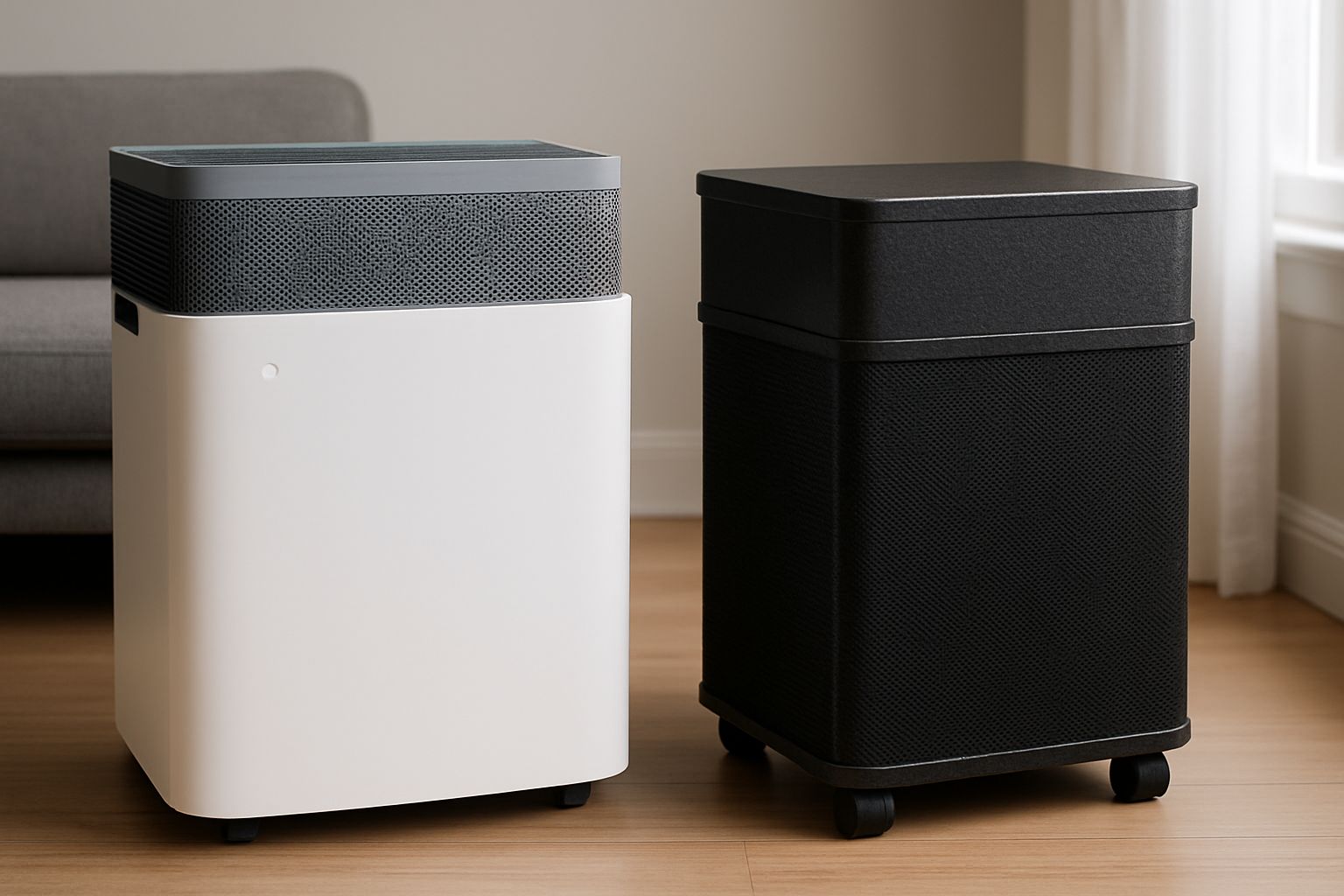
Blueair’s HEPASilent™ technology is one of the most well-engineered filtration systems available for residential use. By combining mechanical and electrostatic filtration in a single pass, Blueair units like the Blueair Blue Pure 211+ achieve particle capture rates comparable to True HEPA standards while operating at significantly lower fan speeds. Lower fan speed means less energy consumed and less noise produced — the Blue Pure 211+ draws as little as 30 watts on its lowest setting, which is remarkably efficient for a unit designed to handle rooms up to 540 square feet. The washable pre-filter is made from recycled plastic bottles, adding another layer of environmental accountability to the product design.
Austin Air: Non-Toxic Materials for Sensitive Households
Austin Air takes a more medically oriented approach to air filtration, and it shows in the construction of units like the Austin Air HealthMate HM400. The HM400 uses a genuine True HEPA filter combined with 15 pounds of activated carbon and zeolite — an unusually large carbon bed designed for maximum VOC and chemical gas absorption. All materials used in Austin Air units are non-toxic and specifically chosen for households where occupants have chemical sensitivities, multiple chemical sensitivity (MCS) syndrome, or severe respiratory conditions. The filters are rated for a 5-year lifespan under normal operating conditions, which dramatically reduces replacement frequency compared to standard purifier filters. For more information on eco-friendly air filtration, you can check out this ultimate eco-friendly air filtration system.
Honeywell HEPA Filters: Widely Accessible Allergen Control
Honeywell occupies the most accessible tier of the eco-conscious HEPA filter market. Units like the Honeywell HPA300 True HEPA Allergen Remover are widely available, straightforward to operate, and deliver certified True HEPA performance for rooms up to 465 square feet. While Honeywell’s filters are not washable, the brand has made meaningful strides in packaging sustainability and filter recyclability. For households looking for a low-barrier entry point into genuine HEPA filtration without committing to a premium price point, Honeywell remains a reliable and honest option. For more information on reducing airborne irritants, check out our guide on health impacts.
How to Choose the Right Eco Air Filter for Your Home
Choosing the right eco air filter comes down to matching the technology to your specific air quality problem, your room size, and your tolerance for maintenance. A filter that’s perfect for a pet-heavy household with dander and odor concerns will be a different product than the ideal choice for someone managing chemical sensitivities in a small apartment. Starting with a clear diagnosis of your indoor air problem — rather than defaulting to the most expensive or most marketed option — will always produce a better outcome. For additional insights on managing airborne irritants, refer to our guide on health impacts.
Match Filter Type to Your Biggest Indoor Air Problem
Every indoor air quality problem has a best-fit filtration solution, and buying the wrong type means paying for performance you’ll never actually use. Start by identifying your primary concern before comparing any products.
- Dust, pollen, and pet dander: True HEPA mechanical filtration is your priority — look for certified 99.97% capture at 0.3 microns
- Cooking odors, smoke, or chemical fumes: You need a substantial activated carbon layer alongside HEPA media — thin carbon pre-filters won’t cut it for serious VOC loads
- Mold and bacteria concerns: Electrostatic filtration or UV-C enhanced eco units add antimicrobial capability that standard HEPA alone doesn’t provide
- General maintenance and HVAC protection: A washable electrostatic furnace filter handles large particle capture while protecting your system — no purifier unit required
- Multiple concerns simultaneously: A multi-stage unit like the Austin Air HealthMate HM400 layers HEPA, carbon, and zeolite to address particles and gases in a single pass
Resist the temptation to over-specify. A bedroom used only for sleeping with no pets and no smoking doesn’t need a 15-pound carbon bed. Matching filter capability to actual need keeps costs reasonable and ensures the unit runs at its most energy-efficient operating point.
Room Size and Air Change Rate: What the Numbers Mean
Every air purifier lists a coverage area in square feet, but the more meaningful specification is the Air Changes per Hour (ACH) rating — how many times per hour the unit cycles the entire room’s air volume through the filter. For general air quality improvement, a minimum of 2 ACH is acceptable. For allergy or asthma management, 4 to 5 ACH is the recommended target. To calculate the ACH a unit delivers in your specific room, divide the purifier’s Clean Air Delivery Rate (CADR) by the room’s cubic footage and multiply by 60. A unit rated for 465 square feet assumes an 8-foot ceiling — in a room with 10-foot ceilings, that effective coverage area shrinks proportionally. Always size up rather than down when your primary concern is a health condition rather than general air freshening.
Eco Air Filters Are the Smarter Long-Term Choice
The evidence across health outcomes, household economics, and environmental impact all points in the same direction. Eco-friendly air filtration has moved well past the point of being a compromise — in most performance categories, it now matches or exceeds conventional filtration while producing less waste, consuming less energy, and lasting significantly longer.
The shift doesn’t require an all-or-nothing overhaul of your home’s air systems. Starting with a single washable HVAC filter or one well-chosen eco air purifier in the room where you spend the most time — typically the bedroom — delivers immediate, measurable air quality improvements. From there, expanding coverage to living areas and home offices builds a layered filtration approach that handles the full range of indoor pollutants your household actually generates. For more information on reducing allergens, check out our guide on allergy solutions and pollen relief effects.
- Replace disposable HVAC filters with a washable electrostatic alternative as the lowest-effort first step
- Add a True HEPA eco purifier to the bedroom for immediate allergy and sleep quality benefits
- Choose units with activated carbon layers if your home has any source of chemical fumes, cooking odors, or smoke
- Look for ENERGY STAR certified purifiers to ensure energy savings compound alongside filtration performance
- Prioritize brands with transparent sustainability credentials — certified materials, recyclable components, and honest filter lifespan ratings
The air inside your home is something you interact with every moment you’re there. Choosing filtration that’s both effective and environmentally responsible is one of the highest-impact decisions you can make for your household’s long-term health — and the technology to do it well has never been more accessible or more affordable than it is right now. For more insights, check out this guide on airborne irritants and their health impacts.
Frequently Asked Questions
Below are the most common questions people ask when evaluating eco-friendly air filtration options. These answers cut through the marketing language and focus on what the evidence and product specifications actually support.
Are eco-friendly air filters as effective as traditional filters?
Yes — when properly specified and maintained, eco-friendly air filters match the filtration performance of conventional alternatives across every major particle category. The key distinction is that effectiveness depends on the specific filter technology chosen, not whether the product carries an eco label. A True HEPA filter made from recycled fiber captures 99.97% of 0.3-micron particles by definition — the same standard as any conventional True HEPA product. The eco credentials relate to material sourcing, energy efficiency, and end-of-life disposal, none of which affect filtration performance.
- Particle filtration: Eco HEPA filters meet the same certified 99.97% capture standard as conventional HEPA
- VOC removal: Coconut shell activated carbon performs comparably to coal-derived carbon in adsorption capacity
- Electrostatic performance: Washable electrostatic filters maintain effectiveness equivalent to mid-range disposable filters when cleaned on schedule
- Energy efficiency: ENERGY STAR certified eco purifiers often outperform conventional units on energy consumption at equivalent CADR ratings
Where eco filters can underperform is when maintenance is neglected. A washable filter that isn’t cleaned on schedule, or a carbon layer that has reached saturation without replacement, will deliver degraded performance regardless of its sustainability credentials. The technology works — but it requires the follow-through that disposable filter users never had to think about.
The practical takeaway is straightforward: choose a filter rated for your specific air quality concern, verify that it carries legitimate certifications like True HEPA or ENERGY STAR, and maintain it according to the manufacturer’s schedule. An eco filter chosen and maintained correctly will protect your indoor air as effectively as any conventional alternative on the market.
How often do you need to clean or replace an eco air filter?
Cleaning frequency depends on filter type and household conditions. Washable electrostatic filters typically need cleaning every one to three months — more frequently in homes with pets, smokers, or high dust loads. True HEPA filters in eco purifier units generally require replacement every 12 to 18 months, though some premium units like the Austin Air HealthMate HM400 are rated for up to 5 years before filter replacement is needed. Activated carbon layers reach saturation faster than HEPA media, particularly in high-VOC environments, and may need replacement every 6 to 12 months independently of the HEPA filter’s condition. Most modern eco purifiers include filter life indicators that take the guesswork out of timing — use them. For more information on maintaining a healthy indoor environment, check out this airborne irritants guide.
Can eco air filters remove pet dander and mold spores?
Yes, and they do so effectively. Pet dander particles range from approximately 2.5 to 10 microns in diameter — comfortably within the capture range of any True HEPA certified filter. Mold spores fall between 1 and 30 microns, meaning the full size range is addressable through HEPA filtration. For households with multiple pets or known mold concerns, pairing a True HEPA eco filter with a washable pre-filter that captures larger dander clumps before they reach the HEPA layer will extend the main filter’s lifespan significantly while maintaining consistent airflow. For more information on maintaining clean indoor air, check out our solutions for clean indoor air.
One important clarification: air filtration captures airborne particles, but pet dander and mold spores that have settled onto surfaces are not addressed by filtration alone. Regular vacuuming with a HEPA-equipped vacuum, washing soft furnishings frequently, and controlling indoor humidity below 50% to inhibit mold growth are all necessary complements to air filtration for meaningful allergen reduction across the full indoor environment.
Are washable air filters worth it compared to disposable ones?
For most households, yes — washable air filters represent better long-term value on both financial and environmental grounds. The upfront cost premium is real but recoverable within the first one to two years through eliminated replacement purchases. Over a five-year period, a quality washable electrostatic filter saves the average household several hundred dollars in replacement costs while generating zero filter waste. The one scenario where disposable filters may remain preferable is in households where the maintenance commitment is genuinely unlikely to be kept — a high-performing washable filter that isn’t cleaned regularly will underperform a fresh disposable, making honest self-assessment about maintenance habits a worthwhile part of the buying decision.
What certifications should I look for in an eco-friendly air filter?
Certifications are the most reliable way to separate genuine performance from green marketing claims. Several key certifications carry real weight and are worth verifying before any purchase.
For filtration performance, True HEPA certification is the non-negotiable standard for particle capture — confirm the exact label says “True HEPA,” not “HEPA-type” or “HEPA-style,” which are unregulated marketing terms with no standardized performance requirement. For energy consumption, ENERGY STAR certification from the U.S. Environmental Protection Agency guarantees the unit uses at least 25% less energy than non-certified models. For overall air purifier safety and performance, the AHAM Verifide® mark from the Association of Home Appliance Manufacturers confirms that the manufacturer’s CADR claims have been independently tested and verified.
On the sustainability side, look for filters carrying GREENGUARD Gold certification, which confirms the product emits low levels of chemical pollutants and is safe for use in environments with children and sensitive individuals. Some eco filter manufacturers also carry FSC (Forest Stewardship Council) certification for sustainably sourced fiber-based filter media. Together, these certifications give you a complete picture of both performance and environmental accountability — and any brand confident in its product will display them prominently rather than burying them in fine print.