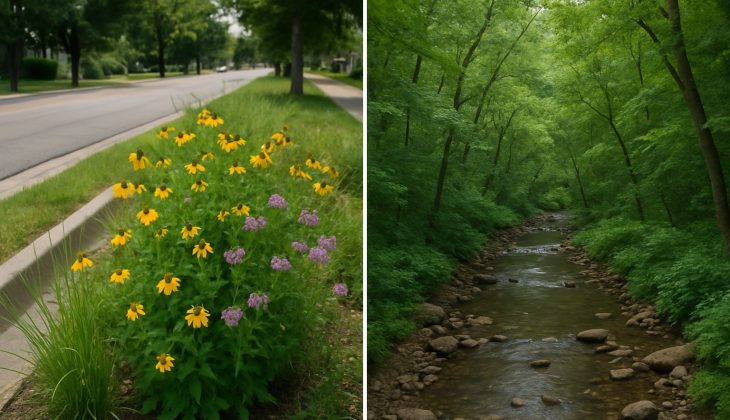
- Aurora, IL, sits along the Fox River Corridor, making it a surprisingly vital stopover for rare pollinators, including at-risk native bee species and migrating Monarch butterflies.
- Several micro-habitats throughout Aurora — from milkweed patches to native bee nesting sites — provide critical refuge for pollinators in an otherwise urbanized landscape.
- Neonicotinoid pesticides and urban development in Kane County are two of the biggest threats facing local pollinator populations right now.
- The Illinois DNR offers hands-on resources, native plant guides, and pollinator seed mixes specifically designed for Midwest gardeners — and using them makes a real difference.
- You don’t need acres of land to support rare pollinators — a single well-planted backyard in Aurora can become a certified pollinator micro-habitat.
Aurora, Illinois, isn’t usually what comes to mind when people think about wildlife conservation — but that’s exactly what makes it so important.
Hidden within its parks, riverbanks, and even residential gardens is a fragile network of pollinators that most residents never notice. Some of these species are rare. Some are in serious decline. And the choices Aurora residents make in their own backyards are directly shaping whether these creatures survive or disappear. For anyone interested in understanding what’s at stake and what can be done, this resource on local pollinator conservation is a great place to start.
Aurora, IL, is a Quiet Hub for Rare Pollinators
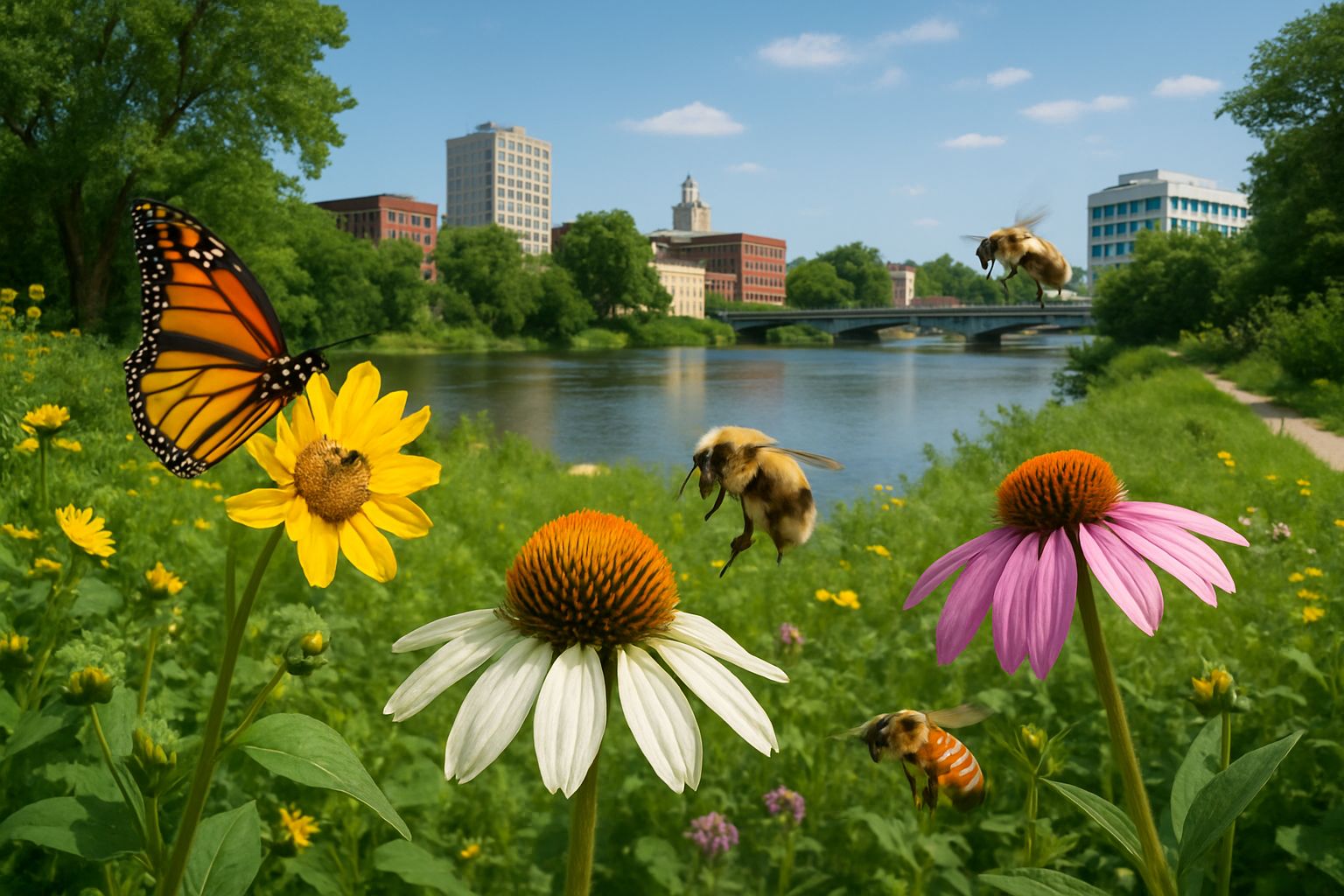
Aurora sits at a unique ecological crossroads. The city straddles both Kane and DuPage counties, and its position along the Fox River creates a natural green corridor that funnels wildlife — including pollinators — through an otherwise dense suburban landscape. This matters more than most people realize.
Why Urban Areas Like Aurora Matter for Pollinator Survival
Urban and suburban environments are often written off as ecological dead zones, but research and on-the-ground observation tell a different story. Cities like Aurora can actually serve as refuges when the surrounding agricultural land has been treated with pesticides or stripped of native vegetation. Fragmented green spaces — a community garden here, a restored prairie patch there — can collectively function as a lifeline for pollinators that have lost their rural habitats.
The key is connectivity. A pollinator can’t survive on one isolated flower patch. It needs a corridor — a series of habitat stepping stones — to find food, mates, and nesting sites across a season. Aurora’s parks, green spaces, and residential gardens, when planted intentionally, form exactly that kind of corridor.
The Role of the Fox River Corridor in Supporting Local Wildlife
The Fox River Corridor running through Aurora acts as a natural highway for wildlife movement. Riparian vegetation along the riverbanks provides nectar sources, nesting materials, and shelter for a wide range of pollinator species throughout the spring, summer, and fall. Native wildflowers like wild bergamot, swamp milkweed, and blue wild indigo naturally colonize these riverbanks, creating spontaneous pollinator habitat that benefits species well beyond the obvious honeybee.
This corridor also links Aurora to larger conservation landscapes in the region, including the Fermi National Accelerator Laboratory’s restored prairies to the north and the Midewin National Tallgrass Prairie to the south — both of which support significant native bee and butterfly populations.
Rare Pollinator Species Found in Aurora, IL
Not all pollinators are equally urgent for conservation. While the European honeybee gets most of the attention, it’s actually Illinois’ native pollinators — the ones that evolved alongside local plants over thousands of years — that are facing the steepest declines.
Native Bee Species Under Threat in the Illinois Region
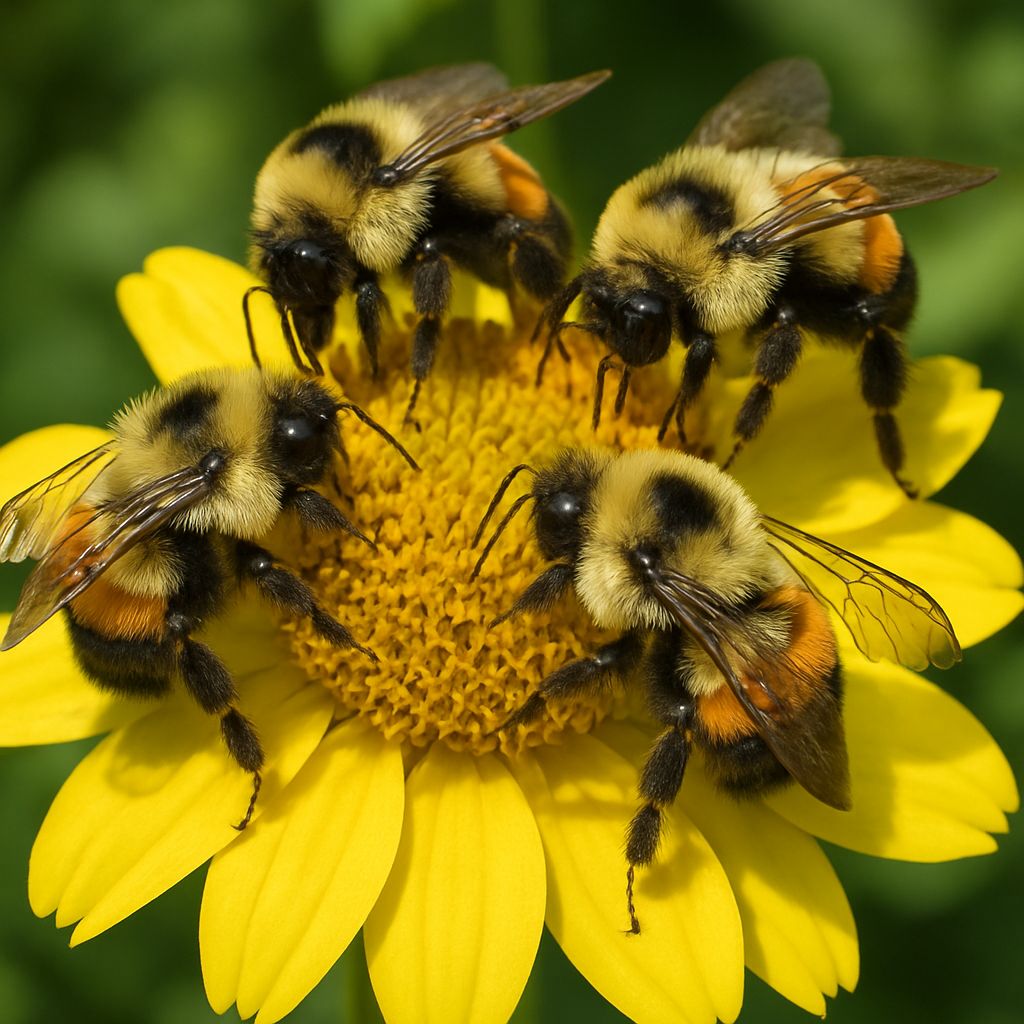
Illinois is home to over 500 native bee species, and several of those found in the Aurora region are considered at risk. The rusty patched bumble bee (Bombus affinis) is one of the most critically endangered insects in North America — listed as federally endangered under the U.S. Endangered Species Act. Historically common throughout the Midwest, its population has declined by more than 87% since the late 1990s. Kane County sits within its historical range, and occasional sightings still occur in areas with intact native prairie plantings.
Other native bees of concern in the region include:
- Yellow-banded bumble bee (Bombus terricola) — experiencing significant range contraction across the Midwest
- Eastern bumble bee (Bombus impatiens) — still relatively common but showing population stress in heavily developed areas
- Sweat bees (family Halictidae) — ground-nesting species highly vulnerable to soil compaction and lawn chemicals
- Squash bees (Peponapis pruinosa) — specialist pollinators tied directly to cucurbit plants, declining with the loss of backyard gardens
Monarch Butterflies and Their Presence in Aurora
The Monarch butterfly (Danaus plexippus) passes through Aurora during its extraordinary annual migration between Mexico and Canada. Aurora lies within the heart of the Central Flyway migration corridor, meaning local milkweed plantings aren’t just nice to have — they’re a critical fuel stop for monarchs making one of the longest insect migrations on Earth. The Illinois DNR has identified milkweed restoration as a top conservation priority, and every new milkweed plant established in Aurora contributes directly to that effort.
Other At-Risk Pollinator Species in Kane County
Beyond bees and monarchs, Kane County supports populations of the Karner blue butterfly (Lycaeides melissa samuelis), a federally endangered species tied to wild lupine habitat. Hummingbird clearwing moths (Hemaris thysbe) and various native sphinx moths also inhabit the region, serving as critical nighttime pollinators for native flora that bloom after dark. For more information on pollinators and their habitats, visit Pollinators and Water-Wise Native Habitats.
Wildlife Refuges That Protect Aurora’s Pollinators
Formal conservation areas near Aurora provide the anchoring habitats that make the broader pollinator corridor viable. These aren’t distant wilderness preserves — several are within a short drive of downtown Aurora.
How Illinois DNR Supports Local Pollinator Conservation
The Illinois Department of Natural Resources runs an active pollinator conservation program with direct relevance to Aurora and Kane County. Through their Passion for Pollinators initiative, the IDNR provides native plant lists tailored to the Midwest region, pollinator seed mixes, educational materials, and guidance on designing pollinator gardens that support both specialist and generalist bee species. They also publish detailed guidance on avoiding neonicotinoid pesticides — a critical resource for Aurora homeowners and gardeners.
The IDNR’s Mason State Tree Nursery produces native Illinois eco-type tree seedlings and pollinator seed mixes available for purchase by residents and conservation groups. These aren’t generic wildflower blends — they’re genetically local plant materials matched to Illinois growing conditions, which makes them far more effective for supporting native pollinators than commercially sourced seed mixes.
- Native Plant Chart — matching plant species to specific pollinator needs
- Pollinator Syndromes Guide — explaining which flower shapes attract which pollinator groups
- Nests for Native Bees Fact Sheet — practical guidance on building and placing nesting structures
- Gardening for Monarchs — step-by-step milkweed and nectar plant installation guide
- Midwest Pollinator Plant List — regionally specific plant recommendations from the IDNR
These resources are freely available through the IDNR website and represent some of the most actionable conservation tools available to Aurora residents right now.
The Importance of Native Plant Corridors in Urban Refuges
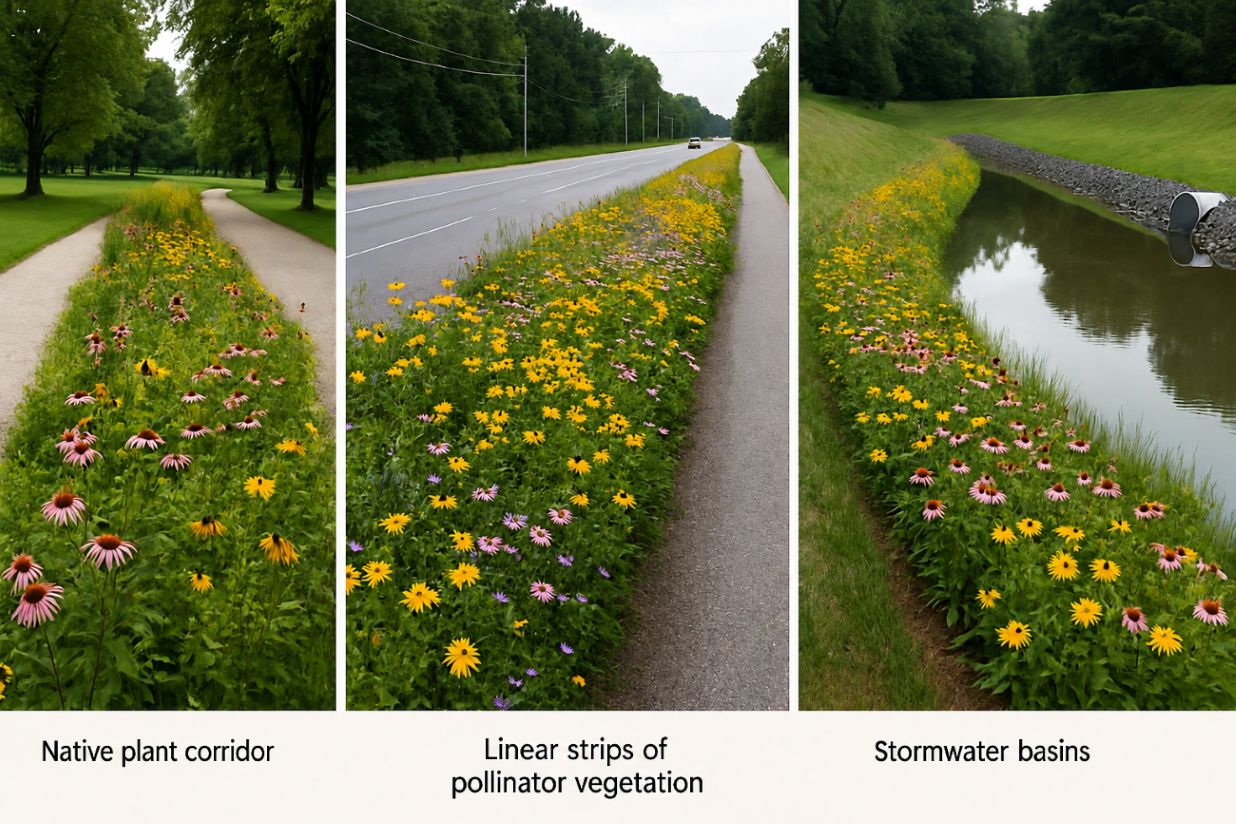
A wildlife refuge is only as effective as the habitat connecting it to the next patch of green space. Native plant corridors — linear strips of pollinator-friendly vegetation running through parks, roadsides, stormwater basins, and private gardens — are what transform isolated refuges into functional ecosystems. In Aurora, every stretch of native plantings along a sidewalk, fence line, or drainage swale is a potential link in that chain.
Micro-Habitats: Small Spaces With Big Impact
You don’t need a nature preserve to make a difference. Some of the most productive pollinator habitats in urban Illinois are no larger than a parking space — and that’s not an exaggeration. Micro-habitats punch well above their weight when they’re planted with the right species and located along active movement corridors.
What Qualifies as a Pollinator Micro-Habitat
A pollinator micro-habitat is any small, intentionally managed space that provides at least one of three things: nectar and pollen sources, nesting sites, or host plants for larval development. The most effective micro-habitats provide all three. Size matters far less than plant diversity and the presence of locally appropriate native species.
In Aurora’s urban context, micro-habitats can take many forms — a 4×8 raised garden bed planted with native coneflowers and wild bergamot, a small patch of unmowed lawn left to support ground-nesting bees, a cluster of native shrubs along a fence line, or a single container garden on an apartment balcony planted with native sedums and asters. What makes them work is intentionality: choosing plants that bloom in sequence from early spring through late fall to ensure continuous forage availability.
How Milkweed Patches Support Monarch Migration Routes Through Aurora
Milkweed is non-negotiable for monarch conservation. It’s the only plant genus on which monarchs will lay eggs, and the only food source for monarch caterpillars. Aurora’s position along the Central Flyway means that milkweed planted here directly supports monarchs during the critical late-summer southward migration. The IDNR specifically recommends swamp milkweed (Asclepias incarnata) and common milkweed (Asclepias syriaca) for the Illinois region — both of which thrive in Aurora’s climate. Importantly, the IDNR advises against tropical milkweed (Asclepias curassavica), which can disrupt normal migration behavior when it persists late into the season.
Native Bee Nesting Sites in Urban and Suburban Aurora
Approximately 70% of North America’s native bee species nest in the ground, which means that every patch of bare, undisturbed soil in Aurora is a potential nesting site. The other 30% are cavity nesters, using hollow plant stems, wood cavities, and pre-made bee houses. Supporting both types in your yard dramatically increases the range of native bee species you’ll attract. The Xerces Society’s Nests for Native Bees fact sheet — available through the IDNR — provides specific dimensions and placement guidelines for homemade nesting structures suited to the species found in Illinois.
The Aurora Water-Wise Garden as a Pollinator Micro-Habitat
Aurora’s municipal water conservation programs have inadvertently created an opportunity for pollinator habitat. Water-wise gardens designed to reduce irrigation demand naturally lean toward drought-tolerant native plants — which happen to be exactly what native pollinators need. Species like prairie dropseed (Sporobolus heterolepis), purple coneflower (Echinacea purpurea), and black-eyed Susan (Rudbeckia hirta) require minimal water once established and provide exceptional pollinator value across the summer season. For those interested in exploring more about local plant options, check out this Chicago shade plants guide.
Replacing even a portion of a traditional lawn with a water-wise native planting in Aurora creates immediate habitat gains. Ground-nesting bees benefit from reduced soil compaction. Foraging bees benefit from reliable nectar sources. And monarch butterflies benefit when milkweed is incorporated into the design. The trade-off for homeowners is lower water bills, less mowing, and a garden that genuinely contributes to local conservation.
Threats Facing Aurora’s Pollinator Population
The rare pollinators found in and around Aurora are not declining by accident. They’re responding to specific, identifiable pressures — most of which are driven by human activity. Understanding these threats is the first step toward addressing them at the local level.
Neonicotinoid Pesticides and Their Local Impact
Neonicotinoids are a class of systemic insecticides that are absorbed by plants and expressed in pollen and nectar — the exact substances bees collect. Exposure causes disorientation, impaired foraging, reduced reproduction, and death in native bee species. The IDNR has published specific guidance on neonicotinoids in home gardens, warning Aurora-area residents that many garden center plants — including common annuals marketed specifically to attract pollinators — are pre-treated with neonicotinoids before sale.
Common neonicotinoid active ingredients to look for on plant and pesticide labels:
Active Ingredient Common Product Use Risk to Pollinators Imidacloprid Soil drenches, nursery stock treatment High — persists in plant tissue for months Clothianidin Seed coatings, granular soil treatments High — highly toxic to bees at low doses Thiamethoxam Foliar sprays, systemic treatments High — impairs bee navigation and memory Dinotefuran Lawn treatments, ornamental plants High — rapid uptake into plant tissue
The practical implication for Aurora gardeners is straightforward: always ask whether nursery plants have been treated with neonicotinoids before purchasing, and choose untreated stock or plants grown from seed at home. Growing native plants from seed using IDNR-sourced materials entirely sidesteps this problem.
Beyond garden purchases, lawn care services operating in Aurora commonly apply neonicotinoid-containing products as part of standard treatment packages. Opting out of these treatments — or switching to a pollinator-safe lawn care program — removes one of the most significant local stressors on native bee populations.
Habitat Loss From Urban Development in Kane County
Kane County has experienced sustained residential and commercial development pressure over the past two decades. Each development project that converts natural land or even semi-natural lawn into impervious surface eliminates foraging habitat, destroys ground-nesting bee colonies, and severs movement corridors that pollinators depend on seasonally. The cumulative effect of thousands of individually small decisions — to pave a lot, remove a hedgerow, replace a meadow with turf — adds up to landscape-scale habitat loss that pushes already-stressed species toward local extinction.
How You Can Support Pollinator Conservation in Aurora Right Now
Conservation in Aurora doesn’t require a permit, a large budget, or a background in ecology. It requires a few square feet of ground, the right plants, and the decision to act.
Plant a Pollinator Garden Using Illinois Native Species
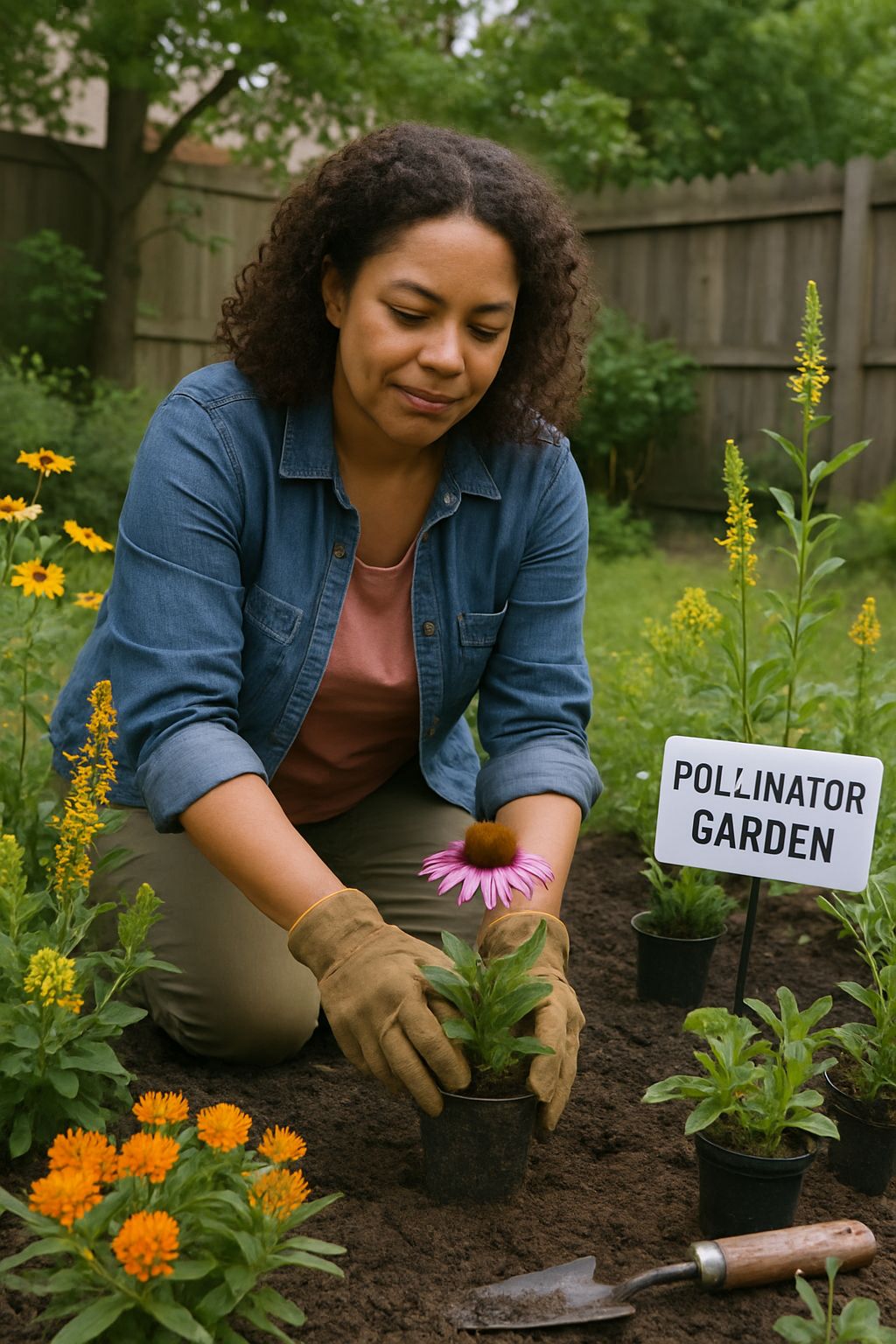
The single most impactful thing an Aurora resident can do for local pollinators is replace ornamental or non-native plantings with Illinois native species. Native plants have co-evolved with local pollinators over millennia, meaning their bloom times, flower shapes, and pollen chemistry are precisely matched to the needs of native bees, butterflies, and moths in this region. A garden planted with native species doesn’t just look good — it functions as a genuine habitat.
For Aurora’s climate and soil conditions, the IDNR’s Midwest Pollinator Plant List recommends prioritizing a sequence of bloom times to ensure continuous forage from April through October. Start with prairie smoke (Geum triflorum) and wild columbine (Aquilegia canadensis) for early spring. Bridge into summer with wild bergamot (Monarda fistulosa), purple coneflower (Echinacea purpurea), and swamp milkweed (Asclepias incarnata). Carry the season into fall with native asters (Symphyotrichum spp.) and goldenrod (Solidago spp.) — two of the most critical late-season nectar sources for pollinators preparing for winter or migration.
Create Nesting Structures for Native Bees in Your Yard
Supporting cavity-nesting bees in Aurora is as simple as leaving dead wood in place, bundling hollow plant stems, or installing a purpose-built bee house. The Xerces Society’s guidelines — distributed through the IDNR — recommend drilling holes between 3/32 and 3/8 inches in diameter into untreated lumber blocks to accommodate a range of native bee species. Place nesting structures in a south-facing location, at least three feet off the ground, near abundant flowering plants. Just as important: leave patches of bare, undisturbed soil in sunny spots of your yard for the 70% of native bee species that nest underground. Simply stopping the compaction of these areas — by keeping foot traffic and tilling away — is enough to make them viable nesting habitat.
Connect With the Illinois DNR’s Pollinator Programs
The Illinois DNR’s Passion for Pollinators program gives Aurora residents direct access to conservation tools that would otherwise require professional expertise. Through the program, you can access the Native Plant Chart, Pollinator Syndromes Guide, monarch gardening instructions, and milkweed fact sheets — all free of charge. The Mason State Tree Nursery, operated by the IDNR, sells native Illinois eco-type plants and pollinator seed mixes that are genetically matched to local growing conditions, making them the gold standard for habitat restoration plantings in Kane County. Engaging with these programs connects your backyard garden to a statewide conservation network with real ecological impact.
Aurora’s Pollinators Need Local Champions to Survive
The rare pollinators found in Aurora — the rusty patched bumble bee, the migrating monarch, the Karner blue butterfly — don’t have the luxury of waiting for policy change or large-scale institutional action. Their populations are declining now, in real time, and the window for meaningful local intervention is open today. You can explore pollinator-friendly garden ideas to help support these species.
What’s remarkable about pollinator conservation in an urban context is how democratized it is. A retired schoolteacher with a 20-foot garden bed in Aurora’s west side has the same conservation potential as a land trust managing a hundred-acre preserve — if they plant the right species. The scale of individual action is small, but the cumulative effect of hundreds of Aurora residents making intentional planting choices, eliminating neonicotinoids, and leaving nesting habitat undisturbed adds up to something the pollinators can actually use. For inspiration, check out these pollinator-friendly shade garden ideas in Chicago.
Aurora already has the ecological infrastructure — the Fox River Corridor, the proximity to restored prairies, and the network of parks and green spaces. What it needs are people willing to extend that infrastructure into their own properties, block by block, garden by garden, season by season.
- Plant native Illinois species that bloom in sequence from April through October
- Eliminate neonicotinoid pesticides from your lawn and garden care routine
- Leave patches of bare soil and hollow stems for ground-nesting and cavity-nesting bees
- Plant swamp milkweed and common milkweed to support monarch migration through Aurora
- Download and use the IDNR’s free Midwest Pollinator Plant List and Native Plant Chart
- Purchase native plants from the IDNR’s Mason State Tree Nursery for genetically local stock
- Talk to your neighbors — pollinator corridors require participation beyond your own property line
Frequently Asked Questions
Aurora, IL, sits within a region of Illinois that supports a surprisingly wide range of pollinator species — from federally endangered native bees to migratory butterflies passing through on continental-scale journeys. The questions below address the most common concerns from Aurora-area residents interested in understanding and supporting local pollinator populations.
What Rare Pollinator Species Live in Aurora, IL?
Aurora and the surrounding Kane County region support several rare and at-risk pollinator species, most of which go unnoticed by the average resident. The area lies within the historical range of the rusty patched bumble bee (Bombus affinis), listed as federally endangered, whose population has declined by more than 87% since the late 1990s. The Karner blue butterfly (Lycaeides melissa samuelis), another federally endangered species, is tied to wild lupine habitat that still exists in fragmented patches across northeastern Illinois.
Monarch butterflies pass through Aurora during both their spring northward and fall southward migrations, using the city as a critical fueling stop along the Central Flyway. Various native sphinx moths and hummingbird clearwing moths (Hemaris thysbe) also inhabit the region, providing nighttime pollination services that most people never witness but that are ecologically essential. For those interested in creating a welcoming environment for these pollinators, consider exploring pollinator-friendly shade garden ideas.
Ground-nesting native bees — including multiple sweat bee species in the family Halictidae and specialist bees like the squash bee (Peponapis pruinosa) — are present throughout Aurora’s residential and park areas. These species are highly sensitive to soil disturbance, compaction, and pesticide exposure, making them useful indicators of local habitat health.
The presence of these species in and around Aurora is not incidental — it reflects the city’s ecological position along the Fox River Corridor and its proximity to regional conservation landscapes, including the Fermi National Accelerator Laboratory prairies and Midewin National Tallgrass Prairie.
- Rusty patched bumble bee (Bombus affinis) — federally endangered, historically present in Kane County
- Monarch butterfly (Danaus plexippus) — migratory, passes through Aurora along the Central Flyway
- Karner blue butterfly (Lycaeides melissa samuelis) — federally endangered, tied to wild lupine habitat
- Hummingbird clearwing moth (Hemaris thysbe) — native, active nighttime pollinator
- Squash bee (Peponapis pruinosa) — specialist pollinator, declining with loss of backyard food gardens
- Sweat bees (family Halictidae) — ground-nesting, highly sensitive to pesticides and soil disturbance
Where Are the Best Wildlife Refuges for Pollinators Near Aurora, IL?
Several significant conservation landscapes within a reasonable distance of Aurora provide anchoring habitat for the pollinator species that move through the city. The Fermi National Accelerator Laboratory in Batavia — just north of Aurora — manages one of the largest restored tallgrass prairie ecosystems in northeastern Illinois, supporting robust native bee and butterfly populations across hundreds of acres. Midewin National Tallgrass Prairie in Wilmington, roughly 35 miles south of Aurora, is the largest native prairie restoration in the Midwest and a major conservation anchor for monarch butterflies and native bees across the region.
Closer to home, the Fox River Forest Preserves managed by the Kane County Forest Preserve District include riparian corridors, oak savannas, and restored prairie patches that provide habitat connectivity through Aurora itself. Bliss Woods Forest Preserve and the Burnidge Forest Preserve are among the locally managed sites with active native plantings that benefit pollinators year-round.
How Do Micro-Habitats Help Pollinators in Urban Areas Like Aurora?
Micro-habitats address one of the core problems facing urban pollinators: fragmentation. When natural habitat is broken into isolated patches by roads, buildings, and lawns, pollinators lose the ability to move freely between food sources, nesting sites, and overwintering areas. Micro-habitats — small, intentionally planted spaces scattered throughout a neighborhood — act as stepping stones that restore functional connectivity across an otherwise inhospitable urban landscape.
In Aurora’s context, even a single well-planted front yard can serve as a critical link between a park green space and a community garden several blocks away. What makes micro-habitats effective isn’t their size — it’s their plant diversity, bloom sequence, and the presence of nesting opportunities. A 6×6 native planting with four or five species blooming across the season provides more genuine habitat value than a large lawn with a single ornamental flower bed. For more information, you can explore resources on pollinator resources provided by the Illinois Department of Natural Resources.
The cumulative impact is what makes micro-habitat conservation genuinely powerful. When enough Aurora residents create and maintain these small spaces, the city itself begins to function as a distributed wildlife refuge — one that no single park or forest preserve could replicate on its own.
What Native Plants Should I Grow in Aurora, IL to Attract Pollinators?
For Aurora’s climate, the IDNR’s Midwest Pollinator Plant List is the most reliable starting point. Focus on species that provide a continuous bloom sequence: wild columbine (Aquilegia canadensis) and prairie smoke (Geum triflorum) in spring; wild bergamot (Monarda fistulosa), purple coneflower (Echinacea purpurea), swamp milkweed (Asclepias incarnata), and common milkweed (Asclepias syriaca) through summer; and native asters (Symphyotrichum spp.) and goldenrod (Solidago spp.) into fall. These species collectively support the widest range of native bee, butterfly, and moth species found in the Aurora region, and all are reliably hardy in Kane County growing conditions.
How Does the Illinois DNR Support Pollinator Conservation Near Aurora?
The Illinois DNR’s pollinator conservation programs are among the most comprehensive state-level resources available to Midwest gardeners and conservationists. Their Passion for Pollinators initiative provides free educational materials, native plant guidance, and design resources specifically tailored to Illinois growing conditions — all directly applicable to Aurora-area residents.
The IDNR’s Mason State Tree Nursery produces and sells native Illinois eco-type plant materials and pollinator seed mixes that are genetically sourced from local Illinois populations. This matters because locally sourced native plants are better adapted to local soil, climate, and seasonal conditions, and they’re more recognizable to local pollinators that evolved alongside them. Commercially sourced wildflower mixes, by contrast, often contain non-local genotypes or even non-native species that provide inferior habitat value.
The DNR also publishes targeted resources on monarch conservation, neonicotinoid avoidance, native bee nesting, and butterfly gardening — all of which are free to download and directly actionable for Aurora homeowners. Their IL Wildlife Action Plan and the associated Natural Heritage database track endangered and threatened pollinator species across Illinois, providing the scientific foundation for local conservation priorities.
For Aurora residents ready to take conservation seriously, engaging with IDNR programs is the most direct path from good intentions to measurable habitat impact — and connecting with a local conservation-focused organization can help you put those resources to work right in your own backyard.