Article-At-A-Glance
- Shady Chicago yards can absolutely support thriving pollinator gardens — you just need the right native plants.
- Wild Geranium, Jacob’s Ladder, and Woodland Phlox are among the best shade-tolerant natives for attracting bees, butterflies, and moths in the Chicago area.
- Spring is the most critical and often most neglected season for pollinators — what you plant now can make or break their survival.
- Native grasses, leaf litter, and dead stems aren’t just garden debris — they’re essential winter habitat for Chicago’s native pollinators.
- Christy Webber Farm & Garden’s Native Plant department is a trusted local resource for sourcing pollinator-friendly plants suited to Chicago’s unique growing conditions.
Your shady backyard isn’t a gardening limitation — it’s an untapped pollinator habitat waiting to happen.
Most Chicago homeowners write off shaded areas as hopeless, defaulting to the same tired hostas year after year. But the reality is that the Chicago region’s native woodland ecosystem is, by definition, a shade ecosystem. Many of the plants that evolved here don’t just tolerate shade — they depend on it. And the pollinators that evolved alongside those plants? They’re out there right now, looking for exactly what your shady yard could offer.
Chicago’s Shady Yards Can Buzz With Pollinators

Shade gardens and pollinator gardens are often treated as two completely separate categories, but in Chicago’s native landscape, they’re the same. The city and its surrounding North Shore neighborhoods sit within what was once an expansive mosaic of oak woodlands, savannas, and forest edges — all of which are partially or heavily shaded environments teeming with insect life.
When you plant native shade-tolerant species, you’re not just adding color to a dim corner. You’re rebuilding a food web. Bumblebees, mason bees, cuckoo bees, butterflies, skippers, and even hummingbird clearwing moths all forage in shaded and partially shaded spaces — as long as the right plants are there to feed them.
Why Shade Gardens Are Overlooked for Pollinators
The assumption is simple and wrong: pollinators need full sun. That belief gets reinforced by gardening content that overwhelmingly features prairie-style gardens with coneflowers and black-eyed Susans bathed in afternoon light. While those plants are genuinely excellent for pollinators, they leave shaded gardeners feeling like they’re out of options.
The truth is more nuanced. Many native woodland plants bloom in spring before the tree canopy fully leaf out, catching peak sunlight exactly when early-season pollinators need it most. Others are adapted to the dappled, shifting light of a forest floor and have been feeding on insects in exactly these conditions for thousands of years.
At Least 75% of Flowering Plants Depend on Pollinators to reproduce
Pollinators are in serious trouble. Habitat loss, pesticide use, and the replacement of native plants with ornamental species have all contributed to steep population declines across North America. Creating even a small native shade garden in Chicago contributes directly to reversing that trend — and given that the vast majority of flowering plants rely on pollinators to reproduce, the stakes extend well beyond your backyard fence. Learn more about gardening with native plants in shady areas to support local pollinators.
Best Shade-Tolerant Native Plants for Chicago Pollinators
Choosing the right plants is where a pollinator shade garden either succeeds or stalls. The following native species are proven performers in Chicago-area shade gardens, each one documented to attract specific pollinators and adapted to the region’s clay-heavy soils and cold winters. For more information on sustainable gardening practices, check out this sustainable urban garden maintenance guide.
Wild Geranium (Geranium maculatum)
Wild Geranium is one of the most reliable and rewarding plants you can add to a Chicago shade garden. It thrives in light shade to part sun, grows up to 2.5 feet tall, and produces delicate lavender-pink flowers from spring through early summer. The blooms attract bumblebees, mason bees, and cuckoo bees, along with butterflies and skippers. Several moth species also use Wild Geranium as a larval host plant, making it a multi-layered contributor to your local ecosystem rather than just a nectar source.
Wild Ginger (Asarum canadense)
Wild Ginger is a low-growing groundcover that spreads slowly to form dense mats in deep to moderate shade. Its hidden, jug-shaped flowers bloom at ground level in early spring and are pollinated primarily by early-emerging flies and gnats — pollinators that most gardeners never even think about supporting. Beyond pollination, Wild Ginger provides critical ground-level cover for insects overwintering in the soil.
Jacob’s Ladder (Polemonium reptans)
Jacob’s Ladder is a spring bloomer that earns its place in any Chicago shade garden quickly. It produces clusters of small, bell-shaped lavender-blue flowers on graceful arching stems and spreads readily without becoming invasive. Bees are the primary visitors, drawn to the open, accessible flower structure. It naturalizes well under the high canopy of oak trees — one of the most common tree types in Chicago’s urban forest.
What makes Jacob’s Ladder especially useful is its early bloom time. It flowers before most competing plants are even out of the ground, giving early-season bees a reliable food source during the critical spring gap. It’s also one of the showier native woodland plants, meaning you don’t have to sacrifice aesthetics for ecological function.
Woodland Phlox (Phlox divaricata)
Few native plants match Woodland Phlox for sheer visual impact in a spring shade garden. It produces clouds of fragrant lavender-blue flowers from mid-spring onward and spreads to form loose, attractive groundcover mats. Butterflies and long-tongued bees are frequent visitors, and the fragrance also draws in sphinx moths at dusk. It performs best in moist, well-drained soil with moderate shade — conditions that are common in Chicago’s older, tree-lined neighborhoods.
Prairie Trillium (Trillium recurvatum)
Prairie Trillium is one of Chicago’s most striking native woodland wildflowers, producing deep maroon blooms in mid-spring atop mottled, three-part leaves. It’s pollinated primarily by native bees and flies and plays an important role in the early-season woodland food web. Trilliums are notoriously slow to establish from seed — often taking seven years to first bloom — but nursery-grown specimens establish much faster. Once settled, they’re long-lived, reliable, and genuinely unforgettable in a shaded garden setting.
Trillium also produces seeds with elaiosomes — fat-rich appendages that ants collect and carry underground, dispersing the seeds naturally. This ant-plant relationship, known as myrmecochory, is one of the fascinating hidden ecological processes your shade garden can support simply by including this one species.
Spring Is the Most Critical Season for Shade Pollinators
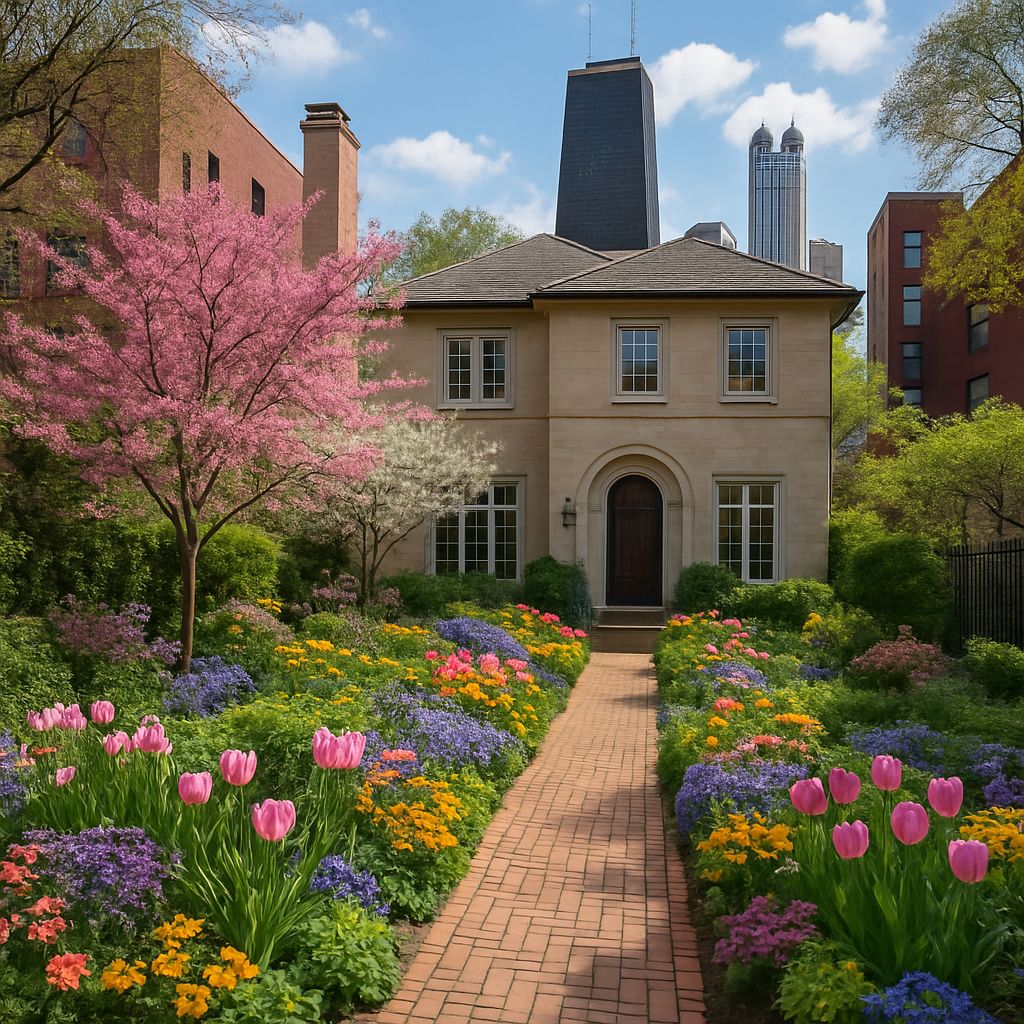
Spring in Chicago is short, unpredictable, and absolutely essential for pollinator survival. The window between snowmelt and full canopy leaf-out is when native woodland plants do some of their most important ecological work — and when your shade garden decisions matter most.
Why Emerging Pollinators Struggle to Find Food in Early Spring
Queen bumblebees emerge from underground hibernation in early spring with almost no fat reserves left. They need nectar and pollen immediately to build energy and start new colonies. The problem is that most conventional gardens — and most turf lawns — offer nothing during this window. A shaded yard planted with early-blooming natives like Jacob’s Ladder and Wild Geranium becomes a critical lifeline during exactly this period. Without these early food sources, emerging queens may not survive long enough to establish the colonies that will pollinate your entire neighborhood through summer.
Let Dandelions and Clover Bloom to Bridge the Gap
Before your native plants hit their stride, dandelions and clover are doing real ecological work. Resist the urge to mow them down the moment they appear. These so-called weeds are among the earliest and most accessible pollen sources available to bees in the Chicago area, and they bloom in exactly the conditions — partial shade, disturbed soil — that describe most urban yards. Letting them flower for even a few extra weeks in spring can meaningfully support pollinator populations while your woodland natives are still waking up.
How to Design a Pollinator Shade Garden in Chicago
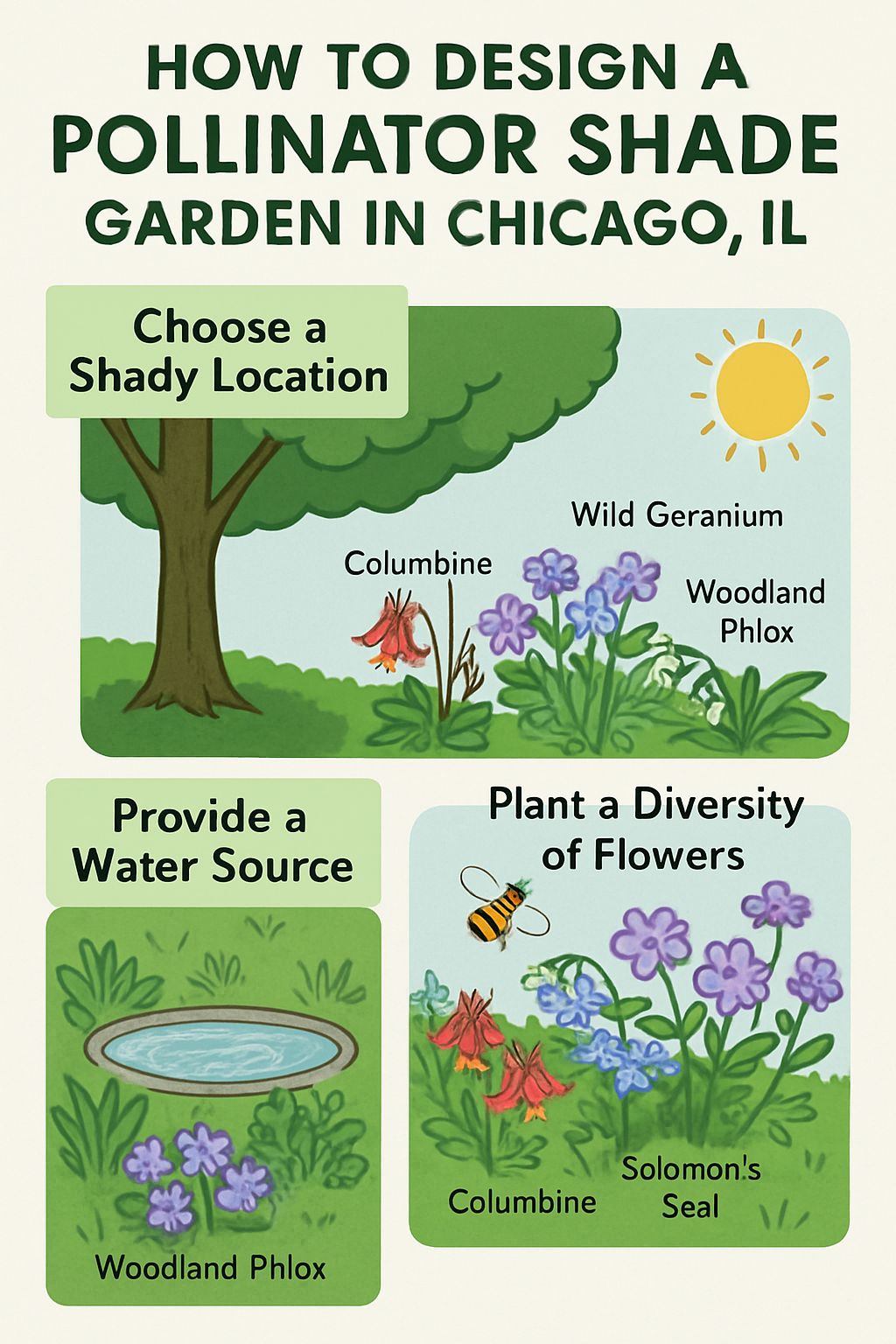
Design is where a pollinator shade garden goes from a collection of plants to a functioning ecosystem. The goal isn’t a perfectly manicured bed — it’s a layered, dynamic space that provides food, shelter, and nesting resources across all four seasons.
Think about your garden the way a woodland edge naturally organizes itself: tall canopy above, mid-height shrubs and perennials in between, and low groundcovers and leaf litter at the base. Each layer serves a different set of pollinators and supports different stages of the insect life cycle. For more ideas on creating a pollinator-friendly environment, consider exploring interactive tips for urban gardens.
Layer Plants by Height to Mimic Natural Woodland Structure
Start with your tallest shade-tolerant natives — Wild Bergamot or Tall Goldenrod at the edges where light increases — then bring in mid-height plants like Wild Geranium and Jacob’s Ladder for the core shaded zone. Fill the ground level with Wild Ginger, Woodland Phlox, or native sedges that knit the bed together and protect soil moisture. This vertical layering dramatically increases the number of pollinator species your garden can support, since different insects feed and nest at different heights.
Including native grasses and sedges is often overlooked but critically important. Carex pensylvanica (Pennsylvania Sedge) is a fine-textured, low-growing sedge that thrives in dry shade under trees — one of Chicago’s most challenging gardening conditions — and provides both ground-level cover and overwintering habitat for small native bees. For more insights on gardening benefits, explore our gardening benefits and nature connection tips.
Group Plants in Clusters to Attract More Pollinators
Single specimen plants scattered across a bed are far less effective than grouped plantings of three, five, or seven of the same species. Pollinators are efficient foragers — they’re drawn to concentrated patches of flowers where they can move quickly between blooms without wasting energy. Grouping plants also creates a stronger visual impact, which is a bonus for gardeners who want their pollinator beds to look intentional rather than accidental.
Use Chicago’s Native Soil Conditions to Your Advantage
Chicago’s soils are predominantly clay-heavy, which frustrates gardeners trying to grow traditional ornamentals but is actually well-suited to many native woodland plants. Species like Wild Geranium, Wild Ginger, and Prairie Trillium evolved in exactly these conditions and don’t need amendment-heavy soil prep to perform well. Working with your soil rather than against it saves time, money, and effort — and produces more resilient plants.
Where soil compaction is severe, especially under large trees, a light top-dressing of leaf compost can improve structure without disturbing shallow tree roots. Avoid deep tilling anywhere near established trees, as feeder roots run surprisingly close to the surface and are easily damaged.
Non-Native Shade Plants That Still Support Pollinators
Native plants should be the backbone of any Chicago pollinator garden, but a few well-chosen non-natives can fill gaps in bloom time or growing conditions without undermining the garden’s ecological function. The key distinction is between non-native plants that still offer accessible pollen and nectar and those that are purely ornamental with little to no wildlife value.
Foxglove (Digitalis purpurea), for example, is non-native but beloved by bumblebees for its deep tubular flowers. Lungwort (Pulmonaria spp.) is another early-blooming, shade-tolerant non-native that bridges the spring gap effectively. Use these as supporting players rather than the stars of your garden, and prioritize replacing them with natives over time as your confidence and plant knowledge grow.
Chicago’s Urban Tree Canopy Creates Unique Shade Conditions
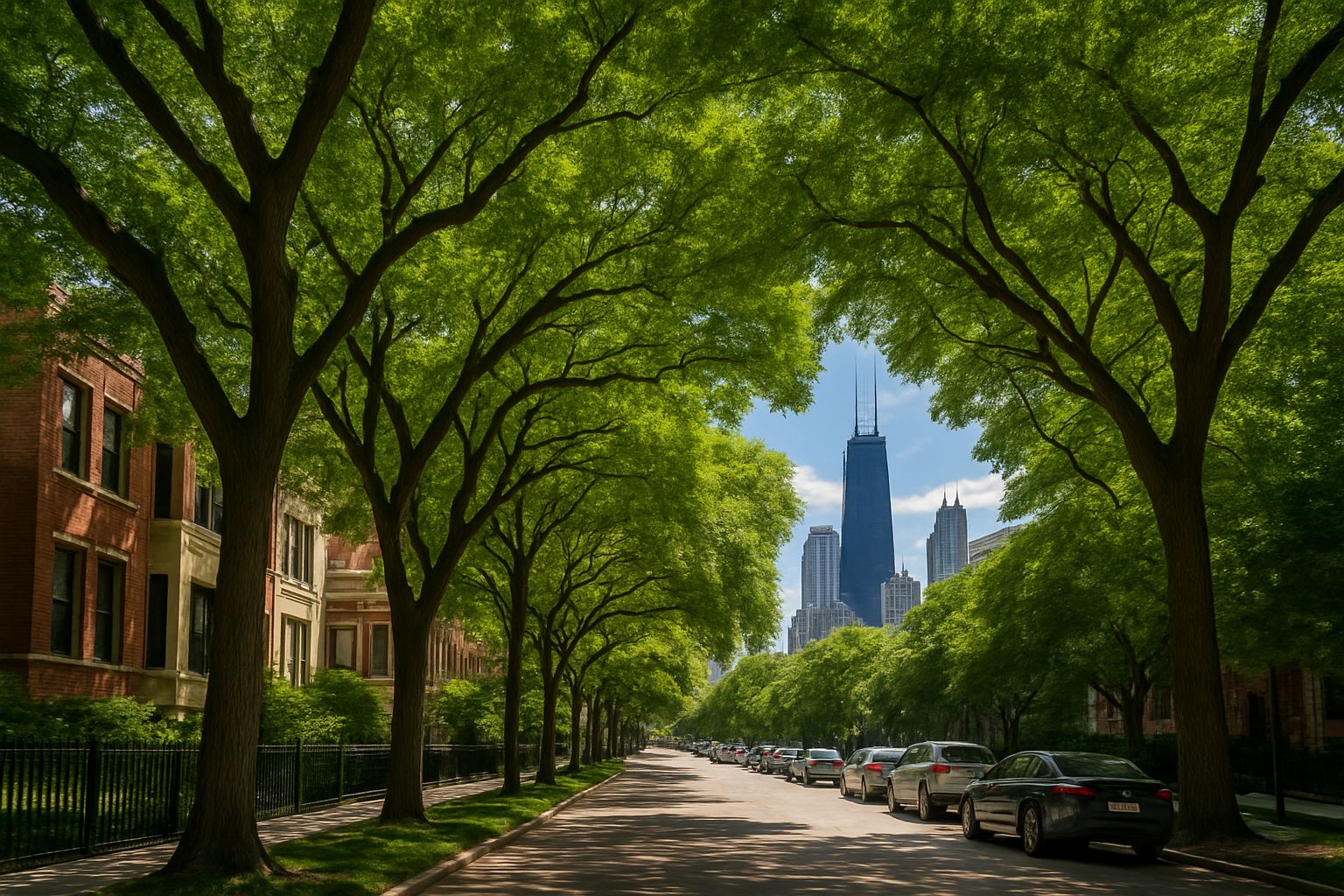
Chicago’s mature urban tree canopy is one of the city’s greatest ecological assets — and one of its most underutilized gardening opportunities. The city’s older neighborhoods are lined with massive oaks, maples, and elms that create deep, shifting shade patterns unlike anything you’d encounter in a rural woodland. Understanding how these trees shape your growing conditions is the foundation of successful shade garden design. For more insights on maintaining urban gardens, check out this sustainable urban garden maintenance guide.
It’s worth noting that oak trees in particular are ecological powerhouses. A single native oak can support over 500 species of caterpillars and moths — many of which are themselves important food sources for birds and other wildlife. Gardening beneath an oak with native understory plants turns your yard into a functioning urban habitat patch, not just an aesthetically pleasing garden. For more insights on maintaining such a garden, check out this sustainable urban garden maintenance guide.
How Mature Trees Shape Light and Soil in Chicago Yards
The shade cast by a mature silver maple in a Chicago backyard is dramatically different from the dappled light under a high-canopied bur oak. Maples tend to create dense, consistent shade with heavy surface root competition and allelopathic leaf litter that can inhibit plant establishment. Oaks, by contrast, allow more light penetration, especially in spring before leaf-out, and their leaf litter breaks down into rich, slightly acidic soil that many native woodland plants actually prefer. Identifying your dominant tree species before choosing plants can save you significant frustration.
Working With Root Competition Under Large Trees
Root competition under Chicago’s mature trees is real, but it’s not a death sentence for shade garden plants. The key is choosing species that evolved in exactly these conditions — plants that are used to competing with tree roots for water and nutrients and have developed strategies to do it successfully.
Pennsylvania Sedge (Carex pensylvanica) is arguably the best plant for dry, root-choked shade in the Chicago area. It forms a fine-textured, low mat that requires almost no maintenance once established and provides excellent ground-level pollinator habitat. Wild Ginger is another strong performer in these conditions, spreading slowly but reliably even in the difficult zone directly beneath a tree’s canopy drip line. For more tips on maintaining your urban garden, check out this sustainable urban garden maintenance guide.
- Avoid deep digging near established trees — feeder roots sit just 2 to 8 inches below the surface
- Top-dress with 1 to 2 inches of leaf compost rather than tilling to improve soil without root damage
- Water new plantings deeply and consistently for the first full growing season to help them outcompete tree roots
- Choose drought-tolerant natives like Pennsylvania Sedge and Wild Ginger for the driest zones directly under the canopy
- Use larger plug or gallon-sized transplants rather than seeds under trees — established root systems compete better from day one
Once established, native woodland plants under trees largely take care of themselves. The first two years require patience and consistent watering, but after that, you’re working with the ecology rather than against it — and that changes everything about how the garden performs.
A Pollinator Shade Garden Supports Far More Than Bees
When you build a native pollinator shade garden in Chicago, you’re not just feeding bees. You’re creating a cascading web of ecological relationships that extends far beyond your property line. The caterpillars feeding on your Wild Geranium leaves become food for nesting birds. The leaf litter sheltering ground-nesting bees also protects overwintering firefly larvae. The moths drawn to your Woodland Phlox at night are themselves pollinators for dozens of plant species. Native shade gardens are genuinely among the highest-impact things a Chicago homeowner can do for urban biodiversity — and they look beautiful doing it.
Start Small and Watch Your Shade Garden Thrive
You don’t need to transform your entire yard at once. Start with a single shaded bed, choose three to five of the native species listed here, and plant them in grouped clusters of at least three. Watch which plants attract which visitors, notice which areas get more light in spring before the canopy fills in, and expand from there. The best pollinator shade garden is one that actually gets planted — and a small, well-chosen start will teach you more than any article can. Give it two full growing seasons, resist the urge to over-tidy, and you’ll have something genuinely extraordinary on your hands.
Frequently Asked Questions
Chicago-area gardeners consistently ask the same questions when they start exploring pollinator-friendly shade gardening. Here are clear, direct answers to the ones that come up most often.
What pollinators are most common in shaded Chicago gardens?
The most common pollinators in shaded Chicago gardens are bumblebees, mason bees, cuckoo bees, and various native fly species. Bumblebees are particularly well-adapted to shaded woodland edges and are some of the most important pollinators in the Chicago region. Butterflies and skippers visit shaded gardens regularly, especially where Wild Geranium and Woodland Phlox are present. Sphinx moths and hummingbird clearwing moths are active at dusk and are drawn to fragrant, tubular flowers like Woodland Phlox. For tips on maintaining your garden, check out this sustainable urban garden maintenance guide.
Many gardeners are surprised to discover that flies are critical early-spring pollinators in shaded spaces. Species like bee flies and hoverflies are among the first insects active after snowmelt and are the primary pollinators of plants like Wild Ginger that bloom at ground level before most bees are active. A diverse shade garden supports a far wider range of pollinator species than most people expect.
Can I grow a pollinator garden under a large tree in Chicago?
Yes — with the right plant selection. The most important strategy is choosing species that evolved under exactly these conditions. Pennsylvania Sedge, Wild Ginger, and Wild Geranium all thrive in the dry, root-competitive shade beneath large trees. Avoid amending soil deeply; top-dress with leaf compost instead, and water consistently through the first two growing seasons. Once established, these plants are remarkably self-sufficient even in challenging under-tree conditions.
When is the best time to plant a pollinator shade garden in Chicago?
Spring and fall are both excellent planting windows for a Chicago pollinator shade garden. Spring planting — ideally after the last frost in mid-May — gives plants a full growing season to establish before winter. Fall planting from mid-September through October allows roots to establish during the cooler months, and many native woodland species actually benefit from a cold stratification period that fall planting naturally provides. For tips on sustainable gardening, check out this guide on gardening benefits and nature connection.
Avoid planting during Chicago’s hottest, driest weeks in July and August unless you’re prepared to water daily. Native plants are drought-tolerant once established, but newly transplanted specimens in their first season are vulnerable to heat stress regardless of how well-adapted they are to local conditions long-term.
Do I need to use only native plants for a pollinator-friendly shade garden?
Native plants should make up the majority of your pollinator shade garden — ideally 70 to 80 percent or more. They have evolved alongside local pollinators and provide food, shelter, and larval host resources that most non-natives simply cannot replicate. A garden planted exclusively with ornamental non-natives, even if it looks beautiful, functions as a near-ecological desert for native pollinators.
That said, a few well-chosen non-natives can complement a native-dominant design without undermining it. Early-blooming shade plants like Lungwort (Pulmonaria spp.) provide accessible pollen during the spring gap, and non-invasive cultivars of foxglove support long-tongued bumblebees effectively. Use them as strategic gap-fillers while continuing to add more native species over time.
How much shade is too much for pollinator-friendly plants in Chicago?
Deep, unbroken shade — the kind found directly against a north-facing foundation wall or under a dense, low-branched evergreen — is genuinely limiting. In these conditions, even the most shade-adapted native plants struggle to bloom consistently, and blooms are what pollinators need most.
Most Chicago yards, however, experience dappled shade, part shade, or seasonally variable light that shifts as the tree canopy leafs out and back. These conditions are well within the tolerance range of native woodland plants, especially species that bloom in spring before canopy closure. Even a few hours of direct morning light combined with bright indirect afternoon light is enough to support a thriving pollinator garden.
The practical test is simple: if you can comfortably read a book outside in that spot on a summer afternoon without full sun on the page, you have enough light for shade-adapted native plants. If it feels genuinely dark even on a bright day, focus on groundcovers like Wild Ginger and Pennsylvania Sedge, and add a few strategic branch lifts to your trees to let more light filter through.