- Climate-resistant green roofs can extend your roof’s lifespan by 50% or more while dramatically cutting energy costs through natural insulation.
- Joliet’s freeze-thaw cycles, heavy rainfall, and urban heat island effect make standard roofing a losing battle — green roof systems are engineered to handle all three.
- Green Roof Solutions, founded in 2005 and based in Glenview, IL, supplies primarily American-made green roof and living wall components throughout North America.
- There’s a critical difference between extensive and intensive green roofs — and choosing the wrong one for your building could cost you significantly more in maintenance and structural reinforcement.
- Green roofs and living walls both qualify for LEED credits, making them a smart investment for commercial property owners in the Joliet area looking to hit sustainability benchmarks.
Your roof is one of the most climate-exposed surfaces on your entire building, and in Joliet, that exposure is no joke.
Joliet sits in a climate zone that throws everything at a building — brutal winters with hard freeze-thaw cycles, summer heat that bakes flat roofing membranes into early failure, and storm events that dump inches of rain faster than conventional drainage can handle. If you’re an eco-conscious homeowner or commercial property manager in this region, a climate-resistant green roof isn’t just an aesthetic upgrade. It’s one of the smartest structural and environmental decisions you can make. Green Roof Solutions, a Glenview, IL-based manufacturer, has been supplying the American green roof industry with quality, USA-made components since 2005, and the demand in the greater Chicago region has only grown.
Joliet’s Climate Demands More From Your Roof
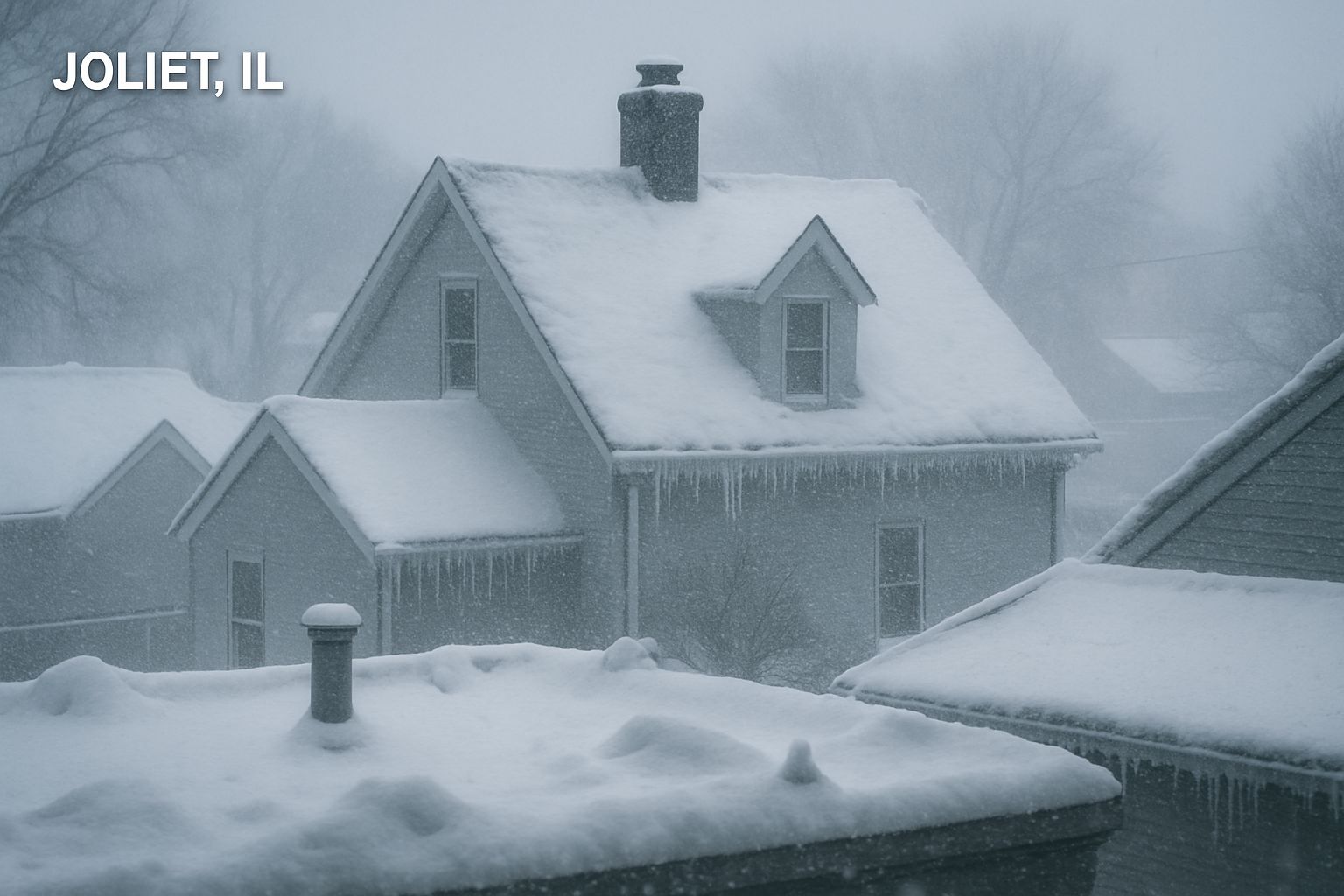
Standard roofing materials were never designed to thrive in a place like Joliet. The Chicago region experiences an average of around 35 freeze-thaw cycles per year, each one expanding and contracting roofing membranes until they crack. Add in summer temperatures that regularly push surface roof temps past 150°F, and you’ve got a recipe for premature roof failure.
Green roofs change the equation entirely. The vegetation layer acts as a living thermal buffer, absorbing solar radiation that would otherwise superheat your roof deck. The growing media retains moisture that cools the surface through evapotranspiration. Together, these layers protect the waterproof membrane beneath from UV exposure and temperature fluctuations that shorten the lifespan of conventional roofing systems.
Joliet Climate Stress Factors vs. Green Roof Response
Climate Challenge Impact on Standard Roofing Green Roof Response Freeze-thaw cycles Membrane cracking and delamination Insulating media layer buffers temperature swings Summer heat Surface temps exceed 150°F, accelerating aging Evapotranspiration keeps surface temperatures significantly lower Heavy rainfall events Overwhelmed drainage, ponding, and leaks Growing media retains and slowly releases stormwater Urban heat island effect Elevated ambient temperatures increase HVAC loads Vegetation cools the surrounding air naturally
The result is a roofing system that doesn’t fight the climate — it works with it. That’s the core promise of a well-designed, climate-resistant green roof in a region like Joliet.
What Green Roof & Wall Systems Actually Are
Green roofs and living walls are exactly what the name suggests: living structures. They’re not painted green or covered in artificial turf. They’re engineered systems that integrate real vegetation, engineered growing media, drainage components, and protective membranes into a unified roofing or wall assembly. Think of them as a constructed ecosystem sitting on top of — or attached to — your building.
The Core Layers of a Green Roof System
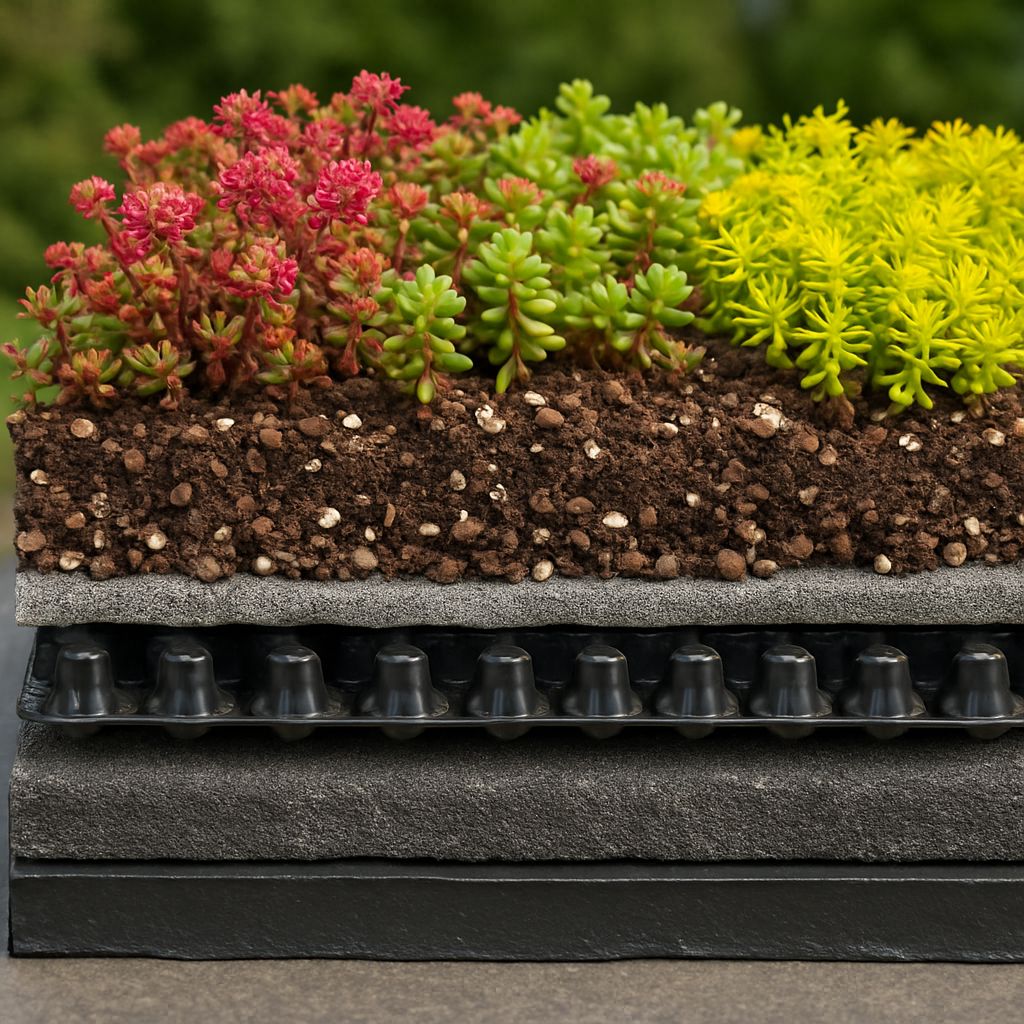
Every climate-resistant green roof is built from the same fundamental stack of components, each one serving a specific protective or horticultural function. Starting from the roof deck up, a complete system includes a waterproof membrane, a root barrier to prevent vegetation from penetrating the structure, a drainage layer to manage water movement, a filter fabric to keep growing media from migrating into drains, the growing media itself, and finally the plant layer on top.
The growing media is not regular garden soil. It’s a lightweight, engineered substrate specifically formulated to drain quickly, resist compaction over time, and support plant life under the unique stress conditions of a rooftop environment. Green Roof Solutions supplies specialized green roof media as part of their component lineup, engineered for performance in climates exactly like Joliet’s.
Each layer in this system is doing real work. The drainage layer prevents waterlogging that would kill plant roots. The filter fabric keeps the drainage channels clear. The root barrier protects your investment in the waterproofing membrane below. Remove any one of these components, and the system’s climate resistance drops significantly.
How Living Walls Differ From Green Roofs
Living walls — also called green walls — are vertical plant systems mounted to exterior or interior wall surfaces. Where green roofs manage stormwater and roof temperature, living walls excel at air quality improvement, acoustic insulation, and facade cooling. They’re also one of the most visually dramatic sustainability features you can add to a Joliet property, turning blank concrete or brick surfaces into lush, living architecture.
Extensive vs. Intensive Green Roofs: Which One Fits Your Building
This distinction matters more than most people realize before they start a project. Extensive green roofs use a shallow growing media layer — typically 2 to 6 inches deep — planted with low-maintenance, drought-tolerant species like sedums. They’re lightweight, require minimal maintenance, and work on a wide range of roof structures without major reinforcement. Intensive green roofs go deeper, sometimes 12 inches or more, supporting larger plants, shrubs, and even small trees. They require structural assessment and a higher maintenance commitment, but they open the door to full rooftop gardens and urban farming applications.
Why Climate Resistance Matters for Joliet Buildings
Joliet isn’t a mild climate. It’s a place that demands serious engineering from every building envelope component, and the roof takes more abuse than almost anything else. Climate resistance in a green roof system isn’t a marketing term — it’s a measurable set of performance characteristics that determine whether your investment holds up for decades or starts failing within a few years.
A climate-resistant green roof system for the Joliet region needs to handle three primary stressors simultaneously: the physical stress of freeze-thaw cycles, the hydraulic stress of intense rainfall events, and the thermal stress of urban heat. No single component handles all three. It’s the integrated system — all layers working together — that delivers true climate resilience. For those interested in enhancing their urban spaces, exploring luxury urban greenhouse designs can offer additional inspiration and ideas.
It’s also worth noting that climate resistance protects more than the vegetation. The waterproof membrane beneath a well-designed green roof system is dramatically shielded from UV radiation and thermal cycling, which are the two biggest drivers of membrane degradation. This is a primary reason why green roofs can extend overall roof system lifespan by 50% or more compared to conventional exposed membranes.
- UV protection: The growing media and vegetation layer block nearly all direct UV radiation from reaching the membrane below.
- Temperature stabilization: Surface temperature swings under a green roof are far narrower than on an exposed black or white membrane roof.
- Physical protection: The system layers protect the membrane from foot traffic, hail impact, and wind-driven debris.
- Moisture management: Engineered drainage layers prevent ponding while the growing media retains water for plant use rather than dumping it all into municipal stormwater systems at once.
How Green Roofs Handle Freeze-Thaw Cycles in Illinois
The growing media layer in a green roof acts as a thermal mass that moderates temperature fluctuations at the membrane surface. Where an exposed membrane might swing from below freezing to 50°F in a single winter day, the membrane beneath a green roof system experiences a fraction of that swing. This reduces the cumulative mechanical stress that causes cracking, delamination, and seam failures over time — the exact failure modes that shorten conventional roof life in Illinois winters.
Managing Heavy Rainfall and Stormwater in the Chicago Region
The Chicago region has seen an increase in high-intensity rainfall events, and Joliet’s combined sewer infrastructure is not always equipped to handle rapid runoff from large rooftop surfaces. Green roofs retain a significant portion of rainfall in the growing media, releasing it slowly through evapotranspiration rather than sending it all directly into the drain system. This reduces peak stormwater discharge, lowers the risk of basement flooding downstream, and can reduce stormwater utility fees for commercial property owners.
Urban Heat Island Effect in Joliet and How Green Roofs Combat It
Urban areas like Joliet absorb and re-radiate heat at rates significantly higher than surrounding rural areas, largely because of the density of dark, hard surfaces — including conventional rooftops. Green roofs directly counter this by replacing heat-absorbing surfaces with vegetation that cools through evapotranspiration. The cooling effect isn’t limited to the building itself. A neighborhood with a meaningful density of green roofs experiences measurably lower ambient air temperatures, reducing the collective HVAC load across the entire area.
The Real Benefits of Installing a Green Roof or Living Wall
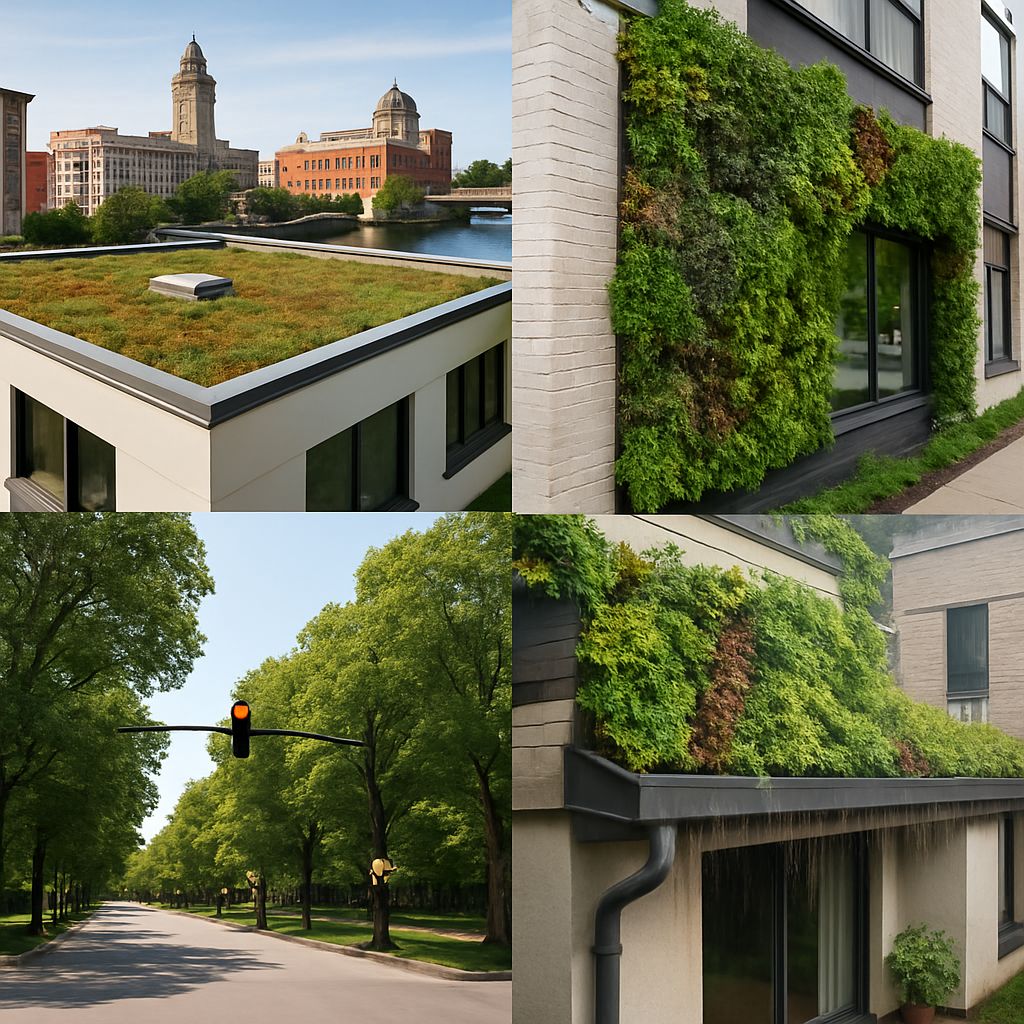
Beyond the climate resilience argument, green roofs and living walls deliver a stack of tangible, measurable benefits that make them compelling even from a purely financial perspective. For those interested in enhancing their urban spaces, exploring luxury urban greenhouse designs can offer additional inspiration and ideas.
The benefits compound over time. Energy savings reduce operating costs every month. An extended roof lifespan defers the enormous capital expense of a full roof replacement. LEED credits can unlock tax incentives and increased property valuations. Stormwater fee reductions lower ongoing utility costs. And the aesthetic and biodiversity value of a living roof or wall is increasingly recognized as a driver of commercial property demand in urban markets.
Energy Cost Reduction Through Natural Insulation
A green roof doesn’t just protect your building from the outside — it actively reduces what you spend on heating and cooling the inside. The growing media and vegetation layers add meaningful thermal resistance to the roof assembly, reducing heat gain in summer and slowing heat loss in winter. For a commercial building in Joliet running rooftop HVAC equipment through both a brutal summer and a hard Illinois winter, that translates into real, recurring dollar savings on energy bills every single month.
The cooling effect is especially pronounced in summer. While a conventional dark membrane roof surface can reach 150°F or higher on a hot Joliet afternoon, the surface of a green roof typically stays within a range close to the ambient air temperature. That difference in surface temperature directly reduces the amount of heat conducted into the building below, which means your air conditioning system isn’t fighting a superheated roof deck all season long.
Extended Roof Lifespan by 50% or More
This is one of the most financially significant benefits of a green roof, and it’s consistently documented across the industry. A properly installed green roof system can extend the lifespan of the waterproofing membrane beneath it by 50% or more — sometimes doubling the service life compared to an exposed membrane. The reason is straightforward: the system layers physically shield the membrane from the UV radiation, temperature extremes, and mechanical abrasion that degrade it fastest. In Joliet’s climate, where a conventional membrane takes a beating from both summer heat and winter freeze-thaw cycles, that protection is especially valuable.
LEED Credit Qualification for Commercial Buildings
Green roofs and living walls both contribute to LEED (Leadership in Energy and Environmental Design) certification points across multiple credit categories. Stormwater management, heat island reduction, energy performance, and innovation credits can all be supported by a well-documented green roof installation. For commercial property owners in Joliet pursuing LEED certification — or looking to improve an existing building’s LEED rating — a green roof system is one of the most multi-dimensional point contributors available in a single building component.
Stormwater Runoff Reduction and Pollutant Filtration
Green roofs don’t just slow down stormwater — they filter it. As rainwater passes through the growing media layer, particulates, heavy metals, and atmospheric pollutants are captured and retained rather than flushed directly into Joliet’s stormwater system. The result is cleaner water discharge and a reduced burden on municipal infrastructure. For large commercial rooftops, the volume of stormwater managed by even a modest green roof system is substantial, and many municipalities — including those in the greater Chicago region — offer stormwater fee incentives for properties that demonstrate on-site retention capacity. To learn more about green roof solutions, visit Green Roof Solutions.
Green Roof Components You Need for a Successful Installation
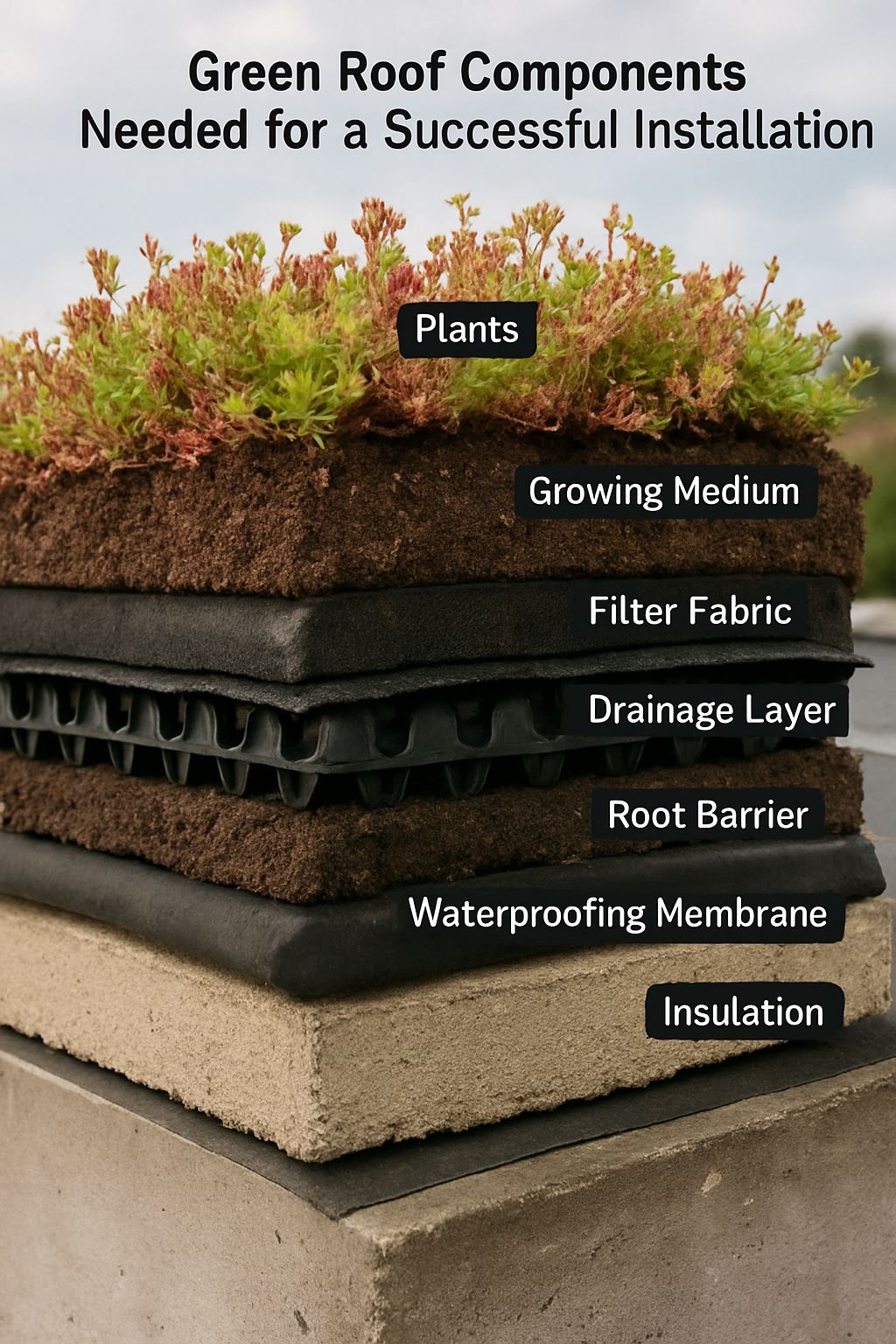
A green roof system is only as strong as its weakest component. Every layer in the assembly has a specific job, and cutting corners on any one of them — using undersized drainage boards, skipping a root barrier, or sourcing low-quality growing media — creates failure points that can compromise the entire investment. Here’s what a complete, climate-resistant green roof installation in Joliet actually requires.
Root Barriers and Filter Fabrics
The root barrier sits directly above the waterproofing membrane and does one critical job: it stops plant roots from penetrating and eventually destroying the membrane layer beneath. Without it, aggressive root systems — even from relatively low-growing sedum species — will find their way into seams and penetrations over time. Filter fabrics sit at the interface between the growing media and the drainage layer, preventing fine particles from migrating downward and clogging the drainage channels. Both components are unglamorous but non-negotiable in a system designed to last decades. For more on creating sustainable garden designs, explore our luxury urban greenhouse designs.
Drainage Layers and Edge Restraints
The drainage layer is the hydraulic engine of the green roof system. It manages the movement of water that exceeds the retention capacity of the growing media, directing it toward roof drains without allowing it to pond on the membrane surface. In Joliet’s heavy rainfall events, a properly sized drainage layer is the difference between a functioning system and a waterlogged, root-killing mess. Green Roof Solutions supplies multiple drainage options in its component lineup, allowing system designers to match drainage capacity to the specific rainfall intensity and roof slope of each project.
Edge restraints are equally important and often underestimated. They hold the growing media and drainage components in place along the roof perimeter, where wind uplift is strongest, and the risk of erosion is highest. On a Joliet rooftop exposed to Chicago-region wind events, unsecured growing media at the perimeter can migrate significantly over time, creating bare zones that expose the membrane and undermine the system’s thermal and hydraulic performance. For more insights on enhancing your rooftop garden, explore these bee-friendly gardening tips.
Green Roof Growth Media and Plant Selection
Standard garden soil is completely unsuitable for a rooftop environment. It’s too heavy when saturated, it compacts over time into an anaerobic layer that suffocates roots, and it doesn’t drain fast enough to protect plant roots from waterlogging during Joliet’s heavy rain events. Engineered green roof growing media is formulated to hit a specific balance: lightweight enough to stay within structural load limits, porous enough to drain quickly, and nutrient-retentive enough to support plant growth without regular amendment. For extensive green roofs in the Joliet area, sedum species dominate plant selection for good reason — they’re cold-hardy through Illinois winters, drought-tolerant through summer dry spells, and they thrive in the shallow media depths that keep structural loads manageable.
Patented Wind Erosion Control Systems
Wind erosion is a genuine threat to rooftop growing media, especially on higher buildings in exposed locations. Green Roof Solutions includes a patented wind erosion control system in their component offerings — a feature that addresses one of the most common long-term performance failures seen in green roof installations that skip this element. On a Joliet commercial building exposed to prevailing winds off Lake Michigan, this isn’t an optional upgrade. It’s a core part of a system designed to remain intact and functional through decades of normal weather exposure.
Roof Garden and Rooftop Farm Options for Joliet Properties
Not every green roof is a low-maintenance sedum blanket. For property owners with the structural capacity and the vision, intensive green roof systems open the door to genuine rooftop gardens and urban agriculture installations that transform an otherwise dead building surface into a productive, usable space. Joliet’s growing food and sustainability culture makes this an increasingly relevant option for both commercial and multi-family residential properties. Explore more about bee-friendly gardening tips to enhance your rooftop garden.
High-End Roof Garden Components Worth Considering
An intensive roof garden goes well beyond basic green roof components. You’re looking at deeper growing media profiles — often 12 inches or more — combined with irrigation infrastructure, hardscape elements like pavers and seating, lighting, and in some cases pergola or shade structure integration. The waterproofing and drainage systems underneath need to be specified for higher water exposure and more complex penetrations. Green Roof Solutions supplies components that support these more complex assemblies, including the drainage boards, inspection chambers, and access boxes that make a rooftop garden maintainable over the long term rather than just impressive at ribbon-cutting.
Urban Agriculture and Rooftop Farming Possibilities
Rooftop farming is a legitimate and growing application in the Chicago region, and Joliet properties with the right structural profile are well-positioned to participate. A rooftop farm requires careful engineering — load calculations, irrigation system design, wind protection, and access planning all need professional coordination. But the output potential is real. Urban rooftop farms can produce meaningful quantities of vegetables, herbs, and other crops in growing seasons that align well with Illinois’s warm months. For commercial properties, a rooftop farm also functions as a powerful differentiator — a visible, productive demonstration of sustainability commitment that resonates with tenants, customers, and the surrounding community. For more information on green roof solutions, visit Ciminelli’s website.
American-Made Green Roof Products vs. Imported Alternatives
When green roofs first started gaining traction in the United States, the industry had a sourcing problem. Almost every component — drainage boards, filter fabrics, growing media, edge restraints — had to be imported from Europe, where green roof technology had a decades-long head start. That meant longer lead times, higher shipping costs, and components that weren’t always optimized for North American climate conditions like the freeze-thaw cycles and high-intensity rainfall events common in the Joliet area.
That’s changed significantly. Green Roof Solutions was founded in 2005 specifically to address this gap, and over the past two decades has built a supply chain that delivers primarily American-made green roof and living wall components throughout North America. For Joliet property owners, that means components engineered and tested for climates like yours, available without the supply chain delays and cost markups that come with imported alternatives. It also means you’re supporting domestic manufacturing — which matters to a lot of eco-conscious property owners who think about sustainability beyond just the building itself.
Green Walls Are Worth the Upkeep
Living walls get passed over sometimes because of maintenance concerns — and it’s true that they require more active management than a mature, extensive green roof. But dismissing them on that basis alone means missing out on one of the most versatile and visually impactful green building tools available. For the right property and the right owner, a living wall delivers benefits that no other single building component can replicate.
- Air quality improvement: Living walls filter airborne particulates and volatile organic compounds, particularly valuable for interior green walls in commercial spaces.
- Acoustic insulation: The plant and substrate layers absorb sound, reducing noise transmission through exterior walls — meaningful for properties near Joliet’s busier corridors.
- Facade cooling: Exterior living walls shade and cool wall surfaces, reducing heat gain through vertical building envelopes during summer months.
- Biodiversity support: A well-planted living wall provides habitat and food sources for pollinators and birds in an otherwise dense urban environment.
- Visual impact: From a pure curb appeal and property marketing standpoint, a living wall is a statement — one that immediately communicates a commitment to anyone who sees it.
Maintenance for a living wall typically involves periodic irrigation system checks, plant health monitoring, pruning, and occasional replanting of any sections that experience dieback. The frequency and intensity of that maintenance depend on the plant species selected, the irrigation system design, and the wall’s sun and wind exposure. A well-designed living wall system with appropriate plant selection for Joliet’s climate can be maintained on a schedule that fits comfortably within normal landscaping service routines. For more on creating habitats for pollinators, explore wildlife refuges and micro-habitats.
The key is getting the plant selection and irrigation design right from the start. Living walls that struggle are almost always the result of either inappropriate plant species for the local climate or inadequate irrigation system design — not an inherent flaw in the concept itself. Work with a green roof and wall professional who understands the specific microclimate conditions of your building’s facade orientation and the realities of Joliet’s seasonal weather patterns.
Start Your Green Roof Project in Joliet the Right Way
The difference between a green roof that performs for 40 years and one that develops problems within the first decade almost always comes down to the quality of the initial planning, component specification, and installation. Start with a structural assessment to confirm your roof deck can support the intended system’s load — this is non-negotiable before any other decisions are made. Then work with a supplier who can provide a complete, integrated component system rather than piecing together mismatched products from multiple sources. Green Roof Solutions offers a single-source approach to green roof components, supplying everything from root barriers and filter fabrics to growing media, edge restraints, drainage systems, and wind erosion control — all specified to work together as a unified, climate-resistant system for properties in the Joliet and greater Chicago region.
Frequently Asked Questions
If you’re still working through the details of whether a green roof or living wall is the right move for your Joliet property, these answers to the most common questions will help you move forward with confidence.
What Makes a Green Roof Climate-Resistant in Illinois Weather Conditions?
A climate-resistant green roof in Illinois is one where every component layer is specified to handle the region’s three primary stressors: freeze-thaw cycles, high-intensity rainfall, and summer heat extremes. The growing media must drain fast enough to prevent waterlogging during heavy rain but retain enough moisture to keep plants alive through summer dry spells. The drainage layer must be sized for peak rainfall intensity, not just average conditions. The root barrier and waterproofing membrane must be compatible with temperature cycling from well below freezing to over 100°F. And the plant selection must include species proven to survive Illinois winters without protection while staying functional through hot, dry summers. Sedum-based extensive systems are the most common choice for Joliet’s climate because they meet all of these requirements with minimal maintenance demands.
Can a Green Roof or Living Wall Qualify My Joliet Building for LEED Credits?
Yes — both green roofs and living walls can contribute to LEED certification across multiple credit categories simultaneously, which makes them unusually efficient sustainability investments from a certification strategy standpoint.
LEED v4 and v4.1, the current frameworks for most commercial building certifications, include credit opportunities in Sustainable Sites, Water Efficiency, Energy and Atmosphere, and Innovation categories — all of which a well-documented green roof installation can support. The key is proper documentation from the design phase forward, including stormwater retention calculations, energy modeling inputs, and material sourcing verification.
For Joliet commercial property owners pursuing LEED certification, the specific credits most directly supported by a green roof or living wall installation include:
- SS Credit: Heat Island Reduction — Green roofs covering a qualifying percentage of the roof area directly address this credit’s requirements.
- SS Credit: Rainwater Management — Documented stormwater retention performance supports this credit at both the basic and enhanced levels.
- EA Credit: Optimize Energy Performance — Improved roof thermal performance contributes to the whole-building energy model used to pursue this credit.
- IN Credit: Innovation — Exceptional green roof or living wall performance that exceeds standard credit thresholds can qualify for innovation points.
Consult with a LEED Accredited Professional early in your project planning to map exactly which credits your green roof system will support and what documentation you’ll need to collect during installation.
What Is the Difference Between an Extensive and Intensive Green Roof?
Extensive green roofs use a shallow growing media layer — typically 2 to 6 inches — planted with lightweight, drought-tolerant species like sedums. They’re the lower-maintenance, lower-cost, and lower-structural-load option, suitable for a wide range of existing roof structures in Joliet without major reinforcement. Intensive green roofs use deeper media profiles, often 12 inches or more, and can support a much wider range of plants, including grasses, perennials, shrubs, and even small trees. They require a structural assessment before installation, a more robust drainage and irrigation system, and a higher ongoing maintenance commitment — but they open the door to genuine rooftop gardens, outdoor seating areas, and urban farming applications that extensive systems simply can’t support.
How Much Maintenance Does a Living Wall Require?
The honest answer is: more than a mature, extensive green roof, but less than most people assume when they first see one. A well-designed exterior living wall in Joliet with appropriate plant selection for the local climate typically requires irrigation system inspections, seasonal pruning, periodic fertilization through the irrigation system, and replanting of any sections that experience winter dieback. For most properties, this fits within a standard seasonal landscaping service schedule rather than requiring dedicated daily or weekly attention. Additionally, incorporating bee-friendly gardening tips can enhance the ecological benefits of your living wall.
Interior living walls have different maintenance profiles because they’re not exposed to the same weather stressors — but they do require consistent irrigation management and light monitoring to keep plants healthy in an indoor environment. The single most important factor in minimizing living wall maintenance is getting the plant species selection right at the design stage. Plants chosen for compatibility with your wall’s specific light, wind, and moisture conditions will perform with far less intervention than species that are marginally suited to the environment. For more information on green wall solutions, visit Ciminelli’s Landscape Services.
Are Green Roof Products for Joliet Projects Made in the USA?
Increasingly, yes — and for good reason. Green Roof Solutions, which serves the greater Chicago region including Joliet, has built its business around supplying primarily American-made green roof and living wall components since its founding in 2005. Early in the American green roof industry’s development, most components had to be imported from Europe. That’s no longer the case for a well-sourced project today.
Choosing American-made components isn’t just about supporting domestic manufacturing, though that matters. It’s also about getting products that have been developed and tested for North American climate conditions — including the specific freeze-thaw, high-heat, and high-rainfall conditions that Joliet projects face. European green roof products were developed for a different climate baseline and don’t always perform optimally when transplanted into the more extreme seasonal range of the Chicago region.
From a project logistics standpoint, domestic sourcing also means shorter lead times, easier access to technical support, and simpler warranty service if a component issue arises after installation. For a project that’s designed to perform for 40 or more years, those practical supply chain advantages are worth factoring into your component sourcing decisions from the start.
Green Roof Solutions covers the full component spectrum for a Joliet green roof project — root barriers, filter fabrics, multiple drainage system options, edge restraints, inspection chambers, green roof growing media, plants, and their patented wind erosion control system. Having a single-source supplier for all of these components means the system is designed to work as an integrated assembly rather than a collection of individually sourced parts that may or may not perform well together over time.