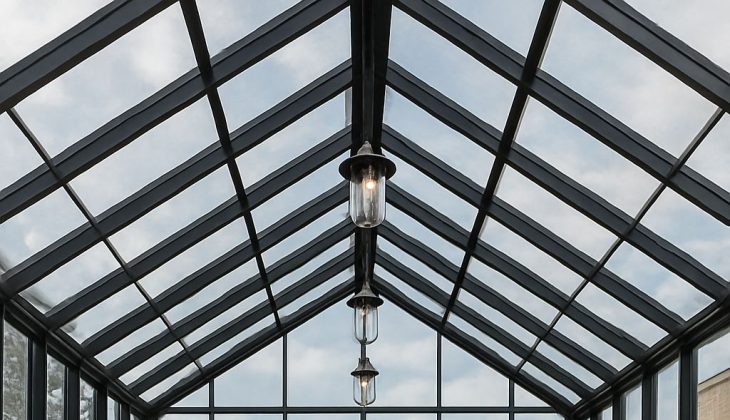
- Luxury urban greenhouses are no longer just for growing plants — they double as entertainment spaces, yoga retreats, and year-round garden sanctuaries.
- The right greenhouse design can add significant property value to your Joliet, IL home while extending your growing season by at least a month on each end.
- Sturdi-Built Greenhouses offers heirloom-quality models like the Artisan and Victorian that are purpose-built for upscale backyards and harsh Midwest winters.
- Premium materials matter — aluminum framing, tempered glass, and automated climate systems separate a true luxury greenhouse from a basic backyard shed.
- Joliet homeowners face unique challenges — keep reading to discover which greenhouse styles and heating solutions hold up best against Illinois winters.
Joliet Homeowners Are Transforming Backyards With Luxury Greenhouses
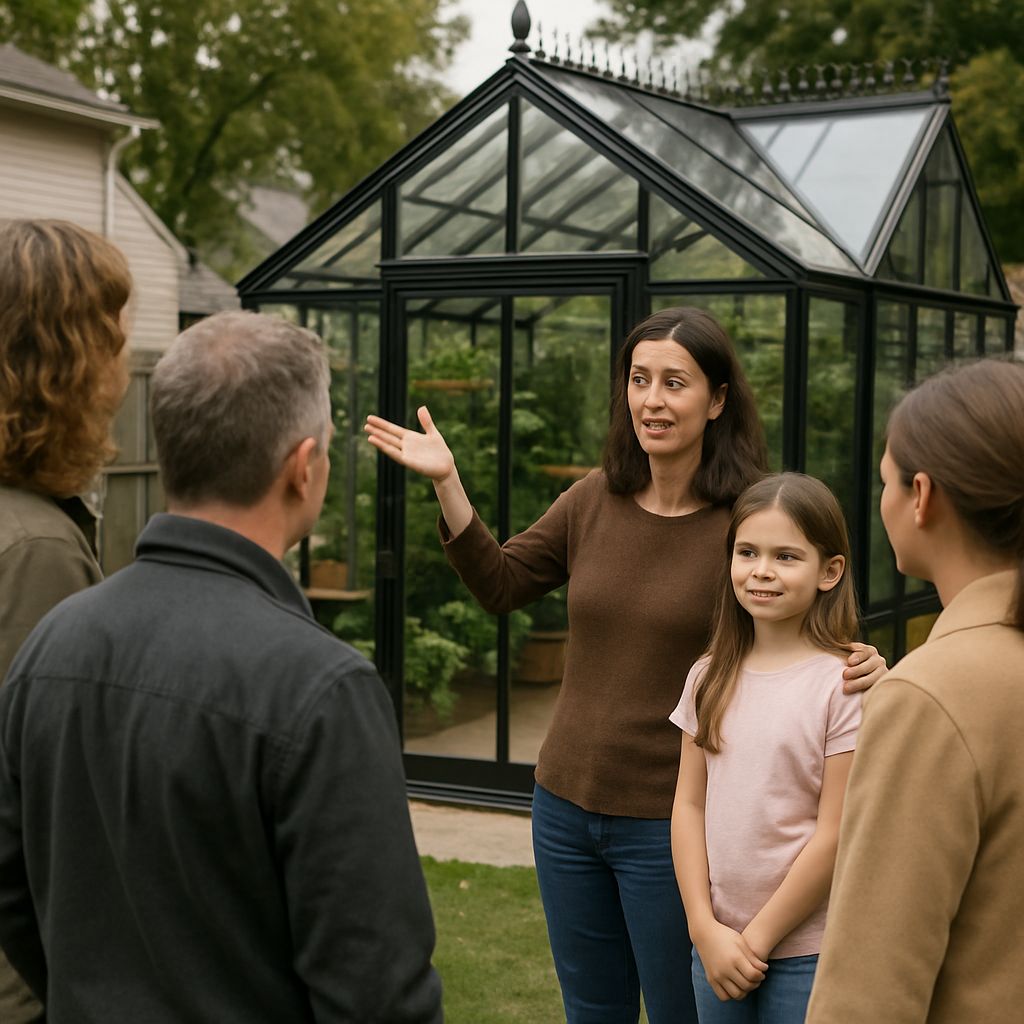
A luxury greenhouse isn’t just a gardening upgrade — it’s a complete lifestyle statement for your backyard.
Across Joliet, IL, homeowners with discerning taste are moving well beyond basic garden beds and seasonal planters. They’re investing in permanent, architecturally stunning greenhouse structures that serve multiple purposes: year-round growing, private retreats, and even elegant entertaining spaces. The demand for high-end greenhouse designs has grown steadily as more urban and suburban homeowners realize that a beautifully crafted greenhouse can transform an ordinary backyard into something extraordinary.
For those exploring premium options, Sturdi-Built’s luxury greenhouse collection is a strong starting point — their structures are engineered for longevity and customized to complement upscale landscapes. Whether you’re drawn to classic Victorian elegance or clean modern lines, there’s a design built to match your vision and your Illinois climate.
What makes Joliet especially interesting is its blend of established neighborhoods with generous lot sizes and a growing culture of premium home investment. Homeowners here aren’t settling for prefabricated plastic kits. They want structures with real architectural presence — greenhouses that look like they belong alongside a professionally landscaped backyard, not dropped in as an afterthought.
Top 3 Luxury Urban Greenhouse Designs for Joliet, IL Homes
Not every greenhouse design suits every backyard or lifestyle. The three models below represent the gold standard in luxury greenhouse design for affluent homeowners — each offering a distinct aesthetic, structural integrity, and functional versatility that holds up beautifully in the Midwest’s demanding climate.
1. The Tudor Greenhouse: Classic English Garden Style
The Tudor Greenhouse draws inspiration from the grand estate gardens of England, featuring steeply pitched rooflines, rich wood-accented framing, and generous glass panels that flood the interior with natural light. It’s the kind of structure that anchors a backyard with old-world sophistication — equally at home next to a formal rose garden or a sweeping lawn. For Joliet homeowners who favor traditional architecture, the Tudor delivers unmatched curb appeal alongside serious growing capability.
2. The Victorian Greenhouse: Ornate Glass and Steel Elegance
The Victorian Greenhouse is arguably the most iconic luxury greenhouse design available, and for good reason. Its intricate ridge detailing, elegant cast-style aluminum framing, and soaring glass walls create a structure that feels more like a conservatory than a traditional greenhouse. Sturdi-Built’s Victorian model blends classic European design with modern structural performance, making it one of the most sought-after options among luxury backyard greenhouse ideas. It performs beautifully as both a serious growing space and a showpiece garden feature.
3. The Modern Lean-To Greenhouse: Sleek Architectural Design
For homeowners with contemporary homes or more compact urban backyards, the Modern Lean-To Greenhouse is an inspired solution. It attaches directly to an existing wall or structure, creating a seamless indoor-outdoor transition that feels intentional rather than improvised. Expansive glass panes, clean angular lines, and minimal framing give it a high-design aesthetic that complements modern landscape architecture exceptionally well. It’s also one of the most energy-efficient configurations, since one shared wall reduces heat loss — a practical bonus for Illinois winters.
Greenhouse Style Best For Key Feature Illinois Winter Rating Tudor Traditional home aesthetics Steeply pitched roof, wood accents ★★★★★ Victorian Showpiece garden centerpiece Ornate cast aluminum, soaring glass ★★★★★ Modern Lean-To Urban lots, contemporary homes Space-efficient, energy-saving wall design ★★★★
What Makes a Greenhouse Truly Luxury
The word “luxury” gets overused in home improvement, but in the greenhouse world, it has a very specific meaning. A true luxury greenhouse goes far beyond a basic polycarbonate shell with a few shelves inside. It starts with architectural design that complements your home, continues with materials engineered to last decades, and finishes with integrated systems that make growing year-round effortless rather than laborious.
Premium Materials That Last in Illinois Winters
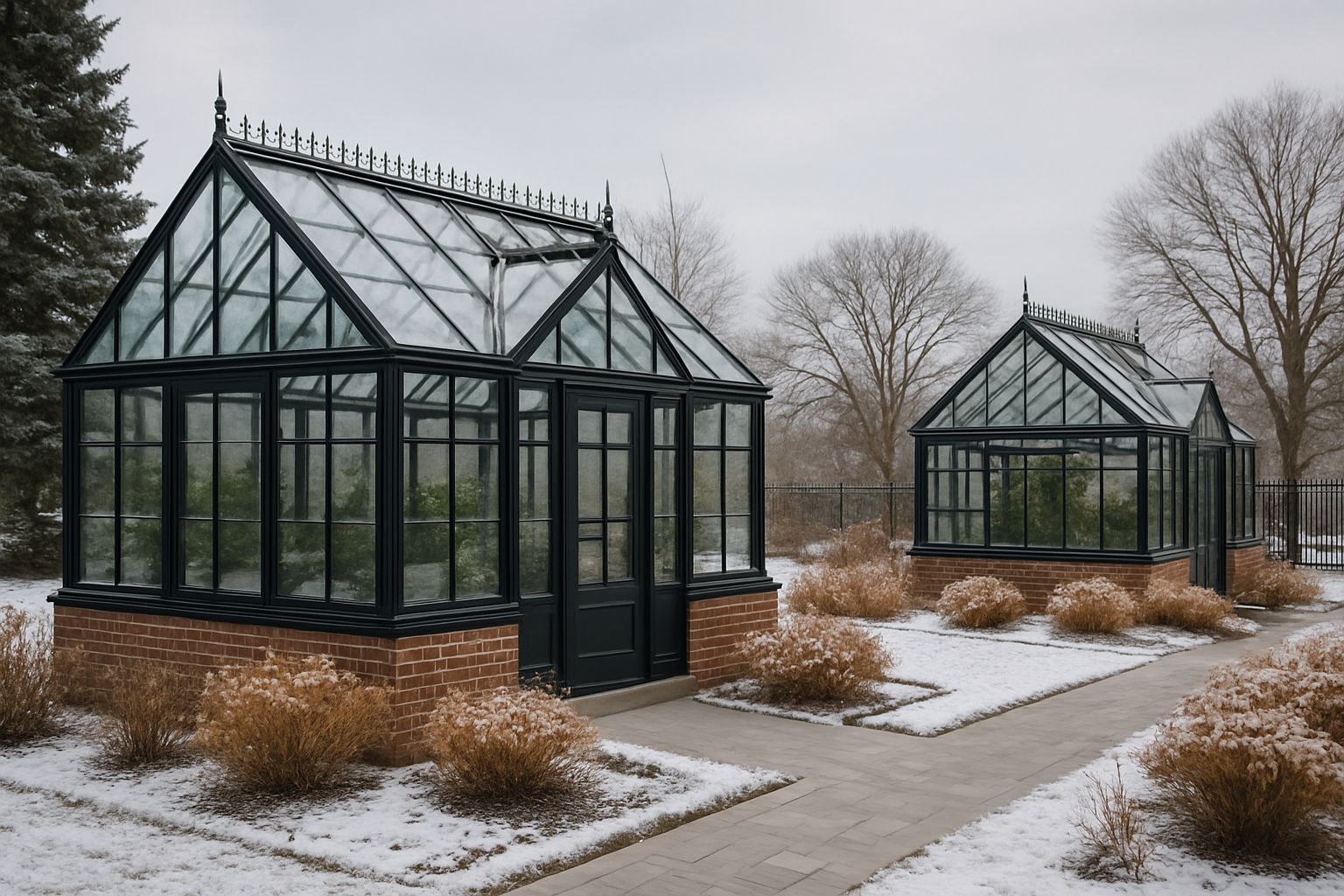
Illinois winters are unforgiving — temperatures routinely drop well below freezing, and heavy snow loads are a real structural concern. Luxury greenhouses built for this environment use heavy-gauge aluminum framing that resists corrosion and won’t warp under temperature extremes. Tempered or double-pane glass panels offer superior insulation compared to standard single-pane options, retaining interior heat far more effectively overnight. Powder-coated finishes on framing extend the lifespan dramatically while maintaining a clean, polished appearance year after year.
Climate Control Systems Worth the Investment
Automated climate control is what separates a passive greenhouse from a true year-round growing environment. High-end systems monitor and regulate temperature, humidity, and ventilation simultaneously — some integrate directly with smart home platforms like Google Home or Amazon Alexa. Roof vents with automatic openers respond to temperature thresholds without any manual input, while thermostatically controlled heaters maintain optimal growing conditions overnight. For Joliet homeowners, this level of automation isn’t a luxury add-on — it’s a practical necessity given the region’s dramatic seasonal temperature swings. For those interested in expanding their gardening expertise, exploring plant-based culinary tips in Joliet can provide additional insights.
Integrated Lighting for Year-Round Growing
Lighting is one of the most underestimated elements in a luxury greenhouse build, and getting it right makes an enormous difference in what you can grow and when. Full-spectrum LED grow lights have replaced traditional HID systems as the preferred choice for high-end installations — they consume significantly less energy, generate far less heat, and can be programmed to mimic natural daylight cycles with precision. Brands like Philips GreenPower and Fluence SPYDR are trusted by serious growers for their output consistency and longevity. For more inspiration, you can explore backyard greenhouse designs that incorporate advanced lighting solutions.
Beyond grow lighting, ambient lighting transforms a greenhouse from a purely functional space into something genuinely beautiful after dark. Warm LED strip lighting along interior ridge beams, path lighting through garden beds, and accent lighting on specimen plants create an atmosphere that’s as compelling at 9 PM as it is at noon. For Joliet homeowners who entertain outdoors, this layer of lighting design makes a luxury greenhouse an unforgettable evening destination.
Home Garden Ideas to Complement Your Greenhouse
A luxury greenhouse becomes even more impressive when the surrounding garden design matches its architectural quality. Thoughtful landscaping that bridges the greenhouse with the rest of your backyard creates a cohesive, estate-quality outdoor environment that feels intentional from every angle.
Raised Bed Gardens That Match High-End Greenhouse Aesthetics
Raised garden beds built from materials that echo your greenhouse framing — think powder-coated steel, naturally weathered cedar, or even powder-coated aluminum — create a visual continuity that elevates the entire outdoor space. Corten steel raised beds have become particularly popular in upscale garden designs for their warm rust patina and industrial-chic durability. Positioning raised beds along pathways leading to and from the greenhouse creates a natural garden journey that makes the entire backyard feel curated and intentional rather than assembled piecemeal.
Herb and Edible Gardens for the Urban Homeowner
There’s a quiet elegance to a well-designed kitchen garden just steps from your back door — and for luxury homeowners, this means going well beyond a few pots of basil. A dedicated herb parterre, inspired by traditional French potager gardens, uses symmetrical beds divided by gravel or brick pathways to organize culinary herbs, edible flowers, and compact vegetables into something genuinely beautiful. Varieties like ‘Purple Ruffles’ basil, bronze fennel, and lemon thyme add both flavor and striking visual texture to the garden.
Connecting your outdoor edible garden to your greenhouse growing program creates a seamless year-round harvest cycle. Start seedlings of heirloom tomatoes and specialty peppers inside the greenhouse during February and March, then transition them outdoors to raised beds once Joliet’s last frost date passes — typically around late April to mid-May. This kind of integrated growing approach is what distinguishes a truly sophisticated home garden from a casual weekend hobby.
How to Extend Your Growing Season in Joliet, IL
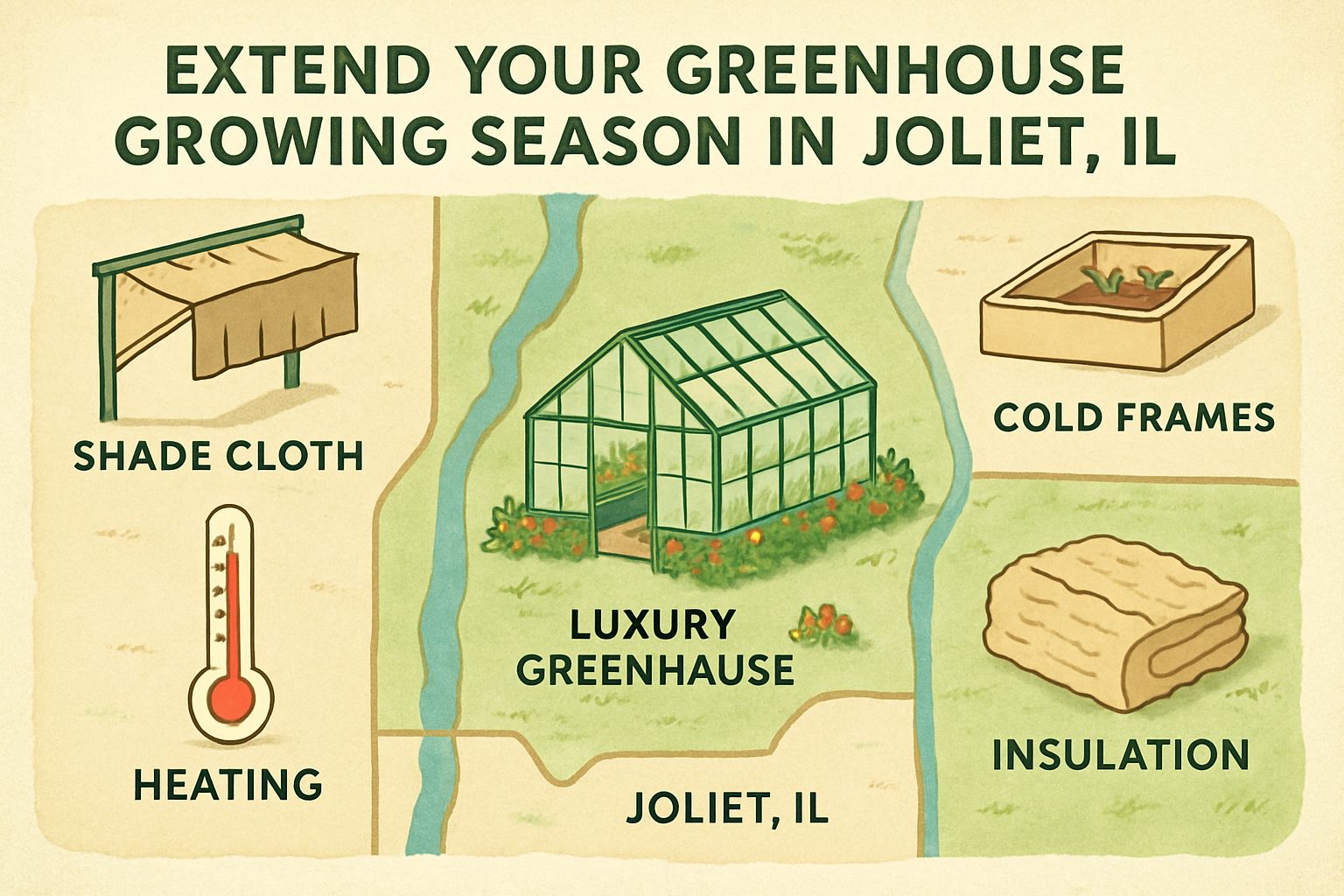
One of the most compelling practical arguments for a luxury greenhouse in Joliet is the ability to dramatically extend your growing season beyond what Illinois weather normally allows. Without any protection, Joliet’s growing season runs roughly from mid-May to mid-October — about five months. A well-equipped greenhouse pushes that window to twelve months, letting you grow fresh produce and maintain tropical specimens through even the harshest February cold snaps. For more information on maintaining your garden throughout the year, check out these seasonal maintenance tips.
The key is treating your greenhouse as a climate zone unto itself rather than simply a shelter from wind. With the right combination of thermal mass, heating infrastructure, and insulating glazing, maintaining interior temperatures of 55°F to 65°F overnight — even when outdoor temperatures plunge to single digits — is entirely achievable. That’s the difference between a greenhouse that limps through winter and one that thrives through it.
Illinois Climate Challenges Every Greenhouse Owner Should Know
Joliet sits in USDA Hardiness Zone 5b, which means average annual minimum temperatures between -15°F and -10°F are possible. Beyond cold, Illinois winters bring heavy snow loads that can stress inadequate glazing systems, prolonged cloud cover that limits natural light for weeks at a time, and dramatic freeze-thaw cycles that stress structural connections. Any luxury greenhouse specified for this region must be engineered with these conditions as baseline requirements — not afterthoughts.
Cold-Hardy Plants That Thrive in Joliet Greenhouses
Not every plant needs tropical warmth to thrive in a winter greenhouse. A well-curated selection of cold-tolerant species can keep your greenhouse lush, productive, and visually stunning through the coldest months without running heating systems at maximum capacity.
Leafy greens are the workhorses of the winter greenhouse. Varieties like ‘Flashy Trout’s Back’ lettuce, ‘Red Russian’ kale, arugula, and spinach continue producing reliably at temperatures as low as 40°F. Microgreens — sunflower, pea shoots, and radish — are fast-turnaround crops that add fresh flavor to winter meals on a two-week harvest cycle.
- Camellias — bloom reliably in cool greenhouse conditions and add dramatic floral presence through winter
- Citrus trees (Meyer lemon, Calamondin orange) — thrive in cool greenhouse temps of 50°F to 65°F and produce fruit through winter months
- Hellebores — frost-tolerant perennials that bloom January through March with minimal heat input
- Cyclamen persicum — prefers cool temperatures between 50°F and 60°F, producing vivid blooms all winter long
- Fig trees (Chicago Hardy Fig) — go dormant in the cool greenhouse but return vigorously in spring, benefiting from frost protection
Heating Solutions for Harsh Midwest Winters
For a Joliet greenhouse, heating is non-negotiable. The most effective luxury installations use a combination of in-floor radiant heating — which warms from the ground up and maintains even temperature distribution — paired with a thermostatically controlled gas or electric forced-air backup heater for extreme cold events. Propane-fired unit heaters from brands like Modine or Re-Verber-Ray are widely used in high-end greenhouse installations for their reliability and rapid heat output. Adding thermal mass in the form of large water-filled containers or stone flooring absorbs daytime solar heat and releases it slowly overnight, meaningfully reducing heating costs without sacrificing growing conditions. For more tips on maintaining your greenhouse, check out our seasonal maintenance tips.
Hiring Greenhouse Specialists in Joliet, IL
Building a luxury greenhouse is a significant investment, and the quality of your installation depends as much on who builds it as on which model you choose. Joliet has a growing network of contractors experienced in premium outdoor structures, but not all of them specialize in the unique requirements of greenhouse construction — proper foundation work, glazing installation, climate system integration, and drainage planning all require specific expertise that general contractors often lack.
What to Look for in a Local Greenhouse Builder
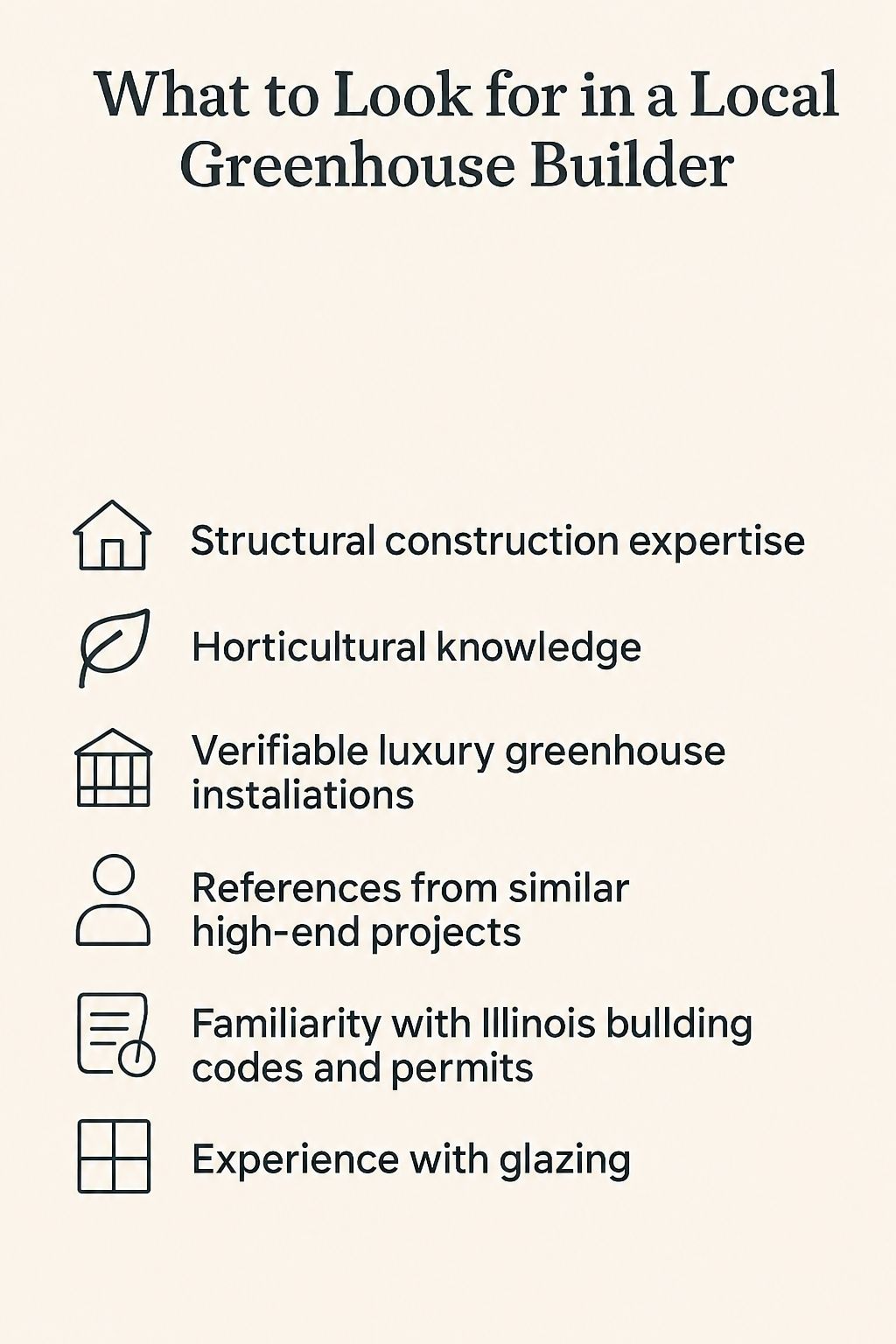
The best greenhouse builders in the Joliet area combine structural construction expertise with genuine horticultural knowledge — they understand that a greenhouse isn’t just a building, it’s a controlled growing environment. Look for contractors who have completed verifiable luxury greenhouse installations, can provide references from similar high-end projects, and demonstrate familiarity with Illinois building codes and permit requirements. A builder who has never managed glazing installation or in-floor radiant heating integration is not the right fit for a premium project, regardless of their general construction credentials.
It’s also worth evaluating whether your builder has relationships with premium greenhouse manufacturers like Sturdi-Built. Authorized dealers and installers who work directly with manufacturers have access to proper installation documentation, warranty support, and technical guidance that independent contractors simply don’t. This matters enormously when something needs adjustment or repair five years down the line — you want a builder whose relationship with your greenhouse doesn’t end the day they pack up their tools.
Questions to Ask Before Hiring a Pro
Walking into a contractor meeting prepared with the right questions separates a confident, informed client from one who gets oversold on unnecessary upgrades or undersold on critical systems. Before signing anything, ask specifically about their experience with glazing systems, foundation types for greenhouse structures, and climate system integration. Request a detailed line-item quote so you can see exactly what you’re paying for — vague lump-sum estimates are a red flag in luxury construction projects of any kind.
A few questions that always belong in that first conversation:
- How many luxury greenhouse installations have you completed in Will County or the greater Joliet area?
- Are you an authorized installer for the greenhouse manufacturer I’ve selected?
- How do you handle foundation work, and what type do you recommend for my specific soil and lot conditions?
- What permits will this project require, and will you manage the permit application process?
- What does your post-installation support look like if climate systems need adjustment?
Your Luxury Greenhouse Is the Best Investment Your Joliet Home Can Make
Investment Factor Basic Greenhouse Luxury Greenhouse Materials lifespan 5–10 years 30–50+ years Growing season Extended by ~1 month at each end Full 12-month capability Property value impact Minimal to moderate Significant — comparable to premium outdoor living additions Usability beyond growing Growing only Entertaining, retreats, yoga, dining Climate system integration Manual venting only Automated, smart-home compatible
No outdoor home improvement delivers quite the combination of lifestyle value, functional utility, and architectural presence that a luxury greenhouse does. A premium deck or patio extends your outdoor living season by a few months. A luxury greenhouse extends it to twelve — and gives you something genuinely productive to do in every one of those months. That’s a return on investment that compounds with every growing season.
For Joliet homeowners specifically, the case is even stronger. In a region where harsh winters limit outdoor enjoyment for nearly half the year, having a beautifully designed, climate-controlled greenhouse space means never losing touch with your garden — and never losing the grounding, restorative experience of being surrounded by growing things, regardless of what’s happening outside. That kind of year-round connection to your garden is something no other home improvement can replicate.
The decision to build a luxury greenhouse is ultimately a decision about how you want to live at home — not just how you want to garden. The finest greenhouse designs become the most-used spaces on the entire property, drawing family members in daily and impressing guests with a level of thoughtfulness and sophistication that simply can’t be faked. When the structure is built right, with premium materials and expert installation, it becomes a defining feature of your home for decades to come.
Frequently Asked Questions
Still have questions about bringing a luxury greenhouse to your Joliet backyard? Here are answers to the most common questions homeowners ask before leaping.
What is the average cost of a luxury greenhouse in Joliet, IL?
- Entry-level luxury greenhouse kit (e.g., Sturdi-Built Artisan, basic configuration): $10,000–$20,000 for the structure alone
- Mid-range luxury installation with foundation, climate systems, and basic lighting: $25,000–$50,000
- High-end custom installation with radiant floor heating, automated climate control, full LED lighting, and premium glazing: $60,000–$100,000+
- Labor costs in the greater Joliet area typically range from $50–$150 per hour, depending on contractor specialization
- Permit fees in Will County vary by project scope but generally fall between $200–$1,500
These figures reflect the full investment range for a genuinely luxury installation — not a basic polycarbonate kit from a big-box retailer. The wide range reflects meaningful differences in structure size, glazing type, foundation complexity, and the depth of climate systems installed.
It’s also worth factoring in the ongoing operational costs of maintaining a year-round heated greenhouse in Illinois. Heating a well-insulated 200-square-foot greenhouse through a Joliet winter typically adds between $80 and $200 per month to energy costs, depending on the heating system, insulation quality, and how cold the season runs. LED lighting and automated ventilation add minimal ongoing cost by comparison.
The bottom line: a well-specified luxury greenhouse in Joliet is a serious investment, but one with a meaningful return. Real estate professionals consistently identify premium outdoor living features — including high-end greenhouses — as meaningful contributors to property value in upscale suburban markets.
Do I need a permit to build a greenhouse in Joliet, IL?
Yes — in most cases, a building permit is required to construct a greenhouse in Joliet, IL, particularly for permanent structures with foundations. Will County and the City of Joliet both require permits for structures above a certain square footage threshold, and any installation involving electrical systems, gas lines, or plumbing will trigger additional permit requirements. Before breaking ground, contact the Joliet Building and Development Services department to confirm the specific requirements for your project scope and lot. A reputable luxury greenhouse installer will handle this process on your behalf as part of their standard service offering.
What greenhouse style works best for small urban backyards in Joliet?
Small urban lots in Joliet don’t have to limit your greenhouse ambitions — they just require smarter design choices. The key is selecting a structure that maximizes usable interior space without dominating the entire backyard footprint, while still delivering the visual impact and functional performance of a luxury installation.
The Modern Lean-To Greenhouse is consistently the top recommendation for compact urban properties. By attaching to an existing exterior wall — typically a south or west-facing house wall for maximum solar exposure — it uses space that would otherwise be wasted while creating a seamless architectural connection between your home’s interior and the garden. Sizes as compact as 6 feet wide by 8 feet long can still deliver a genuine luxury growing environment when properly fitted out with vertical growing systems, built-in shelving, and smart climate controls.
Freestanding designs like the Sturdi-Built Victorian or Tudor can also work beautifully on smaller lots when positioned thoughtfully. Siting the greenhouse toward a rear property corner, anchoring it with complementary planting on two sides, and using it as a visual terminus for a garden pathway creates the impression of a much larger, more expansive garden than the square footage actually allows.
- Lean-To designs — ideal for lots under 5,000 sq ft, attach to existing walls, maximize south-facing solar gain
- 6×8 or 8×10 freestanding designs — workable on mid-sized urban lots with thoughtful placement and vertical growing systems
- Corner placement — positions the greenhouse as a garden anchor without consuming central lawn space
- Vertical growing systems — wall-mounted planters and tiered shelving multiply growing capacity without increasing footprint
Whatever the lot size, the luxury is in the details — premium glazing, quality framing, and thoughtful interior outfitting matter far more than raw square footage when creating a greenhouse that feels genuinely special.
How do I heat my greenhouse during an Illinois winter?
Heating Method Best For Estimated Monthly Cost (200 sq ft) Reliability in Extreme Cold In-floor radiant (gas) Year-round luxury installations $80–$150 ★★★★★ Thermostatically controlled electric heater Smaller greenhouses, backup systems $100–$200 ★★★★ Propane unit heater (Modine) Large structures, rapid heat recovery $90–$160 ★★★★★ Thermal mass (water barrels, stone) Passive heat storage, supplemental use $0 ongoing ★★★ (supplemental only)
Heating a luxury greenhouse through a Joliet winter is entirely manageable when the right system is matched to the structure’s size and insulation quality. In-floor radiant heating is the gold standard for high-end installations — it delivers even, consistent warmth from the ground up, eliminates cold spots, and creates the most comfortable environment for both plants and people. For structures over 150 square feet, pairing radiant floor heating with a thermostatically controlled propane or gas backup unit heater ensures you’re covered even during the most extreme cold snaps.
Passive strategies significantly reduce how hard your heating system has to work. Installing double-pane tempered glass panels rather than single-pane glazing meaningfully reduces overnight heat loss. Lining the north interior wall with thermal mass — large dark-painted water containers, stone cladding, or even brick — absorbs solar energy during the day and radiates it back through the night. Strategic use of thermal shade cloth overnight adds another layer of insulation without requiring any additional energy input.
The most sophisticated luxury greenhouse heating setups integrate with smart home systems, allowing you to monitor and adjust interior temperature remotely via smartphone. When a polar vortex is forecast, you can bump the thermostat set point before it even arrives — protecting your plants without a single trip into the cold.
Can I use my luxury greenhouse as an entertaining space?
Absolutely — and some of the most memorable uses of a luxury greenhouse have nothing to do with growing plants at all. A well-designed greenhouse with ambient lighting, comfortable furnishings, and climate control becomes one of the most unique entertaining spaces imaginable: intimate, surrounded by living greenery, and completely set apart from the ordinary living spaces inside your home. Dinner parties hosted inside a Victorian greenhouse in February, with candlelight reflecting off glass panels and citrus trees in full fruit overhead, create an atmosphere that no interior dining room can match.
The practical requirements for entertaining-ready greenhouses are straightforward. A level, finished floor — whether polished concrete, natural stone pavers, or premium tile — is the foundation of a comfortable gathering space. Built-in irrigation systems keep plant care maintenance-free during events. Ambient LED lighting on dimmers allows the atmosphere to shift from bright and functional during the day to warm and intimate in the evening. A small wine refrigerator or bar cart tucked into a corner completes the experience without requiring any structural additions.
Many luxury greenhouse owners in the Joliet area report that their greenhouse becomes the centerpiece of their social entertaining — the space guests ask about first, linger in longest, and remember most vividly. It’s a natural conversation starter and a genuine expression of personal taste that communicates sophistication without saying a word.
If entertaining is a priority alongside growing, communicate that clearly with your greenhouse builder from the start. Structural decisions made early — floor specification, electrical outlet placement, door width for furniture access, and ventilation capacity for body heat from a crowd — are far easier to get right in the design phase than to retrofit after installation. A luxury greenhouse designed with entertaining in mind from day one is a completely different experience from one that was adapted as an afterthought.
Ready to bring your vision to life? Sturdi-Built Greenhouses crafts heirloom-quality structures purpose-built for homeowners who refuse to compromise on design, materials, or performance. For those interested in sustainable practices, consider exploring eco-friendly urban garden kits to complement your greenhouse setup.