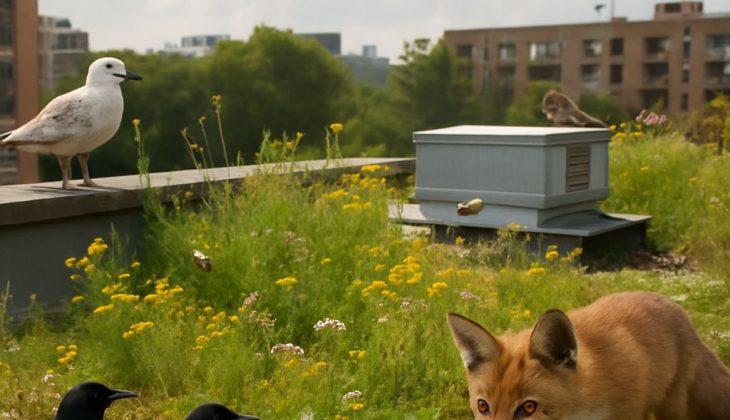
- Springfield, IL rooftops can support full native ecosystems using lightweight growing media as shallow as 3–4 inches, making green roofs viable for many existing residential structures.
- Native Illinois plants like Prairie Dropseed, Little Bluestem, and Purple Coneflower are naturally adapted to survive Springfield’s freeze-thaw cycles, summer heat, and wind exposure without heavy maintenance.
- A rooftop habitat actively supports local wildlife — from Sangamon County’s native bee species to migratory songbirds using urban green roofs as critical stopover points during spring and fall migration.
- Springfield building codes require permits for rooftop modifications, and structural load assessments are a non-negotiable first step before installing any growing medium or vegetation layer.
- Timing your fall cutbacks correctly is one of the most overlooked secrets to a thriving rooftop habitat — cut too early, and you eliminate vital overwintering habitat for native insects.
Springfield’s rooftops are some of the most underused ecological real estate in all of central Illinois — and that’s about to change.
Across Sangamon County, eco-conscious homeowners and building managers are discovering that the flat and low-slope roofs above their heads aren’t just structural necessities. They’re opportunities. With the right plant selection, a properly engineered substrate, and an understanding of Illinois’s demanding climate, a rooftop can transform from dead space into a living, breathing habitat that supports pollinators, filters stormwater, and reduces urban heat — all at once. For residents looking to explore eco-roofing resources and connect with local sustainability-focused guidance, Springfield’s green building community is an excellent starting point.
Springfield Rooftops Can Become Thriving Ecosystems
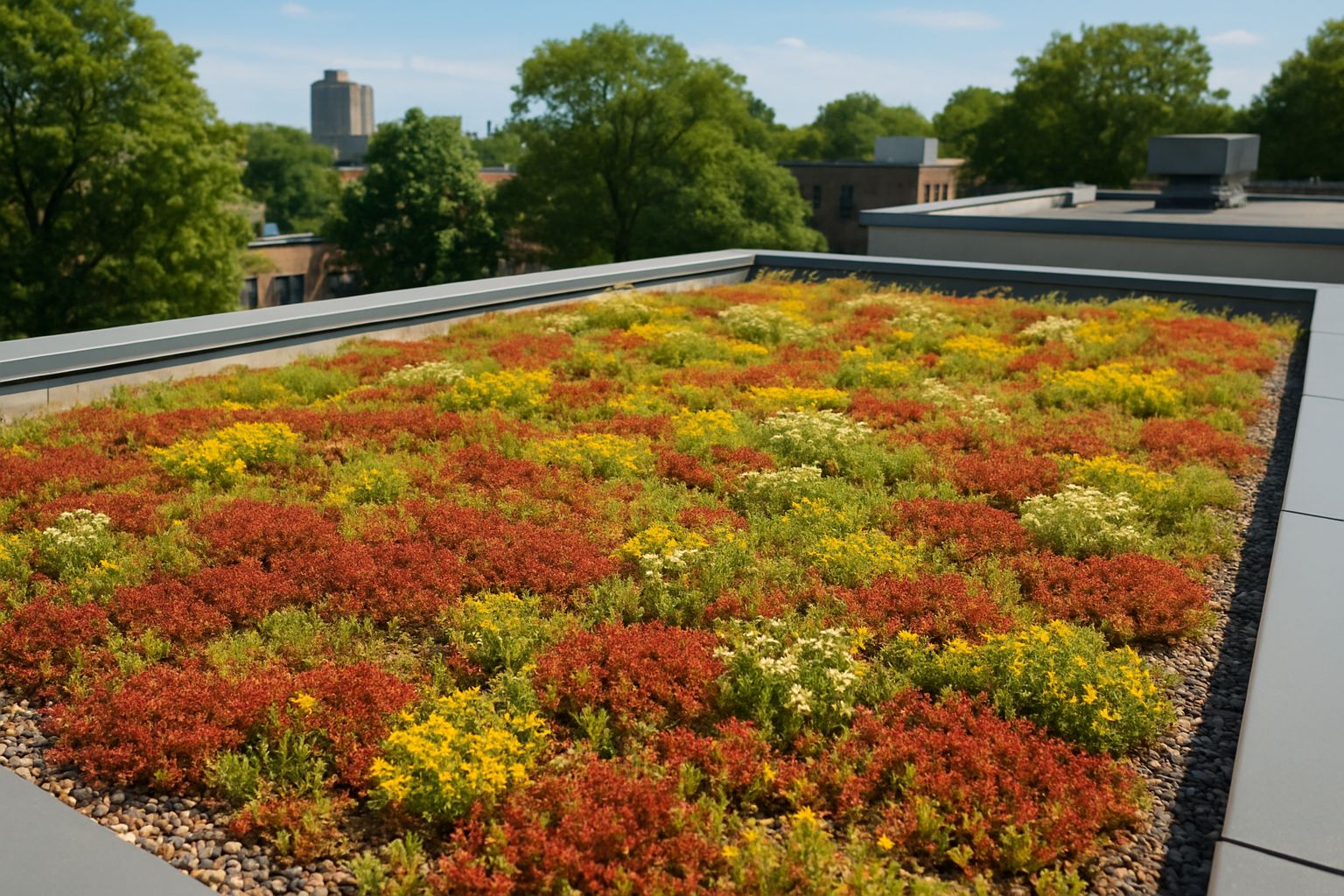
The idea sounds ambitious, but the science is well-established. Green roofs have been documented across Europe and North America for decades, and the ecological principles translate directly to Springfield’s urban landscape. What makes the Springfield context particularly compelling is the region’s position within the Central Illinois Prairie ecosystem. This landscape evolved to thrive in exactly the kinds of exposed, resource-limited conditions that a rooftop presents.
Shallow-substrate extensive green roofs — the most practical type for existing residential buildings — use growing media typically ranging from 3 to 6 inches in depth. That’s thin enough to remain structurally feasible on many homes, yet deep enough to sustain a surprising diversity of native Illinois species. The result isn’t just an aesthetic upgrade. It’s a functioning fragment of habitat in a city where natural green space is increasingly fragmented.
What Makes a Rooftop Habitat “Eco-Friendly”
Not every green roof qualifies as a genuine ecological habitat. A rooftop covered in non-native sedums or ornamental grasses may look green, but it contributes little to local biodiversity. A true eco rooftop habitat in Springfield prioritizes native plant species, supports native invertebrate and bird populations, and integrates systems that work with Illinois’s natural hydrology rather than against it.
Structural Load Considerations for Illinois Homes
Before a single handful of growing medium goes on your roof, a licensed structural engineer needs to assess your building’s load capacity. This is non-negotiable. A saturated extensive green roof growing medium can weigh anywhere from 10 to 35 pounds per square foot, depending on depth and saturation level. Most residential structures in Springfield — particularly older Craftsman and mid-century homes common to the area — were not designed with this additional dead load in mind. For more information on sustainable roofing options, consider exploring climate-resistant green roof solutions.
The assessment process involves reviewing roof joist size, span, and spacing, as well as the overall condition of the existing roof structure. In many cases, targeted reinforcement of specific structural members is enough to make a green roof viable without a full rebuild.
Waterproofing and Drainage Layers That Protect Your Roof
A green roof system is only as reliable as its waterproofing membrane. For Springfield installations, a root-resistant waterproofing layer — typically a thermoplastic polyolefin (TPO) or ethylene propylene diene monomer (EPDM) membrane — must be installed beneath the entire growing assembly. Without a root barrier integrated into or layered above this membrane, aggressive native plant roots will eventually compromise the roof deck.
Above the waterproofing layer, a drainage layer — usually composed of lightweight expanded clay aggregate (LECA) or a prefabricated drainage mat — manages water movement through the system. This layer is critical in Springfield, where heavy spring rainfall events can deliver several inches of precipitation in a short window. Proper drainage prevents waterlogging that would suffocate plant roots and add dangerous saturated weight to the structure. For those interested in sustainable gardening practices, consider attending a Springfield native plants workshop to learn more about eco-friendly solutions.
Layer Material Primary Function Waterproofing Membrane TPO or EPDM with root barrier Prevents water and root penetration into roof deck Drainage Layer LECA aggregate or drainage mat Manages excess water flow and prevents saturation Filter Fabric Geotextile membrane Prevents fine growing media from clogging drainage Growing Medium Lightweight engineered substrate Anchors plants and provides nutrients Vegetation Layer Native plants and seed mixes Delivers ecological function and habitat value
Each layer in a green roof assembly plays a specific role, and skipping or substituting any one of them typically leads to system failure within a few seasons.
Growing Medium Depth and Its Effect on Plant Selection
Depth drives everything in rooftop planting design. The growing medium you use isn’t standard garden soil — it’s an engineered lightweight substrate, typically a blend of expanded shale, clay, or slate mixed with a small percentage of organic matter. This keeps weight manageable while still providing the mineral structure that native prairie plants actually prefer.
- 2–3 inches: Suitable only for hardy succulents and mosses; very limited native Illinois species options
- 3–4 inches: Opens up options for native sedges, Prairie Dropseed, and drought-tolerant wildflowers
- 4–6 inches: Supports a much broader native plant palette including Little Bluestem, Black-Eyed Susan, and Wild Bergamot
- 6+ inches: Allows for deeper-rooted natives and increases biodiversity potential significantly
For most Springfield residential rooftops, a 4-inch growing medium depth hits the sweet spot — structurally achievable on reinforced decks, and ecologically meaningful enough to support genuine native plant communities.
Native Plants That Thrive on Springfield, IL Rooftops
Choosing native Illinois plants for your rooftop isn’t just an ecological preference — it’s a practical one. These species evolved over thousands of years in the Central Illinois landscape, developing deep drought tolerance, cold hardiness through USDA Hardiness Zone 5b conditions, and the ability to establish in lean, low-organic soils. In other words, they were built for exactly the kind of tough environment a rooftop presents.
The following selections represent the most reliable performers for Springfield rooftop habitats based on their adaptability to shallow substrate, exposure tolerance, and ecological value to local wildlife.
Prairie Dropseed for Shallow Substrate Rooftops
Sporobolus heterolepis, or Prairie Dropseed, is arguably the single best grass for a Springfield green roof. It forms tidy, arching clumps that reach 18–24 inches in height, tolerates full sun exposure and reflected heat from rooftop surfaces, and thrives in well-drained, nutrient-poor soils — conditions that closely mimic its native prairie habitat. Its fine-textured foliage turns a striking copper-orange in fall, adding late-season visual interest while its seed heads feed ground-foraging birds.
Critically, Prairie Dropseed’s relatively shallow fibrous root system makes it well-suited to 4-inch substrate depths without the aggressive lateral root spread that can stress adjacent plants or drainage layers.
Purple Coneflower as a Pollinator Magnet
Echinacea purpurea is one of the most ecologically productive native plants you can put on a Springfield rooftop. Its large, daisy-like blooms attract over 50 documented bee species, including several native to Sangamon County. The seed heads that follow bloom provide critical late-summer and fall food sources for American Goldfinches and other seed-eating birds. It handles the heat and drought stress of a rooftop environment with ease once established, and it naturalizes readily in a 4-to-6-inch growing medium.
Little Bluestem Grass for Wind and Drought Resistance
Schizachyrium scoparium was the dominant grass of the original Illinois tallgrass prairie, and its genetics reflect that heritage directly. Little Bluestem develops a deep, fibrous root system that anchors exceptionally well against the wind exposure common on elevated rooftops. Its blue-green summer foliage shifts to vivid red and copper tones by October, and the fluffy white seed heads persist through winter — providing both insulation value for the root zone and foraging material for overwintering birds. For more insights into using native plants in eco-friendly designs, consider attending the Springfield, IL Native Plants Workshop.
Wild Bergamot for Attracting Native Bees
Monarda fistulosa is a powerhouse for attracting native bees. Research has documented it as one of the top nectar sources for bumble bees in the Midwest, including Bombus griseocollis and Bombus impatiens — both species present in Sangamon County. Wild Bergamot reaches 2–4 feet in height, tolerates drought and poor soils effectively, and spreads gradually via rhizomes to fill in gaps in your rooftop plant community over time.
Its aromatic foliage also acts as a natural deterrent to some herbivorous insects, reducing the need for any pest intervention on the rooftop. That’s a meaningful advantage in a system where pesticide use would be genuinely harmful to the native bee populations you’re trying to support.
One practical note: Wild Bergamot can spread aggressively in deeper substrates. In a 4-inch growing medium, its spread is naturally constrained by limited root depth — which actually works in your favor for rooftop applications where controlled coverage is the goal.
- Bloom period: June through August, bridging a critical mid-summer nectar gap
- Preferred substrate depth: 4–6 inches for best performance
- Sun requirement: Full sun to partial shade — adaptable to rooftop microclimates
- Wildlife value: Primary nectar source for native bumble bees; also attracts hummingbirds and sphinx moths
Black-Eyed Susan for Low-Maintenance Color
Rudbeckia hirta is the workhorse of the Springfield rooftop plant palette. It establishes quickly from transplant or seed, blooms prolifically from June through October, and asks almost nothing in return. Its bright yellow ray flowers with dark brown centers are immediately recognizable, and they serve a genuine ecological function — attracting native bees, beetles, and butterflies throughout the long bloom window. For more on using local flora in eco gardens, check out this Springfield IL native plants workshop.
Black-Eyed Susan is a biennial or short-lived perennial that self-seeds readily, meaning once you establish it in your growing medium, it tends to perpetuate itself without replanting. This self-renewing quality is particularly valuable on a rooftop where access for replanting is more demanding than at ground level. It performs reliably in 3-to-4-inch substrate depths, making it one of the few native wildflowers that genuinely works in the shallowest practical rooftop growing systems.
Wildlife Your Rooftop Habitat Will Support
A well-planted Springfield rooftop doesn’t just look alive — it genuinely is. The combination of native flowering plants, undisturbed substrate, and elevation away from ground-level predators creates conditions that wildlife actively seek out. What surprises most first-time green roof installers isn’t that wildlife shows up. It’s how quickly it does.
Within a single growing season, a newly established rooftop habitat in central Illinois can attract native bee foragers, predatory beetles that control pest populations, and migratory bird species using the urban landscape as a navigation corridor. The ecological return per square foot of a well-designed native rooftop planting far exceeds that of a conventional lawn or ornamental garden at ground level.
Bee Species Native to Sangamon County
Sangamon County supports a surprisingly rich native bee fauna, and rooftop habitats can meaningfully contribute to their urban survival. Bombus griseocollis (Brown-belted Bumble Bee) and Bombus impatiens (Common Eastern Bumble Bee) are both active foragers in Springfield and will readily visit rooftop plantings of Wild Bergamot, Purple Coneflower, and Black-Eyed Susan. Mining bees in the genus Andrena and sweat bees in the genus Lasioglossum are also commonly documented in central Illinois urban environments and benefit directly from rooftop nectar and pollen resources.
What rooftop habitats offer that ground-level gardens often can’t match is reduced disturbance. Ground-nesting bees are vulnerable to soil compaction, foot traffic, and pesticide drift. An elevated rooftop planting, by contrast, provides a relatively undisturbed foraging and resting zone that mimics the isolation of a natural prairie remnant — something increasingly rare in Sangamon County’s suburban landscape.
Migratory Birds That Use Urban Green Roofs as Stopover Points
Springfield sits directly within the Mississippi Flyway, one of North America’s four major migratory bird corridors. During spring and fall migration, warblers, sparrows, thrushes, and other neotropical migrants pass through central Illinois in significant numbers — and they are actively searching for food and cover in an otherwise hardscape-dominated urban environment. A rooftop habitat with seed-bearing natives like Little Bluestem, Prairie Dropseed, and Black-Eyed Susan provides exactly the kind of stopover resource these birds need. American Goldfinches, Dark-eyed Juncos, and Song Sparrows have all been documented using urban green roof vegetation during migration in Midwest cities with established green roof programs.
Illinois Climate Challenges to Plan Around
Springfield’s climate is not forgiving, and a rooftop amplifies every extreme. Summer temperatures regularly exceed 90°F, winter lows can drop below 0°F, and the freeze-thaw cycling that occurs in the transitional months creates mechanical stress that ground-level plantings never experience at the same intensity. Planning around these realities from the beginning is what separates a rooftop habitat that thrives for decades from one that fails in its second winter.
Freeze-Thaw Cycles and Root Damage Risks
In a shallow rooftop growing medium, there is no deep soil buffer to moderate soil temperature swings. When Springfield temperatures oscillate above and below freezing — as they frequently do in November, March, and April — the growing medium expands and contracts repeatedly. This heaving action can dislodge young plant root systems, break established root-to-substrate connections, and physically displace plants from the growing medium entirely. Selecting species with fibrous, resilient root systems like Little Bluestem and Prairie Dropseed, rather than taprooted species, significantly reduces freeze-thaw damage risk in shallow substrate systems.
Summer Heat Amplification on Exposed Rooftops
Rooftop surfaces in Springfield can reach surface temperatures of 150°F to 190°F on dark membrane systems during peak summer days — far exceeding ambient air temperatures. Even with a growing medium layer providing insulation, plant crowns and shallow root zones experience heat stress that ground-level plantings never encounter. This is precisely why native prairie species are the right choice: Schizachyrium scoparium, Sporobolus heterolepis, and Echinacea purpurea all evolved under intense open-sky solar radiation in the Illinois prairie and carry genuine heat tolerance encoded in their biology.
Wind Exposure at Elevation and Plant Anchoring Solutions
Wind speed increases measurably with elevation, and a rooftop even two or three stories above street level experiences significantly stronger and more consistent wind exposure than the ground below. For Springfield rooftop habitats, this means selecting plants with strong basal anchoring and flexible stems that bend rather than break — Little Bluestem and Prairie Dropseed again earn their place here. Installing a wind screen or parapet wall on the windward edge of the rooftop can reduce wind stress substantially, and planting in modular green roof trays rather than open substrate beds helps prevent growing medium from being displaced during severe storm events, which are a regular feature of central Illinois summers.
Springfield Building Codes and Permit Requirements

In Springfield, IL, any rooftop modification that changes the structural load, waterproofing system, or drainage characteristics of a building typically requires a building permit from the City of Springfield’s Office of Planning and Economic Development. Green roof installations fall into this category. Before beginning any installation, you’ll need to submit structural engineering documentation confirming your roof can handle the added load, along with construction drawings detailing the green roof assembly layers. The Illinois Energy Conservation Code and local amendments may also apply depending on your building type and occupancy classification. Engaging a Springfield-licensed contractor familiar with green infrastructure projects is strongly advisable — the permitting process is manageable, but only if the documentation is submitted the first time correctly.
Maintenance Your Rooftop Habitat Needs Each Season
One of the most appealing aspects of a native plant rooftop habitat is that once established — typically after the first full growing season — maintenance demands drop dramatically compared to conventional rooftop plantings. Native species are self-sufficient in ways that ornamentals simply aren’t. That said, “low maintenance” is not the same as “no maintenance,” and understanding what each season actually requires will keep your rooftop habitat productive and structurally sound year after year.
Spring Establishment Checks After Illinois Winters
The first warm weeks of April are your most important maintenance window of the year. Walk your rooftop carefully and look for heaved plants — crowns that have been physically lifted out of the growing medium by freeze-thaw cycling. Gently press these back into contact with the substrate and firm the medium around the root zone. Any plants that show no green growth by mid-April should be removed and replaced, as dead plant material in a shallow growing medium can harbor fungal pathogens that spread to healthy neighboring plants.
Check your drainage outlets and filter fabric for winter debris accumulation. Springfield’s winter winds deposit organic material from surrounding trees across rooftop surfaces, and this debris can partially block drainage pathways. A blocked drain during a heavy April rain event can temporarily flood your growing medium — creating anaerobic conditions that damage root systems even in otherwise drought-tolerant native species.
Summer Irrigation Strategies for Drought-Prone Periods
Established native rooftop plantings in Springfield can typically survive on natural rainfall alone once they’ve completed their first full growing season. However, during the establishment year and during extended drought periods — defined as 21 or more consecutive days without significant precipitation, which Springfield experiences most summers — supplemental irrigation becomes necessary to prevent plant loss.
A drip irrigation system installed beneath the vegetation layer, running along the surface of the growing medium, is the most efficient delivery method for rooftop applications. Overhead sprinkler systems lose significant water to evaporation on an exposed rooftop in summer heat, and they wet foliage in ways that can promote fungal disease on species like Wild Bergamot. Program any automated irrigation system to run in the early morning hours — before 7:00 AM — to maximize soil absorption and minimize evaporative loss before the day’s heat builds.
Fall Cutback Timing to Protect Overwintering Insects
This is where most well-intentioned rooftop gardeners make a critical mistake. The instinct to cut back spent plant stems in October — when everything looks brown and dormant — is understandable, but ecologically damaging. Native bee species, including Osmia and Megachile genus bees, overwinter as pupae inside hollow and pithy plant stems. Cutting those stems in fall eliminates an entire generation of pollinators before they can emerge the following spring.
The correct approach is to leave all standing stems and seed heads through the winter. The structural complexity of uncut stems also provides wind protection for the growing medium surface and insulates root zones against Springfield’s coldest temperature drops. Little Bluestem and Prairie Dropseed look genuinely beautiful through the winter months in their copper and buff tones — there is no aesthetic penalty for doing the ecologically right thing here. For more ideas on sustainable gardening, explore these DIY garden ideas.
Wait until late March or very early April to cut stems back to 4–6 inches above the growing medium surface. This timing allows any overwintering insects using the stems to emerge naturally as temperatures warm, while still giving you a clean start for the new growing season before new growth begins pushing through the substrate. For more tips on creating a bee-friendly garden, explore our guide.
Start Small, Then Scale Your Rooftop Habitat
You don’t need to convert your entire roof on day one. Starting with a single modular green roof section — even a 100-to-200-square-foot pilot area on the most structurally sound portion of your roof — allows you to test your plant selections, understand your rooftop’s specific drainage and wind behavior, and build confidence with the maintenance rhythm before scaling up. Many of Springfield’s most impressive rooftop habitats began as small pilot projects that expanded organically over three to five years as their owners gained experience and the plants themselves demonstrated what worked best in that specific microclimate. The ecological value of even a small rooftop planting is real and immediate. Start where you can, then let the habitat guide you forward.
Frequently Asked Questions
The questions below address the most common concerns Springfield residents raise when exploring rooftop habitat projects for the first time.
What Native Plants Are Best for a Springfield, IL Green Roof?
The best native plants for a Springfield, IL green roof are species adapted to shallow, well-drained substrates, full sun exposure, and significant temperature extremes. Prairie Dropseed (Sporobolus heterolepis), Little Bluestem (Schizachyrium scoparium), Purple Coneflower (Echinacea purpurea), Wild Bergamot (Monarda fistulosa), and Black-Eyed Susan (Rudbeckia hirta) consistently perform well in central Illinois rooftop conditions. All five tolerate the heat amplification, wind exposure, and lean growing medium that define rooftop environments, while providing genuine ecological value to local pollinators and birds.
Do I Need a Permit to Build a Rooftop Habitat in Springfield, IL?
Permit Type When Required Issuing Authority Building Permit Any structural modification or added load City of Springfield Office of Planning & Economic Development Zoning Review Modifications affecting building height or appearance Springfield Zoning Division Stormwater Review Changes to drainage or impervious surface City of Springfield Public Works Structural Engineering Sign-Off Required for all green roof installations Licensed Illinois Structural Engineer
Yes, you will almost certainly need a building permit for a rooftop habitat installation in Springfield, IL. Any modification that adds structural load, alters waterproofing systems, or changes drainage characteristics triggers the permit requirement under Springfield’s municipal building code.
The process begins with a structural engineering assessment — this document becomes a core part of your permit application. You’ll also need construction drawings that detail each layer of your green roof assembly, from waterproofing membrane through to the vegetation layer. Submitting incomplete documentation is the most common cause of permit delays, so working with a contractor experienced in Springfield green infrastructure projects is strongly recommended.
Permit timelines in Springfield typically run two to six weeks for residential projects with complete documentation. For those interested in integrating eco-friendly elements, consider attending the Springfield IL Native Plants Workshop to explore local flora options. Budget for this lead time in your project planning — attempting to install before permit approval is issued creates significant legal and insurance liability.
The permitting process, while requiring some upfront effort, also protects you. A permitted and inspected green roof installation ensures your structure has been independently verified as capable of supporting the system — giving you genuine peace of mind that a non-permitted installation simply cannot provide.
How Much Weight Can a Residential Roof in Illinois Support for a Green Roof?
Most residential roofs in Illinois are engineered to support a live load of 20 pounds per square foot and a dead load of 10 to 15 pounds per square foot. A saturated extensive green roof growing medium at a depth of 3–4 inches typically weighs between 15 and 25 pounds per square foot. This means many residential roofs in Springfield can support a shallow extensive green roof system after a structural assessment confirms existing capacity — but targeted reinforcement of roof joists is frequently needed. Only a licensed structural engineer reviewing your specific building’s construction documents can give you a reliable load capacity figure. Do not rely on general averages when making this determination.
Can a Rooftop Habitat Survive an Illinois Winter?
Yes — when planted with the right native species, a rooftop habitat in Springfield, IL can survive Illinois winters reliably. The key is selecting plants that are rated to USDA Hardiness Zone 5b or colder. Springfield falls within Zone 5b, with average annual minimum temperatures ranging from -15°F to -10°F. Prairie Dropseed, Little Bluestem, Purple Coneflower, Wild Bergamot, and Black-Eyed Susan are all rated to Zone 3 or 4 — meaning they carry a substantial cold hardiness buffer beyond what Springfield’s winters typically deliver. For more information on native plants, consider attending the Springfield IL Native Plants Workshop.
The greater winter risk for rooftop plants isn’t cold per se — it’s desiccation. Shallow growing media dry out rapidly during winter wind events, and frozen substrate cannot supply moisture to plant tissues experiencing wind-driven water loss. Applying a light layer of straw mulch over the growing medium surface before Springfield’s first hard frost helps retain substrate moisture through the winter months and moderates the freeze-thaw cycling that stresses root systems. For those interested in learning more about local flora, consider attending a Springfield native plants workshop.
How Do Rooftop Habitats Help Local Wildlife in Springfield, IL?
Rooftop habitats help local wildlife in Springfield by providing native plant resources — nectar, pollen, seeds, and shelter — in an urban environment where such resources have become scarce. As Sangamon County’s natural prairie and woodland habitats have been replaced by development, urban rooftops represent one of the few opportunities to reintroduce functioning native plant communities within the city limits.
For native bee species, rooftop plantings offer both foraging resources and reduced-disturbance resting areas above the foot traffic, pesticide drift, and soil compaction that threaten ground-level habitat. Bumble bee species documented in Sangamon County, including Bombus griseocollis and Bombus impatiens, are active foragers on rooftop native plantings and benefit directly from the nectar availability that species like Wild Bergamot and Purple Coneflower provide across their long bloom windows.
For migratory birds traveling the Mississippi Flyway, Springfield’s rooftop habitats function as urban stopover points — small but meaningful islands of food and cover in a sea of impervious surfaces. Seed heads from Little Bluestem, Black-Eyed Susan, and Prairie Dropseed provide high-energy food for sparrows, finches, and thrushes during the energetically demanding migration period in April and October.
Beyond individual species benefits, rooftop habitats contribute to urban ecological connectivity. A network of green roofs distributed across a city creates stepping-stone habitat corridors that allow insects and small birds to move through the urban landscape — a function that isolated ground-level gardens cannot replicate at the same scale.
For Springfield residents ready to take the next step toward a living rooftop, Springfield’s local green building and sustainability network offers connections to qualified contractors, native plant sources, and permit guidance to help you turn your rooftop into one of the most ecologically productive surfaces in the city.