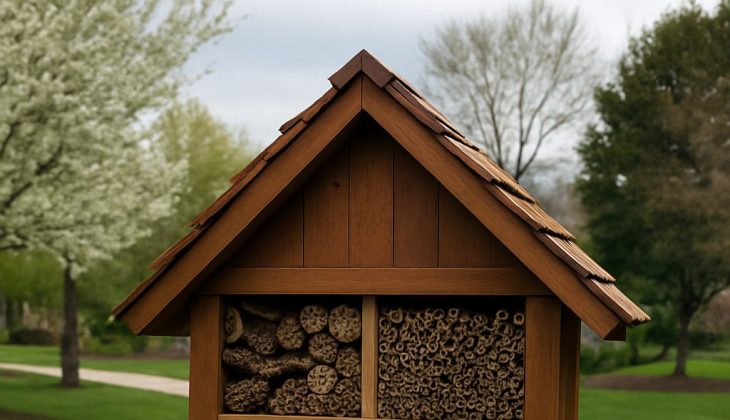
- Insect hotels are structured nesting habitats that attract beneficial insects — and those insects directly bring more birds into your urban garden.
- Urban bird populations are declining partly because cities lack the insect diversity birds depend on for food, making insect hotels a practical fix.
- The right placement, materials, and companion planting can dramatically increase how fast your insect hotel fills up — and how many birds follow.
- Not all insect hotel materials are equal — some common DIY choices actually harm the insects you’re trying to help.
- Insect hotels work best as one piece of a larger bird-friendly garden strategy, paired with native plants, water sources, and a pesticide-free approach.
If you’ve ever wondered why birds rarely visit your urban garden, the answer is almost always the same: there’s not enough food.
Most urban spaces are insect deserts. Paved surfaces, ornamental plants, and regular pesticide use strip away the bug life that birds depend on — and without insects, even the most beautifully planted balcony garden won’t attract much wildlife. An insect hotel is one of the simplest, most effective tools you can add to change that. For urban gardeners looking to build genuinely wildlife-friendly spaces, resources that bridge practical gardening with ecological impact are an invaluable starting point.
What Is an Insect Hotel?
A bug hotel — also called an insect hotel, bug house, or insect house — is an artificial nesting structure designed to give beneficial insects a safe place to shelter, overwinter, and reproduce. Think of it as a birdhouse, but engineered for the tiny creatures that most gardens desperately need more of.
How Insect Hotels Differ From Birdhouses
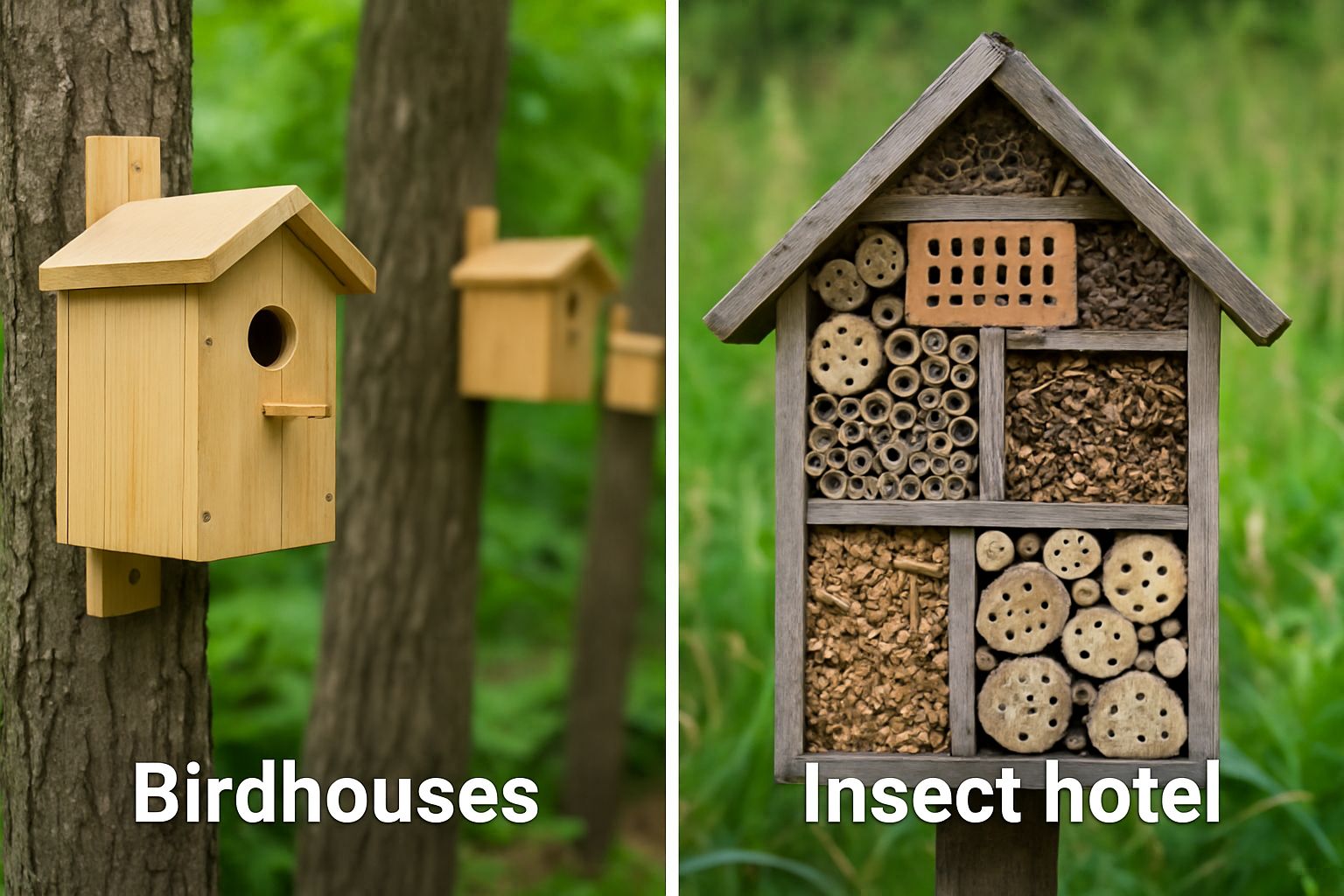
Birdhouses are single-purpose cavities designed for one species at a time. Insect hotels are the opposite — multi-chambered, multi-material structures built to host a whole community of species at once. Each section uses different materials, textures, and cavity sizes to appeal to different insects. A bamboo section might attract mason bees, while a loose bark section draws in ground beetles, and a bundle of dry stems becomes a winter refuge for lacewings. It’s intentional biodiversity built into a single structure.
What Insects Actually Use Them
The guest list is broader than most people expect. Solitary bees (including red mason bees and leafcutter bees), lacewings, ground beetles, ladybirds, hoverflies, and certain solitary wasps are among the most common occupants. Each plays a different role — pollinators, pest predators, or decomposers — and each one is a potential meal for an urban bird passing through.
Why Insect Hotels Matter for Urban Birds
The connection between insect hotels and bird activity isn’t indirect or theoretical. It’s a direct food chain link that plays out in real time in urban gardens every season. Learn more about how urban gardens impact neighborhoods and support local wildlife.
Insects as a Critical Food Source for Urban Birds
Even seed-eating birds like sparrows feed their chicks almost exclusively on insects during the nesting season. Soft-bodied larvae, beetles, and flying insects provide the protein and fat that baby birds need to develop. Species like blue tits, robins, wrens, and blackbirds are particularly dependent on insect availability during spring and summer. A garden rich in insect life isn’t just pleasant for birds — it’s essential for their survival and breeding success.
When insect populations are healthy, birds don’t just visit — they stay, nest, and return year after year. That kind of sustained bird activity is only possible when there’s a reliable, diverse insect food source underneath it all.
How Urban Habitat Loss Affects Bird Populations
Cities replace the layered, complex habitats insects need — leaf litter, dead wood, bare soil, native plant stems — with hard surfaces and manicured landscaping. The result is a dramatic collapse in insect diversity that cascades straight up the food chain. Urban bird populations have declined significantly in many cities, and habitat loss for insects is one of the key drivers behind it.
The Chain Reaction: More Insects Means More Birds
Install an insect hotel and you start reversing that chain reaction, one small habitat at a time. As insects colonize the structure, local birds quickly learn where to hunt. Robins will forage near the base. Blue tits will pick off emerging insects in early spring. Even urban sparrowhawks have been recorded hunting in gardens where insect and small bird activity is concentrated. For more ideas on creating bird-friendly spaces, check out these eco-friendly urban garden kits.
The insect hotel becomes a focal point — a self-sustaining micro-ecosystem that signals to birds that your garden is worth visiting. Over time, the presence of one well-placed insect hotel can reshape the entire wildlife dynamic of an urban outdoor space.
It also creates a compounding effect. More insects attract more birds. More birds mean more natural pest control. Less pest pressure means healthier plants. Healthier plants support more insects. The cycle keeps building — and it all starts with a simple structure filled with the right materials.
- Solitary bees pollinate up to three times more efficiently than honeybees
- Lacewings consume hundreds of aphids per week in their larval stage
- Ground beetles actively hunt slugs, making them a gardener’s best ally
- Ladybirds (ladybugs) consume thousands of aphids over a single season
- Hoverfly larvae target whitefly and other soft-bodied pest insects
The Real Benefits of Installing an Insect Hotel
Beyond attracting birds, insect hotels do serious ecological heavy lifting in compact urban spaces where every square foot of habitat counts.
Natural Pest Control Without Chemicals
The insects that move into a well-built hotel are mostly predatory or parasitic toward common garden pests. Lacewings, ground beetles, and parasitic wasps all actively reduce populations of aphids, whiteflies, slugs, and caterpillars — without a single drop of pesticide. For urban gardeners growing food on balconies or in raised beds, this is a game-changer.
The irony is that the gardeners most frustrated by pest damage are often the ones using pesticides that kill the very insects that would solve the problem naturally. An insect hotel shifts the whole dynamic by building up a resident population of pest controllers that are active 24 hours a day.
Improved Pollination in Small Urban Gardens
Solitary bees are the heavy lifters of pollination in urban gardens. Unlike honeybees, which are managed and often moved, solitary bees like red mason bees and leafcutter bees live and forage locally. A bee hotel filled with correctly sized bamboo tubes (6–8mm diameter for most solitary bee species) can dramatically increase fruit set in tomatoes, courgettes, strawberries, and flowering herbs grown in containers and raised beds.
Increased Biodiversity in Compact Spaces
Urban gardens — especially balconies and rooftop spaces — often feel like ecological dead zones. An insect hotel introduces structured habitat complexity that those spaces otherwise completely lack. Even a small 30cm x 30cm insect hotel placed against a south-facing wall can host multiple insect species simultaneously, creating a micro-community that supports the wider urban ecosystem well beyond the boundaries of your own garden.
Best Insect Hotel Ideas for Urban Spaces
You don’t need a large garden or a big budget to build something that genuinely works. The best insect hotels for urban spaces are the ones that match your environment — your wall space, your sun exposure, your available materials — rather than the ones that look most impressive on a shelf at a garden center. For more inspiration, explore the cooling benefits of urban gardens and their impact on neighborhoods.
Quick Reference: Insect Hotel Designs by Space Type
Design Type Best For Key Materials Difficulty Type Best For Key Materials Difficulty, ground-level spaces Reclaimed pallet wood, bamboo, bark, pine cones Moderate Stacked Terracotta Pots Balconies, patios, container gardens Terracotta pots, dry moss, straw, hollow stems Easy Bamboo Bee Hotel Walls, fences, railings Bamboo canes (6–8mm diameter), wooden frame Easy Repurposed Wooden Crate Rooftop gardens, raised bed areas Old wine or fruit crates, mixed natural materials Easy to Moderate
Whatever design you choose, the core principle stays the same — varied materials packed tightly enough that insects feel secure, with cavity openings that are clean, dry, and correctly sized for your target species. A loose, poorly packed hotel with wide gaps isn’t a habitat. It’s a decoration. For more ideas on creating green spaces, check out this guide on urban gardens and their benefits.
The goal is to create what ecologists call structural complexity — different textures, depths, and void sizes packed into a single structure. That variety is what makes an insect hotel genuinely functional rather than just visually interesting.
DIY Pallet Insect Hotels for Balconies and Small Gardens
A single reclaimed wooden pallet is one of the most versatile starting points for an urban insect hotel. Stand it upright against a south or southeast-facing wall, then fill each horizontal section with different materials — tightly packed bamboo canes in one section, loose bark in another, pine cones wedged into a third, and dry moss or straw at the bottom. The multi-chamber format that pallets naturally provide mirrors exactly what insects look for in natural deadwood habitats.
For balcony builds, a half-pallet works just as well and keeps the footprint manageable. Fix it securely to a wall or railing bracket at least 1.2 metres off the ground, away from prevailing wind and rain. One important detail: always use untreated, chemical-free timber. Pressure-treated wood contains preservatives that are toxic to the insects you’re trying to attract.
Stacked Terracotta Pot Designs
For gardeners with no outdoor wall space at all, stacked terracotta pots are a surprisingly effective alternative. Fill each pot with a different natural material — dry moss, rolled corrugated cardboard, hollow plant stems, or straw — then stack them on their sides in a pyramid or tower formation, securing each layer with a bamboo cane or garden wire threaded through the drainage hole. Place the finished stack on a sunny ledge or the corner of a balcony floor. It’s compact, inexpensive, and genuinely functional for solitary bees and lacewings.
Bamboo and Hollow Stem Bee Hotels
If attracting solitary bees is your primary goal — and it should be, given their outsized impact on both pollination and bird food supply — a dedicated bamboo bee hotel is the most targeted option. Cut bamboo canes to a minimum depth of 15cm (deeper is better, with 20cm being ideal for most mason bee species) and bundle them tightly inside a waterproof wooden box or tube frame. The key measurement is the internal diameter: 6mm attracts red mason bees, 8mm suits leafcutter bees, and a mix of both is ideal. Learn more about rare pollinator species and how to support them in your garden.
Mount the finished hotel on a south-facing wall or fence post at roughly 1.5 metres high, with a slight downward tilt to prevent rainwater pooling inside the tubes. Expect the first mason bees to begin investigating within a few weeks of installation in early spring, with capped tubes — a sign of successful nesting — appearing by late April or May.
Repurposed Wooden Crate Builds
Old wine crates, fruit boxes, or wooden vegetable crates make excellent ready-made insect hotel frames. The solid sides provide weather protection while the open front allows easy insect access. Fill the interior with horizontal layers of mixed materials — alternating bamboo bundles, rolled cardboard tubes, loose bark, and bundles of dry bracken or lavender stems. Add a sloped roof made from a piece of untreated timber or slate offcut to keep rain off, and you have a fully functional hotel with almost zero construction skill required.
What Materials Work Best Inside an Insect Hotel

The materials you pack inside your insect hotel determine almost everything — which insects visit, how quickly the hotel gets colonized, and whether the structure actually supports healthy insect populations or inadvertently harms them. Natural, dry, and chemical-free are the three non-negotiable rules.
Bamboo Canes and Hollow Plant Stems
Bamboo canes are the gold standard for solitary bee nesting tubes. Cut them cleanly just beyond a node at the back end (so there’s a solid wall) and leave the front open. Hollow plant stems — buddleia, sunflower, and elder are all excellent — work on the same principle and have the added benefit of being free if you’re already growing these plants. Vary the diameters between 2mm and 10mm to accommodate the widest range of bee and wasp species. For more information on creating a bee-friendly habitat, check out The Beginner’s Guide to Bug Hotels.
Dry Leaves, Bark, and Pine Cones
Loose bark, dry fallen leaves, and pine cones create the dark, layered refuges that beetles, woodlice, centipedes, and earwigs need. These insects are particularly valuable to birds — robins and blackbirds specifically forage through exactly this kind of ground-level debris material. Pack bark loosely so insects can move through it, and wedge pine cones tightly enough that they don’t fall out when the structure is handled or hit by wind.
Materials to Avoid: Why Plastic Straws and PVC Pipe Fall Short
Plastic straws and PVC pipe sections are common in commercially sold insect hotels, and both are problematic. Plastic doesn’t breathe — moisture builds up inside the tubes, creating conditions for mould and bacterial growth that can devastate solitary bee larvae before they ever emerge. Bamboo and natural plant stems, by contrast, regulate humidity naturally through their porous walls.
Similarly, avoid using wood wool (fine wood shavings) as a filler unless you’re specifically targeting certain beetle species — it compacts badly when wet and can trap insects rather than shelter them. Steer clear of anything treated, painted, varnished, or chemically preserved. The smaller the insect, the more sensitive it is to chemical residues in the materials it nests directly inside.
Where to Place Your Insect Hotel for Maximum Bird Activity
Placement is the variable most urban gardeners get wrong. A beautifully built insect hotel in the wrong spot will sit empty for seasons while birds find nothing to hunt nearby. Get placement right, and you can have active insect colonies — and regular bird visitors — within a single growing season.
Height, Sun Exposure, and Wind Protection
The ideal mounting height for most insect hotels is between 1.2 and 1.5 metres off the ground — high enough to deter ground-level disturbance, low enough for easy bird access from nearby perches. A south or southeast-facing aspect is critical. Solitary bees are cold-blooded and need morning sun warming the nest entrance to trigger daily activity. A hotel mounted on a north-facing wall in permanent shade will attract almost nothing. Wind protection matters too — a structure that rocks or vibrates in strong gusts will be abandoned quickly by nesting insects that need stability.
Proximity to Water Sources
Insects need water, and so do the birds that eat them. Placing your insect hotel within 2–3 metres of a small water source — even a simple terracotta saucer filled with pebbles and topped with clean water — creates a self-contained habitat cluster that’s dramatically more attractive to both groups. Change the water every two to three days to prevent mosquito larvae and keep it clean enough for birds to drink safely.
Pairing Placement With Native Flowering Plants
The most effective insect hotels are never placed in isolation. Surrounding your hotel with native flowering plants that bloom in sequence from early spring through to late autumn ensures a continuous food supply for the insects living in the structure — and therefore a continuous reason for birds to visit.
For early spring, plant single-flowered crocus, pulmonaria, and lungwort. For summer, lavender, borage, and single-flowered roses are exceptional for solitary bees. For autumn, ivy flowers and sedums keep insect activity going right until the first frosts. Native plants always outperform exotic ornamentals for insect diversity — they’ve co-evolved with local species over thousands of years and provide pollen and nectar in forms that local insects can actually access efficiently.
When you combine the right plant palette with a well-placed, well-built insect hotel, the result isn’t just an attractive garden feature — it’s a functioning micro-habitat that supports an entire food web. Birds learn these spots quickly. Once a robin or blue tit discovers that a particular corner of your balcony or garden reliably delivers insects, it will return to that exact location day after day, season after season.
- Face the hotel entrance south or southeast for maximum morning sun exposure
- Mount between 1.2m and 1.5m high for optimal insect colonization and bird access
- Position within 2–3 metres of a water source to create a complete habitat cluster
- Surround with native plants that flower in succession from March through October
- Avoid placing directly under overhanging eaves, where dripping water can saturate the materials
- Keep at least 1 metre away from bird feeders to prevent larger birds from disturbing nesting insects
Tips to Make Your Insect Hotel Work Harder
Building the hotel is just the beginning. What you do around it — and what you stop doing — makes the difference between a structure that sits empty and one that becomes a thriving insect hub that birds actively hunt around all season long.
1. Add Companion Planting Around the Hotel
Plant a ring of insect-friendly natives within half a metre of your hotel. Borage, phacelia, and single-flowered marigolds are among the fastest to attract solitary bees and hoverflies. These plants bridge the gap between your hotel and the wider garden, giving newly emerged insects an immediate and safe foraging destination right outside their front door. The closer the food source, the faster the hotel gets colonized.
2. Let Nearby Grass and Mulch Build Up Naturally
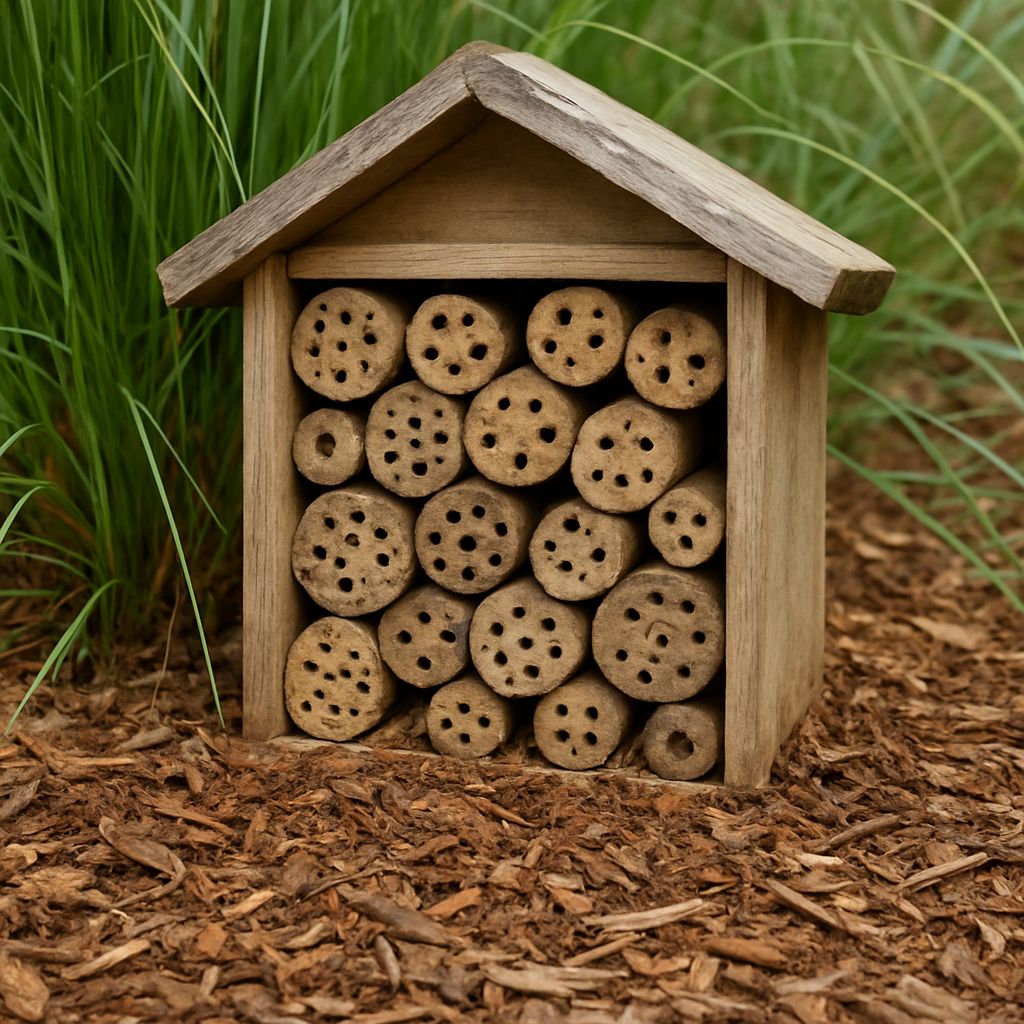
Resist the urge to tidy everything around the base of your insect hotel. A loose layer of bark mulch, fallen leaves, or even a small patch of uncut grass directly beneath the structure creates essential ground-level habitat for beetles, centipedes, and earwigs — exactly the insects that robins and blackbirds forage through most aggressively. Managed messiness is one of the most powerful tools in urban wildlife gardening, and it costs absolutely nothing.
3. Go Organic: Drop Pesticides Entirely
This one is non-negotiable. Any pesticide use — including so-called “natural” or “organic” sprays like pyrethrin — within the foraging range of your insect hotel will undermine everything you’re trying to build. Systemic pesticides absorbed by plants are carried into pollen and nectar, poisoning the very insects you’ve built habitat for. Contact pesticides kill indiscriminately, wiping out predatory insects alongside pest species.
The hardest part for most urban gardeners is trusting the process. When aphids appear on your roses in May, the instinct is to spray. But if your insect hotel is established and your garden is pesticide-free, ladybird larvae and lacewing nymphs will typically clear a moderate aphid infestation within 10 to 14 days without any intervention at all. Patience here pays off in a way that no pesticide ever can. For more insights, explore our seasonal maintenance tips.
Common Pesticides vs. Their Impact on Beneficial Insects
Pesticide Type Common Use Impact on Beneficial Insects Neonicotinoids (e.g., imidacloprid) Systemic pest control Highly toxic to bees; disrupts navigation and reproduction Pyrethrin sprays Aphid and whitefly control Kills lacewings, hoverflies, and ground beetles on contact Slug pellets (metaldehyde) Slug and snail control Lethal to ground beetles and hedgehogs; contaminates soil Fungicides Mould and mildew prevention Disrupts fungal networks that soil insects and beetles depend on
Switching to a fully pesticide-free approach doesn’t mean accepting a garden overrun by pests. It means shifting from chemical dependency to biological balance — a system where predatory insects manage pest populations naturally, and birds mop up whatever remains. It takes one full growing season to establish, but once it clicks, the garden essentially regulates itself.
The birds notice the difference faster than you might expect. A garden with a healthy, chemically undisturbed insect population will start drawing regular bird visitors — robins, blue tits, wrens — within weeks of pesticide use stopping, particularly in spring and summer when insect activity peaks and birds are feeding chicks.
4. Clean and Maintain the Hotel Each Season
Insect hotels don’t need deep cleaning — in fact, over-cleaning is one of the most common mistakes urban gardeners make. The goal is targeted maintenance, not sterilization. At the end of each season, check bamboo tubes for signs of mould or pest damage. Any tubes showing black mould growth or that have been chewed through by parasites should be removed and replaced with fresh, clean-cut bamboo.
Loose natural materials like bark, dry leaves, and pine cones can be refreshed annually by removing the old layer and replacing it with fresh, dry material. Do this in late autumn after insects have settled in for winter, or in very early spring before new activity begins — never mid-season when nesting is underway. Disturbing active nesting chambers, even with good intentions, can destroy an entire generation of solitary bee larvae.
After two to three full seasons of use, the structural materials of most insect hotels — particularly bamboo and soft wood — begin to deteriorate seriously enough to harbour harmful bacteria and fungal growth. At that point, the most responsible approach is to replace the entire hotel rather than patch it. Think of it as a two-to-three-year habitat cycle rather than a permanent fixture.
5. Be Patient — Insects Take Time to Settle In
A newly installed insect hotel in a well-placed, pesticide-free garden with companion planting nearby can start showing signs of occupancy within two to four weeks during peak spring season. For more ideas on creating a sustainable garden, check out these eco-friendly urban garden kits. But full colonization — with multiple species actively nesting across different sections — typically takes one to two full growing seasons. Urban insects are cautious colonizers. Once established, though, a well-maintained hotel will draw returning insects year after year, with populations growing steadily each season.
Insect Hotels Work Best as Part of a Bigger Bird-Friendly Garden
An insect hotel is powerful, but it reaches its full potential when it’s embedded in a garden system designed with birds in mind at every level — native plants for shelter and insects, a clean water source, pesticide-free soil, and undisturbed ground cover that gives the whole ecosystem room to function. Think of the insect hotel not as a standalone product but as the anchor point of a living, bird-friendly habitat that urban spaces rarely offer but absolutely can provide. For more ideas on creating such habitats, explore pollinator garden tours in Illinois.
Frequently Asked Questions
These are the questions urban gardeners ask most often once they’ve decided to install an insect hotel — and the answers that will save you time, money, and frustration along the way.
How Long Does It Take for Insects to Start Using a Bug Hotel?
In a well-positioned, pesticide-free garden with nearby flowering plants, you can expect the first insect activity — typically solitary bees investigating tube openings — within two to four weeks of installation during spring. Capped bamboo tubes, which confirm successful nesting, usually appear within four to six weeks. In autumn or winter installations, expect a longer wait until temperatures rise consistently above 10°C and spring foraging begins in earnest. For more information on creating your own insect habitat, check out this DIY insect hotel guide.
Do Insect Hotels Actually Attract Birds to Urban Gardens?
Yes, but the relationship is indirect and builds over time. Birds don’t visit the hotel itself; they visit because the hotel creates a concentrated population of insects in a predictable location. Once local birds — particularly robins, blue tits, wrens, and blackbirds — identify your garden as a reliable insect source, they establish foraging routines that bring them back repeatedly throughout the day. For more information on creating your own insect habitat, check out this DIY insect hotel guide.
The speed at which birds respond depends heavily on the existing bird population in your area and how insect-rich your garden becomes overall. In dense urban environments with high building density and low green space, it may take a full season before bird visits become regular. In suburban areas with more established bird territories nearby, you may notice increased bird activity within weeks of insect colonization beginning.
The key metric to watch isn’t the hotel itself — it’s the ground around it. When you start seeing a robin working the mulch beneath your insect hotel, or a blue tit hovering near the bamboo tubes in early spring, you know the system is functioning exactly as it should. Those birds aren’t there by accident. They’ve learned that your garden delivers.
Combining an insect hotel with additional bird-friendly features accelerates the process significantly. A nearby bird bath, dense native shrubs for cover, and even a simple log pile placed within a few metres of the hotel create an entire habitat cluster that urban birds find irresistible compared to the bare paving and monoculture planting that dominate most city gardens.
- Robins forage actively through ground-level debris around insect hotels
- Blue tits pick emerging insects directly from bamboo tube openings in early spring
- Wrens hunt beetles and earwigs in loose bark sections at the hotel base
- Blackbirds work the surrounding mulch layer for beetle larvae and earthworms
- House sparrows will catch flying insects attracted to companion plants near the hotel
Can I Put an Insect Hotel on a Balcony or Rooftop Garden?
Absolutely — and in many cases, balcony insect hotels perform surprisingly well because upper-storey positions often receive more direct sunlight and less ground-level disturbance than gardens below. A south-facing balcony wall is an excellent mounting surface, and even a small 20cm × 30cm bamboo bee hotel fixed to a railing bracket can attract solitary bees from a wide surrounding area. For more ideas on creating eco-friendly urban spaces, check out this guide to urban garden kits.
The main adjustment for balcony installations is wind protection. Upper floors are significantly more exposed than ground level, and an insect hotel that moves or vibrates in strong gusts will deter nesting insects quickly. Mount the hotel as close to a solid wall or sheltered corner as possible, and use sturdy fixings rather than lightweight adhesive hooks. A small overhang or roof piece added to the top of the hotel provides both wind break and rain protection.
Pair your balcony hotel with container-grown native plants — lavender, thyme, borage, and single-flowered cosmos all thrive in pots and provide the pollen and nectar that make the hotel worth visiting. Even a window box of mixed native flowering herbs directly below or beside the hotel can dramatically accelerate how quickly insects discover and colonize the structure.
What Is the Best Time of Year to Install an Insect Hotel?
Early spring — ideally late February through March in temperate climates — is the optimum installation window. This timing means the hotel is in place, weathered slightly, and ready when the first solitary bees become active in April. Red mason bees, one of the most reliable early colonizers, typically begin searching for nesting sites when daytime temperatures consistently reach 14°C or above.
That said, autumn installation is also a genuinely good option. A hotel installed in October or November allows the structure to settle, any fresh-cut timber smells to dissipate, and the bamboo tubes to take on the ambient garden scent that insects find familiar and safe. By the time spring arrives, an autumn-installed hotel often feels more established and attracts insects faster than one installed just weeks before the season starts.
How Often Should I Clean or Replace My Insect Hotel?
Light maintenance — checking for mould, removing damaged tubes, refreshing loose natural materials — should happen once per year, either in late autumn after insects have settled in for winter or in very early spring before activity resumes. Never clean or disturb the hotel between April and September when nesting is actively underway. Even moving the hotel a short distance during this period can cause nesting insects to abandon their eggs entirely.
Bamboo tubes specifically should be monitored each spring. Any tube with visible black mould growth, a crushed or split opening, or evidence of being fully chewed through should be pulled out and replaced immediately. Fresh bamboo cut to 15–20cm depth with a clean back node is inexpensive and easy to source from most garden centers, making annual tube replacement a practical and low-cost maintenance step.
Full hotel replacement — the entire structure, not just the infill materials — is recommended after two to three seasons of active use. By that point, timber and bamboo have typically deteriorated to a state where moisture retention and bacterial contamination become genuine risks to insect health. Replacing the hotel doesn’t mean starting from scratch, wildlife-wise; insects in the surrounding garden will relocate into the new structure quickly, especially if it’s placed in the same location as the old one.
For urban gardeners ready to take their outdoor spaces seriously as wildlife habitat, explore how dedicated urban gardening expertise can help you build a bird-friendly ecosystem from the ground up.
Urban gardens not only beautify cityscapes but also provide essential habitats for wildlife. These green spaces can be particularly beneficial for pollinators and birds, offering them a refuge amidst the concrete jungle. For those interested in enhancing their garden’s impact, consider exploring the Naperville pollinator garden tours for inspiration and practical tips on creating a bird-friendly environment.