- Aurora’s Fox River corridor, Phillips Park, and Kane County Forest Preserves are legally accessible foraging zones — but rules vary by location, so knowing where you can and can’t harvest matters before you pick anything.
- Uncommon edibles like purslane, wood sorrel, lamb’s quarters, and garlic mustard grow freely in Aurora — most people walk past them every day without realizing they’re nutritious, harvestable food.
- Aurora has a layered foraging heritage rooted in Potawatomi and other Native American plant traditions, shaped further by European settlers and immigrant communities who brought their own wild plant knowledge to the Fox River Valley.
- Ethical harvesting isn’t optional — taking too much from one area can collapse a local plant population, and foraging near roads or industrial zones in Aurora carries real contamination risks.
- There’s a seasonal rhythm to Aurora foraging — and knowing what to look for in spring versus fall could change everything about how you source food locally. More on that inside.
Aurora, Illinois, has a wild food system hiding in plain sight — along its river trails, tucked into park edges, and pushing through sidewalk cracks — and most residents have no idea it’s there.
This guide is built specifically for Aurora’s landscape, its legal foraging zones, and the uncommon heritage crops that have been growing in this region long before grocery stores existed. Whether you’re new to foraging or already comfortable identifying plants, Aurora offers more than you’d expect from a mid-sized Midwest city. Sustainable foraging education resources can help bridge the gap between curiosity and confident, responsible harvesting.
Key Takeaways: Wild Food in Aurora, Illinois
Aurora’s Streets Are Hiding More Food Than You Think
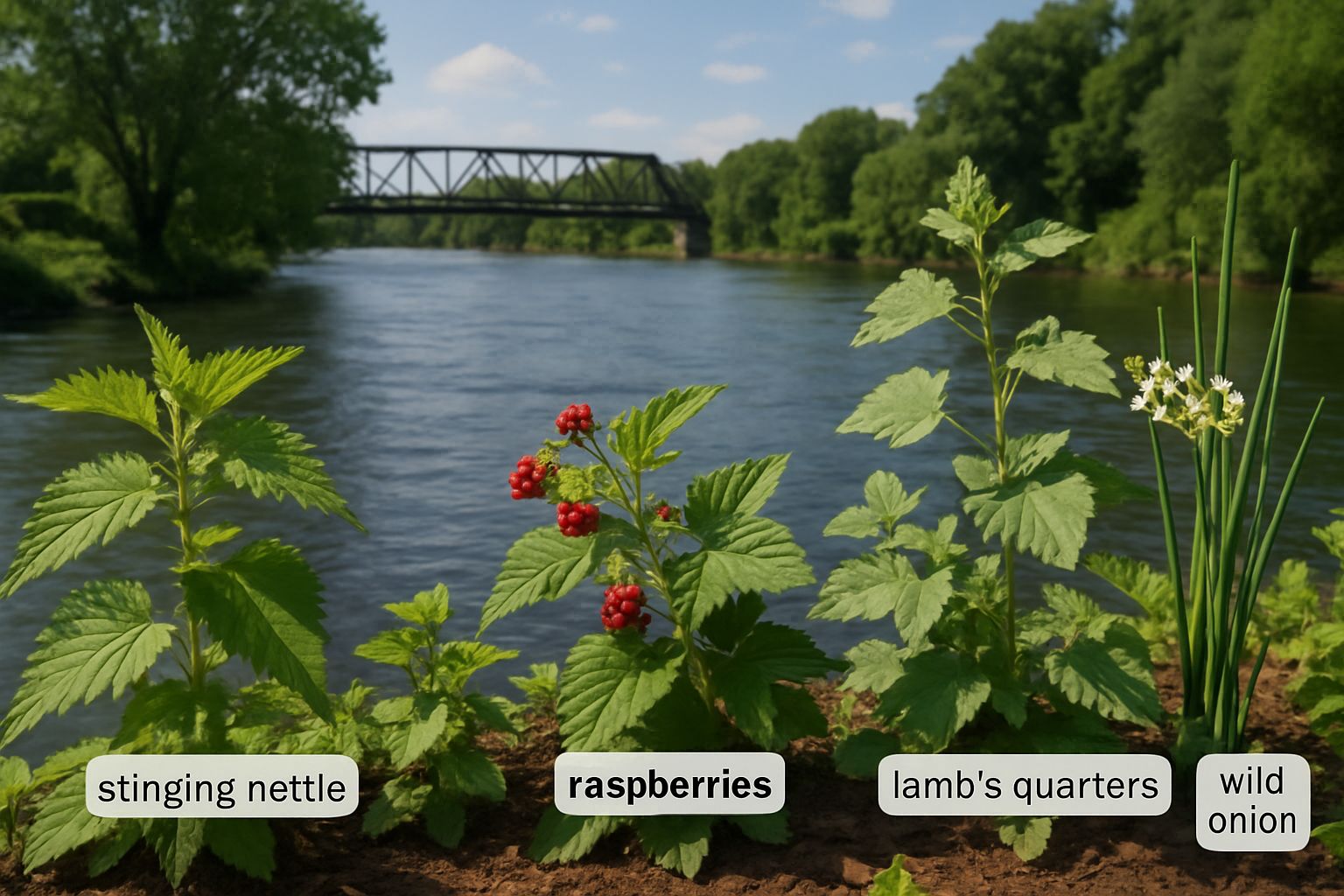
The Fox River doesn’t just run through Aurora — it runs through one of the most ecologically layered foraging corridors in northeastern Illinois. Floodplain edges, riparian woodland understories, open meadow patches, and disturbed urban soils all create different micro-habitats where different edible plants thrive. You don’t need to travel far. In many cases, you need to look down.
Urban foraging in Aurora isn’t about survival — it’s about reconnection. It’s about understanding that lamb’s quarters growing in a vacant lot is nutritionally comparable to spinach, or that the wood sorrel spreading across a shaded park path has a bright lemony flavor that chefs pay good money for. This guide will show you exactly what grows here, where to find it, and how to take it responsibly.
Aurora’s Foraging Heritage: Who Foraged Here First
Aurora sits within the traditional territory of the Potawatomi people, whose sophisticated plant knowledge shaped how generations of people interacted with the Fox River Valley’s landscape. Long before European contact, this region was a managed food system — not a wilderness.
The story of foraging in Aurora doesn’t start with a field guide or a weekend hobby. It starts with indigenous communities who understood this land’s plant vocabulary deeply and completely. That knowledge didn’t disappear — it evolved, merged with other traditions, and in many ways still shapes which plants thrive here today. For those interested in exploring more about this practice, urban foraging offers a modern perspective on identifying and gathering edible plants in urban areas.
Native American Plant Use in the Fox River Valley
The Potawatomi, who inhabited the Fox River Valley region extensively, used wild ramps as both food and medicine, harvested Jerusalem artichoke tubers in the fall, and gathered stinging nettle for fiber and nutrition. Ground plum, a prairie legume now largely forgotten by modern foragers, was a documented food source for Native communities across Illinois. These weren’t incidental uses — they reflected a precise, seasonal relationship with the land that took generations to develop.
European Settler Influence on Wild Plant Harvesting
When European settlers arrived in the Aurora area in the 1830s, they brought their own plant traditions — dandelion as a spring tonic, wild mustard as a cooking green, and elderberry for medicinal preparations. Many of these plants either naturalized from Europe or were actively cultivated in early homestead gardens and eventually escaped into the surrounding landscape. That’s part of why garlic mustard, now considered invasive across Illinois, is so abundant along Aurora’s wooded trail edges today.
The settler foraging tradition was deeply practical. Families supplemented their diets with whatever the land offered, and wild greens in early spring were often the first fresh food available after a long Illinois winter. That pragmatism is baked into the foraging culture of this region.
How Aurora’s Immigrant Communities Shaped Local Foraging Traditions
Aurora has historically been home to large Mexican and Eastern European immigrant communities, both of which brought strong wild plant traditions. Mexican foraging culture includes plants like purslane — called verdolaga in Spanish — which has been a cultivated and wild-harvested green in Mexican cuisine for centuries. Seeing purslane dismissed as a weed in Aurora while it stars in traditional Mexican cooking is one of the more telling contradictions of American food culture.
Eastern European communities similarly recognized lamb’s quarters, wild sorrel, and stinging nettle as legitimate cooking ingredients rather than nuisances. That cross-cultural plant knowledge, layered over centuries, is part of what makes Aurora’s foraging landscape so rich and underutilized.
Illinois Foraging Laws: What Is Legal in Aurora
Foraging is legal in Illinois in many contexts, but “legal” is site-specific. Public land doesn’t automatically mean open-access harvesting, and the rules in Aurora vary significantly between city parks, Kane County Forest Preserves, and Illinois state-managed land.
Public Parks and Forest Preserve Rules in Kane County
The Kane County Forest Preserve District generally permits low-impact, personal-use foraging of common edible plants, but it does not permit the removal of protected plant species, and certain preserves have specific restrictions in place. Always check with the Kane County Forest Preserve District directly before foraging in a specific preserve, as rules can differ by site.
Aurora city parks fall under municipal jurisdiction, which typically restricts plant removal to protect parkland integrity. Small-scale, incidental harvesting — picking a handful of wood sorrel or a few dandelion greens — is unlikely to result in enforcement, but commercial harvesting or removing plants by the bagful crosses a clear legal and ethical line. For more information on urban foraging, check out this Urban Foraging guide.
Foraging on Private Property: What You Need Permission For
Private property foraging in Aurora, as everywhere in Illinois, requires explicit landowner permission. Trespassing laws apply regardless of your intent, and assuming an abandoned lot is fair game is a common and legally risky mistake. The good news is that many property owners — especially in areas with overgrown lots or garden spaces — are happy to grant permission when asked politely.
Community gardens in Aurora sometimes have foraging-friendly edges where volunteers allow harvesting of self-seeded plants. Reaching out to local garden organizations is a low-effort way to access legally clear foraging spaces with additional community knowledge attached.
Railroad right-of-ways, utility corridors, and industrial site edges should always be avoided — not just for legal reasons but because soil contamination risk in these zones is significant and not always visible. A plant can look perfectly healthy while absorbing heavy metals from contaminated ground. For more on safe urban gardening practices, explore the cooling benefits of urban gardens in Chicago.
The Best Foraging Spots in Aurora, Illinois
Aurora’s geography — cut through by the Fox River, edged by forest preserves, and patterned with parks — creates genuine foraging opportunity across multiple habitat types. These three zones consistently produce the highest variety and volume of edible plants.
Fox River Trail Corridor
The Fox River Trail runs along the river through Aurora and connects to a broader regional trail system. The riparian edges along this corridor — where land meets water — are prime habitat for stinging nettle, wild ramps in spring, and elderberry bushes. The disturbed soil zones just off the trail path are reliable spots for lamb’s quarters and garlic mustard.
Stick to trail-adjacent areas and avoid harvesting directly from riverbank soil that may be subject to periodic flooding and contamination from upstream sources. Higher ground along the corridor, particularly where mature tree canopy exists, tends to produce cleaner and more diverse plant growth. For more on maintaining a sustainable garden, check out this sustainable urban garden maintenance guide.
Spring is the most productive season in this corridor. Ramp populations emerge quickly in April under the canopy before the trees fully leaf out, and nettles are most tender and flavorful before they flower in late spring.
Location Habitat Type Key Edibles Best Season Fox River Trail Corridor Riparian woodland & disturbed edges Ramps, nettles, elderberry, lamb’s quarters Spring & early summer Phillips Park Natural Areas Mixed meadow & woodland edge Wood sorrel, purslane, dandelion, garlic mustard Spring through fall Kane County Forest Preserves Oak savanna & prairie remnants Jerusalem artichoke, ground plum, wild onion Fall & spring Phillips Park and Natural Areas
Phillips Park’s more naturalized sections — away from the maintained turf and playground zones — support a surprisingly diverse mix of edible plants. Wood sorrel colonizes shaded path edges reliably throughout the growing season, and dandelion populations here are robust and largely untreated with herbicides in the natural buffer areas.
Kane County Forest Preserves Near Aurora
The forest preserves accessible from Aurora include Burnidge Forest Preserve and LeRoy Oakes Forest Preserve, both of which contain oak savanna and prairie remnant habitats that support heritage species like Jerusalem artichoke and wild onion. These preserves are ecologically richer than city parks precisely because they’ve been managed for habitat quality rather than aesthetics.
Jerusalem artichoke, in particular, tends to naturalize along preserve edges and open woodland margins. Its tall sunflower-like stalks in late summer are an easy identification marker before the tubers are ready to harvest in fall.
LeRoy Oakes is notable for its prairie restoration areas, where plant diversity is higher than almost anywhere else accessible from Aurora. Ground plum, though rare, has been documented in prairie remnants in this part of Kane County, making it worth knowing how to identify even if you encounter it infrequently.
Always verify current preserve-specific rules before harvesting in any Kane County Forest Preserve. Restoration areas in particular may have stricter protections in place to protect native plant populations being actively reestablished.
Forest Preserve Distance from Aurora Notable Edible Species Access Notes Burnidge Forest Preserve ~8 miles north Wild onion, elderberry, wood sorrel Open trails, check seasonal hours LeRoy Oakes Forest Preserve ~10 miles north Ground plum (rare), Jerusalem artichoke, prairie species Prairie restoration zones — verify harvest rules Fox River Shores ~5 miles south Nettles, lamb’s quarters, garlic mustard Riparian corridor access, seasonal flooding possible Uncommon Wild Vegetables Found in Aurora
Aurora’s urban and peri-urban landscape supports a wider range of edible plants than most foragers expect to find this close to a city. Beyond common targets like dandelion, these five plants are abundant, identifiable, and genuinely useful in the kitchen — and most Aurora residents have never considered eating any of them.
Garlic Mustard: Invasive but Edible
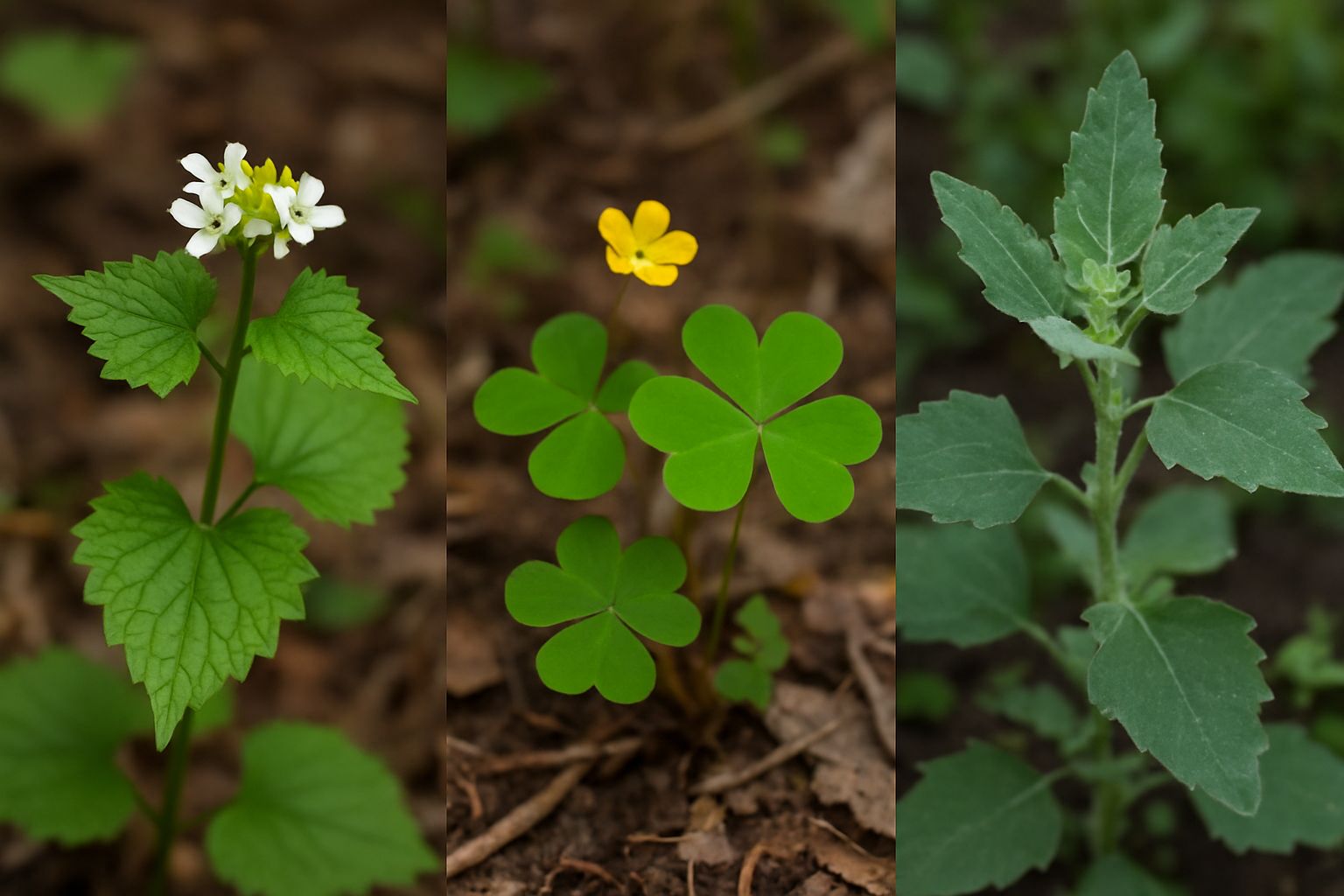
Garlic mustard (Alliaria petiolata) is one of the most aggressively invasive plants in the Aurora area, and that’s actually good news for foragers. It blankets the understory along the Fox River Trail and wooded park edges every spring, forming dense patches that crowd out native plants. Ecologically, it’s a problem. Culinarily, it’s a free, peppery, garlic-flavored green that most foragers overlook.
The young leaves harvested in early spring — before the plant flowers — are the mildest and most versatile. Use them raw in salads, blend them into pesto, or sauté them like any cooking green. Once the plant flowers in late April, the leaves develop a bitter edge that some find unpleasant, though blanching reduces it significantly. Harvesting garlic mustard aggressively is one of the few foraging acts that’s genuinely good for the local ecosystem.
Wood Sorrel: The Lemon-Flavored Ground Cover
Wood sorrel (Oxalis stricta) is the low-growing, clover-like plant with heart-shaped leaves that carpets shaded path edges throughout Aurora’s parks from spring through fall. It has a bright, clean lemon flavor that comes from oxalic acid — the same compound found in spinach and rhubarb. Eaten in reasonable quantities, it’s completely safe, and it makes an exceptional garnish, salad addition, or trail snack. The small yellow flowers are edible too and carry the same citrus punch as the leaves.
Lamb’s Quarters: A Spinach Substitute Growing in Plain Sight
Lamb’s quarters (Chenopodium album) is one of the most nutritionally dense wild greens you’ll find in Aurora, and it grows in nearly every disturbed soil environment in the city — vacant lots, garden edges, compost-adjacent areas, and unmaintained park margins. The leaves have a distinctive mealy, slightly waxy coating and a mild flavor nearly identical to spinach. Nutritionally, it outperforms spinach in several categories, with high levels of calcium, vitamin A, and vitamin C. Young leaves can be eaten raw; larger mature leaves are better lightly steamed or sautéed. For those interested in more gardening insights, check out these gardening benefits and nature connection tips.
Purslane: The Omega-3 Rich Succulent in Aurora’s Sidewalk Cracks
Purslane (Portulaca oleracea) is the fleshy, low-growing succulent pushing through sidewalk cracks and thriving in sunny, disturbed areas throughout Aurora. It’s one of the only plant sources of omega-3 fatty acids, specifically alpha-linolenic acid, which makes it nutritionally unusual among wild greens. The stems and leaves have a mild, slightly mucilaginous texture when raw and a pleasant, tangy flavor. In Mexican cuisine, verdolaga — purslane — is sautéed with pork or tomatoes and is a beloved traditional dish, not a weed.
Harvest purslane in the morning when the succulent stems are at their most hydrated. Look for plants growing in non-treated soil, away from roadside runoff. The entire above-ground portion of the plant is edible — stems, leaves, and small yellow flowers. It wilts quickly after harvest, so use it the same day or store it briefly in a damp cloth in the refrigerator.
Stinging Nettle: How to Harvest and Cook It Safely
Stinging nettle (Urtica dioica) grows prolifically along the Fox River corridor and in moist, nitrogen-rich soil throughout Aurora’s riparian zones. The sting comes from hollow silica needles on the leaves and stems that inject a mix of formic acid, histamine, and serotonin on contact — unpleasant, but temporary. Heavy gloves and long sleeves are non-negotiable during harvest. Use scissors rather than pulling by hand, and drop cuttings directly into a bag without touching the leaves.
Heat neutralizes the sting entirely. Blanching nettle in boiling water for 60 seconds renders it completely safe and produces a dark green, iron-rich cooked green with a flavor similar to spinach but earthier and more complex. Nettle soup is a traditional preparation across Northern Europe, and the blanching water itself — nettle tea — is high in minerals and can be consumed directly. Harvest nettles before they flower in late spring for the best flavor and texture. For those interested in creating a garden that supports local wildlife, consider incorporating pollinator-friendly shade garden ideas to enhance your outdoor space.
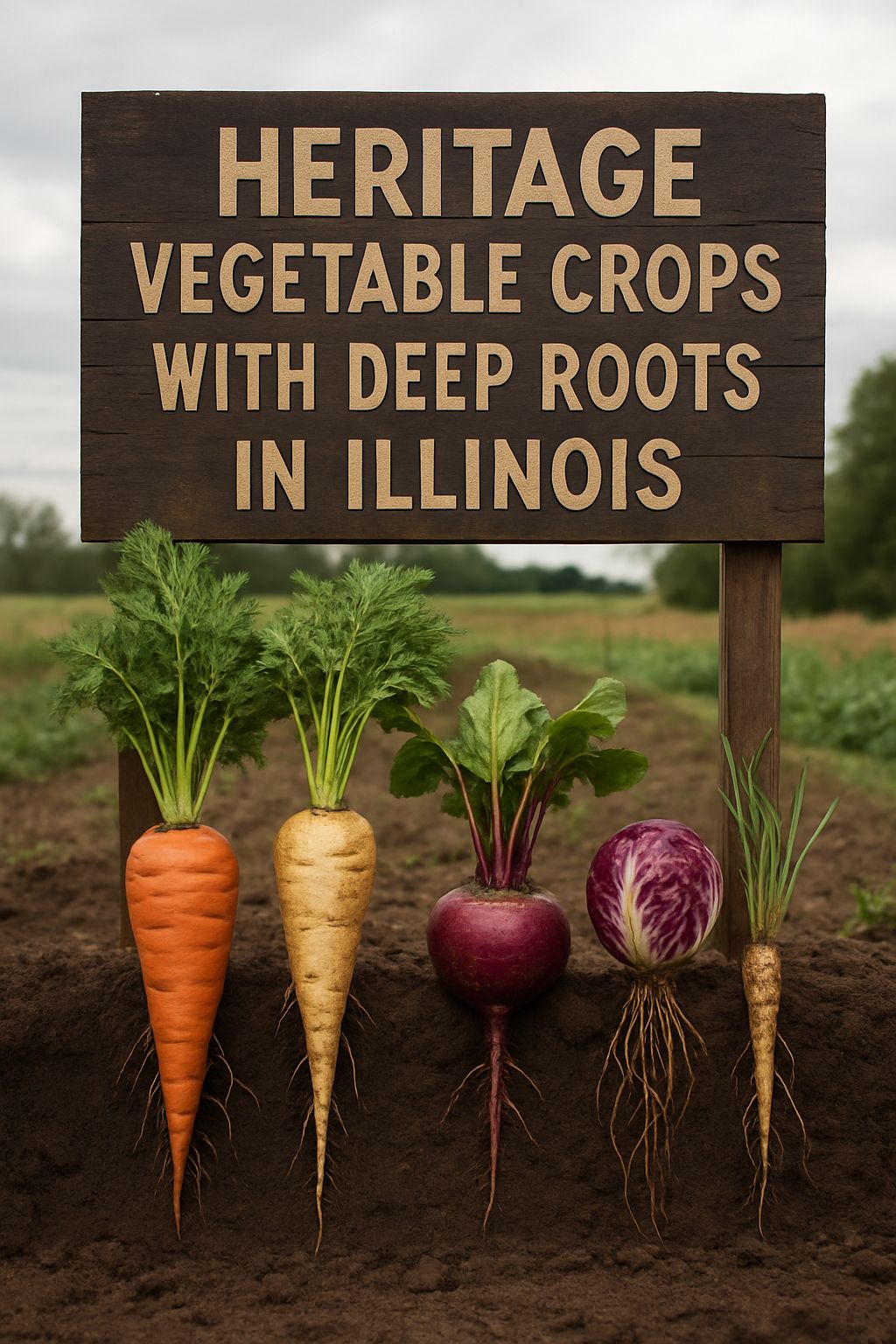
Heritage Vegetable Crops With Deep Illinois Roots
Not everything worth foraging in Aurora is a weed or an invasive. Some of the most interesting edible plants in this region are heritage species — plants with deep roots in North American food culture that were once widely eaten and are now almost entirely forgotten by the mainstream food system. For those interested in urban foraging, you might find valuable insights in this Urban Foraging guide.
These are plants that indigenous communities cultivated relationships with over centuries, that early settlers relied on during lean seasons, and that still grow in Aurora’s forest preserves, woodland edges, and prairie remnants today. They take more patience to find and identify than common urban weeds, but the payoff — both in flavor and in the experience of connecting with the region’s food history — is significant.
Understanding these heritage crops also reframes how we think about “wild” food. Jerusalem artichoke, ramps, and ground plum weren’t random discoveries — they were managed, harvested sustainably, and integrated into complex food systems long before European contact. Foraging them today is, in a real sense, participating in one of the oldest food traditions in Illinois. For those interested in sustainable practices, consider exploring sustainable urban garden maintenance to learn more about integrating these crops into modern gardens.
Ramps: The Wild Onion of the Midwest Woodland Floor
Ramps (Allium tricoccum) emerge in the Fox River Valley’s woodland floors in early to mid-April, often before most other spring plants appear. They look like smooth, broad-leafed lily-of-the-valley but smell unmistakably of garlic and onion — that smell is your primary identification confirmation. Both the broad green leaves and the small white bulb are edible, with the leaves carrying a milder flavor and the bulbs delivering an intense, sweet garlic-onion punch. Ramps have become trendy in high-end restaurants across the country, but they’ve been a spring staple in this region’s food culture for thousands of years.
Jerusalem Artichoke: A North American Native Hiding in Plain Sight
- Scientific name: Helianthus tuberosus
- Identification: Tall sunflower-like plant, 6–10 feet high, with rough hairy stems and small yellow flowers in late summer
- Edible part: Underground tubers, harvested after first frost in fall
- Flavor profile: Sweet, nutty, similar to water chestnut — not at all like an artichoke
- Known locations: Woodland edges, preserve margins, and naturalized open areas near Aurora’s forest preserves
- Caution: Contains inulin, a prebiotic fiber that causes digestive discomfort in some people when eaten in large quantities — start with small portions
Jerusalem artichoke is native to North America and was cultivated by indigenous communities across the continent long before European arrival. Despite the name, it has no connection to Jerusalem — the name is likely a corruption of the Italian word girasole, meaning sunflower. It was introduced to Europe in the early 1600s and became an important food crop there before largely falling out of fashion.
In Aurora’s landscape, Jerusalem artichoke tends to naturalize in dense colonies along preserve edges and open woodland margins. The tall stalks — which can reach 10 feet — are visible from a considerable distance in late summer, making them useful location markers. The actual harvesting happens in the fall, after the first frost sweetens the tubers by converting some of their inulin content to fructose. For those interested in enhancing their garden’s ecosystem, explore these pollinator-friendly shade garden ideas in Chicago.
Tubers can be eaten raw, roasted, sautéed, or made into soup. Roasting at high heat — around 400°F — caramelizes the natural sugars and produces a deeply sweet, nutty result that’s genuinely impressive for something dug out of the ground on a fall afternoon in Kane County.
Ground Plum: A Prairie Legume Once Eaten by Native Communities
Ground plum (Astragalus crassicarpus) is one of the rarest heritage crops you might encounter in the Aurora region, found only in intact prairie remnants in Kane County. The plant produces small, fleshy pods that look like tiny plums and taste mildly sweet when eaten raw in their immature green stage — similar to fresh snow peas. Native communities across the Great Plains and Midwest harvested ground plum pods in late spring as a seasonal food. Population sizes are small, and the species is considered sensitive in Illinois, so treat any encounter as observe-only unless you are certain of a robust, healthy population and confident you can take a minimal amount without impact.
How to Identify Wild Plants Safely in Aurora
The most dangerous mistake in foraging isn’t picking the wrong plant — it’s being overconfident about the right one. Positive identification requires multiple confirmed characteristics, not just a general resemblance to a photo. In Aurora’s landscape, several toxic plants share habitat with edible species, making careful identification non-negotiable every single time. For more insights on urban foraging, you can explore this guide to urban foraging.
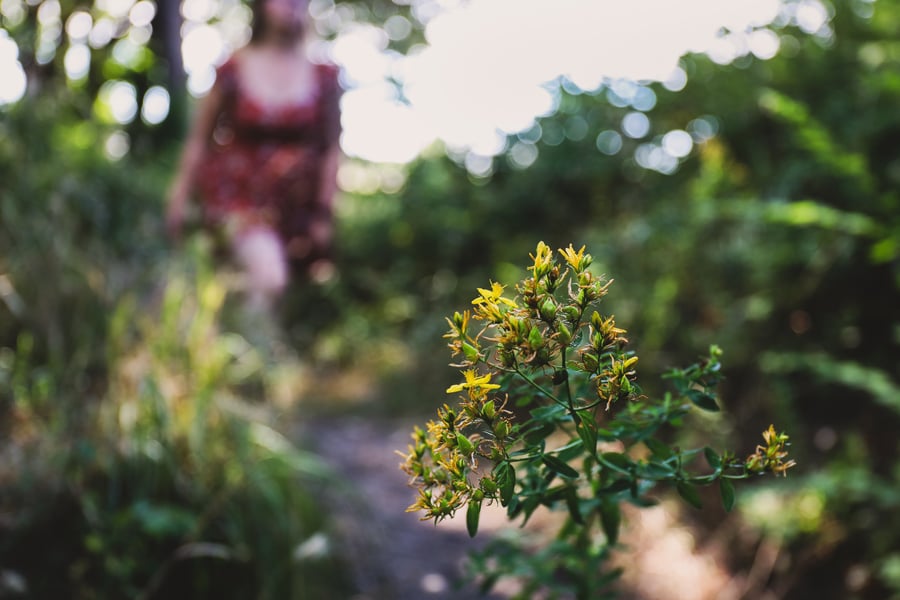
Plant identification is a skill that compounds over time. Your first season foraging in Aurora will feel slow and cautious — that’s exactly how it should feel. By your third season, you’ll recognize ramps by smell before you see them, spot lamb’s quarters from a distance by their leaf shape and color, and know exactly which park edges produce the best wood sorrel. That confidence is earned through repetition, not shortcuts.
The single most important rule is this: never eat any plant you cannot identify with complete certainty using at least two independent sources. One field guide match is not enough. One app identification is not enough. Certainty means you’ve confirmed the plant’s key identifying features — leaf shape, stem structure, smell, habitat, and season — against multiple references, and they all agree. For more information on identifying and gathering edible plants, check out this Urban Foraging guide.
Aurora’s landscape includes several plants that are genuinely dangerous, including poison hemlock along wet margins and wild parsnip in open disturbed areas. Both can cause serious harm. Both are sometimes encountered in the same zones where edible species grow. Knowing what the dangerous plants look like is just as important as knowing the edible ones.
The Importance of Cross-Referencing Multiple Identification Sources
No single field guide covers everything, and no single app is infallible. The most reliable identification process combines a regional field guide, a plant ID app, and ideally a human expert — whether that’s a local foraging group leader, an extension service botanist, or an experienced forager willing to walk a site with you.
For Aurora and the broader northeastern Illinois region, the following resources are particularly reliable for cross-referencing plant identification. Use at least two of these for any plant you’re uncertain about before consuming it. For more information on urban foraging, consider exploring this Urban Foraging guide.
- Midwest Foraging by Lisa M. Rose — covers 115 wild edibles native to the Midwest with clear photos and habitat descriptions specific to this region
- The Forager’s Harvest by Samuel Thayer — exceptionally detailed identification descriptions with a focus on avoiding dangerous look-alikes
- Illinois Wildflowers database (illinoiswildflowers.info) — free online resource with verified Illinois-specific plant photography and habitat data
- University of Illinois Extension Service — provides region-specific plant information and toxic plant warnings for Illinois
- iNaturalist community observations — searchable by location, showing verified plant observations near Aurora submitted by local naturalists
Cross-referencing isn’t just about safety — it builds your identification vocabulary rapidly. Each time you verify a plant across multiple sources, you’re reinforcing recognition patterns that will make future identification faster and more accurate.
Top Plant ID Apps That Work for Illinois Species
For Aurora foragers, iNaturalist is the most reliable app for Illinois-specific plant identification, largely because its database is built from verified, location-tagged community observations — meaning Aurora-area plants are well represented. PlantNet performs well for common species identification but struggles with uncommon heritage plants. Seek (iNaturalist’s beginner-friendly version) is useful for quick confirmations but should never be used as a sole identification source. Treat any app as a starting point, not a final answer.
Plants in Aurora You Must Never Eat
- Poison hemlock (Conium maculatum) — grows along wet margins and ditches near the Fox River; hollow purple-spotted stems; all parts toxic and potentially fatal
- Wild parsnip (Pastinaca sativa) — common in open disturbed areas; causes severe chemical burns on skin contact in sunlight; do not touch
- Pokeweed (Phytolacca americana) — a large plant with dark purple berries; the root and mature plant are highly toxic; berries are attractive to children
- Lily of the valley (Convallaria majalis) — sometimes confused with ramps in spring; no garlic smell; all parts highly toxic to humans
- Water hemlock (Cicuta maculata) — found in wet areas near the Fox River; considered one of the most violently toxic plants in North America
The most critical, dangerous look-alike pairing in Aurora is ramps versus lily of the valley. Both emerge in spring woodland settings, both have smooth, broad, green leaves, and both can appear in similar habitats. The difference is unambiguous: ramps smell strongly of garlic and onion when a leaf is crushed. Lily of the valley has no such smell. If you crush a leaf and smell nothing, put it down.
Poison hemlock deserves special attention because it has naturalized aggressively along Aurora’s waterways and disturbed areas. It resembles wild carrot and other members of the carrot family (Apiaceae), a plant family that also contains several edible species. The key identifier is its hollow stem with distinctive purple-red blotching — but the safest rule is to avoid harvesting any Apiaceae family plant unless you have deep, confirmed expertise in this notoriously difficult-to-distinguish group.
Wild parsnip is a contact hazard as well as an ingestion risk. Its sap, combined with sunlight, causes phytophotodermatitis — severe blistering burns that can take weeks to heal. It’s common enough in Aurora’s open disturbed zones that knowing what it looks like on sight, without touching it, is a genuinely useful skill for anyone spending time outdoors in this area.
Ethical Harvesting Practices Every Urban Forager Needs to Follow
Foraging done carelessly isn’t sustainable foraging — it’s extraction. Aurora’s accessible wild spaces are finite, and the plant populations within them can be damaged or eliminated by over-harvesting, especially for slow-growing perennial species like ramps and ground plum. Ethical harvesting isn’t a set of rigid rules so much as a framework for asking the right questions before you take anything.
The One-in-Twenty Rule for Sustainable Harvesting
The one-in-twenty rule is simple: never take more than one plant, stem, or portion for every twenty you find in a given area. If you find a patch of twenty ramp plants, take one. If you find a colony of one hundred Jerusalem artichoke plants, harvest five tubers and leave the rest. This ratio gives the population enough reproductive capacity to recover and maintain itself season after season. It’s a guideline, not a guarantee, but it’s the most practical standard for urban foragers working in limited, high-traffic spaces like Aurora’s parks and preserves.
For slow-growing perennial species — ramps in particular — some experienced foragers apply an even more conservative standard, harvesting only leaves rather than bulbs to avoid disturbing the root system entirely. A ramp plant takes several years to reach harvestable size, and a colony stripped of its bulbs can take a decade or more to recover. Taking only the leaf while leaving the bulb intact lets you enjoy the harvest while the plant continues to grow. It’s a small adjustment that makes a significant difference over time.
Avoiding Contaminated Zones Near Roads and Industrial Sites
Aurora’s industrial history and its dense road network create real contamination risks that foragers need to actively account for. Plants growing within 50 feet of a heavily trafficked road can accumulate lead, cadmium, and other heavy metals from vehicle exhaust and road runoff in their tissues — and this contamination is invisible. The plant looks healthy. It tastes normal. The risk is entirely hidden. Stick to sites that are set back from major roads, avoid any area with a history of industrial use or contamination, and never harvest from roadside verges, highway medians, or lots adjacent to auto shops, gas stations, or manufacturing facilities. The Fox River corridor is productive precisely because much of it sits away from Aurora’s heaviest road traffic — use that distance intentionally.
Seasonal Foraging Calendar for Aurora, Illinois
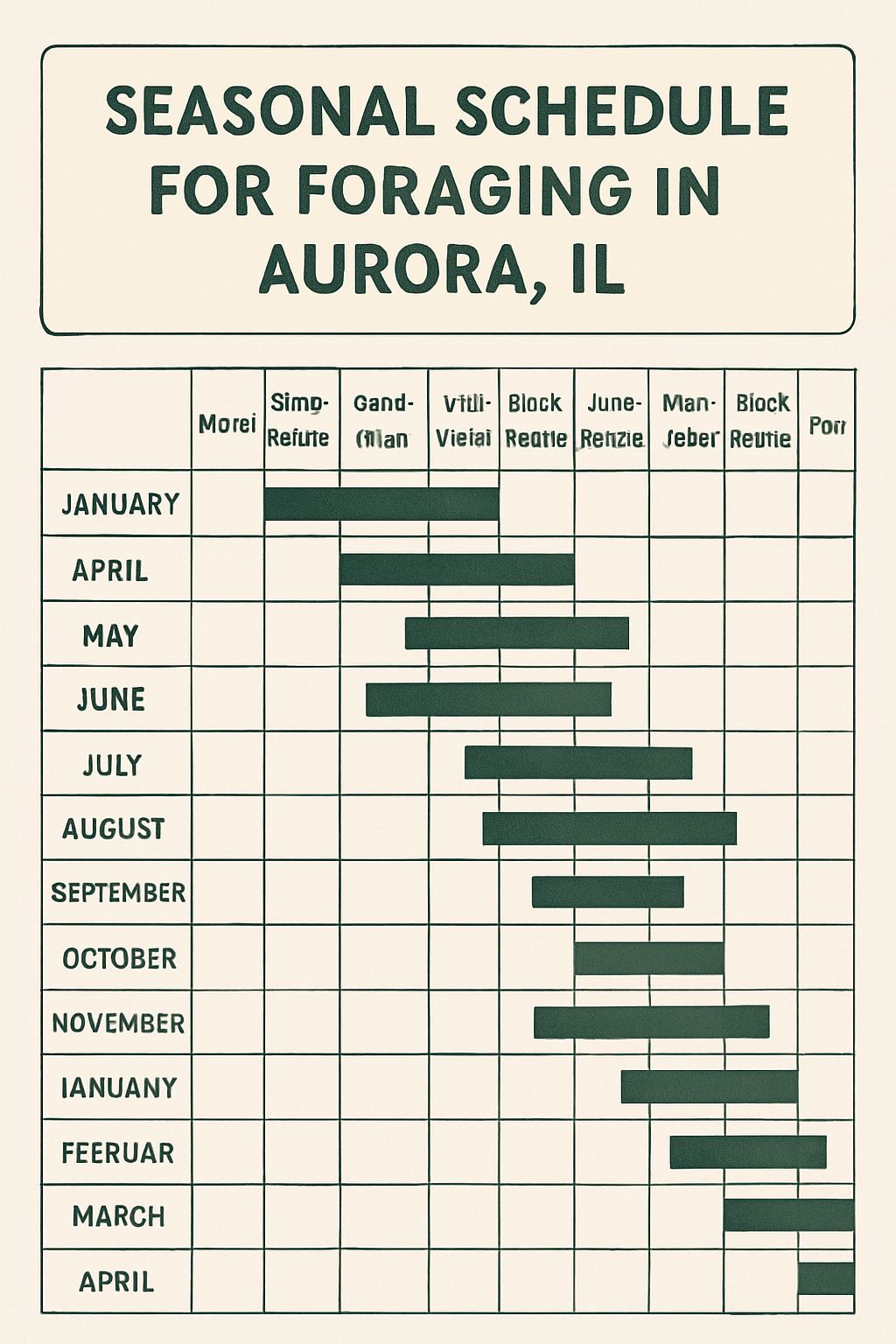
Aurora’s foraging season runs from early April through late October, with a brief but productive late-fall window for root harvests after the first frost. Each season produces a distinct set of targets, and knowing what to prioritize in each window makes the difference between a scattered, frustrating search and a focused, productive harvest. For those interested in exploring urban foraging further, this guide on urban foraging offers valuable insights and tips.
The general rhythm runs like this: spring brings the most prized and time-sensitive greens — ramps and nettles have narrow harvest windows and peak quality that lasts only two to three weeks. Summer opens up a longer, more casual foraging season with abundant heat-loving plants. Fall is the season for roots and tubers, when plant energy has moved underground, and the harvests are dense and filling rather than delicate and leafy.
Spring: Ramps, Nettles, and Early Greens
Spring foraging in Aurora begins in earnest in early April, when ramps push through the leaf litter in the Fox River corridor’s woodland sections. The window for prime ramp leaves is roughly three weeks — once the forest canopy closes and light levels drop, the leaves yellow and lose quality rapidly. Stinging nettle follows close behind, reaching peak tenderness in late April through mid-May before it flowers and coarsens. Garlic mustard is also at its best in this window, with young rosette leaves offering the mildest, most versatile flavor before the plant bolts to flower. Spring is Aurora’s most intense foraging season — concentrated, time-sensitive, and extraordinarily rewarding when you catch it right.
Summer: Purslane, Wood Sorrel, and Lamb’s Quarters
Summer foraging in Aurora is more relaxed in pace but no less productive. Purslane peaks in July and August, thriving in the hot, sunny conditions that other greens struggle with. Wood sorrel remains available throughout the summer in shaded spots and continues into early fall. Lamb’s quarters can be harvested continuously from late spring through late summer — the plant grows aggressively in disturbed urban soils and replaces harvested growth quickly, making it one of the most reliable and consistent summer targets in Aurora. For more on maintaining urban gardens, check out this sustainable urban garden maintenance guide.
Summer is also the season to scout locations for fall harvests. Jerusalem artichoke’s tall stalks are at full height and covered in yellow flowers in late July and August — mark those locations now so you know exactly where to return in October when the tubers are ready. Elderberry clusters along the Fox River Trail ripen to deep purple-black in August and are worth harvesting for syrups and preserves before birds strip the branches clean.
Quick Summer Foraging Checklist for Aurora:
- Harvest purslane in the morning before the heat wilts the succulent stems
- Check shaded park path edges for wood sorrel throughout the season
- Cut lamb’s quarters from the top growth — the plant will resprout for multiple harvests
- Mark Jerusalem artichoke colonies in flower for October tuber harvests
- Harvest elderberries in August before bird pressure peaks — use in syrups, never raw
One summer foraging note specific to Aurora: the city’s heat island effect means south-facing disturbed areas and pavement-adjacent patches dry out faster than surrounding rural areas. Water-stressed purslane actually concentrates its flavors and nutrients more intensely than plants growing in consistently moist soil — the urban stress works in the forager’s favor here.
Fall: Jerusalem Artichoke, Nuts, and Late Roots
Fall foraging in Aurora begins after the first frost — typically in October — when root crops like Jerusalem artichoke reach their peak sweetness as inulin converts to fructose in cold soil. This is the most physically demanding foraging season, requiring a trowel or digging fork and some patience, but the harvests are substantial, and the tubers store well in cool conditions for weeks after harvest. For those interested in sustainable gardening practices, check out this sustainable urban garden maintenance guide.
Oak trees throughout Aurora’s parks and forest preserves drop acorns beginning in September. Acorns require processing — they contain bitter tannins that must be leached out with repeated water soaking before they’re palatable — but the resulting acorn flour is a genuinely useful, nutritious ingredient with deep roots in both Native American and European foraging traditions. White oak acorns, identifiable by their rounded lobe tips, have lower tannin content than red oak acorns and require less processing.
Wild onion (Allium canadense) bulbs can be harvested in the fall from prairie remnant areas in Kane County’s forest preserves. The bulbs are smaller than grocery-store onions but more intensely flavored, and they store well when dried. Identification is straightforward — wild onion smells unmistakably of onion when the leaves are crushed, eliminating any risk of confusion with toxic look-alikes.
Late October also offers a final window for lamb’s quarters seeds, which have dropped from mature plants by this point. The seeds can be gathered in quantity, ground into flour, or cooked as a grain substitute similar to quinoa, which is, not coincidentally, a close botanical relative of lamb’s quarters. It’s one of the few fall foraging opportunities in Aurora that requires no digging and produces a shelf-stable, storable harvest. For those interested in sustainable practices, exploring sustainable urban garden maintenance can offer additional insights into managing your harvest effectively.
| Season | Timing in Aurora | Primary Targets | Notes |
|---|---|---|---|
| Spring | Early April – mid-May | Ramps, stinging nettle, garlic mustard, dandelion | Narrow windows — check weekly |
| Early Summer | Late May – June | Lamb’s quarters, wood sorrel, nettle (second growth) | Scout and mark fall harvest sites |
| High Summer | July – August | Purslane, elderberry, wood sorrel, lamb’s quarters | Harvest purslane mornings; mark Jerusalem artichoke |
| Fall | September – October | Jerusalem artichoke, acorns, wild onion, lamb’s quarters seed | Harvest tubers after first frost for best flavor |
Start Foraging in Aurora This Weekend
You don’t need a full kit, a course, or a perfect plan to start foraging in Aurora. Start with one plant — dandelion, wood sorrel, or lamb’s quarters — in a location you already know well. Confirm the identification with two sources. Harvest a small amount. Cook with it. That single act of moving from curiosity to confident, specific action is how every experienced forager started, and it builds faster than you’d expect.
The Fox River Trail is accessible right now, and so are Phillips Park’s natural margins and the Kane County forest preserve system. The plants are already there. The seasonal calendar is already running. All that’s missing is you, a pair of gloves, a small harvest bag, and a willingness to look at Aurora’s landscape as a food system rather than just scenery.
Frequently Asked Questions
These are the questions that come up most consistently from new foragers exploring the Aurora area for the first time.
Is Foraging Legal in Public Parks in Aurora, Illinois?
Foraging in Aurora’s city parks is a legal gray area. Municipal park ordinances generally restrict plant removal to protect parkland, but small-scale personal harvesting of common plants — a handful of dandelion greens, a few sprigs of wood sorrel — is unlikely to be enforced against. The clearer legal frameworks apply to Kane County Forest Preserves, which permit low-impact personal foraging of non-protected species, and to private property, where landowner permission is required.
The safest approach is to contact the Aurora Parks and Recreation Department directly for guidance on specific parks, and to always check with the Kane County Forest Preserve District before foraging in any specific preserve. Regulations can and do change, and certain areas have site-specific protections in place that override general guidelines. When in doubt, harvest minimally, leave no trace, and prioritize sites where you have explicit permission or clear policy confirmation. For those interested in urban gardening, explore Chicago urban gardens and their cooling benefits for neighborhoods.
What Is the Most Common Edible Wild Plant Found in Aurora?
Dandelion (Taraxacum officinale) is almost certainly the most abundant and widely distributed edible plant in Aurora. It grows in every park, lawn edge, sidewalk crack, and disturbed area throughout the city, is available from early spring through late fall, and every part of the plant is edible — leaves, flowers, and roots. The young spring leaves are the mildest and best for raw use; older leaves are bitter but excellent braised with garlic. Dandelion root can be roasted and used as a coffee substitute. It is one of the most nutritionally dense wild greens available anywhere in Aurora’s landscape.
A close second in terms of abundance is garlic mustard, which dominates wooded trail edges and forest understory throughout Aurora and the surrounding forest preserves. Unlike dandelion, garlic mustard is invasive, meaning harvesting it aggressively carries a genuine ecological benefit rather than a risk. For new foragers, these two plants — dandelion and garlic mustard — are the most practical starting points in Aurora precisely because they are so common, so identifiable, and so forgiving of beginner uncertainty.
How Do I Know If a Plant Is Safe to Eat in the Wild?
A plant is safe to eat when you have confirmed its identity using at least two independent sources — a regional field guide and a verified database or expert confirmation — and when every key identifying feature matches: leaf shape, stem structure, smell, growth habit, habitat, and season. If any single feature doesn’t match, don’t eat it. App-based identification alone is not sufficient. Resemblance to a photo is not sufficient. The critical question isn’t “does this look right?” but “can I rule out every dangerous plant that grows in this habitat at this time of year?” That’s a higher bar, and it’s the right one.
Are There Any Foraging Groups or Clubs in the Aurora, Illinois Area?
Aurora and the broader northeastern Illinois region have an active foraging and naturalist community, and connecting with experienced local foragers accelerates the learning curve dramatically. Group forays provide real-time identification experience, local site knowledge, and the safety net of collective expertise that no field guide can fully replicate.
The following resources are worth exploring for foraging community connections in and around Aurora:
- Illinois Foragers Facebook Group — active statewide community with local knowledge and plant identification help
- Meetup.com foraging groups in the Chicago metro area — several groups run organized forays accessible from Aurora
- Kane County Forest Preserve District programs occasionally offer guided nature walks and plant identification programs
- University of Illinois Extension — Kane County — periodic workshops on edible plants and sustainable harvesting
- iNaturalist Aurora area community — not a group in the traditional sense, but local naturalists who verify plant observations and can be contacted for local knowledge
Joining even one foraging walk with an experienced leader before foraging solo is genuinely worth the time investment. The ability to ask “is this the one?” while standing in front of the actual plant, with someone who knows the answer, is irreplaceable. For those interested in sustainable practices, consider learning about sustainable urban garden maintenance to complement your foraging adventures.
As your confidence builds, consider giving back to the community by documenting your Aurora-area plant observations on iNaturalist. Local observation data helps other foragers, supports conservation research, and builds a richer picture of which edible species are thriving — and which are declining — in Aurora’s urban landscape over time.
What Is the Difference Between Heritage Vegetables and Wild Foraged Plants?
Heritage vegetables are cultivated plant varieties with long historical use — they’ve been selected, saved, and grown deliberately across generations. Wild foraged plants, by contrast, grow without human cultivation, reproducing and spreading on their own in natural or disturbed landscapes. The distinction matters for foragers because heritage vegetables represent intentional food relationships, while wild plants represent opportunistic ones.
In Aurora’s foraging context, the line between these categories blurs productively. Jerusalem artichoke was cultivated by indigenous communities for centuries before escaping into wild landscapes across North America — it’s now found wild throughout Kane County but carries the history of deliberate cultivation. Ramps occupy a similar space: they grow wild, but indigenous communities managed ramp patches, transplanted them, and protected productive sites in ways that shaped current population distributions. For those interested in sustainable practices, check out this sustainable urban garden maintenance guide.
Understanding this distinction also helps foragers make better decisions about what to harvest and how much. A truly wild plant with no history of cultivation may have smaller, more vulnerable populations in urban environments. A heritage crop that has naturalized aggressively — like Jerusalem artichoke — may be harvested more liberally without ecological risk. The history of a plant’s relationship with humans is part of understanding how to interact with it responsibly today. For those interested in urban gardening, this sustainable urban garden maintenance guide offers valuable insights.
The most useful takeaway is this: whether a plant is heritage, wild, or somewhere in between, your relationship with it should be built on the same foundation — accurate identification, respectful harvesting, and a genuine interest in the landscape’s long-term health. That’s what separates foraging as a sustainable practice from foraging as mere extraction, and it’s what connects Aurora’s modern foragers to the long chain of people who fed themselves from this same Fox River Valley landscape for thousands of years before us.
Urban foraging in Aurora, Illinois, offers a unique opportunity to discover heritage and uncommon vegetable crops. By exploring local gardens and community spaces, residents can connect with nature and enjoy the benefits of fresh produce. For those interested in learning more about the advantages of gardening, consider these gardening benefits and nature connection tips to enhance your urban foraging experience.