Article-At-A-Glance: Your Terrace Can Be Beautiful and Allergy-Friendly
- The right plant selection makes all the difference — choosing insect-pollinated species over wind-pollinated ones is the single most effective step you can take toward a pollen-free terrace.
- The OPALS scale (Ogren Plant Allergy Scale) rates plants from 1 to 10 based on allergen risk — stick to plants rated 1-3 and your terrace becomes a breathable, beautiful retreat.
- Foliage-only plants are your secret weapon — they add texture, color, and life to any terrace without releasing a single pollen grain into the air.
- Double-flowered varieties of roses, tulips, and other favorites produce far less pollen than single-petal types — a simple swap that changes everything for allergy sufferers.
- Timing and protective gear matter just as much as plant choice — there are specific windows in the day when gardening is dramatically safer, and we cover them in detail below.
A terrace covered in beautiful plants shouldn’t also be covered in pollen — and with the right approach, it won’t be.
Millions of people avoid outdoor gardening altogether because of allergy symptoms, but that’s a trade-off you don’t have to make. The secret is understanding why some plants trigger reactions and others don’t, then building your terrace around that knowledge. Whether you’re working with a small balcony or a sweeping rooftop space, this guide walks you through every decision — from plant selection to layout to daily maintenance habits — so your terrace becomes a place you actually want to spend time in. For terrace gardeners looking to go deeper on allergy-friendly design strategies, resources from specialists in this space can help you take your setup to the next level.
You Can Garden Without the Sneezing
Most people assume that a garden full of flowers is automatically a garden full of pollen. That assumption costs them years of outdoor enjoyment. The reality is that not all pollen is created equal, and the type that triggers hay fever and allergic reactions is almost exclusively the fine, lightweight, airborne kind produced by wind-pollinated plants. Insect-pollinated plants — which make up a huge portion of the most beautiful garden species — produce heavy, sticky pollen that insects carry from flower to flower. That pollen almost never becomes airborne, which means it almost never reaches your nose.
Once you understand that distinction, building a pollen-free terrace garden shifts from feeling impossible to feeling completely achievable.
What Makes a Plant Pollen-Free (or Low-Pollen)?
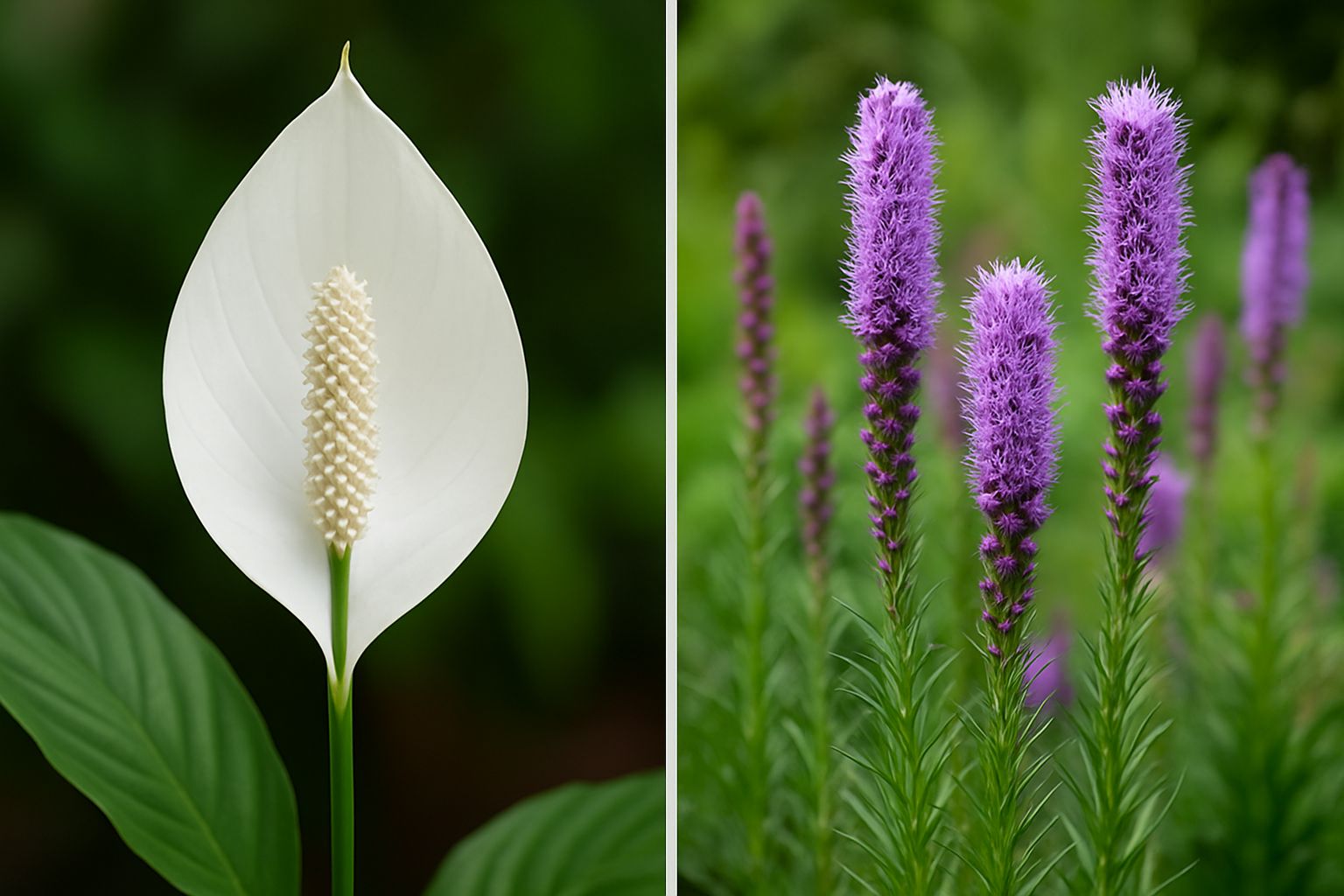
No flowering plant is completely without pollen — pollen is how flowering plants reproduce. But “pollen-free” in garden terms refers to plants that don’t release pollen into the air, either because they’re pollinated by insects, because they’re female plants that produce no pollen at all, or because their pollen is too heavy to become airborne. Understanding which category a plant falls into before you buy it is the foundation of every smart allergy-friendly terrace. For more information, check out this guide on low-pollen plants.
Insect-Pollinated vs. Wind-Pollinated: The Key Difference
Wind-pollinated plants — think birch trees, oak, ragweed, and most ornamental grasses — produce enormous quantities of microscopic, lightweight pollen grains specifically designed to travel through the air. A single birch tree can release up to 5.5 million pollen grains per catkin. Insect-pollinated plants, by contrast, invest their energy in producing nectar and large, sticky pollen grains that cling to bees and butterflies. Those grains are too heavy to float and too sticky to drift, making insect-pollinated species dramatically safer for allergy sufferers on a terrace.
The OPALS Scale: How to Rate Plants Before You Buy
The Ogren Plant Allergy Scale (OPALS) was developed by horticulturist Thomas Ogren and rates plants from 1 (least allergenic) to 10 (most allergenic) based on more than 130 factors. Those factors include pollen type, the amount of pollen produced, bloom duration, pollination method, and how easily the pollen becomes airborne. It’s the most comprehensive plant allergy rating system available and has been adopted by the American Lung Association as a practical tool for allergy sufferers.
When building your pollen-free terrace, the rule is simple:
- OPALS 1-3: Safe choices — low allergen risk, ideal for allergy-friendly terraces
- OPALS 4-6: Moderate risk — use sparingly and position away from seating areas
- OPALS 7-10: Avoid entirely — these are significant allergen contributors
Why Double-Flowered Varieties Are a Smart Choice
Double-flowered plants have extra layers of petals where the pollen-producing stamens would normally be. Those extra petals physically crowd out or replace the stamens, resulting in far less pollen production — and in many cases, none at all. This is why a double-flowered rose is significantly safer for an allergy sufferer than a wild single-petal rose, even though both are technically the same species.
When you’re at the nursery or browsing online, look for variety names that include words like “double,” “full,” or “pompom.” These are reliable indicators of reduced pollen output and are almost always the smarter pick for terrace gardening with allergies in mind.
The Best Pollen-Free Foliage Plants for Terraces
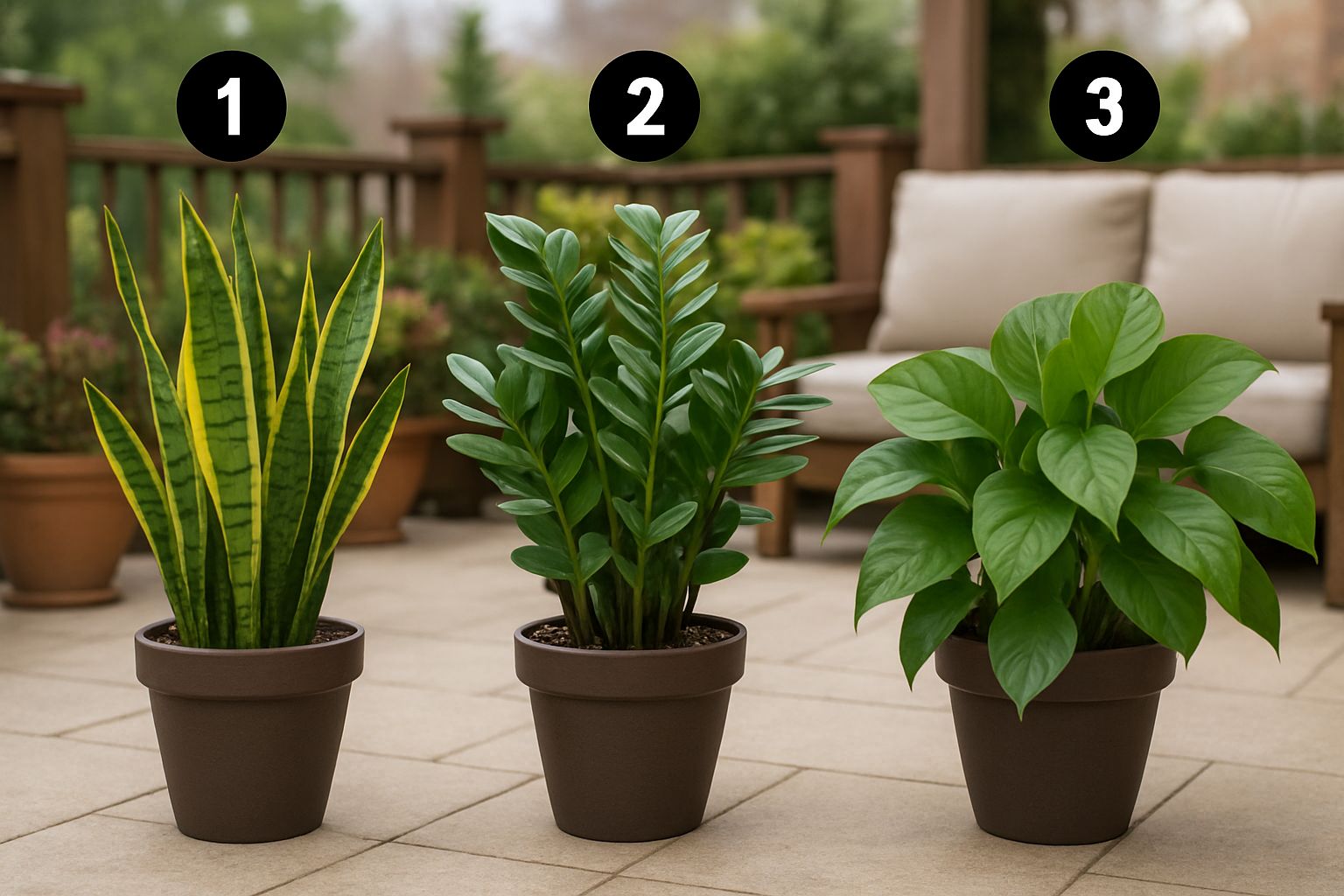
If you want guaranteed zero airborne pollen from a section of your terrace, foliage plants are the answer. They don’t flower (or flower so minimally it’s irrelevant), they’re available in a staggering range of textures, colors, and sizes, and many of them thrive in containers — which makes them perfectly suited to terrace life. For more tips on maintaining a pollen-free garden, check out this guide to pollen-free garden success.
Top Foliage Plants That Add Color Without Pollen
The misconception that foliage plants are boring is easy to disprove. Caladiums bring bold splashes of red, pink, and white. Coleus varieties offer everything from deep burgundy to lime green with almost no effort. Hostas are exceptional for shaded terraces, with enormous architectural leaves that create a lush, layered look. Heuchera (coral bells) produces stunning foliage in deep purple, burnt orange, and silver — and while it does produce small flower spikes, its pollen output is negligible and rates low on the OPALS scale.
- Caladium: Tropical, bold patterns, thrives in warm terrace conditions
- Coleus: Fast-growing, sun or shade varieties available, wide color range
- Hosta: Best for shaded terraces, large architectural leaves
- Heuchera: Year-round color, low OPALS rating, excellent in containers
- Ferns: Classic, airy texture, zero flowering, thrives in humidity
Non-Flowering Grasses That Won’t Trigger Symptoms
Here’s where you need to be careful. Ornamental grasses that rely on wind pollination — like pampas grass or fountain grass — are among the worst choices for an allergy-friendly terrace. However, non-flowering grass alternatives and sedges can still give you that flowing, textural element without the pollen. Blue fescue (Festuca glauca) is a compact, clumping option with silvery-blue color that works beautifully in terrace containers. Carex species (sedges) are another safe pick — they mimic grass visually but produce minimal airborne pollen and rate low on the OPALS scale.
The key distinction to make when shopping is whether the grass produces flowers or seed heads that rely on wind dispersal. If it does, leave it at the nursery.
Colorful Flowering Plants Safe for Allergy Sufferers
You absolutely do not have to sacrifice color or blooms on a pollen-free terrace. The following plants are all insect-pollinated, produce minimal or contained pollen, and are well-suited to container growing, which is exactly what terrace gardening requires. Each one brings something distinct to your space, and together they can give you continuous color across multiple seasons.
Think of these not as compromises, but as the smarter shortlist — the plants that give you everything a terrace should look like, without the cost to your health.
1. Roses: Minimal Airborne Pollen With Maximum Impact
Roses are one of the most allergy-friendly flowering plants available, provided you choose the right variety. Most hybrid roses produce heavy, sticky pollen that doesn’t become airborne, and fully double-flowered varieties produce very little pollen at all. Single-petal rose varieties are the ones to be cautious with — their open centers expose stamens and allow more pollen contact. Stick to hybrid tea roses, David Austin shrub roses, or any variety labeled as “double-flowered” and you’ll have one of the safest, most spectacular terrace plants available.
2. Tulips: Heavy Pollen Contained Within the Cup
Tulips are a brilliant spring choice for allergy-friendly terraces. Their cup-shaped flowers physically contain the pollen within the bloom, preventing it from becoming airborne. Hybrid tulip varieties are even safer — their extra petals further reduce pollen exposure. Plant tulip bulbs in deep containers in autumn, and by early spring, you’ll have bold, concentrated color with virtually no allergy risk.
3. Daffodils: Pollen Stays Inside the Flower
Daffodils are one of spring’s most reliable performers, and for allergy sufferers, they’re close to ideal. Their trumpet-shaped blooms physically enclose the pollen-bearing stamens, meaning the pollen stays inside the flower rather than drifting into the air. That structural design alone makes daffodils one of the safest spring-flowering bulbs you can grow on a terrace.
Double-flowered daffodil varieties like Narcissus ‘Cheerfulness’ and Narcissus ‘Tahiti’ take that safety even further by adding extra layers of petals that further contain or replace the stamens entirely. Plant them in deep containers — at least 30cm deep — in groups of five or more for the most visual impact, and you’ll have a stunning, sneeze-free spring display that practically takes care of itself.
- Best varieties for terraces: Narcissus ‘Tête-à-Tête’ (compact, perfect for containers), Narcissus ‘Cheerfulness’ (double-flowered, fragrant), Narcissus ‘Tahiti’ (bold yellow and orange double blooms)
- Container depth: Minimum 30cm to allow proper bulb development
- Planting time: Autumn, for early spring flowering
- Sun requirements: Full sun to partial shade — highly adaptable to terrace conditions
One practical tip: after daffodils finish flowering, resist the urge to cut the foliage back immediately. Allow the leaves to die back naturally over six weeks so the bulb can store energy for next year’s display. Simply tuck the fading leaves behind other container plants to keep your terrace looking tidy while the bulbs recharge.
4. Impatiens: Shade-Loving Blooms With Minimal Output
Shaded terraces often feel like a design challenge, but impatiens turn that limitation into an advantage. These low-growing, mounding plants thrive in partial to full shade and produce a continuous carpet of cheerful blooms in pink, red, white, coral, and purple from late spring right through to the first frost. Their pollen output is negligible — the flowers are structured in a way that keeps pollen tightly contained, making them one of the most consistently safe choices for allergy sufferers.
Impatiens walleriana is the classic variety, widely available and reliable in containers. For something more architectural, New Guinea Impatiens offer larger blooms and bolder foliage with the same low-allergen profile. Keep them consistently moist and feed with a balanced liquid fertilizer every two weeks during the growing season, and they’ll reward you with almost uninterrupted color all summer long.
5. Snapdragons: Vibrant Colors and Low Pollen Production
Snapdragons (Antirrhinum majus) are a fantastic addition to any allergy-friendly terrace. Their unique hinged blooms are specifically designed to be opened by bumblebees — heavier insects that force the flower open to access nectar. This mechanism means the pollen is only released in direct contact with the pollinating insect, not into the surrounding air. They’re available in virtually every color imaginable, grow well in containers, and provide vertical interest that most low-growing terrace plants can’t match. Choose dwarf varieties like Antirrhinum ‘Snapshot Mixed’ for compact terraces, or taller cultivars for dramatic height in larger arrangements.
6. Geraniums: Hardy, Versatile, and Allergy-Friendly
Few plants have earned their place on the terrace more reliably than geraniums — specifically the Pelargonium genus, which is what most people mean when they say “geranium” in a garden context. These plants are insect-pollinated, produce heavy pollen that doesn’t become airborne, and are exceptionally well-suited to container growing in full sun. They’re also drought-tolerant once established, which makes them forgiving for busy terrace gardeners.
The distinction worth knowing is between Pelargonium (the common bedding geranium) and true Geranium (hardy geraniums or cranesbills). Both are low-allergen choices, but they serve different purposes on a terrace. Pelargoniums thrive in hot, sunny spots and are classic container performers. Hardy Geranium species like Geranium ‘Rozanne’ are better for cooler spots and provide a long flowering season from late spring through autumn.
Scented-leaf pelargoniums deserve a special mention here. Varieties like Pelargonium graveolens (rose-scented) and Pelargonium citrosum (citrus-scented) add an aromatic dimension to your terrace while producing almost no airborne pollen. The scented oils in their leaves also have a mild insect-repelling effect — a genuine bonus for outdoor living spaces.
7. Petunias: Continuous Flowering All Season Long
Petunias are one of the hardest-working plants you can put in a terrace container. They flower continuously from late spring until frost, come in an enormous range of colors and patterns, and their insect-pollinated blooms produce pollen that stays firmly within the flower. Trailing varieties like Petunia ‘Surfinia’ are particularly effective cascading from window boxes or tall containers, creating dramatic curtains of color with minimal allergen risk. For more pollen-free garden success tips, deadhead spent blooms regularly and feed weekly with a high-potassium fertilizer to keep the flowering season going as long as possible.
Pollen-Free Vegetables for Your Terrace Patch
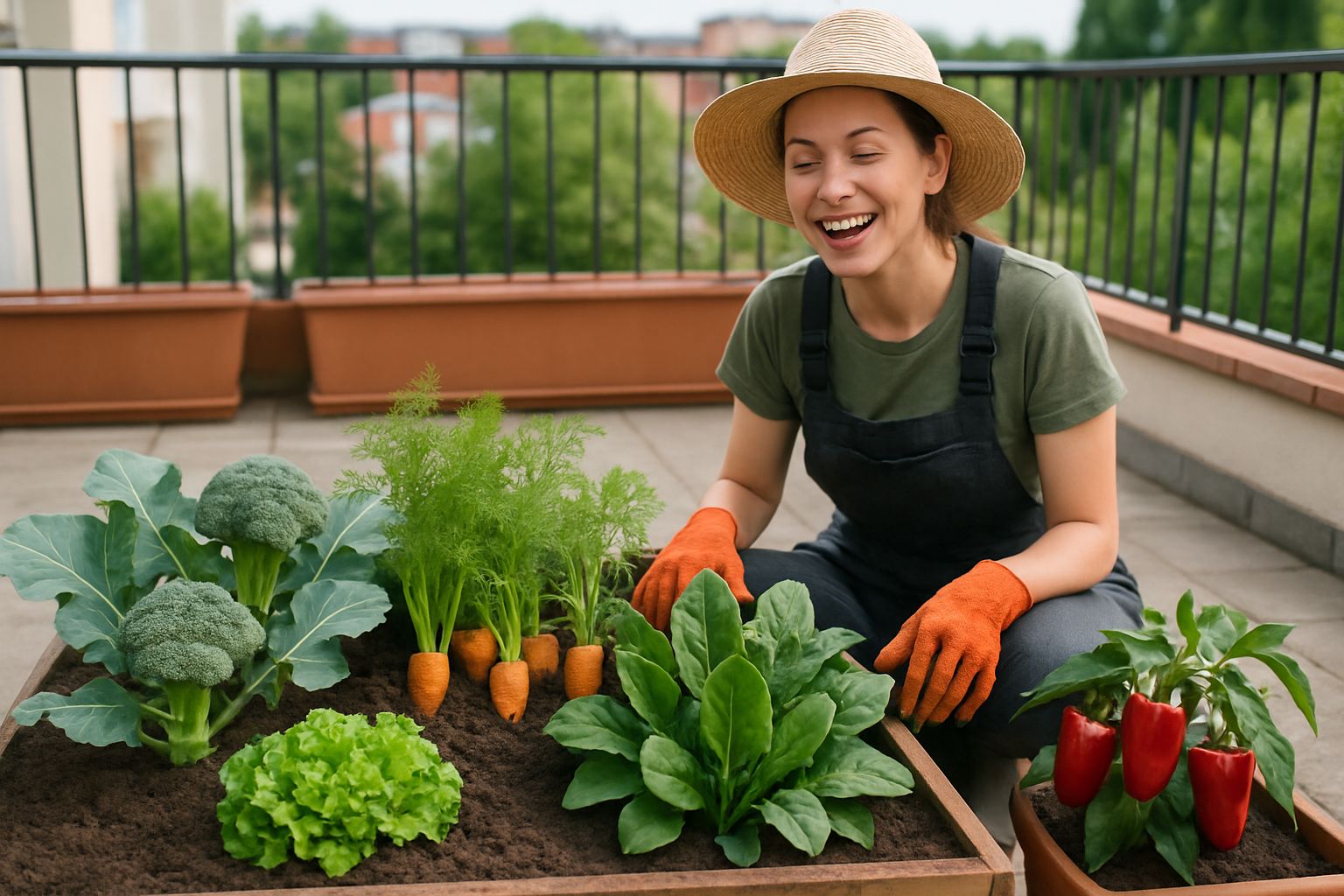
Growing your own food on a terrace is deeply satisfying, and the good news for allergy sufferers is that many of the most productive edible plants are extremely low in airborne pollen. The vegetables most likely to cause problems are those that flower and set seed through wind pollination — but a smart selection of crops lets you grow a productive terrace patch without triggering symptoms.
Leafy and Root Vegetables That Are Safe to Grow
Leafy vegetables are among the safest crops you can grow on an allergy-friendly terrace. Lettuce, spinach, kale, Swiss chard, and rocket are all harvested before they bolt and flower, meaning they never produce pollen in a managed kitchen garden. Root vegetables like radishes, beetroot, and carrots are similarly safe when harvested at the root stage — the pollen risk only appears if you allow them to go to seed, which a productive kitchen gardener rarely does.
Herbs are another excellent category. Basil, parsley, coriander, mint, and chives are all low-allergen choices that thrive in terrace containers. The only caveat with herbs is to harvest them regularly before they flower — once herbs bolt and begin flowering, some (particularly members of the carrot family like parsley and coriander) can produce airborne pollen. A regular harvest schedule eliminates that risk while keeping your herb supply generous.
Which Vegetables to Avoid on an Allergy-Friendly Terrace
Wind-pollinated vegetables are the ones to approach with caution. Sweetcorn is the most significant offender — it produces enormous quantities of lightweight pollen designed to travel on air currents, and it rates high on the OPALS scale. Courgettes and squash produce large, open flowers with accessible pollen that, while primarily insect-pollinated, can cause contact reactions in sensitive individuals. If you’re highly reactive, it’s worth skipping these entirely or asking a non-allergic household member to handle the pollination and harvesting tasks for these crops.
How to Design a Low-Allergy Terrace Garden
Plant selection is only half the equation. Where you place things on your terrace — and how you structure the overall space — has a major impact on your day-to-day allergen exposure. A thoughtfully designed terrace directs airflow, keeps high-pollen plants at a distance from where you sit and breathe, and creates defined zones where allergy sufferers can relax with confidence. These aren’t complicated changes, but they make a measurable difference.
Position Plants Away From Seating and Entry Points
The area immediately around your outdoor seating and your door or window openings should be reserved exclusively for your lowest-allergen plants. Even insect-pollinated species produce some pollen, and placing them directly at nose level next to where you sit and breathe increases contact exposure unnecessarily. Position your safest foliage plants and rated OPALS 1-2 species closest to seating areas, and push any moderate-risk plants to the perimeter edges of the terrace where air circulation carries particles away from your primary living zone.
Use Hardscaping to Reduce Open Pollen Zones
Every section of open soil or growing medium on a terrace is a potential entry point for windborne pollen from neighboring gardens and streets — pollen that settles, accumulates, and gets disturbed again each time you walk past. Replacing open soil areas with paving, gravel, decking tiles, or raised bed covers dramatically reduces the surface area where external pollen can collect. Hardscaping also defines clear, clean pathways through your terrace that make it easier to move through the space without brushing against plants and disturbing settled pollen. For more tips on managing pollen in urban gardens, check out our guide on urban garden success tips.
Create Buffer Zones With Low-Allergen Hedges
If your terrace is exposed to neighboring gardens, street trees, or open areas where wind-pollinated plants grow, a living screen of low-allergen hedging creates a meaningful physical barrier. Female holly (Ilex species) is an excellent choice — female plants produce no pollen, and their dense, waxy leaves trap and filter airborne particles. Photinia ‘Red Robin’ is another strong option, offering dense screening, attractive red new growth, and a low OPALS rating. Position these screening plants along the windward edge of your terrace to intercept incoming pollen before it reaches your seating area.
Suppress Weeds With Ground Cover Plants Like Vinca and Ajuga
Weeds are a hidden allergen problem on terraces that most gardeners overlook. Plants like ragweed, plantain, and dock are wind-pollinated and among the highest-rated species on the OPALS scale — and they’ll happily colonize any bare soil or gap in your terrace containers if you let them. The smartest defense isn’t constant weeding, it’s eliminating the bare ground where weeds take hold in the first place. Low-growing ground cover plants outcompete weeds by denying them light and space, doing your work for you all season long. For more tips on selecting the best plants, check out this guide on low-pollen plants.
Vinca minor (lesser periwinkle) is one of the best options available — it spreads quickly, stays low, produces attractive blue-purple flowers with minimal pollen, and is rated low on the OPALS scale. Ajuga reptans (bugle) is equally effective, offering deep bronze or purple foliage and short spikes of blue flowers in spring that attract pollinators without releasing airborne pollen. Both work beautifully planted around the base of larger container plants or used to cover any exposed terrace soil areas where weeds would otherwise establish. For extra coverage, Thymus serpyllum (creeping thyme) is another excellent ground cover that stays flat, smells wonderful underfoot, and produces minimal airborne pollen.
Add Color Without Any Plants at All
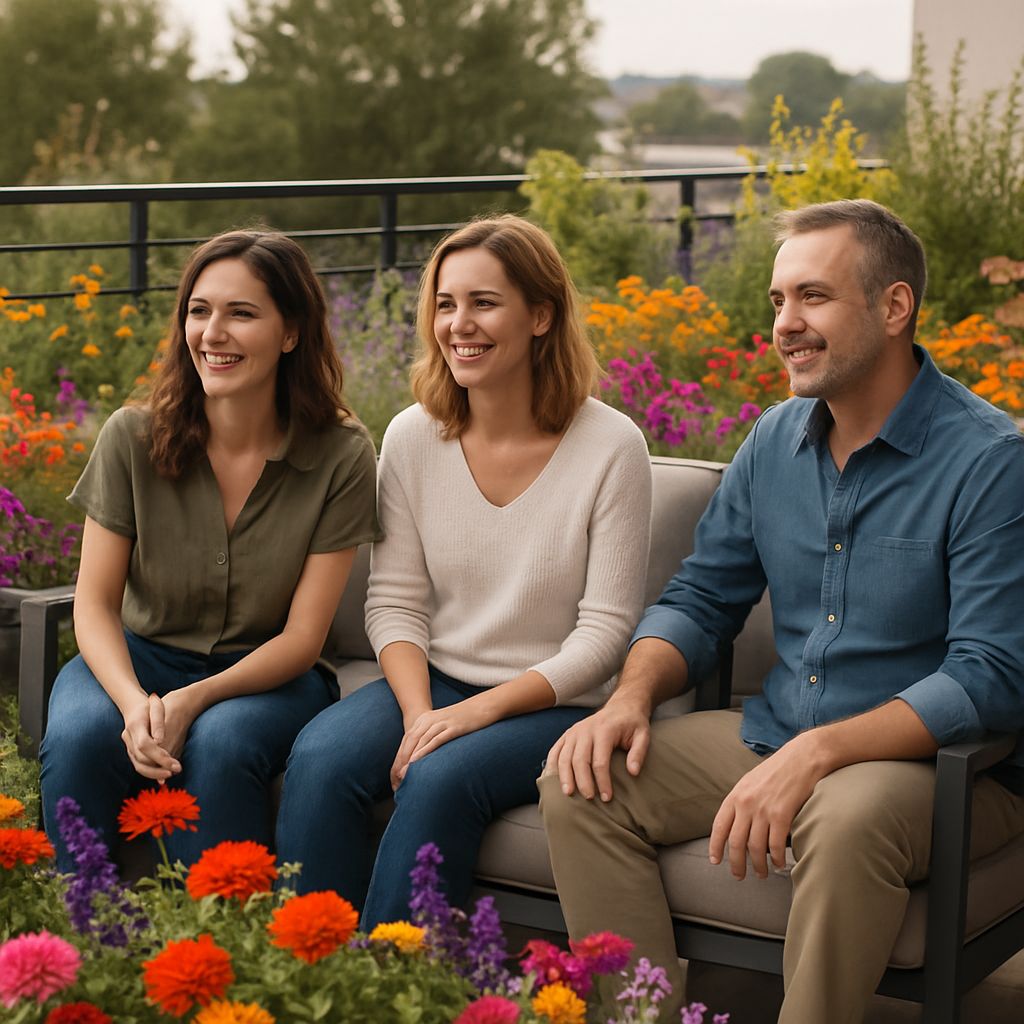
Sometimes, the most liberating realization in allergy-friendly terrace design is that you don’t need plants for every burst of color. Decorative elements — used thoughtfully — can carry significant visual weight on a terrace while giving you complete control over allergen levels in specific zones. This is especially useful for creating a guaranteed safe seating area where you can relax during high pollen season without any plant-related exposure whatsoever.
Colored pots, ceramic planters, outdoor cushions, rugs, and decorative screens all contribute to a terrace’s visual identity without a single pollen grain involved. Tall glazed pots in bold colors can anchor a space just as powerfully as a large plant. Outdoor textiles in warm tones bring life and warmth to hard surfaces. And architectural elements like trellises, lanterns, and water features add depth and movement that draws the eye just as flowering plants do — but entirely on your terms.
- Painted or glazed ceramic pots: Use oversized statement pieces in bold colors to anchor seating zones
- Outdoor rugs: Define living areas and add warmth and pattern without any allergen risk
- Water features: Small self-contained fountains add movement and ambient sound — moving water also helps settle airborne particles
- Decorative screens and trellises: Use as visual dividers or backdrops without the need for climbing plants
- Solar lighting: Lanterns, string lights, and uplighters create atmosphere and extend the time you spend outside in the lower-pollen evening hours
- Colored gravel and stone: Terracotta, slate, and white quartz gravel all add texture and color to container surfaces and pathways
The goal is a terrace that feels generous, layered, and alive — and that doesn’t necessarily require every element to be a living plant. The best allergy-friendly terraces combine thoughtful plant selection with deliberate use of non-plant design elements, creating spaces that are visually rich and physically comfortable at the same time.
Terrace Garden Maintenance Tips for Allergy Sufferers
Even the most carefully designed pollen-free terrace requires maintenance — and how you carry out that maintenance matters just as much as the plants you’ve chosen. The right habits dramatically reduce your symptom exposure without forcing you to hand the garden over to someone else entirely.
Best Times of Day to Garden With Fewer Symptoms
Pollen release follows a consistent daily pattern that you can work with rather than against. Most wind-pollinated plants release their pollen in the morning, with peak airborne pollen concentrations typically occurring between 5 am and 10 am. Pollen counts then drop through midday and into early afternoon before rising again in the early evening as the air cools and sinks. The single most effective timing strategy is to do your active gardening — pruning, repotting, watering, and deadheading — in the late afternoon between 2 pm and 4 pm, when airborne pollen concentrations are at their daily low. For more tips on managing pollen, explore our pollen-free garden success guide.
Gardening after rain is another consistently low-risk window. Rain physically washes pollen out of the air and off plant surfaces, temporarily clearing your terrace environment. Calm, windless days are significantly safer than breezy ones, since wind is the primary mechanism that carries pollen into your terrace from surrounding areas. Checking a local pollen forecast before you plan a gardening session takes seconds and can save you hours of discomfort — apps like Pollen.com or the Met Office’s allergy forecast provide daily counts by region and pollen type. For more tips, explore these hay fever-free gardening tips.
Protective Gear That Actually Makes a Difference
The right protective equipment doesn’t need to be elaborate — it just needs to be consistent. A well-fitted FFP2 or N95 face mask filters out particles as small as 0.3 microns, which covers most pollen grains (typically 10-100 microns in size) with a significant margin. Wearing one during active gardening sessions — particularly pruning, deadheading, or handling dry soil — reduces inhalation exposure dramatically. Wraparound sunglasses protect the mucous membranes of the eyes, which are often the first point of allergic reaction when airborne pollen is present.
Beyond masks and glasses, the habit of showering immediately after gardening removes pollen from hair and skin before it transfers to indoor surfaces or bedding. Change your clothing before entering the main living area of your home. Keep a dedicated pair of gardening clothes near the terrace door rather than wearing them throughout the house. These aren’t dramatic lifestyle changes — they’re small, consistent habits that compound over a season into a meaningful reduction in total allergen exposure. For further tips, explore our guide on airborne irritants and their health impacts.
A Pollen-Free Terrace Is Closer Than You Think
Building a pollen-free terrace garden isn’t about restriction — it’s about making smarter choices that let you enjoy outdoor space fully, without paying for it with your health. Every decision covered in this guide, from choosing insect-pollinated plants rated 1-3 on the OPALS scale, to designing with hardscaping, to gardening at the right time of day, adds up to a terrace that works for you rather than against you.
Start with one section of your terrace. Swap out any wind-pollinated plants for foliage alternatives or the flowering species listed here. Add a ground cover to close off bare soil. Move your seating area away from any moderate-risk plants and toward your safest, lowest-OPALS container displays. You don’t have to redesign everything at once — small, deliberate changes made consistently across one season will transform the experience of being on your terrace.
The gardeners who build the most beautiful allergy-friendly terraces aren’t the ones who gave up on plants — they’re the ones who learned to choose them better. That knowledge is now yours.
Frequently Asked Questions
These are the questions that come up most often from terrace gardeners navigating allergies for the first time. The answers here draw on everything covered in this guide, distilled into fast, practical responses you can act on immediately.
If a specific plant or situation you’re dealing with isn’t covered below, the OPALS rating system is your most reliable independent resource — any plant you’re considering can be looked up and rated before it sets foot on your terrace.
Can I have flowering plants in a pollen-free terrace garden?
Yes — and you should. The key is selecting insect-pollinated flowering plants rather than wind-pollinated ones. Roses, tulips, daffodils, impatiens, snapdragons, geraniums, and petunias are all excellent flowering choices with minimal or contained pollen output. Opt for double-flowered varieties wherever they’re available, as the extra petals significantly reduce pollen exposure compared to single-petal types.
The phrase “pollen-free” in garden terms doesn’t mean plants with zero pollen — it means plants that don’t release pollen into the air where you can inhale it. That distinction opens up a genuinely wide and colorful palette of flowering options for your terrace, as this guide demonstrates. Focus on OPALS ratings of 1-3, and you’ll have both beautiful blooms and a comfortable outdoor space.
Which trees are worst for terrace allergies, and what should I plant instead?
The highest-risk trees for allergy sufferers are wind-pollinated species that produce enormous quantities of microscopic pollen. Birch, oak, ash, plane, and cedar are among the most significant offenders in temperate climates, all rating 8-10 on the OPALS scale. If any of these grow near your terrace — in a neighboring garden or on a street — they represent an external pollen source you can partially mitigate with screening hedges but cannot fully eliminate. For more information on alternatives, explore our low-pollen plant selection guide.
For terrace gardeners who want a tree element — whether in a very large container or at the terrace edge — the safest alternatives are female holly (Ilex aquifolium), which produces zero pollen, apple and pear trees (insect-pollinated, OPALS 1-3), and ornamental flowering cherry (Prunus cultivars) in double-flowered forms, which produce minimal airborne pollen. Dwarf and patio-specific cultivars of apple and pear, like Malus ‘Ballerina, are well-suited to large terrace containers and safe choices for allergy sufferers.
Does the OPALS scale apply to all garden plants?
The OPALS scale was designed to cover a comprehensive range of garden plants, trees, shrubs, grasses, and ground covers — and Thomas Ogren’s system rates thousands of individual species and cultivars. It is the most thorough plant allergy rating system publicly available and has been endorsed by the American Lung Association as a practical tool for reducing allergen exposure in designed outdoor spaces.
That said, the OPALS scale is most extensively documented for plants commonly grown in North American and European gardens. Some less common species, newer cultivars, and certain tropical or subtropical plants may not have a published OPALS rating. In those cases, the practical rule is to assess whether the plant is wind-pollinated or insect-pollinated — wind-pollinated plants with light, powdery pollen are always high-risk regardless of whether they have a specific OPALS number assigned.
OPALS Rating Risk Level Example Plants Terrace Recommendation 1–3 Low Female holly, roses, impatiens, daffodils ✓ Ideal — use freely throughout your terrace 4–6 Moderate Some lavender varieties, single-petal roses △ Use sparingly, keep away from seating 7–8 High Ornamental grasses, some shrubs ✗ Avoid the allergy-friendly terraces 9–10 Very High Birch, oak, ragweed, pampas grass ✗ Never use — significant allergen risk
How do I stop weeds from spreading pollen on my terrace?
The most effective approach is to eliminate bare soil using ground cover plants like Vinca minor or Ajuga reptans, combined with mulch or gravel over any exposed container surfaces. Weeds can only establish where there is open ground and available light — deny them both, and the problem largely manages itself. For any weeds that do appear, remove them before they flower and set seed, which is the point at which they become an active pollen source. Early removal — when the plant is still in leaf — eliminates the allergen risk. For more tips on maintaining a pollen-free garden, check out this guide on pollen-free garden success tips.
What is the easiest pollen-free plant to start with on a terrace?
If you’re just beginning to build an allergy-friendly terrace and want a single, foolproof starting point, impatiens are the answer. They’re available at almost every garden center from late spring onward, they thrive in containers, they ask for very little beyond consistent moisture and occasional feeding, and they’ll flower continuously from planting right through to the first frost.
Their pollen output is negligible, they work in sun or shade, and they come in enough colors to give any terrace a genuine visual impact from day one. There’s no complicated variety selection required and no specialist knowledge needed — simply choose a color or mix you love, plant them into good quality peat-free compost in a container with drainage holes, and keep them well-watered.
Once you’ve seen how well a well-chosen container plant performs on your terrace, adding further low-allergen species becomes much easier. Impatiens are the gateway plant for allergy-friendly terrace gardening — start there, build confidence, and expand your plant palette from that foundation.
For more inspiration on building a terrace space that genuinely works for you — whether you’re managing allergies, limited space, or both — explore the resources and expert guidance available to help you design smarter outdoor spaces.