- Most bags labeled “biodegradable” are not certified and can still break into harmful microplastic particles measuring 0.5–2mm in soil.
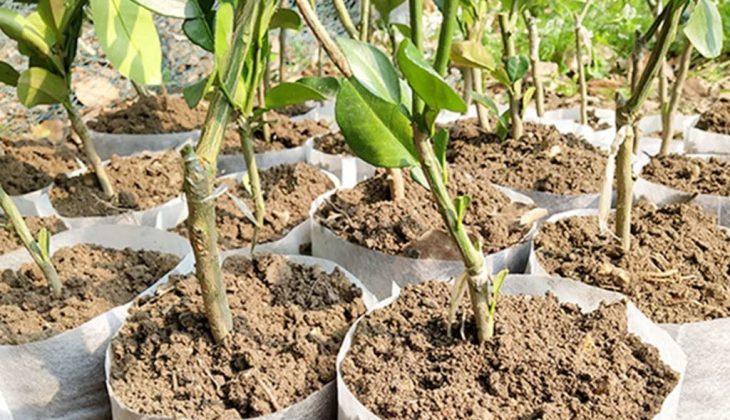
- Genuine non-woven biodegradable planter bags improve root development through air pruning and superior moisture management compared to standard plastic pots.
- A 2023 consumer survey revealed a significant gap between what shoppers believe about biodegradable bags and how those bags actually perform in real conditions.
- There is a critical difference between “biodegradable,” “compostable,” and “degradable” — and confusing them could mean plastic particles ending up in your garden soil.
- Keep reading to learn exactly how to identify a genuinely sustainable planter bag and avoid the greenwashing traps most gardeners fall into.
Most Biodegradable Planter Bags Are Not What They Claim to Be
Walk into any garden center or scroll through any online gardening store and you will find dozens of planter bags proudly stamped with the word “biodegradable.” The problem? That label alone means almost nothing.
Field monitoring data has shown that many bags marketed as biodegradable do not fully break down under normal gardening conditions. Instead, they fragment into particles measuring between 0.5 and 2mm — microplastics that work their way into your soil and stay there while traditional plastic bags remain visibly intact right beside them. The irony is striking. What was sold as the eco-friendly choice may be doing more hidden damage than the standard plastic pot it was meant to replace.
For gardeners who genuinely care about soil health and sustainability, this is not a small distinction. The bags you plant in directly affect your soil’s microbial ecosystem, drainage, aeration, and long-term fertility. Choosing the wrong product based on misleading labeling does not just waste money — it actively works against the healthy garden environment you are trying to build. Understanding what makes a planter bag truly biodegradable is the first step every sustainable gardener needs to take.
What “Biodegradable” Actually Means for Planter Bags
The word biodegradable simply means a material can be broken down by bacteria, fungi, or other living organisms. But that definition leaves enormous room for variation — a material might technically biodegrade over 2 years or over 200 years, and both can legally carry the same label. For a deeper understanding, you can explore a field report from the laboratory on biodegradable bags.
The Difference Between Biodegradable, Compostable, and Degradable
These three terms are used interchangeably in marketing but they describe very different things in practice.
- Biodegradable: Breaks down through biological processes, but with no defined timeframe or end-product guarantee.
- Compostable: Breaks down within a specific timeframe (typically 90–180 days in industrial composting) into non-toxic organic matter that enriches soil.
- Degradable: Breaks down through any process — including chemical or UV exposure — often leaving behind synthetic residue or microplastic fragments rather than clean organic material.
For gardeners, compostable is the gold standard. A bag certified compostable under EN 13432 or ASTM D6400 standards will fully convert into organic matter that feeds your soil. A bag simply labeled “degradable” or even “biodegradable” without third-party certification may be doing the exact opposite.
Why “Biodegradable” on a Label Means Almost Nothing Without Certification
There is no universal legal standard that a manufacturer must meet before printing “biodegradable” on packaging in most markets. This creates a significant greenwashing opportunity. Laminated plastic bags with a thin organic coating, bags made from oxo-degradable plastics that fragment into microplastics under UV light, and genuine plant-fiber bags can all sit on the same shelf with near-identical labeling.
The gap between marketing and material reality is wide enough to matter for your garden. When a bag fragments instead of fully decomposing, those particles bind with soil aggregates, disrupt water infiltration, and can interfere with root hair development in young seedlings. For nursery growers raising trees and larger perennials, this is not a minor issue — it compounds across every growing season.
Always demand documentation. A reputable supplier of genuinely biodegradable planter bags will provide certification references, not just marketing language. If the product page or packaging cannot tell you the material composition and certification standard, treat it as a red flag.
How to Spot a Genuinely Biodegradable Planter Bag
Identifying the real thing comes down to a few specific checks before you buy. If you’re also interested in sustainable gardening practices, you might want to explore our natural urban balcony garden pest management guide.
- Look for EN 13432 (European standard) or ASTM D6400 (U.S. standard) certification marks.
- Check that the material is listed as non-woven natural fiber (jute, coir, bamboo, or rice straw) rather than polypropylene or laminated film.
- Feel the texture — genuine non-woven fiber bags have a rough, breathable surface. Laminated fakes feel smooth and slightly glossy.
- Ask specifically whether the bag is certified for home composting or only industrial composting, as these are entirely different end-of-life scenarios.
- Verify whether the supplier can provide third-party test results for decomposition rate and soil safety.
The Microplastic Problem Nobody Talks About
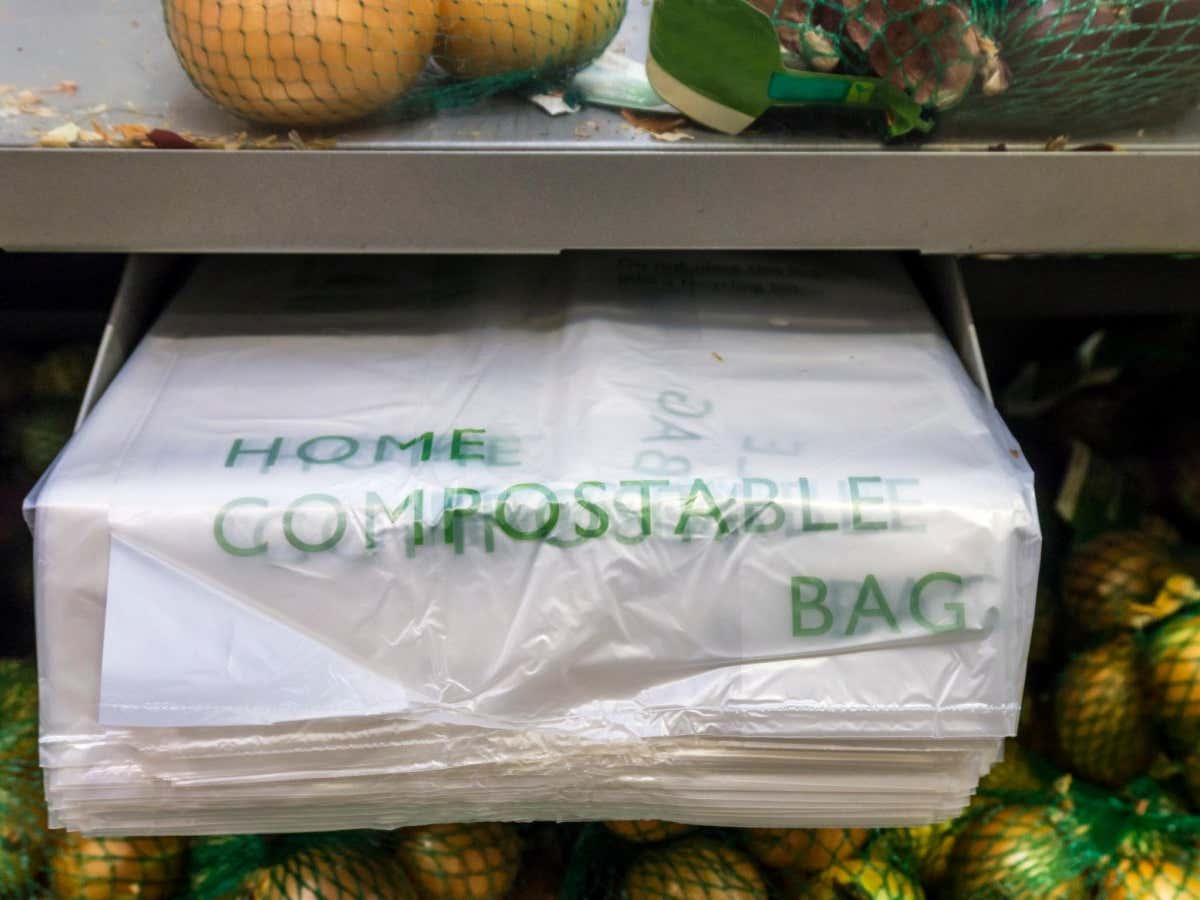
“Biodegradable microplastics may …” from www.newscientist.com and used with no modifications.
The conversation around sustainable gardening almost always focuses on reducing visible plastic waste. What gets far less attention is what happens beneath the surface when a degradable bag starts to break down the wrong way.
How Bags Labeled Biodegradable Still Produce Microplastics
Oxo-degradable bags are among the most common offenders. These are conventional plastics mixed with a pro-oxidant additive that causes them to fragment when exposed to heat or UV light. They visually disappear from the surface, which looks like progress, but the fragmentation process leaves behind particles between 0.5 and 2mm that are now classified as microplastics. Field monitoring data confirms that during the same period when these bags appear to “break down,” traditional plastic bags remain intact and whole — meaning the degradable bag has actually created a more dispersed contamination problem, not solved one.
What the 2023 Consumer Survey Data Actually Revealed
A 2023 survey of consumers who reported using biodegradable bags revealed a consistent and troubling pattern: most buyers assumed the bag would fully decompose in standard garden soil conditions within one growing season. Very few understood that decomposition rates depend heavily on temperature, moisture, microbial activity, and whether the bag was certified for home or industrial composting environments. The gap between consumer expectations and product reality was not marginal — it was fundamental. For those interested in sustainable gardening practices, our natural urban balcony garden pest management guide offers valuable insights.
This matters for gardeners because purchasing decisions are being made based on marketing language rather than material science. The result is gardens quietly accumulating plastic fragments season after season while their owners believe they are making sustainable choices. Closing that knowledge gap is exactly what separates a genuinely sustainable garden from one that only looks the part.
Common Misconceptions About Biodegradable Planter Bags
Misconception 1: All Biodegradable Bags Break Down the Same Way
This is probably the most damaging assumption in sustainable gardening circles. A jute fiber bag, an oxo-degradable polyethylene bag, and a PLA (polylactic acid) bag made from corn starch will all decompose through entirely different mechanisms, at entirely different speeds, and leave behind entirely different residues. Grouping them under one label creates a false sense of equivalence that benefits manufacturers far more than it benefits your soil. For more on sustainable gardening practices, check out our natural urban balcony garden pest management guide.
Jute and coir fiber bags break down through microbial activity in the same way organic matter does — they become part of the soil food web. PLA bags require industrial composting temperatures of at least 58°C to break down efficiently, meaning they will sit largely intact in a cool home compost bin. Oxo-degradable bags, as already covered, fragment into microplastics. The material composition of your bag determines everything about how it actually behaves in your garden.
Misconception 2: They Decompose Quickly in Any Environment
Decomposition is not a switch that flips the moment a bag hits soil. It is a biological process driven by microbial populations, ambient temperature, moisture availability, and oxygen levels. A certified compostable bag that fully breaks down in 12 weeks inside a well-managed hot compost system may take two or more years to decompose in dry, compacted, or cold garden soil — if it breaks down fully at all. Gardeners in arid climates or those planting in containers with low microbial activity should factor this directly into their bag selection.
Misconception 3: Biodegradable Automatically Means Safe for Soil
Not all biodegradable materials leave behind neutral or beneficial residue. Some bags incorporate dyes, adhesives, or chemical stabilizers that persist in the soil long after the structural material has broken down. A bag made from natural fiber that has been treated with synthetic fungicides to extend its shelf life, for example, can leach those chemicals into your growing medium. Always check whether the bag is certified food-safe or certified for organic growing if you are using it for edibles — the fiber material is only half the picture.
Misconception 4: You Can Dispose of Them in Any Bin
Where a bag ends up after use matters as much as what it is made of. Home compostable bags certified to AS 5810 or the equivalent can go directly into a functioning home compost system. Industrially compostable bags certified to EN 13432 need to go to a commercial composting facility — putting them in your home bin or general waste means they will not decompose as intended. Non-woven natural fiber bags can often be buried directly in garden beds where they will break down in place, which is arguably the most sustainable end-of-life option available for container-grown plants being transplanted into the ground.
What Genuine Non-Woven Biodegradable Bags Do Differently
Feature
Genuine Non-Woven Biodegradable Bag
Standard Plastic Pot
Oxo-Degradable Bag
Air Pruning
Yes — natural through porous walls
No
Minimal
Moisture Management
Wicks excess moisture, prevents waterlogging
Drainage holes only
Similar to plastic
Root Circling
Prevented by air contact at walls
Common problem
Can still occur
End-of-Life Impact
Fully decomposes into organic matter
Persistent plastic waste
Microplastic fragmentation
Soil Safety
Certified options are food-safe
Leaches BPA/phthalates (some types)
Leaves synthetic residue
Transplant Stress
Plant-in-bag transplanting reduces shock
Root disturbance at transplant
Variable
The performance advantages of genuine non-woven biodegradable bags go well beyond their end-of-life story. The structural properties of a properly made natural fiber bag actively improve plant health throughout the entire growing period — not just at the point of disposal.
Non-woven construction means the fibers are bonded together mechanically rather than woven into a tight matrix. This creates a wall structure that is porous at a microscopic level, allowing continuous gas exchange between the root zone and the surrounding environment. Roots receive a steady supply of oxygen that simply cannot pass through the solid walls of a plastic container, and this oxygenation directly accelerates root cell development in the active growing zone.
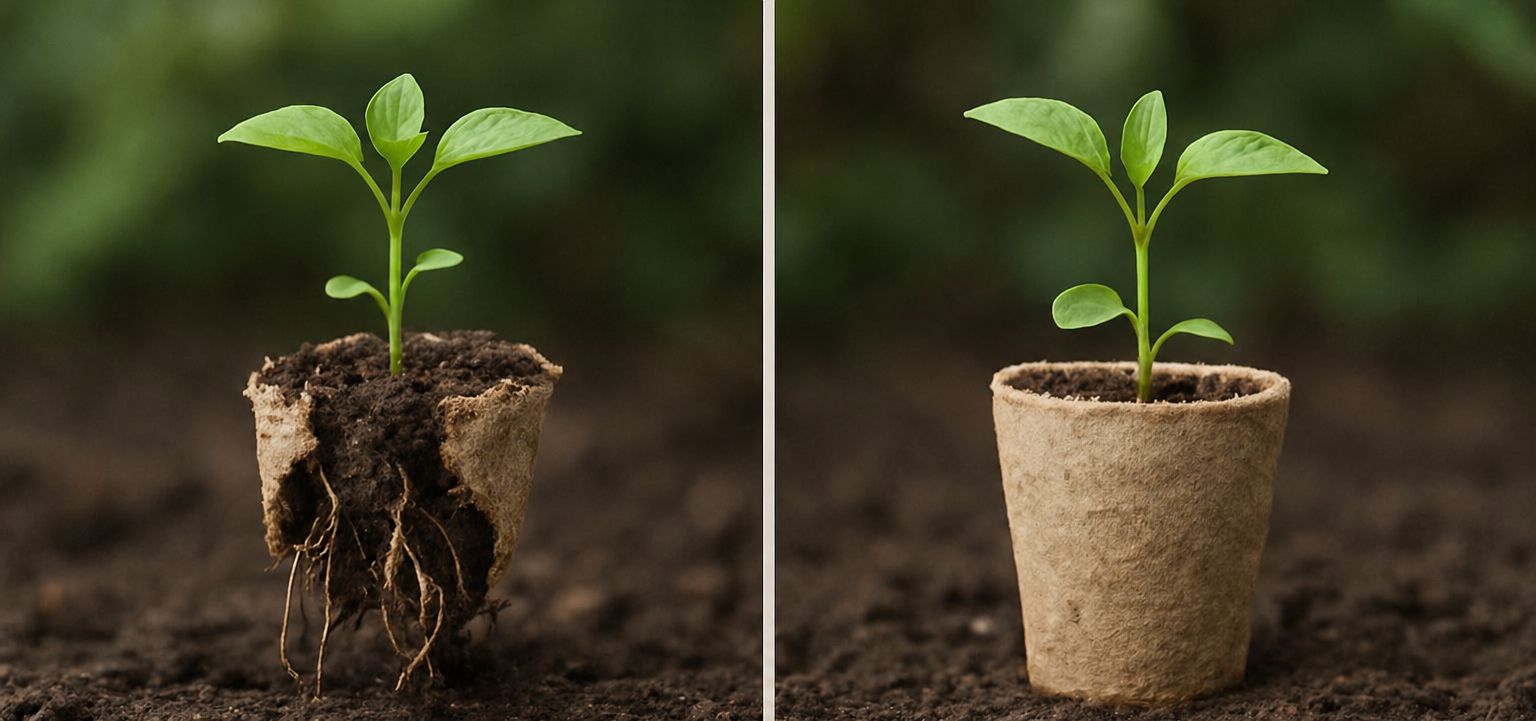
The practical outcome is measurable. Seedlings and young trees grown in genuine non-woven fiber bags consistently develop denser, more fibrous root systems compared to those grown in standard plastic pots of the same volume. When transplanted into the ground — particularly if the bag is planted directly without removal — that established root architecture means faster nutrient uptake and significantly lower transplant shock.
How Porous Fiber Structure Prevents Root Circling and Mold
Root circling is one of the most common and least discussed problems in container gardening. When a root tip reaches the solid wall of a plastic pot, it does not stop growing — it follows the wall and begins to spiral. Over time, circling roots can girdle a plant, restricting water and nutrient flow through the root system even after transplanting into open ground. This is a particular problem for trees and shrubs grown in nursery containers for extended periods.
In a non-woven fiber bag, the root tip reaches the porous wall and encounters air rather than a solid surface. This air contact triggers a natural process called air pruning — the root tip desiccates and stops growing at that point. The plant responds by generating multiple new lateral roots branching from behind the pruned tip, producing a dense, radial root ball rather than a spiraled one. The mold resistance comes from the same porous structure: because moisture can move through the bag wall rather than accumulating, the interior environment stays better ventilated and less hospitable to fungal growth compared to the humid, stagnant conditions that develop inside sealed plastic containers.
Why Moisture Wicking Reduces Pest Pressure Compared to Plastic Pots
Fungus gnats are among the most persistent pests in container growing, and their lifecycle is almost entirely dependent on consistently moist topsoil conditions. Female fungus gnats lay eggs in the top layer of potting mix, and larvae feed on root hairs and organic matter in the growing medium. Plastic pots, particularly those without adequate drainage, create exactly the persistently damp surface conditions that support this lifecycle. For effective strategies to manage these pests, consider this natural urban balcony garden pest management guide.
Non-woven fiber bags wick moisture laterally and upward through the bag wall, which allows the surface layer of growing medium to dry more quickly between waterings. This drying cycle does not stress the plant roots, which are accessing moisture from deeper in the container, but it disrupts the surface environment that fungus gnat larvae require. Growers who have switched from plastic pots to non-woven fiber bags for indoor herbs and tropical plants frequently report a significant reduction in fungus gnat populations without any change to their watering routine.
The same moisture management dynamic reduces the risk of Pythium and Phytophthora root rot, both of which are water mold pathogens that thrive in saturated, low-oxygen root zones. By keeping the root environment consistently aerated and preventing waterlogging, a well-made non-woven fiber bag removes the primary conditions these pathogens need to establish. For more on maintaining healthy garden environments, explore this guide on drip irrigation solutions.
Fourth-Generation Biodegradable Materials Are Changing the Standard
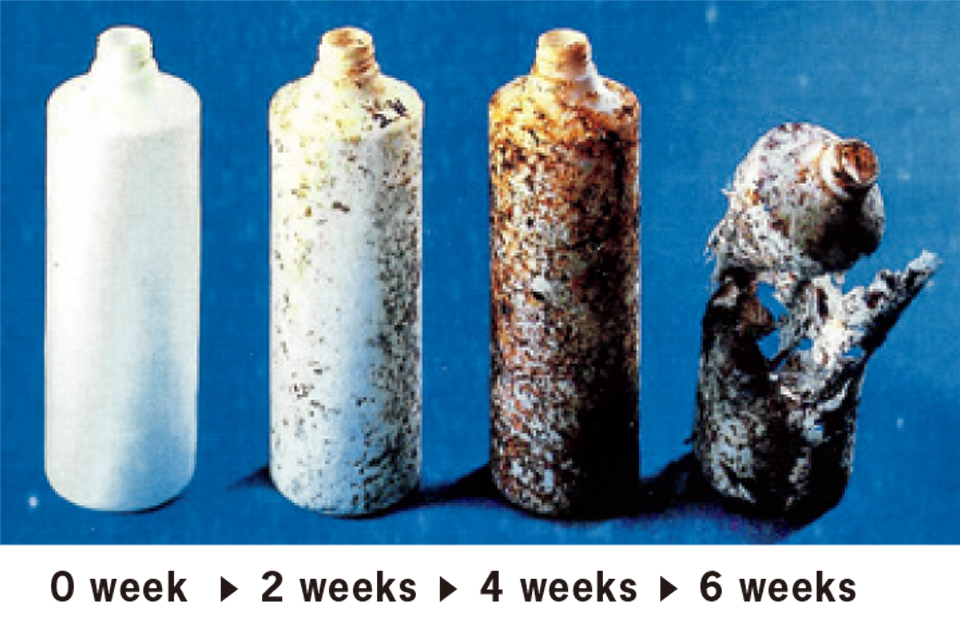
“New Biodegradable Material Reduces …” from www.japan.go.jp and used with no modifications.
The earliest biodegradable planter bags were simple pressed peat or paper pots — functional but structurally fragile and limited in size range. Material development has moved through several generations since then, with each iteration improving structural integrity, decomposition controllability, and growing performance. What is now being referred to in manufacturing circles as fourth-generation biodegradable material combines natural fiber matrices with biopolymer binders derived from sources like cassava starch and sugarcane bagasse, producing bags that maintain structural integrity through a full growing season before decomposing cleanly at end of life.
These materials are engineered to decompose on a defined schedule rather than breaking down opportunistically based on environmental conditions. A fourth-generation bag designed for a 12-month growing cycle will hold its structure reliably through that period even in humid tropical conditions, then break down predictably once the growing cycle ends and conditions shift. This represents a fundamental improvement over first and second-generation biodegradable bags, which could begin decomposing prematurely in warm, wet conditions — creating exactly the structural failure problem that led many growers to dismiss biodegradable bags altogether in early trials. For more on sustainable gardening practices, check out this pest management guide.
How to Use Biodegradable Planter Bags the Right Way
Getting genuine performance from a biodegradable planter bag starts before you fill it with growing medium. The bag needs to be matched correctly to your climate, your plant type, and your intended growing duration. A bag rated for 6 months of structural integrity is the wrong choice for a two-year nursery tree. A heavy-wall coir bag designed for outdoor conditions in a humid temperate climate may retain too much moisture if used indoors in a centrally heated environment with low air circulation. Read the product specification sheet, not just the marketing description, and match the bag to your actual growing conditions.
When filling the bag, use a well-aerated potting mix rather than dense garden soil — the porous bag wall only delivers its aeration and moisture management benefits if the growing medium itself allows air and water to move freely. Pack lightly, water thoroughly on the first fill to settle the medium, and position the bag where air can circulate around the exterior walls. For outdoor use in exposed positions, placing bags on a raised slatted surface rather than directly on solid ground improves underside aeration and prevents the base from staying waterlogged after heavy rain.
Match Bag Thickness and Size to Your Climate
Climate is the single biggest variable in how a biodegradable planter bag performs and how long it holds its structure. In hot, humid climates like coastal subtropical zones, thinner natural fiber bags can begin breaking down within 4 to 6 months — which works perfectly for fast-growing annuals and seedlings but creates real problems for perennials or nursery stock that need 12 or more months of container time. In those conditions, choose bags with a wall thickness of at least 300gsm and look for materials that include a biopolymer binder to slow the decomposition timeline. In cooler, drier climates, lighter bags perform well year-round because the lower microbial activity in dry conditions naturally extends structural life.
Size matters just as much. A bag that is too small forces roots to the walls too quickly, triggering premature air pruning cycles that stunt growth rather than encourage it. A bag that is too large retains excess moisture in the root zone and reduces the aeration benefit. As a general rule, match bag volume to the expected root ball size at the end of the growing period — not at the start.
Where to Dispose of Used Bags Correctly
End-of-life handling determines whether your bag delivers on its sustainability promise. For bags certified to home composting standards, cutting them into smaller pieces before adding them to a compost bin accelerates the breakdown process significantly. For bags being planted directly in the ground with the plant still inside, score the lower third of the bag with a knife before planting to give roots an immediate exit point while the bag begins decomposing around them. Never put industrially compostable bags in home compost bins or general waste — they will not break down in either environment as intended, and in landfill they contribute to methane generation as they partially decompose in anaerobic conditions.
Genuine Biodegradable Planter Bags Do Work — But Only If You Buy the Right Ones
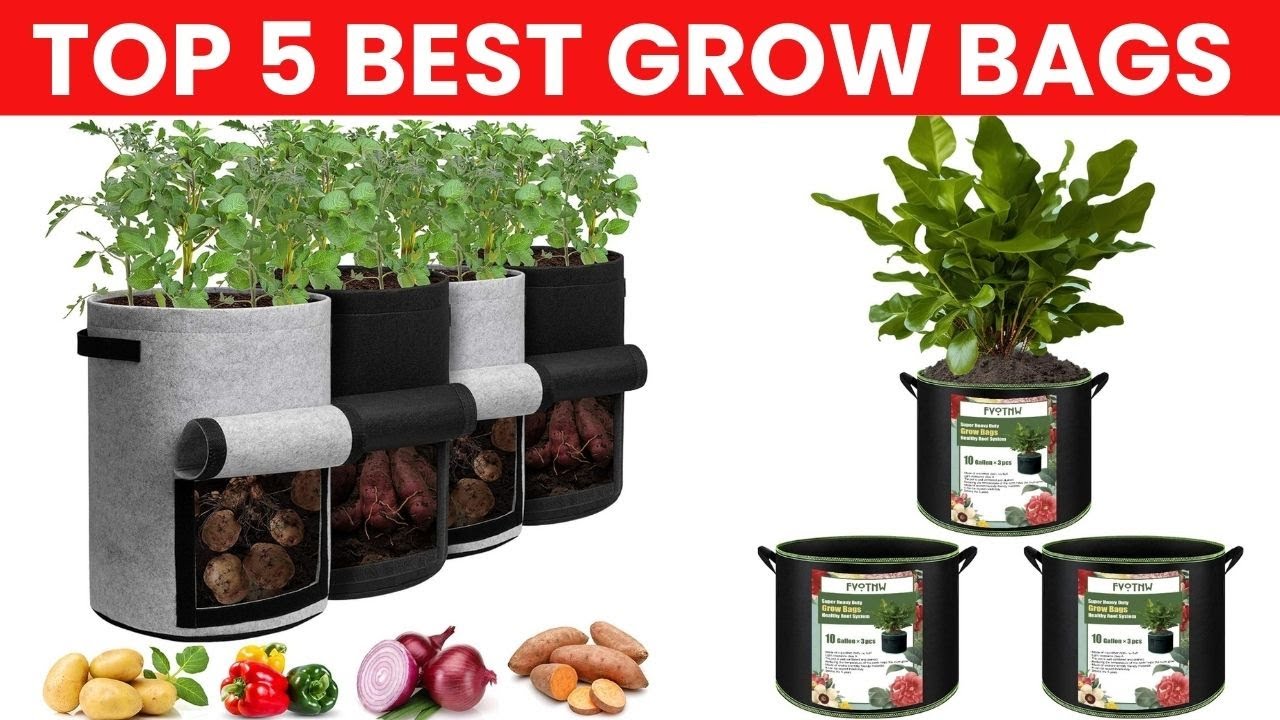
“Top 5 Grow Bags for Healthy Plants …” from www.youtube.com and used with no modifications.
The evidence from real growing trials is clear: genuinely certified, non-woven natural fiber planter bags deliver measurable improvements in root development, moisture management, and transplant success compared to standard plastic pots. The problem has never been with the concept — it has always been with the execution and the labeling standards that allow low-quality products to crowd the market with misleading claims.
When you buy a bag that carries a verifiable certification, lists its material composition transparently, and matches your growing conditions, you get a container that actively works with your plant’s biology rather than against it. Air pruning produces denser root systems. Moisture wicking reduces disease pressure. Plant-in-bag transplanting eliminates root disturbance shock. These are not marginal improvements — they are structural advantages that compound across an entire growing season.
The sustainable gardening choice is not simply to avoid plastic. It is to understand the materials you are using well enough to know whether they are actually doing what the label claims. A cheap oxo-degradable bag is worse for your soil than a well-made plastic pot that you clean and reuse for a decade. A certified compostable non-woven coir bag is genuinely better for your garden in almost every measurable way. The difference between those two outcomes is knowledge — specifically, knowing what to look for and what questions to ask before you buy.
Certification
Standard
Composting Environment
Decomposition Timeframe
EN 13432
European industrial compostable
Industrial facility only
12 weeks at 58°C
ASTM D6400
U.S. industrial compostable
Industrial facility only
180 days maximum
AS 5810
Australian home compostable
Home compost bin
12 months at ambient temperature
OK Compost HOME
TUV Austria home compostable
Home compost bin
12 months at ambient temperature
No certification
Unverified claim
Unknown
Unpredictable — possible microplastic fragmentation
Frequently Asked Questions
The questions gardeners ask most often about biodegradable planter bags tend to cluster around three core concerns: whether the bag will hold together long enough to be useful, whether it is genuinely safe for soil, and how to dispose of it correctly. The answers depend almost entirely on the specific material and certification of the bag in question — which is precisely why generic answers found on most product pages fall short of what gardeners actually need to know.
Do biodegradable planter bags decompose before my plants finish growing?
A quality bag matched to your growing conditions will not. Certified non-woven natural fiber bags engineered for a specific growing duration — typically 6, 12, or 24 months — are designed to maintain structural integrity through that full period before decomposing. The risk of premature breakdown is almost entirely a problem with uncertified or poorly manufactured bags, particularly those sold in humid climates without material specifications. If you are growing long-cycle plants like fruit trees or perennial shrubs, confirm the bag’s rated structural lifespan with the supplier before purchasing and choose a heavier-wall option with a biopolymer binder for extended holding power. For more tips, check out our guide on avoiding common gardening mistakes.
Are non-woven polypropylene bags actually biodegradable?
No. Non-woven polypropylene (PP) fabric bags — the kind widely used as reusable shopping bags and many fabric grow bags — are not biodegradable in any meaningful timeframe. Polypropylene is a synthetic plastic that can take hundreds of years to break down and will fragment into microplastics long before it fully decomposes. Some non-woven polypropylene bags are marketed with vague sustainability language because they are reusable, but they should not be confused with genuinely biodegradable non-woven natural fiber bags made from jute, coir, or bamboo. If the material composition says polypropylene, polyester, or any synthetic polymer, it is not biodegradable regardless of how it is labeled.
What certifications should I look for when buying biodegradable planter bags?
For bags you intend to compost at home, look for AS 5810 or OK Compost HOME certification — both verify decomposition under ambient home composting temperatures. For bags you can access industrial composting facilities for, EN 13432 or ASTM D6400 are the globally recognized standards. If you plan to plant the bag directly in the ground, prioritize bags made from natural fibers like jute or coir with no synthetic binders, as these will decompose in standard soil conditions without requiring specific temperature or facility requirements. Any bag without a verifiable third-party certification should be treated as an unverified claim.
Can I put biodegradable planter bags in my home compost bin?
Only if the bag is specifically certified for home composting. Industrial compostable bags — even those carrying legitimate EN 13432 or ASTM D6400 certification — require sustained temperatures of 55–60°C to break down correctly. A standard home compost bin rarely reaches or maintains those temperatures, meaning an industrially certified bag will decompose very slowly or incompletely in a home compost environment. Home compostable certified bags (AS 5810 or OK Compost HOME) are formulated to break down at the lower temperatures typical of home composting systems, making them the correct choice if a home compost bin is your end-of-life destination.
Do biodegradable planter bags perform better than plastic pots for seedlings?
For most seedling applications, yes — but with an important qualifier. The performance advantage comes specifically from the air pruning effect and superior moisture management of genuine non-woven natural fiber bags. Seedlings grown in these bags develop denser, more fibrous root systems and experience significantly less transplant shock when moved to their final growing position, particularly when the bag is planted directly into the ground without removal. The root system is already fully acclimated to its environment and can begin accessing new soil volume immediately without the recovery period that typically follows bare-root or pot-removal transplanting.
For seed starting in very small volumes, pressed peat or coir pellets remain popular because they are inexpensive and can be planted directly. However, there are valid environmental concerns around peat extraction, and coir-based pellets or small coir fiber pots are a more sustainable alternative that delivers equivalent performance. For anything larger than a seedling tray cell — transplants, nursery stock, container vegetables, or young trees — a properly certified non-woven natural fiber bag will outperform a standard plastic pot in root quality, moisture management, and end-of-life environmental impact across virtually every growing scenario.
The bottom line is straightforward: the technology works, the sustainability benefits are real, and the performance advantages are well-supported by growing trial data. What requires attention is the purchasing decision itself — specifically, verifying that the bag you are buying is made from what it claims to be made from, certified to a standard that matches your end-of-life plan, and sized and specified correctly for your growing conditions. Get those three things right and a biodegradable planter bag will be one of the most effective and genuinely sustainable tools in your garden.
For gardeners looking to make confident, well-informed choices about sustainable growing containers, exploring verified biodegradable planting bag options with transparent material specifications is the most direct path to growing sustainably without the greenwashing guesswork.