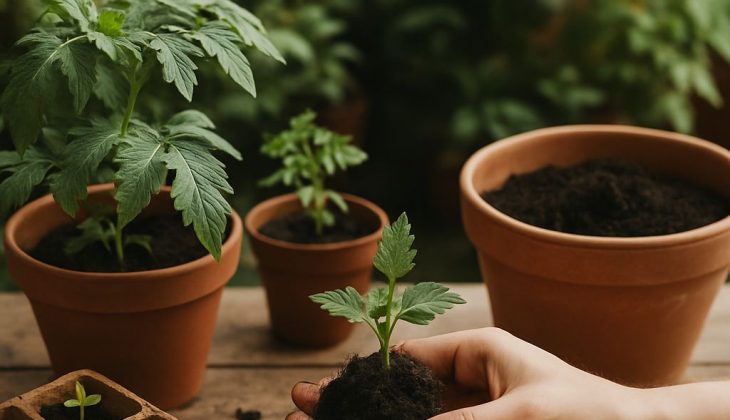
- Succulents need 4–6 hours of bright light daily — south or southwest-facing windows are your best bet indoors.
- Etiolation (stretching) is the #1 sign your succulent isn’t getting enough light — and it’s easily fixed with a grow light or better window placement.
- Not all succulents are created equal — Haworthia and String of Pearls can thrive in lower light conditions where other varieties would struggle.
- Grow lights are a game-changer for apartments or rooms with limited natural light — the right setup can completely transform your results.
- Keep reading to discover which window in your home gives succulents the best chance, and which common lighting mistakes are silently killing your plants.
Most indoor succulents die not from neglect — but from being placed in the wrong spot.
Light is everything to a succulent. These plants evolved in open deserts and dry plains where sunlight is relentless and abundant. Bringing them indoors means you’re already working against their natural instincts, so getting the light right isn’t optional — it’s the whole game. For home gardening enthusiasts looking to go deeper on succulent care, Succulents Box is a trusted resource for both plant selection and growing guidance.
Succulents Indoors Need More Light Than You Think
“How to Care for Succulents (And Not …” from www.architecturaldigest.com and used with no modifications.
- Succulents are native to deserts and extremely dry, sun-drenched climates
- Most varieties need a minimum of 4–6 hours of bright light per day
- Indoor light — even near a window — is significantly weaker than outdoor sunlight
- Low light doesn’t kill succulents immediately, but it slowly weakens them over weeks
- Some shade-tolerant varieties exist, but they are the exception, not the rule
There’s a common misconception that succulents are nearly indestructible because they survive drought. They are drought-tolerant, yes — but they are not shade-tolerant. The moment you move a sun-loving succulent into a dim corner, the countdown begins.
The 4–6 Hour Rule Every Succulent Owner Must Know
Succulents need at least 4–6 hours of morning sunlight each day to stay compact, healthy, and vibrant. Morning light — the kind that comes through east or south-facing windows — is gentler than the intense afternoon rays, making it ideal for most common indoor varieties. If your plant is getting less than 4 hours, you’ll start to notice the warning signs within a few weeks.
It’s worth noting that not all hours of light are equal. Direct sunlight, where the sun’s rays physically touch the plant’s leaves, is far more effective than ambient brightness in a room. Six hours of true direct sun will always outperform six hours of bright indirect light when it comes to keeping succulents thriving indoors.
Why Light Is the Number One Reason Succulents Fail Indoors
Walk into any garden center and you’ll find succulents marketed as easy, low-maintenance plants. That’s partially true — but what the label doesn’t tell you is that “easy” assumes you’re giving them enough light. Insufficient light leads to etiolation, weak root systems, increased susceptibility to root rot, and pale, washed-out color. More succulents are lost to poor light placement than to overwatering, underwatering, or wrong soil combined.
The Best Windows for Indoor Succulents
Window selection is the single most impactful decision you’ll make for your indoor succulents. Not all windows are equal — the direction they face changes everything about the quality, intensity, and duration of the light your plants receive throughout the day. For more information on how light affects your plants, check out this indoor plant lighting guide.
Quick Window Guide for Indoor Succulents:
🌞 South-facing: Best overall — longest duration of direct sun, highest intensity.
🌞 Southwest-facing: Excellent — catches strong afternoon light.
🌤 East-facing: Good — gentle morning sun, lower afternoon intensity.
🌤 West-facing: Decent — strong afternoon sun but misses morning light.
⛅ North-facing: Poor — minimal direct light, suitable only for very shade-tolerant varieties.
South and Southwest Windows: The Gold Standard for Succulents
A south-facing window is the holy grail for indoor succulent placement. Because the sun travels across the southern sky in the northern hemisphere, south-facing windows receive the most hours of direct sunlight throughout the day — and at the highest angle, meaning the rays are more intense. Placing your succulents within a few feet of a south or southwest window gives them the closest thing to outdoor desert conditions you can achieve inside your home.
East and West Windows: A Workable Alternative
East-facing windows deliver soft, gentle morning sunlight — perfect for succulents that prefer bright light without the scorching heat of afternoon rays. West-facing windows flip that equation, offering strong afternoon sun that can be intense but productive. Both are workable options, especially for moderately light-tolerant varieties. If you only have east or west exposure, aim to place your succulents as close to the glass as possible to maximize what’s available.
North Windows: Why Most Succulents Struggle Here
North-facing windows receive the least direct sunlight of any orientation, making them the most challenging placement for succulents. Most varieties will etiolate quickly — stretching toward whatever faint light they can find. If a north-facing window is your only option, you’ll need to either choose an exceptionally shade-tolerant species like Haworthia or supplement with a dedicated grow light to make up the difference.
The distance from the window matters too. Even at a south-facing window, moving your succulent just a few feet back from the glass can cut light intensity dramatically. Keep sun-loving varieties as close to the pane as possible without letting them touch the cold glass in winter.
Signs Your Succulent Is Getting the Wrong Amount of Light

“Too much sun light / grow light or not …” from www.reddit.com and used with no modifications.
Your succulent will tell you exactly what it needs — you just have to know how to read the signals. Both too much and too little light produce distinct, visible symptoms that show up in the leaves, stems, and overall shape of the plant. If you’re interested in creating a lush environment for your plants, consider exploring vertical garden systems to enhance your indoor garden setup.
Stretching and Leggy Growth Means Too Little Light
Etiolation is the technical term, but gardeners call it “stretching” — and once you see it, you can’t unsee it. When a succulent isn’t getting enough light, it literally reaches for more, elongating its stem and spreading its leaves wide apart as it strains toward the nearest light source. A healthy Echeveria should look tight and rosette-shaped. If yours looks like it’s trying to escape the pot, it needs more light immediately.
The fix is straightforward: move it to a brighter window or introduce a grow light. Unfortunately, the stretched stem won’t shrink back — but new growth from a better-lit position will be compact and healthy. You can also propagate the stretched plant to start fresh with better lighting from day one. For more tips on maximizing small spaces, check out our urban balcony garden kits.
Browning and Sunburn Means Too Much Direct Sun
Yes, succulents can get sunburned. When a plant that has been living in lower light is suddenly exposed to intense, direct afternoon sun — especially through a south or west-facing window in summer — the leaves develop brown, crispy patches that won’t recover. This is especially common when moving succulents outdoors in summer without a gradual acclimatization period. If you notice tan or brown scarring on the top sides of the leaves, dial back the direct sun exposure and move the plant to a spot with bright but slightly filtered light, like a spot set back a foot or two from the window. For more tips on managing plant exposure, consider exploring low pollen plants for urban gardens.
Best Succulent Varieties for Low Light Indoors
Not every succulent needs a sun-drenched south window to survive. A handful of varieties have adapted to filtered, lower-light conditions — and these are the ones worth seeking out if your home doesn’t get ideal natural light.
1. Haworthia: The Top Low Light Succulent
Haworthia is the undisputed champion of low-light succulents. Native to the understory of South African shrublands — where they naturally grow beneath rocks and larger plants — Haworthias have evolved to thrive in filtered, indirect light rather than the intense direct sun that most succulents crave. This makes them uniquely suited to indoor environments where bright direct light is hard to come by.
There are dozens of Haworthia species, but a few stand out as particularly well-suited to indoor growing. Haworthia attenuata (Zebra Plant) is one of the most popular, with its striking white horizontal stripes. Haworthia cooperi features translucent, gel-like leaves that almost glow in indirect light. Both stay compact — rarely exceeding 6 inches — making them perfect for windowsills and small spaces.
One important distinction: low light does not mean no light. Even Haworthias benefit from a few hours of bright indirect light each day. A north or east-facing windowsill is ideal. In truly dark rooms with no natural light at all, even this tough genus will eventually struggle.
Haworthia Quick-Care Snapshot:
🌞 Light needs: Bright indirect light, 2–4 hours daily minimum
🌍 Best window: East or north-facing
💧 Watering: Every 2–3 weeks, allow soil to dry fully between waterings
🍁 Soil: Well-draining cactus or succulent mix
🌡 Temperature: 60°F–80°F ideal
❌ Avoid: Direct intense afternoon sun — leaves will scorch
2. Senecio String of Pearls
The Senecio rowleyanus — better known as String of Pearls — is one of the most visually striking succulents you can grow indoors. Its cascading strands of perfectly round, pea-sized beads make it a natural choice for hanging planters or high shelves where the vines can trail dramatically downward.
String of Pearls sits in a middle ground when it comes to light. It prefers bright indirect light and can handle some direct morning sun, but intense afternoon sun will scorch and shrivel the delicate pearls quickly. An east-facing window or a spot a foot or two back from a south-facing window hits the sweet spot perfectly.
What makes String of Pearls slightly more forgiving than other succulents is the way its spherical leaves are designed. The round shape minimizes surface area exposed to light and heat, reducing water loss — which also means it can tolerate slightly lower light for short periods without immediately showing distress. That said, it still needs consistent bright light to keep the strands full and healthy rather than sparse and stretched.
- Hang in a bright east-facing window for best results
- Water sparingly — the pearls store water and rot easily if overwatered
- Avoid cold drafts; keep above 50°F at all times
- Leggy, widely-spaced pearls signal insufficient light — move closer to a window or add a grow light
- Fertilize lightly in spring and summer to encourage fuller, faster-growing strands
3. Sedum Donkey’s Tail
Sedum morganianum — the Donkey’s Tail or Burro’s Tail — is another trailing succulent that works beautifully indoors, with fat, blue-green leaves packed tightly along cascading stems that can eventually reach 2 feet or more in length.
- Needs bright indirect to some direct light — at least 4 hours daily
- Best placed at a south or east-facing window
- Leaves drop at the slightest touch, so choose a permanent spot and leave it
- Slower growing than String of Pearls but incredibly rewarding once established
Donkey’s Tail is more light-hungry than Haworthia or String of Pearls, so it’s not the best pick for truly dim spaces. But in a bright room with a good window, it becomes a lush, architectural statement plant that requires almost no maintenance beyond occasional watering. For more tips on plant care, check out indoor plant lighting advice.
The dropped leaves aren’t a loss — they’re an opportunity. Each plump leaf can be laid on top of moist succulent soil and will propagate into a new plant within a few weeks, making Donkey’s Tail one of the most rewarding succulents to multiply and share.
How Grow Lights Can Save Your Indoor Succulents
“Succulent Grow Light Recommendations …” from mountaincrestgardens.com and used with no modifications.
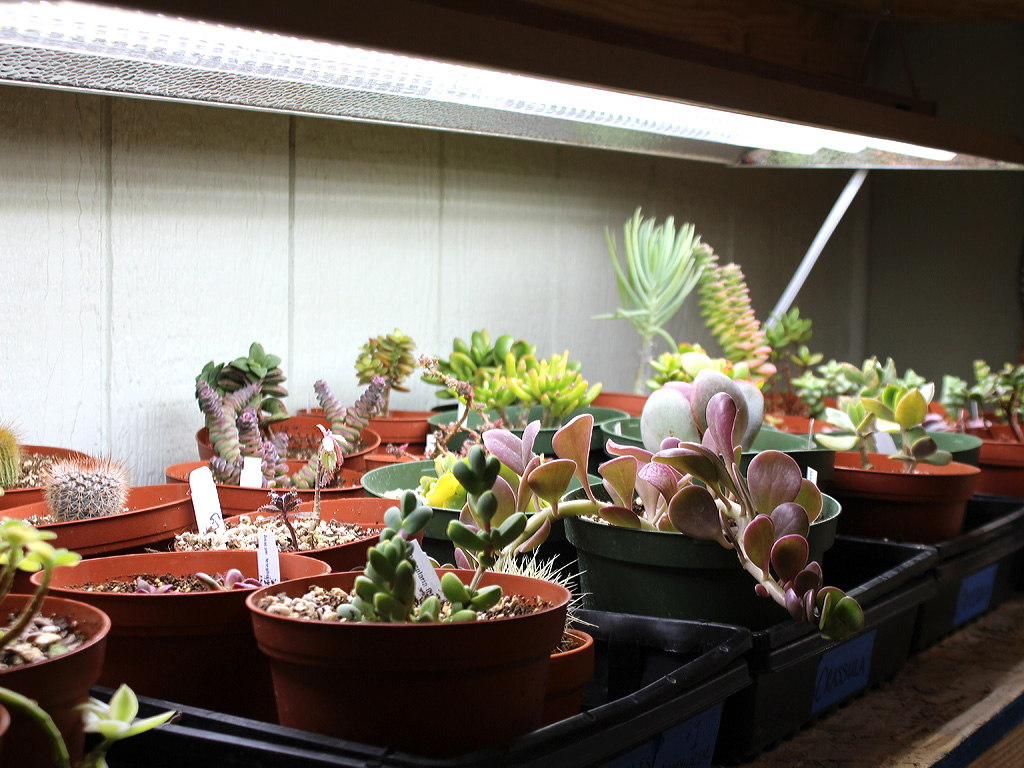
When your windows simply can’t deliver enough natural light — whether due to apartment orientation, seasonal changes, or room layout — a grow light bridges the gap completely. Modern LED grow lights have made this easier and more affordable than ever, and for serious indoor gardeners, they’re not a backup plan. They’re a core part of the setup. For more insights on indoor plant lighting, check out Indoor Plant Lighting 101.
When to Switch to a Grow Light
The clearest signal is etiolation — that tell-tale stretching and reaching behavior that means your succulent is starving for light. But don’t wait until things get desperate. If you’re placing succulents in a north-facing room, a basement, or an office with only artificial lighting, start with a grow light from day one rather than trying to rescue a plant that’s already struggling. Prevention is far more effective than correction when it comes to light deprivation in succulents. For more inspiration, consider exploring urban balcony garden kits to transform small spaces into thriving green areas.
How Far to Place a Grow Light From Your Succulents
Distance matters enormously with grow lights. Most full-spectrum LED grow lights designed for succulents and cacti should be positioned 6 to 12 inches above the plant canopy for effective light delivery. Too close and you risk light burn — the artificial equivalent of sunburn. Too far and the light intensity drops off sharply, losing most of its effectiveness. Always check the manufacturer’s specific recommendation for the model you’re using, as output varies significantly between products. For those interested in creating a sustainable gardening environment, consider exploring DIY eco-friendly garden ideas.
How Many Hours of Grow Light Do Succulents Need Per Day
Aim for 12 to 16 hours of grow light exposure per day when using artificial lighting as the primary light source for your succulents. If you’re supplementing natural light from a window, 6 to 8 hours of grow light on top of available daylight is usually sufficient. Using a simple plug-in timer takes all the guesswork out of this — set it and forget it, and your succulents get consistent light every single day without you having to think about it.
Temperature and Light: How They Work Together for Succulents
Temperature & Light Interaction Guide:
🌡 60°F–80°F + bright light: Ideal growing conditions — compact growth, vibrant color
🌡 Below 40°F + any light: Growth stops, risk of frost damage or death
☀ Above 90°F + intense direct sun: Risk of heat stress and sunburn, especially through glass
🌌 55°F–60°F + bright light: Acceptable — slower growth but plant remains healthy
🌊 Any temp + no light: Rapid decline regardless of other care conditions
Light and temperature are deeply interconnected for succulents. In their native desert habitats, succulents experience intense light alongside high daytime temperatures and cooler nights — a cycle that drives healthy growth, triggers color changes, and regulates their water usage. Indoors, replicating this rhythm as closely as possible is what separates thriving plants from ones that merely survive. For more detailed insights, check out this indoor plant lighting guide.
One often-overlooked issue is window glass in winter. While a south-facing window provides great light in cold months, the glass itself can get extremely cold and create a frigid microclimate right where your succulents are sitting. Leaves touching cold glass can sustain frost damage even when the rest of the room feels warm. Keep a small gap between your plants and the windowpane during winter months. For those interested in maximizing their plant space, consider exploring urban balcony garden kits for small space transformations.
Conversely, summer sun through glass — especially south or west-facing windows — can amplify heat to levels that stress even heat-tolerant succulents. If you notice your plants looking wilted or washed out during hot summer afternoons despite getting plenty of light, the issue may be excessive heat rather than too much or too little light. A sheer curtain can filter the intensity without dramatically reducing the light duration.
The Ideal Temperature Range: 60°F to 80°F
Most indoor succulents perform best when temperatures stay consistently between 60°F and 80°F. This range mimics the comfortable daytime warmth of their native environments while staying well within what most homes naturally maintain year-round. Within this range, combined with adequate light, succulents will grow steadily, hold their color, and stay compact.
Slight dips at night — down to around 55°F — are not only tolerable but can actually be beneficial. Cooler nighttime temperatures mimic desert conditions and can intensify the stress-coloring that makes many succulents turn vivid shades of red, purple, and orange. If you want more colorful succulents, a bright window paired with slightly cooler overnight temps is one of the most effective natural tricks available. For more tips, check out succulent care tips for beginners.
What to Do When Temperatures Drop Below 40°F
At 40°F and below, most succulents enter a danger zone. Cell damage from near-freezing temperatures can occur quickly, and frost will kill the majority of common indoor succulent varieties outright. If you move your succulents outdoors during summer — which is a great way to give them a light boost — make it a firm rule to bring them back inside before nighttime temperatures consistently drop below 40°F in autumn. Don’t wait for the first frost warning. By then, the damage may already be done.
Succulent Ambiance Ideas That Actually Work Indoors
“Indoor Succulent Garden …” from bloomscape.com and used with no modifications.
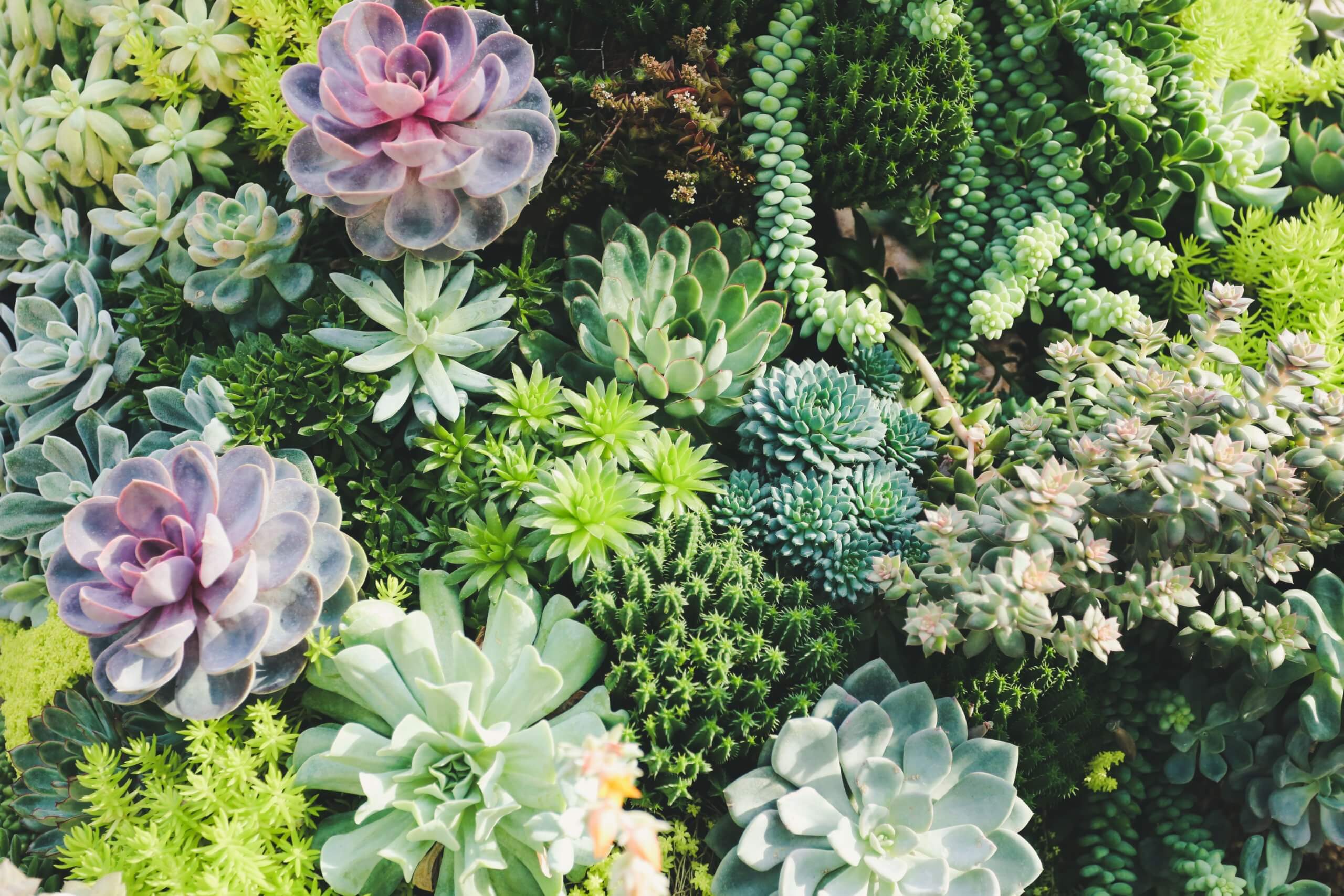
Succulents aren’t just plants — they’re living décor. With the right light setup and a little intentional arrangement, they can completely transform the feel of a room, adding texture, color, and a sense of calm that few other plants can match indoors.
Windowsill Arrangements That Double as Decor
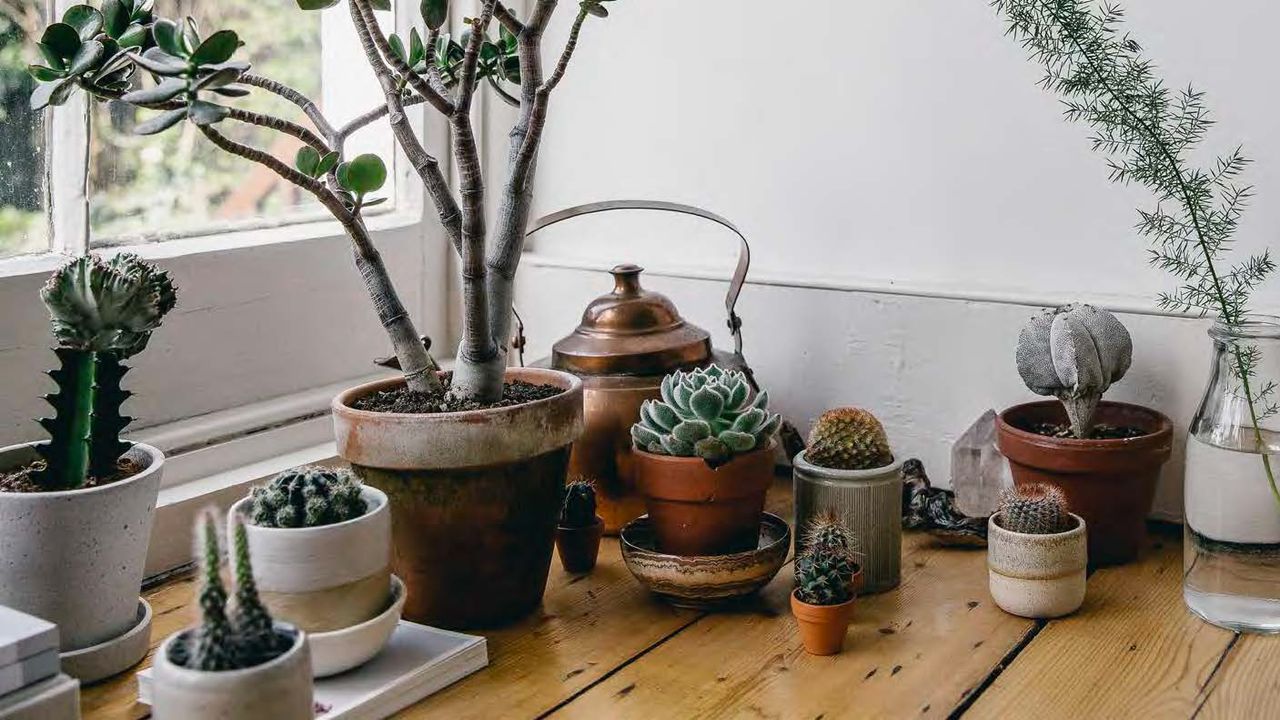
A south-facing windowsill is prime real estate in any home, and succulents make the most of every inch. Line up a mix of rosette-shaped Echeverias, compact Haworthias, and a trailing String of Pearls in a small hanging planter just above, and you’ve instantly created a layered, living window display that gets better with every season. Use terracotta pots in varying sizes for a warm, earthy aesthetic, or go with white ceramic containers for a cleaner, modern look.
The key to a windowsill arrangement that looks intentional rather than cluttered is working in odd numbers — three or five plants grouped together almost always looks more natural than two or four. Vary the heights by placing taller varieties like Aloe vera or Euphorbia tirucalli at the back, mid-height rosettes in the center, and low trailing varieties at the front or edges. This creates depth and draws the eye naturally across the whole arrangement.
How to Use Grow Lights to Create a Cozy Indoor Garden Atmosphere
Grow lights have a reputation for being purely functional — and the harsh purple-pink glow of older HPS and blurple LED units did nothing to help that image. But modern full-spectrum LED grow lights, like the Barrina T5 Full Spectrum LED Grow Light or the Spider Farmer SF series, emit a warm white light that looks completely natural and actually enhances the ambiance of a room rather than clashing with it. Position a warm-spectrum grow light above a shelf of mixed succulents in an otherwise dim corner, and the result feels like a softly lit indoor garden nook rather than a science experiment. For those with limited space, consider exploring urban balcony garden kits to further transform your indoor garden atmosphere.
For a truly cozy setup, mount grow light strips underneath floating shelves and arrange your succulents on the shelf below each light strip. The downward-facing warm light pools gently over the plants and creates a layered, atmospheric glow — especially striking in the evening. It functions beautifully as both a plant care system and accent lighting in living rooms, home offices, or reading corners.
Grouping Succulents by Light Needs for a Stylish, Functional Display
One of the smartest things you can do as an indoor succulent grower is cluster plants with similar light requirements together. High-light lovers like Echeveria, Sedum Donkey’s Tail, and Aloe go near your brightest south-facing window. Medium-light varieties like String of Pearls and Gasteria sit a foot or two further back or near an east-facing window. Shade-tolerant Haworthias fill in the spots that don’t get direct sun at all. Beyond the practical benefits, grouping by light zones naturally creates visually cohesive sections throughout your space — each area tells its own botanical story.
The Right Light Setup Means Healthier, Better-Looking Succulents
Getting light right isn’t complicated, but it does require paying attention. Once you understand what your specific plants need and match them to the right window or grow light setup, you’ll notice the difference within weeks — tighter growth, more vibrant color, and plants that actually look the way they’re supposed to.
| Succulent Variety | Light Requirement | Best Window | Grow Light Needed? | Ideal Temp Range |
|---|---|---|---|---|
| Echeveria | Bright direct, 6+ hrs | South / Southwest | Yes, if no south window | 60°F – 80°F |
| Haworthia attenuata | Bright indirect, 2–4 hrs | East / North | Optional | 60°F – 80°F |
| Senecio String of Pearls | Bright indirect, 4–6 hrs | East / South (set back) | If north-facing only | 65°F – 80°F |
| Sedum Donkey’s Tail | Bright direct, 4–6 hrs | South / East | Yes, in low-light rooms | 60°F – 75°F |
| Aloe Vera | Bright direct, 6+ hrs | South / Southwest | Yes, if no south window | 55°F – 80°F |
| Gasteria | Low to medium indirect | East / North | Helpful in dark rooms | 60°F – 75°F |
Use this table as your go-to placement guide whenever you bring a new succulent home. Matching the plant to the right window from the start eliminates most of the common problems — etiolation, sunburn, and slow decline — before they ever have a chance to develop.
And remember: light is dynamic. The angle and intensity of sunlight shifts significantly between summer and winter, meaning a spot that was perfect in July may leave your succulents light-starved by November. Reassess your placement at the start of each season, and don’t hesitate to rotate plants or introduce supplemental grow light when the days get shorter. Consistency is what separates a thriving indoor succulent collection from one that constantly struggles.
Frequently Asked Questions
Here are the most common questions gardeners ask about indoor succulent lighting — answered clearly and directly.
Can succulents survive in a room with no windows?
Succulents cannot survive long-term in a completely windowless room without artificial lighting. They require light for photosynthesis, and without it, they will slowly weaken, stretch, and eventually die — no matter how carefully you water or care for them in other ways.
That said, a windowless room doesn’t have to be off-limits. A quality full-spectrum LED grow light running for 12–16 hours per day can fully replace natural sunlight for most succulent varieties. The Barrina T5 Full Spectrum Plant Light is a popular, affordable option that works well in exactly this situation. Set it on a timer, position it 6–12 inches above your plants, and a windowless space becomes a completely viable growing environment.
How do I know if my succulent is getting enough light indoors?
The clearest sign of adequate light is compact, tight growth — leaves stacked closely together with rich, saturated color. If your succulent looks stretched, pale, or is leaning dramatically toward a light source, it needs more light immediately. Healthy succulents in good light hold their shape, grow steadily, and in many cases develop intensified color at the leaf tips and edges due to mild light-induced stress, which is completely normal and desirable. For more tips on maintaining a healthy indoor garden, check out these vertical garden systems tips.
What is the best artificial light for indoor succulents?
Full-spectrum LED grow lights are the best choice for indoor succulents. They cover the complete light spectrum — including the blue wavelengths that drive compact growth and the red wavelengths that support flowering and root development — while running cool and efficiently. Look for lights with a color temperature between 5000K and 6500K for the most sun-like output.
Specific models worth considering include the Barrina T5 Full Spectrum LED Grow Light for shelving setups, the Spider Farmer SF-1000 for larger collections, and the GE Lighting BR30 Full Spectrum LED Grow Light Bulb as a simple, screw-in option that works in standard lamp fixtures. Avoid fluorescent tubes and incandescent bulbs — they don’t deliver the spectrum or intensity succulents need to stay healthy.
Can I put my succulents outside during summer to get more light?
Yes — moving succulents outdoors during summer is one of the best things you can do for them. Outdoor light intensity is dramatically higher than anything achievable through a window or even most grow lights, and the natural air circulation outdoors also reduces the risk of pests and fungal issues. Most succulents will reward a summer outdoors with faster growth, tighter form, and more vivid coloring. For those with limited outdoor space, consider exploring vertical garden systems to maximize your gardening area.
The critical step is acclimatization. Don’t move a plant that’s been living in a dim indoor spot directly into full outdoor sun — the shock will cause severe sunburn within hours. Instead, start with a shaded outdoor spot — under a patio cover or in dappled shade — for the first week, then gradually move it into more direct sun over 2–3 weeks as it adjusts.
When autumn arrives and nighttime temperatures start approaching 40°F consistently, bring them back inside. Don’t wait for frost warnings — by that point, cold damage may already have occurred. Check nighttime forecasts regularly from late September onward and err on the side of bringing them in earlier rather than later.
Do succulents need direct sunlight or is indirect light enough?
It depends entirely on the variety. High-light succulents like Echeveria, Aloe vera, and Sedum Donkey’s Tail genuinely need several hours of direct sunlight — where the sun’s rays physically touch the leaves — to maintain their compact shape and vivid color. Bright indirect light alone won’t cut it for these varieties long-term. For those with limited space, consider exploring urban balcony garden kits to maximize sunlight exposure.
However, shade-tolerant varieties like Haworthia, Gasteria, and some Aloe hybrids do perfectly well in bright indirect light and can actually suffer from too much intense direct sun. The leaf structure of these plants — often featuring translucent windows or deep green pigmentation — is specifically adapted to capture and use lower light levels efficiently.
As a general rule: if a succulent has plump, pale green or colorful leaves with a waxy coating, it likely wants direct sun. If it has darker, thicker, or more textured leaves, it’s probably more tolerant of indirect conditions. When in doubt, start with bright indirect light and observe how the plant responds over 2–4 weeks before adjusting placement.