- Low-pollen plants like orchids, Shasta daisies, and lavender let you garden without triggering allergies — and they’re just as visually stunning as high-pollen varieties.
- The key difference between allergy-safe and allergy-triggering plants comes down to how they’re pollinated — insect-pollinated plants keep pollen sticky and contained, while wind-pollinated ones release fine particles into the air.
- Urban gardens face a unique pollen challenge — confined spaces, limited airflow, and proximity to windows and seating areas mean pollen concentrations can build up faster than in open landscapes.
- Container gardening is one of the most effective tools for controlling your exposure to pollen in a small urban space.
- Certain common garden favorites are serious pollen offenders — and you’ll want to know which ones to avoid before your next trip to the nursery.
Your garden should be a place you actually want to spend time in — not a place that sends you running for antihistamines.
For allergy sufferers, picking the wrong plants can turn a relaxing balcony or rooftop garden into a seasonal nightmare. But here’s the thing: building a beautiful, colorful, thriving urban garden without high pollen levels is completely achievable. It just comes down to knowing which plants to choose and how to arrange them. Urban gardening specialists have long recognized that smart plant selection is the foundation of any allergy-friendly outdoor space.
Why Pollen Levels Matter More in Urban Gardens
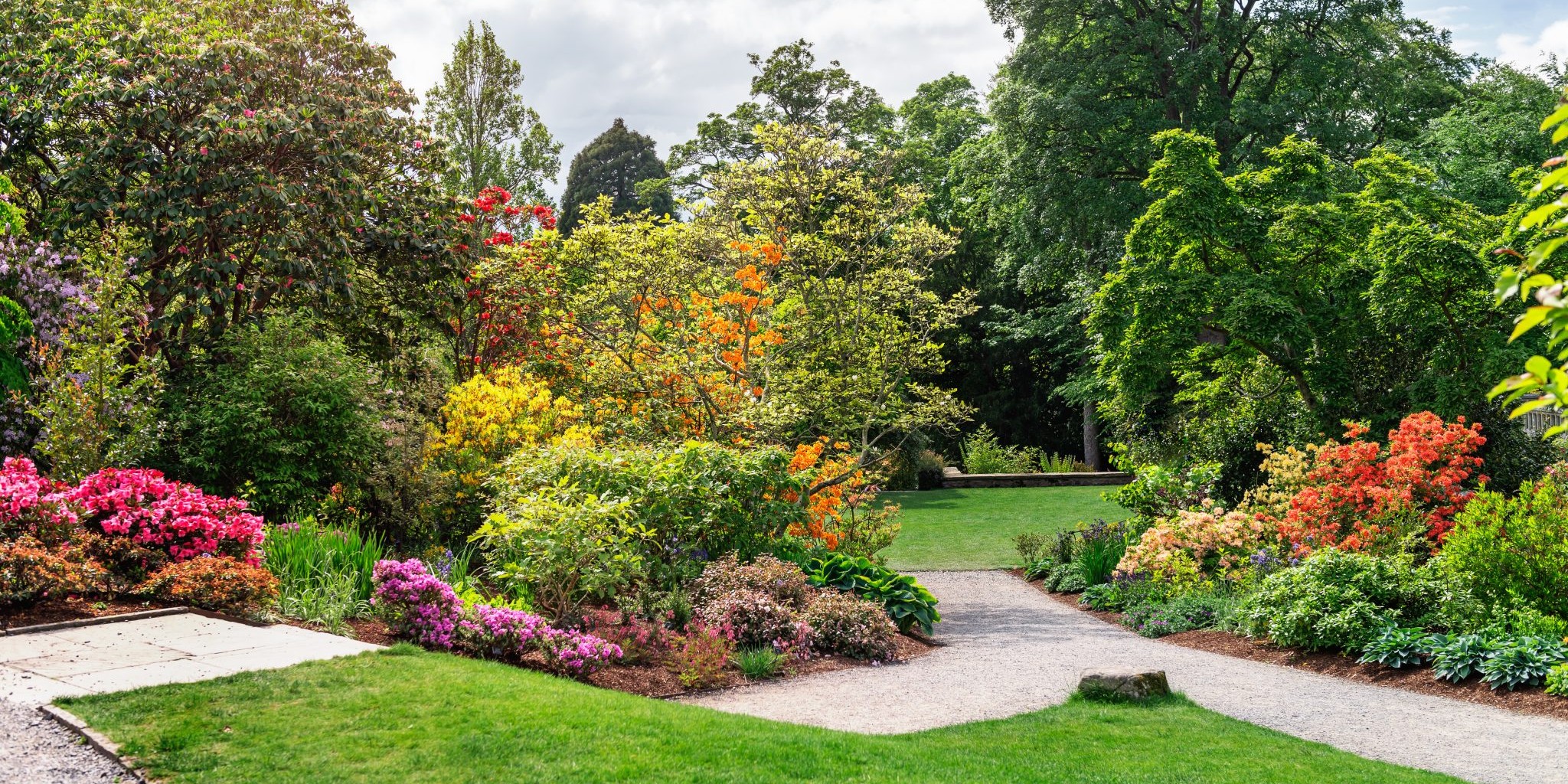
“Pollen Count & Pollen Forecast – United …” from unitedallergyservices.com and used with no modifications.
Open countryside gardens have one major advantage over urban ones: airflow. Pollen released in a wide open field disperses quickly, diluting into the broader atmosphere. In a rooftop garden, a walled courtyard, or a small balcony, that same pollen has nowhere to go. It recirculates, accumulates on surfaces, and gets pushed right back into your breathing zone every time the wind shifts.
Urban gardeners also tend to spend time in close proximity to their plants — trimming, watering, rearranging pots. That close contact with high-pollen plants significantly increases exposure compared to a casual walk through a park.
How Airborne Pollen Spreads in Confined Urban Spaces
Wind-pollinated plants release enormous quantities of ultra-fine pollen grains designed to travel. In a tight urban space, these particles bounce off walls, settle on furniture, and drift through open windows. A single ragweed plant, for example, can release up to one billion pollen grains in a single season — and in a confined courtyard garden, that’s a serious problem. Even low wind speeds are enough to keep fine pollen particles suspended in the air for hours at a time.
The Difference Between Wind-Pollinated and Insect-Pollinated Plants
This distinction is the single most important concept in allergy-friendly gardening. Wind-pollinated plants — grasses, many trees, and some flowers — produce lightweight, dry, airborne pollen in massive quantities because most of it misses its target. Insect-pollinated plants do the opposite: they produce heavier, stickier pollen that clings to bees and butterflies rather than floating into your sinuses. Brightly colored, fragrant flowers are almost always insect-pollinated, which is why a garden full of roses and lavender tends to be far gentler on allergies than one full of ornamental grasses.
Which Common Garden Plants Produce the Most Pollen
Before building your low-pollen garden, it helps to know which plants to avoid. Some of the worst offenders are genuinely popular choices that show up in garden centers everywhere.
The highest-pollen culprits to avoid or minimize in urban gardens include plants that are notorious for triggering allergies. For a comprehensive guide on creating a low-pollen oasis, you can explore more in this blog on allergy relief gardens.
- Ryegrass and Bermuda grass — among the most allergenic plants on earth, releasing fine airborne pollen from late spring through summer
- Traditional sunflowers (Helianthus annuus) — heavy pollen producers, though pollenless cultivars exist
- Chrysanthemums — widely planted but consistently rated high on allergy indexes
- Wisteria — a visually dramatic climber that releases significant airborne pollen
- Chamomile (wild varieties) — despite its gentle reputation, wild chamomile is a known allergen for many people
- Juniper and cypress trees — if you’re near any in neighboring properties, the pollen drift alone can cause issues
Replacing even a few of these with low-pollen alternatives makes a measurable difference in how comfortable your garden feels during peak allergy season.
The Best Low-Pollen Flowers for Urban Gardens
“Allergy Friendly Garden Flowers With …” from thursd.com and used with no modifications.
The good news is that the most visually rewarding garden plants tend to be insect-pollinated — meaning they’re naturally lower in airborne pollen. From cascading orchids on a windowsill to neat rows of Shasta daisies in a raised bed, you have plenty of genuinely gorgeous options to work with.
1. Orchids: Near Zero Pollen, Maximum Visual Impact
Orchids produce pollen in compact, waxy clusters called pollinia, which stick together rather than dispersing into the air. For practical purposes, this makes them essentially pollen-free from an allergy standpoint. Phalaenopsis orchids — the arching, moth-like varieties you’ll see in most garden centers — are ideal for balconies and indoor-adjacent spaces. They thrive in indirect light and need watering only once every one to two weeks, making them one of the lowest-maintenance, highest-impact plants for urban gardeners with allergies.
2. Shasta Daisy: A Cheerful Bloom With Minimal Airborne Pollen
The Shasta Daisy (Leucanthemum x superbum) gives you the classic white-and-yellow daisy look with dramatically less airborne pollen than wild daisy varieties. It’s a hybrid, bred specifically for garden use, and its pollen is heavy enough that it doesn’t easily become airborne. Shasta Daisies grow well in containers and raised beds, reaching about 2 to 3 feet in height. They bloom from early summer through fall, giving you a long season of color without the allergy payoff.
3. Sunbeam Sunflower: The Low-Pollen Alternative to Traditional Sunflowers
Quick Comparison: Traditional Sunflower vs. Sunbeam Sunflower
Feature Traditional Sunflower Sunbeam Sunflower Pollen Level High Near Zero (pollenless) Petal Color Yellow Bright Yellow Height 5 to 12 feet 4 to 5 feet Container-Friendly Difficult Yes, in large containers Bloom Season Summer to early fall Summer to early fall
The Sunbeam Sunflower (Helianthus annuus ‘Sunbeam’) is a pollenless cultivar developed specifically for allergy-conscious gardeners and the cut flower industry — because pollen stains on tablecloths are as unwelcome as pollen in your sinuses. It produces the same bold, cheerful blooms as a standard sunflower but with no viable pollen whatsoever.
For urban gardeners, the Sunbeam’s more manageable height of 4 to 5 feet makes it workable in large containers or raised beds on rooftops and terraces. It needs full sun — at least 6 hours per day — and regular watering during dry spells, but it’s otherwise unfussy and grows quickly from seed.
One practical note: even pollenless sunflowers still attract bees and other pollinators, which is a genuine benefit for any urban garden ecosystem. The bees are drawn by the flower’s nectar rather than pollen, so you get the ecological value without the allergen load.
4. Lavender: Low Pollen and a Natural Bee Attractor
Lavender (Lavandula angustifolia) sits in an interesting middle ground — it does produce some pollen, but it’s insect-pollinated, meaning the pollen is heavy and sticky rather than airborne. Most allergy sufferers tolerate lavender well, and the Asthma and Allergy Foundation of America recognizes insect-pollinated plants like lavender as significantly safer choices than wind-pollinated alternatives. Beyond the allergy angle, lavender is one of the hardest-working plants you can put in an urban garden: it repels mosquitoes, attracts bees and butterflies, and releases a calming fragrance that genuinely improves the feel of an outdoor space.
5. Chamomile: Gentle on Allergies and Easy to Grow in Containers
Roman Chamomile (Chamaemelum nobile) is the variety to reach for if you want the delicate, apple-scented blooms without the allergy risk. Unlike its wild cousin, Roman Chamomile produces minimal airborne pollen and is generally well-tolerated by allergy sufferers. It’s the cultivated, double-flowered varieties in particular — where petals replace the pollen-bearing center — that are the safest picks.
In an urban setting, chamomile thrives in shallow containers, making it perfect for windowsills, balcony railings, and small raised beds. It prefers full sun and well-drained soil, grows to about 12 inches tall, and spills attractively over the edges of pots. As a bonus, the dried flowers are genuinely useful — steep them for tea, add them to a bath, or simply enjoy the scent as you brush past the plant on your balcony.
One important distinction worth repeating: avoid planting Anthemis cotula, commonly called stinking chamomile or mayweed. It’s a wild variety that produces significantly more airborne pollen and is a known irritant for allergy sufferers. Stick with Roman Chamomile or the German Chamomile variety Matricaria recutita for the safest results.
The Best Low-Pollen Foliage and Herbs for Urban Spaces
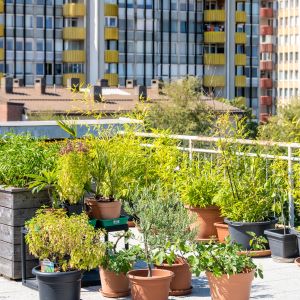
“Best Perennials for Urban Gardens …” from naturehills.com and used with no modifications.
Flowers aren’t the only way to build a rich, layered urban garden. Foliage plants and herbs bring texture, fragrance, and practical value — and many of them produce so little pollen that they’re essentially invisible to your immune system. These are the plants that fill in the gaps between your flowering specimens and make a garden feel lush and complete rather than sparse.
Mint: A Practical, Fragrant, and Allergy-Friendly Herb
Mint (Mentha spp.) is one of the most useful plants you can grow in an urban garden, and it produces very low levels of airborne pollen. It’s technically insect-pollinated, which means whatever pollen it does produce stays sticky and contained rather than drifting into the air. Peppermint (Mentha x piperita) and spearmint (Mentha spicata) are the two most practical choices for container growing — both thrive in pots, prefer partial to full sun, and need consistent moisture to stay productive.
The one well-known rule with mint: always grow it in containers. It spreads aggressively through underground runners and will take over any open garden bed within a single growing season. In a pot, that aggressive growth works in your favor — you get a dense, fragrant, fast-growing plant that requires almost no effort. Harvest regularly by pinching stems just above a leaf node to keep the plant compact and encourage fresh growth.
Succulents Like Aloe Vera and Echeveria: Texture Without the Pollen
Succulents are among the most allergy-safe plants you can choose, full stop. Aloe Vera (Aloe barbadensis miller) and Echeveria species rarely flower in typical urban container conditions, and when they do, their pollen is heavy, waxy, and insect-dependent — nothing that becomes airborne. What they bring to a garden is architectural texture: the geometric rosettes of Echeveria in terracotta pots, or the bold upright blades of a mature Aloe Vera, create visual structure that anchors a planting scheme.
Both handle the harsh conditions of urban gardening particularly well — reflected heat from concrete and brick, irregular watering, and limited root space. Aloe Vera is also genuinely functional; the gel inside its leaves is a proven treatment for minor burns and skin irritation, making it one of the few garden plants that earns its place twice over.
Cacti: Hardy, Low-Maintenance, and Completely Allergy-Safe
Cacti produce pollen, but they’re insect and bird-pollinated, which means their pollen never becomes airborne in any meaningful quantity. For rooftop gardens and sun-drenched urban terraces, columnar cacti like Cereus repandus or clustering varieties like Echinopsis chamaecereus — the peanut cactus — create striking vertical interest with almost zero maintenance and zero allergy risk. They need well-draining cactus mix, minimal watering, and as much direct sun as your space can offer.
How to Design an Allergy-Friendly Urban Garden
Good plant selection is only half the equation. Where you place your plants, how you arrange your outdoor space, and what you use to cover the ground all have a real impact on how much pollen you’re exposed to on a daily basis. A thoughtfully designed garden keeps pollen-producing plants at a safe distance from the areas where you spend the most time.
Think of your urban garden in zones. The area closest to your windows, doors, and seating should contain exclusively low-pollen or pollen-free plants. Mid-distance zones can accommodate plants with slightly higher pollen levels, provided they’re insect-pollinated. Any high-pollen plants — if you choose to include them at all — should live at the furthest edge of your space, ideally downwind from where you sit. For more guidance, consider exploring crafting your low-pollen paradise for allergy relief.
Layering your garden vertically also helps. Tall plants placed at the windward edge of a rooftop or balcony garden can act as a partial barrier, interrupting airflow before it carries pollen from neighboring properties into your space. This doesn’t eliminate the problem, but it meaningfully reduces the volume of incoming airborne pollen on high-count days.
Urban Garden Pollen Zone Planner
Zone Distance From Seating/Windows Recommended Plants Pollen Risk Zone 1 (Immediate) 0 to 3 feet Orchids, Succulents, Aloe Vera, Mint Minimal Zone 2 (Mid-Range) 3 to 8 feet Lavender, Shasta Daisy, Roman Chamomile, Echeveria Low Zone 3 (Perimeter) 8+ feet Sunbeam Sunflower, ornamental grasses (low-pollen varieties only) Low to Moderate Avoid Entirely Any distance Ryegrass, Chrysanthemums, Wisteria, Wild Chamomile High
Use Hardscaping to Create Pollen-Free Zones
Replacing sections of your garden with hardscaping — pavers, gravel, decking, or stone — immediately eliminates pollen sources in those areas. A well-placed seating area surrounded by pavers rather than planted beds gives you a genuinely pollen-free zone where you can relax even on high-count days. Gravel mulch in particular is worth using around container plants, as it suppresses any weeds that might otherwise contribute their own pollen to the space.
Replace Traditional Grass With Low-Pollen Ground Covers Like Ivy or Moss
If your urban garden includes any ground-level planted areas, traditional grass is one of the worst choices you can make from an allergy standpoint. Grass pollen — particularly from ryegrass and Bermuda grass — is among the most allergenic substance in the natural world, and even a small patch of lawn in a walled urban garden can produce enough airborne pollen to trigger symptoms on warm, dry days.
English Ivy (Hedera helix) makes a dense, attractive alternative that spreads to fill ground-level spaces without producing meaningful airborne pollen. Irish Moss (Sagina subulata) is another excellent option for smaller areas — it forms a tight, bright green carpet that handles light foot traffic and stays low enough to use between pavers and stepping stones.
For shadier urban spaces where grass struggles anyway, consider Creeping Jenny (Lysimachia nummularia), which produces cheerful yellow flowers on trailing stems and spreads efficiently across moist, shaded ground. All three of these ground covers are insect-pollinated and represent a genuine upgrade over traditional lawn grass in every way that matters for allergy sufferers.
Position High-Pollen Plants Away From Windows and Seating Areas
Even if you commit to a predominantly low-pollen garden, you may have existing plants you’d rather not remove, or neighboring plants that drift pollen into your space. The practical solution is distance and positioning. Pollen concentration drops significantly with distance from the source — placing any moderate-pollen plants at the far edge of a balcony or terrace, at least 8 to 10 feet from where you sit, reduces your direct exposure without requiring you to remove the plant entirely. Keeping windows and doors on the windward side of your space closed on high pollen days adds another practical layer of protection.
Container Gardening: The Smartest Tool for Controlling Pollen Exposure
Container gardening gives urban gardeners something that traditional garden beds simply cannot: mobility. If a plant turns out to produce more pollen than expected, or if your allergy symptoms flare on a particular day, you can physically move the container away from your seating area or inside entirely. That level of control is genuinely valuable when managing a space designed around allergen reduction.
Containers also restrict root spread, which keeps plants more compact and — in the case of aggressive spreaders like mint — prevents them from taking over the space. Smaller plant volume generally means lower pollen output, which is another quiet benefit of container growing that rarely gets mentioned.
For the most allergy-friendly container setup, use high-quality potting mix rather than garden soil, as outdoor soil can harbor mold spores — another common allergen. Terra cotta pots are preferable to plastic in warm climates because they allow moisture to evaporate through the walls, reducing the damp conditions that encourage mold growth at the soil surface.
Maintenance Tips That Keep Pollen Levels Low
Even the most carefully chosen plant selection can become an allergy problem without the right maintenance habits. How and when you tend your garden directly influences how much pollen becomes airborne, how long it stays suspended, and how frequently it accumulates in the areas where you spend your time.
Water Early in the Morning to Suppress Airborne Pollen
- Water your garden between 6:00 AM and 10:00 AM — before pollen counts peak for the day
- Use a drip irrigation system or watering can directed at the soil, not overhead sprinklers that disturb foliage and release trapped pollen
- After watering, lightly mist hard surfaces like pavers and railings to wash settled pollen away before it becomes airborne again
- On high pollen count days, avoid watering altogether until early evening when pollen levels naturally drop
Morning watering does two useful things at once: it gives plants the moisture they need before heat stress peaks, and it weighs down any pollen that has settled on leaves and soil overnight, preventing it from becoming airborne as temperatures rise. It’s one of the simplest, most consistently effective habits you can build into your urban garden routine.
Overhead watering is the one method to avoid specifically from a pollen standpoint. Spraying water through the canopy of a plant disturbs leaves and flower heads, releasing stored pollen in bursts. A long-spouted watering can or a drip line directed at the base of each plant keeps moisture where it needs to go without agitating the parts of the plant that produce pollen.
If you’re managing a rooftop or balcony garden with multiple containers, a simple soaker hose system threaded between pots delivers water directly to soil level with minimal disturbance. Products like the Melnor Flat Soaker Garden Hose work efficiently in container setups and can be connected to a basic timer to automate early morning watering without you having to be outside during the highest-pollen period of the day.
Mulch Your Garden Beds to Stop Pollen From Becoming Airborne
Pollen that lands on bare soil is easily disturbed — by wind, foot traffic, watering, or even the movement of birds and insects through the garden. A 2 to 3 inch layer of mulch over any open soil creates a physical barrier that traps settled pollen and holds it in place, significantly reducing the amount that re-enters the air on warm, breezy days.
For urban gardens, fine bark mulch or decorative gravel are the two most practical choices. Fine bark mulch is lightweight enough to use in raised beds and larger containers, breaks down slowly, and adds organic matter to the soil over time. Decorative gravel — pea gravel or crushed granite — works better around the base of containers on rooftops and terraces, where organic mulch can attract insects or create drainage issues.
One material to avoid in allergy-sensitive gardens is straw mulch. While it’s popular in vegetable gardens, straw can harbor mold spores and occasionally contains seed heads from grass species — both of which are significant allergen sources. Stick with inorganic or bark-based mulch options for the cleanest results.
Refresh your mulch layer at the start of each growing season. Over winter, organic mulch compresses and thins, reducing its effectiveness as a pollen barrier just as spring — the highest pollen season — begins. A fresh top-up in early spring takes less than an hour and pays dividends throughout the entire allergy season.
Mulch Comparison for Allergy-Friendly Urban Gardens
Mulch Type Best For Pollen Trapping Allergy Risk Lifespan Fine Bark Mulch Raised beds, large containers Excellent Very Low 1 to 2 seasons Pea Gravel Terrace containers, pathways Good None Indefinite Crushed Granite Rooftop gardens, dry climates Good None Indefinite Straw Mulch Not recommended for allergy gardens Poor High (mold, grass seed) 1 season Shredded Leaves Shaded beds only Moderate Low to Moderate 1 season
Prune Regularly to Reduce Pollen-Producing Growth
Deadheading — removing spent flower heads before they fully mature — is one of the most direct ways to reduce pollen output from flowering plants. A flower that has finished blooming but hasn’t been removed will often continue releasing residual pollen as it dries and degrades. Removing it promptly cuts off that source entirely. For plants like Shasta Daisies and lavender, regular deadheading also encourages a second flush of blooms, so you get more color and less pollen at the same time. For additional strategies, check out this guide on low-pollen plants for your garden.
When pruning, always wear a close-fitting face mask rated at least N95 and do your pruning in the early morning or after light rain, when pollen counts are at their lowest. Dispose of clippings in a sealed bag rather than a compost pile — compost bins in urban spaces can become concentrated pollen and mold sources if plant material is added without care.
Low-Pollen Plants Are the Smartest Choice for Any Urban Gardener With Allergies
Building an allergy-friendly urban garden isn’t about sacrificing beauty or variety — it’s about making smarter choices at every stage, from plant selection through to daily maintenance. The plants covered in this guide — orchids, Shasta daisies, Sunbeam sunflowers, lavender, Roman chamomile, mint, succulents, and cacti — give you an extraordinarily wide palette to work with, and none of them require you to compromise on the visual or sensory experience of gardening.
The design principles matter just as much as the plant list. Zoning your garden so pollen-free plants sit closest to where you live and breathe, replacing grass with ivy or moss, using containers for mobility and control, and maintaining simple morning watering and mulching routines — together, these habits create an environment where your immune system isn’t constantly on the defensive.
Allergy season doesn’t have to mean staying indoors. With the right plants and the right approach, your urban garden can be the most comfortable place you spend time in from spring through fall — and that’s exactly what a garden should be. For ideas on how to create a low-pollen paradise, explore various plant options that won’t trigger allergies.
Low-Pollen Urban Garden Plant Quick Reference
Plant Type Pollen Level Container-Friendly Light Requirement Phalaenopsis Orchid Flower Near Zero Yes Indirect light Shasta Daisy Flower Very Low Yes Full sun Sunbeam Sunflower Flower None (pollenless) Yes (large pot) Full sun Lavender Herb/Flower Low Yes Full sun Roman Chamomile Herb/Flower Very Low Yes Full sun Peppermint Herb Very Low Yes (essential) Partial to full sun Aloe Vera Succulent Near Zero Yes Full sun Echeveria Succulent Near Zero Yes Full sun Cereus repandus Cactus Very Low Yes (large pot) Full sun
Frequently Asked Questions
Urban gardeners dealing with allergies tend to have very specific questions about which plants are truly safe and which popular gardening advice actually holds up. The answers below are direct and practical — no guesswork, no vague reassurances.
If you’re building your first allergy-friendly garden or overhauling an existing one, these are the questions worth getting right before you visit the nursery.
What Makes a Plant Low-Pollen or Allergy-Friendly?
A plant is considered low-pollen or allergy-friendly when it produces either very small quantities of pollen, or pollen that is too heavy and sticky to become airborne. Insect-pollinated plants fall into this category — their pollen is designed to cling to visiting bees and butterflies rather than drift through the air. Wind-pollinated plants are the opposite: they produce enormous quantities of fine, lightweight pollen specifically designed for long-distance air travel, which is what makes them such potent allergens.
Can You Have a Colorful Garden Without High Pollen Levels?
Absolutely. Some of the most visually striking garden plants — orchids, Shasta daisies, lavender, pollenless sunflower varieties, and roses — are insect-pollinated and produce minimal airborne pollen. The widespread assumption that colorful gardens are automatically high-pollen gardens is simply incorrect. Bright colors and strong fragrances are traits that attract insects, not wind, which is precisely why they tend to be safer for allergy sufferers. A thoughtfully planted urban garden can be genuinely spectacular without triggering a single symptom. For more information, explore low-pollen plants that are perfect for your garden.
Are All Succulents Safe for Allergy Sufferers?
The vast majority of succulents are safe, particularly the species most commonly grown in urban gardens — Aloe Vera, Echeveria, Haworthia, and Sedum. These plants rarely flower in container conditions, and when they do, their pollen is waxy and insect-dependent rather than airborne. The one exception worth noting is that some people have a contact allergy to the latex sap in certain Euphorbia species, which are technically succulents. If you have sensitive skin, wear gloves when handling Euphorbias and avoid getting the white milky sap on exposed skin.
Does Container Gardening Actually Reduce Pollen Exposure?
Yes, in several meaningful ways. Container-grown plants are generally more compact than their in-ground equivalents, which means lower overall pollen output per plant. Containers can be physically moved away from seating areas or indoors during peak pollen days, giving you direct control over your exposure in a way that fixed garden beds simply don’t allow. They also restrict root spread, which keeps aggressive plants like mint contained and manageable without the sprawling growth that would otherwise increase pollen production.
The secondary benefit is soil quality control. Using fresh, high-quality potting mix in containers eliminates the mold spores and weed seeds that exist in outdoor garden soil — both of which are independent allergen sources that often get overlooked when gardeners focus exclusively on plant pollen.
Which Common Garden Plants Should Allergy Sufferers Avoid Entirely?
The plants most consistently problematic for allergy sufferers in urban garden settings are those that are wind-pollinated, produce large quantities of fine pollen, or have a documented history of triggering allergic responses. Ryegrass (Lolium perenne) and Bermuda grass (Cynodon dactylon) top the list — even a small patch of either in a walled garden can generate significant airborne pollen on warm, dry days. Traditional chrysanthemums are widely planted but consistently rate highly on allergy indexes, as do many ornamental grasses marketed for their feathery plumes.
Wisteria is a particular problem in urban gardens because its vigorous growth can make it seem like a spectacular feature plant, but it releases significant airborne pollen during its spring bloom. Similarly, birch and oak trees — common in urban streetscapes — shed enormous quantities of pollen in early spring that drifts into nearby rooftop and balcony gardens. You may not be able to control what’s in neighboring properties, but you can avoid actively adding these species to your own space.
Wild chamomile varieties (Anthemis cotula), bachelor’s buttons (Centaurea cyanus), and some varieties of salvia also produce more airborne pollen than their appearance suggests. The rule of thumb is straightforward: if a plant relies on the wind rather than insects to move its pollen, it has no place in an allergy-friendly urban garden, regardless of how attractive it looks in the garden center.
When in doubt, look up a plant’s OPALS score — the Ogren Plant Allergy Scale, developed by horticulturalist Thomas Leo Ogren — which rates plants from 1 (safest) to 10 (most allergenic). Any plant scoring 1 to 3 is a safe choice for an allergy-friendly garden. Anything scoring 7 or above is best avoided entirely, particularly in the confined airspace of an urban outdoor setting.