
- DIY eco-friendly garden barriers protect your plants, soil, and local wildlife without synthetic chemicals or plastic waste.
- Living barriers like hedgerows, companion planting, and thorny shrubs can fully replace traditional fencing in many garden types.
- Natural physical barriers — from woven willow wattle to reclaimed stone — can be built cheaply or for free using locally sourced materials.
- One natural pest barrier material works surprisingly well against slugs, snails, and crawling insects — and it’s already in many kitchen cupboards.
- Choosing the right eco-friendly barrier depends on your garden type, and the wrong choice can actually limit biodiversity instead of supporting it.
Your garden already has everything it needs to defend itself — you just need to stop getting in the way.
Most gardeners reach for plastic edging, chemical sprays, or synthetic weed barriers without realizing these shortcuts quietly degrade the very soil, water, and insect life that makes a garden thrive. There’s a better way, and it starts with working alongside nature instead of against it. Whether you’re protecting a veggie patch from rabbits, defining a flower bed, or blocking wind from young seedlings, natural barriers do the job without the environmental cost.
Eco-conscious gardening doesn’t stop at composting and rainwater collection. Nature’s Path and other leaders in sustainable living have long recognized that the boundaries we create in our gardens matter just as much as what we grow inside them. The materials you choose for your garden edges, pest barriers, and living fences send a ripple effect through your entire local ecosystem.
Key Takeaways: Natural Garden Barriers That Work and Won’t Harm the Planet
Your Garden Deserves Better Than Chemical Barriers
Walk through any garden center and you’ll find rows of plastic border rolls, chemical slug pellets, and synthetic weed membranes. They’re cheap, they’re convenient, and they’re quietly causing damage you won’t see until years later. Plastic edging breaks down into microplastics that enter your soil and water supply. Metaldehyde-based slug pellets, once widely used, were banned in the UK in 2022 precisely because of the harm they caused to hedgehogs, birds, and soil invertebrates.
Quick Comparison: Chemical vs. Natural Garden Barriers
Barrier Type Cost Environmental Impact Lifespan Biodiversity Effect Plastic edging Low Microplastic pollution 3–5 years Negative Chemical slug pellets Low Kills beneficial insects and birds Single season Very negative Woven willow wattle Free–Low Fully biodegradable 3–10 years Positive Living hedgerow Low–Medium Carbon sequestering Permanent Very positive Copper tape (slugs) Low–Medium Minimal 2–4 years Neutral Stone/rock borders Free (sourced) Zero Decades Positive (habitat)
The numbers above tell a clear story. Natural barriers consistently outperform synthetic options when you factor in long-term cost, environmental health, and actual effectiveness. A well-placed hedgerow doesn’t just block wind — it sequesters carbon, shelters pollinators, and provides nesting habitat for birds. No roll of plastic edging has ever done that.
What Makes a Garden Barrier “Natural” and Eco-Friendly?
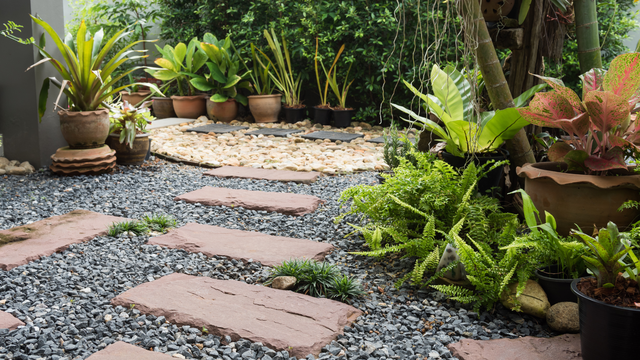
“Natural Barriers to Deter Wildlife” from www.superiorspray.com and used with no modifications.
The term “eco-friendly” gets thrown around loosely, so it’s worth being specific. A truly natural garden barrier is made from materials that biodegrade without releasing toxins, can be sourced locally or repurposed, and ideally adds something positive to the ecosystem rather than simply existing as a boundary.
That definition rules out a lot of products marketed as “green.” Bamboo garden edging sold in plastic packaging, for example, or “natural” weed barriers made with synthetic binders, don’t quite make the cut. The goal is barriers that work with your garden’s biology, not just barriers that look rustic.
The Difference Between Natural and Synthetic Barriers
Natural barriers are derived from living or once-living materials — wood, stone, plant matter, or beneficial minerals like diatomaceous earth. Synthetic barriers are manufactured from plastics, petrochemicals, or treated metals that don’t break down cleanly in a garden environment. The practical difference matters most at end-of-life: a willow wattle fence composts into your garden when it’s done. A plastic border roll goes to landfill.
Why Chemical Barriers Harm Soil, Insects, and Water Systems
Soil is not a passive growing medium — it’s a living system hosting billions of bacteria, fungi, nematodes, and invertebrates per teaspoon. Chemical barriers, including synthetic herbicide-treated weed fabrics and pesticide-laced granular borders, disrupt this system at the microbial level. Research from the Soil Association has consistently shown that synthetic chemical inputs reduce soil organic matter over time, making soil more compacted, less water-retentive, and less productive.
The damage doesn’t stop at the soil surface. Runoff from chemical garden treatments enters local waterways, where even low concentrations of common pesticides affect aquatic invertebrates and the fish that feed on them. When it rains after you’ve applied a chemical slug barrier, that chemistry moves — into your lawn, your drainage, your neighbor’s garden. For those looking to minimize such impacts, consider exploring low-pollen plants that naturally deter pests without harmful chemicals.
- Metaldehyde slug pellets were banned in the UK in 2022 due to wildlife toxicity
- Glyphosate-based weed killers have been linked to disruption of soil microbial communities
- Synthetic weed membranes fragment into microplastics within 3–5 years of outdoor use
- Pesticide runoff is one of the leading causes of freshwater invertebrate decline in urban areas
- Chemical soil sterilants used as barriers can remain active in soil for up to 3 years
The picture that emerges is one of compounding damage — each season of chemical use making it marginally harder for your garden’s natural defenses to function. Switching to natural barriers isn’t just an ethical choice; it’s the practical one for anyone who wants their garden to genuinely thrive decade after decade.
How Natural Barriers Work With Your Garden Ecosystem
Natural barriers succeed because they participate in your garden’s ecology rather than overriding it. A border of rosemary doesn’t just look beautiful — it releases volatile oils that confuse aphids and whiteflies trying to locate host plants. A dry stone wall doesn’t just define a bed edge — it provides overwintering habitat for ground beetles, which are among the most effective natural predators of slugs and vine weevil larvae. Every natural barrier pulls double or triple duty. For those interested in exploring more about urban gardening solutions, check out these urban balcony garden kits.
Plant-Based Living Barriers
Living barriers are the gold standard in eco-friendly garden boundary design. They improve with time, require no manufacturing, and contribute directly to local biodiversity. The key is choosing the right plants for the job — because a living barrier that needs constant cutting, watering, or pest management of its own defeats the purpose entirely. For those interested in sustainable gardening, consider exploring top low-pollen plants to enhance your garden’s biodiversity.
Each of the four living barrier types below serves a distinct function. Understanding what you’re actually trying to block — wind, foot traffic, pests, or animal intrusion — will help you pick the right one from the start. For those focusing on creating a garden that minimizes allergens, consider exploring low-pollen plants to complement your barriers.
1. Hedgerows: Dense Native Shrubs That Block Wind, Pests, and Foot Traffic
A mixed native hedgerow combining hawthorn (Crataegus monogyna), blackthorn (Prunus spinosa), field maple (Acer campestre), and dog rose (Rosa canina) creates one of the most effective and biodiverse garden barriers possible. Plant bare-root whips in a staggered double row at 45cm spacing between November and March for best establishment. Within three to five years, a well-managed hedgerow becomes impenetrable to most animals, blocks wind by up to 50% across a distance eight times its height, and provides habitat for over 1,500 species of insects, birds, and small mammals.
2. Companion Planting Borders: Marigolds, Lavender, and Rosemary as Pest Deterrents
Companion planting borders work through chemistry. French marigolds (Tagetes patula) release thiophenes from their roots, which suppress root-knot nematodes in the soil beneath them. Lavender’s linalool content deters aphids, whiteflies, and cabbage moths, making it exceptional as a border around brassica beds. Rosemary contains camphor and 1,8-cineole — both proven insect deterrents that work most effectively when the plant is brushed or warmed by sun. For those looking to transform small spaces, consider exploring urban balcony garden kits to incorporate these plants effectively.
Plant these in a continuous border at least 30cm wide around your vegetable beds for meaningful pest deterrence. Mixing all three gives you layered chemical defense across the growing season, since their peak volatile output occurs at different times.
3. Thorny Shrubs Like Hawthorn and Blackberry as Natural Fencing
For gardens that need serious animal exclusion — think deer, foxes, or determined neighborhood cats — thorny shrubs are genuinely hard to beat. Hawthorn can be laid (a traditional hedgelaying technique) to create a dense, interwoven barrier at ground level that even rabbits struggle to penetrate. Blackberry (Rubus fruticosus) grows rapidly and produces a productive, wildlife-rich barrier that doubles as a food source. The tradeoff is management: both plants need annual cutting back to stay dense rather than leggy.
4. Tall Grasses and Bamboo for Privacy and Wind Protection
Clump-forming ornamental grasses like miscanthus (Miscanthus sinensis ‘Malepartus’) and pampas grass reach 2–3 metres and create a soft, rustling privacy screen that also buffers wind without creating the damaging turbulence that solid fences produce. For bamboo, always choose a clumping variety such as Fargesia murielae rather than running bamboo — running varieties spread aggressively and become an ecological problem of their own. Clumping bamboo stays contained, grows to 3–4 metres, and provides year-round screening without any of the invasive risk. For more ideas, explore DIY garden fence ideas that suit any budget.
Natural Physical Barriers You Can Build Yourself
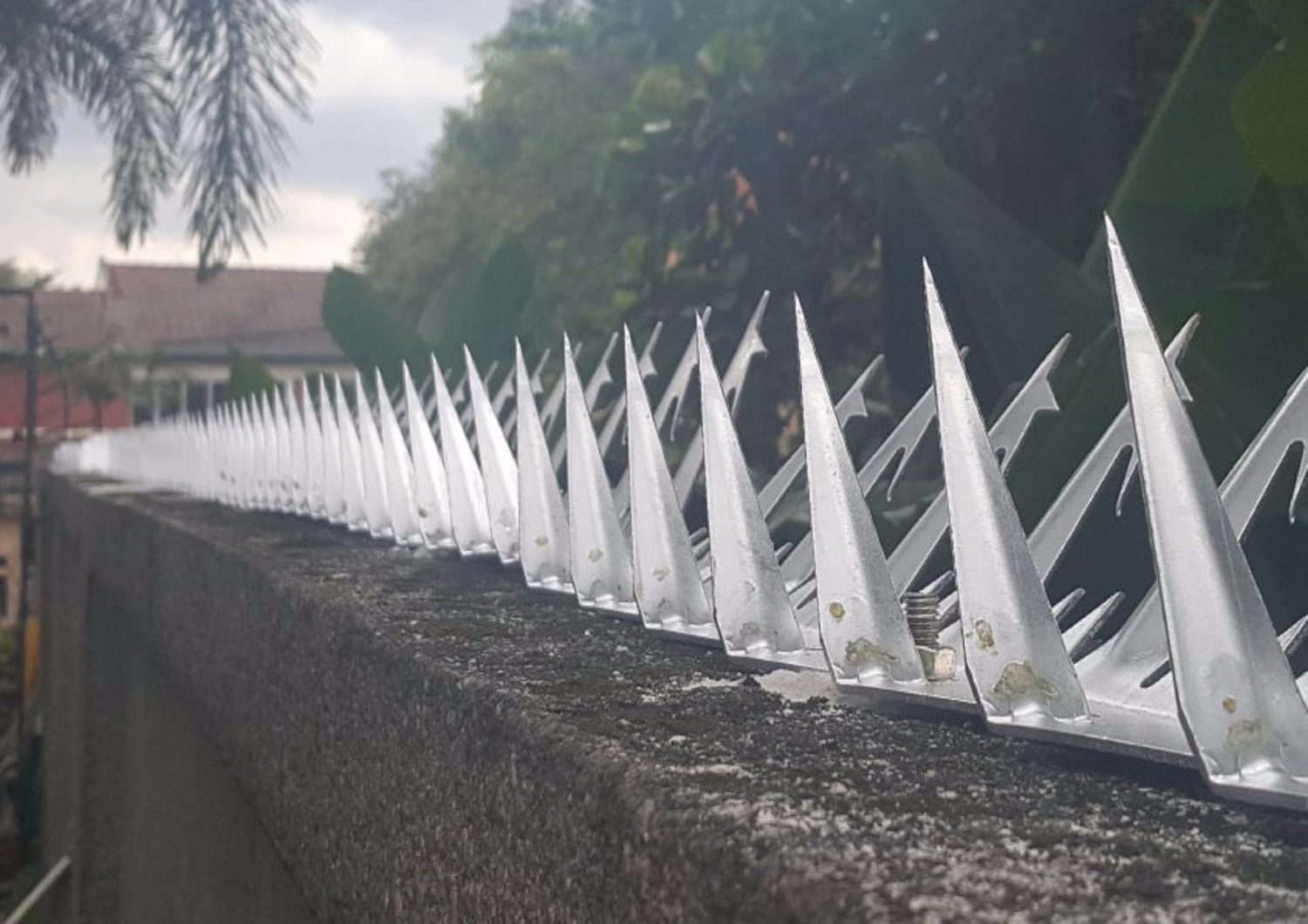
“Man Made Versus Natural Barrier Fences …” from www.backdoorsurvival.com and used with no modifications.
Not every garden boundary needs to be alive to be eco-friendly. Natural physical barriers built from wood, stone, or woven plant material are durable, biodegradable at end-of-life, and often free or nearly free to source locally. For more ideas on creating sustainable garden boundaries, check out these DIY garden fence ideas. The key difference from synthetic options is what happens when they eventually break down — natural materials return to the soil, synthetic ones don’t.
Building your own physical barriers also gives you complete control over dimensions, aesthetics, and placement — something no off-the-shelf plastic product can offer. For more ideas, check out these DIY garden fence ideas.
Wattle Fencing: How to Weave Willow Branches Into a Garden Wall
Wattle fencing is one of the oldest garden barrier techniques in human history, and it remains one of the most effective natural options available today. The basic principle is simple: flexible green branches — most commonly willow (Salix viminalis) or hazel (Corylus avellana) — are woven horizontally between upright wooden stakes to create a dense, interlocked panel that’s surprisingly rigid once complete. If you’re interested in more natural gardening ideas, explore these low-pollen plants for urban gardens.
To build a wattle panel, drive sharpened stakes of at least 2.5cm diameter into the ground at 30cm intervals to a depth of 30–45cm. Then weave your rods in an alternating over-under pattern between each stake, packing each row tightly downward as you go. Use the freshest, most pliable willow or hazel you can find — rods cut in late winter when the sap is rising are the most flexible and least likely to crack during weaving. A finished 1-metre-high panel typically requires around 20–25 rods of 2–3 metres in length per linear metre of fence. For more tips on utilizing small spaces, check out urban balcony garden kits.
One of the remarkable things about willow wattle is that living willow stakes will often root in the ground and begin growing, gradually transforming your fence into a living structure. This isn’t guaranteed — it depends on soil moisture and the time of year you install it — but when it happens, the fence becomes self-repairing and increasingly robust over time. Even without rooting, a well-built hazel wattle fence will last 5–10 years before needing significant repair.
- Harvest willow rods between November and February for maximum flexibility
- Soak dry rods in water for 24–48 hours before weaving to prevent splitting
- Use sweet chestnut or oak stakes for the uprights — both resist ground rot far better than softwood
- Seal the tops of cut stakes with beeswax or natural linseed oil to slow weathering
- Weave a double-rod layer at the base for added strength and to close any gaps that ground-level pests might exploit
Wattle fencing is genuinely one of those DIY projects where the finished result looks far more complex and expensive than the actual effort involved. The materials cost nothing if you have access to a willow or hazel coppice, and even bought willow rods are inexpensive compared to any manufactured fencing alternative.
Pallet Wood Borders: Free Material With Rustic Charm
Reclaimed wooden pallets are one of the most abundant free materials available to any urban or suburban gardener. Thousands are discarded every week by warehouses, garden centers, and supermarkets — and a single heat-treated pallet (look for the HT stamp, which confirms it was treated without methyl bromide) gives you enough timber to edge several metres of garden bed or build a low border fence with genuine structural integrity.
Disassemble pallets carefully with a flat pry bar to avoid splitting the boards, then use the planks as vertical edging stakes driven 20–25cm into the ground, or nail them horizontally between driven posts for a low picket-style border. Leave the wood untreated to keep it fully biodegradable — untreated pine and softwood pallets will typically last 3–5 years outdoors before breaking down, at which point they can be composted directly into the garden. If you want to extend their life without synthetic preservatives, a coat of raw linseed oil applied annually works well and remains fully non-toxic.
Stone and Rock Borders That Double as Wildlife Habitats
A dry stone border is arguably the most permanent and ecologically valuable physical barrier you can build. Unlike mortared walls, dry stone construction uses no binding materials at all — stones are carefully stacked and interlocked using gravity, weight distribution, and the natural friction between surfaces. The gaps and cavities that result are not a flaw; they’re a feature. Ground beetles, slow worms, solitary bees, and overwintering toads all use dry stone structures as shelter and hibernation habitat, making a stone border one of the most wildlife-positive choices you can make. For more ideas on utilizing small spaces effectively, explore urban balcony garden kits.
Source stone locally wherever possible — reclaimed stone from demolished buildings, fieldstone cleared from a vegetable plot, or even flint collected from a chalky garden are all ideal. The basic rule of dry stone construction is to keep the base twice as wide as the top and always place your largest, flattest stones at the base. Two-stone width construction with a central rubble core is the most stable approach for borders over 30cm in height. No cement, no synthetic binders — just stone on stone, done right.
Organic Pest Barriers That Protect Without Chemicals

“Organic Pest Control: Ways to Protect …” from glamourgarden.com and used with no modifications.
Keeping slugs, snails, and crawling insects out of your beds doesn’t require a single drop of pesticide. Several natural materials create physical or sensory barriers that deter pest species without touching beneficial insects, soil life, or the wider garden ecosystem. The trick is knowing which material works for which pest — and applying it correctly so it actually holds up through rain and weather.
Copper Tape Against Slugs and Snails
Copper tape works by creating a mild electric charge when it contacts the mucus of slugs and snails, delivering a sensation that causes them to retreat. Apply a continuous band of at least 4cm-wide copper tape around raised bed edges, pot rims, or individual plant collars, ensuring there are no gaps — even a 2mm break gives slugs a crossing point. For raised beds, position the tape near the top edge and fold 1cm of it outward at a right angle to create an overhang that slugs physically cannot navigate around. Copper tape loses effectiveness as it oxidizes to a dull brown, so clean it annually with a dilute vinegar solution to restore its conductivity. For more tips on managing small garden spaces, explore urban balcony garden kits.
Diatomaceous Earth as a Perimeter Powder
Food-grade diatomaceous earth (DE) is the fossilized skeletal remains of microscopic aquatic organisms called diatoms. Under a microscope, DE particles have razor-sharp edges that pierce the exoskeletons of crawling insects — including slugs, vine weevils, ants, and earwigs — causing them to desiccate and die within hours of contact. It is entirely non-toxic to mammals, birds, earthworms, and beneficial soil microbes.
Apply DE as a 2–3cm wide band around the perimeter of beds or directly around vulnerable plant stems. The critical limitation is moisture — DE loses effectiveness when wet and must be reapplied after rain. For this reason, it works best under cloches, in polytunnels, or during dry spells in summer. Always use food-grade DE rather than pool-grade, which contains crystalline silica and is not safe to handle or apply in garden settings.
Mulch Moats and Wood Chip Borders That Suppress Weeds Naturally
A deep mulch border — sometimes called a mulch moat — placed around the perimeter of a bed serves double duty as both a weed barrier and a slug deterrent. Apply a 10–15cm deep layer of coarse wood chip or bark mulch in a 30–40cm wide band around your beds. This depth is thick enough to suppress 95% of weed germination by blocking light to the soil surface, while the rough texture discourages slugs and snails from crossing. Unlike synthetic weed membranes, wood chip mulch actively improves soil structure as it slowly decomposes, feeding soil fungi and improving water retention.
For best results, source wood chip from a local tree surgeon — many will deliver a trailer load for free or minimal cost as it saves them disposal fees. Avoid using fresh grass clippings as a mulch border since their dense, mat-forming texture actually creates ideal slug habitat rather than deterring them. Stick with coarse, chunky wood chip that stays loose and aerated.
How to Keep Animals Out of Your Garden Naturally
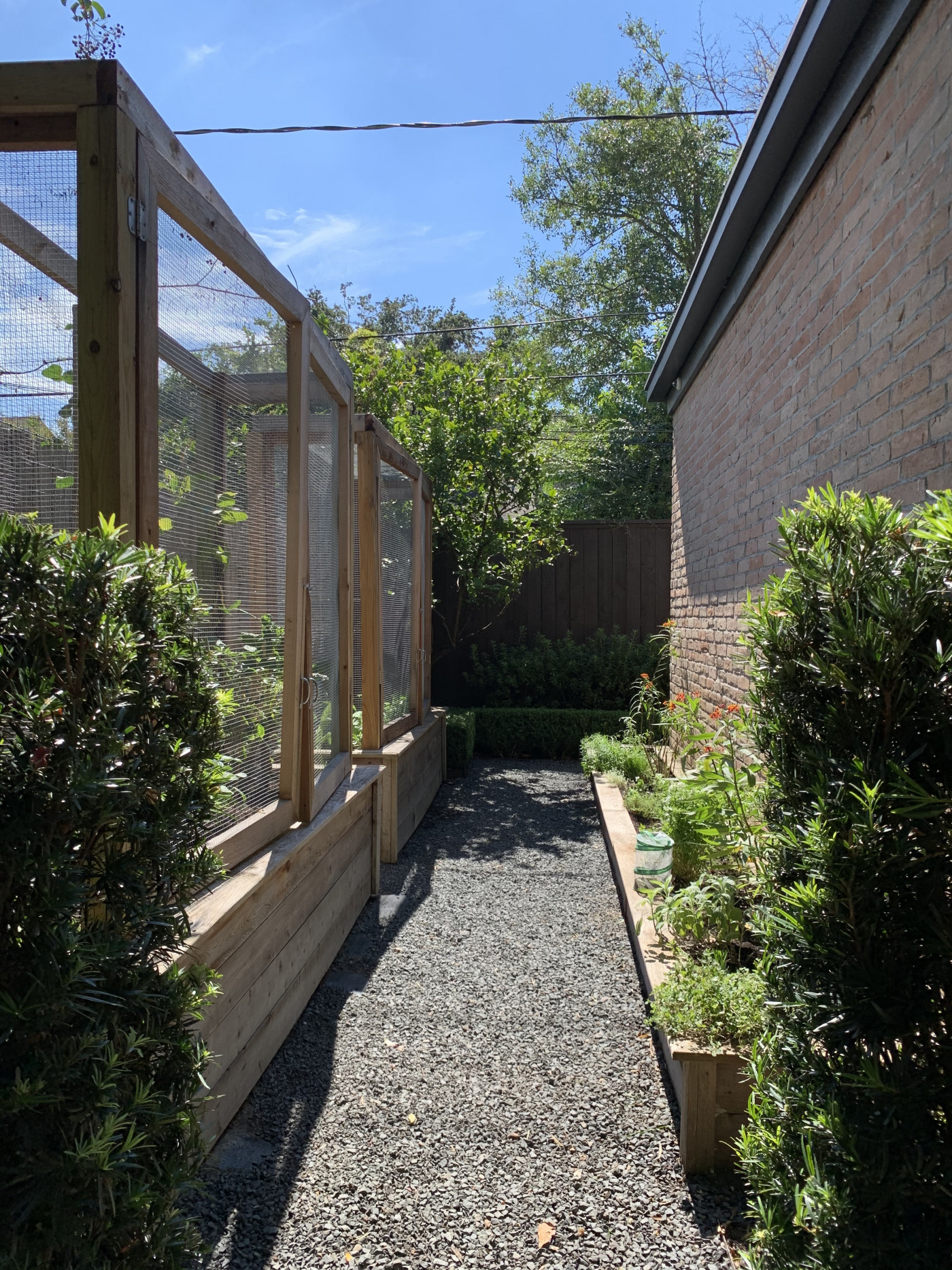
“Keep Animals out of Your Kitchen Garden …” from www.gardenary.com and used with no modifications.
Larger animals — rabbits, deer, foxes, badgers, and cats — require a different approach than pest insects. Physical exclusion is the most reliable method, but it needs to be done correctly to actually work. A fence that’s 30cm too short, or has a single unguarded gap at ground level, will be found and exploited within days by determined wildlife.
The good news is that effective animal exclusion doesn’t require expensive manufactured fencing. Natural wood posts combined with standard wire mesh, supported by a few key installation details, will outperform most pre-built garden fence options when it comes to keeping animals where they belong.
Chicken Wire Paired With Natural Wood Posts
For rabbit exclusion specifically, the installation details matter more than the materials. Standard 31mm hexagonal galvanized chicken wire is effective, but only if the bottom 15–20cm is bent outward at a 90-degree angle and buried horizontally underground — this prevents rabbits from simply digging beneath the fence line, which is their default response to a vertical barrier. Use natural round wood posts of sweet chestnut or oak rather than pressure-treated timber, as both species have naturally high tannin content that resists ground rot for 15–20 years without any chemical treatment.
For deer, height is the determining factor. Roe deer can clear a 1.2-metre fence without effort; fallow and red deer require a minimum of 1.8 metres of effective fencing height. A cost-effective approach for large gardens is a double fence system — two parallel 1-metre fences spaced 1.2 metres apart. Deer are reluctant to jump into a confined space, so a double fence at half the height of a single deer fence is often more effective and significantly cheaper to install. For additional garden solutions, consider exploring vertical garden systems for maximizing space.
Scent-Based Deterrents: Garlic Spray, Predator Urine, and Citrus Peels
Scent-based deterrents work best as a supplementary layer alongside physical barriers rather than as a standalone solution. Their effectiveness depends on regular reapplication — typically every 7–10 days or after rain — and rotating between different deterrent types to prevent animals from habituating to a single scent.
Garlic spray is one of the most effective and straightforward options for deterring a wide range of garden pests including rabbits, deer, and aphids. Blend four full bulbs of garlic with one litre of water, strain, and dilute 1:10 with additional water before applying as a perimeter spray around beds and vulnerable plants. The allicin compounds released by crushed garlic are detectable by mammals at concentrations far below what humans can smell, making it a powerful sensory deterrent. For those interested in other pest-resistant plants, check out our guide on low-pollen plants for urban gardens.
- Garlic spray: Effective against rabbits, deer, and aphids — reapply every 7 days and after rain
- Predator urine (fox or lion): Available commercially, deters rabbits and rodents — rotate with other scents to prevent habituation
- Citrus peels: Fresh orange, lemon, and grapefruit peel repels cats and some insects — replace every 3–4 days as they dry out
- Chilli pepper spray: Capsaicin irritates the nasal membranes of mammals — apply to fence posts and entry points
- Human hair clippings: Collected from a hairdresser and stuffed into mesh bags — the human scent deters deer and rabbits when hung at nose height around the garden perimeter
Lion dung pellets, sold commercially under brand names including Silent Roar, contain genuine predator scent compounds that trigger a fear response in cats, rabbits, and foxes. While the idea sounds unusual, field testing by the Royal Horticultural Society has found them to be among the more consistently effective mammal deterrents available for garden use.
No single scent deterrent works permanently. The most effective approach is to layer two or three different types around your garden perimeter, rotating them every few weeks to prevent local wildlife from learning that the smell poses no actual threat. Combined with a well-installed physical barrier, scent deterrents close the gaps that fencing alone can’t cover.
Upcycled and Repurposed Barrier Materials
Some of the most visually striking garden barriers cost absolutely nothing to make. Upcycled and repurposed materials — glass bottles, broken ceramics, salvaged timber, reclaimed bricks — turn what would otherwise be waste into functional garden features with genuine character. The environmental logic is hard to argue with: a barrier made from materials that already exist produces no new manufacturing emissions, no packaging waste, and no transport footprint.
The practical challenge with upcycled barriers is structural consistency — you’re working with irregular shapes and materials that weren’t designed to be garden edging. The solution is to design with the irregularity rather than against it. A bottle border doesn’t need to be perfectly level to be beautiful; a mosaic of broken pottery set into a low mortar edge gets more interesting the more varied the pieces are.
Glass Bottles, Broken Pottery, and Reclaimed Timber as Garden Edges
Upturned glass bottles — particularly wine bottles in green or brown — set neck-down into the soil create a surprisingly robust and visually distinctive bed border. Push each bottle 15–20cm into the soil at a slight angle, packing soil firmly around the neck. The weight of the glass keeps them stable, and the rounded bases shed water rather than collecting it. A single metre of bottle border requires approximately 8–10 standard wine bottles and takes under 30 minutes to install. The glass catches and refracts light beautifully in low sun, turning a simple bed edge into an unexpected garden feature.
How to Source Free or Cheap Eco-Friendly Materials Locally
The best eco-friendly barrier materials are often hiding in plain sight. Tree surgeons regularly give away chipped wood for free — websites like Chip Drop connect homeowners directly with arborists looking to offload loads that would otherwise cost them disposal fees. Reclaimed stone turns up constantly on local marketplace sites like Facebook Marketplace and Freecycle, often listed for free collection by people clearing gardens or demolishing outbuildings. Willow and hazel rods can be harvested from riverbanks, hedgerows, and community coppice projects — many local wildlife trusts run winter coppicing days where volunteers take home as much material as they can carry.
For timber, skip outside local building sites (with permission) often yield offcuts of untreated wood perfectly suited to raised bed edging or post construction. Pallets are available free from most industrial estates simply by asking. The pattern that emerges is consistent: the closer you look locally, the less you need to buy. Building a network of local sources — your tree surgeon, a nearby farm, a community orchard — means your garden barrier materials replenish themselves season after season at zero cost.
Choosing the Right Natural Barrier for Your Garden Type
Not every natural barrier suits every garden. The right choice depends on what you’re protecting, what you’re protecting it from, how much space you have, and how much ongoing maintenance you’re willing to commit to. A living hedgerow is a brilliant solution for a large rural garden but completely impractical for a 6-metre urban terrace plot. A wattle fence that looks at home in a cottage garden might feel out of place in a sleek modern space designed around small space transformation and minimal planting.
Small Urban Gardens: Low-Profile Borders That Define Without Crowding
Urban gardens live and die by proportion. A barrier that works beautifully in a half-acre plot can make a compact city garden feel like a prison yard. The priority in small spaces is defining zones and edges without consuming growing area or blocking the light that limited urban gardens can’t afford to lose.
Low-profile stone borders of 15–20cm work exceptionally well in urban settings — they define bed edges clearly, create microhabitats for ground beetles, and take up almost no horizontal space. Reclaimed brick set on edge in a continuous line is another excellent option, providing a crisp boundary that’s free from salvage yards and completely biodegradable when it eventually crumbles. For pest deterrence in small urban beds, copper tape around raised bed frames and a consistent mulch layer are more practical than the larger-scale solutions suited to open gardens.
Companion planting borders work particularly well in small urban gardens because they serve multiple functions in tight spaces — a 30cm border of French marigolds around a raised bed deters pests, attracts pollinators, adds color, and is completely edible, all without consuming meaningful growing area.
- Use reclaimed brick set on edge for crisp, space-efficient bed definition
- Copper tape around raised bed frames handles slug control without any footprint at all
- A single row of lavender along a path edge deters pests and pollinates the beds behind it
- Upturned glass bottles create a striking border in tiny spaces using zero new materials
- Keep physical barrier heights under 40cm to avoid shading adjacent beds in north-facing urban gardens
Vegetable Patches: Barriers That Protect Crops Without Blocking Sun
Vegetable gardens have specific requirements that ornamental borders don’t. The barrier needs to exclude pests — both crawling insects at soil level and larger mammals at perimeter level — without casting shade onto sun-demanding crops like tomatoes, squash, and brassicas. This rules out tall hedgerows on south-facing sides and means keeping any physical fence structure as open in profile as possible.
The most effective setup for a vegetable patch combines layers: a perimeter of chicken wire on natural wood posts for mammal exclusion, copper tape on all raised bed edges for slug control, companion planting borders of marigolds and rosemary along the sunny sides, and a deep wood chip mulch moat around the entire area to suppress weeds and deter crawling pests from approaching the beds. Each layer addresses a different threat, and together they create a comprehensive, chemical-free protection system that actually gets more effective over time as companion plants establish and mulch breaks down to improve soil.
Wildlife Gardens: Barriers That Invite Biodiversity Instead of Blocking It
Wildlife gardens require a fundamentally different approach to barriers — the goal shifts from exclusion to invitation. Rather than keeping things out, a wildlife garden barrier should create habitat, provide shelter, support feeding, and connect different areas of the garden in ways that allow wildlife to move freely and safely. Dry stone walls, mixed native hedgerows, log pile borders, and open-bottomed stone edging all qualify. The one thing a wildlife garden should never have is a solid perimeter barrier at ground level — every wildlife garden needs at least one hedgehog highway gap (a 13cm x 13cm opening) in any boundary fence to allow ground-level wildlife to move between gardens freely.
Natural Barriers Are the Smarter Long-Term Choice for Any Garden

“Natural Weed Barriers vs Landscape …” from www.thrivelot.com and used with no modifications.
Every natural barrier you install is a decision that compounds over time. A living hedgerow planted today is a wildlife sanctuary in ten years. A dry stone border built from reclaimed rubble becomes a slow worm habitat within two seasons. A companion planting border started from seed this spring is a self-seeding, pest-deterring permanent feature by autumn. Natural barriers don’t degrade your garden — they become part of it, adding ecological value with every passing year that no synthetic product is capable of matching. The switch away from plastic edging, chemical slug killers, and synthetic weed fabric isn’t a sacrifice; it’s an upgrade with benefits that keep arriving long after you’ve forgotten the initial effort it took.
Frequently Asked Questions
Natural garden barriers cover a wide range of materials, techniques, and purposes, so questions tend to cluster around a few specific pain points: what actually works against particular pests or animals, how long natural materials last, and whether they’re safe in gardens used by children and pets. The answers below address the most common questions with the specificity they deserve.
What is the most effective natural barrier to keep rabbits out of a vegetable garden?
The most effective natural barrier against rabbits is 31mm hexagonal galvanized chicken wire on natural wood posts, installed with the bottom 15–20cm bent outward at 90 degrees and buried horizontally underground. The buried horizontal skirt is the critical detail — without it, rabbits simply dig beneath the vertical fence line within days. The fence needs to stand at least 90cm above ground, as rabbits can jump but rarely bother with obstacles that height when easier food sources are available. Supplement the physical barrier with a garlic spray perimeter applied weekly for maximum deterrence.
Can living plant barriers replace a traditional fence entirely?
Yes — in many garden types, a well-chosen living barrier is more effective than a traditional fence. A mature mixed native hedgerow of hawthorn, blackthorn, and dog rose is physically impenetrable to most animals, withstands wind loading far better than a panel fence, and never needs replacing. The honest caveat is time: a living barrier takes three to five years to reach full effectiveness. For gardeners who need immediate protection, a temporary chicken wire fence alongside a newly planted hedgerow gives you immediate function while the living barrier establishes. For those interested in maximizing small spaces, consider exploring urban balcony garden kits as a complementary solution.
For urban gardens where space is limited, living barriers may only be practical as low companion planting borders rather than full perimeter fencing. In those situations, combining a low living border with a slim physical barrier like a stone edge or reclaimed timber post gives you the ecological benefits of both approaches in a compact footprint.
How long does a woven willow wattle fence last before it needs replacing?
A well-built woven hazel wattle fence will last 5–10 years before the horizontal rods need significant replacement. Willow wattle lasts slightly less — typically 3–7 years — but if the willow stakes root and begin growing, the living sections of the fence become self-repairing and can last indefinitely with light management. The base of the fence deteriorates fastest due to ground contact and moisture, so inspect the bottom two rows of weaving annually and replace individual rods as needed rather than waiting for the whole fence to fail. Using sweet chestnut or oak uprights rather than softwood stakes dramatically extends the overall lifespan of the structure.
Is diatomaceous earth safe to use around pets and children?
Food-grade diatomaceous earth is safe to use around pets and children when applied correctly. It is non-toxic if ingested in small amounts and is actually used as an internal parasite treatment for livestock at controlled doses. The one precaution worth taking is to avoid inhaling DE dust during application — the fine particles can irritate the respiratory tract if breathed in directly. Apply it on a still day, avoid applying near the faces of pets or young children who are close to the ground, and it presents no meaningful health risk in normal garden use. For more tips on safe gardening practices, explore our guide on low-pollen plants for urban gardens.
The critical distinction to repeat here is to always use food-grade diatomaceous earth, not pool-grade or filter-grade DE. Pool-grade DE is processed at high temperatures, which converts its amorphous silica into crystalline silica — a known respiratory hazard that is absolutely not safe to use in garden environments where children or pets are present. The packaging will clearly state which grade it is; if it does not specify food-grade, do not use it.
What natural materials work best for raised bed garden borders?
The best natural materials for raised bed borders depend on the height and permanence you need. For low decorative edging up to 20cm, reclaimed brick set on edge, upturned glass bottles, or flat fieldstone all work beautifully and cost nothing to source. For structural raised beds of 30–60cm, untreated hardwood planks of oak, sweet chestnut, or larch are the gold standard — all three species have natural decay resistance that gives them 15–20 years of functional life in ground contact without any chemical treatment.
Avoid using reclaimed railway sleepers unless you can confirm they are genuine new oak sleepers rather than old creosote-treated ones. Traditional creosote-treated sleepers leach polycyclic aromatic hydrocarbons into adjacent soil — these are persistent organic pollutants that accumulate in vegetables grown nearby. New untreated oak sleepers are chemically inert and structurally outstanding for raised bed construction.
For a completely free option, stacked logs from storm-damaged or pruned trees make excellent raised bed walls up to 30cm in height. The logs slowly decompose and inoculate the bed soil with beneficial fungi, improving the soil food web inside the bed as they break down — an effect sometimes called a “hugelkultur” base that enhances water retention and long-term fertility.