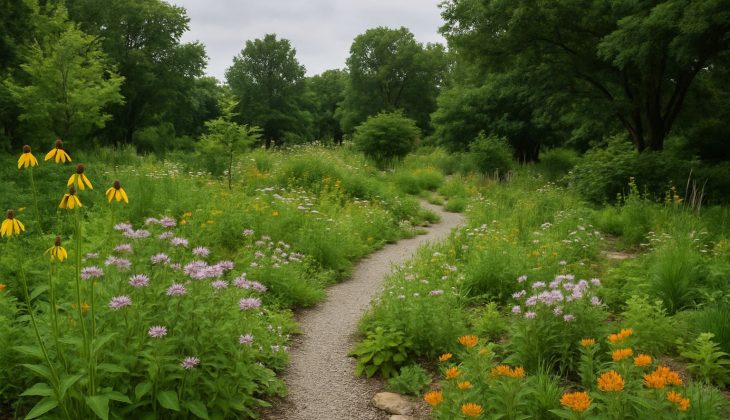
Springfield, IL Native Plants — At A Glance
- Springfield falls in USDA Hardiness Zones 5b to 6a, which directly shapes which native plants will survive and thrive in your yard year after year.
- Illinois was originally a vast tall-grass prairie, and tapping into that legacy means your garden works with the land instead of against it.
- Native plants require significantly less watering, fertilizing, and pest control once established — making them the smarter long-term choice for Springfield gardeners.
- The right combination of native perennials, shrubs, and trees can support pollinators, birds, and beneficial insects all four seasons.
- Nature Hills Nursery offers a curated selection of Illinois native plants that are proven performers in Springfield’s specific climate conditions.
Planting native in Springfield isn’t just a trend — it’s one of the smartest gardening decisions you can make for your yard, your wallet, and the local ecosystem.
Springfield, Illinois, sits in the heart of what was once one of North America’s most biologically rich landscapes: the tall-grass prairie. That history matters, because the native plants that evolved here are already perfectly tuned to the local soils, rainfall patterns, and seasonal temperature swings. When you choose plants that belong here, you stop fighting your environment and start working with it. Fewer inputs, stronger plants, and a landscape that actually supports wildlife rather than just decorating a yard.
Springfield’s Native Plants Are Built for This Climate
Springfield experiences genuine Midwest weather — cold, snowy winters followed by hot, humid summers with variable rainfall. That range eliminates a lot of ornamental plants that look great at the garden center but collapse under Illinois conditions. Native plants don’t have that problem. They’ve been handling this climate for thousands of years.
What USDA Hardiness Zones 5b to 6a Mean for Your Garden
Springfield straddles USDA Plant Hardiness Zones 5b and 6a. In practical terms, Zone 5b means average annual minimum temperatures between -15°F and -10°F, while Zone 6a edges that up to -10°F to -5°F. What this tells you as a gardener is that your plants must be cold-hardy enough to survive genuine deep freezes while also tolerating summer heat that regularly pushes into the 90s.
Choosing plants rated for Zone 5 gives you a buffer. It’s always smarter to plant slightly hardier than your zone requires, especially in Springfield where late spring frosts can surprise even experienced gardeners. For those interested in enhancing their gardens with climate-resistant features, consider exploring climate-resistant green roof and wall solutions. The table below gives a quick reference for understanding what each zone demands:
| USDA Zone | Avg. Min. Temp | What It Means for Springfield |
|---|---|---|
| 5b | -15°F to -10°F | Full cold hardiness required; most of Springfield proper |
| 6a | -10°F to -5°F | Slightly milder microclimates; southern and urban areas |
The bottom line: always verify a plant’s zone rating before purchasing, and when in doubt, lean toward the more cold-hardy option. Native Illinois plants selected for this region are already rated appropriately, which removes the guesswork entirely.
How Clay-Rich Illinois Soils Shape Your Plant Choices
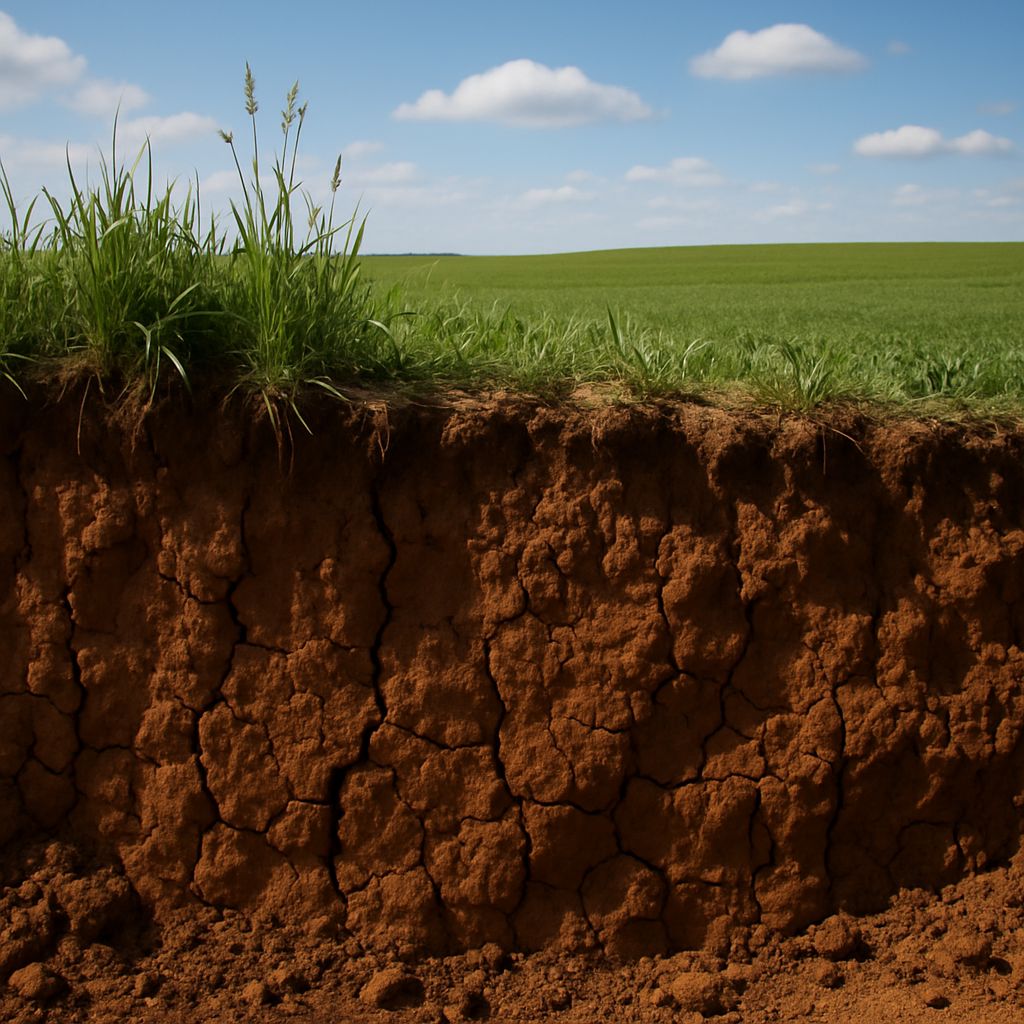
Springfield’s soils are predominantly clay-heavy, which creates both challenges and opportunities. Clay soil drains slowly, can compact easily, and becomes either rock-hard in drought or waterlogged after heavy rain. Most ornamental plants struggle in these conditions. Native Illinois plants, however, evolved directly in these soils, and many of them depend on this structure for their deep root systems to anchor properly.
- Purple Coneflower (Echinacea purpurea): Thrives in clay, is drought-tolerant once established, and is a magnet for goldfinches and native bees.
- Wild Blue Indigo (Baptisia australis): Deep taproot breaks through clay naturally; fixes nitrogen and improves soil structure over time.
- Swamp Milkweed (Asclepias incarnata): Built for wetter clay areas; critical host plant for monarch butterflies.
- Little Bluestem (Schizachyrium scoparium): Native prairie grass that tolerates poor, dry clay soils with striking fall color.
- Joe-Pye Weed (Eutrochium purpureum): Loves heavier, moist soils; provides late-season nectar when most plants have finished blooming.
A soil test from the University of Illinois Extension is a worthwhile first step before any major planting. It will reveal your pH levels and any nutrient gaps, so you can amend smartly rather than broadly. Most native plants prefer a soil pH between 6.0 and 7.0, which aligns well with Springfield’s naturally occurring range.
Why Tall-Grass Prairie Roots Still Matter in Springfield Gardens Today
Illinois earned the nickname “The Prairie State” for a reason — before European settlement, roughly 22 million acres of tall-grass prairie covered the land. Today, less than one-tenth of one percent of that original prairie remains. Every native plant garden in Springfield is, in a small but meaningful way, a restoration of something that was nearly lost entirely. Prairie plants like Big Bluestem (Andropogon gerardii), Prairie Dropseed (Sporobolus heterolepis), and Rattlesnake Master (Eryngium yuccifolium) don’t just look beautiful — they rebuild the soil, filter stormwater, and create habitat corridors for wildlife navigating an increasingly fragmented landscape.
The Best Native Perennials for Springfield,
IL Gardens
Perennials are the backbone of any native garden. They come back year after year, deepen their root systems with each passing season, and become increasingly drought-tolerant and self-sufficient over time. Springfield gardeners have an impressive palette to work with.
Top Drought-Tolerant Perennials for Pollinator Habitats
Once established — typically after the first full growing season — native perennials can handle Springfield’s dry spells with minimal supplemental watering. This is a direct result of their deep root systems, which can extend 10 to 15 feet into the soil in some prairie species, accessing moisture that shallow-rooted ornamentals simply can’t reach. For pollinator gardens specifically, diversity of bloom time is just as important as plant selection itself.
Some of the strongest drought-tolerant performers for Springfield include Prairie Blazing Star (Liatris pycnostachya), which blooms July through August and draws migrating monarchs; Black-Eyed Susan (Rudbeckia hirta), a reliable early-to-mid summer bloomer that seeds freely and feeds a wide range of native bees; and Pale Purple Coneflower (Echinacea pallida), a slightly more refined alternative to the common purple coneflower with longer, drooping petals that specialist bees favor. For more information on these native plants, check out this guide to thriving gardens.
Native Perennials That Deliver Year-Round Color and Wildlife Value
One of the biggest misconceptions about native gardens is that they look bare or unkempt outside of peak summer bloom. In reality, a well-planned native perennial garden has something happening in every season. Early spring brings Virginia Bluebells (Mertensia virginica) and Wild Columbine (Aquilegia canadensis). Summer explodes with coneflowers, milkweeds, and prairie grasses. Fall shifts into the warm tones of Little Bluestem and the seed heads of Black-Eyed Susan. Even in winter, the structural remains of dried grasses and coneflower seed heads feed birds like goldfinches and chickadees while adding visual texture to the dormant landscape.
Leaving seed heads standing through winter is not laziness — it’s one of the most impactful things you can do for local wildlife. Many native bee species overwinter inside hollow or pithy stems, and birds rely on those same seed heads as a critical food source during the coldest months.
Native Shrubs That Work Hard in Illinois Landscapes
Shrubs provide the structural middle layer of a native landscape — taller than perennials, shorter than canopy trees, and often the most valuable plants for birds and mammals. In Springfield, native shrubs handle everything from rain garden overflow to dense hedgerow screening.
Best Native Shrubs for Rain Gardens and Hedgerows
Springfield receives an average of around 36 inches of rain annually, and clay soils mean that water moves slowly. Rain gardens — shallow, planted depressions designed to capture and filter runoff — are one of the most practical applications for native shrubs. Buttonbush (Cephalanthus occidentalis) is an outstanding choice, tolerating standing water for extended periods while producing unique spherical white flowers that are irresistible to pollinators. Silky Dogwood (Cornus amomum) works equally well in wet conditions and produces blue-white berries that more than 40 species of birds actively seek out. For drier hedgerow applications, American Hazelnut (Corylus americana) creates dense, wildlife-rich screening with the bonus of edible nuts that attract turkeys, deer, and squirrels. Learn more about native plants in Springfield and how they can enhance your garden.
Which Native Shrubs Attract the Most Wildlife
If attracting birds, pollinators, and beneficial insects is a priority — and it should be — a few native shrubs stand head and shoulders above the rest. American Elderberry (Sambucus canadensis) is arguably the single most wildlife-productive shrub you can plant in Springfield. Its flat-topped white flower clusters feed hundreds of pollinator species in early summer, and its dark purple berries are consumed by over 50 species of birds, including Baltimore orioles and cedar waxwings. Equally impressive is the native Pasture Rose (Rosa carolina), which provides nesting structure for small birds, pollen for native bees, and winter rose hips that sustain wildlife through cold months when other food sources have vanished.
How to Layer Shrubs for Maximum Seasonal Interest
The secret to a native shrub planting that looks intentional rather than accidental is layering — combining plants of different heights, bloom times, and structure so that something is always contributing to the overall picture. Start with taller background shrubs like Nannyberry Viburnum (Viburnum lentago), which can reach 15 feet and offers spring flowers, summer berries, and brilliant fall foliage. In front of that, place mid-height shrubs like Buttonbush or American Hazelnut at 6 to 10 feet. At the front edge, low-growing natives like Lead Plant (Amorpha canescens) or Meadow Sweet (Spiraea alba) soften the transition to perennials or lawn.
Think in terms of seasons, not just bloom time. You want at least one shrub doing something interesting — flowering, fruiting, or showing fall color — in each of the four seasons. This approach turns a shrub border from a single-moment display into a living, evolving habitat that earns its space year-round.
Springfield Native Shrub Seasonal Interest Guide
Spring: American Elderberry (flowers), Pasture Rose (early blooms), Nannyberry Viburnum (white flower clusters)
Summer: Buttonbush (spherical white flowers), Silky Dogwood (berries forming), Lead Plant (purple spikes)
Fall: Nannyberry Viburnum (red-to-black berries + foliage color), American Hazelnut (nuts ripen), Meadow Sweet (seed structure)
Winter: Pasture Rose (red hips), Silky Dogwood (red stems), American Elderberry (branching structure for birds to perch)
Once you have this seasonal framework mapped out on paper, filling the gaps becomes straightforward. You’re essentially building a calendar of habitat events rather than just selecting plants by appearance — and that shift in thinking is what separates a functional eco-garden from a standard landscape planting. For more ideas, explore these DIY garden ideas.
How to Design an Eco-Garden in Springfield

Designing a native eco-garden in Springfield doesn’t require a landscape architecture degree. It requires observation, a basic understanding of your site conditions, and a willingness to think in plant communities rather than individual specimens. The most successful native gardens mimic the structure of the ecosystems that existed here before: a canopy layer, a shrub layer, a perennial layer, and a ground cover layer all working together.
Start With a Soil Test Before You Plant Anything
A soil test from the University of Illinois Extension costs very little and saves a significant amount of money and frustration. It tells you your soil’s pH, nutrient levels, and organic matter content — the three factors that most directly influence whether a newly planted native will establish quickly or struggle for years. Springfield’s clay soils often run slightly alkaline, and some native plants prefer a marginally more acidic environment. Knowing this upfront means you can amend specifically rather than broadly, targeting exactly what your soil lacks rather than guessing with generalized fertilizer products. For those interested in local flora, the best low-pollen native plants can be a great addition to your garden.
How to Plan a Low-Maintenance Native Plant Layout
Group plants by their water and light needs rather than purely by aesthetics. This single decision eliminates most of the ongoing maintenance in a native garden. Place moisture-loving species like Swamp Milkweed and Buttonbush in low areas or near downspouts where water naturally collects. Put drought-tolerant prairie species like Little Bluestem and Prairie Blazing Star on slopes or in areas with full sun and fast drainage. When plants are matched to microclimates they naturally prefer, they establish faster, require less supplemental irrigation, and resist pest pressure far more effectively.
Mixing Trees, Shrubs, and Perennials for a Balanced Ecosystem
A truly functional native garden includes all three layers. Native canopy trees like Bur Oak (Quercus macrocarpa) — one of the most ecologically valuable trees in the Midwest, supporting over 500 species of caterpillars alone — anchor the space and create the shade conditions that woodland perennials need beneath them. Under and around those trees, native shrubs like Wild Black Currant (Ribes americanum) or Pagoda Dogwood (Cornus alternifolia) fill the middle story. At the ground level, native perennials and ground covers like Wild Ginger (Asarum canadense) or Pennsylvania Sedge (Carex pensylvanica) complete the picture, suppressing weeds naturally while feeding ground-dwelling insects and creating nesting habitat for bumble bees. For more ideas on creating a vibrant garden, explore these DIY garden ideas.
Rain Garden Design Basics for Illinois Yards
A rain garden is one of the highest-impact additions a Springfield homeowner can make to their property. It captures stormwater runoff from roofs, driveways, and compacted lawn areas, allows it to slowly infiltrate into the soil, and filters pollutants before they reach local waterways. The basic design principle is simple: create a shallow depression — typically 6 to 12 inches deep — positioned to intercept runoff from a downspout or paved surface, then plant it with native species that tolerate both temporary flooding and dry periods between rain events.
For Springfield specifically, the best rain garden plants combine deep root systems with flooding tolerance. Blue Wild Indigo, Swamp Milkweed, Cardinal Flower (Lobelia cardinalis), and Buttonbush are all proven performers. Sizing matters too: a rain garden should typically be about 20 to 30 percent of the size of the area draining into it. A 500-square-foot roof section draining to a single downspout, for example, would need a rain garden of roughly 100 to 150 square feet to function effectively in clay-heavy Springfield soils.
Where to Source Native Plants in Springfield, IL
Sourcing truly local native plants — not just plants labeled “native to North America” but plants with genuine Illinois provenance — makes a measurable difference in how well they establish and how effectively they support local wildlife. Prairie Nursery, based in Wisconsin but shipping widely throughout the Midwest, specializes in genetically appropriate native wildflowers, ferns, sedges, grasses, and shrubs along with pre-planned garden designs and seed mixes. For online ordering with reliable cold-hardiness verification for Illinois specifically, Nature Hills Nursery’s Illinois native plant collection is a well-curated resource that takes the guesswork out of zone-appropriate selection. Local options include the Illinois Department of Natural Resources’ periodic native plant sales, and the Illinois Native Plant Society often coordinates with regional nurseries to connect gardeners with local ecotype sources.
Seasonal Planting Calendar for Springfield Gardeners
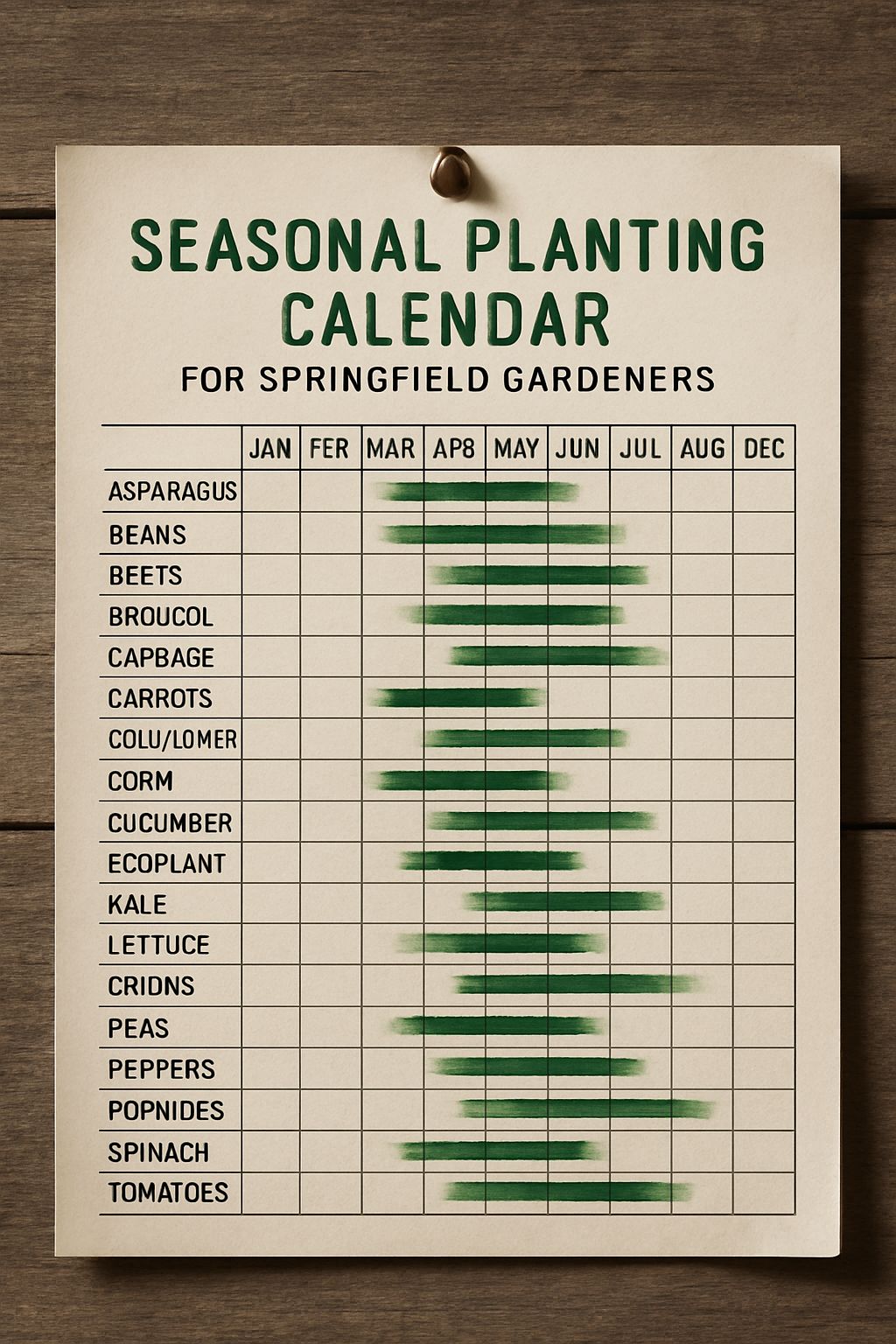
Timing matters enormously with native plant establishment. Springfield’s growing season runs roughly from mid-April through October, but the optimal planting windows are much narrower depending on what you’re putting in the ground. The biggest mistake new native gardeners make is planting everything in late spring because that’s when nurseries are fully stocked — when in reality, fall planting often produces stronger, faster-establishing plants because roots have time to develop before summer heat stress arrives.
Spring Planting Priorities for Illinois Native Gardens
Spring planting in Springfield has a narrow sweet spot: after the last frost date (typically mid-April) but before summer heat sets in. The goal during this window is to get roots established while soil moisture is still reliable and temperatures are moderate. Container-grown natives can go in anytime during this window, but bare-root plants and seed-grown plugs perform best when planted in April or very early May before soil temperatures climb above 60°F consistently.
Focus spring planting energy on perennials and grasses first, since they need the full growing season to develop their root systems before winter. Save any major shrub or tree planting for fall if possible — or water newly planted woody natives diligently through their first summer if spring planting is unavoidable. A 2 to 3 inch layer of shredded hardwood mulch applied immediately after planting dramatically improves moisture retention and gives spring-planted natives a genuine fighting chance through their first Illinois summer.
Fall Planting Advantages Most Gardeners Overlook
Fall is genuinely the best time to plant native trees and shrubs in Springfield, and most gardeners don’t take full advantage of it. When you plant in September or October, the above-ground portion of the plant slows down and stops demanding water, but the roots keep growing actively until the ground freezes — sometimes as late as December in Zone 6a. That means a fall-planted Bur Oak or Buttonbush arrives the following spring with a head start of several months of root development that a spring-planted equivalent simply doesn’t have.
Native perennials planted in fall also benefit from a process called cold stratification — a period of cold and moisture that naturally breaks seed dormancy and primes root systems for vigorous spring growth. Many Illinois natives actually require this cold period to perform well, which is why fall-planted specimens so often outperform spring-planted ones from the same nursery batch. If you can only do one thing differently in your native garden this year, shift your major planting effort to September and October and watch the difference it makes.
Start Small, Let Springfield’s Ecosystem Do the Rest
The most paralyzing mistake in native gardening is trying to do everything at once. Start with a single rain garden, a small pollinator border along a sunny fence line, or a cluster of three to five native shrubs replacing a section of high-maintenance lawn. Native plants, once established, begin doing the work for you — self-seeding, spreading through rhizomes, attracting the insects that control pests, and building soil organic matter with their deep root systems. Year two looks better than year one. Year three looks better than year two. The ecosystem momentum builds on itself, and your labor input steadily decreases as the garden matures. For more inspiration, check out these pollinator garden tours in Naperville.
Springfield’s native plant community is resilient, adaptive, and eager to reclaim any ground you give it. You don’t need a perfect plan or a large budget — you just need to start. Pick two or three plants from this guide that match your site conditions, put them in the ground this season, and pay attention to how they respond. That observation will teach you more about your specific yard than any guide ever could, and it will point you clearly toward what to add next. For additional ideas, explore some of the best low-pollen native trees, shrubs, and perennials that thrive in similar conditions.
Frequently Asked Questions
- What native plants grow best in Springfield IL?
- What is the plant hardiness zone for Springfield Illinois?
- Are native plants really lower maintenance than non-native plants?
- Can I plant a native garden in a small suburban yard?
- When is the best time to attend a native plants workshop in Springfield IL?
What native plants grow best in Springfield IL?
The best native plants for Springfield IL include Purple Coneflower (Echinacea purpurea), Black-Eyed Susan (Rudbeckia hirta), Prairie Blazing Star (Liatris pycnostachya), Little Bluestem grass (Schizachyrium scoparium), Wild Blue Indigo (Baptisia australis), Swamp Milkweed (Asclepias incarnata), American Elderberry (Sambucus canadensis), Buttonbush (Cephalanthus occidentalis), and Bur Oak (Quercus macrocarpa). These plants are proven performers in Springfield’s clay-heavy soils, Zone 5b to 6a winters, and variable rainfall patterns — and all provide significant ecological value for local pollinators, birds, and beneficial insects.
What is the plant hardiness zone for Springfield, Illinois?
Springfield, Illinois falls within USDA Plant Hardiness Zones 5b and 6a. Zone 5b covers most of the city proper, with average annual minimum temperatures between -15°F and -10°F. Zone 6a applies to some of the southern and more urbanized areas of the city, where the heat island effect and slightly milder conditions push the minimum temperature range to -10°F to -5°F.
When selecting plants, always use Zone 5b as your baseline to ensure cold hardiness across the full range of Springfield winters. Plants rated to Zone 5 or lower will handle even the harshest Springfield cold snaps without damage, giving you a reliable, long-lived landscape rather than one that suffers dieback in a hard winter. Consider incorporating low-pollen native trees and shrubs to enhance your garden’s resilience and biodiversity.
Are native plants really lower maintenance than non-native plants?
Yes — but with one important qualification. Native plants require attentive care during their first one to two growing seasons while their root systems establish. After that establishment period, they need less supplemental watering, fertilizing, and pest management than non-native ornamentals because they are already adapted to Springfield’s specific soil chemistry, rainfall patterns, and temperature extremes. The investment of effort upfront pays off in years of reduced maintenance and a landscape that largely manages itself. For more information on suitable plant choices, check out the best low-pollen native trees and shrubs.
Can I plant a native garden in a small suburban yard?
Absolutely. Some of the most ecologically productive native gardens in the Midwest occupy very modest footprints. Even a 10-by-10-foot pollinator border planted with Purple Coneflower, Prairie Blazing Star, and Little Bluestem provides meaningful habitat for native bees, butterflies, and songbirds. The key in a small space is selecting plants with multiple seasonal functions — bloom value, seed head interest, fall color, and wildlife feeding potential — so every square foot works hard across all four seasons. Compact native cultivars like Echinacea purpurea ‘Magnus’ and Baptisia australis ‘Decadence’ series are well-suited to smaller suburban lots without sacrificing ecological value. For more ideas, check out this guide on low-pollen native plants that thrive in suburban settings.
When is the best time to attend a native plants workshop in Springfield, IL?
Native plant workshops in Springfield and the broader central Illinois region tend to cluster in two seasonal windows: early spring (March through May) when gardeners are planning and purchasing for the growing season, and late summer to early fall (August through October) when the focus shifts to fall planting, seed collection, and garden preparation for the following year. The Illinois Native Plant Society, the University of Illinois Extension, and local conservation districts are the most reliable sources for finding upcoming workshop dates and events in the Springfield area.
If your goal is hands-on learning rather than lecture-style education, look specifically for plant identification walks, native garden tours, and seed-saving workshops — these formats give you direct experience with plants in the field, which accelerates learning far faster than classroom-only events. The Morton Arboretum and Midewin National Tallgrass Prairie also host periodic native plant programming that draws participants from across central Illinois, including Springfield.
Nature Hills Nursery offers a well-curated selection of Illinois-appropriate native plants shipped directly to your door — an easy next step for any Springfield gardener ready to turn workshop inspiration into a thriving eco-garden. For those interested in expanding their gardening skills, explore some DIY garden ideas to enhance your outdoor space.