Article-at-a-Glance
- Low-pollen native trees, shrubs, and perennials are the smartest choice for Rockford, IL landscapes — they’re adapted to Zone 5b clay soils, need no irrigation after establishment, and produce far less airborne pollen than invasive ornamentals.
- Wind-pollinated trees like male maples, ash, and Bradford pear are the biggest allergy triggers in Rockford yards — swapping them for insect-pollinated natives dramatically cuts airborne pollen exposure.
- Thomas Leo Ogren’s allergen scale (1–10) is the most practical tool for comparing pollen risk between plants — and most Rockford-native species score at the low end.
- Tree Care Enterprises works with Rockford homeowners on landscape design-build projects that blend native plants into functional, beautiful yards without sacrificing curb appeal.
- There are several high-allergen invasive plants already common in Rockford yards — including Russian Olive (rated 9) and Male Privet (rated 10) — that should be removed and replaced immediately.
If your eyes are watering and your nose won’t quit every spring, the problem might be growing right in your own yard.
Rockford gardeners are in a unique position. The plants that thrive best in this climate — the ones that handle our heavy clay soil, survive -15°F winters, and come back stronger every year — are largely the same plants that produce the least problematic pollen. Native species adapted to northern Illinois mostly rely on insects, not wind, to spread their pollen. That means less of it ends up in the air you breathe. Tree Care Enterprises regularly recommends native-forward landscape designs for exactly this reason — the ecological and allergy-related benefits stack up fast.
Rockford’s Best Low Pollen Native Plants at a Glance
| Plant | Type | Pollen Risk | Best Site Condition |
|---|---|---|---|
| Bur Oak (Quercus macrocarpa) | Tree | Low–Moderate | Full sun, dry to average |
| Eastern Redbud (Cercis canadensis) | Tree | Low | Full sun to part shade |
| Serviceberry (Amelanchier) | Tree/Shrub | Very Low | Sun to part shade |
| Swamp White Oak (Quercus bicolor) | Tree | Low–Moderate | Wet or periodically saturated |
| Native Viburnum (V. trilobum) | Shrub | Very Low | Wet to average |
| New Jersey Tea (Ceanothus americanus) | Shrub | Very Low | Dry, full sun |
| Ninebark (Physocarpus opulifolius) | Shrub | Low | Adaptable, full sun |
| Black-eyed Susan (Rudbeckia hirta) | Perennial | Very Low | Full sun, dry to average |
| Prairie Dropseed (Sporobolus heterolepis) | Grass | Low | Full sun, dry |
| Wild Columbine (Aquilegia canadensis) | Perennial | Very Low | Part to full shade |
Why Rockford Gardens Need Low Pollen Native Plants
Rockford sits in USDA Hardiness Zone 5b, which means winters regularly drop to -10°F to -15°F, summers push into the mid-to-upper 90s, and the soil is predominantly heavy clay with uneven drainage. Most imported ornamentals weren’t built for this. They struggle through two or three seasons on amended soil, then fail — leaving you replanting, rewatering, and respraying on a cycle that never ends.
Native plants broke that cycle long before nurseries existed. The species that evolved in northern Illinois are already calibrated to the freeze-thaw cycles, the clay, the drought stretches in July, and the soggy springs. Once established — typically after one full growing season — they largely take care of themselves. That alone is worth the switch. The lower pollen load is a bonus that’s hard to ignore.
How Wind-Pollinated Plants Trigger Allergies
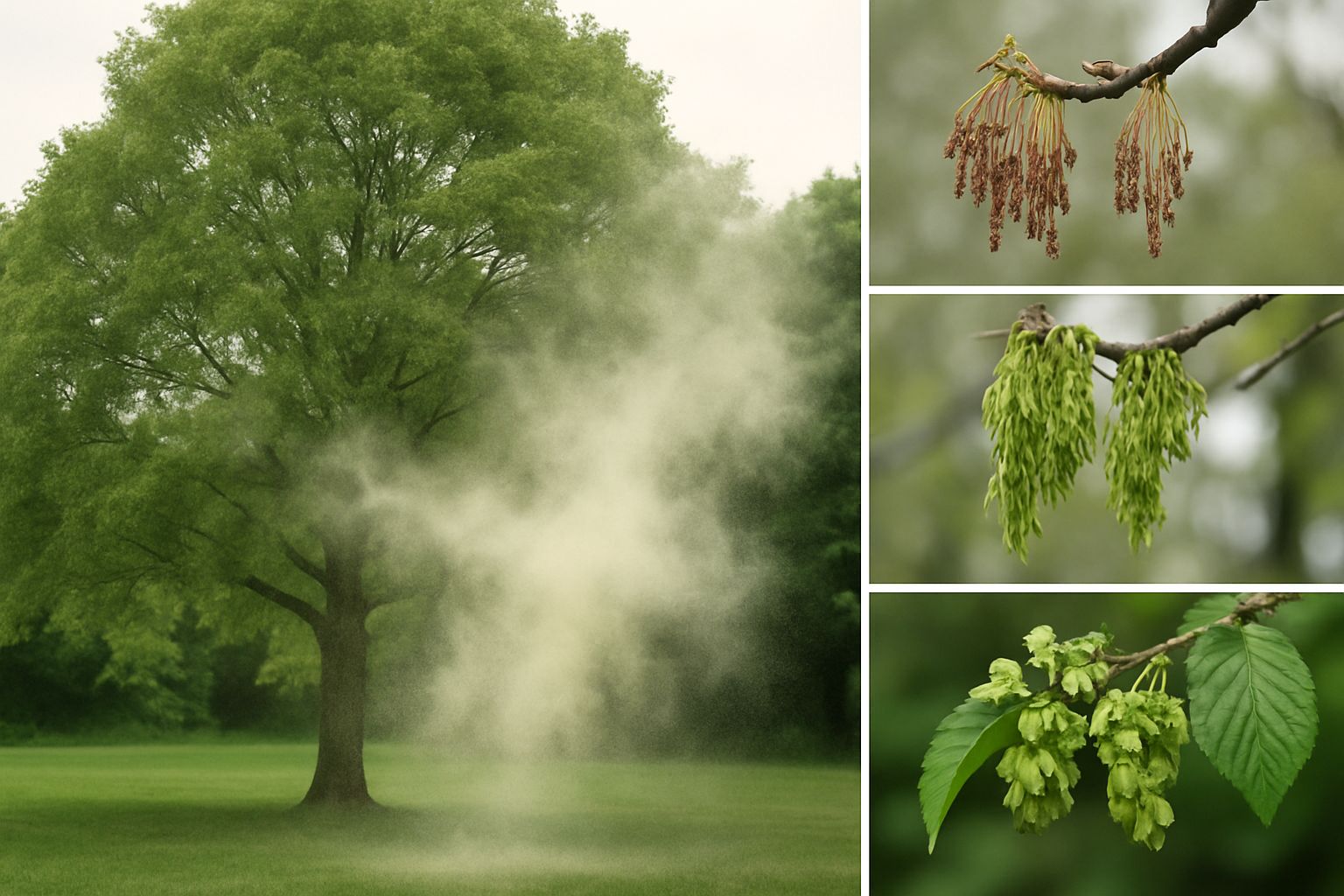
Not all pollen is created equal. Plants that rely on wind for pollination produce enormous quantities of lightweight, dry, airborne pollen — it has to travel far and wide to find a target. Trees like male maples, ash, and elm release this pollen in early spring before you’ve even opened your windows for the season. It’s invisible, it’s everywhere, and it’s the primary driver of spring allergy symptoms in Rockford.
Insect-pollinated plants work completely differently. Their pollen is heavier, stickier, and designed to attach to a bee or butterfly rather than drift through the air. Those large, showy flowers you see on redbuds, serviceberries, and viburnums? That’s the plant advertising to pollinators, not broadcasting pollen into the wind. For allergy sufferers, that distinction changes everything about how you should think about your plant list.
Why Native Plants Produce Less Problematic Pollen
In Thomas Leo Ogren’s book Allergy-Free Gardening, plants are rated on an allergen scale from 1 (lowest risk) to 10 (highest risk). The scale factors in pollen weight, dryness, stickiness, volume produced, and bloom timing. Most Rockford-native species that rely on insect pollination score at the low end of this scale. Meanwhile, invasive species that have crept into our landscapes — Russian Olive scores a 9, Buckthorn scores a 9, and Male Privet hits a 10 — are among the worst offenders. Many of these are already growing in Rockford yards right now, but there are ideas and tips to manage these invasive species effectively.
Rockford’s USDA Zone 5b and What It Means for Plant Selection
Zone 5b is demanding. A plant that thrives in Zone 6 Chicago suburbs may not survive a standard Rockford winter, and a plant rated for Zone 4 northern Wisconsin may be overbuilt for what we need. The sweet spot is plants that evolved specifically in northern Illinois prairie, savanna, and woodland ecosystems — they’re already dialed in. Every tree, shrub, and perennial on this list has been chosen because it performs in Zone 5b without special treatment, not because it looks good in a catalog photo.
Best Low Pollen Native Trees for Rockford Landscapes
Tree selection is the most consequential decision in any landscape project. A tree you plant today will still be growing — or failing — 50 years from now. In Rockford, the native tree options that combine low allergen profiles with long-term structural strength are mostly oaks, with a few outstanding smaller-canopy species rounding out the list.
- Bur Oak (Quercus macrocarpa) — The most adaptable large native tree for Rockford, tolerating drought and clay equally well
- Swamp White Oak (Quercus bicolor) — First choice for low-lying or periodically wet sites
- Red Oak (Quercus rubra) — Faster-growing oak with outstanding fall color, common in Rockford’s existing mature canopy
- Eastern Redbud (Cercis canadensis) — Best small native tree for seasonal color with very low pollen risk
- Serviceberry (Amelanchier spp.) — Four-season interest, insect-pollinated, wildlife value is exceptional
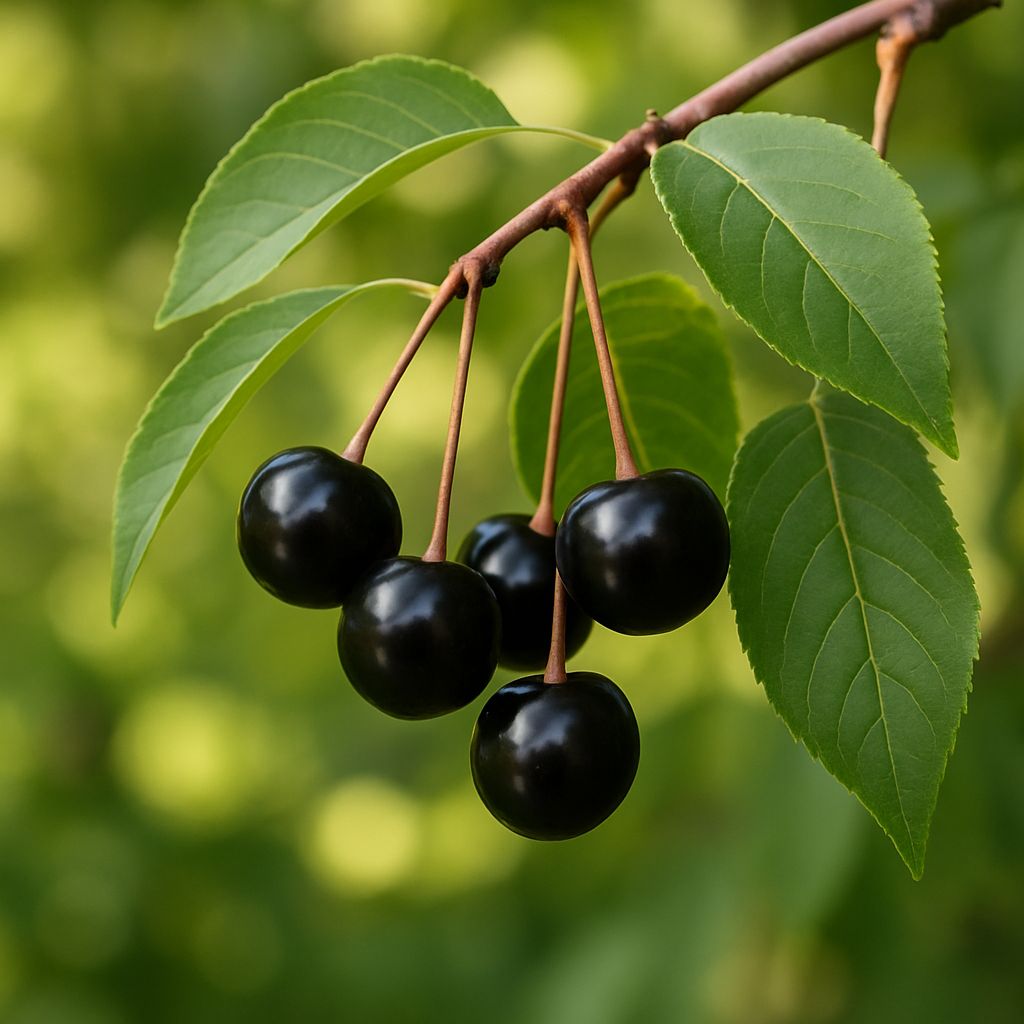
- Black Cherry (Prunus serotina) — Often underused; supports significant wildlife with late spring bloom and good fall color
What these trees share is a reliance on insects — not wind — as their primary pollination mechanism. Their pollen doesn’t get airborne in the volumes that trigger seasonal allergies. That’s the core criterion for everything on this list.
Bur Oak (Quercus macrocarpa): The Gold Standard for Rockford Landscapes
If you’re planting one tree in a Rockford yard, plant a bur oak. It’s the dominant native canopy tree of the northern Illinois savanna ecosystem, which means it evolved in exactly the conditions your yard presents — clay soil, periodic drought, harsh winters, and heavy wind. Mature specimens can reach 60–80 feet with a broad, commanding canopy. More importantly, they live for centuries and become the kind of structural anchor that defines a property.
From an allergy standpoint, bur oak produces wind-dispersed pollen like all oaks — but the bloom period is short, typically two to three weeks in mid-spring, and the pollen is released in lower volumes than non-native ornamental trees that dominate suburban landscapes. On Ogren’s allergen scale, oaks generally land in the low-to-moderate range, well below the high-allergen ornamentals they’d be replacing in most Rockford yards.
Swamp White Oak (Quercus bicolor): Best for Wet or Low-Lying Sites
Wet corners and low spots that turn into standing water after spring rains are one of Rockford’s most common landscaping challenges. Swamp white oak is the structural tree solution for those areas. It handles periodic saturation without the root rot problems that kill most ornamental trees planted in similar conditions, and it transitions equally well to drier summer conditions once the water table drops.
Visually, swamp white oak delivers exfoliating bark with peeling plates that add winter interest, and the bicolored leaves — dark green above, pale beneath — give it a distinctive look through the growing season. It’s a large tree, typically reaching 50–60 feet, so site it where it has room. Wildlife value is high, with acorns supporting over 100 species of birds and mammals across the Midwest. For those concerned about allergies, you can stay updated on seasonal allergy trends in Rockford, IL.
Eastern Redbud (Cercis canadensis): Small Tree, Big Impact
Eastern redbud is the best small native tree for Rockford landscapes where you need color, scale, and low allergy risk in the same package. It blooms before the leaves emerge — typically late April in Zone 5b — covering bare branches in clusters of vivid magenta-pink flowers that are insect-pollinated and produce essentially no airborne pollen. For allergy sufferers, it’s one of the safest flowering trees you can plant.
Mature size stays manageable at 20–30 feet, making it a practical choice for smaller yards, foundation planting areas, or as an understory tree beneath larger oaks. It handles both full sun and part shade, tolerates Rockford clay with reasonable drainage, and provides heart-shaped foliage that turns yellow in fall. Plant it where you’ll see it from a window in late April — you won’t regret it.
Serviceberry (Amelanchier spp.): Four-Season Native with Low Allergy Risk
Serviceberry might be the most underplanted native tree in Rockford. It blooms white in early spring just ahead of the redbud, produces edible blue-purple berries in June that birds strip within days, turns orange-red in fall, and holds clean gray-brown bark through winter. That’s four distinct seasons of landscape interest from one low-maintenance plant that needs nothing from you after its first year in the ground.
From an allergy standpoint, serviceberry is insect-pollinated with showy flowers that score at the very low end of Ogren’s allergen scale. It works as a multi-stem large shrub or can be trained to a single-stem small tree depending on your needs. Amelanchier canadensis, A. laevis, and A. arborea are all strong performers in Zone 5b. Size ranges from 15 to 25 feet depending on species and training.
Best Low Pollen Native Shrubs for Rockford, IL
Shrubs are the middle layer of any well-designed landscape — they connect the canopy trees above to the perennials and groundcovers below, and they do most of the seasonal heavy lifting in terms of color, texture, and wildlife habitat. The native shrubs that perform best in Rockford are tough, adaptable, and almost universally insect-pollinated, which keeps their allergy footprint minimal.
Native Viburnum (Viburnum trilobum): Best for Wet Sites and Wildlife
American cranberrybush viburnum is one of the most useful native shrubs for Rockford landscapes, particularly in areas with seasonal moisture. It handles wet conditions that would rot most ornamental shrubs, produces flat-topped white flower clusters in late spring that are insect-pollinated, and then follows up with bright red berry clusters that persist well into winter. Birds — especially cedar waxwings — target those berries hard once the weather turns cold. Fall foliage goes deep red-purple. Mature size is typically 8–12 feet, so give it space or plan on light annual pruning to keep it tidy.
Ninebark (Physocarpus opulifolius): Hardy, Versatile, and Deer Resistant
Ninebark is one of those plants that thrives on neglect — which makes it perfect for Rockford’s demanding conditions. It tolerates clay soil, periodic drought, part shade, and even road salt spray better than almost any other native shrub. The exfoliating bark peels back in layers of cinnamon and tan through winter, white flower clusters appear in late spring, and the seed heads persist through fall, providing wildlife food. Deer generally leave it alone, which puts it on a short list of dependable options for properties bordering natural areas. Native straight-species ninebark reaches 6–10 feet; cultivars like Physocarpus opulifolius ‘Diablo’ are more compact and add deep burgundy foliage to the mix.
New Jersey Tea (Ceanothus americanus): Drought-Tough and Pollinator-Friendly
Don’t let the name fool you — New Jersey Tea is a true Illinois native that thrives in the dry, sunny conditions common to many Rockford landscape sites, particularly on south-facing slopes or areas with sandy loam over clay. It stays compact at 3–4 feet, produces dense clusters of white flowers in early summer that are magnets for native bees, and fixes its own nitrogen — meaning it actually improves your soil over time. On Ogren’s allergen scale, insect-pollinated shrubs like this one consistently land at the low end. After establishment, it’s essentially drought-proof, making it one of the most low-maintenance options on this entire list.
Buttonbush (Cephalanthus occidentalis): Best Shrub for Wet Problem Areas
If you have a chronically wet corner, a drainage swale, or a spot that holds standing water after rain events, buttonbush is your answer. It’s one of the few native shrubs that actually prefers saturated soil conditions, growing naturally along stream banks and pond edges across northern Illinois. The spherical white flower heads that appear in midsummer are unlike anything else in the native palette — they look architectural, almost tropical — and they draw an extraordinary range of pollinators. Allergy risk is minimal due to insect pollination. Mature size is 6–12 feet depending on moisture availability, and fall color adds a final note of yellow-orange before leaf drop. Learn more about pollinator garden tours in Illinois.
Best Low Pollen Native Perennials for Rockford, IL
- Black-eyed Susan (Rudbeckia hirta) — Long-blooming, drought-tolerant, insect-pollinated, and one of the most reliable sun perennials in Zone 5b
- Butterfly Weed (Asclepias tuberosa) — Brilliant orange bloom, essential monarch habitat, extremely low pollen risk
- Wild Bergamot (Monarda fistulosa) — Lavender bloom in midsummer, exceptional drought tolerance, insect-pollinated
- Prairie Dropseed (Sporobolus heterolepis) — Fine-textured native grass, low allergen, exceptional four-season form
- Wild Columbine (Aquilegia canadensis) — Best early-season native for dry shade under oaks
- Solomon’s Seal (Polygonatum biflorum) — Elegant arching stems for deep shade, virtually zero allergy risk
- Pennsylvania Sedge (Carex pensylvanica) — Native groundcover alternative to turf grass under tree canopies
- Cardinal Flower (Lobelia cardinalis) — Intense scarlet bloom for wet sites, hummingbird magnet
- Joe Pye Weed (Eutrochium maculatum) — Tall late-season bloom for wet areas, pollinators love it
- Blue Flag Iris (Iris virginica shrevei) — Native iris for wet sites, stunning violet bloom in late spring
Perennials are where a Rockford native landscape really comes alive through the seasons. The trees provide structure, the shrubs provide mass and habitat — but the perennials deliver the color progression, the pollinator activity, and the textural variety that makes a garden feel intentional rather than just planted. Every species on this list is adapted to Zone 5b conditions without supplemental care after the establishment season.
One thing that surprises most Rockford homeowners is how many of these perennials handle clay soil without amendments. Unlike imported ornamental perennials that demand loamy, well-draining beds, most Illinois prairie natives evolved in heavy clay. They’ve developed deep root systems — some extending 10–15 feet down — that access water and nutrients far below the surface. That’s why they stay green and upright during the August dry spells that turn ornamental beds crispy.
The allergy advantage with native perennials is significant. Because nearly all of these species rely on insects, butterflies, or hummingbirds for pollination, their pollen is heavy, sticky, and stays put. It doesn’t become part of the airborne pollen load that drives Rockford’s spring and summer allergy season. You can plant an entire perennial border with these species and actually reduce the allergenic load in your immediate outdoor environment compared to a conventional ornamental planting.
Sun Perennials That Work Hardest in Rockford Gardens
Black-eyed Susan is the workhorse of the Rockford native perennial palette. It blooms from late June through September, handles full sun and clay soil without complaint, reseeds reliably without becoming aggressive, and scores at the absolute low end of any pollen allergen scale due to its insect-pollinated structure. Plant it in drifts of five or more for the most visual impact.
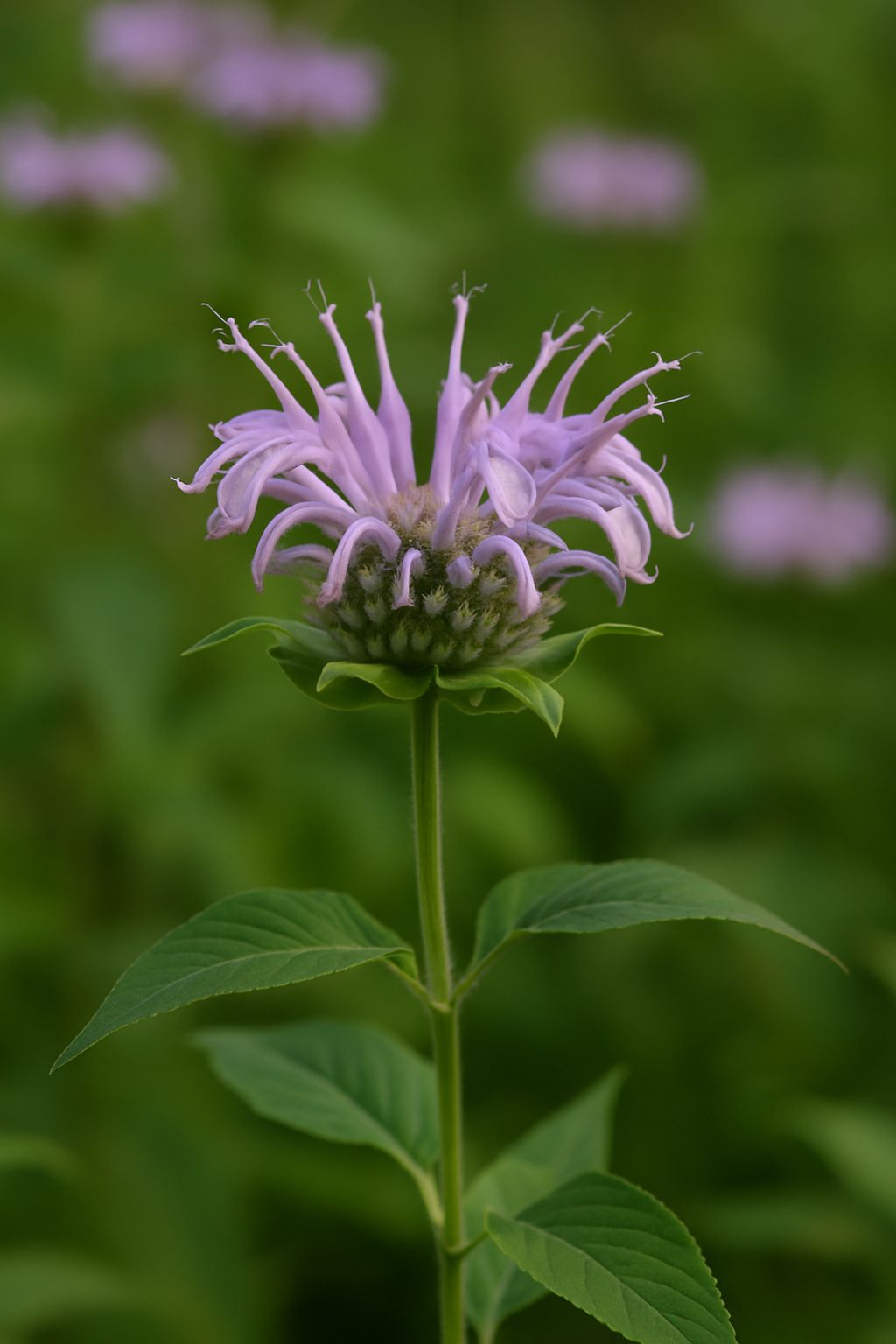
Wild bergamot (Monarda fistulosa) is the better choice over its close relative bee balm (M. didyma) for most Rockford sites. Where M. didyma wants consistent moisture, wild bergamot is genuinely drought-tolerant once established — a critical distinction for the dry midsummer conditions common to many Rockford yards. The lavender bloom runs through July and August and draws a remarkable variety of native bees, including several specialist species that only forage on Monarda.
Butterfly weed (Asclepias tuberosa) deserves a spot in every Rockford sun garden. The intense orange bloom in July is one of the most vivid colors in the native palette; it’s an essential larval host and nectar habitat for monarch butterflies, and it’s among the most drought-tolerant perennials you can plant in Zone 5b. One important note: it emerges late in spring — often not until mid-May — so mark its location carefully in fall to avoid accidentally digging it up.
Native Grasses That Replace High-Pollen Lawn Alternatives
Most conventional turf grasses — Kentucky bluegrass, fescue blends, perennial ryegrass — release significant wind-dispersed pollen through summer. They’re a direct contributor to the airborne pollen load in your immediate environment, and they require constant mowing, irrigation, and fertilization to maintain. Native grasses flip that equation entirely.
Prairie dropseed (Sporobolus heterolepis) is the best fine-textured native grass for Rockford landscapes. It forms neat, fountain-shaped clumps roughly 18–24 inches tall, blooms with delicate airy seed heads in late summer that smell faintly of coriander, and turns bright orange-gold in fall before going dormant. It’s slow to establish — give it two full seasons before judging it — but once it’s settled in, it’s essentially indestructible and requires only an annual cutback in late winter.
Little bluestem (Schizachyrium scoparium) is the other essential native grass for Rockford sun gardens. It grows 2–4 feet tall in upright steel-blue clumps through summer, then shifts to copper-rust-orange in fall — one of the best fall color plants in the entire native palette, grass or otherwise. It holds its form through winter, providing structure and bird habitat when everything else has gone flat. Both prairie dropseed and little bluestem score low on allergen scales because their pollen is produced in relatively small quantities and has lower wind-dispersal efficiency than turf grass species.
Native Grass Comparison for Rockford, IL Landscapes
Prairie Dropseed (Sporobolus heterolepis) — Height: 18–24” | Sun: Full | Soil: Dry to average | Allergen Risk: Low | Best Use: Border edging, mass planting
Little Bluestem (Schizachyrium scoparium) — Height: 2–4′ | Sun: Full | Soil: Dry to average | Allergen Risk: Low | Best Use: Meadow borders, slope stabilization
Pennsylvania Sedge (Carex pensylvanica) — Height: 6–10” | Sun: Part to full shade | Soil: Dry shade | Allergen Risk: Very Low | Best Use: Groundcover under oaks and maples
Blue Wild Rye (Elymus canadensis) — Height: 3–5′ | Sun: Full to part shade | Soil: Average to moist | Allergen Risk: Low | Best Use: Naturalized areas, erosion control
Best Native Perennials for Dry Shade Under Oaks and Maples
Dry shade under established trees is one of the hardest planting conditions in any Rockford yard — the tree roots outcompete almost everything for water, and the canopy blocks rainfall. Pennsylvania sedge (Carex pensylvanica) is the single best groundcover solution for these areas. It forms a low, fine-textured carpet 6–10 inches tall that stays semi-evergreen through Rockford winters, spreads slowly by rhizome to fill in gaps, and requires almost no maintenance beyond an occasional spring trim. Wild columbine (Aquilegia canadensis) adds early-season red and yellow flowers above the sedge layer in April and May before the tree canopy fully closes in, and Solomon’s seal (Polygonatum biflorum) provides elegant arching stems with white hanging bell flowers through the summer shade. All three are insect-pollinated with negligible allergy risk. For more information on native plants, visit Native Plants Rockford Illinois Zone 5b.
Native Perennials for Wet or Periodically Saturated Sites
Wet sites in Rockford are an opportunity, not a liability — if you plant the right species. Cardinal flower (Lobelia cardinalis) is the showstopper for these areas: intense scarlet spikes reaching 3–4 feet in late summer that are one of the most reliable hummingbird plants in the Midwest. It reseeds prolifically in moist conditions, so once you establish a colony, it maintains itself. Joe Pye weed (Eutrochium maculatum) provides the vertical structure in wet areas, reaching 5–7 feet with large dusty-rose flower heads in late summer that support an exceptional diversity of late-season pollinators.
Blue flag iris (Iris virginica shrevei) is the early-season wet-site perennial, blooming in late May with violet-blue flowers that are genuinely stunning in mass plantings along drainage swales or rain gardens. It naturalizes well and spreads to form colonies over time. Combine it with Joe Pye weed and cardinal flower, and you have a three-season wet-site planting that requires zero inputs after establishment and produces essentially no allergenic pollen.
Non-Native Plants to Remove From Your Rockford Yard
Choosing the right native plants is only half the equation. The other half is identifying what already exists in your landscape that’s actively working against your allergy goals — and in many cases, against the broader health of Rockford’s natural areas.
Several non-native ornamentals that became popular in Midwest landscaping over the past 30–40 years have since been identified as both invasive and high-allergen. They spread aggressively into natural areas, crowd out the native species that support local wildlife and ecosystems, and score at the high end of Ogren’s allergen scale. The combination of invasive behavior and high pollen production makes them a double liability in any Rockford yard.
The good news is that every plant on the removal list has a strong native replacement that performs the same landscape function — same screening, same fall color, same flowering season — without the ecological damage or the allergy risk. Removing these plants and replacing them with natives is the highest-leverage single action most Rockford homeowners can take to improve their landscape. For more insights on seasonal allergies, check out Rockford’s real-time seasonal allergy trends.
Bradford Pear and Norway Maple: Invasive and High Risk
Bradford pear (Pyrus calleryana) became one of the most-planted street and landscape trees in the Midwest through the 1980s and 90s. It’s now recognized as aggressively invasive across Illinois, escaping cultivation into natural areas and roadsides where it outcompetes native species. Beyond the ecological damage, it’s structurally weak — the tight branch angles that give it its distinctive upright form make it highly susceptible to splitting under ice or wind load, a real problem in Rockford winters. Pollen allergen risk is moderate to high. Replace it with native serviceberry for a similar flowering season and scale at a fraction of the allergy and maintenance cost. For those interested in supporting local ecosystems, consider exploring pollinator garden tours in Illinois.
Norway maple (Acer platanoides) is a different kind of problem. It leafs out earlier and holds leaves later than native maples, shading out spring ephemerals and native understory plants beneath it. Its shallow, dense root system is notoriously hostile to any underplanting. And as a wind-pollinated tree that releases pollen in early spring, it contributes directly to the seasonal allergy burden in your yard. Native sugar maple or red oak are the appropriate replacements, depending on your site conditions.
Burning Bush and Japanese Barberry: Why They Need to Go
Burning bush (Euonymus alatus) is one of the most common landscape shrubs in Rockford — and it scores a 7 on Ogren’s allergen scale, meaning it’s a meaningful contributor to your yard’s pollen load. Beyond allergen risk, it’s classified as invasive in Illinois, spreading by bird-dispersed seed into woodland edges and natural areas throughout the region. The fall color that made it popular can be matched or exceeded by native viburnums, native itea, or oakleaf hydrangea — all of which score far lower on the allergen scale and support wildlife rather than disrupting it. Japanese barberry presents a similar profile: invasive in Illinois natural areas, high enough on the allergen scale to be worth removing, and easily replaced by native shrubs that serve the same screening or border function without the ecological downside. For more insights on local plant trends, check out Rockford’s real-time seasonal allergy trends.
How to Design a Low Pollen Native Landscape in Rockford
Getting a native landscape right in Rockford isn’t complicated, but it does require thinking in a specific sequence — site conditions first, plant selection second, aesthetics third. When you flip that order and start with what looks good in a photo, you end up fighting your soil, your drainage, and your microclimate for the life of the planting. Start with what your site actually is, and the plant list almost writes itself.
- Assess sun exposure — Full sun (6+ hours), part shade (3–6 hours), or full shade, measured in midsummer when the canopy is fully leafed out
- Identify drainage patterns — Where does water pool after a heavy rain? Where does it drain first? Wet and dry zones often exist within the same small yard
- Test or observe your soil — Rockford clay is the default, but disturbed urban soils can vary significantly within a single property
- Note existing trees — Mature oaks and maples create dry shade conditions that most plants can’t handle; plan those zones separately
- Map deer pressure — Properties bordering natural areas or forest preserves need a deer-resistant plant list; most native grasses and aromatic species qualify
Once you have a clear picture of your site conditions, match plants from this article to each zone. A bur oak for your sunny, dry front yard. A swamp white oak or buttonbush for the low corner that stays wet. Pennsylvania sedge under the existing maple. A drift of black-eyed Susans and wild bergamot along the sunny south fence line. The right plant in the right spot needs almost nothing from you — and that’s the goal.
What distinguishes a great Rockford native landscape from a mediocre one isn’t the plant list — it’s the layering. Canopy trees provide structure and cooling. Native shrubs create the mid-story that feeds birds through winter. Perennials and grasses fill the ground layer with seasonal color and pollinator habitat. When all three layers are present, the landscape feels complete, balanced, and intentional — not just scattered plants in mulch beds.
Match Plants to Your Site Conditions First
Rockford’s most common landscaping failure is planting a sun-lover in part shade, or a dry-site species in a wet corner, because it looked right at the nursery. Native plants are adapted to specific niches — swamp white oak wants wet feet, New Jersey tea wants dry sun, Pennsylvania sedge wants dry shade. Forcing a plant into the wrong conditions doesn’t just slow its establishment; it keeps it permanently stressed, which means more pest pressure, more disease, and eventual replacement. The ten minutes you spend assessing your site conditions before buying a single plant is the highest-return time investment in the whole project. For more ideas on creating sustainable garden spaces, check out these eco-friendly urban garden kits.
The 60/40 Native-to-Ornamental Ratio That Works Best
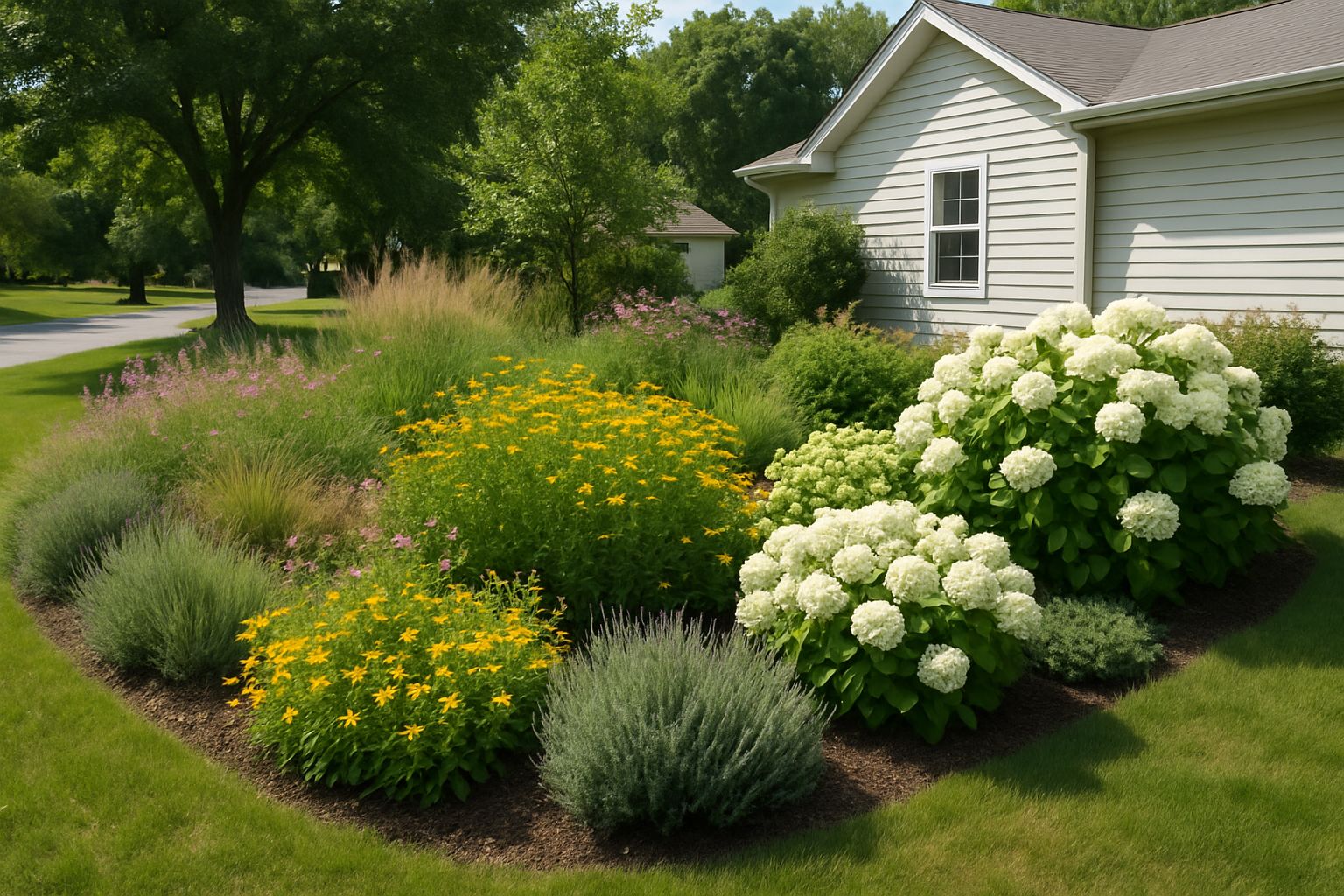
A pure-native landscape is a legitimate and ecologically valuable goal, and some Rockford homeowners go that route successfully. But for most residential projects — especially those where curb appeal, neighborhood context, and specific aesthetic requirements matter — a 60–70% native, 30–40% selected non-native ornamental blend delivers the best results. The natives provide the ecological function, the allergy reduction, and the low-maintenance backbone. The carefully chosen non-natives fill specific roles — a particular color in a specific season, a precise form for a focal point — where no native quite fits the need. The keyword is selected: every non-native in a Rockford landscape should be chosen deliberately, not defaulted to because it was on the nursery cart.
Establishment Year Care: The One Season That Matters Most
Native plants are not zero-maintenance in year one. The establishment season — the first full growing season after planting — is when the plant is investing all its energy into root development rather than top growth. During this period, consistent soil moisture is critical even for drought-tolerant species. The rule of thumb is one inch of water per week through the first summer, either from rain or supplemental irrigation, delivered slowly and deeply rather than frequent shallow watering. For more insights on maintaining your garden, explore our seasonal maintenance tips.
Mulch is your best tool for establishment success. A 3-inch layer of wood chip mulch over the root zone retains moisture, moderates soil temperature, and suppresses the weed competition that is the single biggest threat to newly planted natives in Rockford. Keep mulch pulled back 2–3 inches from the trunk or crown of each plant to prevent rot. Refresh it in year two if it’s broken down significantly.
By year two, most native perennials and shrubs are largely self-sufficient. By year three, you’ll notice the difference in how little you’re doing compared to a conventional ornamental landscape. Trees take longer — plan on watering during drought in years one through three for any native tree, then step back and let the root system do its job. The long-term payoff of that three-year investment is a landscape that runs almost entirely on rainfall, with no fertilizer, minimal pruning, and no replanting cycle. For more information on native plants suitable for your area, check out this guide to native plants in Rockford, Illinois.
Establishment Year Watering Guide for Rockford Native Plants
Native Perennials — Water deeply once per week during dry stretches in year one. Most are self-sufficient by year two.
Native Shrubs (small, under 4 feet) — Deep watering twice per week for the first 6–8 weeks, then weekly through the first summer. Largely independent by year two.
Native Shrubs (large, 4–10 feet) — Weekly deep watering through the entire first growing season. Monitor in year two during July–August drought periods.
Native Trees (up to 3-inch caliper) — Weekly deep watering for the full first season; continue during drought in years two and three. After year three, supplemental water is rarely needed.
Native Grasses — Water weekly in year one, especially prairie dropseed, which establishes slowly. Expect limited top growth in year one — root development is happening underground.
Your Low Pollen Rockford Garden Starts With the Right Plant in the Right Spot
Every plant on this list is growing successfully somewhere in Rockford right now — in yards, along forest preserve edges, in rain gardens and parkway strips and backyard prairie patches. They don’t need special soil, special irrigation, or special attention after that first critical season. What they need is to be matched to the right conditions and given the time to establish. Do that, and you get a landscape that reduces your allergy exposure, supports the native bees and birds that have been disappearing from northern Illinois for decades, and gets easier to maintain every single year. That’s a better trade than anything the ornamental nursery catalog has to offer. Tree Care Enterprises can help you bring this kind of landscape to life — from plant selection through installation and beyond.
Frequently Asked Questions
What native trees have the lowest pollen in Rockford IL?
The native trees with the lowest allergy risk for Rockford are Eastern redbud (Cercis canadensis), serviceberry (Amelanchier spp.), and black cherry (Prunus serotina). All three are insect-pollinated, which means their pollen is heavy, sticky, and designed to attach to pollinators rather than drift through the air. Oaks — including bur oak and swamp white oak — are wind-pollinated and produce slightly more airborne pollen, but their bloom periods are short and their allergen ratings are significantly lower than the non-native ornamental trees most commonly removed from Rockford landscapes.
Are native plants really better for allergy sufferers?
Yes, in most cases — but the key distinction is between insect-pollinated and wind-pollinated species, not simply native versus non-native. Native insect-pollinated plants like redbud, serviceberry, viburnum, and most native perennials produce pollen that stays on the plant rather than becoming airborne. This directly reduces the allergenic load in your immediate outdoor environment.
The bigger allergy win comes from what you’re replacing. The non-native ornamentals most commonly found in Rockford yards — including burning bush (Ogren allergen score: 7), Russian olive (score: 9), buckthorn (score: 9), and male privet (score: 10) — are among the highest-rated allergy plants in the regional landscape. Removing them and replacing them with low-allergen natives doesn’t just neutralize a pollen source — it actively reduces the total allergenic burden in your yard.
Which native plants survive Rockford’s clay soil?
Most of the native plants on this list handle Rockford clay without amendment because they evolved in exactly those conditions. The strongest clay performers include bur oak, swamp white oak, ninebark, native viburnums, black-eyed Susan, wild bergamot, prairie dropseed, Joe Pye weed, and Pennsylvania sedge. These species have developed deep, aggressive root systems over thousands of years in northern Illinois clay soils — systems that break through compaction, access deep moisture, and anchor the plant through freeze-thaw cycles that heave shallower-rooted ornamentals right out of the ground.
The one important nuance is drainage. Clay soil that drains slowly but eventually clears is suitable for most of these species. Clay that holds standing water for more than 48–72 hours after a rain event narrows your options to the wet-site specialists: swamp white oak, buttonbush, cardinal flower, Joe Pye weed, blue flag iris, and native viburnums. Placing a drainage-sensitive native like butterfly weed or New Jersey tea in a chronically saturated spot will kill it regardless of how well it handles dry clay elsewhere on the property.
When is the best time to plant native trees and shrubs in Rockford IL?
Fall planting — specifically September through mid-October — is the best window for native trees and shrubs in Rockford. Soil temperatures are still warm enough to encourage root establishment, air temperatures have dropped enough to reduce transplant stress, and the plant naturally enters dormancy shortly after planting, which gives the root system time to settle in before the demands of a full growing season begin. The result is a plant that breaks dormancy in spring with an established root foothold rather than starting from zero.
Spring planting is the second-best option and works well for most native perennials and grasses. Plant after the last hard frost — typically late April to early May in Zone 5b — and water consistently through the first summer. Avoid planting trees and large shrubs in midsummer if at all possible; the combination of heat stress and transplant stress during Rockford’s July and August dry periods makes establishment significantly harder and increases the risk of losing the plant in year one.
Can I mix native and non-native plants in the same landscape?
Absolutely — and for most Rockford residential landscapes, a thoughtful mix is the most practical approach. A 60–70% native, 30–40% selected non-native framework gives you the full ecological and allergy-reduction benefits of a native-forward design while leaving room for specific ornamental choices that serve defined aesthetic or functional roles the native palette doesn’t fully address.
The non-natives that work best in a Rockford mixed landscape are those that are non-invasive, have low allergen ratings, and offer something specific — a particular bloom color, a specific size and form, or a seasonal role — that no native quite fills. The non-natives to avoid are the known invasives: Bradford pear, Norway maple, burning bush, Japanese barberry, Russian olive, and buckthorn. These don’t just underperform ecologically — they actively spread into natural areas and increase the regional pollen and allergen load for everyone.
The clearest practical guidance: choose non-natives by exception, not by default. Every non-native in your Rockford landscape should be there because it fills a specific gap that no native can fill, not because it was available at the nursery or looked good in a photo. When you apply that filter, the non-native portion of your plant list gets smaller and more intentional — and the overall landscape performs better for it.