- Wind-pollinated herbs like fennel and dill are among the most common garden triggers — switching to insect-pollinated varieties can dramatically reduce your exposure during peak allergy season.
- Nettle leaf contains natural antihistamine compounds that can measurably reduce seasonal allergy symptoms when harvested and prepared correctly.
- Goldenrod is one of the most misunderstood herbs in allergy gardening — most people avoid it when they should actually be growing it.
- A well-planned allergen-friendly herb garden follows a monthly calendar that aligns planting, harvesting, and storing with your local pollen season.
- Pollen Urban Free Garden specializes in low-allergen growing solutions and practical guidance for allergy-prone gardeners who want to grow without the sneezing.
Most herb gardens are quietly working against allergy sufferers — and the frustrating part is that nobody warns you at the garden center.
Article-at-a-Glance: Grow Herbs That Help, Not Hurt
This guide covers which herbs are genuinely safe to grow, which common ones secretly trigger reactions, how to set up your growing space to minimize mold and pollen exposure, and a month-by-month planting calendar so your allergy toolkit is ready before symptoms hit. You’ll also find two simple home preparations you can make from your own harvest.
Most Herb Gardens Trigger Allergies — Here’s How to Fix That
“Herb Allergy: Understanding Diagnosis …” from www.wyndly.com and used with no modifications.
Walk into any garden center in spring and you’ll find shelves of chamomile, fennel, yarrow, and tansy — all commonly sold as “medicinal herbs.” What the labels don’t tell you is that several of these plants belong to the Asteraceae family, the same plant family as ragweed. For anyone with seasonal pollen allergies, planting them is like inviting the problem into your backyard.
The fix isn’t avoiding herb gardens altogether. It’s knowing which herbs to grow, how to grow them in ways that limit your exposure, and when to harvest before pollen counts peak. A thoughtfully designed allergen-friendly herb garden can actually become part of your allergy management strategy rather than a source of symptoms.
What Makes a Herb “Allergen-Friendly”
An allergen-friendly herb is one that produces little to no airborne pollen, doesn’t belong to a cross-reactive plant family for common allergy sufferers, and doesn’t encourage mold growth through its cultivation habits. That’s a specific set of criteria — and it immediately rules out a surprising number of popular garden herbs.
It’s also worth separating two distinct goals here. Some herbs are allergen-friendly simply because they won’t trigger a reaction when you grow them. Others go a step further — they actively contain compounds shown to reduce allergy symptoms like histamine release, sinus inflammation, and nasal congestion. The best allergen-friendly herb garden does both. For more tips on managing your garden, check out our natural pest management guide.
Two criteria every herb in this guide meets:
1. Low or no airborne pollen risk when grown correctly.
2. Does not belong to a high-cross-reactivity plant family for ragweed, grass, or birch pollen allergy sufferers — unless specifically noted with guidance.
The Difference Between Wind-Pollinated and Insect-Pollinated Herbs
Wind-pollinated plants release enormous quantities of lightweight pollen into the air because they rely on the wind — not bees — to reproduce. Insect-pollinated plants, by contrast, produce heavier, stickier pollen that stays on the flower and gets transferred by pollinators. That difference is everything for allergy sufferers. Fennel, dill, and mugwort are all wind-pollinated herbs that can spike local pollen counts. Basil, mint, and elderflower are insect-pollinated and present a far lower airborne risk.
Why Some Herbs Trigger Reactions Even Without Pollen
Pollen isn’t the only problem. Some herbs trigger contact dermatitis when handled — fresh nettle being the most obvious example due to its formic acid-loaded stinging hairs. Others release volatile aromatic compounds that can irritate the airways of people with chemical sensitivities, even when there’s no pollen involved. Strongly scented herbs like rosemary, thyme, and oregano fall into this category for sensitive individuals. Mold is another hidden trigger: herbs grown in dense, poorly ventilated clusters or in consistently damp soil create ideal conditions for mold spores, which are a major but underrecognized allergy driver.
How to Spot Low-Allergen Herbs at a Nursery or Seed Catalog
Most nurseries don’t label plants by pollination type or allergen risk, so you have to know what to look for yourself. A few reliable signals help narrow it down quickly. For more guidance, check out this herbs for allergies relief guide.
- Flower structure: Tubular or complex flowers (like mint, elderflower, and borage) are almost always insect-pollinated and lower risk.
- Family name: Avoid anything in the Asteraceae (daisy) family if you have ragweed allergies — this includes chamomile, echinacea, yarrow, and calendula.
- Seed catalog descriptions: Look for terms like “entomophilous,” “insect-pollinated,” or “low pollen” in specialty catalogs. These are not common labels but are worth searching for.
- OPALS rating: The Ogren Plant Allergy Scale (OPALS) rates plants from 1 (least allergenic) to 10 (most allergenic). Aim for plants rated 1–4 for your primary garden space.
- Avoid “feathery” or “umbrella-shaped” flower heads: These are typical of the Apiaceae family (fennel, dill, caraway) — predominantly wind-pollinated.
The Best Allergen-Friendly Herbs to Grow
The following herbs all meet both criteria — low pollen risk when grown correctly, and documented therapeutic value for allergy sufferers. Each one has a slightly different growing profile, so knowing what you’re working with before you plant saves a lot of frustration later.
Nettle: The Anti-Histamine Herb You Can Grow in a Container
Stinging nettle (Urtica dioica) is one of the most clinically studied herbs for seasonal allergy relief. Research has shown that freeze-dried nettle leaf inhibits several key inflammatory pathways involved in allergic response, including histamine release and prostaglandin formation. A study published in Planta Medica identified nettle’s ability to inhibit pro-inflammatory cytokines as a key mechanism behind its antihistamine effect.
Despite its intimidating name, nettle is one of the easiest allergen-friendly herbs to grow in a container — which is actually the preferred method, since it spreads aggressively in open soil. Use a deep pot of at least 12 inches, a rich loamy mix, and keep it in a semi-shaded spot. Wear gloves during handling. Once blanched in boiling water for 60 seconds, the sting is completely neutralized and the leaves are safe to use in teas, tinctures, or food.
Elderflower: A Beginner-Friendly Shrub With Real Allergy Benefits
Elderflower (Sambucus nigra) is one of the few truly beginner-friendly shrubs that also delivers real sinus and allergy relief. The flowers contain flavonoids — particularly rutin and quercetin — that help stabilize mast cells and reduce mucous membrane inflammation. This makes elderflower tea particularly useful during hay fever season when nasal congestion is the primary symptom.
Elder is insect-pollinated, produces minimal airborne pollen, and grows vigorously in most temperate climates with very little intervention. It prefers moist, well-drained soil and partial shade, tolerates clay, and can be grown as a container shrub if pruned annually. Harvest flowers in late spring when they’re fully open but before the yellow centers darken — that’s when the aromatic compounds are at peak concentration.
Goldenrod: The Most Misunderstood Allergy Herb in Your Garden
Goldenrod (Solidago virgaurea) gets blamed for hay fever every August and September — but it’s actually innocent. The real culprit blooming at the same time is ragweed (Ambrosia artemisiifolia), a wind-pollinated plant with invisible flowers that releases clouds of allergenic pollen. Goldenrod’s bright yellow flowers are insect-pollinated, meaning its pollen is too heavy to become airborne in meaningful quantities.
Beyond being safe to grow, goldenrod is genuinely therapeutic. European herbal medicine has long used it as an anti-inflammatory and decongestant, and research supports its role in reducing upper respiratory inflammation. Its active compounds include saponins, flavonoids, and phenolic acids, all of which contribute to its ability to ease sinus congestion and irritation.
It’s also one of the hardiest plants on this list. Goldenrod thrives in poor, dry soil with full sun — it actually performs worse in rich, fertilized beds, which makes it a low-maintenance addition to any allergen-friendly garden.
- OPALS rating: 4 out of 10 — well within the low-allergen range.
- Best use: Tincture or tea for sinus congestion and upper respiratory inflammation.
- Harvest timing: Collect flowers when approximately one-third of the flower spike has opened for highest potency.
- Companion planting note: Do not plant adjacent to ragweed, which grows wild in many North American gardens and is frequently mistaken for goldenrod.
If you grow only one herb specifically for allergy relief, goldenrod makes a strong case for that spot.
Eyebright: Why You Should Buy It Dried Rather Than Grow It
Eyebright (Euphrasia officinalis) is a traditional European remedy for itchy, watery eyes and sinus inflammation — two of the most stubborn allergy symptoms. It’s genuinely effective, but it’s also a hemiparasitic plant that attaches to the roots of nearby grasses to survive. This makes it extremely difficult to establish in a home garden without the right host grasses in place, and most home growers fail with it. The practical recommendation: source high-quality dried eyebright from a reputable supplier and skip the cultivation headache entirely. Look for organically certified dried herb from suppliers like Mountain Rose Herbs or Starwest Botanicals, and use it as a tea or eye wash preparation.
Basil, Mint, and Chamomile: Low-Pollen Kitchen Herbs That Are Safe for Most
These three are the workhorses of the allergen-friendly kitchen garden. Basil (Ocimum basilicum) and mint (Mentha spp.) are both insect-pollinated with OPALS ratings of 3 or below, making them among the safest choices for allergy-prone gardeners. Mint in particular has mild decongestant properties due to its menthol content. The important caveat with chamomile is family membership — German chamomile (Matricaria chamomilla) belongs to the Asteraceae family and can cross-react in people with ragweed allergies. If you know ragweed is a trigger for you, leave chamomile out and replace it with lemon balm (Melissa officinalis), which offers similar calming and anti-inflammatory benefits with no cross-reactivity risk. For more tips on maintaining a pollen-free garden, check out this guide on avoiding common gardening mistakes.
Herbs to Avoid If You Have Allergies
Knowing what to plant is only half the equation. The other half — the half most planting guides skip entirely — is knowing what to pull out of your garden plan before it causes problems. Several herbs that appear on “medicinal herb” lists are genuine allergy triggers, and a few are specifically dangerous for people who already react to airborne pollen.
Ragweed Relatives Hidden in Common Herb Lists
The Asteraceae family is enormous, and ragweed is just one of its members. The problem is that the human immune system doesn’t always distinguish between ragweed pollen and the proteins found in other Asteraceae plants — a phenomenon called cross-reactivity. This means that even growing non-ragweed members of this family can provoke reactions in sensitive individuals, particularly during handling or when the plants go to flower. For those looking to manage allergies, consider exploring herbs for allergy relief.
The most commonly encountered Asteraceae herbs to avoid include:
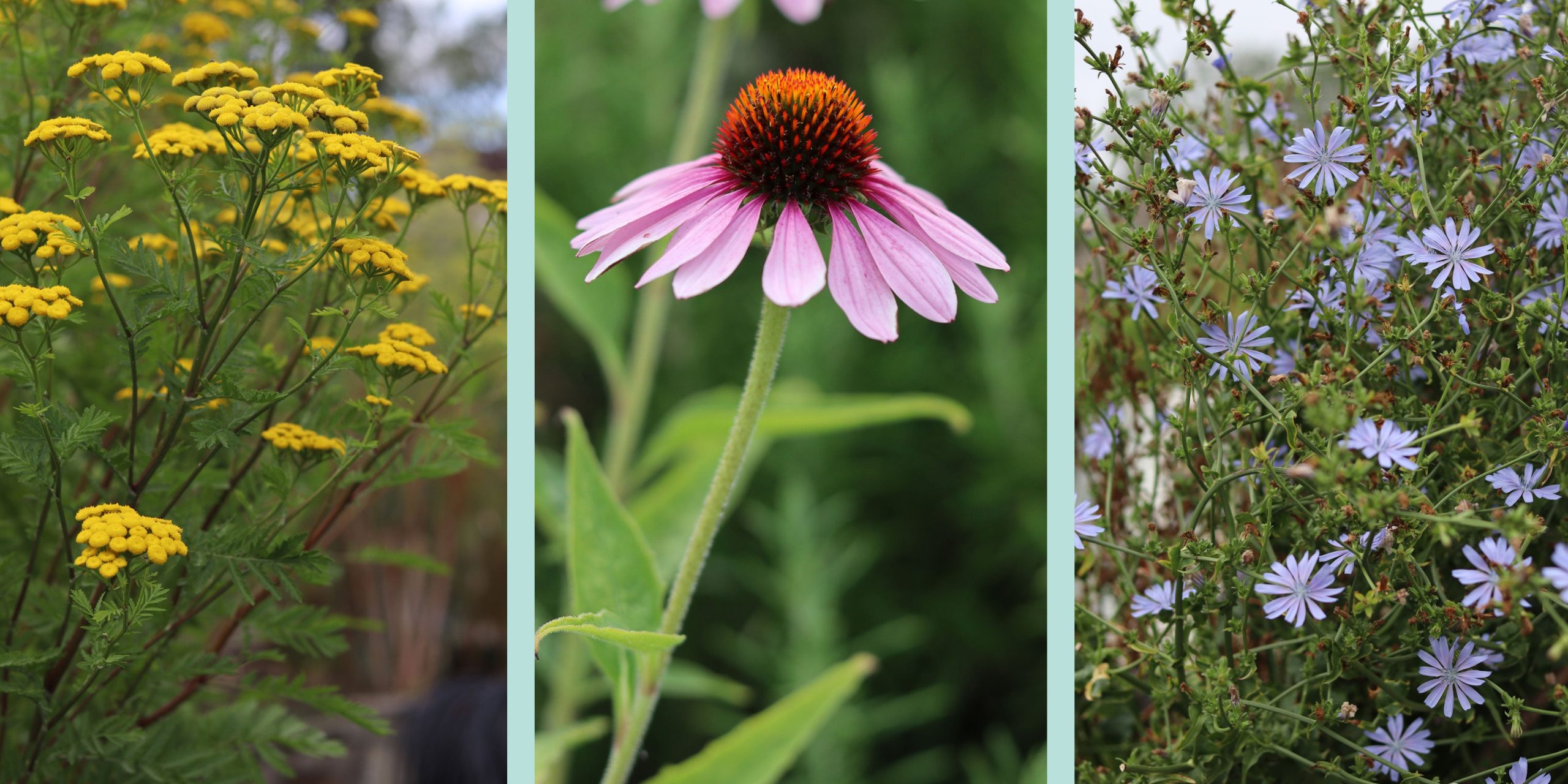
“Introducing the Asteraceae Herb Family …” from www.jekkas.com and used with no modifications.
- Chamomile (Matricaria chamomilla) — one of the most frequent cross-reactors with ragweed
- Echinacea (Echinacea purpurea) — widely sold as an immune herb but a significant Asteraceae cross-reactor
- Yarrow (Achillea millefolium) — a wind-assisted pollinator with a high OPALS rating
- Calendula (Calendula officinalis) — popular in skin preparations but risky in the garden for ragweed-sensitive growers
- Tansy (Tanacetum vulgare) — aggressive spreader with strongly allergenic aromatic compounds
- Feverfew (Tanacetum parthenium) — another Asteraceae member that cross-reacts with both ragweed and birch pollen
Artemisia Family Herbs That Cross-React With Pollen Allergies
The Artemisia genus deserves its own warning. Mugwort (Artemisia vulgaris) is one of the most potent allergenic plants in the Northern Hemisphere — its pollen is a primary trigger for late-summer allergic rhinitis across Europe and North America. What makes this particularly relevant to herb gardeners is that mugwort cross-reacts extensively with both birch pollen and a long list of foods and herbs, a syndrome known as Mugwort-Mustard Allergy Syndrome and Mugwort-Celery-Spice Syndrome in clinical literature.
Other Artemisia herbs commonly found in herb garden seed catalogs include wormwood (Artemisia absinthium), tarragon (Artemisia dracunculus), and southernwood (Artemisia abrotanum). All of these should be avoided entirely in an allergen-friendly garden. Even if you personally don’t react to them, they can dramatically increase local airborne Artemisia pollen levels — which affects your neighbors and anyone who visits your outdoor space.
Monthly Planting Calendar for Allergen-Friendly Herbs
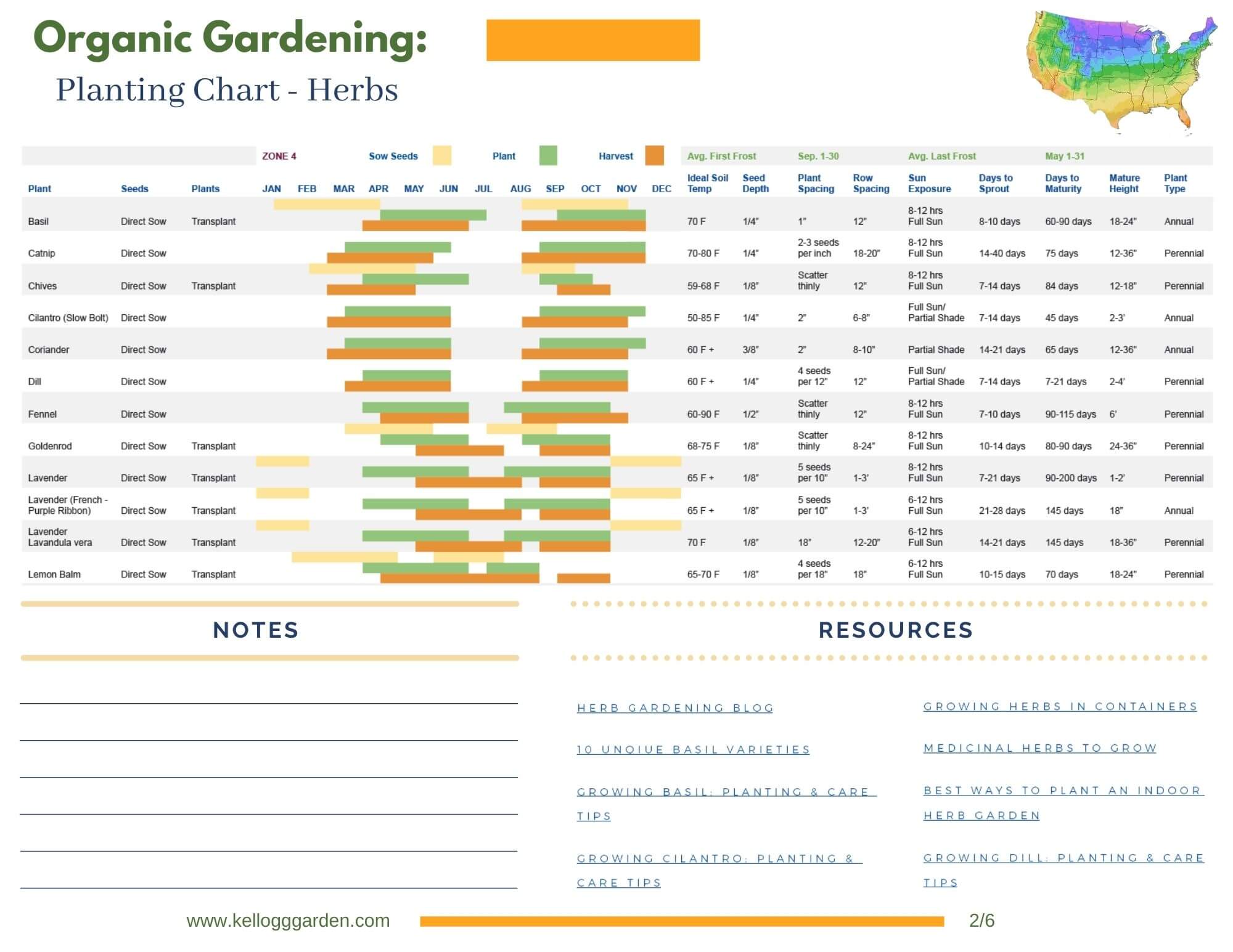
“Herb Planting Charts By Zone | Kellogg …” from kellogggarden.com and used with no modifications.
Timing is what separates an effective allergy herb garden from one that looks good but doesn’t help when you need it most. Allergy seasons are predictable — tree pollen peaks in spring, grass pollen in early summer, and weed pollen (particularly ragweed) in late summer through fall. Your planting, harvesting, and preparation schedule should work around those windows so that your remedies are ready before the season hits, not after you’re already symptomatic. For more tips on maintaining a healthy garden, check out our guide to avoiding common gardening mistakes.
January and February: Plan Your Layout and Order Seeds Early
Winter is the strategic phase. Use January and February to map your growing space, identify which herbs match your specific allergy triggers, and order seeds from reputable suppliers before stock runs low. Nettle seeds in particular sell out early at quality suppliers like Strictly Medicinal Seeds. This is also the time to check your OPALS ratings for any existing plants in your garden and flag anything rated 7 or above for removal or relocation before spring growth begins.
March and April: Start Nettle and Elderflower Indoors Before Last Frost
Nettle germinates best when cold-stratified for two to four weeks before sowing — placing seeds in a damp paper towel in the refrigerator in late February sets you up perfectly for a March indoor start. Sow into deep seed trays using a loamy seed-starting mix and keep soil consistently moist but never waterlogged. Elderflower cuttings taken from established shrubs in early spring root readily in a mixture of perlite and compost. If you’re starting elder from seed, be aware it requires cold stratification of up to 16 weeks, which means seeds started now likely won’t be ready until the following season — cuttings are the faster path.
May and June: Move Containers Outside and Begin Succession Planting
Once nighttime temperatures stay reliably above 50°F (10°C), nettle containers can move outdoors to a semi-shaded position. Harden them off over seven to ten days by gradually increasing outdoor exposure before leaving them out full-time. This is also the window to direct-sow mint and basil outdoors, and to plant goldenrod divisions if you sourced them from a local grower.
Succession planting mint every three weeks from May through early June gives you a continuous harvest through summer rather than one large flush. Use separate containers for each mint variety — spearmint, peppermint, and lemon mint all have slightly different volatile compound profiles, and having multiple options available lets you tailor preparations to specific symptoms. Peppermint’s higher menthol content makes it better for acute congestion; lemon mint is gentler and better suited to daily tonic teas.
July and August: Harvest Peak-Potency Herbs Before Flowering Peaks
The window for harvesting most medicinal herbs is tighter than most growers expect. For nettle, the most potent leaves are those harvested before the plant flowers — once flowering begins, the plant redirects its energy and the concentration of active compounds in the leaves drops measurably. In most temperate climates, this means your nettle harvest window runs from late June through mid-July. Cut stems to about one-third of the plant’s height, wearing thick gloves, and process immediately or dry within 24 hours to preserve active constituents.
Goldenrod should be harvested when roughly one-third of the flower spike has opened. Elderflower, if you didn’t harvest in late spring, may produce a second smaller flush in warmer climates — grab it. July and August are also when ragweed begins its pollen release, which makes this the most important period to keep your garden free of Asteraceae volunteers. Check beds weekly and remove any unidentified seedlings before they establish.
September and October: Dry and Store Your Harvest Before First Frost
Proper drying makes the difference between a medicinal herb and a pile of plant matter with no therapeutic value. The target drying temperature for most delicate herbs — nettle, elderflower, goldenrod — is between 95°F and 115°F (35°C–46°C). Above that range you start degrading the volatile compounds and flavonoids that give these herbs their activity. A food dehydrator with adjustable temperature settings like the Excalibur 3926TB gives you the precision a conventional oven can’t.
Once fully dried — leaves should crumble cleanly with no flexibility — store in amber glass jars away from light, heat, and humidity. Label each jar with the herb name, harvest date, and part used (leaf, flower, root). Properly dried and stored nettle leaf retains significant potency for up to 18 months. Goldenrod flowers are best used within 12 months. Discard any herb that shows color fading, clumping, or off-odor — these are signs of moisture exposure and possible mold contamination.
November and December: Prep Soil and Plan Next Year’s Allergy Toolkit
Late autumn is when you set the conditions for a stronger garden next season. For container growers, refresh the top two to three inches of potting mix and add a layer of worm castings to reintroduce microbial life before the pots go dormant. In-ground beds benefit from a cover crop of low-allergen clover or a thick mulch layer of wood chips to protect soil structure and suppress weed germination — including Artemisia and Asteraceae weeds that commonly self-seed in disturbed soil.
November is also the right time to assess what worked and what didn’t in this season’s herb garden. Did your nettle produce enough for a full season of tea? Did the goldenrod establish well or does it need a sunnier position? Make notes while the season is fresh rather than relying on memory come February planning time.
Use December to stock any gaps in your herbal toolkit with high-quality dried herbs from verified suppliers. Freeze-dried nettle leaf — which preserves active constituents better than air-dried product — is worth sourcing now while it’s in stock. This is also a good time to review your preparation recipes, restock carrier oils or alcohol for tincture-making, and check expiration dates on everything currently in your kit so nothing catches you off guard when pollen season starts again in March.
How to Set Up an Allergen-Friendly Herb Garden at Home
The physical setup of your garden matters as much as what you plant in it. Poor spacing, the wrong growing medium, and badly chosen placement can turn even the right herbs into allergy triggers — through mold, damp soil, or cross-contamination from neighboring plants. Getting the setup right from the start saves you significant frustration. For those interested in efficient water management, consider exploring common drip irrigation kit issues to ensure your garden remains healthy and allergen-free.
The three variables that matter most are: whether you grow in containers or in-ground, how you space and position plants relative to each other and to your home, and how you manage soil moisture and mulching to suppress mold. Each of these has a clear best practice for allergy-sensitive growers.
Container vs. In-Ground Growing for Allergy Sufferers
Containers win for most allergy-prone gardeners — and not just because they limit the spread of aggressive growers like nettle and mint. Container growing also gives you precise control over your soil composition, which directly affects mold spore levels. A well-draining container mix — typically two parts potting soil to one part perlite — stays aerated and dries between waterings, which is exactly the condition you want. In-ground beds, especially in clay-heavy or poorly draining gardens, tend to stay damp longer and harbor higher mold spore counts at soil level.
That said, in-ground growing makes sense for larger plants like elderflower and goldenrod, which develop extensive root systems that constrain poorly in pots. If you go in-ground with these, build raised beds with a custom soil blend rather than planting directly into native soil. A mix of topsoil, compost, and coarse horticultural grit gives you drainage and fertility without the waterlogging risk of standard garden soil. Raise the bed at least 12 inches above grade level to further improve drainage and reduce the splash-back of mold-laden soil particles onto lower leaves during watering.
Spacing and Placement to Minimize Cross-Contamination From Neighboring Plants
Keep a minimum of 18 inches between different herb species in your allergen-friendly garden, and position your therapeutic herbs — nettle, elderflower, goldenrod — upwind of any ornamental plantings you haven’t been able to fully vet for allergen risk. If you share a fence line with neighbors who grow common ragweed-family plants, a physical barrier of dense, low-OPALS shrubs like viburnum or serviceberry on that border can intercept a meaningful amount of windborne pollen before it reaches your herb beds. It won’t eliminate cross-contamination, but it reduces it significantly. For more tips, check out this guide on herbs for allergies relief.
Soil, Mulch, and Watering Habits That Reduce Mold Spore Exposure
Mold spores are one of the most underestimated allergy triggers in home gardens, and most gardeners unknowingly create ideal conditions for them. The three habits that matter most are: watering at soil level rather than overhead (wet foliage is a mold incubator), watering in the morning so soil dries before nightfall, and using a coarse wood chip or bark mulch rather than straw or leaf mold, which decompose into damp mold-rich layers at soil level. Keep mulch pulled back at least two inches from plant stems to prevent collar rot. If you notice a white or gray powdery residue on your soil surface, that’s a sign of fungal activity — improve drainage immediately and reduce watering frequency before it spreads to plant material.
Simple Home Preparations From Your Herb Garden
Growing the herbs is only the first step. What you do with them after harvest determines whether your garden actually functions as an allergy management tool or just sits in jars looking good on your shelf. The two preparations below are the most practical starting points — one for daily tonic use through allergy season, and one for acute symptom relief when congestion peaks.
Neither recipe requires specialized equipment. A basic kitchen scale, a fine mesh strainer, amber glass jars, and food-grade vegetable glycerin or high-proof vodka for tincturing are all you need to get started. If you want to take your preparations further, Pollen Urban Free Garden offers practical guidance on building a complete allergen-friendly garden and natural remedy toolkit that goes well beyond the basics covered here. Additionally, for those interested in optimizing their garden space, consider exploring custom raised garden beds for city living.
One important note before you start: the therapeutic value of any home preparation depends entirely on the quality and potency of the dried herb you’re working with. Herbs that were harvested at the wrong time, dried at too high a temperature, or stored too long will produce weak preparations regardless of how precisely you follow the recipe. Always smell your dried herbs before using them — a vibrant, strong, characteristic aroma means active compounds are still present. Faded, dusty, or off-smelling herbs should be discarded and replaced.
Both recipes below use herbs you can grow from this guide. Start with whichever matches your most pressing symptom — congestion points toward the goldenrod tincture, while itchy eyes and sneezing respond better to the nettle and elderflower tea used consistently from two to three weeks before your known allergy season begins.
- Tools needed: Kitchen scale, fine mesh strainer or muslin cloth, amber glass jars with lids, glass measuring cup, labels
- For the tea: Dried nettle leaf, dried elderflower, filtered water, optional raw honey
- For the tincture: Fresh or dried goldenrod flowers, 80-proof vodka or vegetable glycerin (for alcohol-free version)
- Storage: Teas are best consumed fresh; tinctures stored in amber glass away from heat last 3–5 years
- Dosing baseline: Both preparations are most effective when used consistently throughout allergy season, not just during acute symptom episodes
How to Make a Nettle and Elderflower Allergy Tea
Combine one teaspoon of dried nettle leaf with one teaspoon of dried elderflower in a pre-warmed ceramic teapot or French press. Pour 250ml of water that has been heated to 90°C — just below a rolling boil — over the herbs and steep covered for 10 to 15 minutes. Covering the steep is critical: the aromatic volatile compounds that contribute to elderflower’s anti-inflammatory activity evaporate rapidly in open-air steeping. Strain through a fine mesh strainer, sweeten lightly with raw local honey if desired (local honey adds trace pollen exposure that some practitioners believe supports desensitization), and drink one to two cups daily beginning two to three weeks before your allergy season starts. This tea can be prepared in larger batches and refrigerated for up to 48 hours — just reheat gently rather than boiling. For more tips on managing your garden during allergy season, check out this natural urban garden pest management guide.
A Basic Goldenrod Tincture You Can Make With Two Ingredients
Pack a clean, dry amber glass jar loosely with freshly dried goldenrod flowers — the one-third-open harvest stage gives you the best balance of saponins and flavonoids. Pour 80-proof vodka (40% alcohol) over the flowers until they are fully submerged with at least half an inch of liquid above the plant material. Seal the jar, label it with the date and contents, and store in a cool dark location for four to six weeks, shaking the jar once daily. After the maceration period, strain the liquid through a muslin cloth, pressing firmly on the plant material to extract all the tincture. Transfer to a fresh amber dropper bottle and store away from heat and light. Standard starting dosage is 2–3ml (approximately 40–60 drops) in a small glass of water, up to three times daily during peak congestion periods.
An Allergen-Friendly Herb Garden Is One of the Smartest Things You Can Grow
Most people treat their allergy symptoms reactively — reaching for antihistamines after they’re already miserable. An allergen-friendly herb garden flips that approach completely. When nettle is dried and jarred before tree pollen peaks, when goldenrod tincture is already on your shelf when ragweed season hits in August, and when your growing space is configured to minimize mold and cross-contamination, you’re managing allergies on your own terms rather than reacting to them.
The knowledge curve is steeper than a standard kitchen herb garden, but the payoff is proportional. You end up with a garden that doesn’t trigger symptoms, a set of preparations that genuinely support your body’s response to seasonal allergens, and a month-by-month rhythm that keeps you ahead of every major pollen window. That’s worth the extra planning.
Frequently Asked Questions
These are the questions that come up most often from gardeners building their first allergen-friendly herb setup. The answers below reflect practical growing reality, not idealized conditions.
Can I Grow Allergen-Friendly Herbs Indoors Year-Round?
Yes — with the right light setup. Nettle, mint, and lemon balm all grow well indoors under full-spectrum LED grow lights providing at least 14 hours of light per day. Elderflower and goldenrod are too large for practical indoor growing and are better managed as outdoor perennials. Indoor growing eliminates outdoor pollen exposure during harvest, which is a significant advantage for highly sensitive individuals. Use a well-draining potting mix with added perlite, and run a small fan nearby to improve air circulation and reduce the risk of fungal issues at soil level. For more tips on maintaining a pollen-free garden, explore our comprehensive guide.
Is Lavender Safe to Grow in an Allergy-Friendly Garden?
Lavender (Lavandula angustifolia) has an OPALS rating of 5, which places it in the moderate range — not as safe as mint or nettle, but far less problematic than Asteraceae or Artemisia herbs. Most people with standard pollen allergies tolerate lavender in the garden without difficulty, though those with fragrance sensitivities or chemical-triggered airway reactions may find its strong volatile oils irritating when working in close proximity to flowering plants. If you want lavender in your allergy-friendly garden, site it at the garden’s edge rather than in your primary herb bed, and harvest stems for drying before full bloom to reduce aromatic compound release.
How Long Before Homegrown Nettle Is Ready to Harvest for Allergy Relief?
Nettle grown from seed is typically ready for its first light harvest approximately 80 to 100 days after germination, once plants have reached at least 12 inches in height. Don’t strip more than one-third of the plant on the first harvest — this allows the root system to continue strengthening. Plants in their second and third year produce significantly more harvestable leaf biomass and tend to have higher concentrations of active compounds than first-year plants. If you’re starting from established divisions rather than seed, you can generally take a modest first harvest within four to six weeks of transplanting.
What Is the Safest Way to Handle Fresh Nettle Without Skin Irritation?
Thick nitrile or leather gloves are essential — standard latex or thin rubber gloves offer inadequate protection against nettle’s hollow silica needles, which can penetrate thin materials. When harvesting, use scissors or pruning snips rather than pulling or pinching stems with your fingers, even while gloved. Cut stems into a paper bag or basket lined with a clean cloth. If you do get stung, the traditional remedy of rubbing the affected area with a dock leaf (Rumex obtusifolius) — which frequently grows nearby in the wild — is actually supported by its alkaline sap neutralizing the formic acid from the sting. Once you process nettle through blanching (60 seconds in boiling water), drying, or blending, the sting is completely deactivated and no special handling is needed. For more tips on maintaining a safe garden environment, check out these common gardening mistakes.
Are Allergen-Friendly Herbs Safe to Use During Pregnancy?
Pregnancy requires a significantly more cautious approach to any herbal use, including the herbs covered in this guide. Several herbs that are completely safe for general adult use carry specific contraindications during pregnancy. For more information on herbs that may help with allergies, check out this guide on herbs for allergies relief.
- Nettle leaf tea in culinary amounts (one weak cup occasionally) is generally considered low-risk, but high therapeutic doses are not recommended during pregnancy due to its uterine-stimulating properties at high concentrations.
- Elderflower has limited safety data for pregnancy and is best avoided therapeutically, though occasional culinary use is unlikely to pose significant risk.
- Goldenrod is not recommended during pregnancy — it has diuretic and anti-inflammatory actions that have not been adequately studied in pregnant populations.
- Mint in culinary amounts is generally safe and may ease nausea; high-dose peppermint oil is a different matter and should be avoided.
- Eyebright should be avoided entirely during pregnancy due to insufficient safety data.
The overarching principle is to consult a qualified midwife or herbalist before using any herb therapeutically during pregnancy, even those with a strong general safety profile. What’s appropriate for a healthy non-pregnant adult is not automatically appropriate during gestation. For more information on safe herb use, you can refer to this herb guide.
That said, the garden setup practices in this guide — growing low-pollen, insect-pollinated herbs, managing mold exposure, and eliminating Asteraceae and Artemisia plants from your growing space — are beneficial regardless of pregnancy status and don’t carry the same considerations as internal therapeutic use. For more information, check out this guide on herbs for allergy relief.
If you’re looking for the safest possible approach during pregnancy and still want to use plants for allergy relief, focus on environmental management first: the allergen-free garden design itself reduces your pollen and mold exposure without requiring any internal herbal preparation. That’s a meaningful intervention on its own.
Pollen Urban Free Garden provides practical, research-informed resources for building a growing space that works with your health rather than against it — explore their full range of allergen-friendly gardening guidance to take your setup further.