
Urban Balcony Pest Management: What You Need to Know First
- Prevention beats treatment every time — inspecting new plants before they touch your balcony is the single most effective pest control habit you can build.
- The five most common balcony pests are aphids, spider mites, fungus gnats, whiteflies, and mealybugs — each with a targeted natural fix.
- Balcony containers are uniquely vulnerable to rapid infestations because of limited soil volume, still air, and concentrated heat.
- Natural sprays like neem oil and DIY soap solutions are safe for edible plants and effective enough to handle most infestations without chemicals.
- Keep reading to find out which companion plants create a natural pest barrier on even the smallest balcony — and how to arrange them for maximum effect.
Your balcony garden is thriving — until it isn’t, and something tiny is to blame.
Pest problems in urban balcony gardens move fast. One week your basil looks lush and full; the next, the leaves are curled, sticky, or peppered with tiny holes. Container gardening concentrates both plants and problems in a small space, which means an infestation that might spread slowly across a ground garden can take over a balcony in days. The good news is that natural, apartment-friendly solutions exist for every common balcony pest — and most of them cost almost nothing to implement. For gardeners looking to go deeper into organic growing strategies, Rockin W Homestead is a trusted resource that covers everything from container pest control to companion planting in small urban spaces.
Balcony Pests Are Manageable Without Chemicals
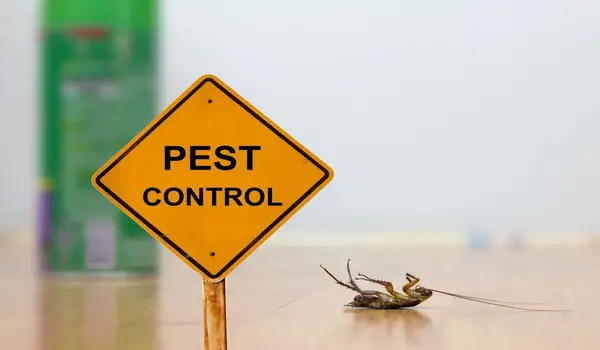
“Control Pests Without Chemicals …” from bulkagrochem.com and used with no modifications.
Reaching for a bottle of synthetic insecticide feels like the fastest solution, but on a balcony — where you’re eating what you grow, breathing the air, and sharing space with neighbors — it’s often the worst one. Toxic sprays kill beneficial insects alongside harmful ones, leave residue on edible plants, and can drift into living areas. The reality is that with consistent prevention, the right natural sprays, and a few smart planting choices, you can keep your balcony garden nearly pest-free all season long without a single synthetic chemical.
The Most Common Balcony Garden Pests
Not every bug on your balcony is a threat, but these five are responsible for the vast majority of container garden damage in urban settings. For effective pest management, you might consider using natural barriers to protect your plants. Knowing exactly what you’re dealing with changes everything about how you respond.
1. Aphids
Aphids are small, soft-bodied insects that cluster on new growth, the undersides of leaves, and along stems. They feed by piercing plant tissue and sucking out sap, which causes leaves to curl, yellow, and eventually drop. On a balcony, they spread quickly between pots — especially when plants are crowded together. Consider using natural barriers to help manage their spread.
What makes aphids particularly frustrating is that they reproduce without mating, meaning a single aphid can start a full colony in days. They also excrete a sticky substance called honeydew that attracts ants and promotes sooty mold growth on leaves.
Signs you have an aphid problem include:
- Curled or puckered new leaves
- Sticky residue on stems or nearby surfaces
- Visible clusters of tiny green, black, or white insects on undersides of leaves
- Presence of ants farming the plant for honeydew
2. Spider Mites
Spider mites thrive in hot, dry conditions — exactly the environment a sun-exposed balcony creates in summer. They’re barely visible to the naked eye but leave behind telltale fine webbing between leaves and a stippled, bronze discoloration on leaf surfaces. A severe spider mite infestation can defoliate a container plant within two weeks.
3. Fungus Gnats
Fungus gnats are more of a soil problem than a leaf problem. The adult gnats are harmless but annoying; it’s their larvae living in moist potting mix that damage plant roots. Overwatering is the primary cause, making fungus gnats one of the most preventable pests in container gardening.
If you’re seeing tiny flies hovering around your pots and your plants seem to be wilting despite adequate watering, fungus gnat larvae attacking the root system is a likely culprit.
4. Whiteflies
Whiteflies look like tiny white moths and tend to congregate on the undersides of leaves. When disturbed, they scatter in a small white cloud — a distinctive sign that separates them from other pests. Like aphids, they suck plant sap and excrete honeydew, weakening plants over time and making leaves prone to mold. For more on identifying and managing these pests, check out this guide on common urban pests.
They’re especially common on tomatoes, peppers, and ornamental flowering plants — all popular choices for balcony container gardens.
Whitefly populations build fast in warm, sheltered conditions, and because balconies trap heat, they can escalate from a minor nuisance to a serious infestation within a single season if left unchecked.
5. Mealybugs
Mealybugs are small, waxy, white insects that look like tiny cotton tufts tucked into leaf joints and along stems. They move slowly and are easy to spot, but they’re surprisingly resilient — their waxy coating protects them from water and many sprays. On succulents, herbs, and tropical container plants, mealybug infestations can be persistent without targeted treatment.
Why Balcony Gardens Attract Pests Faster Than Ground Gardens
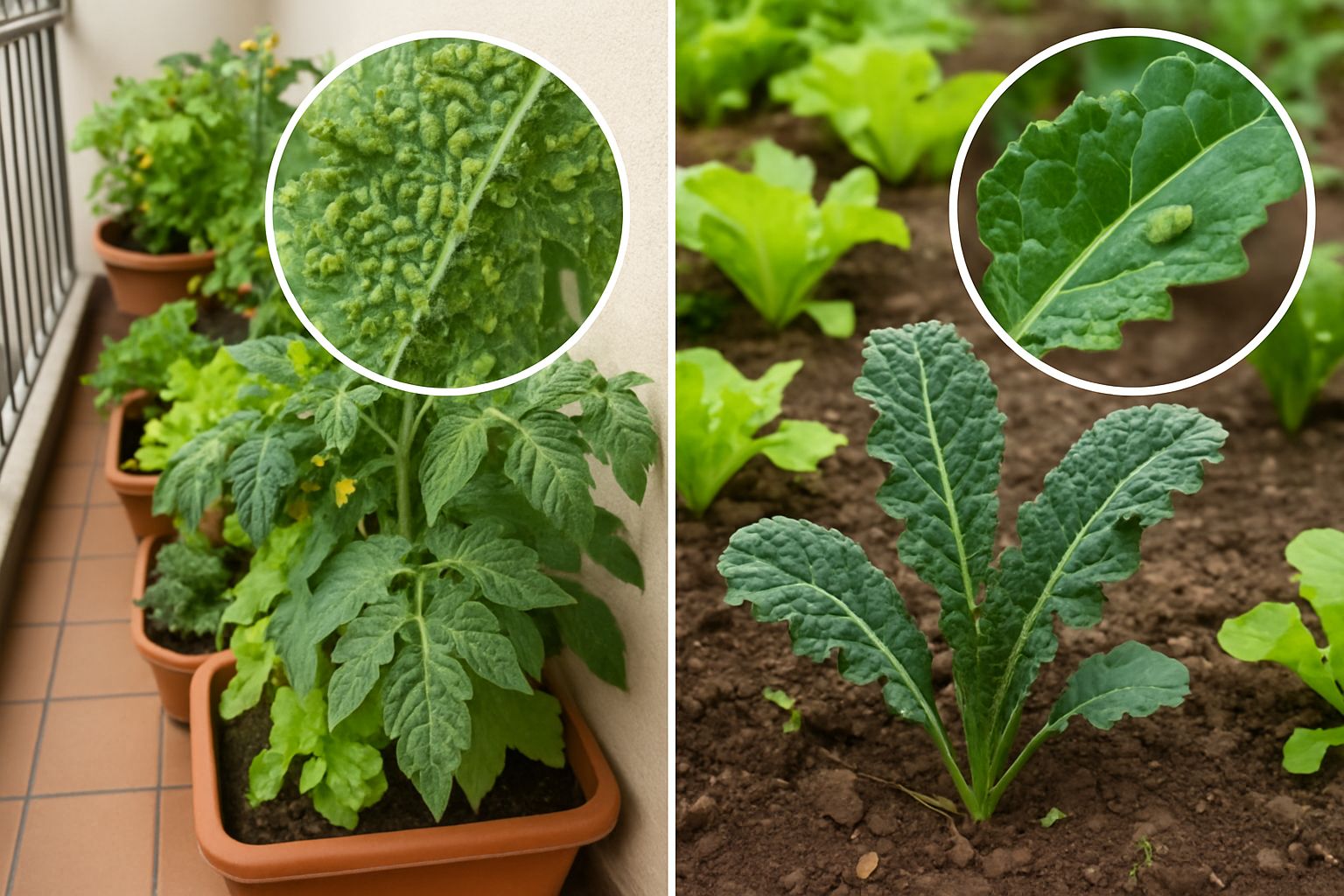
Ground gardens have natural checks and balances — beneficial insects, diverse soil biology, and more airflow — that balconies simply don’t have. Understanding why your small-space garden is more vulnerable helps you make smarter decisions about how you set it up and maintain it.
Limited Soil Volume Stresses Plants
Container plants are restricted to the soil volume in their pot, which means nutrients deplete faster, roots overheat in summer, and moisture fluctuates more dramatically than in ground soil. Stressed plants are measurably more attractive to pests — insects detect chemical signals released by weakened plants and target them first. For more insights on maintaining healthy container plants, consider exploring self-watering planter tools that can help regulate moisture levels effectively.
Keeping your container plants healthy and unstressed is actually a form of pest control. Practical steps that reduce plant stress include:
- Choosing containers with adequate drainage holes
- Using a high-quality potting mix with perlite for aeration
- Top-dressing with compost every four to six weeks during the growing season
- Watering consistently rather than erratically
- Sizing pots appropriately — too small means constant stress
A well-fed, well-watered plant in the right-sized container is naturally more resistant to pest pressure than one that’s struggling. It’s not a guarantee, but it significantly changes the odds in your favor.
Still Air and Heat Accelerate Infestations
Many balconies — particularly those surrounded by walls or glass barriers — trap heat and have minimal airflow. Spider mites, whiteflies, and aphids all reproduce faster in warm, still environments. A ground garden benefits from natural breezes that physically disrupt pest colonies and dry out moisture that fungus gnats need. On a balcony, you need to deliberately compensate for that lack of airflow by spacing plants apart and occasionally misting foliage in the morning.
Prevention Is Your First Line of Defense

Every hour you spend preventing a pest problem saves three hours of trying to fix one. These four habits form the foundation of a pest-resistant balcony garden.
None of them require special products or expertise — just consistency.
1. Inspect Every New Plant Before It Hits Your Balcony
Every new plant you bring onto your balcony is a potential trojan horse. Nursery plants — even healthy-looking ones — can carry pest eggs, larvae, or active infestations hidden under leaves, tucked into soil, or buried in stem joints. Before any new plant joins your balcony garden, take five minutes to check it thoroughly. For more tips on maintaining a healthy garden, explore our eco-friendly garden guide.
Flip every leaf and look at the undersides. Check the soil surface for tiny flying insects. Look into the joints where leaves meet stems — that’s where mealybugs and aphids like to hide. If anything looks suspicious, isolate the plant for a week before placing it near your other containers.
2. Use Sterile Potting Mix Every Season
- Reusing old potting soil from a previous season reintroduces fungus gnat larvae, disease spores, and pest eggs into your containers
- Sterile, fresh potting mix eliminates this risk entirely from the start of each growing season
- Look for a mix that includes perlite for drainage — waterlogged soil is the number one cause of fungus gnat infestations
- Avoid garden soil in containers; it compacts, drains poorly, and often carries ground-dwelling pests
If budget is a concern, you don’t have to throw out all your old mix. Instead, refresh it by combining one part old potting soil with two parts fresh sterile mix, then top-dress with finished compost. This gives you the microbial benefits of seasoned soil without the pest baggage. For more ideas on urban gardening, check out custom raised garden beds tips for city living.
The difference between a gnat-free balcony and one that’s constantly clouded with tiny flies often comes down entirely to what’s in the pot before you even plant anything. Starting clean is the simplest pest prevention strategy there is.
3. Clean Containers Before Reuse
Old containers carry residue from previous plants — dried roots, soil particles, pest eggs, and fungal spores can all survive through winter and reactivate when conditions warm up. Before reusing any pot, scrub it with a solution of one part white vinegar to three parts hot water, rinse thoroughly, and let it dry completely in the sun before adding fresh soil.
Clay and terracotta pots are especially prone to harboring pests and disease in their porous surfaces. A thorough scrub makes a real difference with these materials. For plastic containers, check for cracks where pest eggs can overwinter — if a pot is cracked beyond reasonable repair, replacing it is the smarter call. For more information on managing pests, explore this guide on common urban pests.
4. Space Plants to Allow Airflow
Crowded pots are pest magnets. When foliage overlaps between containers, pests like aphids, spider mites, and whiteflies can move freely from plant to plant without ever being exposed to open air. Spacing containers at least six to eight inches apart — even on a small balcony — creates enough separation to slow that spread significantly.
Good airflow also keeps leaf surfaces drier, which discourages fungal problems that often develop alongside pest damage. Think of spacing as a passive, zero-cost form of pest and disease prevention that works around the clock.
Natural Sprays That Actually Work
When prevention isn’t enough and pests have already moved in, natural sprays are your most reliable tool. The three below cover the full range of common balcony pests, are safe for edible plants, and can be made or sourced affordably without specialized equipment.
Neem Oil Spray
Neem oil is pressed from the seeds of the neem tree (Azadirachta indica) and contains a compound called azadirachtin, which disrupts the hormonal systems of insects — preventing them from feeding, molting, and reproducing. It’s effective against aphids, spider mites, whiteflies, mealybugs, and fungus gnats, making it the closest thing to an all-purpose natural pesticide for balcony gardeners.
To make a basic neem oil spray, combine two teaspoons of cold-pressed neem oil with one teaspoon of mild liquid dish soap and one quart of warm water. Shake well before each use and apply in the early morning or evening — never in direct midday sun, as neem oil can cause leaf burn when applied in high heat. Spray the entire plant, paying special attention to leaf undersides where pests cluster.
Apply every seven to fourteen days as a preventative measure, or every five to seven days when actively treating an infestation. Neem oil breaks down quickly in sunlight and leaves no harmful residue on edible plants, making it one of the safest and most effective options available to urban balcony gardeners.
DIY Soap Spray
A simple insecticidal soap spray works by breaking down the protective outer coating of soft-bodied insects like aphids, mealybugs, and whiteflies — causing them to dehydrate and die on contact. It’s fast-acting, inexpensive, and gentle enough for regular use on vegetables and herbs.
Mix one and a half teaspoons of pure castile soap — Dr. Bronner’s unscented works well — into one quart of water. Avoid dish soaps with added degreasers or fragrances, which can damage plant leaves. Spray directly onto affected areas, making sure to coat both the tops and undersides of leaves thoroughly.
DIY Soap Spray Quick Reference
Recipe: 1.5 tsp pure castile soap + 1 quart water
Best for: Aphids, mealybugs, whiteflies
Application: Spray directly on pests, coat leaf undersides
Frequency: Every 4–7 days during active infestation
Avoid: Applying in direct sun or heat above 90°F
Safe for edibles: Yes — rinse leaves before harvesting
Garlic and Chili Spray
This is one of the oldest natural pest deterrents in the gardener’s toolkit — and it earns its reputation. Blend four to five garlic cloves and two to three hot chili peppers with two cups of water, strain thoroughly, then dilute with an additional quart of water before spraying. The capsaicin in chili and sulfur compounds in garlic repel a wide range of insects, including aphids, caterpillars, and beetles. Reapply after rain and every five to seven days during active pest pressure. Keep spray away from your eyes, and wash your hands after handling — the chili concentration is strong.
Companion Planting for Pest Control
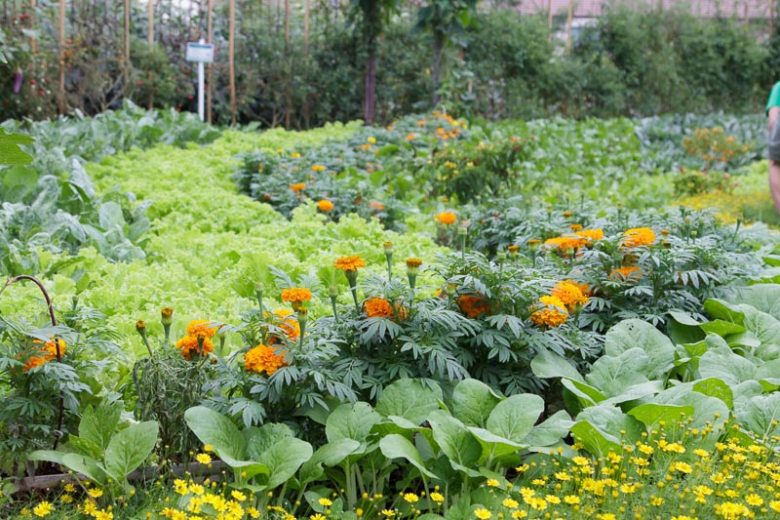
“Trap Crops to Control Pests” from www.gardenia.net and used with no modifications.
One of the most elegant natural pest control strategies is using plants themselves as protection. Certain plants release volatile compounds, scents, or chemical signals that actively repel specific pests — and on a balcony, where every pot counts, doubling up on pest-repelling plants alongside your edibles is an incredibly efficient use of space. For those interested in allergen-free gardening, consider checking out our allergen-free herb kit checklist for more information.
Companion planting isn’t just about what repels pests — it’s also about what attracts beneficial insects that prey on the pests already in your garden. The two work together, and a well-planned balcony garden uses both strategies simultaneously. For those looking to enhance their garden setup, consider using self-watering planter tools to maintain optimal plant health and pollen control.
Best Pest-Repelling Plants for Containers
These plants earn their space on any urban balcony by pulling double duty — they’re useful or beautiful in their own right, and they actively reduce pest pressure on neighboring plants:
- Basil — repels aphids, whiteflies, and tomato hornworms; pairs perfectly with tomatoes and peppers
- Marigolds (Tagetes species) — emit a scent that deters aphids, whiteflies, and nematodes; grow well in six-inch containers
- Mint — repels aphids, flea beetles, and ants; keep in its own container as it spreads aggressively
- Lavender — deters moths, fleas, and whiteflies while attracting predatory wasps and hoverflies
- Chives — repel aphids and spider mites; useful planted near roses, tomatoes, or carrots in containers
- Calendula — acts as a trap crop, drawing aphids away from more valuable plants while attracting ladybugs
How to Arrange Companion Plants in Small Spaces
On a balcony, you’re working with limited square footage, so companion planting has to be intentional. Place strongly scented repellent plants — basil, mint, lavender — at the perimeter of your balcony arrangement, essentially creating a fragrant barrier around your more vulnerable edibles. Tuck marigolds and calendula into gaps between larger containers rather than giving them their own dedicated space.
Grouping plants by pest vulnerability also helps — keep your tomatoes, peppers, and eggplants together with basil and marigolds as companions, since they share common pest threats. This concentrates your natural defenses where they’re most needed rather than scattering them randomly across the balcony.
How to Fix Soil Problems That Invite Pests
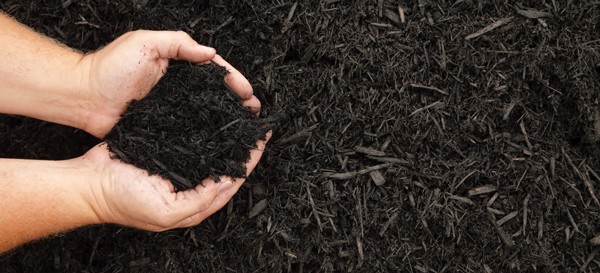
“No More Pests! – Southern Living Plants” from southernlivingplants.com and used with no modifications.
Soil health and pest pressure are directly connected. Poor-quality or exhausted potting mix stresses plant roots, retains too much moisture, and provides the exact conditions that fungus gnats and root-feeding larvae need to thrive. Fixing your soil is sometimes the most impactful pest control move you can make, and using custom raised garden beds can improve soil drainage and quality.
Soil Problem Pest It Attracts Natural Fix Overwatered, waterlogged mix Fungus gnats, root rot flies Add perlite, improve drainage, let soil dry between waterings Depleted, nutrient-poor soil Aphids, spider mites (stressed plants) Top-dress with compost every 4–6 weeks Old, reused potting mix Fungus gnats, larvae, disease Replace with fresh sterile mix each season Compacted, airless soil Root-feeding larvae Aerate with a chopstick or skewer; repot into larger container High-nitrogen synthetic fertilizer Aphids (attracted to lush soft growth) Switch to balanced organic fertilizer or compost tea
One particularly effective soil treatment for active fungus gnat infestations is a hydrogen peroxide drench — mix one part 3% hydrogen peroxide with four parts water and pour it through the soil. The solution kills larvae on contact without harming plant roots, and it breaks down into water and oxygen within hours, leaving no chemical residue behind.
Top-dressing containers with a thin layer of coarse sand or fine gravel is another underused but highly effective technique. It creates a physical barrier that prevents adult fungus gnats from laying eggs in the soil surface — one of the simplest interventions you can make for a pest that otherwise seems impossible to eliminate entirely.
Attract Beneficial Insects to Your Balcony
Most gardeners think of insects as the enemy, but the truth is that the vast majority of insects that visit your balcony are either neutral or actively working in your favor. Ladybugs, lacewings, hoverflies, and parasitic wasps are natural predators that feed on aphids, whiteflies, and mites — and inviting them onto your balcony is one of the most sustainable, zero-effort pest control strategies available to urban gardeners. For more information on managing pests, check out this guide on common urban pests.
Best Flowers to Grow for Beneficial Insects
Beneficial insects are attracted primarily by nectar and pollen sources — they need food before they’ll stick around to hunt pests. The flowers that work best are ones with open, accessible centers rather than complex double blooms, which make it difficult for small insects to feed efficiently. For more information on managing pests, check out this guide on urban pest identification and control.
These container-friendly flowers reliably draw beneficial insects to balcony gardens:
- Alyssum — low-growing, fragrant, and exceptional at attracting hoverflies and parasitic wasps that prey on aphids
- Calendula — doubles as an aphid trap crop while feeding ladybugs and lacewings
- Phacelia — one of the most powerful beneficial insect attractors available; grows well in containers
- Dill and fennel — their flat flower heads (called umbels) are magnets for predatory wasps and lacewings
- Borage — star-shaped blue flowers attract bees and hoverflies; also repels tomato hornworms
Even a single pot of alyssum or calendula positioned near your most pest-prone plants can make a measurable difference in how quickly beneficial insects find and control an infestation. These aren’t just pretty additions to your balcony — they’re working plants pulling their weight every single day of the growing season.
How to Create a Mini Habitat on a Small Balcony
You don’t need a sprawling garden to support beneficial insects — you need diversity and a pesticide-free environment. A small bee or lacewing house mounted to a balcony wall provides shelter for solitary insects between feeding cycles. Combine this with a shallow dish of fresh water — marbles or pebbles in the dish give insects a safe landing surface — and you’ve created a complete mini habitat that invites natural pest control to move in permanently.
The single most important rule for a beneficial insect habitat is to avoid all broad-spectrum sprays, even natural ones like neem oil, when beneficial insects are actively present. Apply any spray in the early morning or late evening when beneficials are least active, and target only the affected plants rather than blanketing your entire balcony. A balanced ecosystem, even a tiny one, is far more effective at long-term pest management than any spray routine.
Manual Removal Methods for Small Infestations
When a pest problem is caught early, sometimes the most effective solution is the simplest one. A strong stream of water from a spray bottle knocks aphids and spider mites off leaves immediately — repeat this every two to three days and most small infestations resolve without any sprays at all. For mealybugs, dip a cotton swab in rubbing alcohol and touch it directly to each insect; the alcohol dissolves their waxy coating and kills them on contact. Larger pests like caterpillars or beetles can simply be picked off by hand and dropped into a container of soapy water. These methods work best when you’re inspecting plants frequently enough to catch infestations before they scale up. For more detailed strategies, check out this guide on common urban pests.
A Healthy Balcony Garden Is a Pest-Resistant One
Every strategy in this guide connects back to the same core principle: healthy plants in a well-maintained environment are inherently more resistant to pest pressure than stressed plants in poor conditions. Pests are opportunists — they target weakness. When your containers have great soil, adequate drainage, proper spacing, and consistent care, you remove the majority of conditions that make your balcony garden an attractive target in the first place.
Build your pest management approach in layers. Start with prevention — clean containers, fresh soil, inspected plants, and good spacing. Add companion plants and beneficial insect attractors as your passive defense layer. Keep neem oil, soap spray, and garlic-chili spray ready for the moments when prevention isn’t enough. And stay consistent with weekly inspections so that nothing escalates beyond what a simple manual removal or one round of spray can handle. That’s not a complicated system — it’s a sustainable one that gets easier every season you practice it.
Frequently Asked Questions
Urban balcony gardeners tend to run into the same pest questions season after season. The answers below cover the most common ones with straightforward, practical guidance.
Natural pest control is not about a single magic solution — it’s about understanding which tool fits which problem and applying it at the right time. These FAQs address the specific situations where even experienced container gardeners sometimes get stuck.
If your situation doesn’t fit neatly into one of these questions, the broader principle always applies: identify the pest first, address the root cause (usually soil, stress, or spacing), and reach for the least invasive solution before escalating to stronger treatments.
What is the fastest natural way to get rid of aphids on balcony plants?
The fastest immediate fix is a strong spray of water directly onto the affected plant, focusing on leaf undersides where aphids cluster. This physically dislodges and kills large numbers of aphids in minutes. Follow up the next day with a castile soap spray — one and a half teaspoons per quart of water — applied thoroughly to all plant surfaces. Repeat every four to five days until the infestation clears. For a balcony garden, adding a pot of alyssum or calendula nearby will attract aphid-hunting beneficial insects that continue working even after you’ve walked away.
Can I use neem oil on edible plants like herbs and vegetables?
Yes — neem oil is safe for use on edible plants when applied correctly. It breaks down rapidly in sunlight and does not leave harmful residue on leaves, fruits, or herbs when used as directed. Apply in the early morning or evening to avoid leaf burn and to minimize contact with pollinators during their active hours.
The one practical note is to rinse harvested leaves or vegetables briefly under water before eating if you’ve applied neem oil within the past three days. The oil itself is non-toxic, but the smell can linger on fresh herbs briefly after application. Cold-pressed neem oil is the preferred form — it retains higher levels of active azadirachtin compared to heat-processed versions, making it more effective against a broader range of pests.
Why do I keep getting fungus gnats in my container garden?
Fungus gnats are almost always a moisture problem. Their larvae require consistently moist, organic-rich soil to survive — the moment the top two inches of soil dry out between waterings, the larval population collapses rapidly. If you’re seeing persistent gnat problems, the first step is to audit your watering habits before trying any treatment.
Beyond watering, switching to a potting mix with a higher perlite content improves drainage and reduces the surface moisture that adult gnats need to lay eggs. Topping containers with a half-inch layer of coarse sand creates a physical barrier that prevents egg-laying at the soil surface. For active infestations, a drench of one part 3% hydrogen peroxide to four parts water applied directly to the soil kills larvae immediately and breaks down harmlessly within hours. Sticky yellow traps placed just above soil level catch adult gnats and reduce the breeding population while your soil management strategy works underneath.
Are there any plants that naturally repel spider mites?
Several plants produce volatile compounds that spider mites actively avoid. Rosemary, peppermint, and spearmint are among the most effective — the strong terpenes they release create an environment that mites find inhospitable. Growing these in containers near spider mite-vulnerable plants like tomatoes, strawberries, and ornamentals provides a continuous passive deterrent without any sprays required.
Chrysanthemums are worth a specific mention — they contain pyrethrin, a natural insecticidal compound that repels and kills a wide range of insects including spider mites. A pot of chrysanthemums positioned among your edible containers adds a layer of chemical deterrence that works passively through the season. Combine this with regular misting of plant foliage on hot days — spider mites hate humidity — and you significantly reduce the conditions that allow them to build damaging population levels.
How often should I inspect my balcony plants for pests?
Once a week is the minimum for a balcony garden during the growing season. In hot summer months — when pest reproduction accelerates dramatically — every three to four days is a more protective frequency, especially for plants that have had previous infestations.
Your weekly inspection doesn’t need to be lengthy. A focused five-minute walk through your containers, flipping several leaves on each plant and checking stem joints and soil surfaces, is enough to catch most problems before they escalate. Pay extra attention during and after heat waves, as spider mite and whitefly populations can double within days in sustained high temperatures.
The best time to inspect is early morning when light is clear and pests are most visible. Bring a small magnifying glass — a basic 10x loupe works perfectly — if you’re dealing with small pests like spider mites that are difficult to see clearly with the naked eye. Early detection is genuinely the most powerful tool in your pest management system.
Keep a simple garden journal noting what you find during each inspection and what treatment you applied. Patterns emerge quickly — you’ll learn which of your plants are most vulnerable, which seasons bring which pests, and which treatments work fastest on your specific balcony. That accumulated knowledge, season over season, is what transforms a reactive gardener into a truly skilled one.
Pest First Sign Best Natural Treatment Prevention Tip Aphids Curled leaves, sticky residue Water spray + castile soap spray Plant alyssum or marigolds nearby Spider Mites Fine webbing, bronze leaf stippling Neem oil spray every 5–7 days Mist foliage in heat; grow rosemary nearby Fungus Gnats Tiny flies hovering over soil H2O2 drench + sticky traps Let soil dry between waterings; use coarse sand topdress Whiteflies White cloud when plant disturbed Neem oil + yellow sticky traps Inspect undersides of leaves weekly Mealybugs White waxy tufts at stem joints Rubbing alcohol on cotton swab Avoid over-fertilizing with nitrogen
Natural balcony pest management is less about fighting your garden and more about understanding it. The more clearly you see the relationship between soil health, plant stress, pest pressure, and beneficial insects, the less you’ll need to intervene at all. Each season you garden naturally, your balcony ecosystem becomes more balanced and more resilient on its own terms.
If you’re ready to take your natural gardening practice further — from pest control to soil building, composting, and growing food in small urban spaces — Rockin W Homestead offers in-depth, practical guidance for every stage of the journey.
Managing pests in your urban balcony garden can be a challenging task, but with the right strategies, you can keep your plants healthy and thriving. One effective method is to use natural barriers to deter pests. For a comprehensive guide on creating these barriers, check out this DIY eco-friendly garden natural barriers guide.