Article-at-a-Glance: Custom Raised Garden Beds for City Living
- You can grow real, fresh food in almost any city space — balcony, rooftop, backyard, or patio — with the right custom raised garden bed setup.
- Material choice matters more in cities: cedar wood, galvanized steel, and concrete blocks each perform differently depending on your space and climate.
- A complete DIY raised garden bed can be built for under $200 — and some of the best options require zero power tools.
- Modular raised bed systems like the Birdies Large Modular Metal Raised Garden Bed Kit let you start small and expand your garden over time as your confidence grows.
- The depth of your raised bed determines what you can grow — and most city gardeners get this wrong before they even buy soil.
City living doesn’t have to mean giving up on growing your own food — in fact, some of the most productive gardens in the world are crammed onto rooftops, balconies, and tiny urban backyards.
Whether you’ve got a fire escape with two feet of clearance or a south-facing concrete patio just waiting for some green, custom raised garden beds are the fastest, most flexible way to start growing in the city. Companies like Urban Garden Co. have helped thousands of city dwellers transform even the most unlikely urban spaces into thriving edible gardens — proving that where there’s sunlight, there’s a way.
What makes raised beds so powerful in an urban setting isn’t just convenience. It’s control. You control the soil quality, the drainage, the depth, and the footprint. No digging into compacted city soil, no dealing with mystery ground contaminants, and no waiting for a perfect yard you may never have. You build the environment your plants need, and you put it exactly where the sun hits best.
You Can Grow Real Food in a City — Here’s How
“How to Grow Food for Free in the City …” from www.robingreenfield.org and used with no modifications.
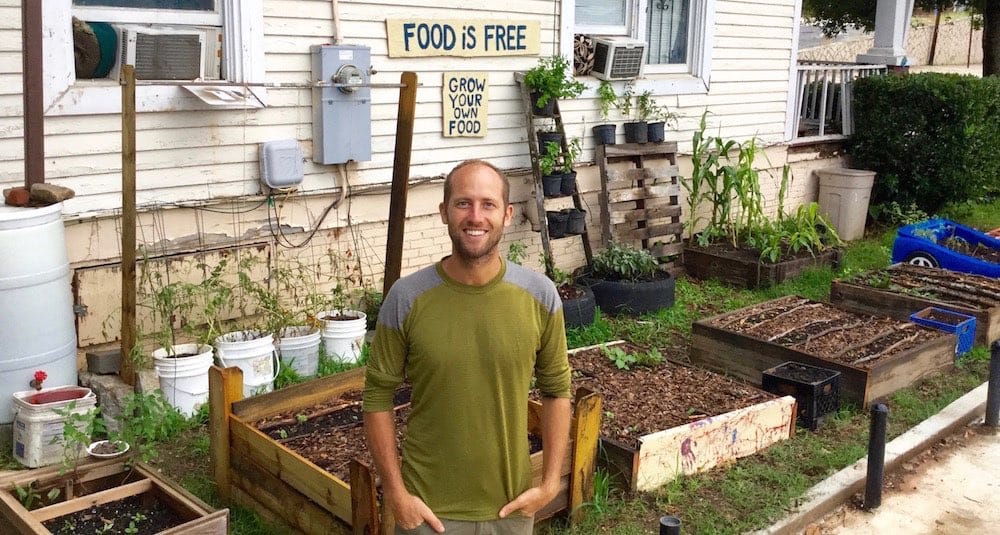
The idea that you need a big suburban backyard to grow vegetables is one of the most persistent myths in gardening. City gardeners regularly harvest kale, zucchini, eggplant, herbs, lettuce, and radishes from raised beds no larger than 4✕4 feet. The key is working with your space rather than against it, and considering options like urban balcony garden kits can help transform even the smallest spaces into productive gardens.
Raised garden beds solve the three biggest problems city growers face: poor or contaminated soil, limited space, and awkward growing conditions. By elevating your growing area, you sidestep whatever is happening beneath your feet — whether that’s concrete, compacted clay, or old urban fill — and replace it with exactly the right mix for your plants. And because you’re building up instead of digging down, you can garden on patios, rooftops, and balconies where traditional in-ground gardening is simply impossible. For those interested in maximizing their space, consider exploring vertical garden systems for a pollen-free balcony.
Pick the Right Raised Bed for Your Space
Not every raised bed works in every city space. A heavy cedar planter that’s perfect for a ground-level backyard could be a structural problem on a fifth-floor rooftop. Before you buy materials or start building, match your bed type to your specific situation.
Balconies and Rooftops Need Lightweight Materials
Weight is everything when you’re working above ground level. A cubic foot of moist garden soil weighs around 80 to 100 pounds, which means even a small 2✕4 foot bed filled to 12 inches deep can push close to 600 pounds total. For balconies and rooftops, look at lightweight fabric grow bags, thin-gauge galvanized steel beds, or shallow modular trays that distribute weight more evenly. Always check your building’s load rating before setting up any permanent structure.
Small Backyards Can Handle Larger Modular Beds
If you have a ground-level backyard — even a tiny one — you have more options. Modular systems like the Birdies Large Modular Metal Raised Garden Bed Kit are ideal here because they can be configured in multiple shapes and expanded over time. A standard 4✕8 foot bed gives you 32 square feet of growing space, which is genuinely enough to supply a household with salad greens and herbs through most of the growing season.
Vertical and Tiered Beds Save the Most Floor Space
When horizontal floor space runs out, go vertical. Tiered raised beds stack growing layers on top of each other, dramatically increasing your planting area without expanding your footprint. A three-tiered vertical bed can give you the equivalent growing space of two or three flat beds while taking up the floor space of just one. These work especially well for trailing plants, herbs, and strawberries that spill naturally over the edges.
The Best Materials for Custom Raised Garden Beds
“Materials for Raised Garden Beds …” from durablegreenbed.com and used with no modifications.
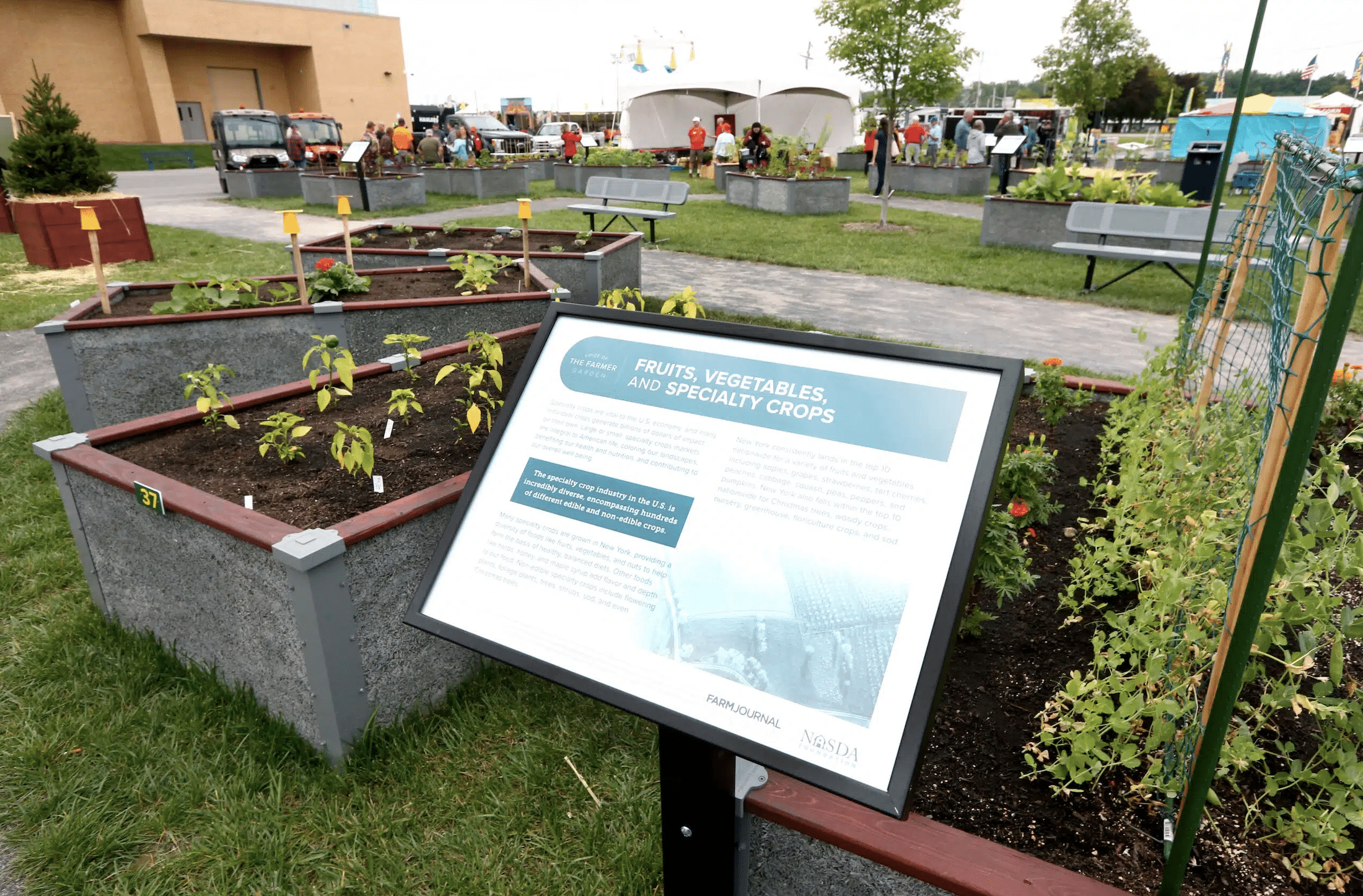
The material you choose affects how long your bed lasts, how it performs in your local climate, what it costs upfront, and how it looks in your space. Each option has real trade-offs worth knowing before you commit.
Cedar Wood Is the Gold Standard for DIY Beds
Cedar is the most popular wood for raised garden beds for good reason. It’s naturally rot-resistant, meaning it won’t break down quickly when it’s in constant contact with moist soil. A cedar bed built from 2✕6 boards will typically last 10 to 20 years with no treatment needed. It’s also beautiful, which matters when your garden is also part of your living space. The main downside is cost — cedar costs more upfront than pine or untreated lumber — but the longevity makes it the better value over time.
Galvanized Metal Beds Last Longer in Harsh Weather
Galvanized steel beds have surged in popularity for urban gardens because they handle city weather extremes well — heat, cold, rain, and humidity — without warping or rotting. The Vego Garden 17″ Tall 10-in-1 Jumbo Modular Metal Raised Garden Bed Kit is one of the standout options in this category, offering a full 17 inches of soil depth which is enough for almost any vegetable. Galvanized steel is also more compact in its wall thickness, so you lose less interior growing space compared to thick wooden boards.
Concrete Planter Wall Blocks Require Zero Tools
For gardeners who want a permanent, ultra-durable raised bed without buying a single power tool, notched concrete planter wall blocks are an underrated choice. You simply stack them in a rectangle — the notched edges lock together — and fill the interior with soil. They’re especially practical for creating tiered or stepped bed designs on sloped surfaces. Some key advantages worth noting include their versatility for small space transformation.
- No drilling, screwing, or cutting required
- Blocks are repositionable if you want to change the bed shape later
- Concrete retains heat, which can extend your growing season in cooler climates
- Very low long-term maintenance — concrete doesn’t rot, warp, or rust
- Widely available at hardware stores like Home Depot for low cost per block
The trade-off with concrete blocks is weight. Unlike wood or metal beds, a concrete block bed is essentially permanent once filled with soil. If you’re renting your space or anticipate moving, this may not be the most practical choice. For those interested in alternative gardening methods, consider exploring vertical garden systems as a space-saving option.
Repurposed Materials Like Pallets and Bathtubs Cut Costs
Before you spend a dollar on materials, check what you already have access to. Wooden pallets — the kind used for shipping — can be broken down and reassembled into raised bed frames for almost nothing. Old galvanized bathtubs, stock tanks, and even large wooden wine barrels make excellent ready-made raised beds with zero construction required. The key with pallets is to only use those stamped with HT (heat treated), not MB (methyl bromide treated), which means the wood was chemically treated and is unsafe for food growing.
How to Build a DIY Raised Garden Bed for Under $200
“How I Built a DIY Raised Garden Bed for …” from www.apartmenttherapy.com and used with no modifications.
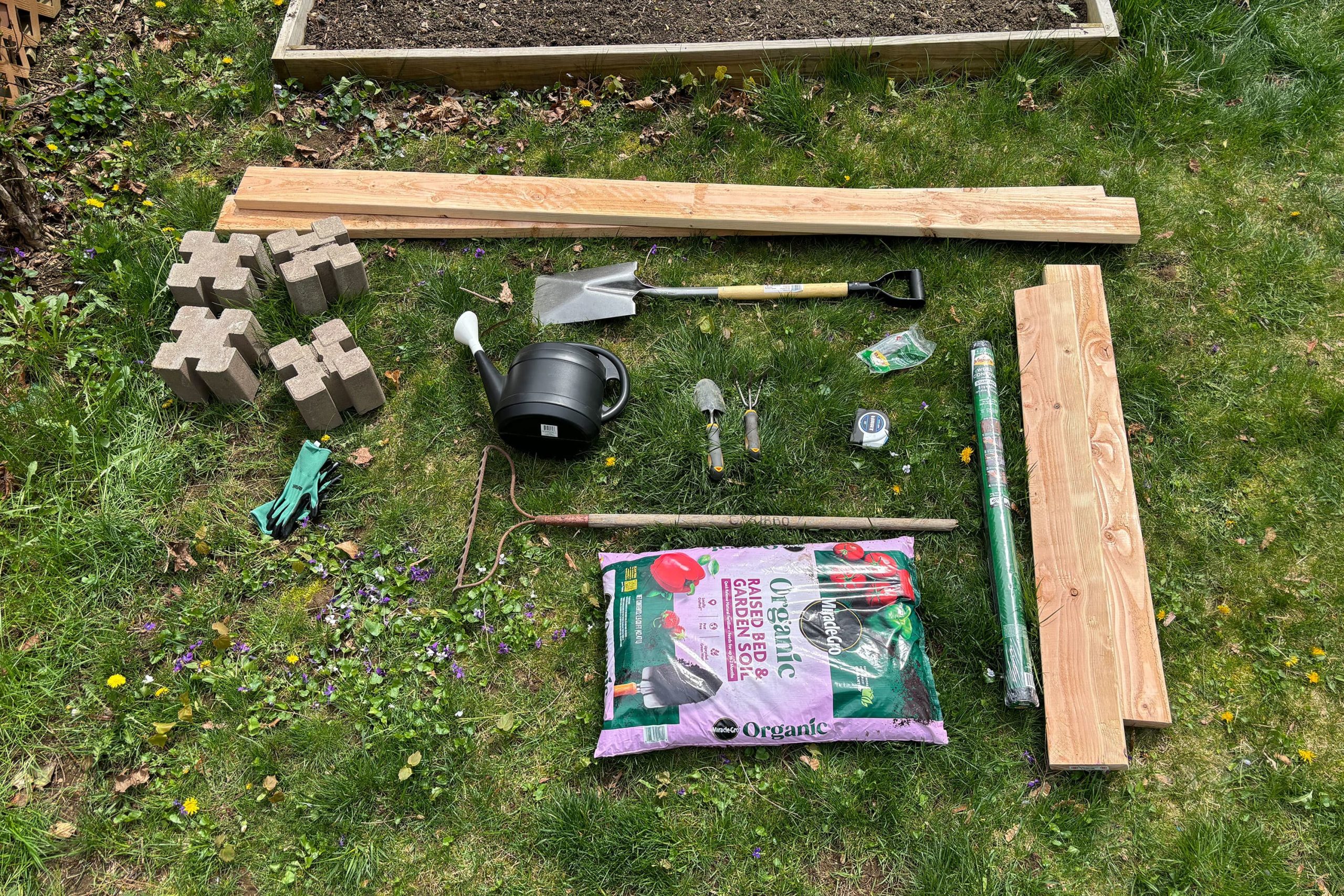
Building your own raised garden bed is one of the most satisfying projects a city gardener can do — and it doesn’t require carpentry experience or a garage full of tools. The basic version takes under two hours and costs well under $200 when you shop smart. Here’s exactly how to do it.
Step 1: Frame the Bed and Clear the Ground
Start by deciding on your dimensions. A 4✕4 foot bed is the classic beginner size because you can reach the center from any side without stepping in. A 4✕8 foot bed doubles your growing area and is still very manageable. Mark your footprint with stakes or spray paint, then clear the area of grass, weeds, or debris.
If you’re placing your bed on concrete or patio pavers, you can skip the clearing step entirely. Just make sure the surface is level enough that your bed walls sit flat — an unlevel bed will cause water to pool unevenly in the soil, which can drown roots on one side while leaving the other side dry. A simple bubble level does the job in seconds.
Step 2: Assemble Your Walls Without Power Tools
For a no-tool build, use notched concrete planter wall blocks stacked two courses high, or opt for a ready-made kit like the Birdies Large Modular Metal Raised Garden Bed Kit, which connects with simple hardware and takes about 30 minutes to assemble. If you’re going the cedar board route, pre-cut 2✕6 boards at your local hardware store — most will cut lumber to length for free or a small fee — then connect corners using L-brackets or pre-drilled corner posts. No saw needed on-site.
Step 3: Fill With the Right Soil Mix
This is where most first-time raised bed gardeners make their biggest mistake: using straight topsoil or garden soil from bags. These compact quickly in raised beds and suffocate roots. Instead, use a mix of roughly 60% topsoil, 30% compost, and 10% perlite or coarse sand for drainage. This is sometimes called a “Mel’s Mix” variant, and it stays loose, drains well, and feeds your plants as it breaks down. For those interested in space-saving solutions, consider exploring vertical garden systems to complement your raised beds.
For a standard 4✕4 foot bed filled to 10 inches deep, you’ll need approximately 13 cubic feet of soil mix. Many garden centers sell blended raised bed soil by the cubic foot or in large bags specifically formulated for this purpose. If you’re filling a larger bed, buying in bulk by the yard from a local soil supplier is significantly cheaper than bagged options.
Step 4: Plan Your Plant Layout Before You Plant
Don’t just start dropping seeds and transplants wherever there’s space. Taller plants like tomatoes and kale should go on the north side of the bed so they don’t shade out shorter plants as they grow. Use the square foot gardening method — dividing your bed into a grid of 1-foot squares — to maximize every inch of growing space. Companion planting, like pairing basil with tomatoes or carrots with onions, also helps naturally deter pests without chemicals. For more tips, check out this eco-friendly garden guide.
Best Vegetables and Herbs for City Raised Beds

“What to Grow in Raised Beds—Vegetables …” from food52.com and used with no modifications.
Not every vegetable is equally suited to raised bed city growing. The best choices are productive in small spaces, fast to harvest, and forgiving of the slightly more intense conditions of urban environments — more reflected heat, more wind, and less consistent watering than a suburban plot might get.
Shallow Containers Work Well for Lettuce, Radishes, and Herbs
If your bed is only 6 inches deep — common on balconies and rooftops where weight is a concern — you’re actually still well set up for a surprisingly productive harvest. Lettuce, spinach, arugula, radishes, chives, basil, parsley, cilantro, and most culinary herbs are all shallow-rooted crops that thrive in just 6 to 8 inches of quality soil. You can succession plant these every two to three weeks for a near-continuous harvest through the growing season.
Deeper Beds Open Up Zucchini, Eggplant, and Kale
Get your soil depth to 12 inches or more and your plant options expand dramatically. Kale, Swiss chard, bush beans, peppers, and even compact varieties of zucchini and eggplant all become viable. These crops need the extra depth for root development and the additional soil volume also buffers against the faster drying that raised beds experience compared to in-ground growing.
If you want to grow tomatoes in a raised bed — and you absolutely should because homegrown city tomatoes are extraordinary — aim for at least 18 inches of depth and choose determinate or compact indeterminate varieties bred for container growing, like Tumbling Tom or Bush Early Girl. For those interested in maximizing small spaces, consider exploring urban balcony garden kits. These won’t sprawl out of control and will still produce a genuine, satisfying harvest.
Customize Your Raised Bed to Fit City Life
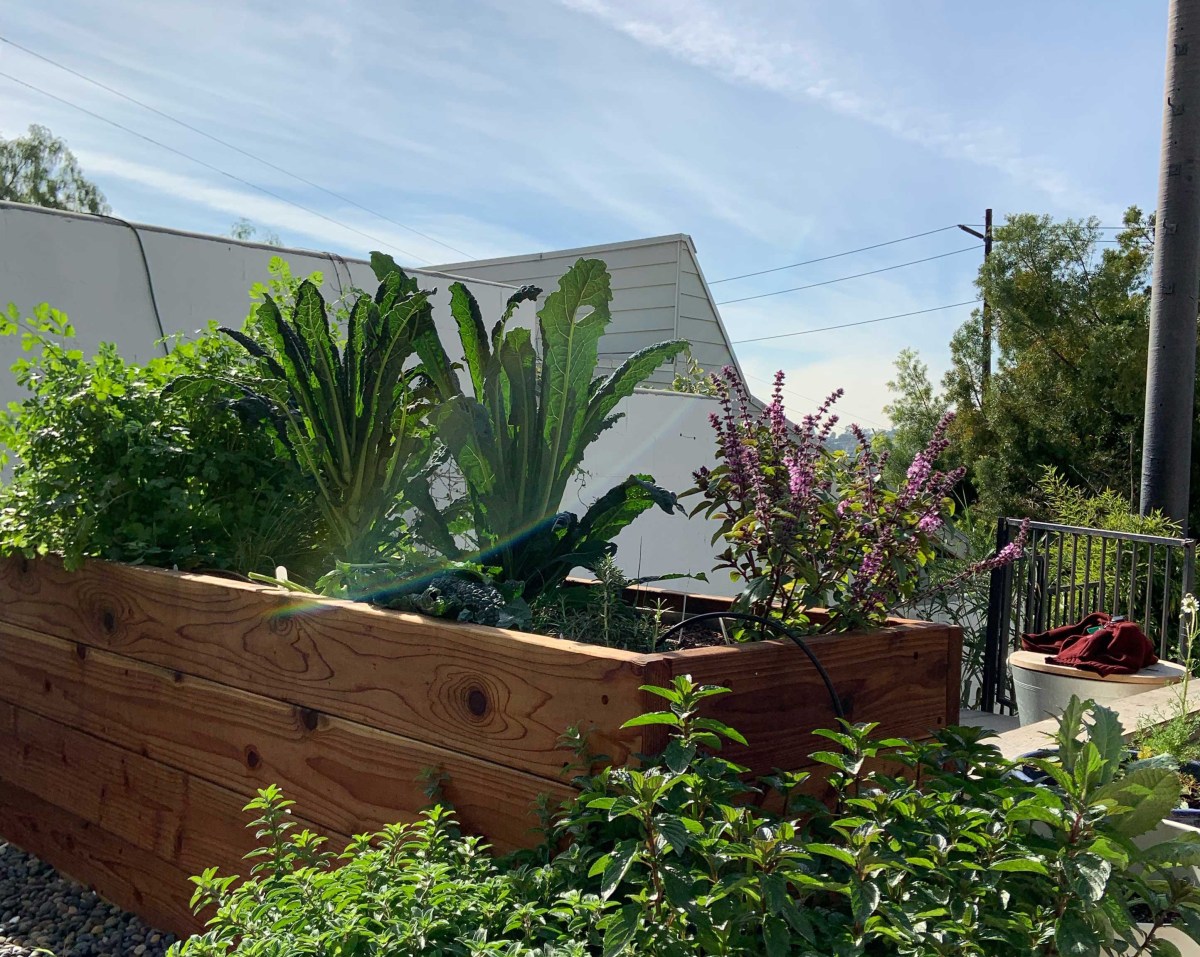
“A Raised Bed in a City? Urban Gardening …” from sunset.com and used with no modifications.
The best thing about a custom raised garden bed is that it works around your life, not the other way around. City living is full of constraints — small footprints, shared walls, lease agreements, HOA rules, structural limitations — and a well-thought-out raised bed can navigate all of them without compromise.
Customization isn’t just about looks. It’s about building a system that fits your watering schedule, your sun exposure, your budget, and your long-term gardening goals. A bed you design around your actual life is one you’ll actually maintain — and maintaining it is what produces food. For more inspiration, check out these DIY raised garden bed ideas.
Think beyond the rectangle. L-shaped beds can wrap around a patio corner and create a sense of an enclosed garden room. Stepped tiered beds on sloped surfaces turn an awkward grade into a feature. Narrow 2-foot-wide beds along a fence line can line an entire yard perimeter without taking up central space. The form should always follow the function of your specific space.
City Space Type Recommended Bed Style Max Soil Depth Best Crops Balcony (rented) Lightweight fabric grow bags or shallow galvanized trays 6–8 inches Lettuce, herbs, radishes Rooftop Modular lightweight metal kits with drainage trays 8–10 inches Herbs, peppers, chard Small backyard Cedar 4✕8 bed or Birdies modular metal kit 12–18 inches Tomatoes, kale, zucchini, beans Concrete patio Galvanized steel or concrete block bed 10–17 inches Eggplant, peppers, herbs, greens Fence line / narrow strip 2-foot-wide cedar or metal bed, vertical trellis added 12 inches Climbing beans, cucumbers, herbs
Once you know your space type, building around it becomes straightforward. Start with one bed, get comfortable with the rhythm of watering and harvesting, and then expand. Most experienced city gardeners started with a single 4✕4 foot bed and grew from there — both in garden size and in how deeply they connected to the food they were growing.
Modular Designs Let You Expand Over Time
One of the smartest things about modular raised bed systems is that you don’t have to commit to a finished garden on day one. Start with a single 4✕4 foot module, get comfortable with the growing process, and add sections as your confidence — and appetite for homegrown food — grows. The Birdies Large Modular Metal Raised Garden Bed Kit is built specifically for this kind of phased expansion, with panels that connect together in multiple configurations without any specialized tools.
This approach also makes financial sense for city gardeners who are working with a tight budget. Instead of a large upfront investment in a full garden setup, you build incrementally. A single starter module might cost $80 to $120, and each additional panel expands your growing area without requiring you to start over from scratch. Over two or three seasons, you end up with a genuinely productive urban garden that you built piece by piece.
- Start with one 4✕4 or 2✕4 module to learn your space and sun patterns before committing to a larger layout
- Add modules along a fence, wall, or patio edge to grow your garden footprint gradually
- Use corner connectors to create L-shapes or U-shapes that wrap around existing patio features
- Mix bed heights — a 6-inch module for herbs next to a 17-inch module for tomatoes — to maximize productivity in a compact area
- Document what works each season so each expansion is smarter than the last
The modular approach also gives you flexibility if your living situation changes. If you move to a new city apartment, your beds come with you — panels disassemble, soil can be bagged and transported, and the whole system reassembles in a new space. That kind of portability is genuinely rare in garden infrastructure and makes modular systems a particularly smart investment for renters. For more ideas on transforming small spaces, check out these urban balcony garden kits.
Hanging Wall Planters Work as Micro Raised Beds
When floor space is completely gone, look at your vertical surfaces. Hanging wall planters — essentially shallow pockets or troughs mounted to a fence, wall, or railing — function as micro raised beds for herbs, lettuce, and trailing plants like strawberries. A south-facing fence lined with wall-mounted cedar troughs can produce a continuous harvest of salad greens through most of the growing season, using zero floor space whatsoever. For city gardeners dealing with truly minimal square footage, this isn’t a compromise — it’s a genuinely productive system that many experienced urban growers prefer for herb growing year-round.
Your City Garden Starts With One Bed
Every serious city gardener started in the same place: one bed, one season, and a genuine curiosity about whether this would actually work. It does work. Cedar boards, concrete blocks, galvanized steel panels, or even a repurposed stock tank — the container matters far less than getting started. Pick the option that fits your space, your budget, and your current skill level, fill it with a quality soil mix, and plant something you actually want to eat.
The harvest from that first bed — even if it’s just a consistent supply of fresh basil or a bowl of homegrown lettuce — changes how you think about the space you live in. Cities are full of underused sunlight, blank walls, and empty corners that are just waiting to grow something. Your first custom raised garden bed is the beginning of seeing your city differently, one square foot at a time.
Frequently Asked Questions
City gardeners tend to run into the same practical questions before they start — and getting clear answers upfront saves a lot of frustration and wasted money. The questions below cover the most common sticking points for anyone setting up a custom raised garden bed in an urban environment.
Whether you’re working with a 60-square-foot balcony or a narrow concrete patio, these answers are grounded in what actually works in real city growing conditions — not idealized suburban garden setups. For those looking to make the most of limited spaces, consider exploring urban balcony garden kits for small space transformations.
Can I Put a Raised Garden Bed on a Balcony or Rooftop?
Yes, but weight is the critical factor. A filled raised bed can weigh several hundred pounds, so always check your building’s load-bearing capacity before setting anything up. Distribute weight by using multiple smaller, lighter beds rather than one large heavy one. Opt for lightweight fabric grow bags or thin-gauge galvanized steel trays over heavy cedar or concrete block builds. Use a lightweight soil mix with extra perlite to reduce overall weight without sacrificing drainage or root health. When in doubt, speak to your building manager or a structural engineer — especially for rooftop setups where load limits are more strictly enforced.
What Is the Cheapest Way to Build a Raised Garden Bed?
The cheapest functional raised garden bed you can build uses notched concrete planter wall blocks stacked two courses high. The blocks are available at hardware stores like Home Depot for a few dollars each, require zero tools, and can be reconfigured or repurposed if you move. A 4✕4 foot bed using this method typically comes in well under $50 in materials, excluding soil.
The next most affordable option is pallets. Heat-treated (HT-stamped) wooden pallets are often available for free from hardware stores, garden centers, or warehouse businesses. Break them down into boards and reassemble them into a simple rectangular frame using basic screws. Even with soil costs factored in, a pallet wood raised bed can come in under $75 total.
The soil itself is often where the budget gets tight. Buying pre-blended raised bed soil in bags from a garden center is convenient but expensive for larger beds. For a 4✕8 foot bed filled to 12 inches, buying topsoil, compost, and perlite separately and mixing them yourself typically saves 30 to 50 percent compared to bagged blended products.
Build Method Estimated Material Cost Tools Required Best For Concrete planter wall blocks $30–$50 None Permanent ground-level beds Repurposed HT pallets $0–$30 Basic screwdriver Budget-first beginners 2✕6 cedar boards $80–$150 Pre-cut at store, L-brackets Long-term durable DIY beds Modular metal kit (Birdies) $100–$180 None Expandable, portable setups Galvanized stock tank $60–$120 Drill (for drainage holes) Rooftops, patios, renters
How Deep Does a Raised Garden Bed Need to Be for Vegetables?
Depth requirements vary significantly depending on what you want to grow, and getting this right before you build saves you from replanting in a bed that’s too shallow for your chosen crops.
The minimum workable depth for most vegetable growing is 6 inches, which suits shallow-rooted crops like lettuce, spinach, radishes, and most herbs. These crops don’t need much root space and thrive in the loose, fertile soil of a well-built shallow bed. For those interested in expanding their gardening space, consider exploring DIY vertical garden wall systems to maximize your growing area.
For mid-range crops — peppers, eggplant, bush beans, kale, and Swiss chard — aim for at least 10 to 12 inches of soil depth. These plants develop more substantial root systems and need the extra volume to access consistent moisture and nutrients as the season progresses.
Deep-rooted crops like tomatoes, carrots, and cucumbers need a minimum of 12 to 18 inches. The Vego Garden 17″ Tall 10-in-1 Jumbo Modular Metal Raised Garden Bed Kit is specifically designed with this in mind, offering a full 17 inches of growing depth that comfortably handles virtually any vegetable you’d want to grow in a city garden.
- 6 inches: Lettuce, spinach, arugula, radishes, basil, chives, parsley
- 8–10 inches: Cilantro, mint, shallow-rooted annual flowers, chard
- 10–12 inches: Peppers, eggplant, kale, bush beans, beets
- 12–18 inches: Tomatoes, cucumbers, zucchini, carrots, squash
Do I Need Power Tools to Build a Raised Garden Bed?
No — and this is one of the most liberating things about modern raised bed options for city gardeners. Modular metal kits like the Birdies system and the Vego Garden kits connect with simple hand-tightened hardware. Concrete block beds require nothing but stacking. Pre-cut cedar boards join together with basic L-brackets that need only a handheld screwdriver. Fabric grow bags need no assembly whatsoever — just fill and plant.
If you do want to go the full DIY cedar board route and prefer to cut your own lumber, a circular saw makes the job faster. But most hardware stores will cut lumber to your exact dimensions at the time of purchase, often for free or a small per-cut fee. There is genuinely no barrier to building a productive raised garden bed in a city apartment with zero power tools and no prior construction experience.
What Soil Should I Use in a Custom Raised Garden Bed?
Never fill a raised bed with straight topsoil or bagged “garden soil.” Both compact too quickly in the contained environment of a raised bed, cutting off airflow to roots and causing drainage problems within a single growing season. A raised bed needs a lighter, more structured mix that stays loose and drains freely even after months of watering. For more ideas on setting up your raised bed, you can explore some DIY raised garden bed projects.
The most reliable all-purpose raised bed soil mix is roughly 60% quality topsoil, 30% aged compost, and 10% perlite or coarse horticultural sand. This combination provides structure, fertility, and drainage in the right balance for most vegetables and herbs. The compost feeds your plants as it continues to break down, the topsoil provides body and water retention, and the perlite keeps the mix from compacting over time.
Refresh your soil each season by top-dressing with 2 to 3 inches of fresh compost in early spring before planting. Over time, your bed’s soil level will drop slightly as organic matter breaks down — this is normal and expected. Just add more compost to bring it back up to within an inch or two of the top of your bed walls, which maximizes your effective root depth and keeps productivity high year after year. For more ideas on maximizing small spaces, consider exploring urban balcony garden kits.
If you’re gardening in a city where soil contamination is a genuine concern — near industrial sites, old painted structures, or busy roads — raised beds with a geotextile liner at the base provide an additional layer of separation between your growing medium and whatever is below. This is one of the most underappreciated safety advantages of raised bed gardening in urban environments, and it’s a simple addition that costs almost nothing but provides real peace of mind about what’s in your food. For more eco-friendly gardening tips, check out our DIY eco-friendly garden guide.