Article-At-A-Glance: Stop Pollen From Ruining Your Indoor Air
- True HEPA filters capture particles as small as 0.3 microns — well within the size range of most pollen grains, which typically measure between 10 and 100 microns.
- HyperHEPA filters, like those in IQAir’s HealthPro Plus, go even further — trapping ultrafine particles down to 0.003 microns, making them the most advanced option for severe allergy sufferers.
- Indoor pollen levels can actually exceed outdoor levels — especially in homes with poor ventilation or high foot traffic. Keep reading to find out why.
- Placement and maintenance matter just as much as the filter itself — even the best HEPA purifier won’t perform well if it’s in the wrong spot or running on a clogged filter.
- A multi-layered approach works best — combining HEPA filtration with other allergen-reduction strategies delivers the most significant relief from indoor pollen exposure.
If pollen is making your indoor air feel more like the outdoors, a quality HEPA air filtration system is the most effective tool you have to fight back.
Indoor air quality is a serious concern that doesn’t get enough attention. The EPA has noted that indoor air can be significantly more polluted than outdoor air, and pollen is one of the biggest seasonal contributors to that problem. For allergy sufferers, this isn’t just uncomfortable — it can affect sleep, productivity, and overall health. IQAir, a leader in advanced air purification technology, has spent decades developing filtration systems specifically engineered to address these challenges at a microscopic level.
HEPA Filters Are Your Best Defense Against Indoor Pollen
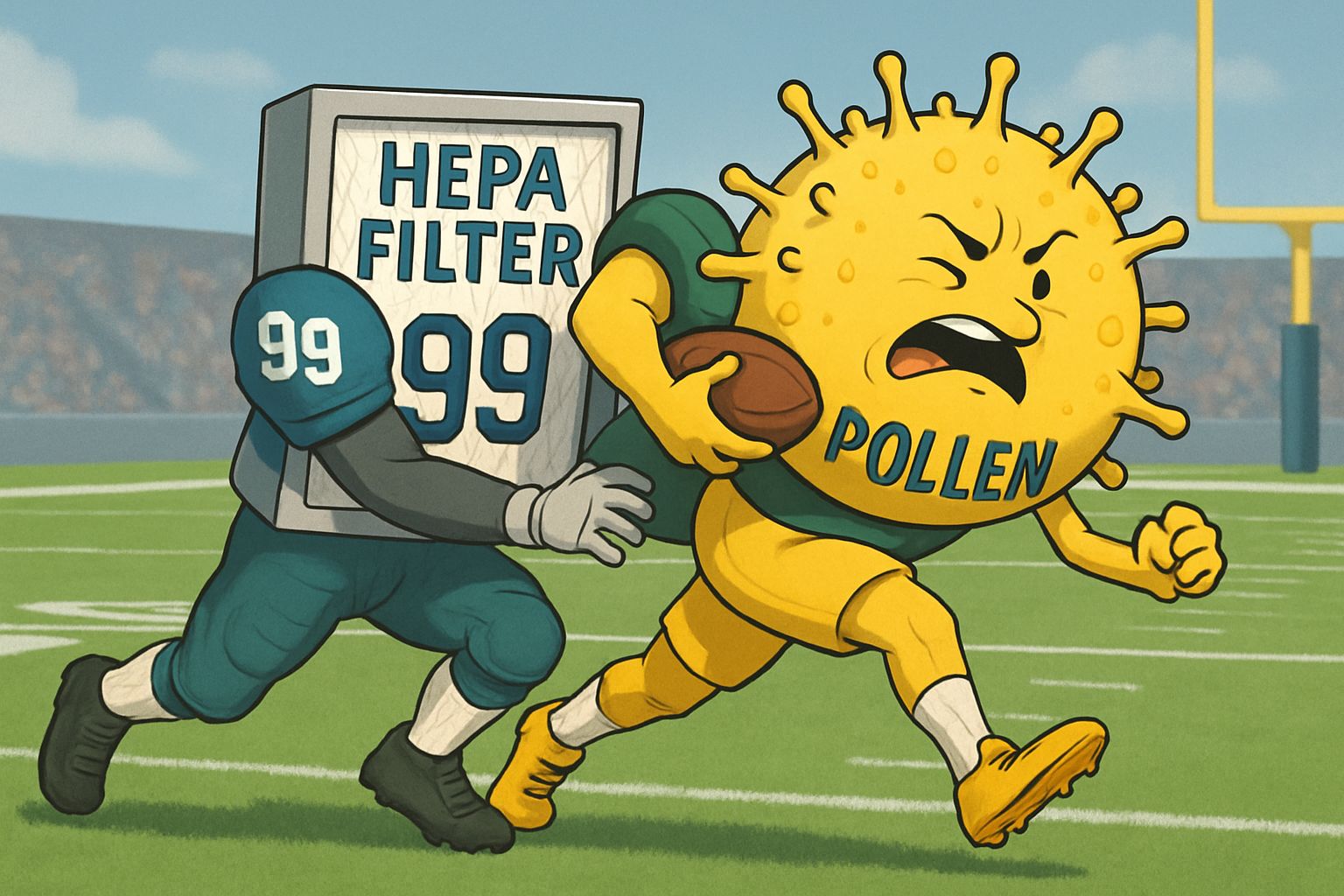
HEPA stands for High-Efficiency Particulate Air. To earn the HEPA designation, a filter must capture at least 99.97% of airborne particles that are 0.3 microns in diameter. Pollen grains range from about 10 to 100 microns — meaning a true HEPA filter traps them with ease. The real challenge isn’t catching pollen itself, it’s catching the finer debris and fragments that pollen breaks into, which can penetrate deeper into your respiratory system.
This is why filter quality matters more than brand name or price tag alone. Not all filters marketed as “HEPA-type” or “HEPA-like” meet the true HEPA standard. Always look for filters that are verified to the 99.97% at 0.3 microns benchmark.
How Pollen Gets Inside Your Home
Most people assume closing the windows during pollen season is enough. It’s not. Pollen finds its way indoors through a surprising number of pathways, and once it’s inside, it can linger for days without proper filtration.
Every time you open a door, a cloud of outdoor air — loaded with pollen — pushes inside. Your clothes, hair, and pets carry pollen particles directly into your living spaces. HVAC systems without proper filtration actively pull outdoor air in and distribute it throughout your home. Even brief window openings during early morning hours, when pollen counts peak, can dramatically spike indoor pollen levels.
Common Entry Points for Pollen
Understanding where pollen enters gives you a clear action plan for reducing it. Here are the most common culprits:
- Doorways and entryways — especially in high-traffic homes
- Windows and window screens — screens filter large debris but not pollen-sized particles
- Clothing and shoes — pollen clings to fabric fibers and gets tracked inside
- Pets — fur acts like a pollen magnet during outdoor walks
- HVAC intake vents — particularly systems with older or low-grade filters
- Gaps in insulation and weatherstripping — even small gaps allow air exchange
Why Indoor Pollen Levels Can Exceed Outdoor Levels
This surprises most people, but it’s well-documented. Once pollen enters a home, it settles on surfaces — carpets, upholstered furniture, bedding — and gets repeatedly disturbed back into the air through normal activity like walking, sitting, or running a fan. Without a HEPA air purifier actively cycling and filtering the air, pollen recirculates continuously.
Homes with wall-to-wall carpeting are particularly prone to this problem. Carpet fibers trap pollen deep below the surface where regular vacuuming can’t fully reach, creating a persistent reservoir that releases particles back into the air over time.
What Makes a HEPA Filter Effective Against Pollen
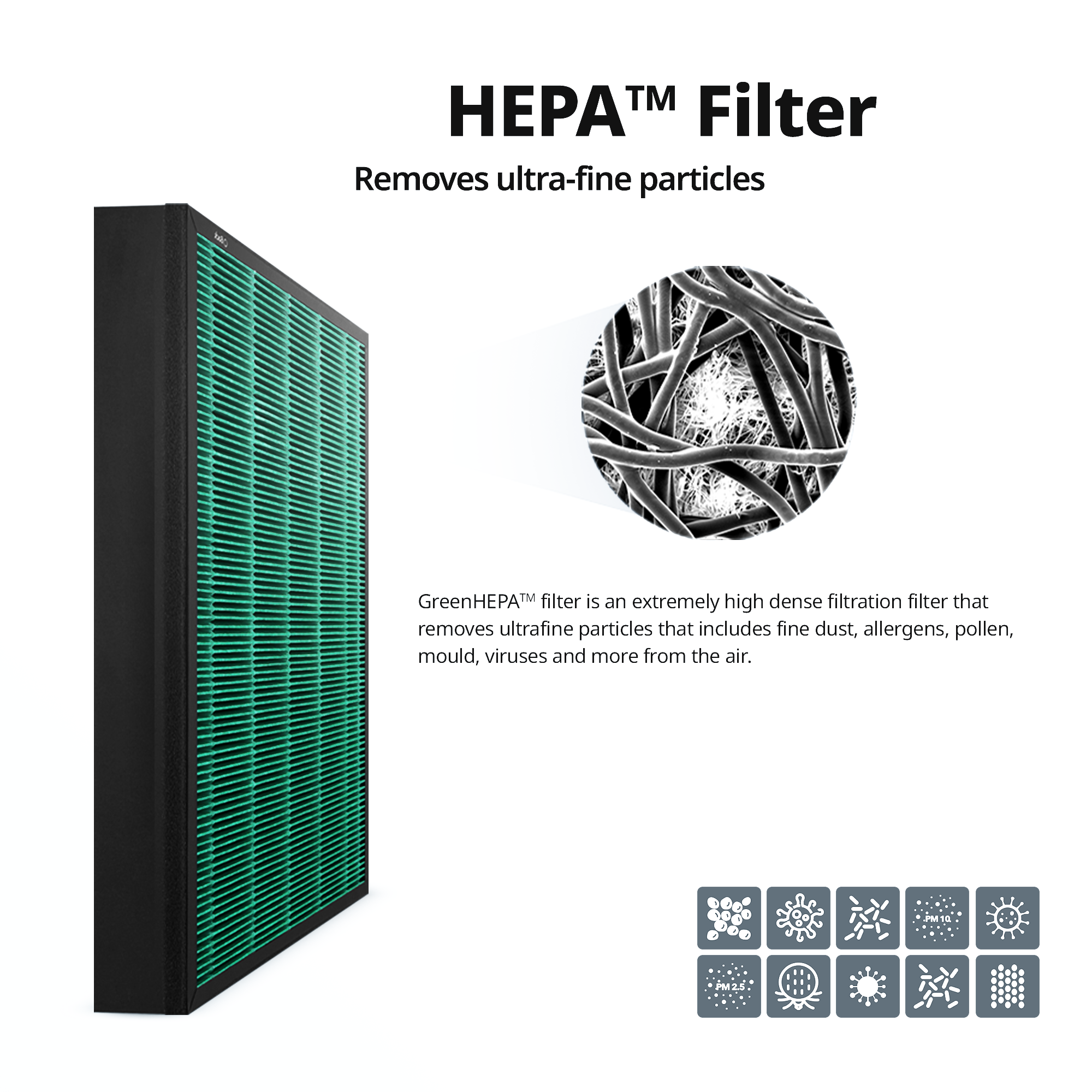
“What Is a HEPA Filter? How It Works …” from coway.co.uk and used with no modifications.
Not all HEPA filters are built the same way, and understanding the mechanics behind how they work helps you make a smarter purchase decision.
The 0.3 Micron Standard and Why It Matters for Pollen
The 0.3 micron threshold isn’t arbitrary — it represents the most penetrating particle size (MPPS), meaning it’s the hardest size for filters to capture. HEPA filters are tested and rated at this specific size because if they can capture 99.97% of particles at 0.3 microns, they can capture even higher percentages of larger particles like pollen. In practical terms, this means a certified true HEPA filter is extraordinarily effective against whole pollen grains.
Where it gets more nuanced is with pollen fragments — broken pieces of pollen that measure well below 1 micron. These fragments are actually more dangerous for respiratory health because they penetrate deeper into lung tissue. Standard HEPA filters still capture these, but ultrafine filtration technology like HyperHEPA performs even better in this regard. For those interested in reducing pollen exposure in urban settings, consider exploring low pollen plants for urban gardens.
Always verify that a purifier’s filter has been independently tested and certified — not just labeled — to meet true HEPA standards.
HEPA vs. HyperHEPA: Which One Do You Need
Standard HEPA filters capture particles down to 0.3 microns at 99.97% efficiency. HyperHEPA filters, a technology developed by IQAir, capture particles down to 0.003 microns — 100 times smaller — making them significantly more effective against ultrafine pollen fragments, smoke particles, and certain viruses. For most households dealing with seasonal pollen allergies, a true HEPA filter provides excellent protection. However, if you or a family member has severe allergies, asthma, or a respiratory condition, the upgrade to HyperHEPA filtration is worth the investment.
Multi-Stage Filtration and Its Role in Pollen Removal
The most effective air purifiers don’t rely on a single filter. Multi-stage systems use a pre-filter to catch large particles first, extending the life of the main HEPA filter. An activated carbon layer then handles gases and odors. The HEPA or HyperHEPA stage handles fine and ultrafine particles. This layered approach means the system stays efficient longer and tackles a broader range of indoor air pollutants simultaneously — not just pollen, but also mold spores, pet dander, dust mites, and VOCs.
How to Choose the Right HEPA Air Purifier for Pollen
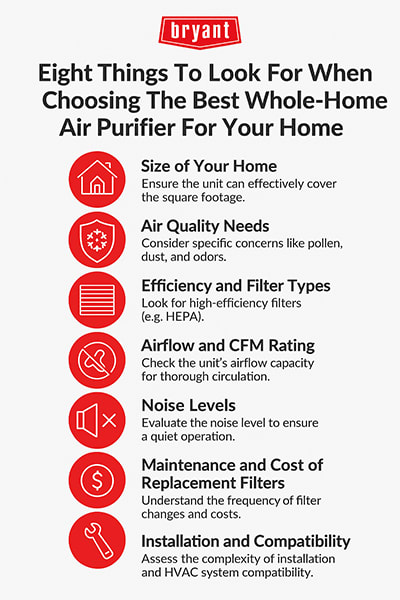
“What is the Best Air Purifier for a …” from www.bryant.com and used with no modifications.
With dozens of options on the market, narrowing down the right HEPA purifier comes down to five key factors that directly impact performance in a pollen-heavy environment.
1. Match the Purifier Coverage Area to Your Room Size
Every HEPA air purifier is rated for a maximum coverage area, measured in square feet. Running a purifier designed for a 200 sq ft room in a 500 sq ft open-plan living space means the unit is constantly overwhelmed — it can never cycle the air fast enough to make a meaningful difference. Check the CADR (Clean Air Delivery Rate) rating alongside the coverage area. For pollen specifically, look for a CADR rating of at least 200+ for rooms larger than 300 square feet.
2. Look for Built-In Air Quality Monitoring
Real-time air quality monitoring changes how you interact with your purifier. Instead of running it on a fixed schedule and guessing whether it’s working, a built-in sensor detects rising particle levels — like when someone walks in from outside carrying pollen — and automatically ramps up filtration speed to compensate. For those interested in reducing pollen exposure, consider exploring low-pollen plants for urban gardens to further minimize indoor allergens.
Some advanced models display a color-coded air quality index directly on the unit, giving you immediate visual feedback on your indoor air conditions. This feature is particularly useful during peak pollen season when indoor particle counts can spike rapidly throughout the day.
3. Check Noise Levels for Bedroom Use
A HEPA purifier only works if you actually run it consistently, including overnight. Many high-performance units run loud enough on their top settings to disrupt sleep. Look for models with a dedicated sleep or quiet mode that operates below 30 decibels — roughly equivalent to a soft whisper. The IQAir HealthPro Plus, for instance, operates at just 22 dB on its lowest setting, making it genuinely usable in a bedroom environment without disrupting sleep quality.
4. Prioritize Energy Star Certified Models
Running an air purifier 24 hours a day during pollen season adds up on your electricity bill faster than most people expect. Energy Star certified models are tested to consume significantly less energy than non-certified alternatives without sacrificing filtration performance.
Look for purifiers with auto mode — a setting that allows the unit to scale fan speed up or down based on current air quality readings. This prevents the system from running at full power unnecessarily, cutting energy consumption while maintaining clean air. For more tips on maintaining a healthy indoor environment, consider exploring vertical garden systems that can help reduce pollen exposure.
5. Consider Smart Features for Easier Filter Management
Filter replacement reminders, app connectivity, and scheduling features all make long-term maintenance easier and more consistent. Smart HEPA purifiers like those in IQAir’s lineup can track filter life based on actual usage hours — not just calendar time — so you’re replacing filters when they actually need it, not on a generic schedule that may be too early or too late.
Where to Place Your Air Purifier for Maximum Pollen Reduction
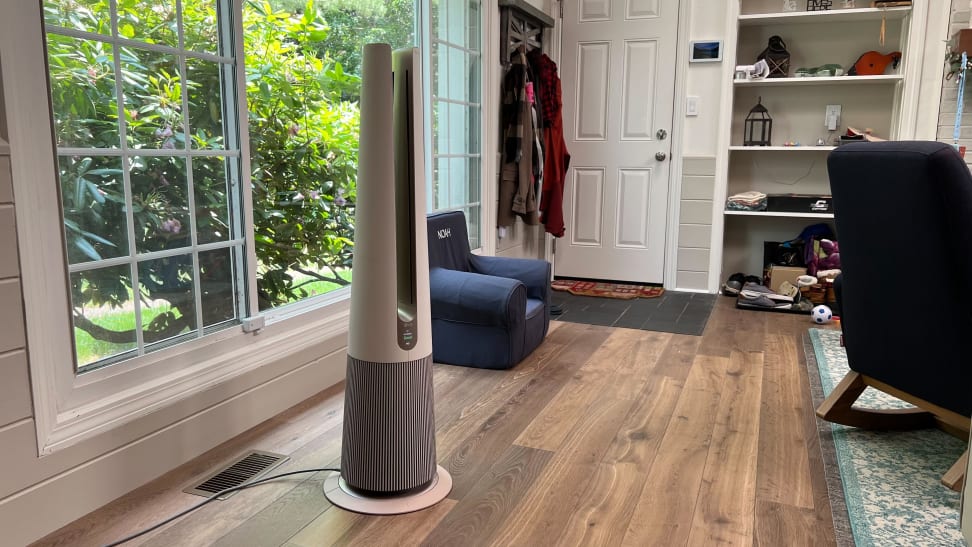
“Air purifier placement: What’s the best …” from www.reviewed.com and used with no modifications.
Placement is one of the most overlooked factors in HEPA purifier performance. The best unit on the market will underperform if it’s tucked into a corner behind furniture where airflow is restricted. Position your purifier in the area where you spend the most time — typically the bedroom or main living area — and keep at least 18 inches of clearance on all sides to allow unrestricted air intake and output.
For pollen specifically, placing the unit near the primary entry points into the room gives it the best chance to capture particles before they settle on surfaces. Near a doorway or on the side of the room closest to windows is often ideal. If you have an open floor plan, a single large-capacity unit positioned centrally will outperform multiple small units placed randomly around the space.
How to Maintain Your HEPA Air Purifier
A neglected HEPA purifier doesn’t just lose efficiency — it can actually become a source of indoor air problems. Clogged filters restrict airflow, forcing the motor to work harder while delivering less filtered air. In high-pollen environments, filters load up faster than the manufacturer’s standard replacement timeline might suggest.
During peak pollen season — typically spring and early fall — check your pre-filter every 2 to 3 weeks. Pre-filters are often washable, making them easy and inexpensive to maintain. Keeping the pre-filter clean extends the life of the more expensive main HEPA filter significantly, often doubling its usable lifespan.
The single most important maintenance habit is running your purifier continuously during high pollen periods rather than switching it on and off. Intermittent use allows pollen to accumulate on surfaces between cycles, making it harder for the unit to maintain consistently clean air levels.
Maintenance Quick Reference Guide
Component Check Frequency Action Required Typical Lifespan Pre-Filter Every 2–3 weeks (pollen season) Rinse or vacuum clean 3–6 months HEPA Filter Every 3 months Visual inspection, replace if gray/loaded 12–18 months Carbon Filter Every 3 months Replace when odors return 6–12 months Air Intake Vents Monthly Wipe with dry microfiber cloth Ongoing Exterior Housing Monthly Wipe down with damp cloth Ongoing
When and How to Clean or Replace HEPA Filters
True HEPA filters should never be washed with water unless the manufacturer explicitly states they are washable — most are not. Water damages the dense fiber matrix that gives HEPA filters their particle-trapping capability. Instead, gently tap the filter over a trash bin outdoors to dislodge loose surface debris, or use a vacuum with a brush attachment on the lowest suction setting. When the filter surface appears visibly dark or gray across most of its surface area, it’s time for a full replacement regardless of the hours logged. For more information on reducing pollen exposure, check out these low pollen plants for urban gardens.
Dusting and Clearing Air Intake Vents
The air intake vents on your purifier accumulate dust, pet hair, and yes — pollen — on their outer grilles. This buildup doesn’t just look unsightly; it physically reduces the volume of air the unit can draw in, directly reducing its ability to filter your room air effectively.
Use a dry microfiber cloth or a soft brush attachment on a vacuum to clear the intake grilles monthly. Never use liquid cleaners directly on the intake area, as moisture can damage internal components and potentially encourage mold growth inside the unit housing.
Pay particular attention to the underside and rear vents on tower-style purifiers — these are easy to miss during routine cleaning but are often the primary intake points for the unit. A quick monthly wipe-down takes under two minutes and has a measurable impact on airflow performance.
If your purifier has been running in a high-pollen environment for an extended period, consider taking the unit outside briefly to clean the exterior vents — this prevents dislodged pollen from simply recirculating back into your indoor air during the cleaning process.
💡 Pro Tip: During peak pollen season, set a recurring monthly phone reminder specifically for air purifier vent cleaning. It takes less than 5 minutes but can extend your filter life by weeks and keep airflow rates at their optimal level throughout the entire season.
Other Strategies to Reduce Indoor Pollen Exposure
A HEPA air purifier handles what’s already in your air, but a complete pollen defense strategy also focuses on reducing how much pollen enters your home in the first place. Combining filtration with smart daily habits creates a compounding effect — less pollen getting in means your purifier works more efficiently, filters last longer, and your indoor air quality stays cleaner with less effort overall.
Wash Bedding Regularly in Hot Water
Bedding is one of the most pollen-saturated surfaces in your home, simply because you carry pollen on your body and hair into bed every night. Washing sheets, pillowcases, and duvet covers in hot water — at least 130°F (54°C) — effectively kills dust mites and flushes out pollen that has accumulated deep in fabric fibers. During peak pollen season, aim to wash bedding at least once per week rather than the standard bi-weekly schedule most households follow.
Dry your bedding in a machine dryer rather than hanging it outside. Line-dried laundry, while energy-efficient, acts like a giant pollen trap — collecting airborne pollen across the entire surface area of your sheets before you bring them back inside. A dryer set to medium-high heat eliminates this problem entirely while also helping to kill any remaining allergens that survived the wash cycle.
Keep Windows Closed During High Pollen Seasons
Pollen counts are highest between 5 a.m. and 10 a.m. on warm, dry, breezy days — exactly the kind of morning most people want to open their windows and let fresh air in. Resist the urge. A single open window during peak pollen hours can introduce enough particles to overwhelm your HEPA purifier for hours. Use local pollen forecasting apps or websites like the American Academy of Allergy, Asthma and Immunology’s (AAAAI) National Allergy Bureau to check daily counts before deciding whether to ventilate naturally. For more tips on managing pollen exposure, consider exploring low pollen plants for urban gardens.
On days when pollen counts are rated moderate to very high, keep windows and doors closed throughout the day and rely on your HEPA air purifier to maintain indoor air quality. Save natural ventilation for rainy days or periods after a rainfall — precipitation effectively washes pollen out of the air, bringing outdoor counts to their lowest levels and making brief ventilation far safer for allergy sufferers.
Combine Air Purifiers With Allergen-Blocking Sprays
Allergen-blocking sprays like Allersearch ADMS Anti-Allergen Spray work by chemically denaturing allergen proteins on contact, neutralizing pollen that has already settled onto carpets, upholstery, and curtains. These sprays don’t replace HEPA filtration — they complement it by addressing settled allergens that your air purifier can’t capture until they become airborne again. Used together, HEPA filtration handles airborne particles while allergen-blocking sprays neutralize what’s sitting on your surfaces, creating a genuinely comprehensive pollen defense system for your home.
A HEPA Air Purifier Alone Won’t Eliminate Pollen — But It Gets You Most of the Way There
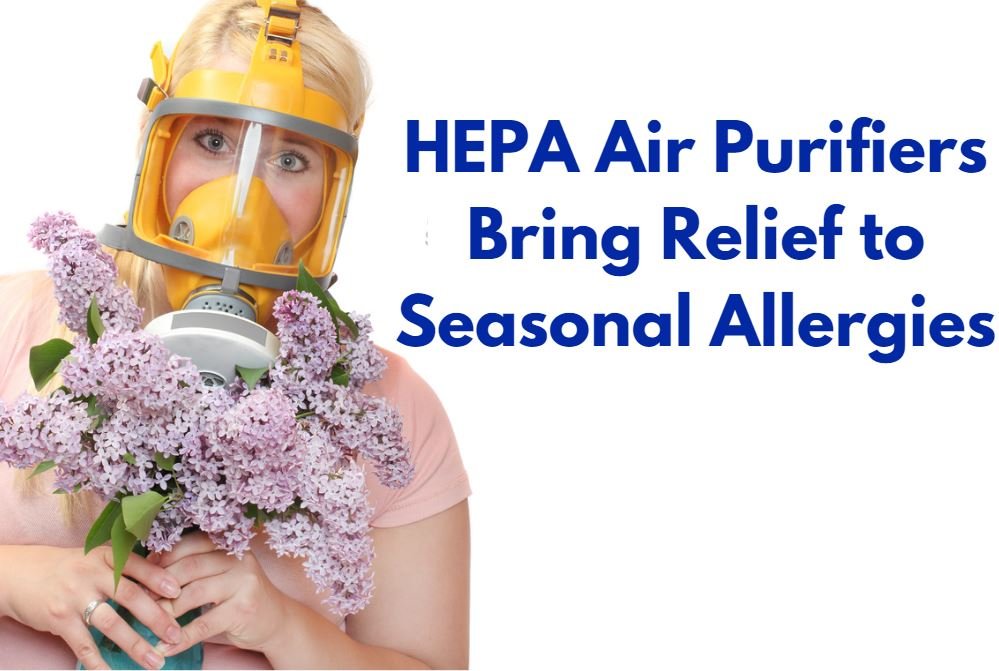
“Air Purifiers Help with Allergies” from www.iso-aire.com and used with no modifications.
No single solution completely eliminates indoor pollen exposure. The goal is meaningful reduction — bringing indoor pollen levels down to a point where your immune system isn’t constantly triggered. A high-quality HEPA air purifier running continuously in your primary living and sleeping spaces does the heavy lifting, often reducing airborne pollen concentrations by over 99% within the purifier’s effective coverage zone. The remaining strategies — washing bedding, keeping windows closed, managing entry points, and using allergen sprays — close the gaps that filtration alone can’t address.
Think of your indoor air quality plan the same way you’d approach any layered defense. Each strategy independently makes a measurable difference. Combined, they create an indoor environment where pollen simply doesn’t stand much of a chance. The investment in a quality HEPA system pays off not just during pollen season, but year-round — the same filtration that captures pollen also handles mold spores, pet dander, dust mite debris, and fine particulate matter from cooking and outdoor pollution. For more tips on minimizing pollen indoors, check out our guide on pollen-free balcony garden systems.
Frequently Asked Questions
Here are the most common questions people ask when setting up HEPA filtration specifically for pollen control, answered with the specificity that actually helps you make better decisions.
How Often Should I Replace the HEPA Filter in My Air Purifier?
Most manufacturers recommend replacing true HEPA filters every 12 to 18 months under normal operating conditions. However, during heavy pollen season — or in households with pets, smokers, or high foot traffic — filters can load up significantly faster. If you notice your purifier’s airflow feels weaker than usual, or if your air quality monitor shows consistently elevated particle readings despite the unit running, inspect the filter regardless of how recently it was installed. For more information on maintaining your air purifier, check out this ultimate guide on HEPA air purifiers.
A practical rule: visually inspect your HEPA filter every three months. If more than two-thirds of the filter surface appears dark gray or brown, replace it. Running a heavily loaded HEPA filter doesn’t just reduce performance — it can cause the motor to overheat and shorten the overall lifespan of your unit. The cost of a replacement filter is always less than the cost of replacing the entire purifier. For more information, check out this ultimate guide on HEPA air purifiers.
Can a HEPA Air Purifier Remove All Pollen From My Home?
A true HEPA filter captures 99.97% of airborne particles at 0.3 microns — and pollen grains are significantly larger than that, ranging from 10 to 100 microns. So in terms of what’s actually suspended in your air and passing through the purifier, the filtration rate is extremely high. The practical limitation isn’t the filter itself — it’s coverage and air cycling speed.
A purifier can only filter the air that physically moves through it. Pollen settled on surfaces, hiding in carpet fibers, or sitting in rooms the purifier doesn’t cover remains a problem. This is why running your purifier continuously — rather than intermittently — matters so much. Continuous operation means the air in your room gets cycled through the filter multiple times per hour, progressively reducing the total airborne pollen load rather than just addressing brief spikes.
In short, no — a HEPA purifier won’t remove every single pollen particle from your home. But with proper placement, correct sizing for your room, and consistent operation, it will reduce airborne pollen to levels that most allergy sufferers find dramatically more comfortable than unfiltered indoor air.
What Is the Difference Between a HEPA and HyperHEPA Filter?
A standard true HEPA filter captures particles down to 0.3 microns at 99.97% efficiency. A HyperHEPA filter, developed by IQAir, captures particles down to 0.003 microns — 100 times smaller — at verified efficiency levels. For pollen itself, both perform excellently since pollen grains are far larger than either filter’s minimum capture threshold. The meaningful difference shows up with pollen fragments — submicron pieces of broken pollen that penetrate deeper into the respiratory tract and can trigger more severe allergic responses. HyperHEPA technology captures these fragments at rates that standard HEPA filters cannot match, making it the stronger choice for individuals with severe allergies or asthma. For those interested in minimizing pollen exposure, consider exploring low-pollen plants for urban gardens as an additional measure.
Where Is the Best Place to Put a HEPA Air Purifier for Pollen?
Place your HEPA air purifier in the room where you spend the most time — for most people, that’s the bedroom, since you spend roughly a third of your life there. Position the unit away from walls and furniture, with at least 18 inches of clearance on all sides to allow unrestricted airflow. Avoid placing it in corners, behind curtains, or inside closets, where restricted airflow dramatically reduces the volume of air the unit can process per hour.
If you have the budget for a second unit, prioritize your main living area as the secondary placement. For open-plan spaces, a centrally located, high-capacity unit will outperform multiple small units scattered around the perimeter. During pollen season, keep the unit positioned closer to the room’s primary entry point — typically the door — so it can capture incoming particles before they disperse throughout the space.
Do HEPA Air Purifiers Help With Asthma Triggered by Pollen?
Yes — and the evidence supporting this is substantial. Pollen is one of the most common asthma triggers, particularly during spring and fall seasons when airborne counts peak. By continuously removing pollen particles from indoor air, a HEPA purifier reduces the likelihood of inhaling the concentrations of pollen that can initiate an asthmatic response. For asthma sufferers specifically, the bedroom is the highest-priority placement location since nighttime breathing of polluted air can trigger symptoms that disrupt sleep and worsen overall respiratory health.
For individuals with pollen-triggered asthma, a few additional considerations beyond standard HEPA filtration are worth noting:
- Choose a purifier without an ionizer or ozone-generating function — ozone is a known asthma irritant, and some air purifiers produce it as a byproduct
- Prioritize models with HyperHEPA filtration for submicron pollen fragment capture
- Run the unit on its highest effective setting during peak pollen hours (5 a.m. to 10 a.m.) even if you’re still sleeping
- Keep the bedroom door closed while the purifier runs to maximize filtration efficiency within the contained space
- Pair filtration with regular HVAC filter upgrades — use MERV 11 or higher rated filters in your central system to prevent pollen from being distributed through your ductwork
While a HEPA air purifier is not a medical treatment and doesn’t replace prescribed asthma medications or an asthma action plan developed with your physician, it functions as a powerful environmental control measure that reduces exposure to one of the most common and potent asthma triggers in existence.
If you’re ready to take indoor air quality seriously — whether for allergy relief, asthma management, or simply breathing cleaner air every day — IQAir offers a range of advanced HEPA and HyperHEPA air purification systems engineered to deliver verified, measurable results in real home environments. For more information, check out HEPA air purifiers for allergies.