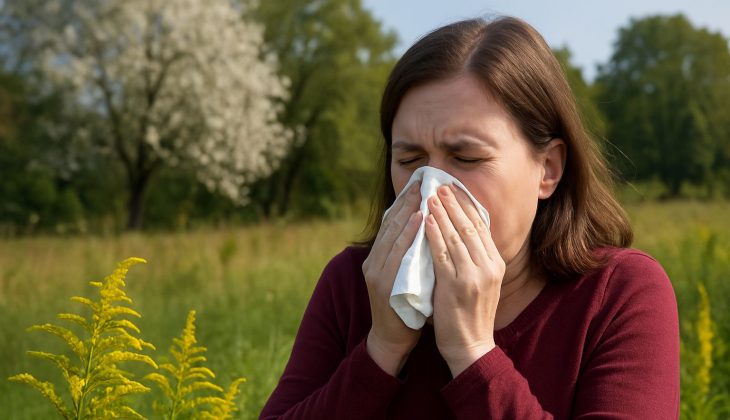
- Rockford is currently dealing with multiple simultaneous allergen triggers, including extreme dust & dander, high mold levels, and moderate grass and ragweed pollen.
- Allergy season in Rockford runs almost year-round, with tree pollen starting as early as late February and ragweed extending well into September.
- Most “real-time” pollen data you see online is actually a forecast, not a live measurement — there’s typically a 1-2 day delay in verified counts.
- Warmer Illinois springs are causing pollen seasons to start earlier and last longer than they historically have.
- Knowing exactly which allergen is peaking — and when — is the difference between managing your symptoms and being blindsided by them.
If you’re sneezing, congested, or waking up with itchy eyes in Rockford right now, you’re not imagining it — multiple allergens are elevated at the same time.
Seasonal allergies in Rockford, IL follow a pattern that’s predictable once you know what to look for, but the window of relief is getting shorter every year. Understanding which triggers are active, why they’re escalating, and how local geography plays a role can help you get ahead of your symptoms rather than chase them. Resources focused on regional health trends can help Rockford residents stay informed as conditions shift throughout the year.
Rockford Is in the Middle of a Multi-Trigger Allergy Event
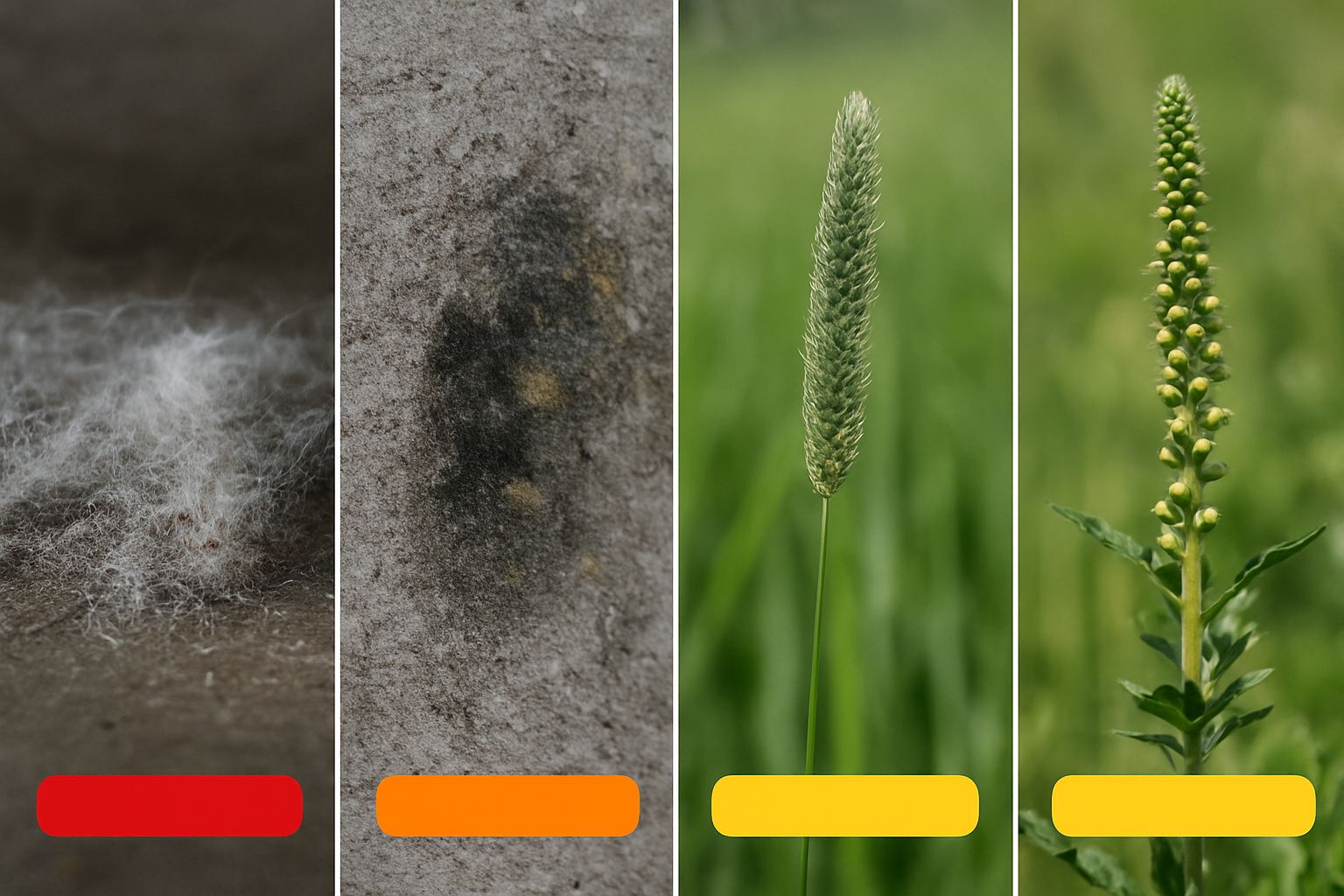
Right now, Rockford isn’t dealing with just one allergen — it’s a stacked situation. Dust & dander is currently rated Extreme, mold is sitting at High, and both grass pollen and ragweed pollen are at Moderate levels. When multiple triggers overlap like this, even people with mild allergies can experience significant symptoms, and those with asthma are at heightened risk.
Current Pollen & Allergen Levels at a Glance
| Allergen | Current Level |
|---|---|
| Dust & Dander | Extreme |
| Mold | High |
| Grass Pollen | Moderate |
| Ragweed Pollen | Moderate |
| Tree Pollen | Low / None |
Grass pollen levels are forecast to gradually decrease over the coming days, which offers some relief on that front. However, dust, dander, and mold are not weather-dependent in the same way pollen is — they don’t simply “blow away” with a change in wind direction.
Why Dust & Dander Is Hitting Extreme Levels
Dust and dander allergens are classified separately from pollen because they aren’t seasonal in the traditional sense — they’re present year-round and spike based on indoor conditions, humidity fluctuations, and how much time people spend with windows open. During summer months in Rockford, when residents alternate between air conditioning and open windows, dander from pets and dust mite activity can both surge. The Extreme rating means the concentration of these particles in the air is high enough to trigger reactions in even mildly sensitive individuals. For more information on local allergy conditions, visit Rockford allergy weather updates.
What makes this particularly challenging is that most people focus their allergy management on outdoor pollen while ignoring indoor triggers. Dust mites thrive in humidity levels above 50%, which is very common in Rockford’s humid continental climate during summer. If your indoor humidity isn’t being actively managed, your home may be amplifying the very triggers you’re trying to escape.
Mold at High: What That Means for Your Symptoms
Mold spores are another allergen that doesn’t follow a clean seasonal calendar. In Rockford, mold levels climb when temperatures are warm and moisture is present — conditions that describe most of the summer. The Rock River corridor and surrounding green spaces create natural humid zones where mold spores reproduce rapidly and become airborne. For those interested in exploring more about the local plant life and maintenance, check out this Naperville plant ID guide.
A High mold rating means spore counts are elevated enough to provoke respiratory symptoms including nasal congestion, throat irritation, and worsened asthma. Mold allergies are frequently mistaken for a lingering cold or sinusitis, which delays proper treatment. If your symptoms persist well past peak pollen season, mold is often the overlooked culprit. For those interested in eco-friendly solutions, explore eco-friendly urban garden kits that may help manage mold and other allergens.
Why Allergy Season Keeps Getting Worse in Illinois

It’s not just your perception — allergy seasons in Illinois are measurably longer and more intense than they were a generation ago. The combination of shifting climate patterns, earlier spring warmth, and Rockford’s specific geography creates conditions where allergens thrive across a wider window of the year. Learn more about how climate change is affecting allergy seasons in Illinois.
How Climate Change Is Extending the Pollen Season
Warmer average temperatures in northern Illinois are directly linked to earlier pollen release dates. Plants respond to temperature cues, and as winters become shorter and milder, species like maple and elm begin releasing pollen earlier in February than they historically did. This doesn’t just shift the start date — it extends the overall season because fall cooling is also arriving later.
The practical result for Rockford residents is that the brief windows of relief between allergy seasons are compressing. Where there was once a clear break between tree pollen season ending and grass pollen season beginning, those windows now overlap. The same trend is visible at the back end of the season, where ragweed now pushes well into September rather than tapering off in August.
This also has a compounding effect on symptom severity. Longer seasons mean more total pollen exposure over the year, which can sensitize the immune system further over time and cause previously mild allergy sufferers to develop stronger reactions.
- Maple and elm pollen now begins as early as late February in Rockford
- Oak pollen follows and runs through April and May
- Grass pollen peaks from June through July
- Ragweed extends the season strongly into September
- Dust, dander, and mold remain active year-round
Understanding this timeline is the foundation of managing your allergy exposure effectively in Rockford — you can’t prepare for what you don’t see coming. For additional insights on managing allergies, consider exploring seasonal maintenance tips.
Warmer Springs Mean Earlier Tree Pollen Releases
Tree pollen is typically the first major allergen to hit each year, and in Rockford, it’s arriving earlier than it used to. Maple is usually the opening trigger, followed by elm, then the heavier oak pollen that dominates April and May. For allergy sufferers who rely on antihistamines, starting medication after symptoms begin means you’re already behind — the histamine response is already active. Learn more about how climate change is affecting allergy seasons.
What Rockford’s Local Vegetation Adds to the Problem
Rockford’s parks are loaded with the exact tree species that produce the most allergenic pollen. Sinnissippi Park and the Rock River corridor feature dense populations of oak, maple, and elm — the three primary tree pollen sources in this region. The open Illinois farmland surrounding the city also acts as an unobstructed pathway for pollen to travel into residential areas. Learn more about how climate change is affecting allergy season in Illinois.
Unlike cities with more diverse or less allergenic urban tree planting, Rockford’s green infrastructure leans heavily toward high-pollen species. This isn’t a minor detail — local vegetation composition is one of the most direct factors in how intense your personal pollen exposure will be on any given day. For those interested in alternative urban planting strategies, exploring urban farming innovations in Aurora, IL might offer some insights.
- Sinnissippi Park — Dense oak, maple, and elm concentration along the Rock River
- Rock River corridor — High moisture zones that amplify mold spore counts
- Surrounding farmland — Flat, open terrain with no natural windbreaks, allowing pollen to travel freely into the city
- Urban tree canopy — Dominated by high-pollen species rather than low-allergen alternatives
How Rockford Pollen Data Is Actually Collected
Most people assume the pollen count they check on a weather app is a live reading — like a thermometer measuring the air right now. That’s not how it works. Pollen monitoring is a labor-intensive process that involves physical collection equipment, manual microscope analysis, and trained technicians counting individual spore types.
The standard tool used in pollen monitoring is a Rotorod or Burkard spore trap — a device that collects airborne particles on a sticky surface over a set time period. Once collected, the sample has to be physically examined under a microscope by a certified analyst who identifies and counts each pollen type. That process takes time, which is why verified pollen counts are typically 1-2 days behind real-world conditions.
For Rockford specifically, forecasts are calculated using a combination of recent verified measurements, satellite data that maps local vegetation, and current weather conditions including wind speed, temperature, and humidity. Services like Airmine update these forecasts four times daily to keep the data as current as possible, but it’s important to understand you’re looking at a model-based prediction, not a direct measurement of what’s floating through your backyard right now.
Why Most “Real-Time” Pollen Data Is Actually a Forecast
When AccuWeather or a pollen tracking app shows you today’s count, that number is generated by an algorithm trained on historical pollen data, current weather inputs, and vegetation mapping — not a fresh sample pulled from the air this morning. This is standard practice across the industry, and it’s not a flaw. It’s simply the practical reality of how pollen science works at scale. The forecast models are quite accurate, but knowing their nature helps you interpret them correctly. A “Moderate” grass pollen reading today is a well-informed prediction, not a laboratory-confirmed measurement.
The 1-2 Day Delay in Manual Pollen Measurements
When physical pollen trap data is used to anchor or calibrate forecast models, that data arrives with a built-in delay of one to two days. A sample collected on Monday isn’t analyzed and reported until Tuesday or Wednesday at the earliest. This is why real-time forecasting tools layer in satellite vegetation data and weather modeling — to bridge the gap between what was measured and what is likely happening right now. For allergy sufferers, this means that if you’re having a severe symptom day that doesn’t match the reported count, the forecast may simply not have caught up yet with an actual spike in local pollen.
Which Allergens Peak in Each Season in Rockford
Rockford’s allergy calendar is one of the more demanding in the Midwest. The combination of its humid continental climate, river corridor geography, and surrounding agricultural land means there’s rarely a month where at least one allergen isn’t clinically relevant. Knowing the sequence helps you plan ahead rather than react, especially when considering seasonal maintenance tips for your garden.
The season effectively runs from late February through September for outdoor allergens, with indoor triggers like dust, dander, and mold persisting year-round. That leaves a narrow window — roughly October through January — where outdoor pollen exposure drops to minimal levels for most people.
Spring: Tree Pollen Leads the Charge
Maple and elm are first out of the gate, typically releasing pollen in late February or early March depending on how mild the winter has been. Oak follows and becomes the dominant tree pollen source through April and into May. Oak pollen is particularly problematic because it’s produced in enormous quantities, travels long distances, and is a potent allergen for a large percentage of the population. If you have spring allergies in Rockford, there’s a very high probability that oak is a primary trigger.
Summer: Grass Pollen Takes Over
Once tree pollen winds down in late May, grass pollen picks up almost immediately. In Rockford, grass pollen peaks through June and July, making this the most intense period for people with grass sensitivities. The flat, open terrain surrounding the city means grass pollen from surrounding fields moves into residential areas with very little natural resistance.
Current data shows grass pollen is at Moderate levels and is expected to decrease over the coming week gradually. However, “Moderate” still means meaningful exposure — for highly sensitive individuals, moderate levels are more than enough to drive daily symptoms. The overlap between late grass pollen season and the beginning of ragweed season in August creates another compounding window that catches many allergy sufferers off guard.
Late Summer & Fall: Ragweed Season Hits Hard
Ragweed is one of the most potent and widespread allergens in North America, and Rockford gets a heavy dose of it. The season typically builds through August and peaks in September, with the flat Illinois farmland around the city acting as an ideal growing environment for ragweed. A single ragweed plant can release up to one billion pollen grains over a season, and those grains are light enough to travel hundreds of miles on the wind. Even if there’s no ragweed growing near your home, you can still be significantly exposed.
Year-Round: Dust, Dander & Mold Never Fully Go Away
Unlike pollen, dust mites, pet dander, and mold spores don’t follow a seasonal calendar. They fluctuate based on indoor humidity, ventilation habits, and temperature — all of which shift significantly across Rockford’s four-season climate. Dust mites peak when indoor humidity rises above 50%, which is common in Rockford summers. Mold spores spike outdoors after rain events and in areas near standing water or dense vegetation like the Rock River corridor.
Currently, dust & dander is rated Extreme and mold is at High in Rockford — meaning these non-pollen triggers are actually the most acute concern right now, even as grass and ragweed draw most of the attention. Managing these allergens requires different strategies than pollen avoidance, focused primarily on indoor air quality and humidity control rather than checking daily forecasts.
How to Reduce Your Exposure on High-Count Days
Knowing allergen levels is only useful if it changes what you do. On days when multiple triggers are elevated simultaneously — like right now in Rockford — layering your exposure reduction strategies makes a measurable difference in symptom severity. No single tactic eliminates exposure, but combining several creates a meaningful reduction in your total allergen load throughout the day. For instance, consider implementing eco-friendly urban garden kits to help manage pollen levels around your home.
The most common mistake people make is treating allergy management as reactive — taking medication after symptoms start rather than before exposure happens. Antihistamines work better as a preventive measure taken before exposure than as a rescue treatment after the histamine response is already active. Check the forecast the night before, note which triggers are elevated, and plan your day accordingly — including when you go outside, how long you stay, and what you do when you come back in.
Best Times of Day to Go Outside During High Pollen Periods
Pollen counts follow a predictable daily rhythm. For most pollen types, counts are highest between 5 a.m. and 10 a.m., when plants release their pollen during the coolest part of the day. If you can shift outdoor exercise, yard work, or morning routines to the afternoon — particularly after 3 p.m. — you’ll typically encounter significantly lower pollen concentrations in the air.
Wind is the other major variable. Dry, windy days push pollen counts up sharply because there’s no moisture to weigh particles down. Rainy or calm mornings are actually the lowest-risk windows for outdoor activity, even if the forecast still shows moderate levels. After a rain event, pollen is temporarily washed from the air, giving you a short exposure window before counts rebound — usually within a few hours as the air dries out and plants resume releasing pollen. Learn more about seasonal maintenance tips to manage pollen exposure effectively.
When you come back inside after any outdoor time on high-count days, treat the transition seriously. Change your clothes, wash your hands and face, and if possible,, shower before sitting down on furniture. Pollen sticks to hair and fabric and continues exposing you indoors long after you’ve come inside — a detail that most people overlook entirely when wondering why their symptoms persist through the evening.
Indoor Air Quality Steps That Actually Make a Difference
With dust and dander currently at Extreme levels in Rockford, indoor air quality deserves as much attention as outdoor pollen avoidance right now. The goal is to reduce your total allergen load across the whole day — not just during the hours you spend outside. These are the steps that produce the most measurable impact, including exploring eco-friendly urban garden kits to improve air quality indoors.
- Run a HEPA air purifier in your bedroom and main living area continuously on high-pollen or high-dander days — HEPA filters capture particles as small as 0.3 microns, which includes pollen, mold spores, and most dander
- Keep windows closed during peak pollen hours (5 a.m. to 10 a.m.) and use air conditioning instead of opening windows for ventilation on high-count days
- Control indoor humidity by keeping levels between 30% and 50% — this directly suppresses dust mite reproduction and slows mold growth, two of Rockford’s highest-rated current triggers
- Wash bedding weekly in hot water (above 130°F) to kill dust mites, which are a major driver of the current Extreme dust & dander rating
- Vacuum with a HEPA-equipped vacuum cleaner rather than a standard model, which can recirculate fine particles back into the air
- Replace HVAC filters regularly — a minimum MERV-11 rated filter will capture pollen and mold spores circulating through your home’s air system
One of the highest-impact single changes you can make is a dehumidifier. In Rockford’s humid summers, indoor humidity regularly climbs above 60%, which is prime territory for both dust mite proliferation and mold growth. A dehumidifier set to maintain 45% humidity addresses two of the three most severe current allergen categories at once. For more detailed insights, you can check the current allergy weather conditions in Rockford.
These steps compound over time. A home with consistent HEPA filtration, controlled humidity, and clean bedding will have a measurably lower allergen concentration than one without — and that difference shows up directly in how often and how severely you experience symptoms.
Rockford Allergy Levels Are High — Here’s What to Do Next
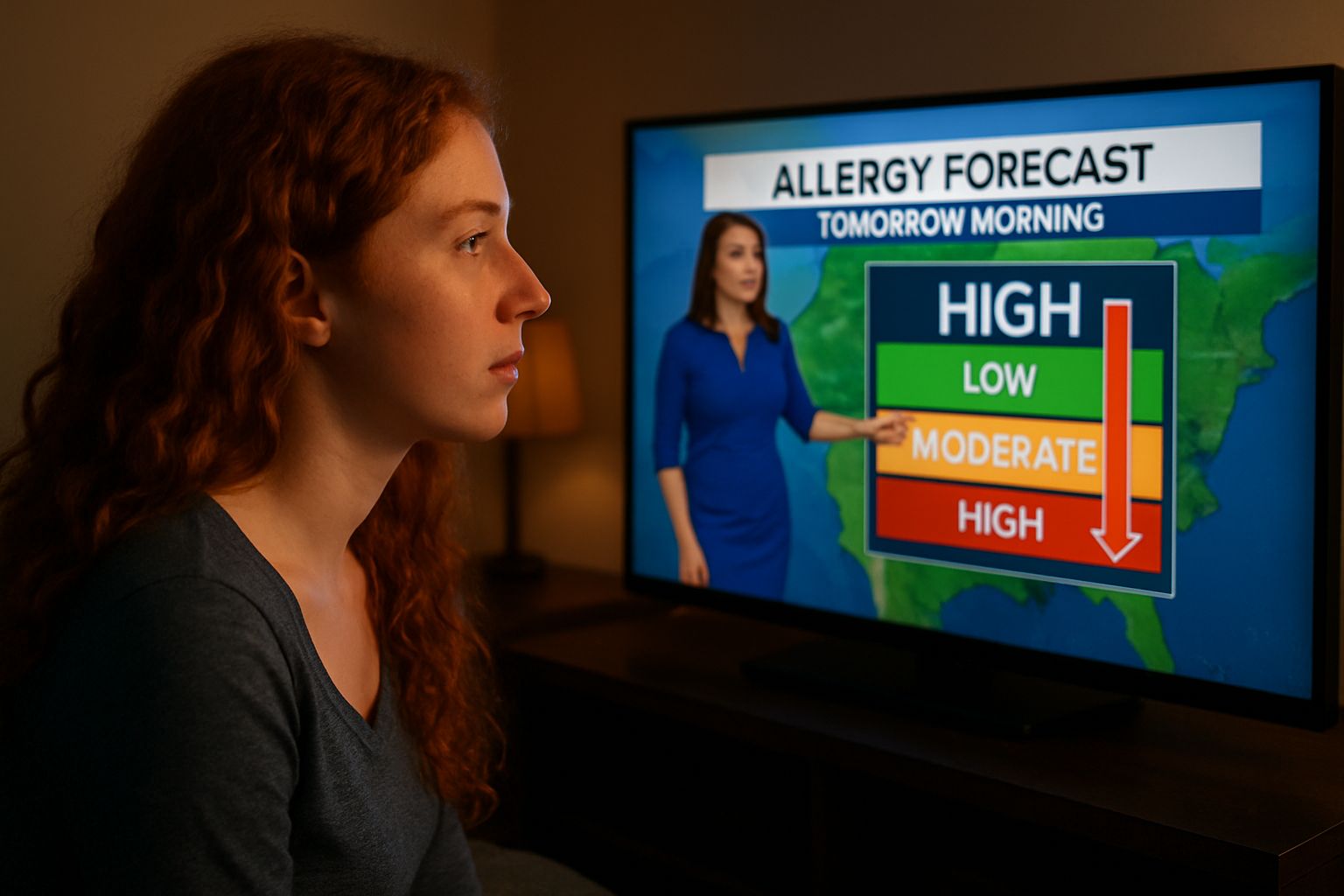
The most important shift you can make is moving from reactive to proactive. Check Rockford’s allergen forecast the night before, identify which triggers are elevated, and build your exposure reduction plan around that information — not your symptoms. Your symptoms are already a sign the immune response is active.
If your current allergy management isn’t keeping up with Rockford’s multi-trigger environment, it’s worth speaking with an allergist about targeted treatment options including immunotherapy, which addresses the root sensitivity rather than just masking symptoms season after season.
Frequently Asked Questions
Rockford residents frequently have specific questions about how local pollen data works, what the severity ratings actually mean, and how to interpret forecast changes from day to day. The answers below cover the most common points of confusion.
Understanding the mechanics behind the data helps you use it more effectively — and avoid the frustration of feeling like the forecast doesn’t match what your body is telling you.
How Often Is the Rockford Pollen Forecast Updated?
The Rockford pollen forecast is updated four times daily. Data is provided by Airmine, which uses satellite vegetation mapping, current weather inputs, and recent physical measurements to generate each forecast cycle. The timestamp on the most recent update is displayed alongside the forecast data so you can see exactly how current the information is.
Keep in mind that while the forecast updates four times per day, the underlying physical pollen trap measurements that help calibrate those forecasts are still subject to the standard 1-2 day processing delay. The frequent updates primarily reflect changes in weather modeling inputs rather than new laboratory measurements each cycle.
What Is Considered an Extreme Allergen Level in Rockford?
An Extreme rating — which dust & dander currently holds in Rockford — represents the highest tier on the allergen severity scale. At this level, even individuals who don’t consider themselves allergy sufferers may notice symptoms, and those with diagnosed allergies or asthma should take active precautionary steps. It is not simply a “high” reading with a different label — Extreme indicates concentrations that pose a clinically meaningful risk to a broad portion of the population, not just highly sensitive individuals.
Does Rain Help Reduce Pollen Counts in Rockford?
Yes — rain temporarily washes pollen out of the air, which is why many allergy sufferers notice symptom relief during and immediately after a rainstorm. The effect is real but short-lived. Once the rain stops and surfaces begin to dry, pollen release typically resumes, and airborne counts can rebound within a few hours.
There is also a counterpoint worth noting: rain increases mold spore activity. Wet conditions are ideal for mold reproduction, so while a rainstorm may lower your grass or tree pollen exposure for a few hours, it can simultaneously drive mold counts higher — particularly in Rockford’s river corridor areas. On days following heavy rainfall, check mold levels specifically before assuming the air is clear.
Can Pollen Travel Into Rockford From Other Areas?
Absolutely. Pollen grains — particularly ragweed — are extremely lightweight and can travel hundreds of miles on wind currents. Rockford’s position on flat, open Illinois terrain with minimal natural windbreaks means there is very little to slow incoming pollen from surrounding agricultural regions. Ragweed pollen released from farmland miles outside the city limits can and does contribute meaningfully to Rockford’s measured counts.
This also means that even if your immediate neighborhood has few allergenic plants, you are not insulated from high pollen exposure. Local vegetation explains part of your exposure, but regional wind patterns carry allergens across significant distances — which is one reason why Rockford’s flat geography consistently produces higher effective pollen exposure than its urban footprint alone would suggest. For those interested in reducing allergen exposure, exploring eco-friendly urban garden kits might be beneficial.
When Is Allergy Season the Worst in Rockford, IL?
Allergy season in Rockford, IL is worst during two overlapping windows: the peak tree pollen period in April through May, and the grass-to-ragweed transition period spanning late July through September. These are the times when pollen counts are highest and when multiple allergen types are simultaneously elevated, compounding the total exposure load.
However, for individuals sensitive to dust, dander, or mold, the concept of a single “worst season” is less meaningful. These triggers are active year-round and can reach Extreme or High levels at any point depending on indoor conditions and weather. Currently, with dust & dander at Extreme and mold at High, the most acute allergy burden in Rockford is being driven by non-pollen triggers — which means mid-summer can be just as difficult as peak spring for a significant portion of allergy sufferers.
The practical takeaway: if you only brace for spring allergy season and then stand down, you’re leaving yourself exposed for the majority of the year. Managing Rockford allergies effectively means staying engaged with the forecast from February through October, and keeping indoor allergen controls active all twelve months. For those interested in seasonal maintenance tips, it’s crucial to adapt your strategies as the year progresses.
For ongoing regional health insights and allergy management resources tailored to communities like Rockford, visit PROMOTED_LINK to stay ahead of what’s in the air.