Article-At-A-Glance: Aurora IL, Is Quietly Becoming an Urban Farming Tech Hub
- Aurora, IL is embracing vertical farming, hydroponics, and AI-driven crop monitoring to transform underused urban spaces into productive food systems.
- Soil-free growing methods like aeroponics and aquaponics are helping Aurora farmers produce more food using up to 95% less water than traditional agriculture.
- IMSA Aurora is integrating agricultural STEM education into its programs, preparing the next generation of urban farming innovators — and what they’re teaching might surprise you.
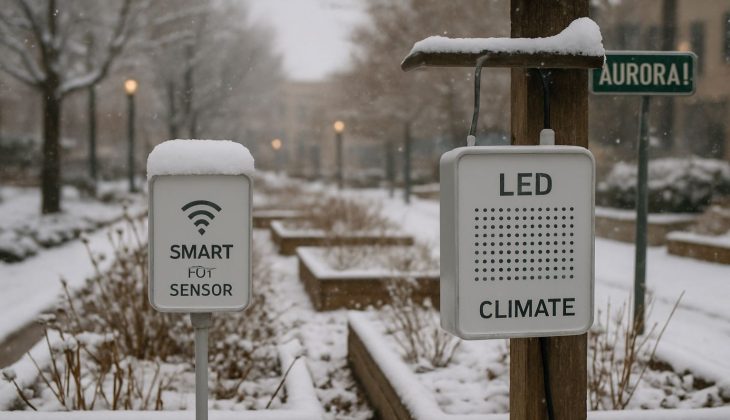
- Smart IoT sensors and LED climate systems are making year-round crop production possible in Illinois, regardless of brutal winter conditions.
- Aurora’s urban farming technology movement isn’t just about food — it’s a replicable blueprint for mid-sized American cities facing food security challenges.
Aurora, Illinois, isn’t the first city that comes to mind when you think cutting-edge agriculture — but that’s exactly what makes what’s happening here so compelling.
Quietly and deliberately, Aurora has been building the infrastructure, education programs, and community momentum to become a serious player in urban farming technology. Sitting just 40 miles west of Chicago, Aurora has the density, the industrial spaces, and the growing food equity challenges that make urban farming not just an interesting idea, but a practical necessity. For those exploring where innovation meets local impact, Eden Green Technology offers a compelling look at how controlled environment agriculture is reshaping food systems at the city level.
Aurora IL Is Growing More Than Just Crops
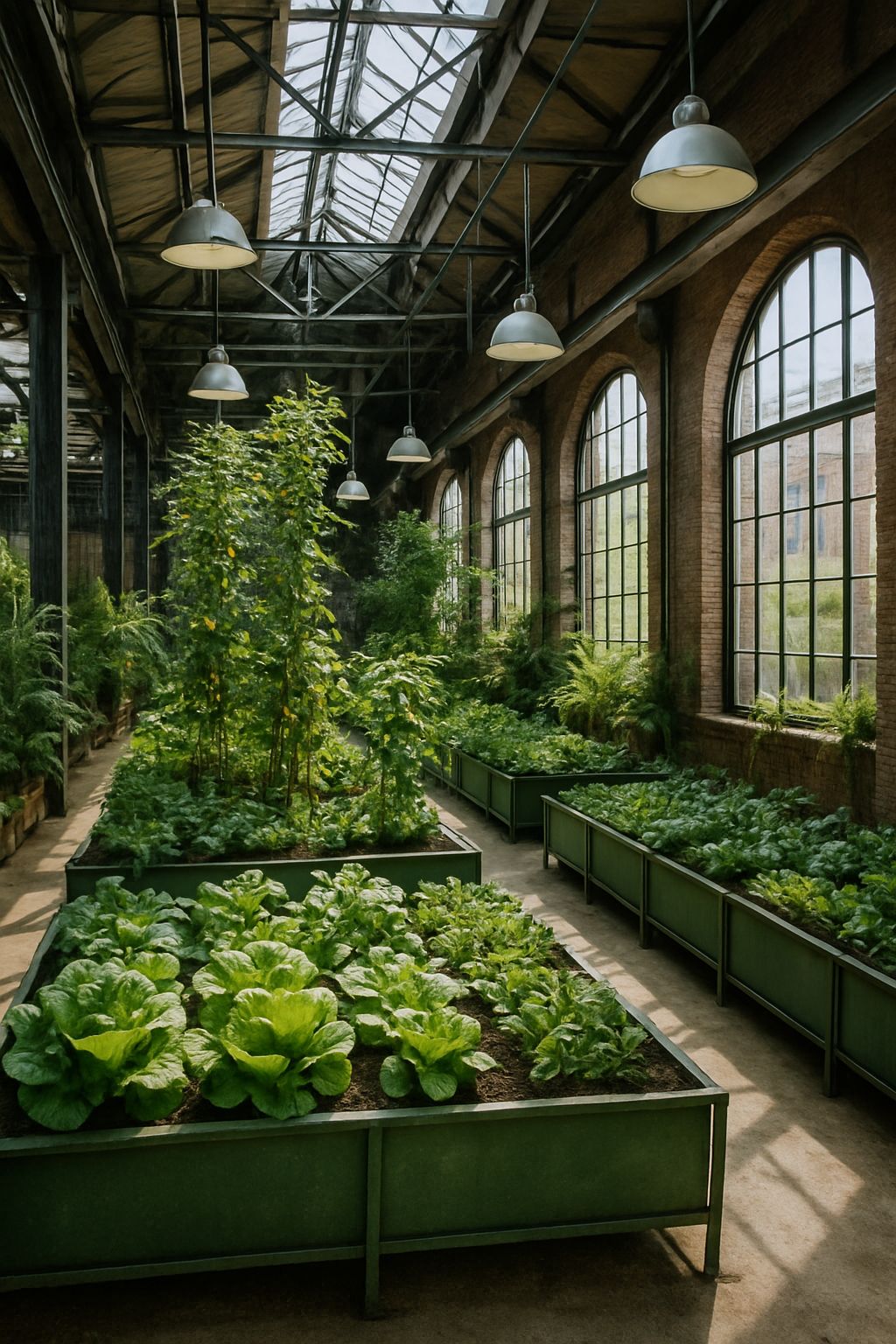
The story of urban farming in Aurora is really a story about reinvention. Like many mid-sized Midwest cities, Aurora has faced its share of economic shifts — vacant commercial buildings, food access gaps in certain neighborhoods, and a need for sustainable local industry. Urban farming technology is stepping into that gap in a very practical way.
What makes Aurora’s approach different from a simple community garden movement is the deliberate use of technology to scale production, improve efficiency, and create systems that can run year-round without depending on Illinois’s unpredictable weather. These aren’t just raised beds in a parking lot. We’re talking about data-monitored growing environments, automated nutrient delivery, and intelligent lighting systems that mimic optimal sunlight conditions. To learn more about the broader impact of urban gardens, check out the cooling benefits of Chicago urban gardens.
Here’s what’s already in motion across Aurora’s urban farming landscape:
- Repurposed industrial and commercial spaces converted into controlled indoor farms
- Hydroponic and aeroponic systems produce leafy greens, herbs, and vegetables without soil
- IoT-connected sensor networks tracking humidity, temperature, CO₂ levels, and plant health in real time
- Educational partnerships through institutions like IMSA Aurora, teaching students agricultural technology hands-on
- Community-supported agriculture (CSA) models are being enhanced with tech-driven production forecasting
The momentum is real, and the technology driving it is more accessible than most people realize.
The Core Technologies Powering Aurora’s Urban Farms
Urban farming in Aurora isn’t one-size-fits-all. Different growers are using different technology stacks depending on their scale, space, and crop goals. But several core technologies show up consistently across the most successful operations. For those interested in unique plant varieties, exploring specialty herb gardens can provide insights into innovative cultivation techniques.
Hydroponics, Aeroponics, and Aquaponics: Soil-Free Growing Explained
Soil-free growing is the backbone of urban agriculture technology, and for good reason. Hydroponics delivers nutrients directly to plant roots through water, allowing crops to grow up to 50% faster than in soil while using significantly less space. In Aurora’s indoor farming setups, hydroponic systems are commonly used for high-turnover crops like lettuce, spinach, basil, and kale.
Aeroponics takes it a step further — plant roots are suspended in air and misted with a nutrient solution at timed intervals. This method uses up to 95% less water than conventional field farming and produces exceptionally clean, fast-growing crops. It’s particularly well-suited to urban environments where water efficiency directly impacts operating costs.
Aquaponics adds another layer by integrating fish cultivation into the system. Fish waste provides natural fertilizer for the plants, and the plants filter the water for the fish. It’s a closed-loop ecosystem that produces both protein and produce — a compelling model for urban food security when space and resources are limited.
AI and IoT Sensors: How Smart Systems Monitor Crops in Real Time
This is where urban farming gets genuinely exciting. IoT (Internet of Things) sensors placed throughout a growing environment continuously collect data on temperature, humidity, pH levels, dissolved oxygen, light intensity, and CO₂ concentration. That data feeds into AI-driven platforms that can identify stress patterns in plants before visible symptoms appear — catching problems days or even weeks earlier than a human observer could.
For Aurora urban farmers, this means fewer crop losses, better resource allocation, and the ability to run leaner operations with less hands-on labor. Some systems can automatically adjust nutrient dosing, lighting schedules, or airflow in response to real-time readings — essentially creating a self-regulating growing environment. Learn more about the integration of technology in urban agriculture.
LED Grow Lighting and Climate Control Systems
Illinois winters are no joke. Temperatures regularly drop below freezing from November through March, making outdoor growing impossible for a large portion of the year. LED grow lighting systems solve this by delivering precisely calibrated light spectrums — tuned to the specific wavelengths plants use for photosynthesis — without the heat output of traditional HID lighting.
Modern LED systems like those used in commercial vertical farms can be programmed to simulate specific photoperiods, accelerating growth cycles or triggering flowering on demand. Paired with HVAC and climate control systems that maintain optimal temperature and humidity ranges year-round, Aurora’s indoor farms can produce consistent harvests in January just as easily as in July.
Vertical Farming in Aurora: Growing Up, Not Out
Land scarcity in urban environments is one of the defining constraints of city-based food production. Vertical farming solves this by stacking growing layers on top of each other — turning a single square foot of floor space into multiple tiers of productive growing area. In a city like Aurora, where available land is limited but warehouse and commercial square footage exists, this approach is a natural fit.
How Vertical Farms Use Abandoned Buildings and Urban Rooftops
Some of the most innovative urban farms in the Midwest are operating out of spaces that were previously written off — shuttered warehouses, unused retail floor space, and flat industrial rooftops. Aurora has no shortage of these. Converting them into vertical farming operations requires investment in racking systems, grow lighting, irrigation infrastructure, and environmental controls, but the payoff is a high-yield growing space that can operate independently of outdoor conditions.
Rooftop farms add another dimension by using otherwise dead space on top of commercial buildings. With the right waterproofing, structural assessment, and lightweight growing systems, rooftops can support productive hydroponic gardens that reduce a building’s heat absorption while generating fresh produce.
Year-Round Food Production Regardless of Illinois Weather
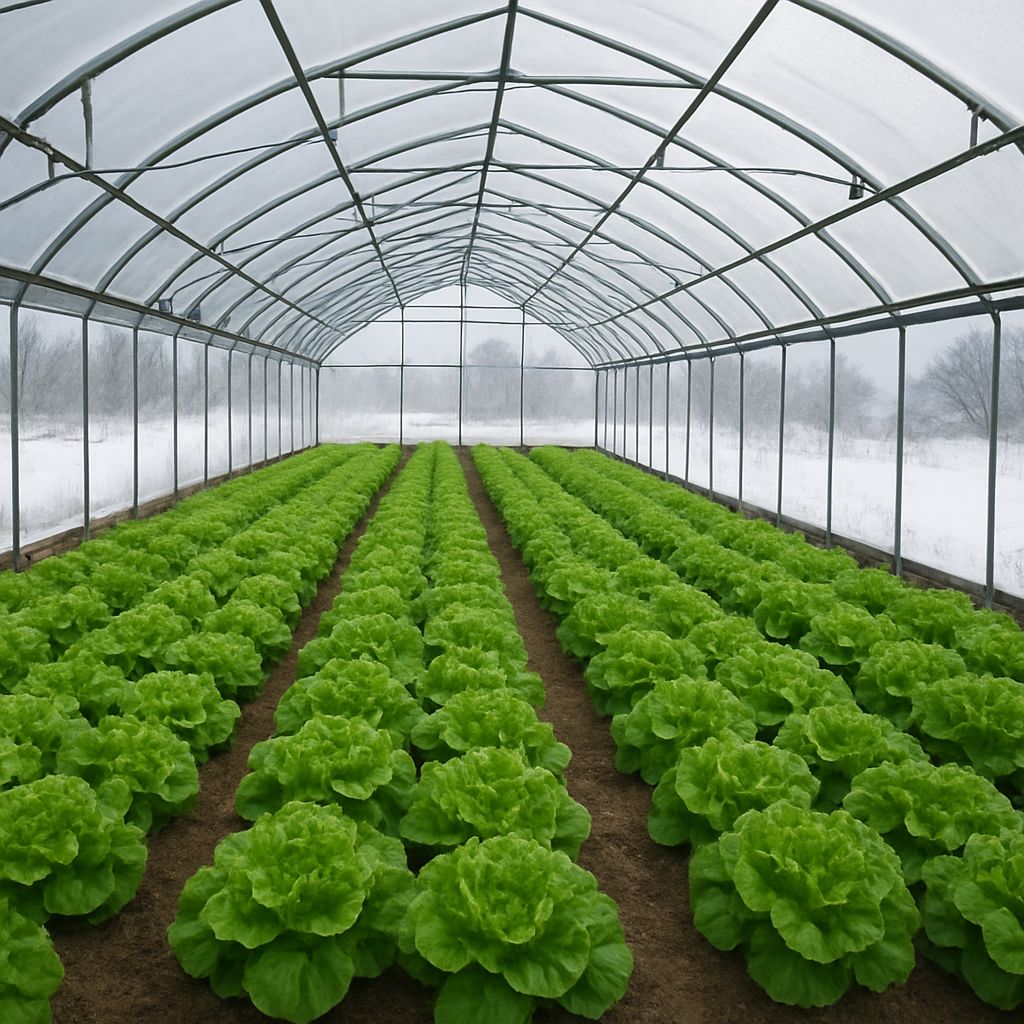
This is the single biggest advantage vertical indoor farming has over traditional agriculture in a climate like Aurora’s. By fully controlling the growing environment, indoor vertical farms eliminate weather as a variable entirely. Crops don’t fail because of an early frost, an unexpected heat wave, or a summer drought. Production schedules become predictable, supply chains stabilize, and farmers can plan inventory with a level of confidence that outdoor agriculture simply can’t provide.
For Aurora residents — particularly those in neighborhoods with limited grocery access — this reliability translates directly into more consistent availability of fresh, locally grown produce throughout the entire year.
STEM Education and Urban Farming Tech at IMSA Aurora
The Illinois Mathematics and Science Academy (IMSA) in Aurora isn’t just producing future engineers and physicists — it’s training the next generation of agricultural technologists. IMSA’s hands-on approach to science education has made it a natural home for programs that blend biology, data science, and environmental systems through the lens of food production. When students here engage with urban farming technology, they’re not doing it as a side project — it’s integrated into serious scientific inquiry.
- Students work directly with hydroponic and aeroponic growing systems as part of applied science curricula
- Data collection from IoT sensors is used in real analytical exercises, treating the farm as a live laboratory
- Environmental impact assessments teach students to measure water savings, energy use, and carbon reduction
- Cross-disciplinary projects connect agriculture with chemistry, computer science, and systems thinking
- Community outreach components connect student-grown produce with local food access initiatives
What IMSA is doing matters well beyond its campus. By normalizing agricultural technology as a serious scientific discipline, the institution is helping dismantle the outdated idea that farming is low-tech work. These students are learning that feeding cities in the 21st century is one of the most complex and important engineering challenges we face.
The ripple effect of this kind of education is significant. Students who understand precision agriculture, controlled environment systems, and data-driven crop management don’t just become farmers — they become the innovators who build better farming systems, write the software that runs them, and design the policies that scale them. Aurora is cultivating that talent pipeline right now.
What the Agricultural STEM Summer Camp Covers
IMSA’s agricultural STEM programming includes summer camp experiences where students engage with vertical farming systems, soilless growing techniques, and environmental monitoring technology in a compressed, intensive format. Participants learn how to set up hydroponic systems, calibrate nutrient solutions, interpret sensor data, and evaluate crop health — all within a framework that connects these skills to broader food system challenges. It’s practical, fast-moving, and designed to show students that urban agriculture is a field where scientific thinking has immediate, tangible outcomes.
Why Teaching Kids Farming Tech Matters for the Future
The global food system faces enormous pressure — population growth, climate volatility, water scarcity, and supply chain fragility are all converging at once. The solutions to those problems won’t come from scaling up the same industrial agriculture models that created many of them. They’ll come from people who grew up understanding controlled environment agriculture, precision resource management, and urban food systems design.
Aurora is positioning itself to produce those people. Every student who leaves IMSA understanding how an aeroponic system works, or how AI can predict crop stress before it’s visible, carries that knowledge into whatever field they enter. The agricultural workforce of 2040 needs people who think this way — and Aurora is helping build that foundation today.
How Aurora’s Urban Farms Are Reducing Environmental Impact
One of the most powerful arguments for urban farming technology isn’t just about food — it’s about what urban farms don’t do. They don’t require vast tracts of pesticide-treated land. They don’t depend on long refrigerated supply chains that burn fossil fuels. They don’t drain aquifers or contribute to topsoil erosion. In a city like Aurora, where sustainability goals are becoming increasingly embedded in municipal planning, urban farming tech aligns directly with broader environmental priorities.
The environmental benefits compound when you look at the full lifecycle of food produced in controlled urban environments versus conventionally farmed produce shipped from California, Mexico, or beyond. Local production means fewer food miles, less packaging, lower refrigeration demand, and fresher product reaching consumers in shorter timeframes.
Lower Water Use Through Precision Resource Management
Hydroponic and aeroponic systems recirculate water rather than letting it drain into the soil and evaporate. A closed-loop hydroponic system can reduce water consumption by 70 to 95% compared to conventional field irrigation — a dramatic difference that matters enormously in regions experiencing increasing drought pressure. IoT-based moisture and nutrient sensors ensure that water and fertilizer are delivered in precise quantities, eliminating the guesswork and overuse that characterizes traditional irrigation.
Cutting the Carbon Footprint of Long-Distance Food Transport
The average piece of produce in the United States travels between 1,500 and 2,500 miles before reaching a consumer’s plate. That distance represents significant fuel consumption, refrigeration energy, and emissions. Urban farms in Aurora growing food for Aurora residents eliminate the vast majority of that transport footprint. When a vertical farm in a converted warehouse can supply leafy greens to a grocery store three miles away, the carbon math changes dramatically in favor of local production.
Reducing Fertilizer and Pesticide Waste With Data-Driven Farming
Controlled growing environments eliminate the need for most pesticides — there are no outdoor pest populations to manage when your farm is sealed indoors. Nutrient delivery in hydroponic systems is precisely dosed based on plant need and growth stage, meaning fertilizer runoff — one of the most damaging forms of agricultural pollution — is effectively eliminated. AI-driven crop monitoring takes this further by flagging early signs of nutrient deficiency or disease, allowing growers to intervene with minimal inputs before a problem escalates. For those interested in sustainable urban agriculture, exploring urban foraging in Aurora, Illinois can provide additional insights into innovative farming techniques.
What Aurora’s Urban Farming Tech Means for Local Food Security
Food security isn’t just a global issue — it’s a hyperlocal one. Aurora has neighborhoods classified as food deserts, where residents have limited access to fresh, affordable produce within a reasonable distance. Urban farming technology directly addresses this gap by enabling food production inside or immediately adjacent to underserved communities, rather than relying on supply chains that frequently bypass those areas entirely.
When a vertical farm can operate inside a community center, a church basement, or a converted storefront, fresh produce stops being a logistics problem and becomes a neighborhood asset. Technology makes this possible at scales that weren’t viable even a decade ago — smaller, modular hydroponic units now exist that can be deployed in almost any indoor space with adequate power and ventilation. For Aurora, this means the tools to build genuine food resilience at the neighborhood level are already available. The work is connecting the technology to the communities that need it most, including exploring specialty herb gardens as a viable option.
The Next Wave of Urban Farming Innovation Coming to Aurora
The urban farming technology landscape is evolving fast — and what’s considered cutting-edge today will likely be standard equipment within five years. Aurora’s growing interest in this space positions it to adopt next-generation tools as they become commercially accessible, building on the infrastructure and knowledge base already being developed across the city.
Robotics and Automation in Small-Scale Urban Farm Settings
Robotics in urban agriculture used to mean million-dollar systems only accessible to large commercial operations. That’s changing rapidly. Compact, affordable robotic systems are now being designed specifically for small-scale indoor farms — the kind that fit inside a converted Aurora warehouse or a community growing facility. These systems handle repetitive, labor-intensive tasks like seeding, transplanting, harvesting, and packaging with consistent precision that human labor simply can’t match at scale. For those interested in unique agricultural practices, exploring uncommon vegetable crops in Aurora can provide additional insights.
For Aurora’s urban farming community, this matters because labor cost is one of the primary barriers to profitability in small urban farm operations. A single automated seeding system can process thousands of seed placements per hour with near-perfect accuracy, freeing human workers to focus on higher-value tasks like system management, quality control, and community outreach. As the cost of these systems continues to drop, they’ll become viable for smaller and smaller operations.
Automated harvesting arms, conveyor-based transplanting systems, and robotic packaging units are already in use at commercial vertical farms across the Midwest. Aurora growers watching those deployments are learning what to adopt and when — positioning themselves to integrate automation thoughtfully rather than reactively. For those interested in exploring further, there are also specialty herb gardens in Aurora that offer unique insights and ideas.
AI-Assisted Crop Monitoring: From Rooftop Gardens to Indoor Farms
AI-assisted crop monitoring is becoming one of the most transformative tools available to urban farmers at every scale. Computer vision systems mounted above growing trays can analyze thousands of plants per minute, detecting subtle color changes, leaf deformities, or growth rate anomalies that indicate stress, disease, or nutrient deficiency — all before the human eye would catch them. For an Aurora rooftop garden or indoor vertical farm, this kind of early detection system can mean the difference between a minor correction and a total crop loss. Platforms integrating this technology are already being piloted in urban farm settings across Illinois, and Aurora operators paying attention to those results are gaining a serious competitive and operational advantage.
Aurora’s Urban Farming Tech Is a Blueprint Other Cities Should Follow
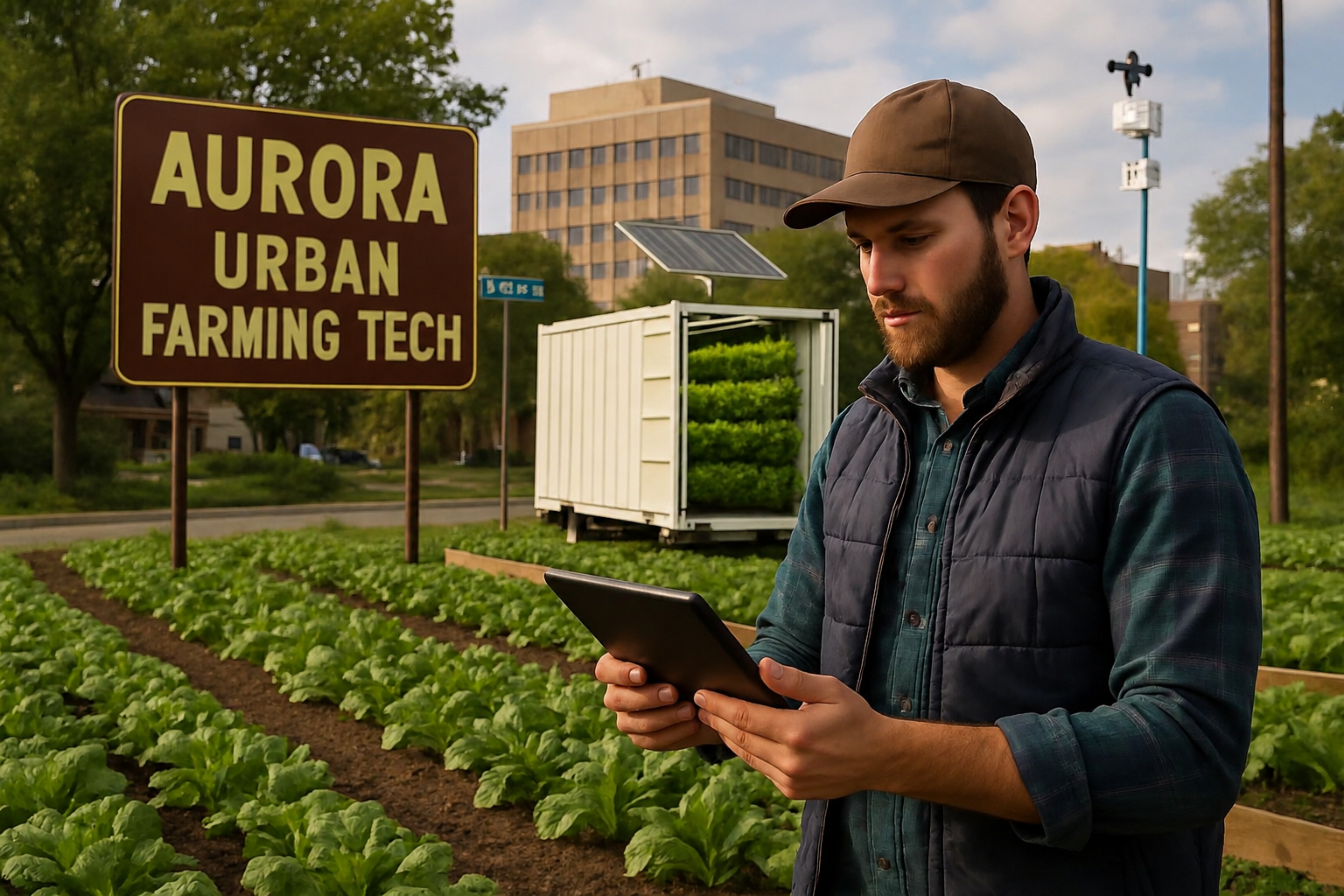
What Aurora is building — intentionally or not — is a replicable model for how mid-sized American cities can use technology to address food security, environmental sustainability, and economic reinvention simultaneously. The combination of available industrial space, institutional support through IMSA, growing community awareness, and proximity to Chicago’s broader innovation ecosystem gives Aurora a unique but reproducible set of conditions. Other cities facing similar challenges — vacant commercial properties, food access gaps, sustainability mandates — can look at Aurora’s approach and find a framework that translates. The technology is scalable. The community engagement strategies are transferable. And the urgency is universal.
Frequently Asked Questions
Urban farming technology raises a lot of practical questions, especially for people encountering it for the first time. The concepts can sound complex, but the core ideas are straightforward once you break them down. Below are the most common questions Aurora residents, students, and prospective urban farmers ask about the technology reshaping local food production.
Whether you’re a curious resident, a student considering a career in agricultural technology, or a community organizer exploring food access solutions, these answers are designed to give you a clear and honest picture of what’s actually happening — and what’s realistically possible — in Aurora’s urban farming landscape.
Quick Reference: Aurora Urban Farming Technology at a Glance
🌿 Primary Growing Methods: Hydroponics, Aeroponics, Aquaponics
💧 Water Savings vs. Traditional Farming: Up to 95% reduction
📊 Monitoring Technology: IoT sensors, AI crop analysis, computer vision
💡 Lighting Systems: Programmable LED full-spectrum grow lights
🏫 Education Hub: Illinois Mathematics and Science Academy (IMSA), Aurora
🛠 Automation Trend: Robotic seeding, harvesting, and transplanting systems
🌱 Key Benefit: Year-round production regardless of Illinois weather conditions
These fundamentals form the foundation of everything Aurora’s urban farming technology movement is building on — and understanding them makes the bigger picture much easier to navigate.
What types of urban farming technology are currently used in Aurora, IL?
Aurora’s urban farms are using a combination of soilless growing systems, smart monitoring technology, and controlled environment infrastructure. The most widely adopted methods include hydroponic systems for fast-cycling crops like lettuce and herbs, aeroponic setups for water-critical operations, and IoT sensor networks that track temperature, humidity, pH, and plant health data in real time. LED grow lighting systems calibrated to specific crop light spectrums are standard in any serious indoor growing operation in the area.
On the more advanced end, AI-driven crop monitoring platforms and automated seeding and harvesting systems are beginning to appear in larger Aurora-area urban farm operations. These technologies are moving quickly from commercial-scale novelty to practical small-farm tools as costs decrease and accessibility increases.
Does Aurora IL have any urban farming education programs?
Yes — and IMSA Aurora is the standout example. The Illinois Mathematics and Science Academy has integrated urban farming technology into its applied science curriculum in meaningful ways, treating controlled environment agriculture as a serious subject of scientific study rather than an elective curiosity.
- Hands-on hydroponic and aeroponic system operation as part of applied science coursework
- Real-time IoT sensor data collection and analysis used in live laboratory exercises
- Agricultural STEM summer camp programming for students across Illinois
- Environmental impact assessment projects measuring water, energy, and carbon metrics
- Community outreach components connecting student-grown food to local food access programs
Beyond IMSA, community organizations and local urban farming initiatives in Aurora are increasingly offering workshops, volunteer programs, and cooperative growing opportunities that introduce residents to urban farming technology at a practical, accessible level.
The combination of institutional programming at IMSA and grassroots community engagement creates a layered education ecosystem — one that reaches students on a rigorous academic path and community members looking for hands-on involvement with local food production.
As urban farming continues to grow in Aurora, expect these educational touchpoints to expand. The demand for people who understand how to operate, manage, and innovate within controlled environment agriculture systems is only going to increase — and Aurora’s education infrastructure is building toward that demand deliberately. For those interested in unique agricultural practices, exploring urban foraging in Aurora can provide valuable insights.
How does vertical farming work in a city like Aurora?
Vertical farming works by stacking growing layers — typically in the form of tiered racking systems fitted with hydroponic or aeroponic growing channels — inside a controlled indoor environment. Each tier receives its own LED lighting, irrigation, and climate management, allowing crops to grow independently of outdoor conditions. In Aurora, this model is particularly well-suited to the city’s inventory of underutilized warehouse and commercial spaces, which provide the ceiling height, power infrastructure, and floor area that vertical farm installations require. A single well-designed vertical farm facility can produce the equivalent output of many times its footprint in conventional field agriculture — making it a genuinely powerful tool for urban food production in a space-constrained city environment.
How does urban farming technology improve food security in Aurora?
Urban farming technology improves food security in Aurora by enabling fresh produce to be grown inside or immediately adjacent to communities that currently lack reliable access to it. Traditional grocery supply chains frequently underserve lower-income urban neighborhoods — urban farming technology breaks that dependency by making local production viable at the neighborhood scale.
The reliability factor is equally important. Because controlled environment farms operate independently of weather, seasonal variation, and long-distance supply chain disruptions, they can deliver consistent produce availability year-round. That consistency is something conventional supply chains — as the COVID-19 pandemic made brutally clear — cannot always guarantee.
Modular hydroponic systems now available at relatively low cost can be deployed in community centers, schools, faith-based facilities, and even large residential spaces. For Aurora’s food access advocates, this means the infrastructure to build neighborhood-level food resilience is no longer out of reach — it’s a matter of connecting available technology with community will and supportive policy.
Can urban farming tech in Aurora realistically replace traditional agriculture?
Realistically, no — and that’s not actually the goal. Urban farming technology in Aurora isn’t positioned to replace the vast commodity agriculture systems that produce grain, livestock feed, and bulk staple crops. Those systems operate at a scale and with a cost structure that urban farms cannot replicate. What urban farming technology can do — and is already doing — is supplement traditional agriculture in ways that matter enormously for local food access, fresh produce availability, and supply chain resilience.
The most honest framing is this: urban farming technology handles the last mile of food production with extraordinary efficiency. High-value, perishable crops like leafy greens, herbs, microgreens, tomatoes, and strawberries are where controlled environment agriculture genuinely outperforms traditional supply chains — in freshness, consistency, resource efficiency, and proximity to the consumer.
For Aurora specifically, the opportunity isn’t to replace farms in rural Illinois — it’s to build a local food layer that reduces dependence on fragile long-distance supply chains for fresh produce, creates local economic activity, and puts nutritious food closer to the people who need it most. That’s a goal urban farming technology is already equipped to deliver on, right now, with systems that exist today. If you’re ready to explore what controlled-environment agriculture can look like at scale, Eden Green Technology is a strong place to start understanding the future of local food production in practice. Additionally, you might find it interesting to explore urban foraging in Aurora as a complementary approach to sustainable food sourcing.